
A great kitchen looks calm even when it’s working hard. The secret is often a room you never see: the walk-in pantry. When the door blends into the cabinetry, the whole wall reads as one clean surface, and all the cereal boxes, small appliances, and bulk groceries disappear behind it.
Hidden walk-in pantries have become one of the most requested kitchen features, and for good reason. They give you generous storage without breaking up your design. They also hide the mess while you’re cooking or hosting.
This guide shares 25 hidden walk-in pantry ideas for 2026, from seamless jib doors to moody dark interiors and sunlit organized spaces. You’ll see how each one looks, how it works, and what to plan for. We’ll also cover sizing, lighting, shelving, safety, and budget, so you can build a pantry that looks good and works every day.
Building or altering walls, doors, and electrical work often needs permits and licensed pros, so check local rules before you start.
Quick Answer: What Is a Hidden Walk-In Pantry?
A hidden walk-in pantry is a pantry room you can step into, with an entrance that blends into the surrounding kitchen. The door might look like a cabinet, a wall panel, or a bookcase. You might also hide it with a sliding panel or a pocket door.
The best hidden pantries share these features:
- A disguised door that matches nearby cabinets or walls
- Smart shelving for dry goods, small appliances, and bulk items
- Good lighting so you can see everything at a glance
- A clear layout with room to walk, reach, and carry
- A finish that suits the kitchen, even though it stays out of view
Hidden Pantry Door Types at a Glance
The door is what makes the pantry “hidden.” Here are the most common types.
| Door Type | How It Hides | Space Needed | Best For |
|---|---|---|---|
| Jib (hidden) door | Flush with cabinetry, no visible frame | Standard door swing | Seamless modern kitchens |
| Cabinet-front swing door | Matches cabinet panels and hardware | Door swing clearance | Classic and traditional kitchens |
| Sliding barn door | Slides along the wall | Wall space beside the door | Farmhouse and rustic styles |
| Pocket door | Slides into the wall cavity | Clear wall cavity | Tight spaces |
| Bifold door | Folds in two | Narrow clearance | Small openings |
| Glass or reeded glass door | Shows a soft outline | Standard swing | Light-filled, airy pantries |
Costs and complexity vary by region and builder, so request local quotes.
Before You Build: Plan the Basics
A little planning prevents expensive fixes.
- Choose a workable size. A walk-in pantry usually works well at about 5 by 5 feet, though smaller layouts can still function with smart design.
- Leave walking room. Aim for an aisle of roughly 30 to 36 inches so you can move and carry items.
- Pick shelf depth carefully. Around 12 inches suits most canned and boxed goods. Deeper shelves tend to hide items at the back.
- Plan the door first. Check the swing, the clearance, and whether it blocks a walkway or an appliance.
- Think about outlets. If you plan to keep appliances inside, add outlets on a safe circuit. Hire a licensed electrician.
- Mind the walls. Pocket doors need a wall cavity free of plumbing and wiring.
- Keep egress and code in mind. Don’t block exits, and follow local building and fire rules.
- Budget with a cushion. Build in extra funds for surprises like moving wiring or fixing walls.
1. Seamless Pantry Moment
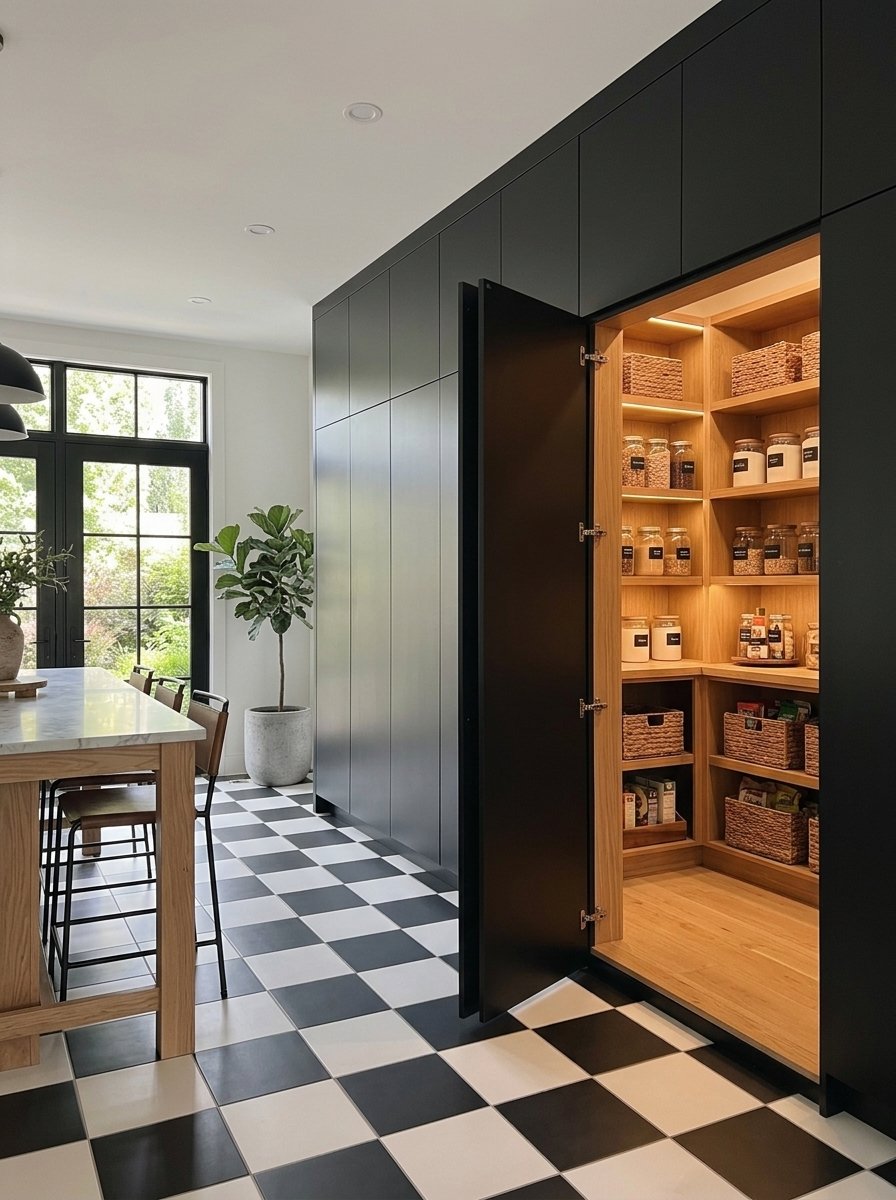
The most polished hidden pantry is one you can’t find at first glance. A jib door, also called a hidden door, sits flush with the surrounding cabinetry. There are no visible trim pieces, just a clean wall of matching panels.
To make it work, the door gets the same finish as the cabinets next to it. Use push-to-open latches or a discreet pull so no handle breaks the line. Concealed hinges keep the surface smooth.
What makes it work:
- A door built to match the cabinet panel size and grain
- Hidden hinges or a pivot mechanism
- Consistent shadow lines around the edge
Practical note: A flush door must be well made, since poorly fitted ones can stick or sag. Ask a skilled cabinetmaker or carpenter to build and hang it.
2. Warm Wood & Everyday Ease
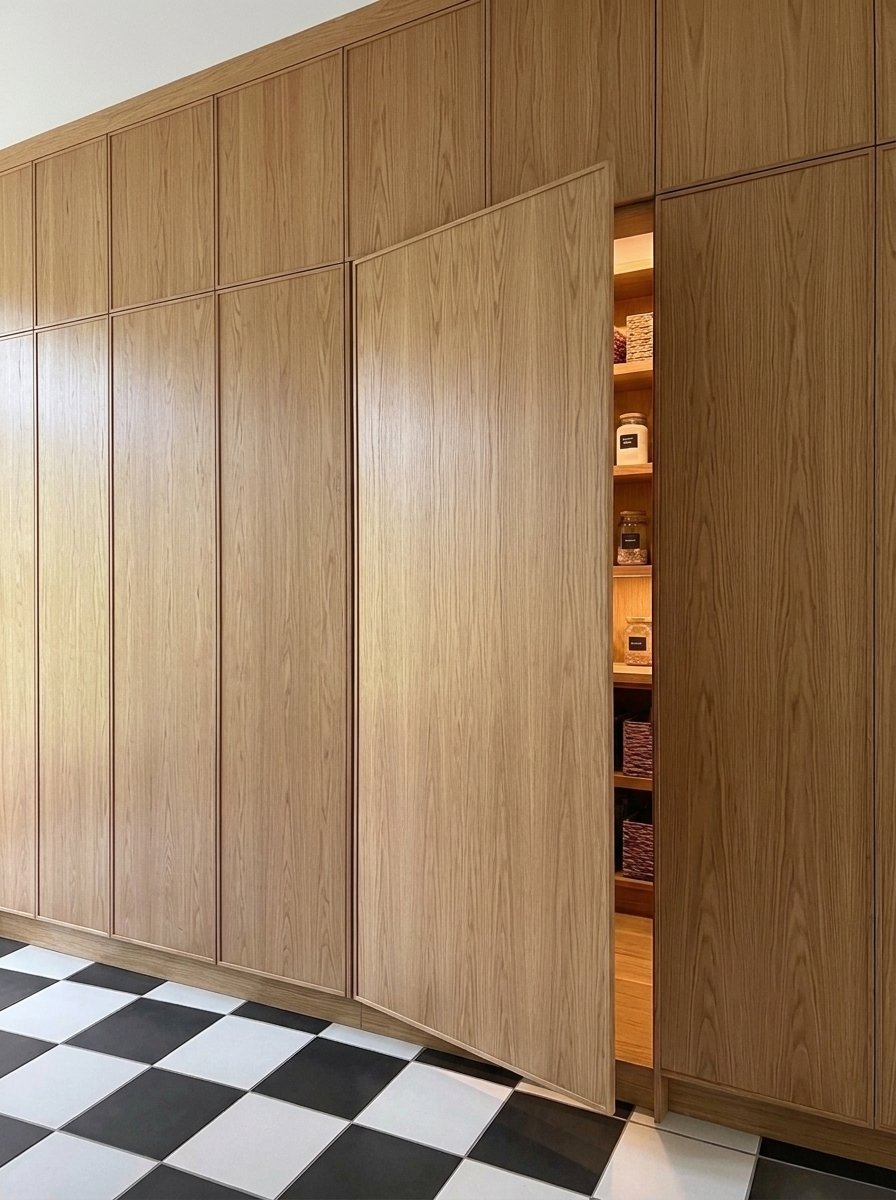
Wood makes a hidden pantry feel friendly and lived-in. Think oak, walnut, or ash cabinetry with a door that fits seamlessly into the wood wall.
Inside, keep the wood theme going with solid shelves and a warm lamp or LED strips. The result feels calm and natural, with just enough grain to add interest.
Style tips:
- Choose one wood species and repeat it throughout
- Use a clear matte finish to protect the wood
- Add woven baskets and ceramic canisters for texture
Care tip: Wood near a sink or dishwasher can warp over time. Keep shelves away from moisture, and wipe up spills promptly.
3. Sleek Utility, Designer Calm
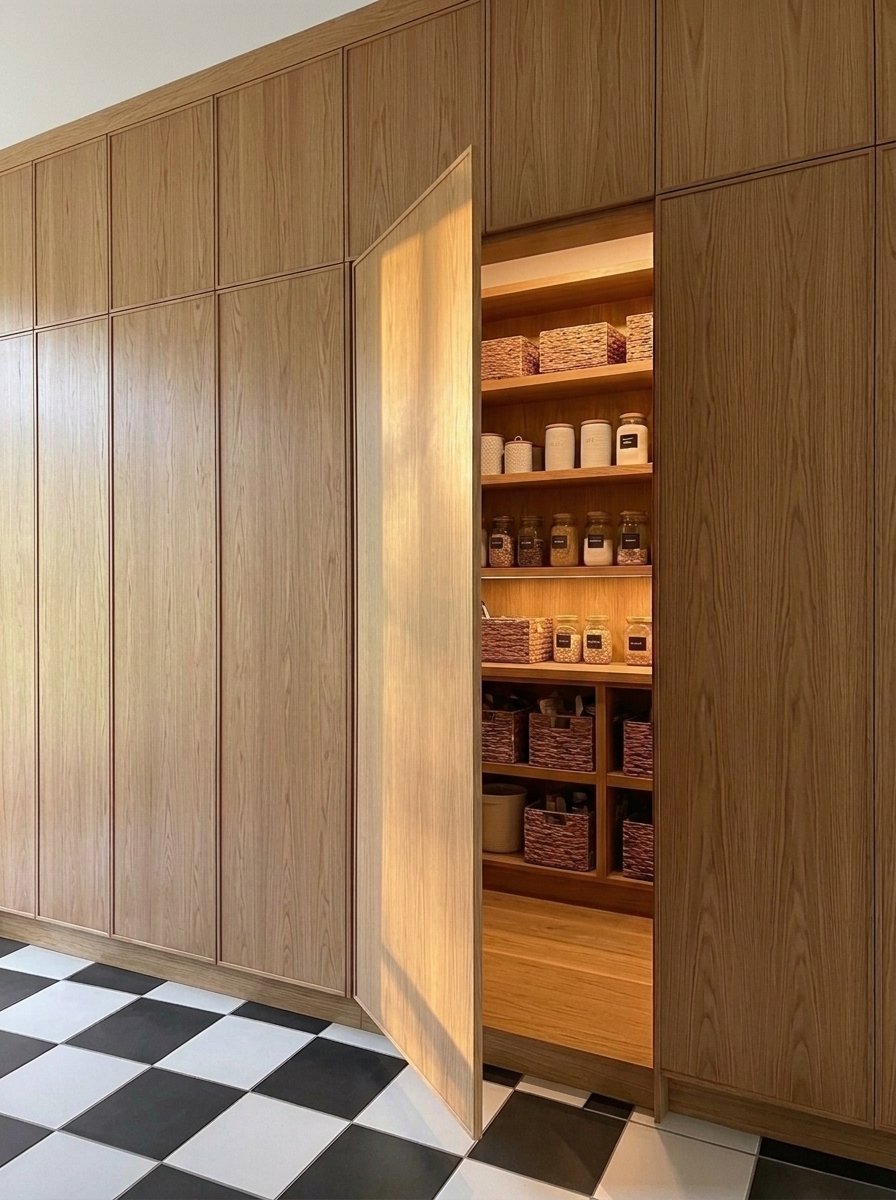
Sometimes the best pantry is a calm, flat-fronted wall. Handleless cabinetry with a matte finish keeps everything sleek, and the pantry door melts into the line.
This style is minimal and architectural. Neutral colors like warm gray, soft white, or taupe work well. Inside, keep things as tidy as the outside, with uniform containers and clear labels.
Design details:
- Handleless doors with finger grooves or push latches
- Slim, matching lighting inside
- Matching interior finishes so the room feels intentional
Good to know: Handleless doors show fingerprints, so choose a finish with a slight texture or a coating that resists marks.
4. Classic Cabinet Disguise
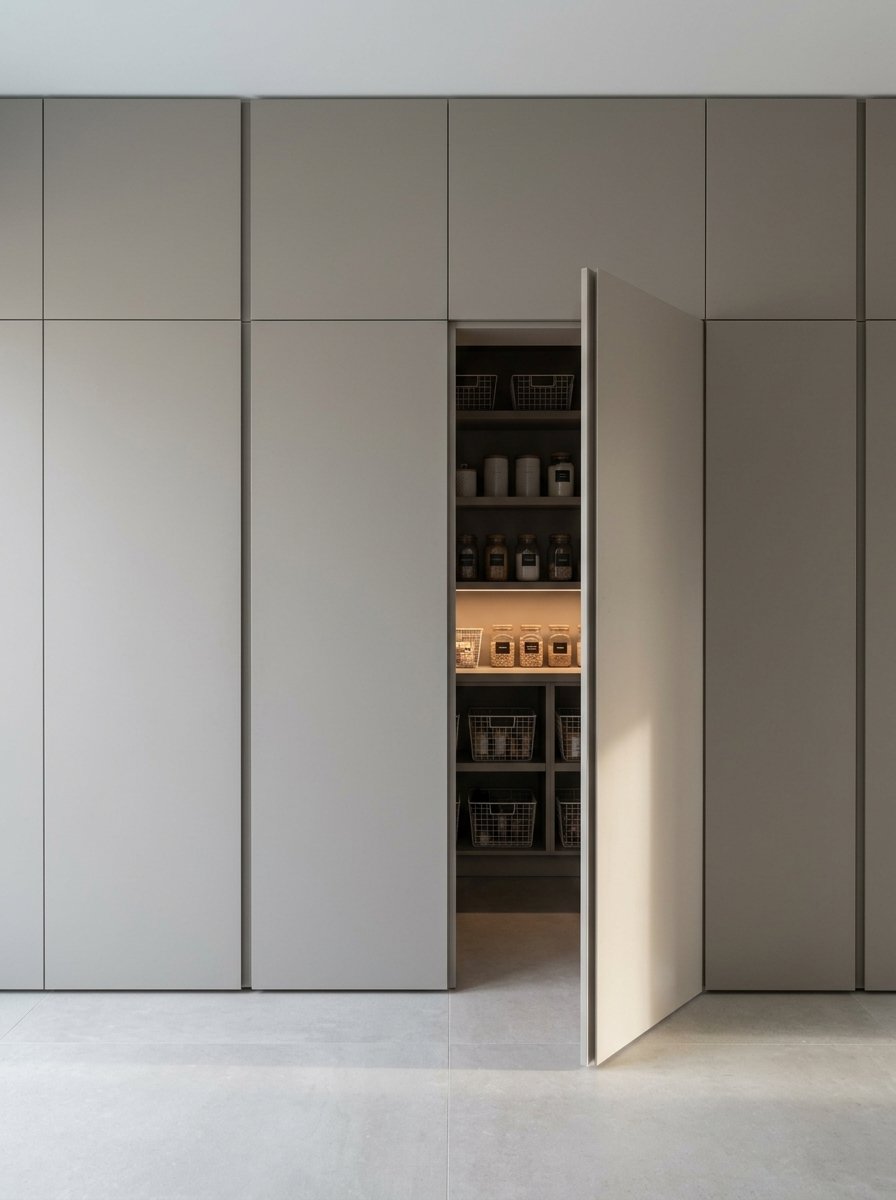
If you love classic cabinetry, you can still hide a pantry. Make the pantry door look like part of the cabinet run, with matching panels, rails, and hardware.
Some designers even add dummy drawer fronts or a faux cabinet face to complete the illusion. Shaker-style doors work especially well because their simple frames repeat easily across the wall.
How to pull it off:
- Match door profiles and hardware exactly
- Align horizontal lines with neighboring cabinets
- Use the same paint or stain batch for consistent color
This approach suits traditional, transitional, and farmhouse kitchens, where cabinetry takes center stage.
5. Soft Neutral Pantry Glow
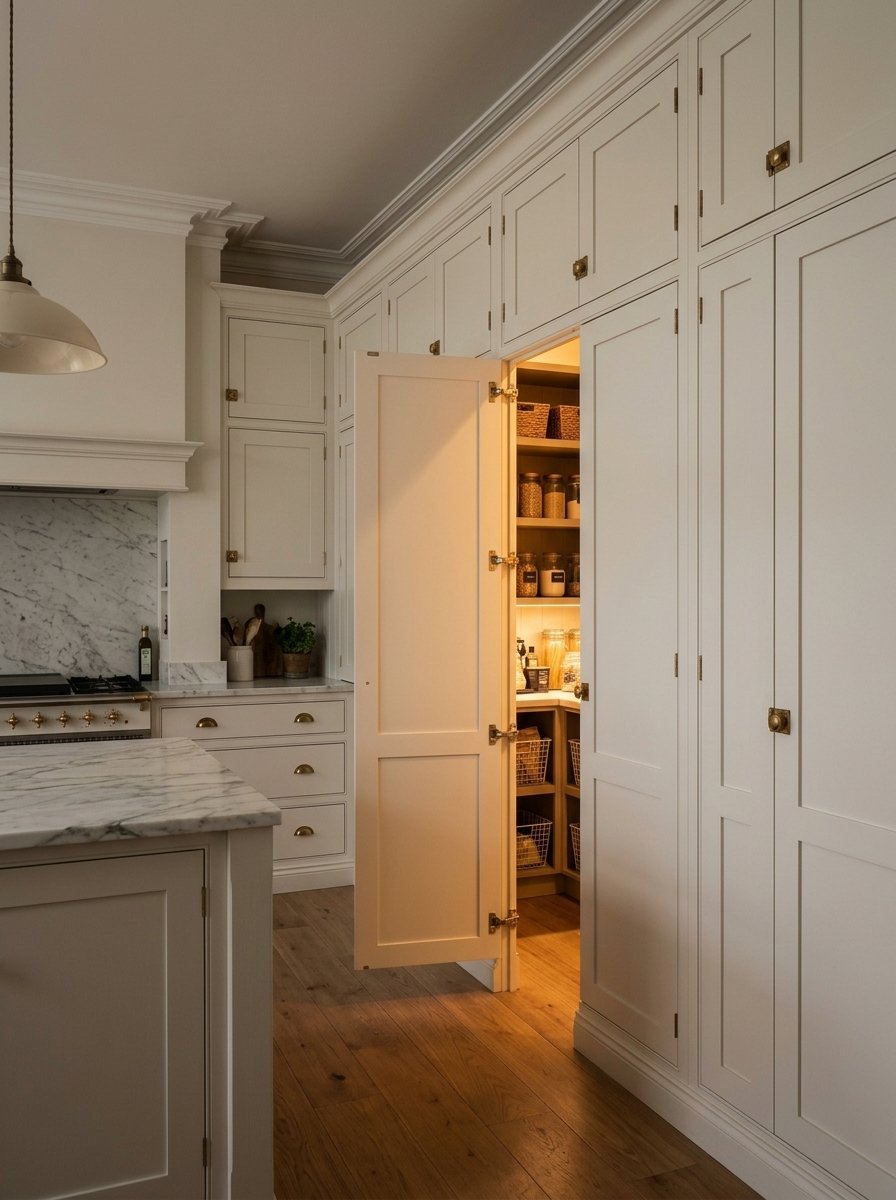
A pantry doesn’t need to be dark and cramped. Soft neutrals like oat, cream, and greige create an inviting, glowing space that feels bigger than it is.
Add LED strip lighting under each shelf for a gentle, even wash of light. Pale wood shelves, light flooring, and matte white containers keep the look clean and bright.
Lighting tips:
- Choose warm white LEDs, around 2700K to 3000K
- Consider motion-activated lights for hands-full convenience
- Install lights at the front edge of shelves to avoid shadows
Safety note: Use LED fixtures rated for the space, and have wiring installed by a licensed electrician.
6. Compact but Thoughtful
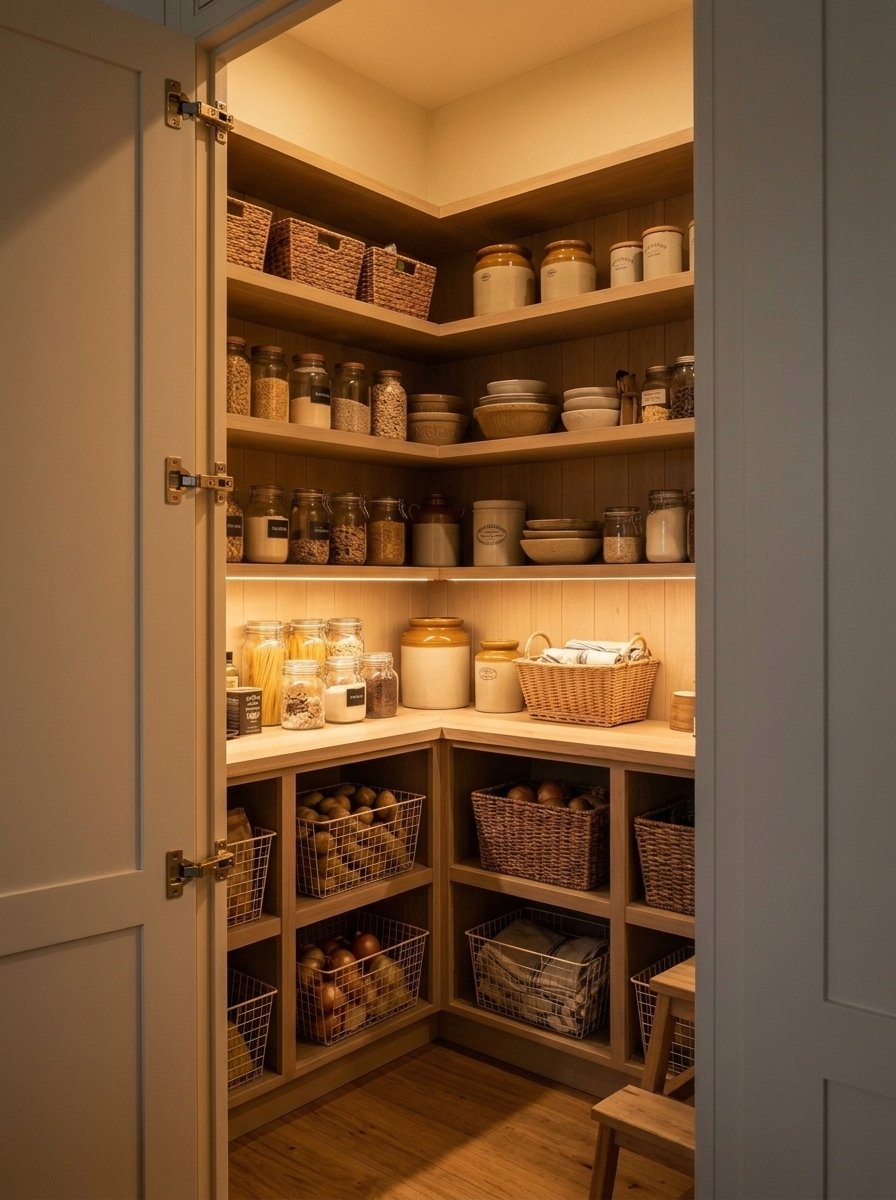
Not every home has room for a large pantry. A compact hidden pantry, even 3 by 4 feet, can hold a surprising amount if you plan carefully.
Use a pocket door or sliding panel so no door swing eats floor space. Choose narrow, full-height shelves, and add pull-out drawers for easy reach. Go vertical wherever possible.
Small-pantry strategies:
- Use shelves from floor to ceiling, with a step stool for upper areas
- Add over-the-door racks if the door allows
- Store infrequent items high and daily items at eye level
Tip: Keep the aisle clear. A pantry that’s packed too tight becomes a place where things get forgotten.
7. Moody Pantry with Personality
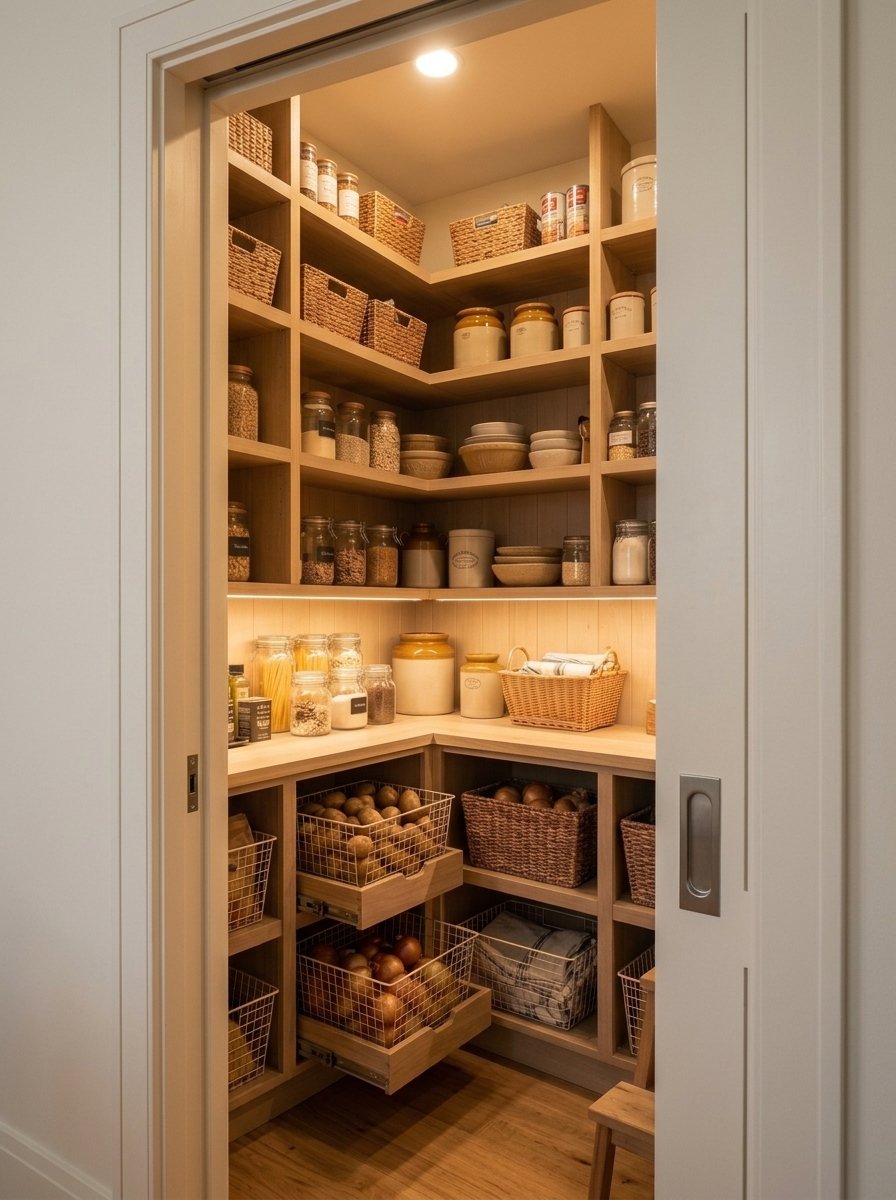
If you love drama, a moody pantry is a fun surprise. Deep green, navy, charcoal, or even black walls create a rich, cozy feel that contrasts with a lighter kitchen.
Because the pantry stays hidden, you can take more risks. Add brass hardware, patterned wallpaper, or a statement light. The reveal when you open the door is half the fun.
Keep it practical:
- Use strong, well-placed lighting so dark colors don’t hide items
- Choose light-colored containers for contrast
- Paint with a scrubbable finish like satin or eggshell
Pro tip: Test paint samples inside the pantry at different times of day. Small rooms can make dark shades look different from what you expect.
8. Soft Traditional Charm
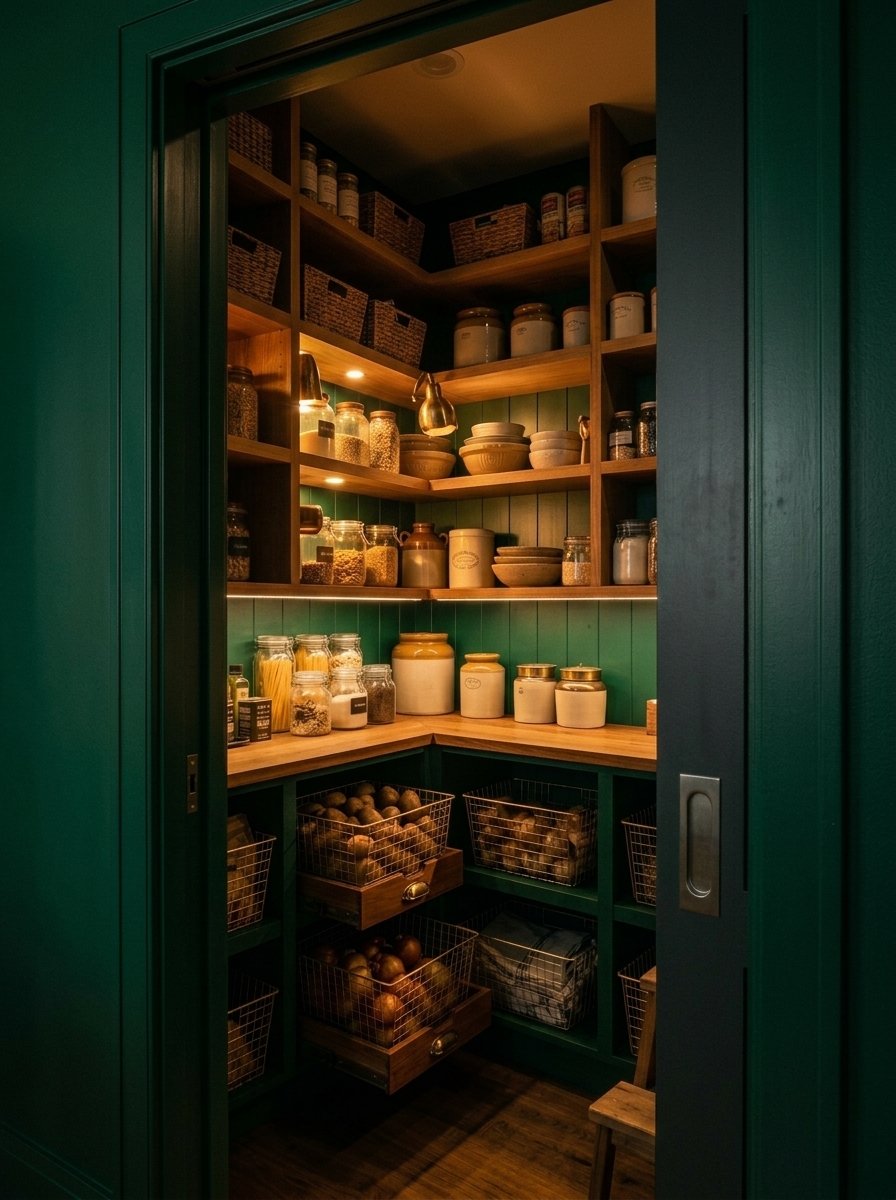
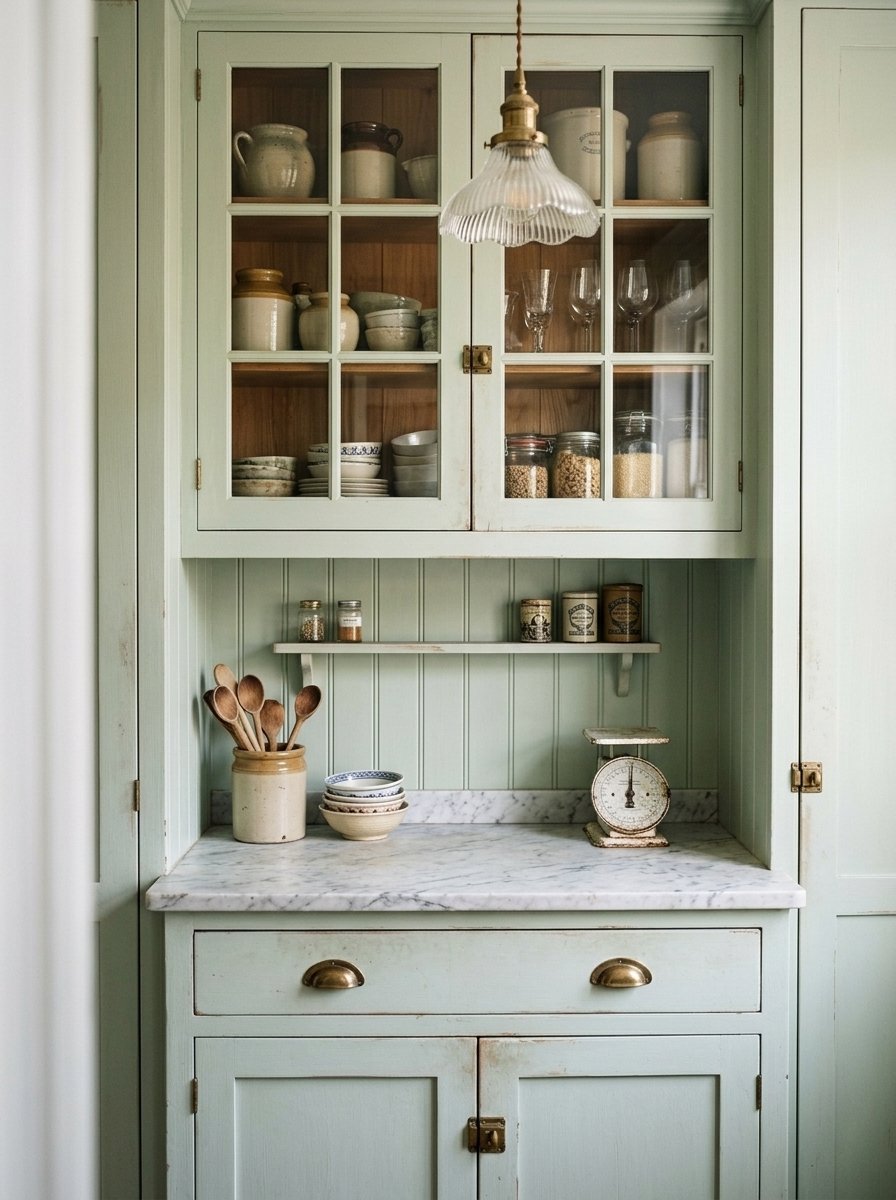
Traditional style never goes out of date. A hidden pantry with beadboard walls, cup pulls, and glass-front cabinets feels gentle and timeless.
Paint the door the same soft white or cream as the nearby cabinets. Inside, add open shelves with a plate rail or a small marble counter for prep. A pretty pendant or sconce adds a finishing touch.
Traditional details:
- Beadboard or shiplap on the pantry walls
- Cup pulls and cabinet knobs in aged brass or nickel
- A patterned floor tile for a little personality
Tip: Glass-front cabinets show what’s inside, so keep them organized. Use matching jars and labels to maintain the look.
9. Farmhouse-Style Hideaway
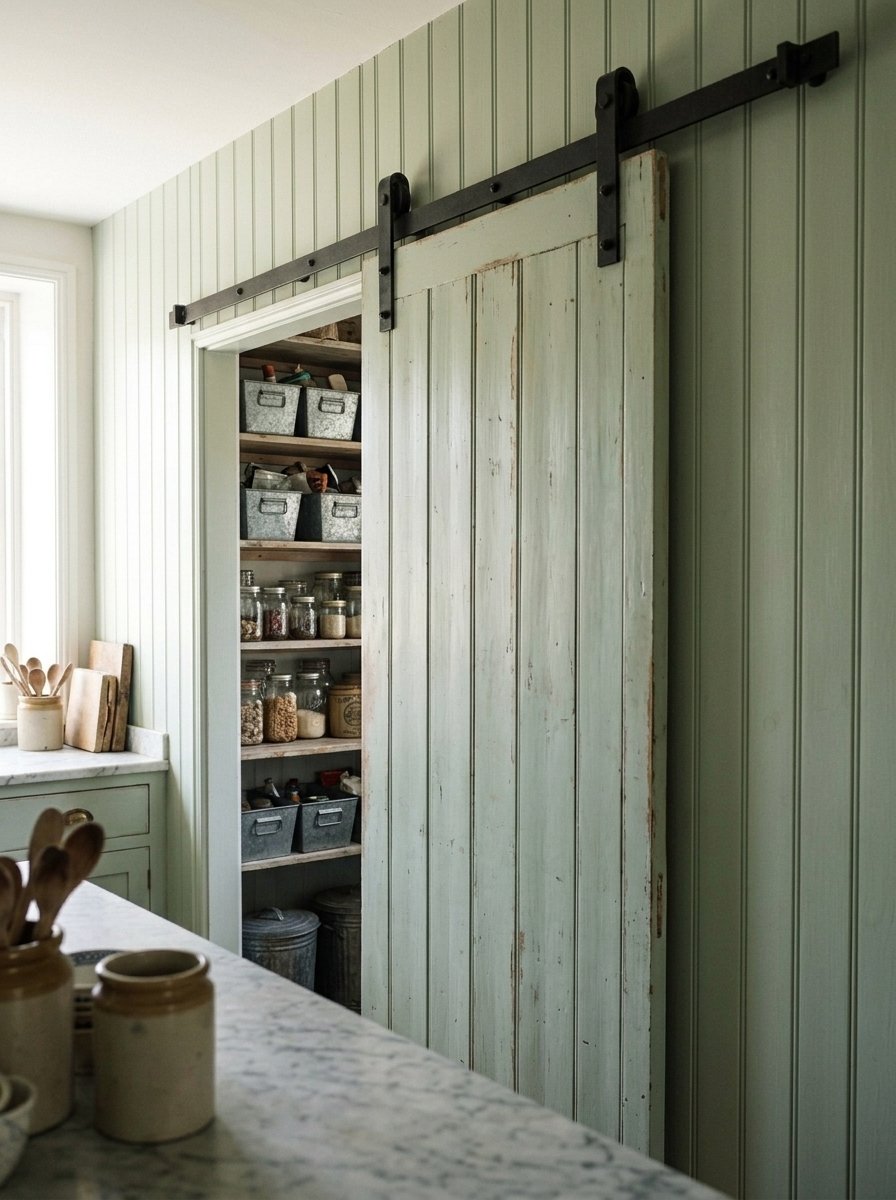
A sliding barn door is one of the easiest ways to conceal a pantry. It slides along a track, so no door swing is needed, and it adds rustic charm.
Choose a door in reclaimed wood, painted planks, or a classic Z-brace style. Pair it with black hardware and a simple pull. Inside, use open shelves with galvanized bins, wire baskets, and mason jars for a farmhouse feel.
Farmhouse touches:
- A sturdy track rated for the door’s weight
- Wide wooden shelves with simple brackets
- A hanging basket or hooks for linens and aprons
Installation note: Sliding doors need a solid wall behind them, and you must leave enough wall space beside the opening. Have the track anchored into studs or blocking.
10. Modern Builder-Perfect Pantry
Many standard homes come with a basic walk-in pantry with wire shelving. You can upgrade it into a hidden design without rebuilding the room.
Replace wire shelves with solid wood or melamine boards. Swap the plain door for a cabinet-style one that matches the kitchen. Add LED lighting, a few drawers, and a set of matching containers.
Upgrade steps:
- Remove old wire shelving and patch the walls
- Install new shelves at adjustable heights
- Replace the door with a flush or cabinet-matched version
- Add lighting and a fresh coat of paint
Budget angle: This is one of the most cost-effective ideas on the list, since you keep the existing footprint.
11. Soft & Seamless Entry
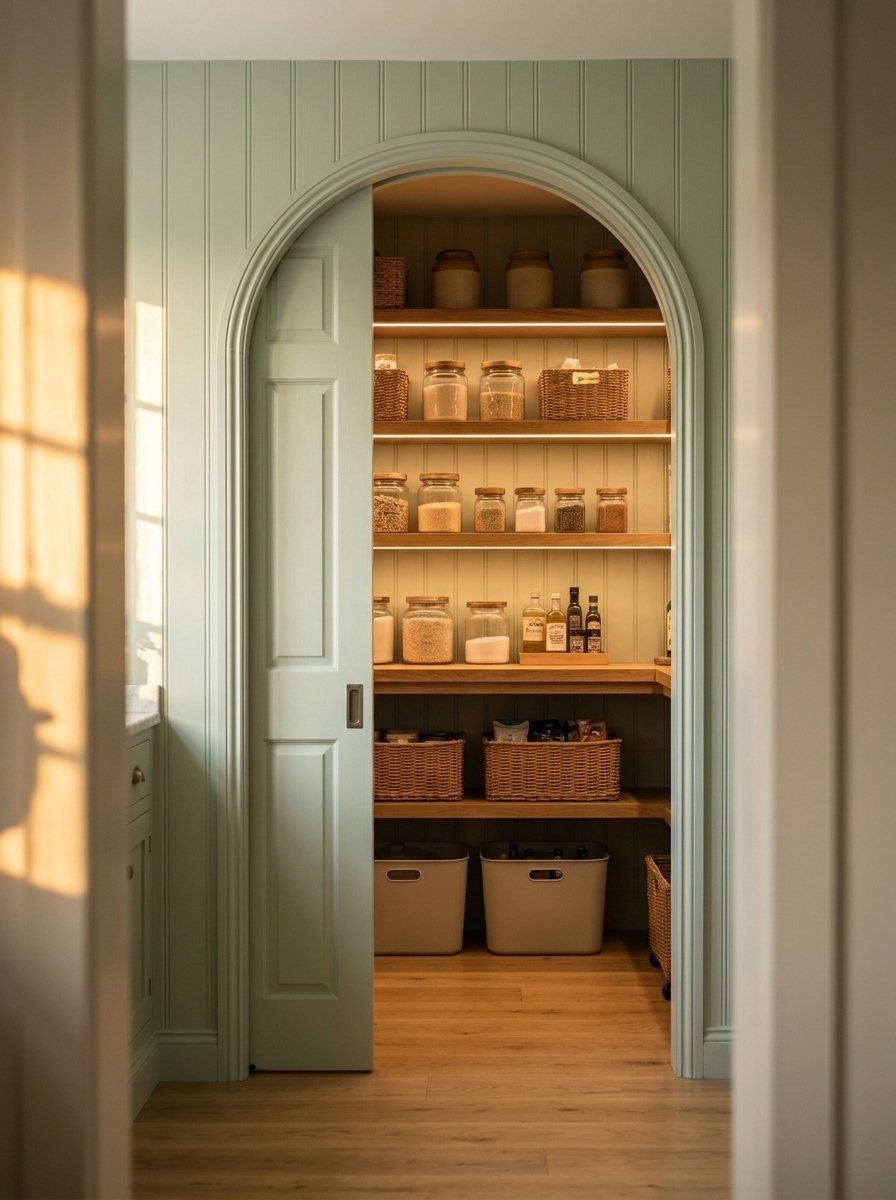
A gentle, softened entry makes the pantry feel like part of the kitchen’s flow. Think rounded corners, an arched opening, or a pocket door that glides quietly out of sight.
Pocket doors keep the entrance clear because they slide into the wall. When open, there’s no door to bump into. When closed, the surface can match the surrounding wall or cabinetry.
What to plan:
- A wall cavity free of plumbing, wiring, and ducts
- Soft-close hardware for quiet operation
- A flush pull so the door stays clean-lined
Good to know: Pocket doors can be harder to repair than swinging doors, so choose high-quality hardware and ask your installer about access panels.
12. Statement Wood, Silent Storage
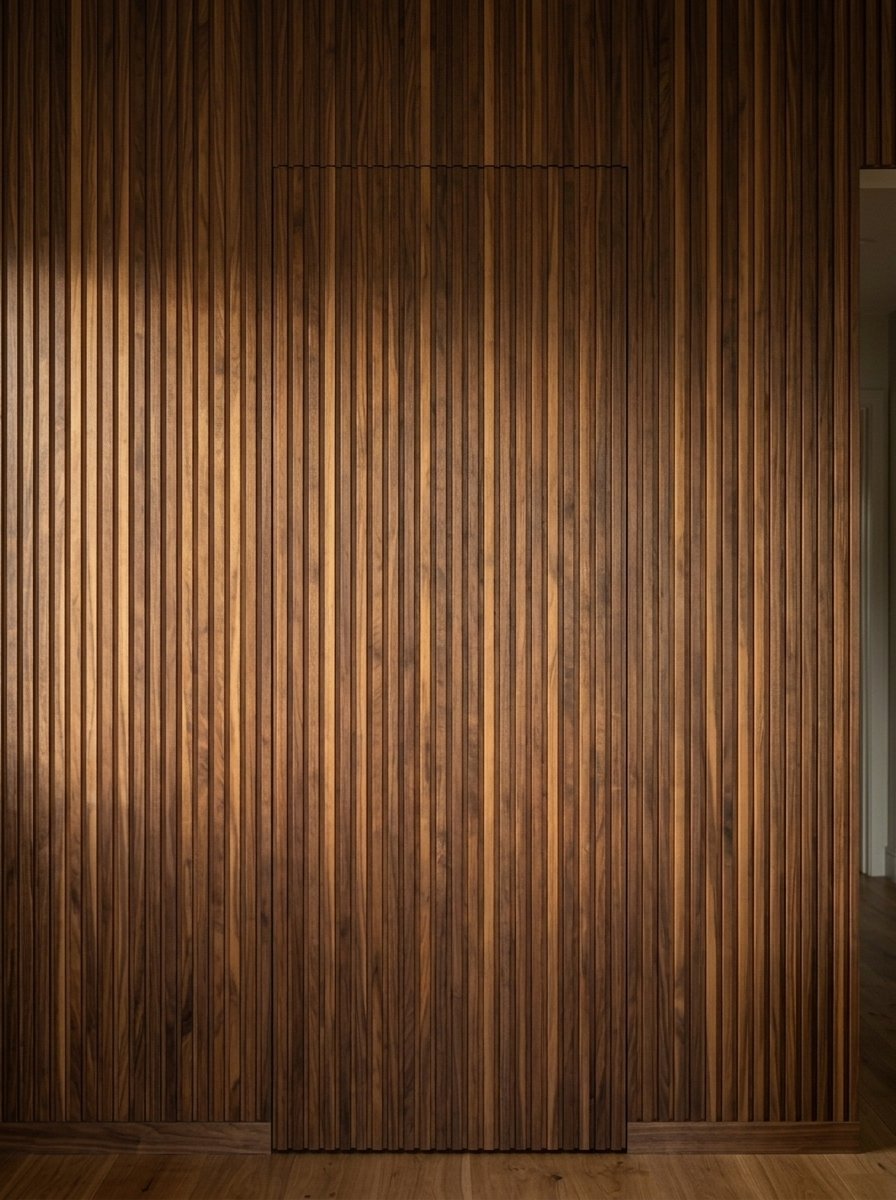
Sometimes the door is the star. A large wood panel in walnut, rift oak, or reeded timber can become a feature wall, while still hiding a pantry behind it.
The door blends into a wall of wood paneling, so the room looks like a single, rich surface. Use concealed hinges and a hidden pull to keep the lines clean. Inside, keep the design simple so the door gets the attention.
Design tips:
- Run the wood grain continuously across the door and panel
- Use slim vertical slats or reeded detail for texture
- Keep nearby hardware minimal
Care note: Natural wood moves with humidity, so use a stable veneer or engineered panel, and let a pro handle the installation.
13. Minimal Outside, Magic Inside
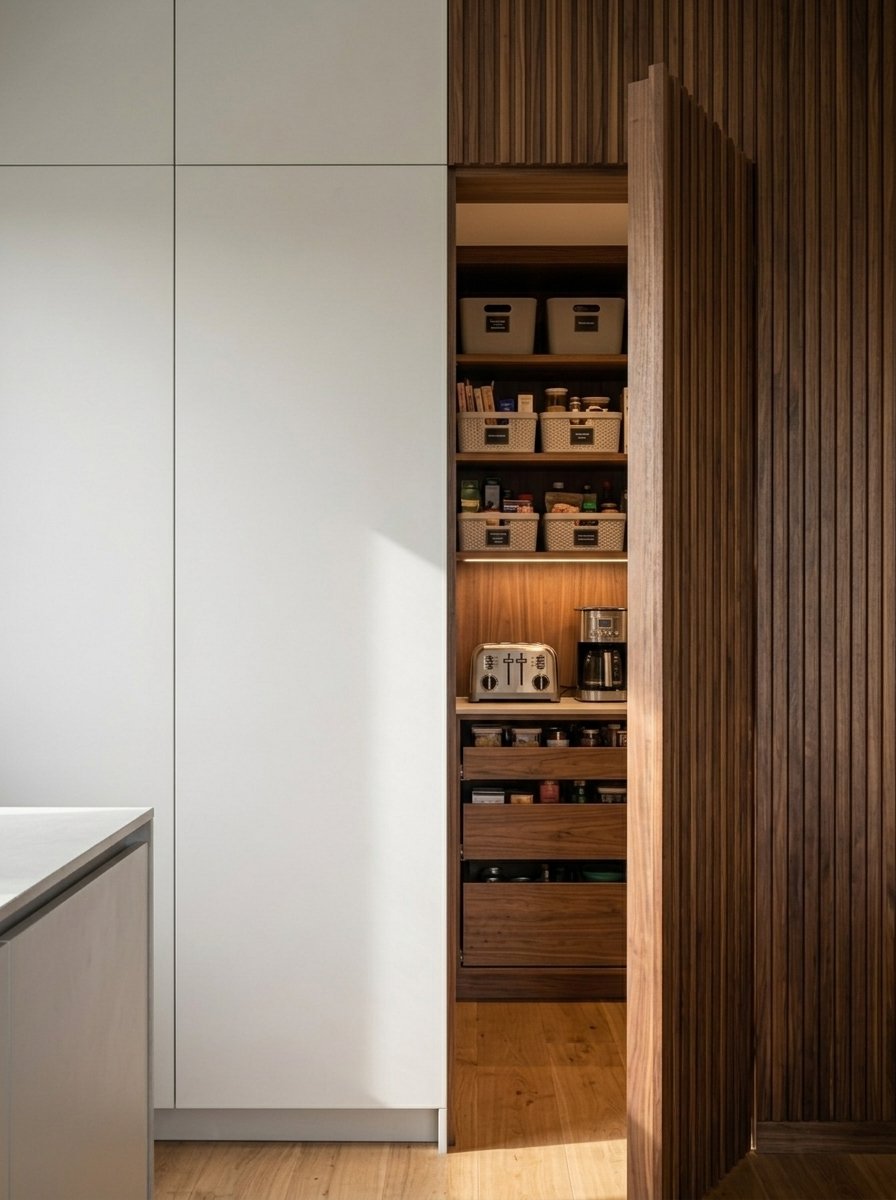
The outside is plain and quiet. The inside is where the magic happens. This idea suits homeowners who want a clean kitchen and a highly organized pantry.
From the kitchen, you see only a smooth wall. Step inside, and you find labeled bins, pull-out drawers, deep shelves, and a built-in spot for small appliances. It’s like a secret organizing studio.
What to include inside:
- Pull-out drawers for heavy or bulky items
- Narrow shelves for spices and cans
- A countertop for appliances and a power strip or outlets
- A rail or hooks for aprons and tote bags
Habit tip: Keep a small notepad or whiteboard inside the door to track what’s running low.
14. Modern Contrast Moment
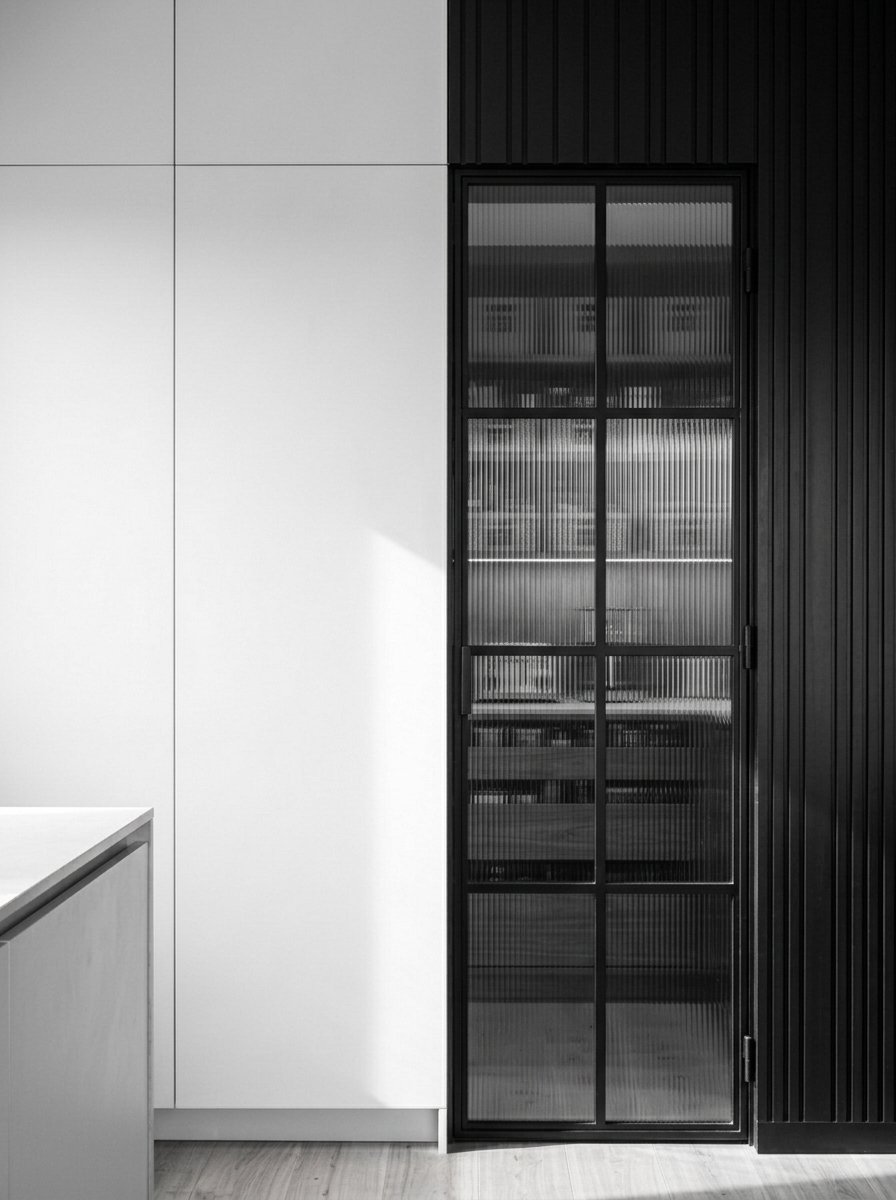
Hiding a pantry doesn’t always mean matching it. Sometimes a bold contrast looks great: a dark door in a light kitchen, or a black-framed glass door against white walls.
Steel-framed glass doors, especially with reeded or frosted glass, let light pass through while still softening the view inside. They give a modern, industrial feel.
Contrast ideas:
- A black door in a white kitchen
- Reeded glass in a thin metal frame
- A color-blocked panel in deep green or navy
Trade-off: Glass doors don’t hide the contents as completely, so keep shelves neat or use frosted glass for more privacy.
15. Cozy Meets Contemporary
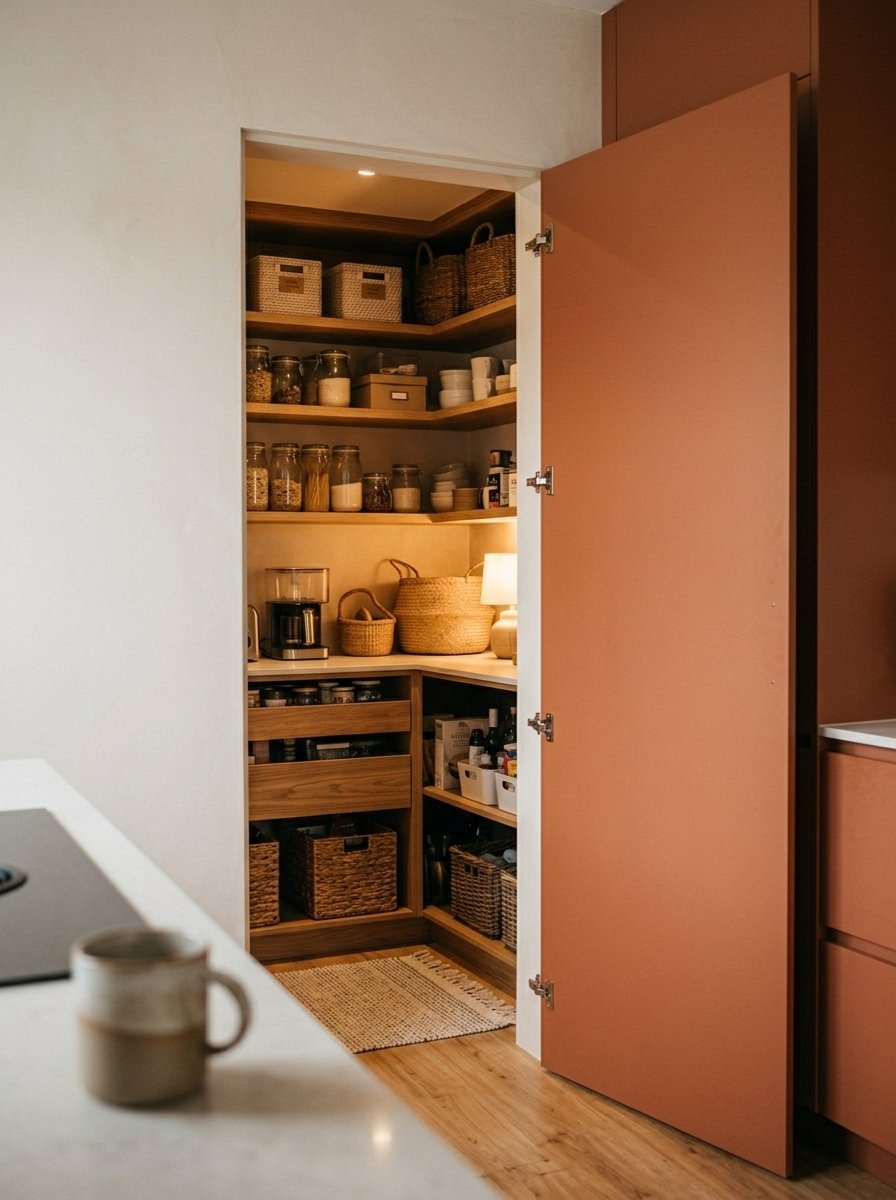
Cozy and contemporary can live together. Combine clean lines with warm textures to create a pantry that feels both stylish and welcoming.
Try a flat-front door in a warm color, plus shelves with natural wood edges. Add a woven rug, a few baskets, and a soft sconce. The mix of smooth and textured surfaces gives the space depth.
Warm touches:
- Wood or cork flooring underfoot
- Woven baskets for produce
- Warm lighting rather than bright cool white
Tip: A small runner rug adds softness, but secure it with a non-slip pad so nobody trips while carrying groceries.
16. Classic Cabinetry, Clever Secret
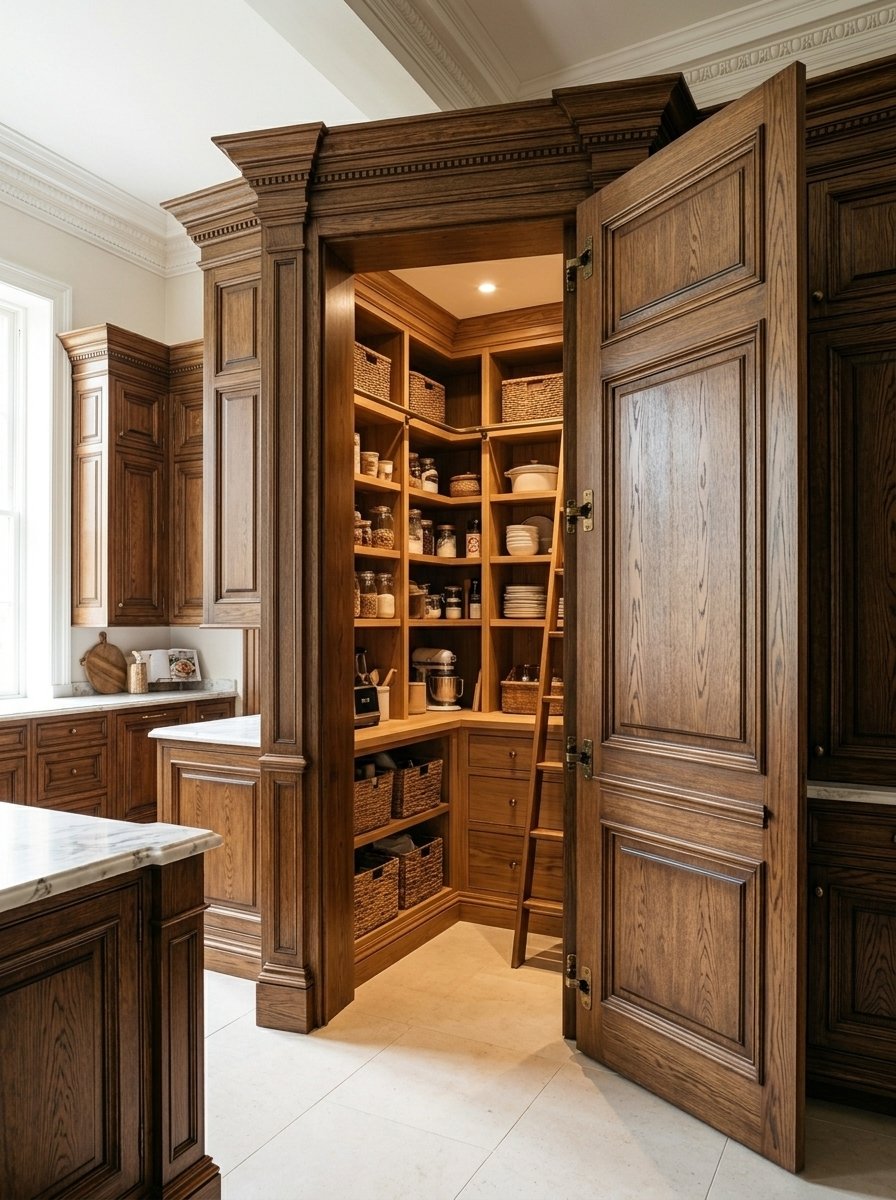
A tall, full-height pantry cabinet that swings open to reveal a walk-in space is a classic trick. From the front, it looks like a normal storage unit, but behind it is a surprise.
The key is a strong frame and heavy-duty hinges, since the door is large and heavy. Make it look like any other cabinet, with matching panels, hardware, and trim.
Details to get right:
- Hinges rated for the door’s full weight
- A soft-close mechanism to prevent slamming
- Door stops so it doesn’t hit an appliance or wall
Safety note: Large doors can swing unexpectedly. Make sure the door can’t strike someone and that the frame is properly secured to the wall.
17. Clean Lines, High Function
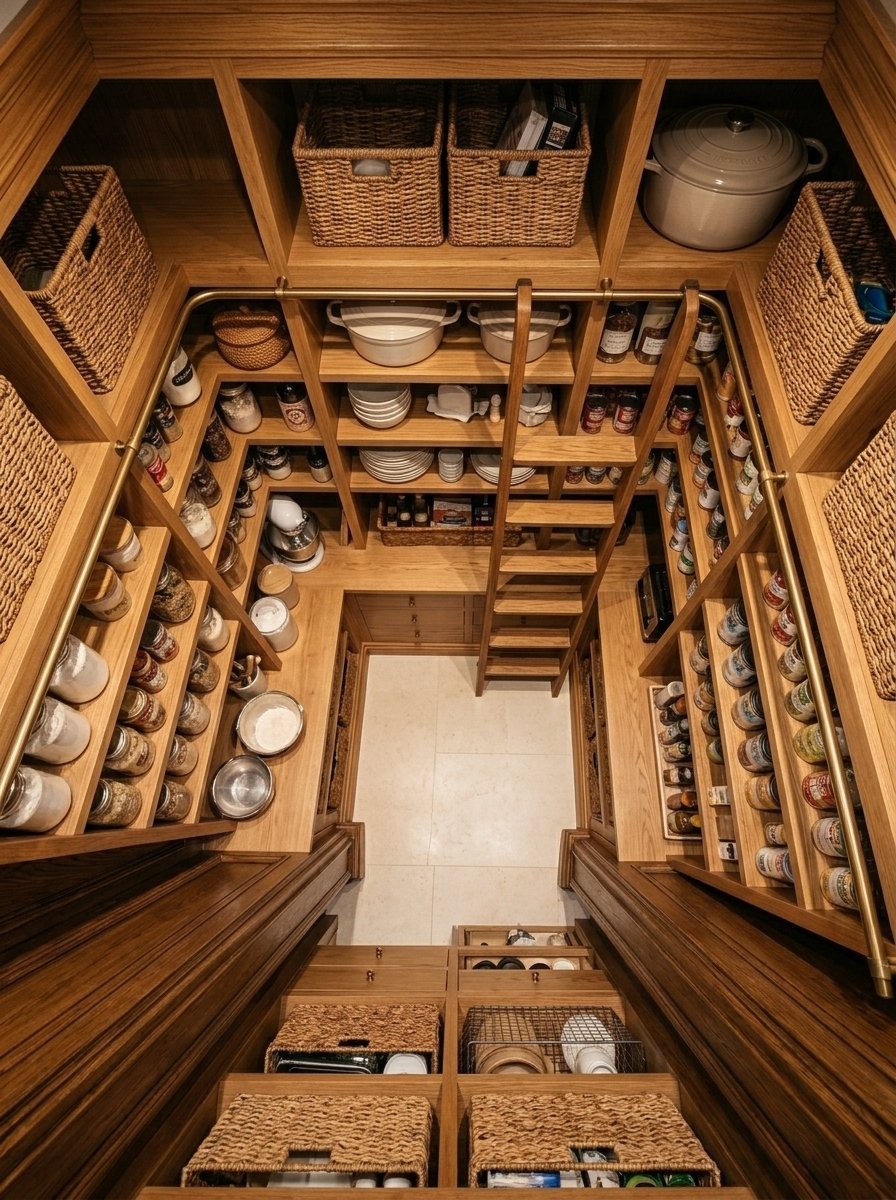
If you love efficiency, plan your pantry in zones. Each zone holds a type of item, so you always know where to look.
Here’s a simple zone plan:
| Zone | What Goes Here | Best Location |
|---|---|---|
| Daily | Cereal, snacks, oils | Eye level, near the door |
| Baking | Flour, sugar, mixers | Mid-height, with counter space |
| Bulk | Canned goods, drinks | Low shelves or floor bins |
| Appliances | Air fryer, blender, stand mixer | Counter with outlets |
| Rarely used | Holiday items, serving ware | High shelves |
Add pull-out drawers and an appliance “garage” with a small counter. This frees up your kitchen worktop and keeps the main room clear.
Tip: Store heavy items low and lighter items high. It reduces strain and the risk of falling objects.
18. Warm Woods & Smart Flow
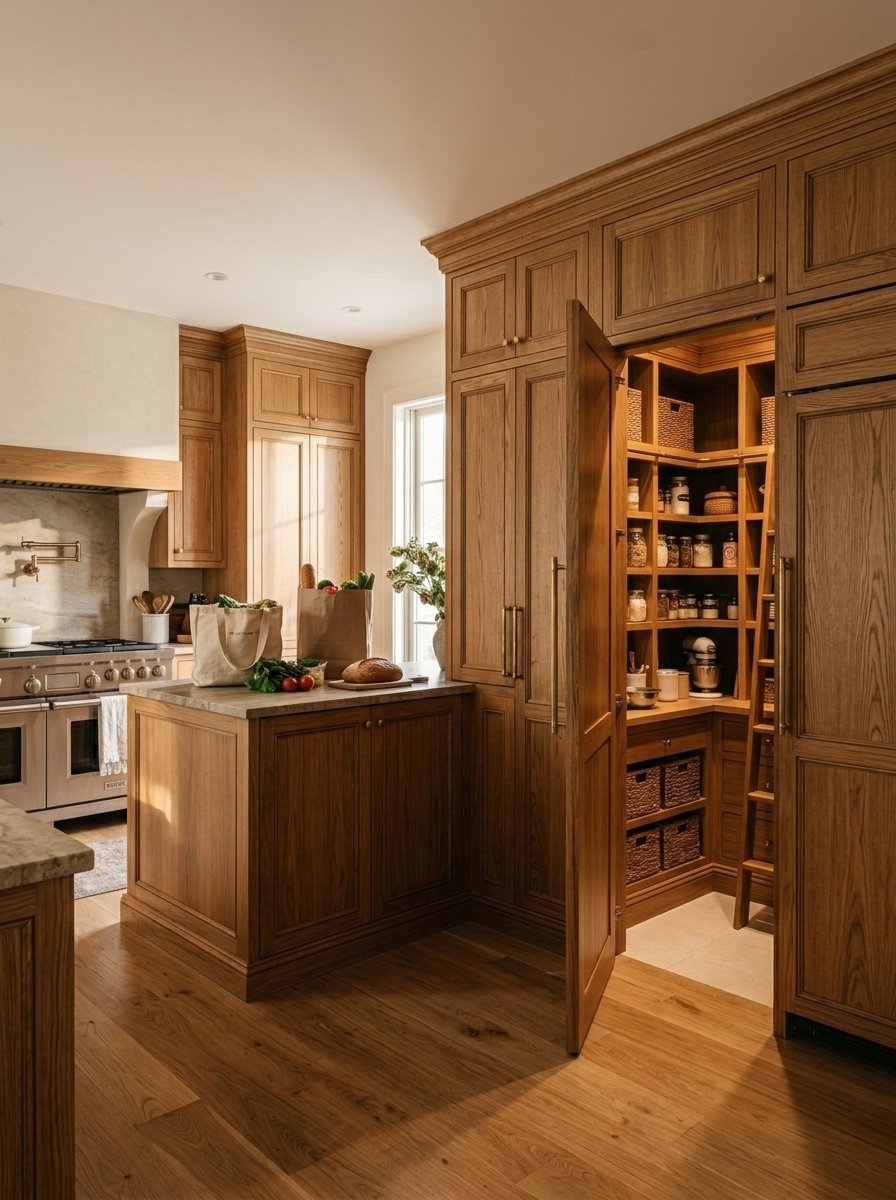
A pantry should fit how you move through the kitchen. Good flow means you can grab ingredients, step out, and cook without crossing paths with other people.
Place the pantry door near the cooking zone or next to the refrigerator, so the most-used items are close. Use warm wood shelves and a continuous countertop at waist height to create a landing spot for grocery bags.
Flow tips:
- Put the door near the main prep area, not in a corner that adds steps
- Leave a clear path from the entry door to the pantry for carrying bags
- Add a small countertop inside for unloading and sorting
Ask yourself: Where do groceries come in, and where do they end up? Design the pantry to shorten that path.
19. Bright, Organized Bliss
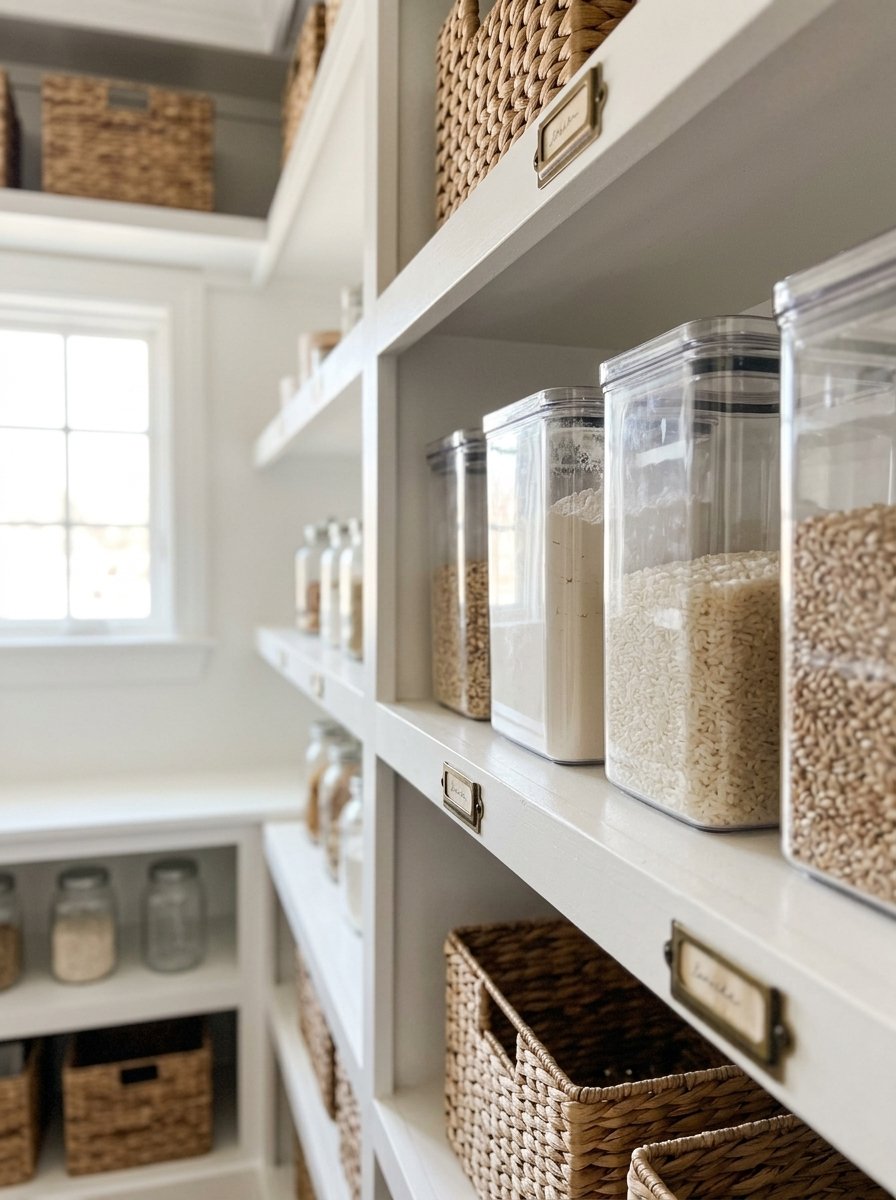
Bright pantries make it easy to see what you have, which reduces waste. If you can include a small window or a glass door, you get natural light, too.
Use white or very light walls, matte white bins, and clear containers for staples like flour, rice, and pasta. Add simple labels. Keep the color palette narrow so the space feels calm and uncluttered.
Organizing ideas:
- Clear, airtight containers for dry goods
- Uniform bins for snacks, baking supplies, and drinks
- Labels on shelf edges, not just on containers
- A “first in, first out” habit: put new items behind older ones
Food safety tip: Keep the pantry cool and dry, away from heat sources like ovens and sunny windows, and check expiration dates regularly.
20. Classic Kitchen, Secret Upgrade
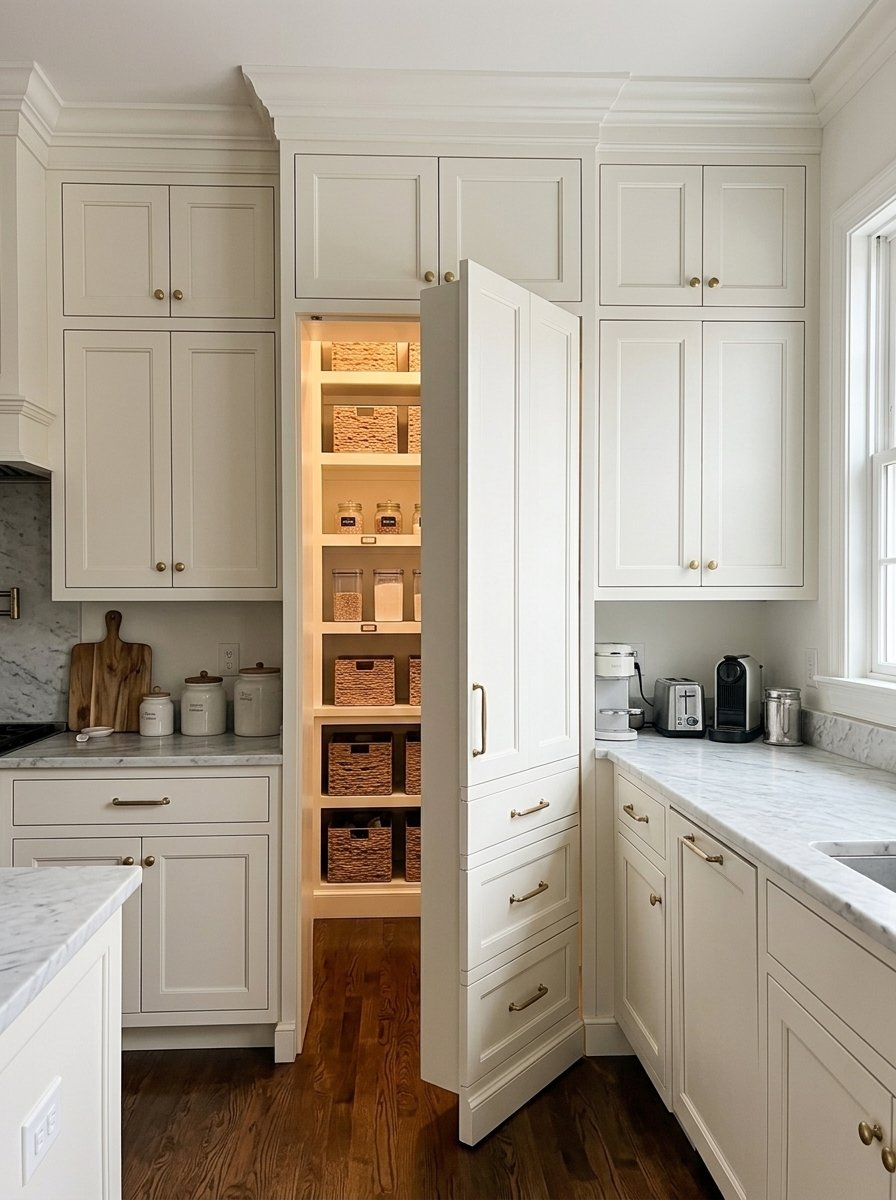
Sometimes the best upgrade is hidden in plain sight. If you have an existing closet next to the kitchen, you can convert it into a walk-in pantry with a disguised door.
A closet that backs onto the kitchen is often a good candidate. You may need to open the wall, add electrical outlets, and reframe the door. The kitchen stays classic, while the pantry becomes a secret storage upgrade.
What to check first:
- Whether the wall is load-bearing (ask a structural pro)
- Where wiring, plumbing, and vents run
- Whether the closet size supports shelves and a walking aisle
Permit note: Moving walls or electrical often needs permits. Check local requirements before you start.
21. Hidden Coffee Moment
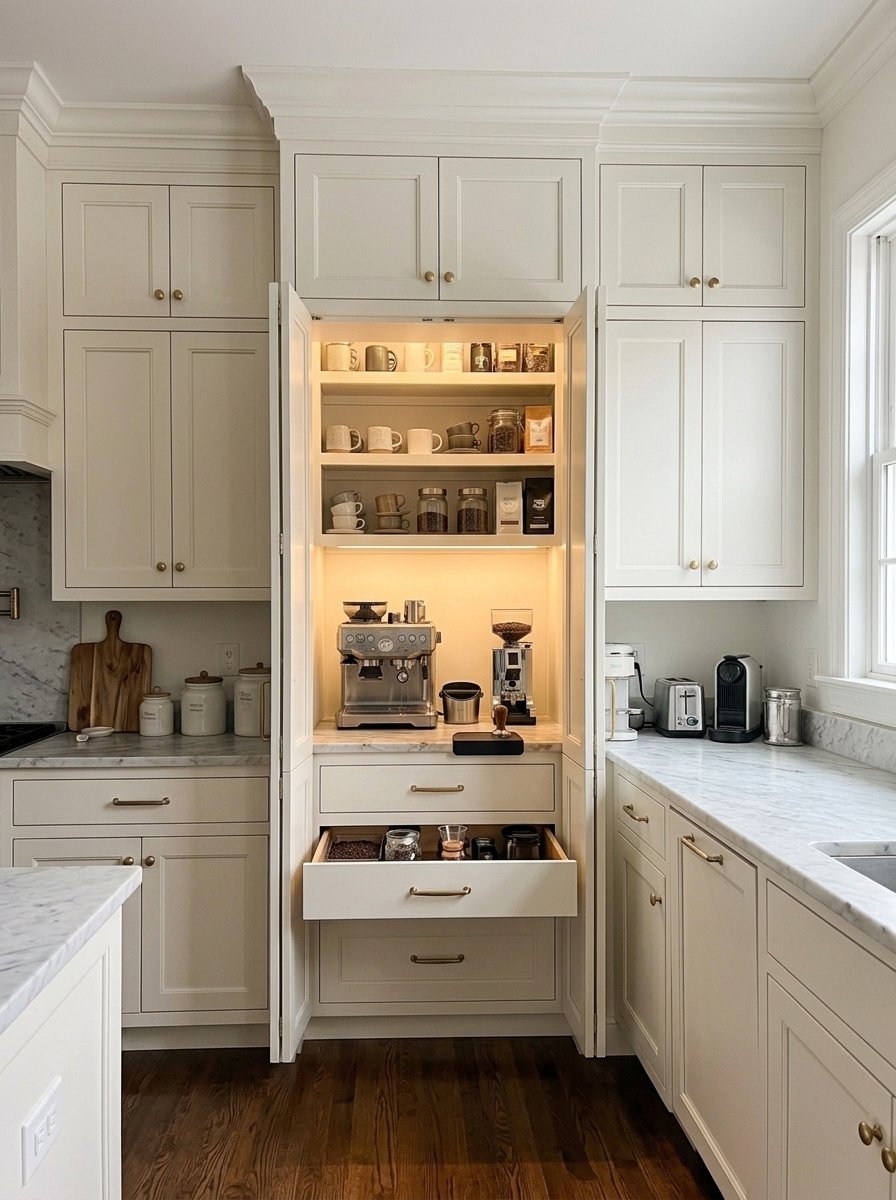
A hidden pantry can double as a breakfast or coffee station. When you close the door, the coffee machine, grinder, and toaster disappear, and your kitchen counters stay clear.
Inside, set up a counter at a comfortable height with outlets above it. Add a small shelf for mugs, a drawer for pods or beans, and a hook for a towel. Some designers use bifold doors, so the whole station opens like a cabinet.
Coffee station checklist:
- Outlets on a dedicated or properly rated circuit
- A water source or a refillable carafe
- A heat-safe counter surface
- Good ventilation, since coffee machines and toasters produce heat and steam
Safety note: Don’t close the door on a running appliance. Let it cool, and avoid placing heat-producing devices right against shelving.
22. Classic Pantry Glow-Up
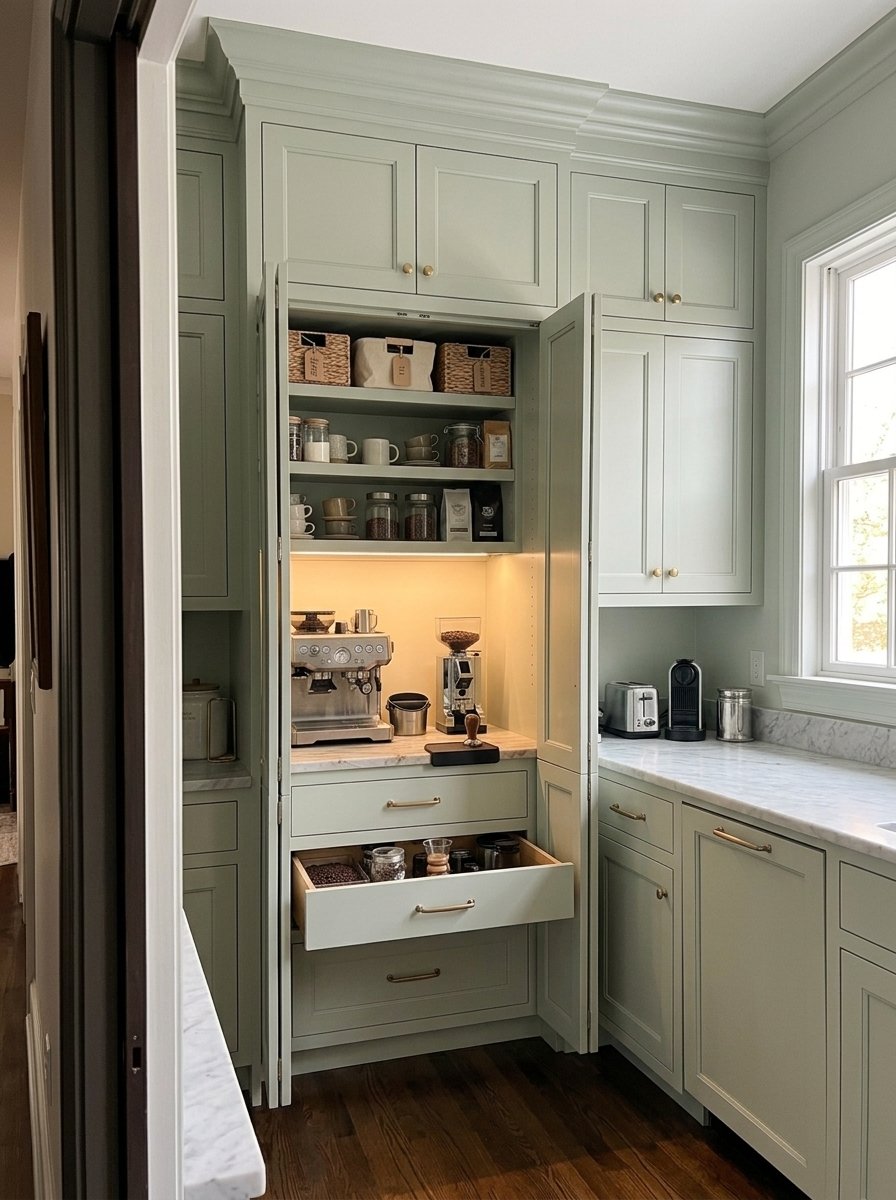
You don’t need a full remodel to get a better pantry. A glow-up can start with paint, lighting, and better shelving.
Paint the walls a fresh color, swap the old bulb for a warm LED, and install adjustable shelves. Add a matching set of baskets and a simple label system. If the door is plain, upgrade it with a panel kit or a new finish.
Weekend upgrade list:
- Empty and clean the pantry
- Patch and paint the walls
- Add LED lighting
- Install new shelves or shelf liners
- Refill with containers and labels
Cost tip: Many of these steps are DIY-friendly and affordable, especially compared with a full construction project.
23. Moody Storage, Done Right
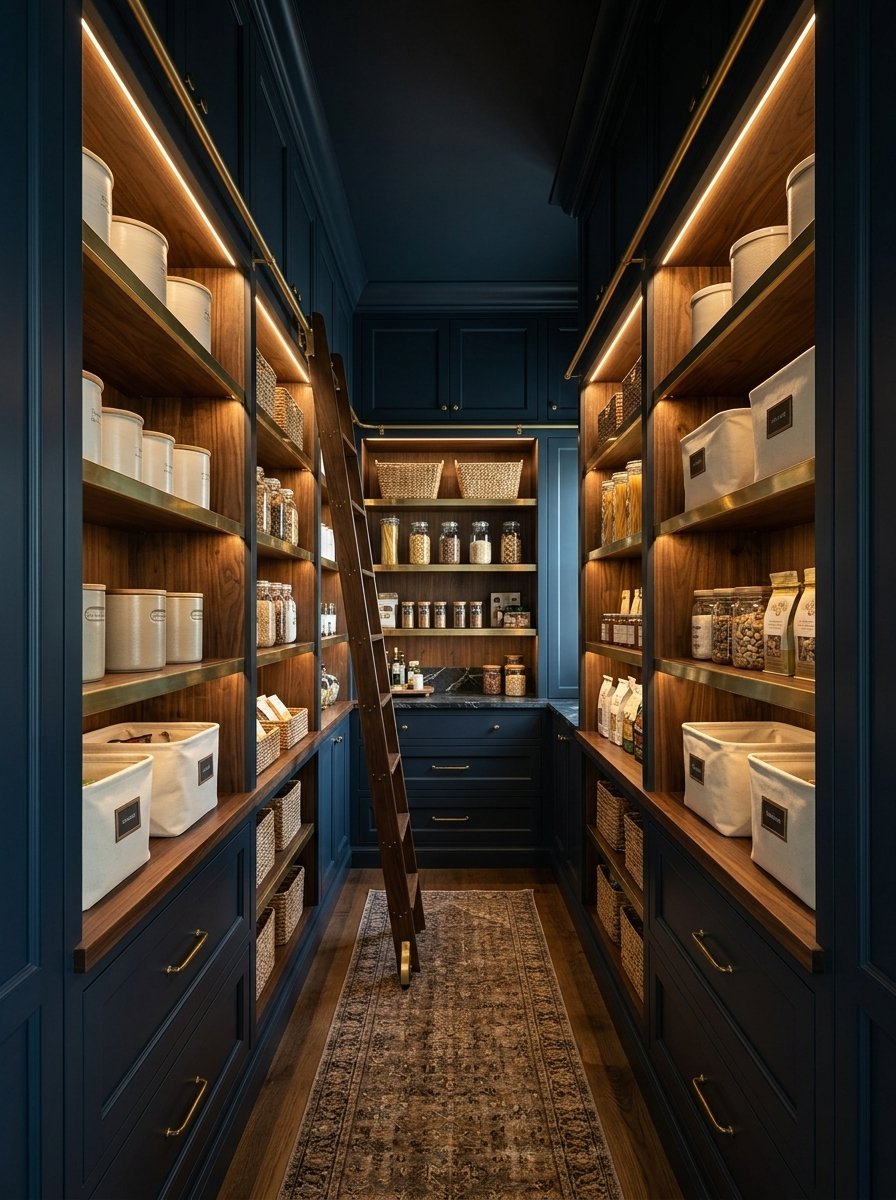
Moody pantries look dramatic, but they need extra planning. Dark walls absorb light, so lighting matters more.
Use several light sources: a ceiling fixture, LED strips on shelves, and maybe a sconce. Choose light containers and labels so items stand out against the dark background. A glossy or satin paint helps reflect light.
Moody pantry recipe:
| Element | Suggestion |
|---|---|
| Walls | Deep green, navy, or charcoal in satin |
| Shelves | Walnut or black with brass edging |
| Lighting | Warm LEDs on every shelf |
| Containers | Cream or white for contrast |
| Hardware | Brass or aged bronze |
Tip: If a full dark room feels too heavy, paint only the back wall dark and keep the sides light.
24. Clean Lines, Calm Energy
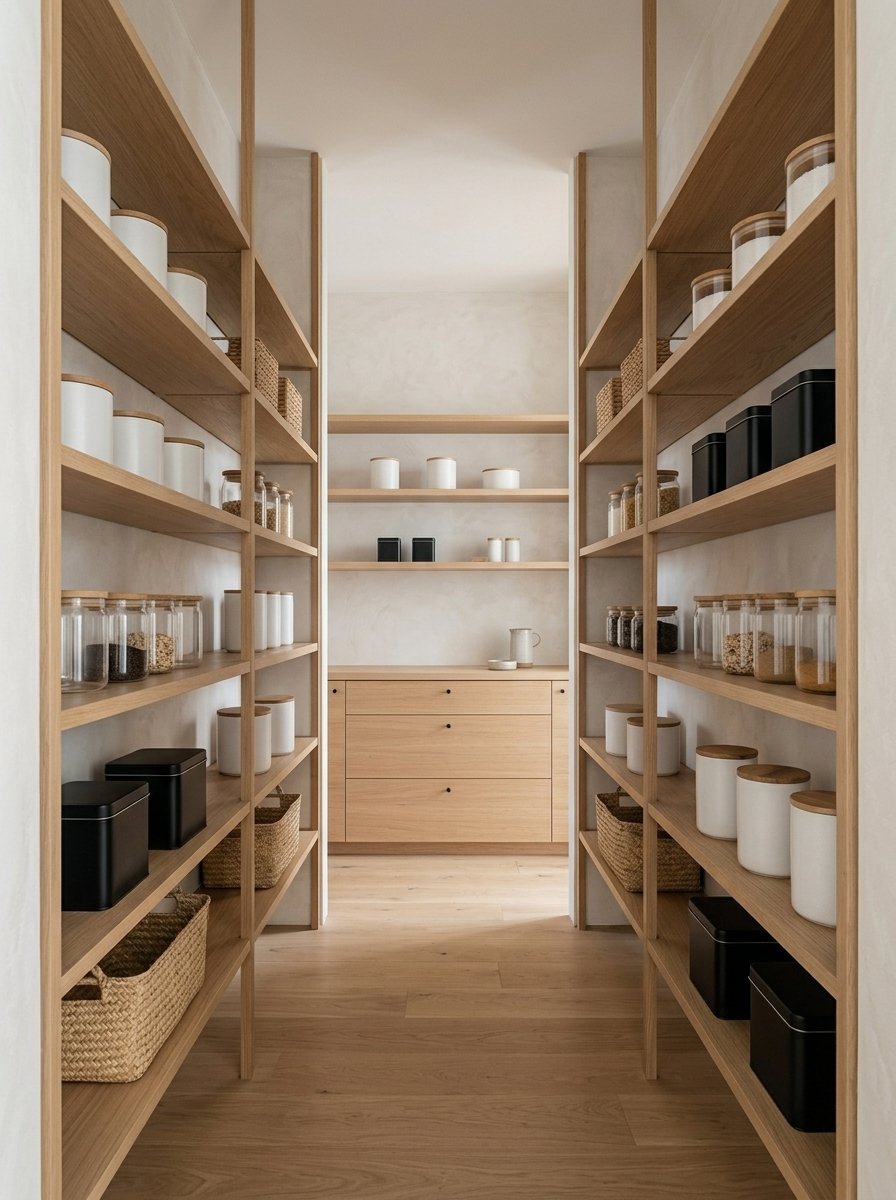
A calm pantry makes cooking easier. This design uses straight lines, a restrained palette, and plenty of empty space.
Choose slim, uniform shelves and matching containers. Keep colors to two or three shades, such as white, oak, and black. Leave a few inches of breathing room on each shelf so the space doesn’t feel crowded.
Calm design rules:
- Limit open items to what you use often
- Decant staples into matching containers
- Hide odds and ends in lidded boxes
- Keep the floor clear
Habit tip: Do a quick reset once a week. Put things back, wipe shelves, and check what needs restocking.
25. Soft Luxury Kitchen Moment
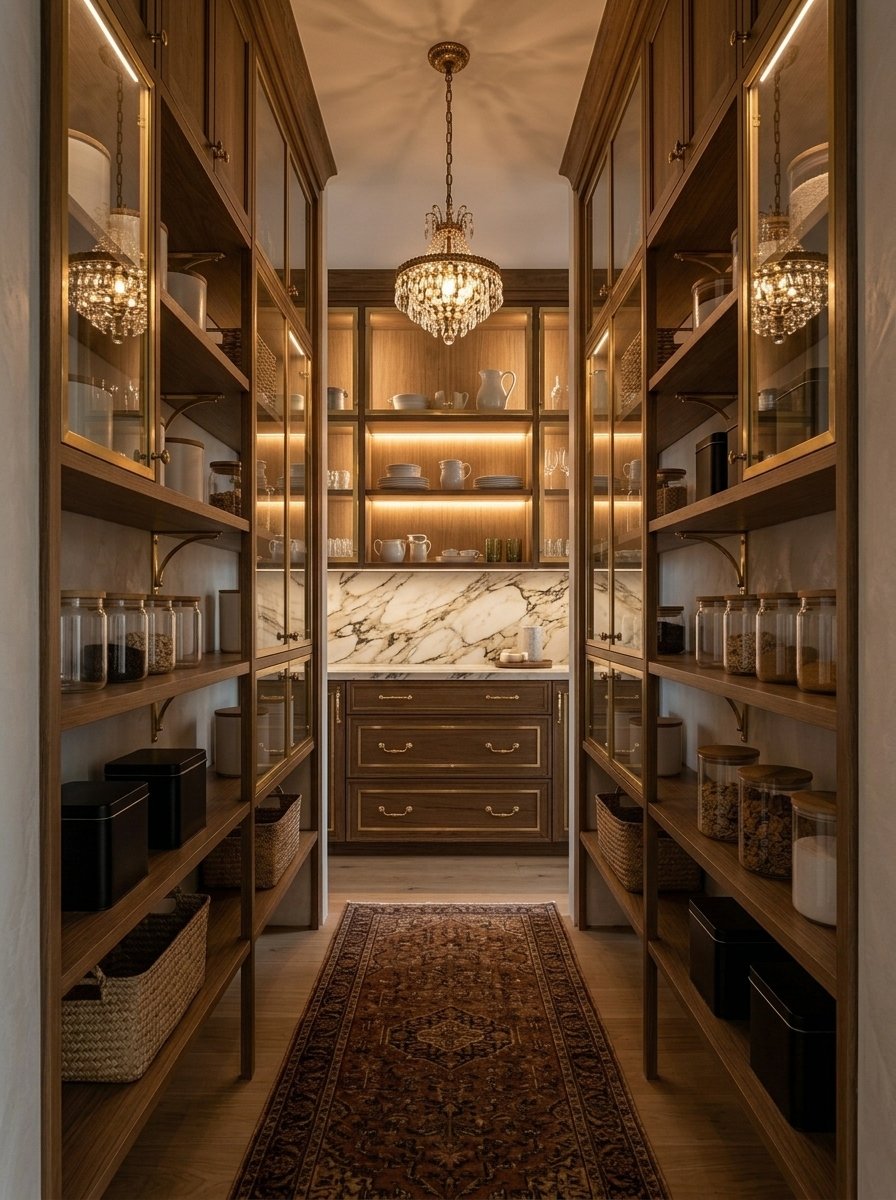
For a touch of luxury, treat the pantry like a boutique. Use marble or quartz counters, brass hardware, and glass-front cabinets. Add a small chandelier or a pair of sconces for a glow.
You can include a wine rack, a beverage fridge, or a built-in coffee bar. A runner rug and a statement wallpaper make the space feel like a designer dressing room for food.
Luxury touches:
- A marble or quartz counter for prep
- Brass or gold hardware
- Glass-front uppers with interior lighting
- A small seating perch or step stool in a matching finish
Practical note: Marble stains easily. Choose a sealed finish or a durable quartz look for hardworking pantries.
Pantry Lighting Guide
Good lighting makes any pantry feel bigger and easier to use.
| Lighting Type | Best Use | Tips |
|---|---|---|
| LED strips under shelves | Even light on every shelf | Use warm white, 2700K to 3000K |
| Ceiling fixture | General light | Choose a flush or slim fixture |
| Motion-activated lights | Hands-full convenience | Good for deep or narrow pantries |
| Door-activated switch | Automatic on/off | Works like a refrigerator light |
| Sconces or a small pendant | Decorative glow | Great for styled pantries |
Have a licensed electrician handle wiring, especially if you add outlets or new circuits.
Shelving and Storage Guide
Shelf choices can make or break pantry function.
| Storage Type | Best For | Notes |
|---|---|---|
| Fixed shelves | Heavy, stable items | Use sturdy brackets or built-ins |
| Adjustable shelves | Changing needs | Great for tall bottles and small jars |
| Pull-out drawers | Heavy or deep items | Reach everything without bending far |
| Wire baskets | Produce and snacks | Allow airflow |
| Door racks | Spices and small items | Check door clearance |
| Lazy Susans | Corners and oils | Stop items getting lost |
Keep shelf load limits in mind. Heavy items like canned goods and large bottles need strong supports.
Budget Guide: Where to Spend and Where to Save
| Item | Approach | Why |
|---|---|---|
| Hidden door and hardware | Spend | A poor fit ruins the effect |
| Shelving | Mid-range | Sturdy and adjustable is key |
| Lighting | Mid-range | LEDs are efficient and long-lasting |
| Paint | Save | The cheapest way to change the look |
| Containers and labels | Save | Mix budget bins with a few good ones |
| Countertops | Spend or save | Depends on use and style |
Costs depend on your area, materials, and labor, so get several quotes for any construction work.
Common Hidden Pantry Mistakes to Avoid
- Making the door swing into a busy walkway
- Choosing shelves that are too deep and hide food
- Skipping lighting or using one dim bulb
- Forgetting outlets for appliances
- Using a pocket door where a wall has pipes or wires
- Overfilling the space with no walking room
- Ignoring ventilation and moisture
- Using hardware that isn’t rated for a heavy door
Step-by-Step: How to Plan Your Hidden Pantry
- Decide on location. Choose a spot near the kitchen work zone.
- Measure the space. Note width, depth, ceiling height, and door clearance.
- Choose a door type. Pick jib, cabinet-front, sliding, pocket, or glass.
- Check walls and utilities. Confirm wiring, plumbing, and structure.
- Plan the layout. Zone the shelves, drawers, and counter.
- Plan lighting and outlets. Decide before the walls are closed up.
- Choose finishes. Match or contrast with the kitchen.
- Get quotes and permits. Work with qualified pros for structural and electrical tasks.
- Build and install. Follow the plan, and double-check door fit.
- Organize. Use containers, labels, and a first-in, first-out routine.
Conclusion
A hidden walk-in pantry combines the best of both worlds: a kitchen that stays calm and stylish, and a storage space that works hard behind the scenes. Whether you choose a seamless jib door, a sliding barn door, or a moody dark interior, the key is to plan the layout, lighting, and organization from the start.
Pick two or three ideas that match your kitchen style and your daily routine. Start with the door and the layout, then add the details that make the space truly yours. A pantry you enjoy opening is a pantry you’ll keep tidy.
FAQs
What is a hidden walk-in pantry?
It’s a pantry room with a disguised entrance, such as a door that matches cabinets or a wall panel.
How big should a walk-in pantry be?
About 5 by 5 feet works well, but smaller pantries can function with smart shelving and a pocket door.
What are the best doors for a hidden pantry?
Jib doors, cabinet-front doors, sliding barn doors, and pocket doors are the most popular choices.
How do I hide a pantry door in my kitchen?
Match the door to your cabinetry or wall finish, and use concealed hinges and a discreet pull.
Can I turn a closet into a walk-in pantry?
Yes. Check the wall structure, wiring, and size first, and confirm any permits with your local office.
What lighting works best in a pantry?
Warm LED strips on shelves, plus a ceiling light or motion sensor, make everything easy to see.
How deep should pantry shelves be?
Around 12 inches suits most cans and boxes. Deeper shelves can hide items at the back.
Are hidden pantries expensive?
Costs vary widely. Upgrading an existing pantry is cheaper than building a new one.
How do I keep a pantry organized?
Use labeled containers, zone your shelves, and follow a first-in, first-out routine.
Can a pantry hold small appliances?
Yes, with proper outlets and ventilation. Never close the door on a hot or running appliance.