
A pool doesn’t have to mean a huge yard and a huge bill. Plenty of homeowners get the cool-down, the weekend fun, and the backyard glow-up from a pool that is only a few feet wide. The trick is picking the right type for your space, your budget, and the way you actually plan to use it.
This guide walks you through 30 affordable small pool ideas. Some cost less than a good patio set. Others are a bigger investment but still cost far less than a full-size in-ground pool. You’ll see what each idea looks like, who it suits, what to watch out for, and a few ways to keep costs down.
Prices vary a lot by region, materials, and labor, so treat every number here as a rough ballpark and get local quotes before you commit.
Quick Answer: What Is the Cheapest Small Pool to Own?
From lowest to highest upfront cost, the most budget-friendly options are usually:
- Inflatable or soft-sided pools (cheapest, but short-lived)
- Stock tank pools (low cost, sturdy, very popular)
- Above-ground pools (best value for real swimming)
- Modular or container pools (mid-range)
- Small in-ground plunge pools (highest cost, longest life)
If you want the lowest total cost over several years, an above-ground or stock tank pool with a good cover often wins.
Small Pool Types at a Glance
| Pool Type | Typical Upfront Cost | Setup Difficulty | Best For |
|---|---|---|---|
| Inflatable pool | Very low | Very easy | Renters, kids, trial run |
| Stock tank pool | Low | Easy | Cooling off, tiny yards |
| Above-ground pool | Low to moderate | Moderate | Families, real swimming |
| Modular or container pool | Moderate | Moderate to hard | Modern yards, unique look |
| Small lap pool or swim spa | Moderate to high | Moderate | Fitness |
| In-ground plunge pool | High | Hard (pro install) | Long-term home value |
Costs depend on your area, so use this table only to compare options against each other.
Safety First: Do This Before You Pick a Pool
Even a small pool can be dangerous, especially for toddlers. Drowning is a leading cause of death for young children in the U.S., and it can happen in just a few inches of water. Plan for safety before you plan for style.
- Check local rules. Many towns require permits, fencing, or barriers once a pool passes a certain depth. Rules differ, so call your local building office first.
- Add a barrier. A fence with a self-closing, self-latching gate is the standard approach. A locking cover helps too.
- Keep electricity safe. Pumps and lights near water should run on GFCI-protected circuits. Hire a licensed electrician if you’re unsure.
- Never leave kids unattended. Not even for a minute.
Keep these points in mind as you read through the ideas below.
1. Traditional Above-Ground Pool
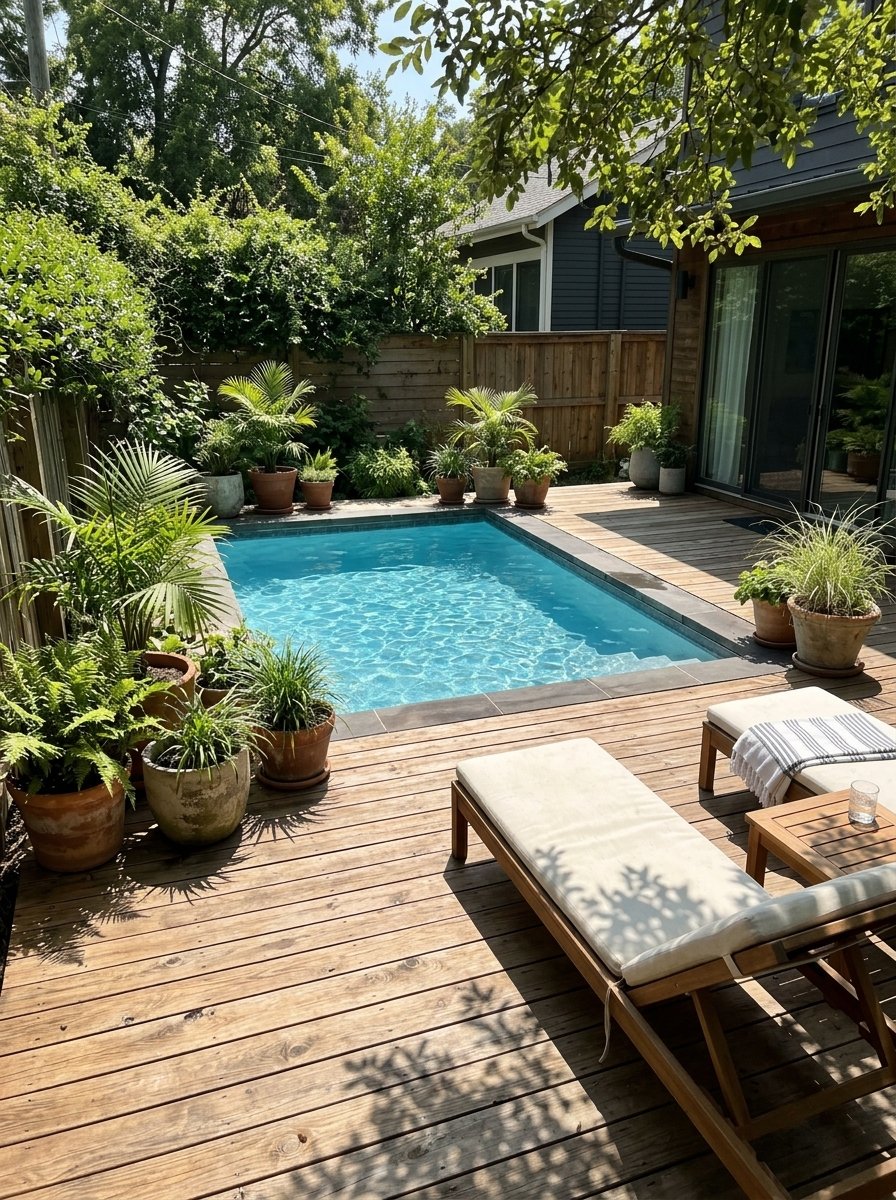
The classic above-ground pool is still the best value for most families. You get a real swimming space at a fraction of the cost of digging a hole.
For a small yard, look at round pools around 12 to 15 feet across, or compact ovals. Steel and resin frames both work. Resin resists rust, which helps in humid or coastal areas.
Budget tips:
- Buy a complete kit with the pump, filter, and ladder included.
- Do the leveling yourself if you’re handy. An uneven base is the number one cause of problems.
- Use a pool cover to cut down on cleaning and chemical use.
Watch out for: The liner will need replacing eventually, so set aside a little money for that. Also remember that water is heavy, so the ground has to be flat and firm.
2. Upscale Inflatable Pool
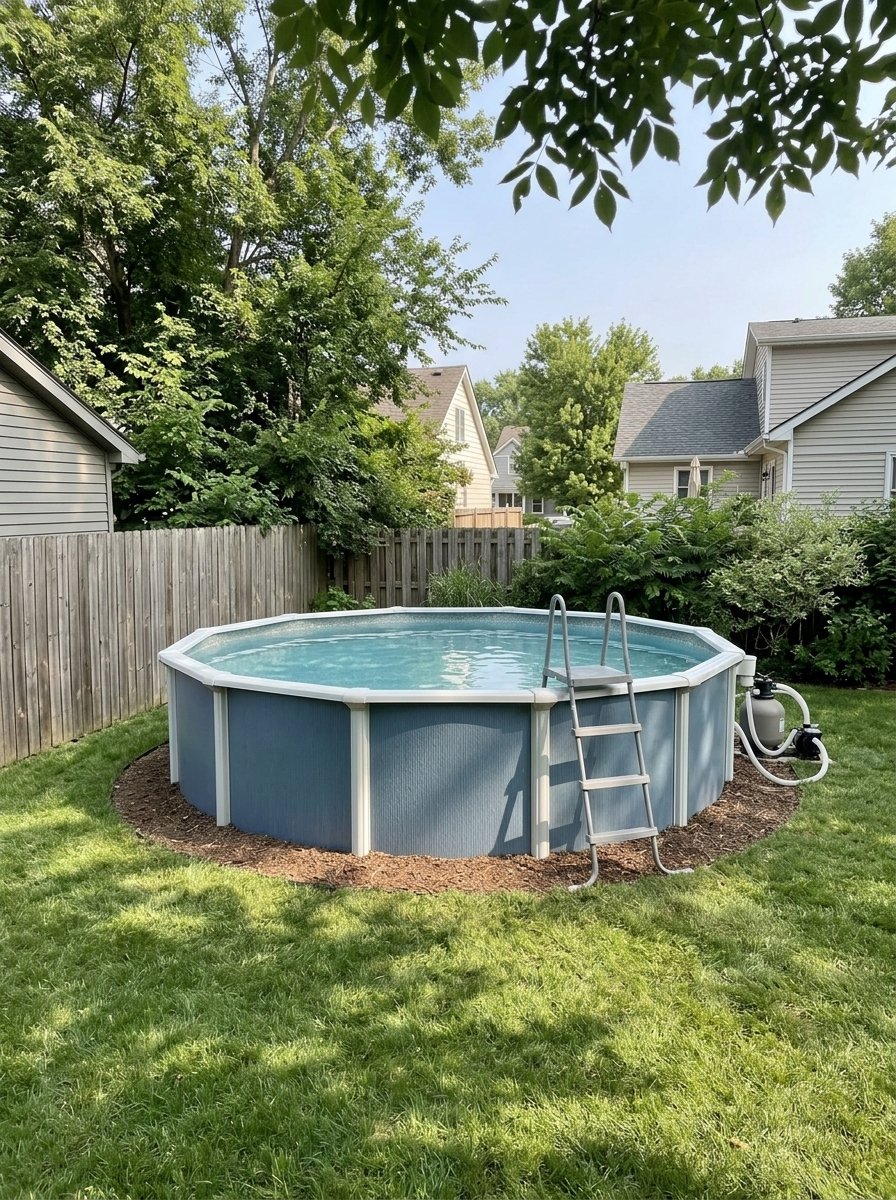
Forget the thin kiddie pool. Today’s heavy-duty inflatable pools use thick vinyl, reinforced seams, and sturdier walls. Some have built-in seating ledges and come with a filter pump.
They suit renters, people testing whether they’ll actually use a pool, and anyone who wants a seasonal option that packs away in the fall.
Why it works on a budget:
- Very low upfront cost
- Set up in an afternoon
- No digging, no permit in many areas (check yours)
Watch out for: Inflatables don’t last as long as framed pools, and sharp objects can puncture them. Put a ground cloth or foam tiles underneath. They’re also not meant for diving or deep swimming.
3. Sleek Plunge Pool
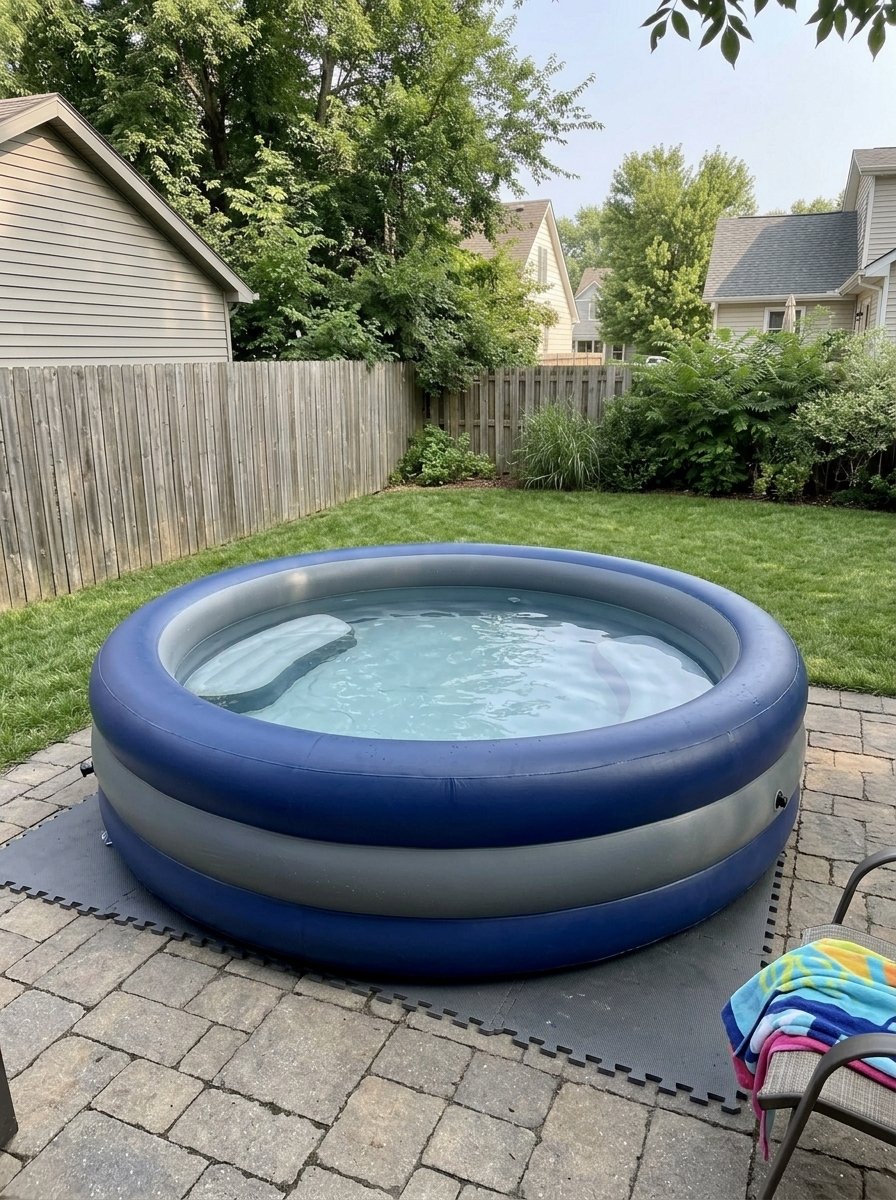
A plunge pool is a small, deep pool made for soaking, floating, and cooling off, not for swimming laps. Many are only 6 to 10 feet long and around 4 to 5 feet deep.
They’re the go-to choice when you want an in-ground look in a tiny yard. Fiberglass plunge pools are popular because they arrive as one shell, so installation goes faster than a custom-built pool.
Pros:
- Small footprint, big visual impact
- Less water, fewer chemicals, lower heating costs
- Can double as a hot tub if you add heating
Cons: It’s the priciest idea in this first group. Still, a plunge pool usually costs well below a full-size in-ground pool.
4. Modular Pool
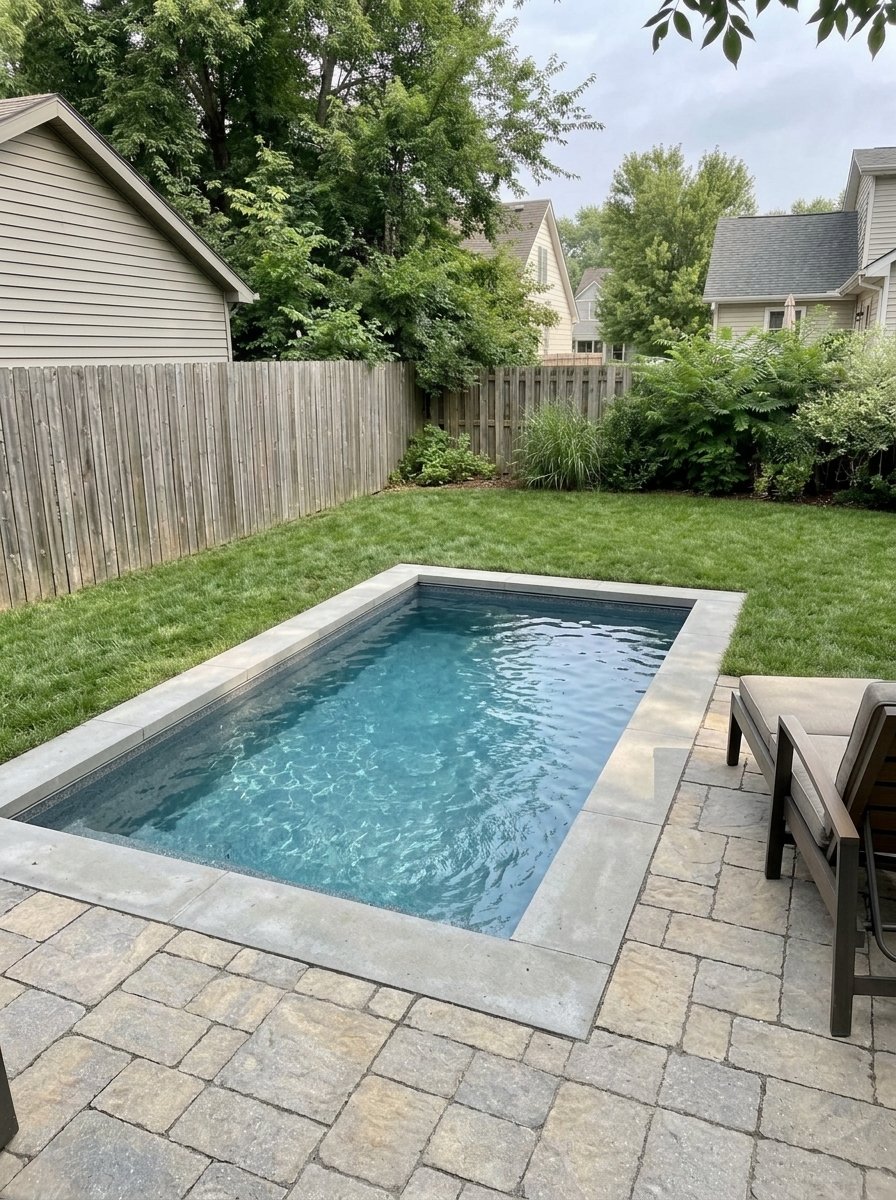
Modular pools come in prefabricated sections or panels that are assembled on your property. Because the factory does most of the work, you save on custom labor.
Shipping container pools fall into this category. A steel container is modified, waterproofed, and set into or above the ground. They look modern and industrial, and they can be installed quicker than a traditional pool.
Good to know:
- Not every yard has the access needed for a crane or delivery truck.
- Container pools need proper structural support and waterproofing. Hire an experienced builder, not a hobbyist.
- Rules and permits vary, so confirm what your area requires.
Modular pools suit people who want a sleek, contemporary look without a long construction project.
5. Small Lap Pool
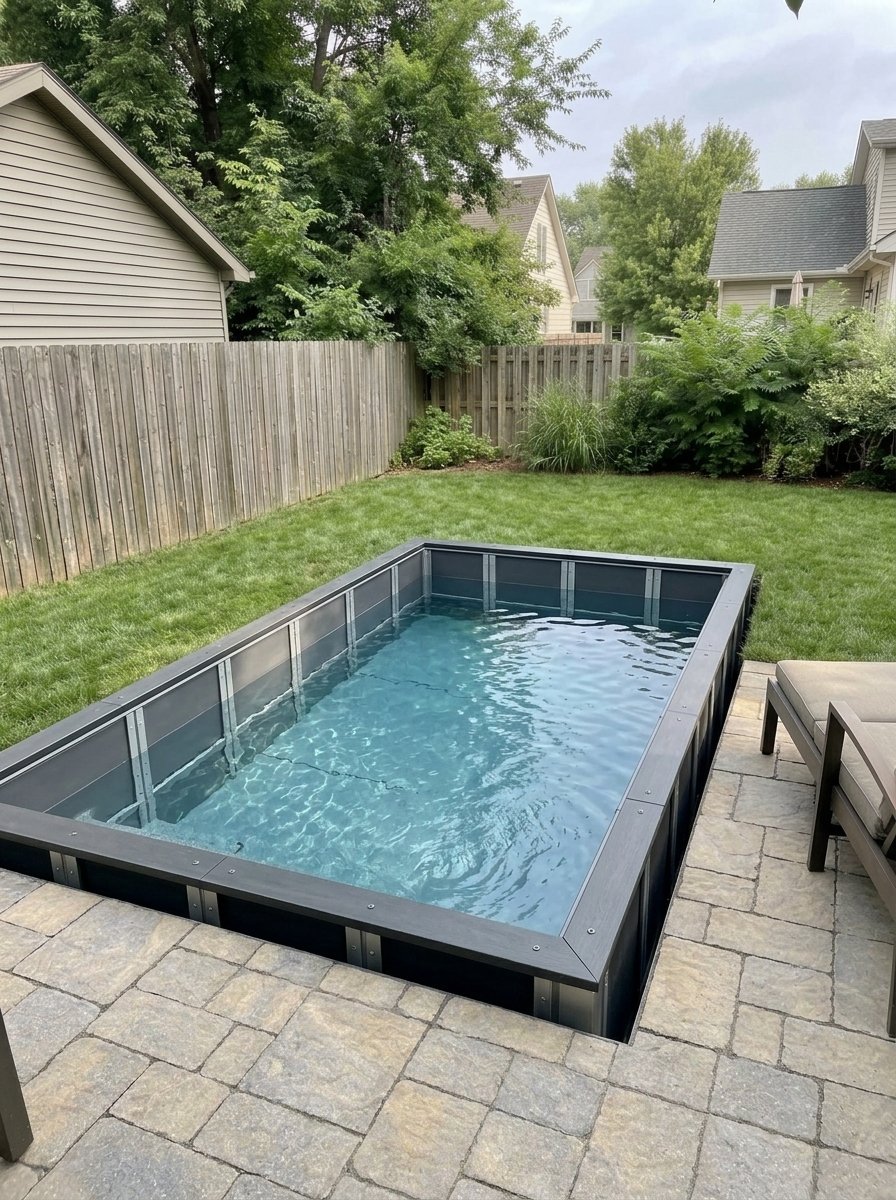
Want exercise more than lounging? A small lap pool is long and narrow, often 8 to 10 feet wide and much longer than it is wide. It gives you a clear lane for swimming.
If even that is too big, look at a swim spa. These compact units use jets to create a current, so you swim in place. They fit in a space not much bigger than a large hot tub.
Budget tips:
- A swim spa often costs less than building a full lap pool.
- Because the water volume is smaller, heating and chemical costs stay lower.
- Place it near a house wall or fence so it doesn’t take up useful yard space.
Best for: Fitness fans, rehab swimming, and people who want year-round use with a cover and heater.
6. Small Dip Pool
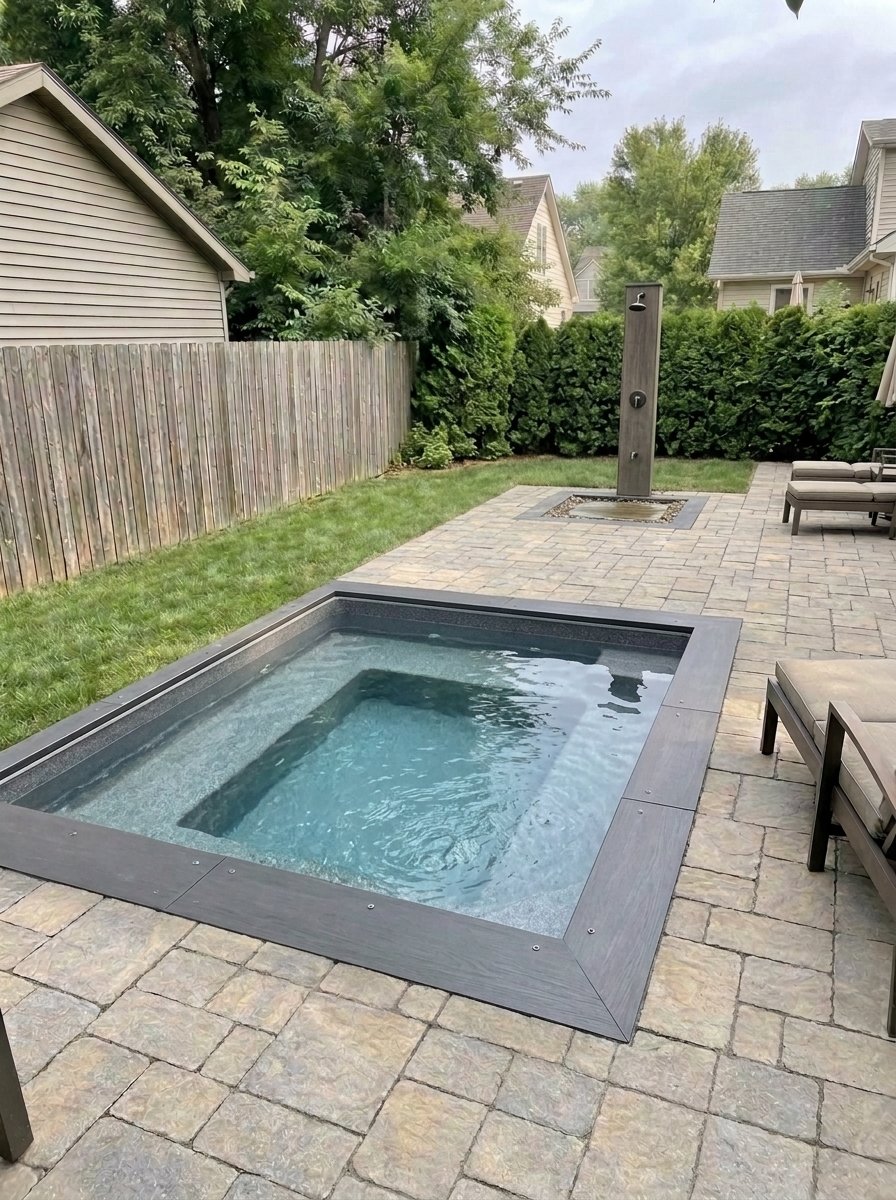
A dip pool is shallow and small, usually about 3 to 4 feet deep. Think of it as a cold plunge or a quick cool-down spot rather than a place to swim.
It’s one of the simplest ways to enjoy an in-ground look because it needs less excavation and less equipment than a regular pool.
Style ideas:
- Surround it with stone pavers or gravel
- Add a built-in bench for sitting
- Put it beside a patio or outdoor shower
Why it saves money: Smaller volume means a cheaper shell, a smaller pump, and fewer chemicals. It’s a good match for hot climates where the goal is cooling off, not exercise.
7. Cocktail Pool
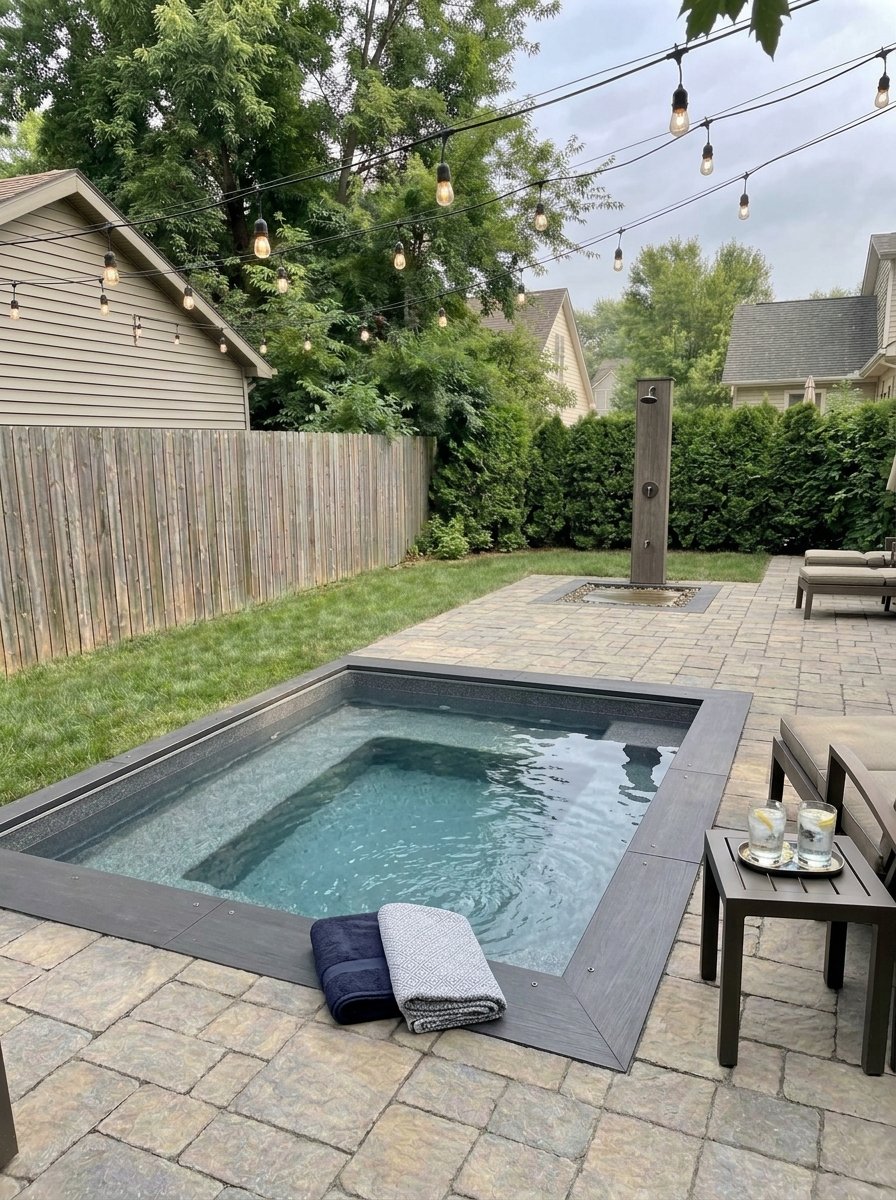
A cocktail pool is a small pool designed for sitting, sipping, and chatting. It usually has shallow benches or ledges around the edge so you can relax with water up to your chest.
It sits between a hot tub and a plunge pool. Many people like it because it’s social. A few friends can fit comfortably, and nobody needs to swim.
Make it affordable:
- Keep the shape simple (a square or rectangle costs less than a custom curve)
- Skip fancy water features at first
- Add string lights and a couple of outdoor chairs for atmosphere
Watch out for: Without a heater, a small pool cools down fast at night. A solar cover can help hold heat for free.
8. An In-Deck Pool
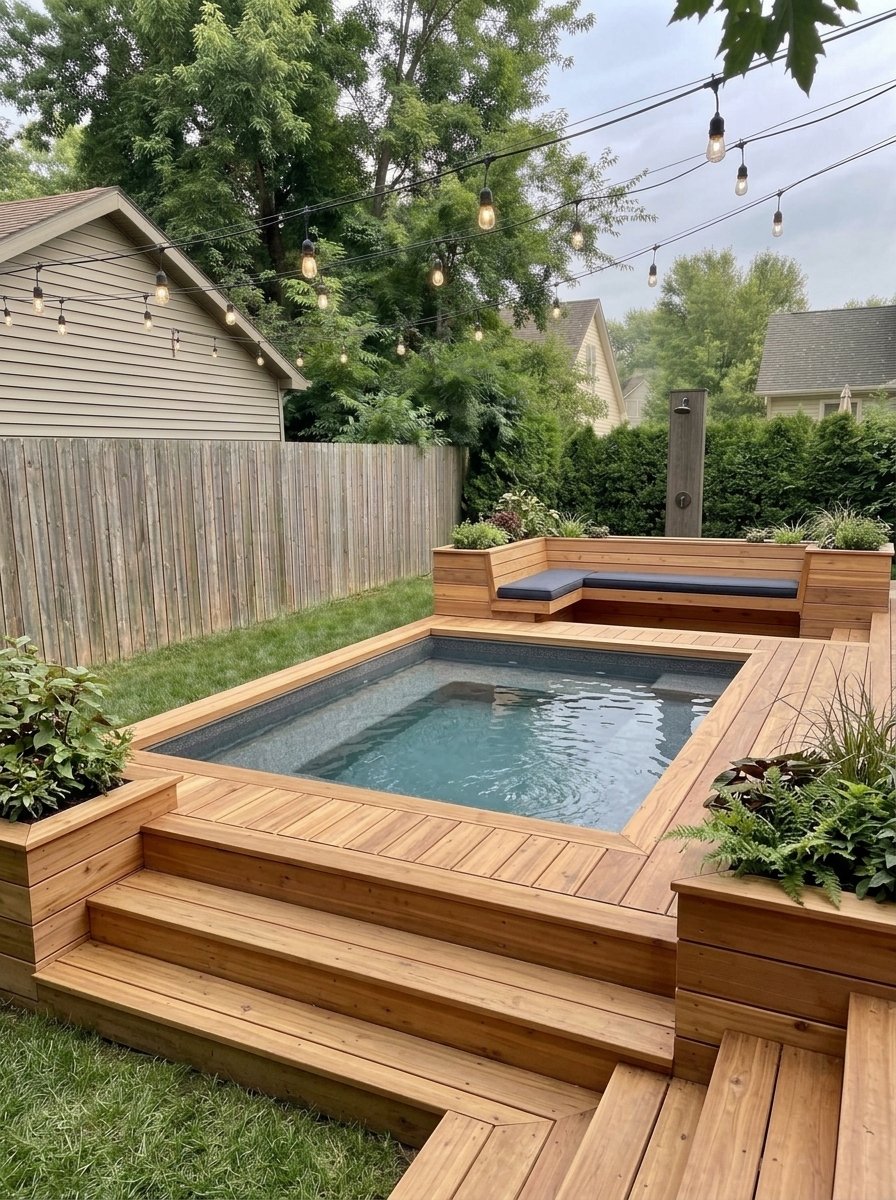
An in-deck pool is an above-ground pool built into a deck so the water sits close to deck level. It gives you a custom, built-in look without the cost of excavation.
Plan the structure carefully. The deck must be strong enough to support the weight around the pool, and the pool walls often need extra support. Water weighs about 8 pounds per gallon, so the numbers add up quickly.
Why people love it:
- It hides the pool wall, which many people find unattractive
- You get a built-in seating and lounging area
- Lower cost than a traditional in-ground pool
Tip: Talk to a deck builder or structural pro before cutting a single board. A mistake here is costly and unsafe.
9. Partially Built-In Pool
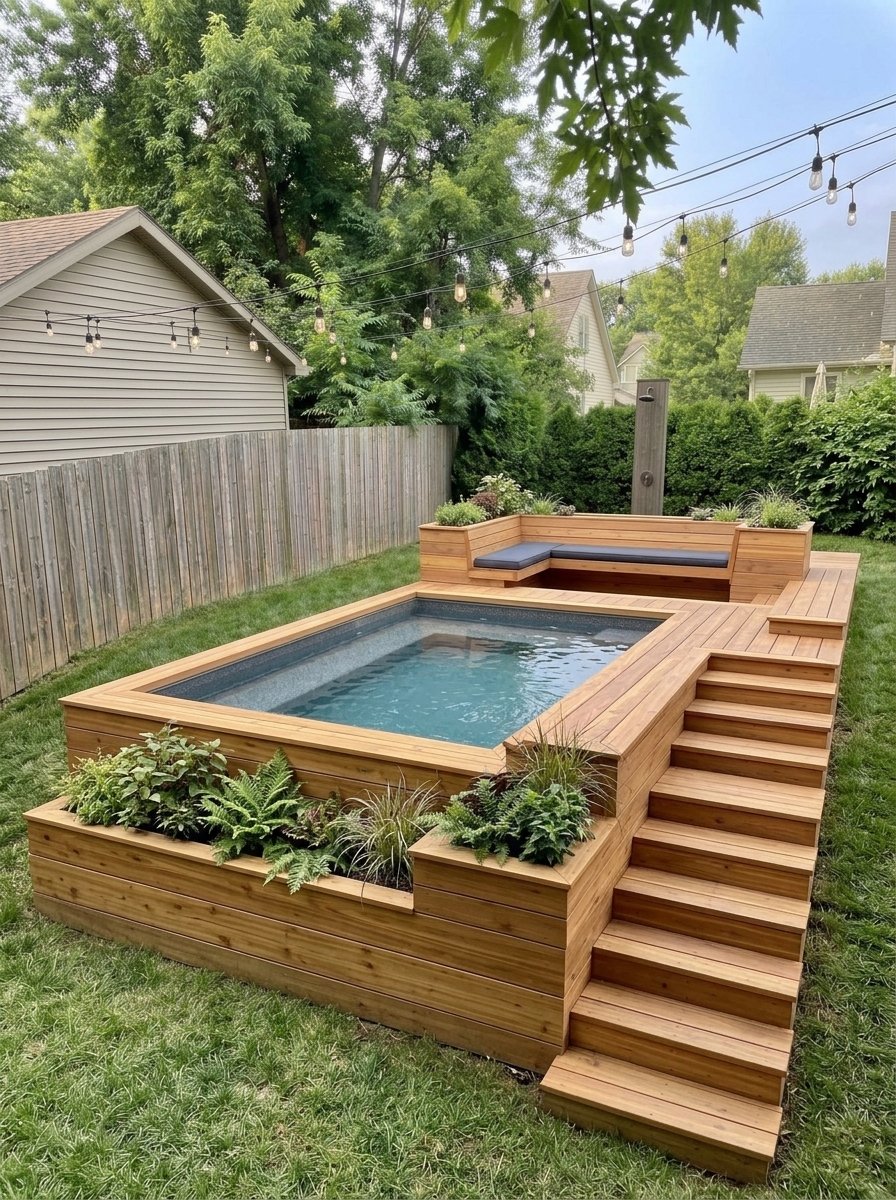
A partially built-in pool, sometimes called a semi-inground pool, sits half above and half below ground. You dig less than for a full in-ground pool, which cuts excavation costs, but you still get a lower profile.
This works especially well on sloped yards. The dug-out side sits in the ground, while the other side becomes a raised wall you can turn into seating or a planter.
Ways to style it:
- Wrap the raised side in cedar or composite boards
- Build a bench along the wall
- Add a retaining wall that doubles as a garden bed
Good to know: Drainage matters. Water pooling around the base can cause damage over time, so grade the soil away from the pool and ask a pro about groundwater in your area.
10. Pergola Pool
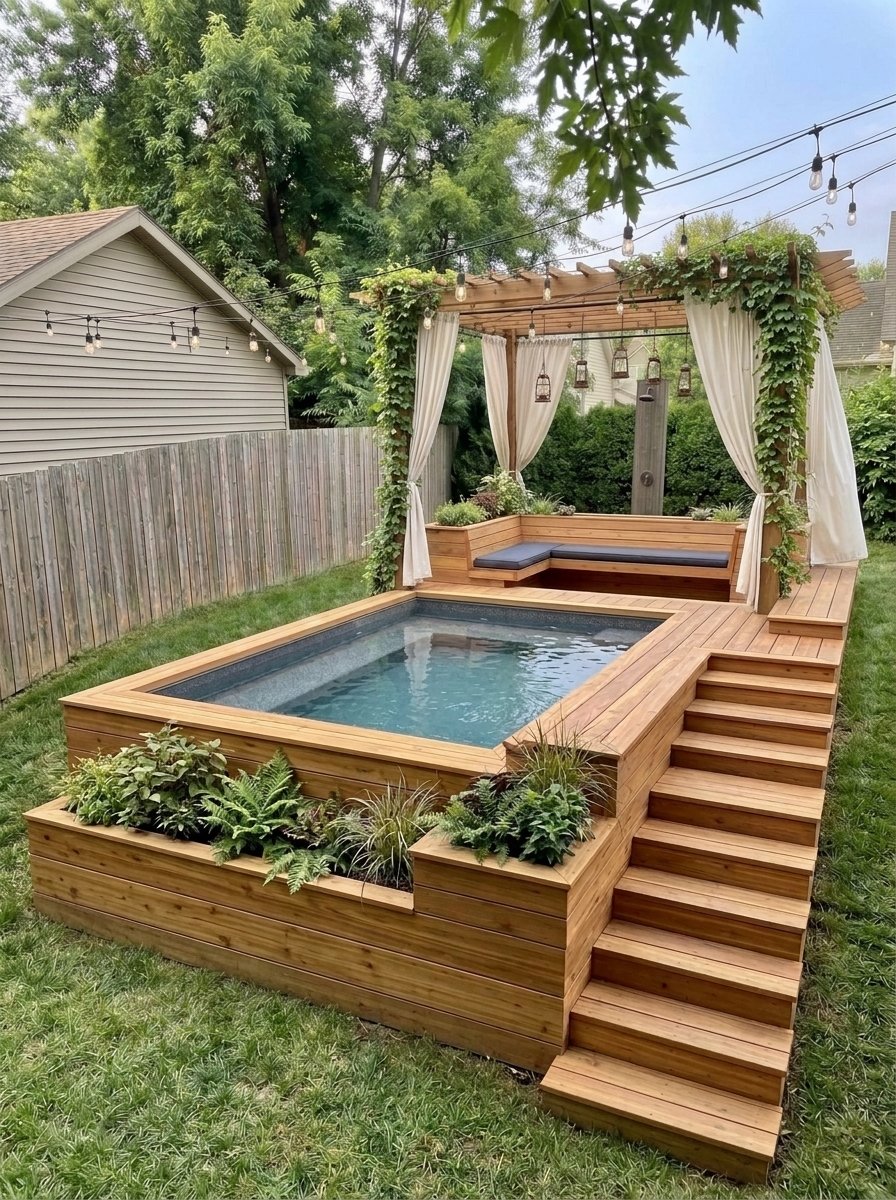
A pergola over or beside a small pool adds shade, structure, and a resort feel. It’s one of the cheapest ways to make a simple pool look like a designed space.
You don’t need a giant structure. A slim wood or metal pergola next to the pool, with a few outdoor curtains or a shade sail, is enough to create a cozy corner.
Budget-friendly upgrades:
- Buy a pergola kit instead of hiring custom work
- Train climbing vines like jasmine or clematis for natural shade
- Hang solar lanterns instead of wired lights
Tip: Keep the pergola a few feet back from the water’s edge. This reduces leaf drop and makes cleaning easier. Check local rules too, since structures near pools sometimes have setback requirements.
11. A Pop of Color
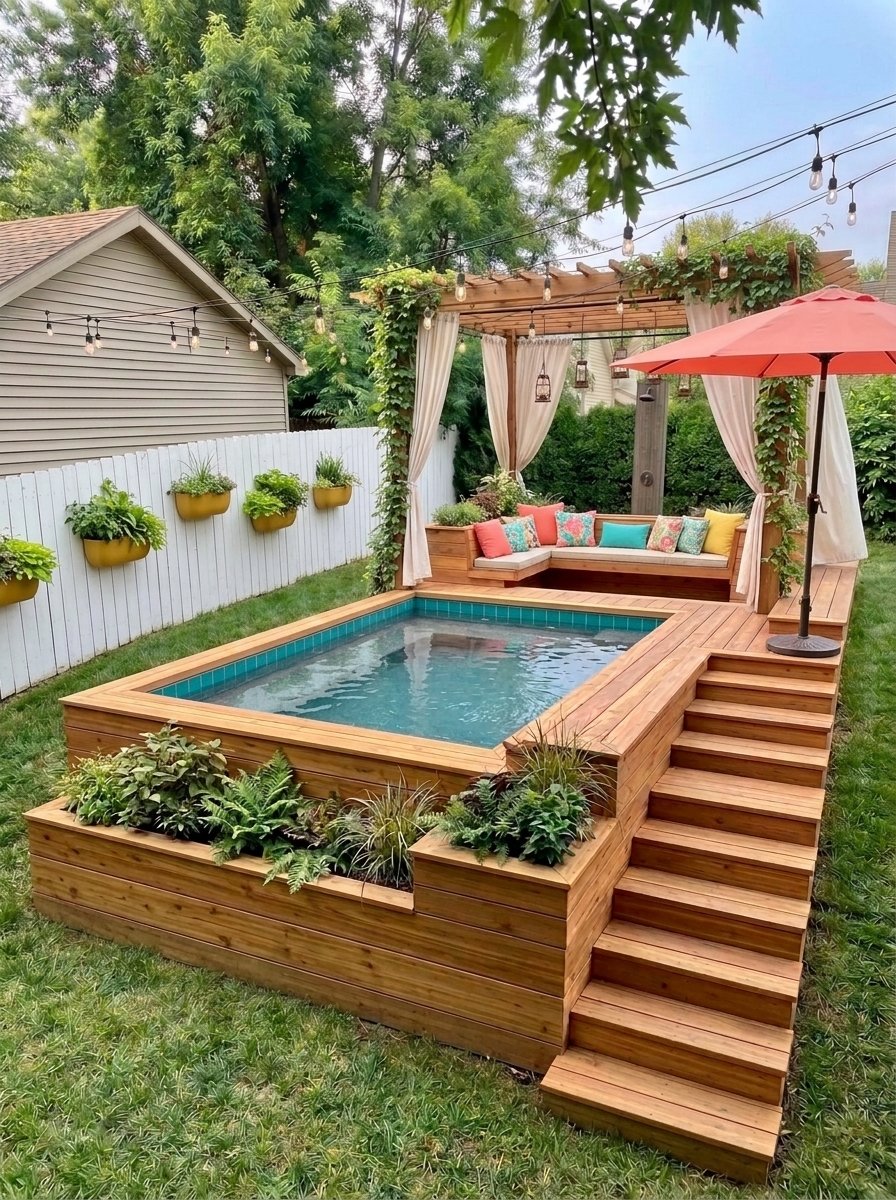
Who says a small pool must be blue and beige? Color is one of the cheapest design tools you have.
Try a bold tile band at the waterline, a bright painted fence, or colorful cushions and towels in a single accent shade. Teal, coral, and mustard all look great against water.
You can also change the water’s look with the liner or interior finish. Dark liners make the water look deeper and richer, while light ones look crisp and sparkly.
Easy color ideas:
- Painted planters in a bold shade
- A bright umbrella or shade sail
- Colorful outdoor rug near the lounge area
- Mosaic tile accent on the pool step
Keep to two or three colors so the space feels planned, not chaotic.
12. A Modern-Style Pool With a Twist
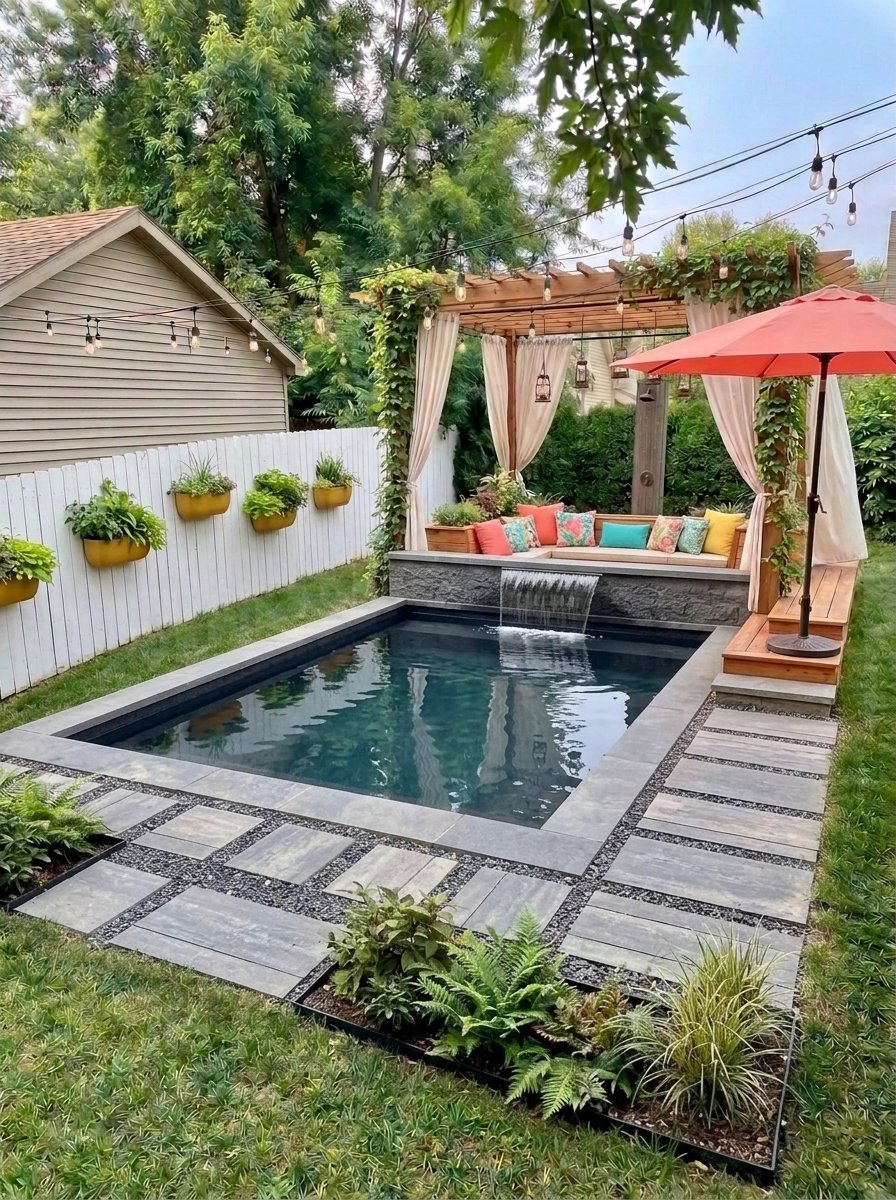
Modern pool design is about clean lines, simple materials, and a little surprise. A rectangle is the cheapest shape to build, so you can keep costs low and add the “twist” with details.
A few twist ideas:
- A black pool liner or dark interior for a sleek, mirror-like surface
- A raised wall with a small spillway or sheer descent water feature
- Slim concrete pavers with grass or gravel joints
- A color-matched fence that frames the pool like a gallery wall
Choose one standout feature and keep everything else quiet. That’s how modern design stays elegant and affordable.
Watch out for: Dark finishes absorb heat, which can warm the water a bit. That’s a bonus in cool climates and something to think about in very hot ones.
13. Deck Surround for In-Ground Look
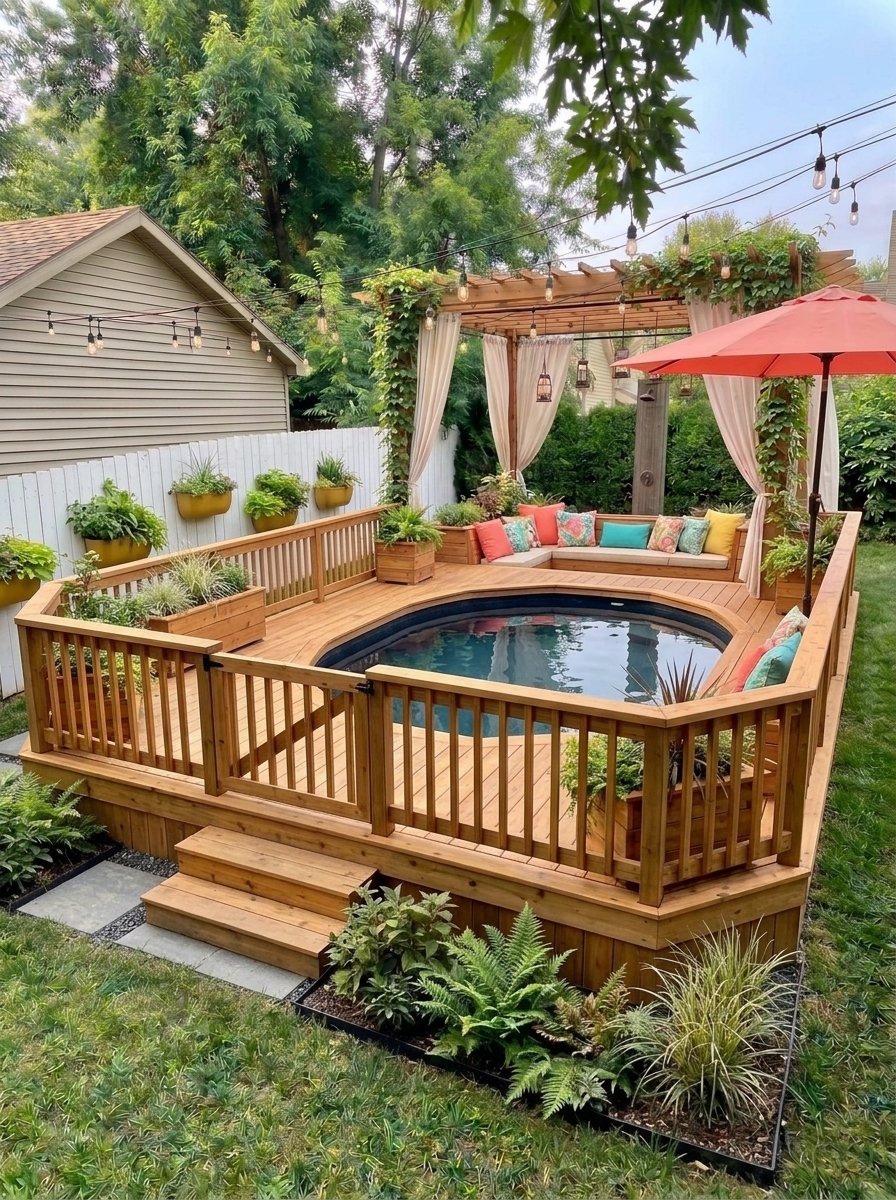
Want the look of an in-ground pool without digging? Build a deck around an above-ground pool so the walls disappear and the deck becomes the main feature.
A wraparound deck with a bench, planters, and a gate to the pool steps makes the whole setup feel built-in. It also gives you a safe, level place to lounge.
Budget tips:
- Use pressure-treated lumber for the frame and a nicer board only on the surface
- Keep the deck footprint tight around the pool
- Build in stages if cash is tight: start with a ladder platform, add more later
Safety note: The deck must meet local code, including rail height and secure gates. A deck that gives a child easy access to the water defeats the purpose of a pool barrier.
14. A Beautiful Stock Tank Pool
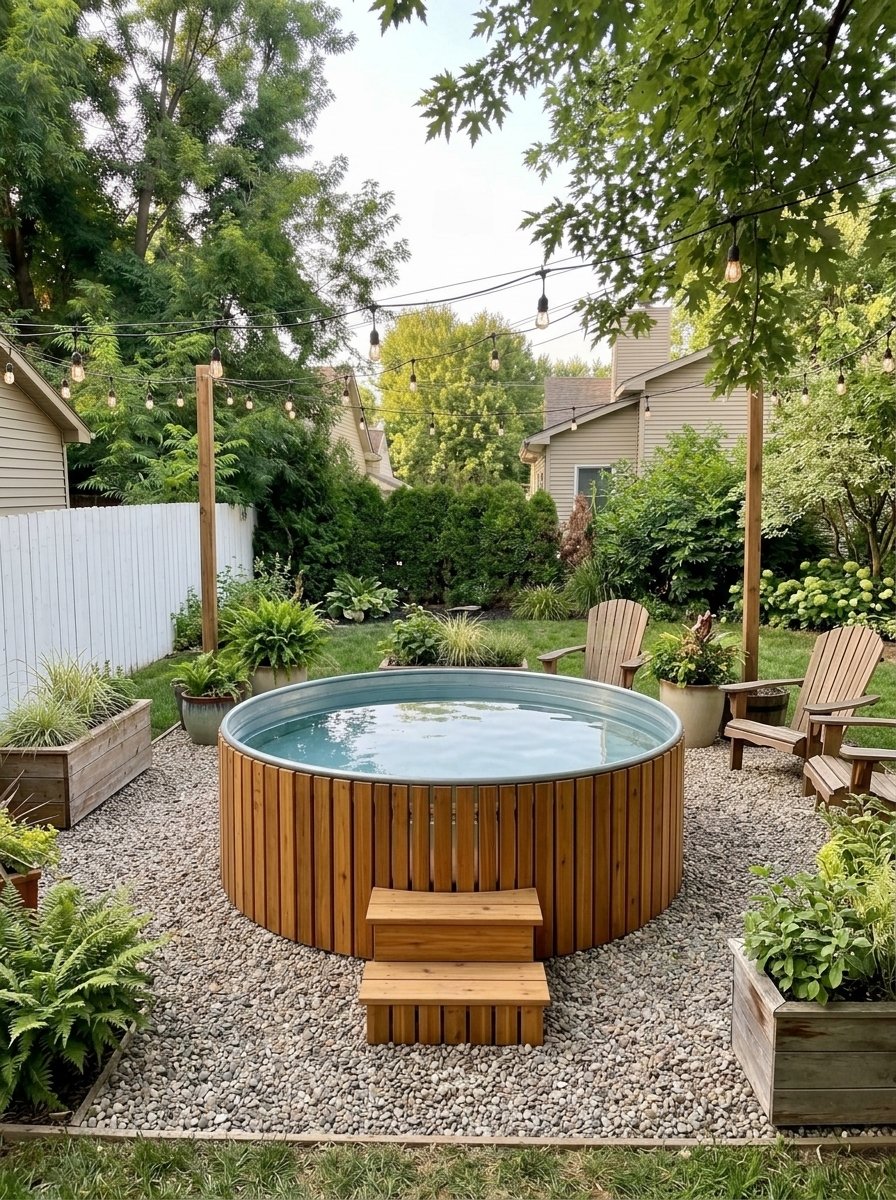
Stock tank pools have become a favorite for small, affordable pools. A galvanized or poly livestock tank is sturdy, simple, and already shaped like a pool. The tank itself typically costs a few hundred dollars.
You still need a few extras: a pump and filter, a sanitation plan (chlorine or a saltwater system), and a level base such as compacted gravel or pavers.
How to make it beautiful:
- Paint the outside with exterior paint or wrap it in cedar slats
- Surround it with gravel, planters, and string lights
- Add a simple bench or a few steps for easier entry
Safety and care notes:
- Use a GFCI-protected power source for the pump
- Clean and sanitize regularly, because small bodies of water can turn green fast
- Cover it when not in use, especially if children are nearby
15. Pool With a Gazebo
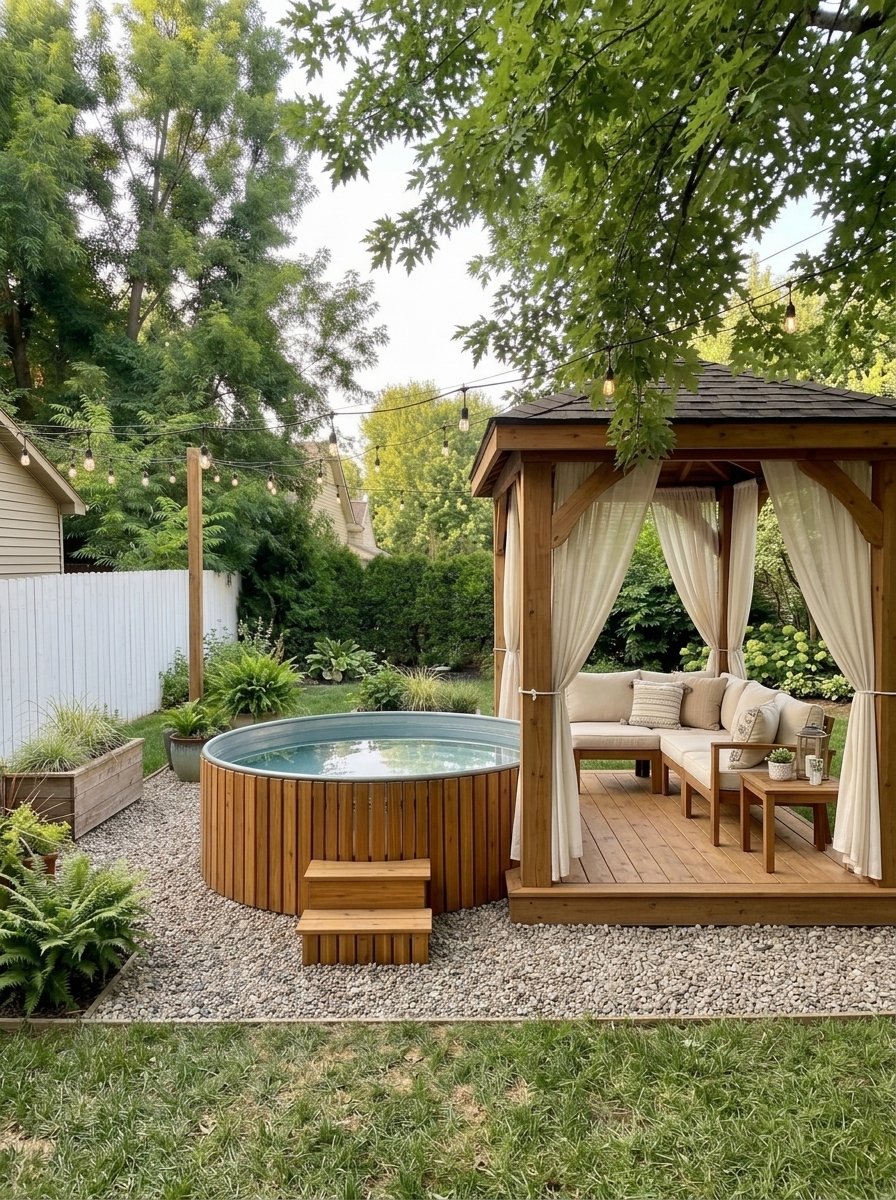
A gazebo gives you a shaded retreat right next to the water. It’s a good fit if you love the idea of a small outdoor room where you can read, nap, or host friends.
You don’t need a custom build. A pre-made metal or wood gazebo kit costs far less and can be assembled over a weekend.
Make it work:
- Place the gazebo on the sunny side so the pool gets afternoon light
- Hang mosquito netting for evenings
- Add a small side table and outdoor cushions
Watch out for: Wind. Anchor lightweight gazebos securely to the ground. A gazebo that blows into a pool is a hassle, and a danger.
16. Submerged in Gravel Patio
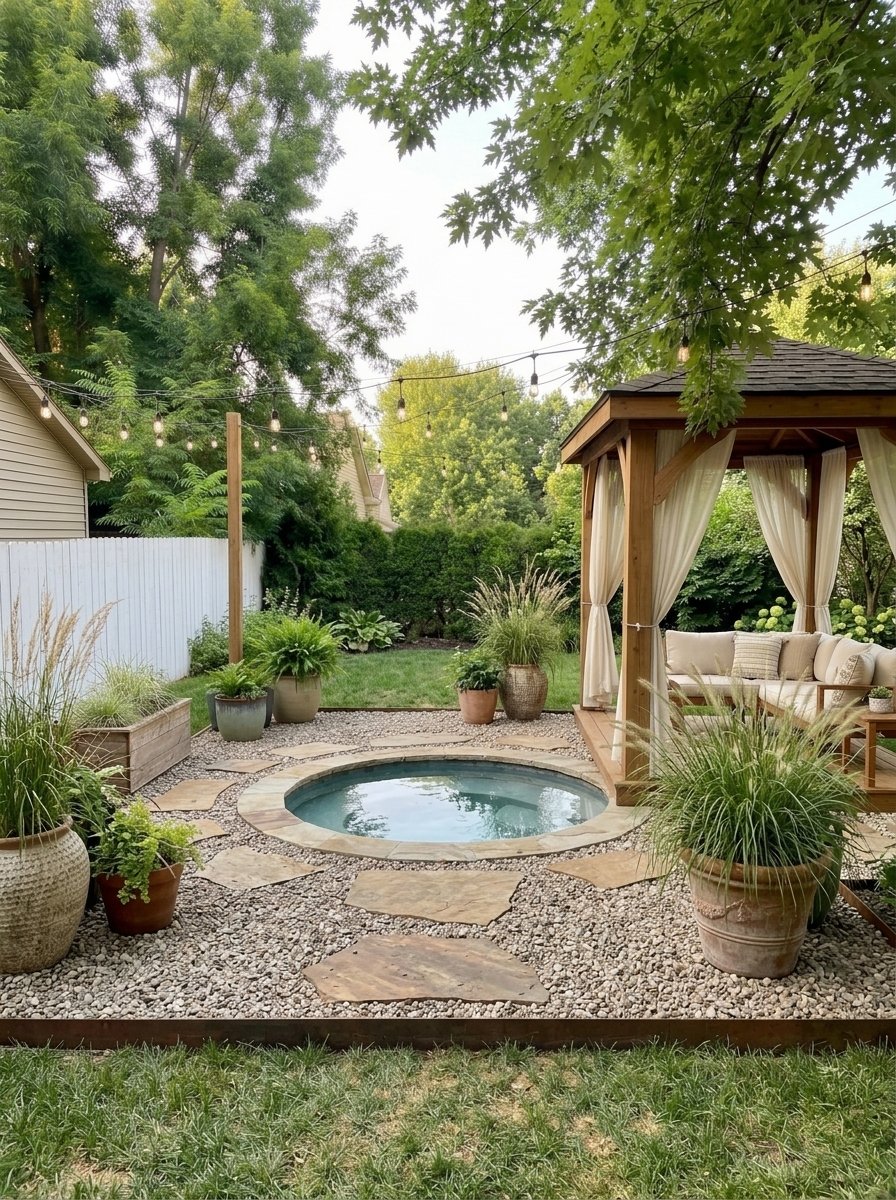
A gravel patio is one of the cheapest hardscape materials, and it pairs nicely with a small pool. Setting the pool into a gravel area, or surrounding it with gravel, creates a relaxed, natural look.
Crushed stone or pea gravel drains well and costs much less than concrete or stone pavers. Use landscape fabric underneath to keep weeds down.
Design ideas:
- Lay stepping stones from the house to the pool
- Edge the gravel with steel or stone borders
- Add large pots with ornamental grasses
Good to know: Loose gravel can get kicked into the pool and clog filters. Use larger stones near the water or keep a strip of solid pavers right along the edge.
17. Matching Deck and Pool
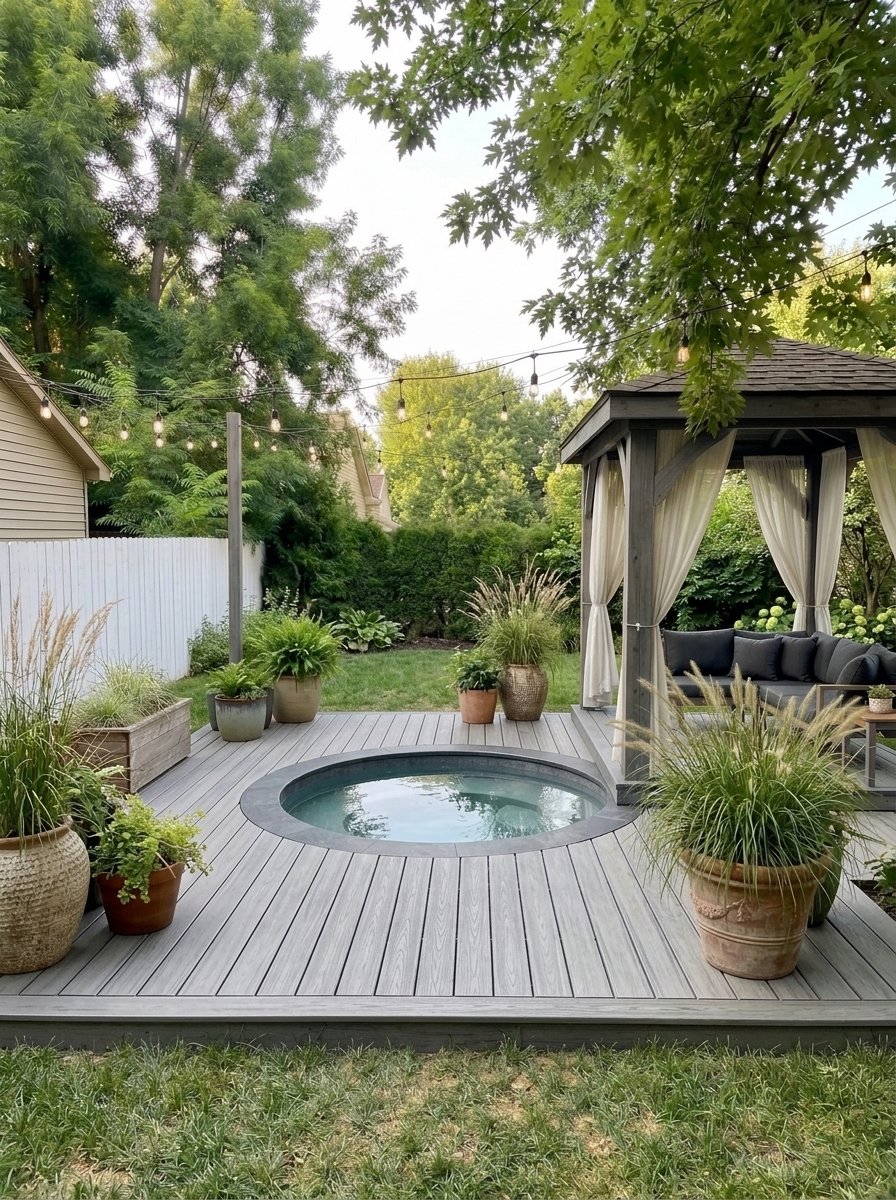
When the deck and pool share a color story, even a basic pool looks planned. Pick one main tone and repeat it.
For example, a gray composite deck with a gray pool wall and charcoal cushions looks calm and cohesive. A warm cedar deck with a tan liner and sand-colored towels feels cozy and natural.
How to do it cheaply:
- Stain an existing deck to match the pool wall color
- Paint the pool’s outer frame (if the manufacturer allows it) to blend in
- Choose outdoor fabrics in the same palette
Tip: Test stain or paint on a small hidden patch first. Colors look different once they dry and in full sun.
18. Deck Surround for Hot Tub
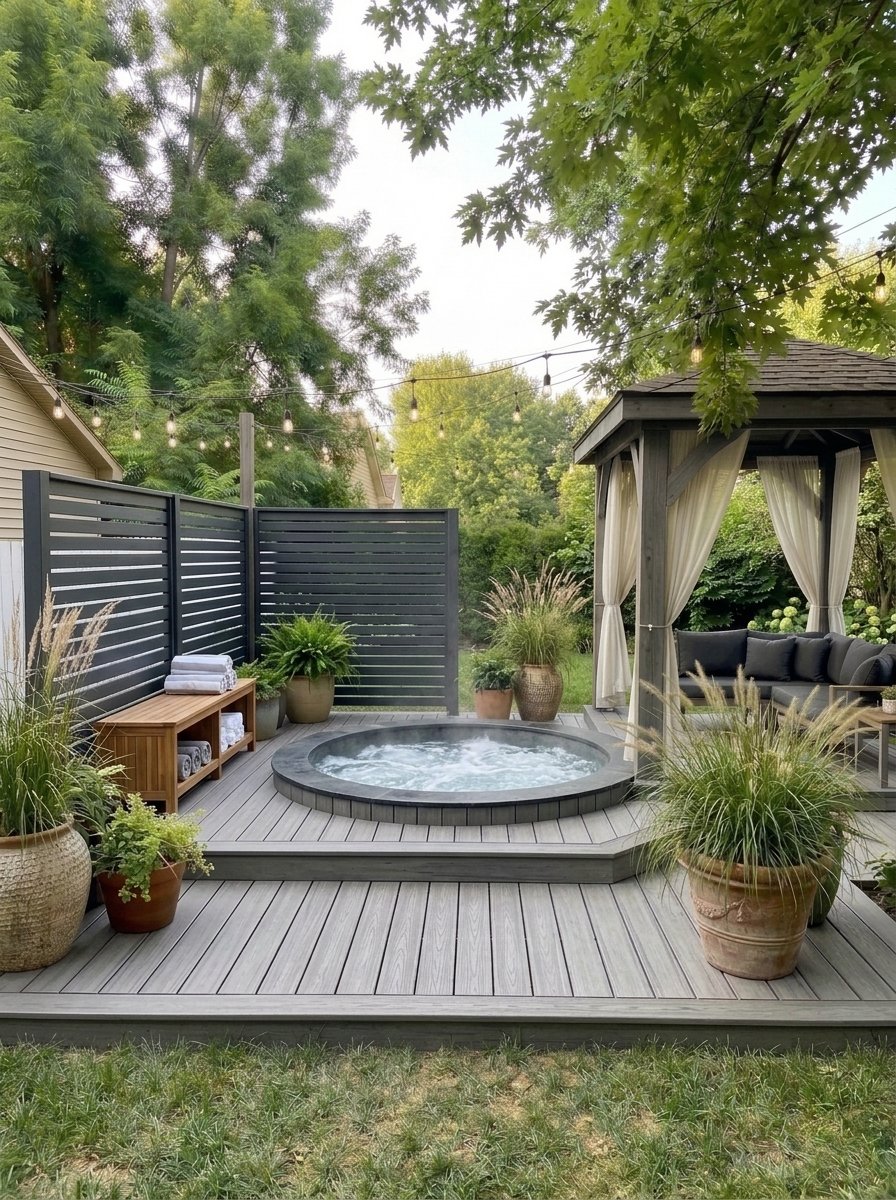
A small pool and a hot tub can share a deck, or a hot tub can be the “pool” for tiny spaces. A deck around a hot tub hides its shell, adds seating, and makes the whole area feel like a spa.
If you already have a hot tub, a deck is one of the best upgrades. If you don’t, a compact swim spa or soaking tub can serve as a budget pool alternative.
Ideas to try:
- A step-up platform so entry is easy and safe
- Privacy screens made from slats or reeds
- A built-in cooler or storage bench for towels
Safety note: Hot water and kids don’t mix. Use a locking cover and follow temperature guidelines from the manufacturer.
19. An Easy Pool Deck
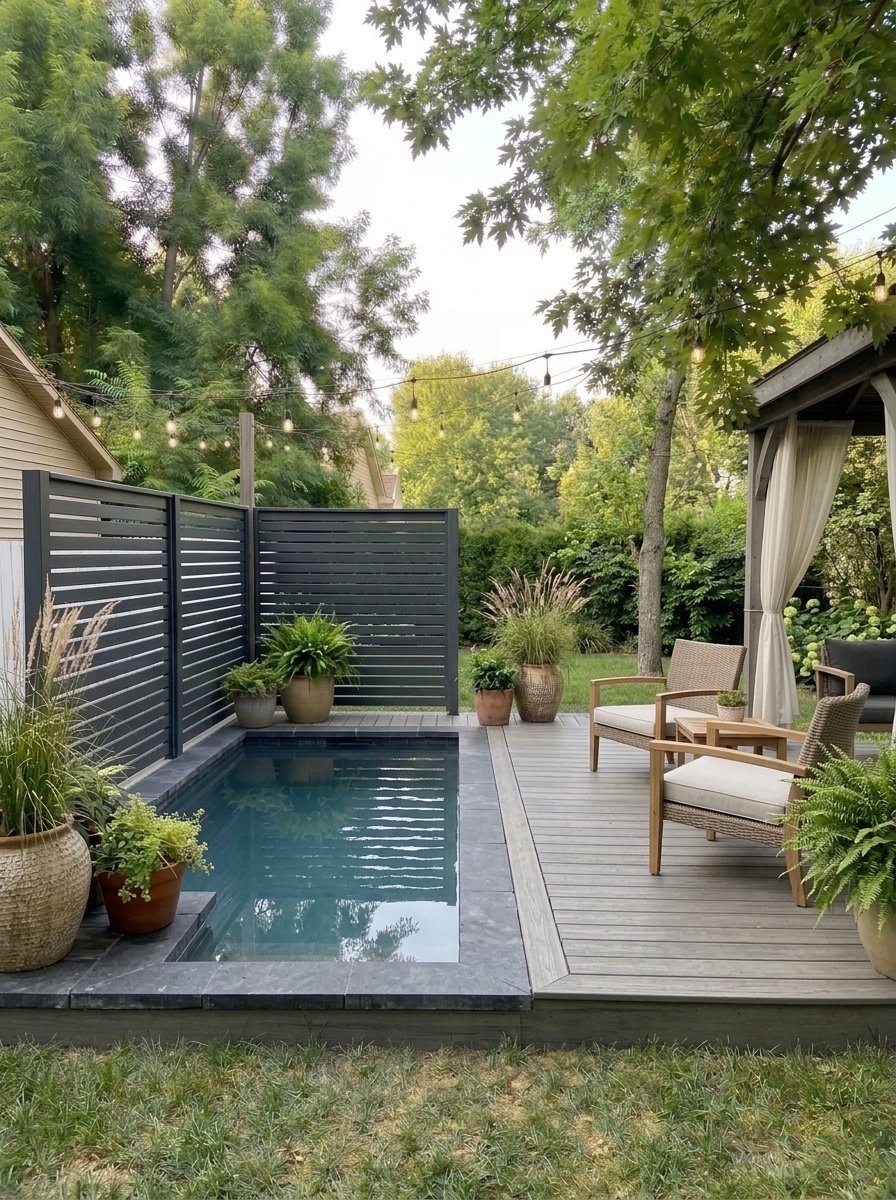
Not every deck needs to be fancy. A simple platform deck beside a small pool gives you a dry place to sit, set towels, and keep the area clean.
A low platform deck can be built with basic framing and standard boards. Keep it close to the ground and avoid complicated railings by designing it at a safe height.
Keep it simple:
- Use a rectangle or square footprint
- Choose pressure-treated boards and seal them
- Leave small gaps between boards for drainage
Slip warning: Wet wood and wet composite can get slippery. Pick boards with grooves or add outdoor mats near the water.
20. Farmhouse Style Pool
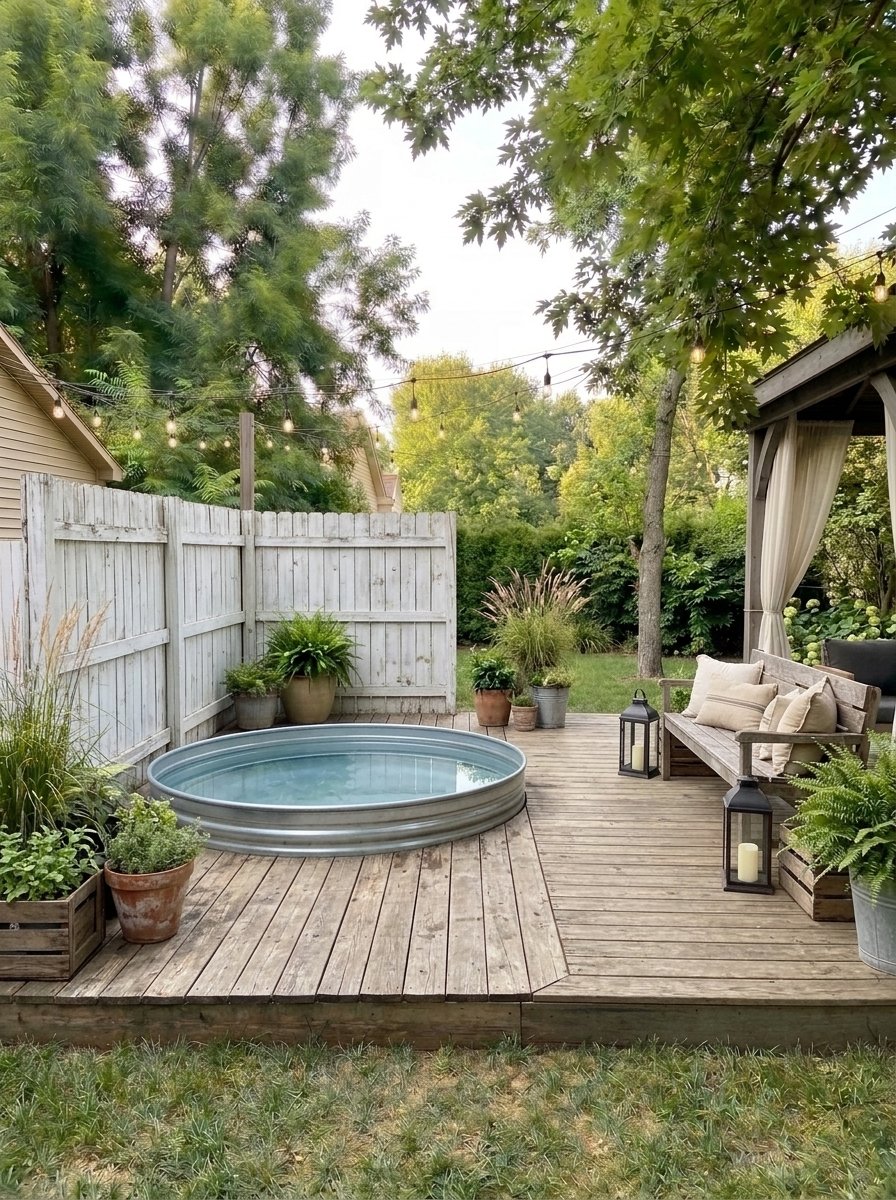
Farmhouse style fits small pools well, especially stock tank and above-ground setups. It’s relaxed, warm, and practical.
Think galvanized metal, weathered wood, white planters, and plenty of greenery. A simple wooden fence in white or natural tones frames the pool nicely.
Farmhouse touches:
- A galvanized stock tank as the pool
- Wooden crates or barrels as planters
- Lanterns and string lights
- An old bench or rocking chairs nearby
This style is friendly to thrift-store finds and DIY projects. Flea markets and secondhand sales can fill the space for very little money.
21. Private Pool Area
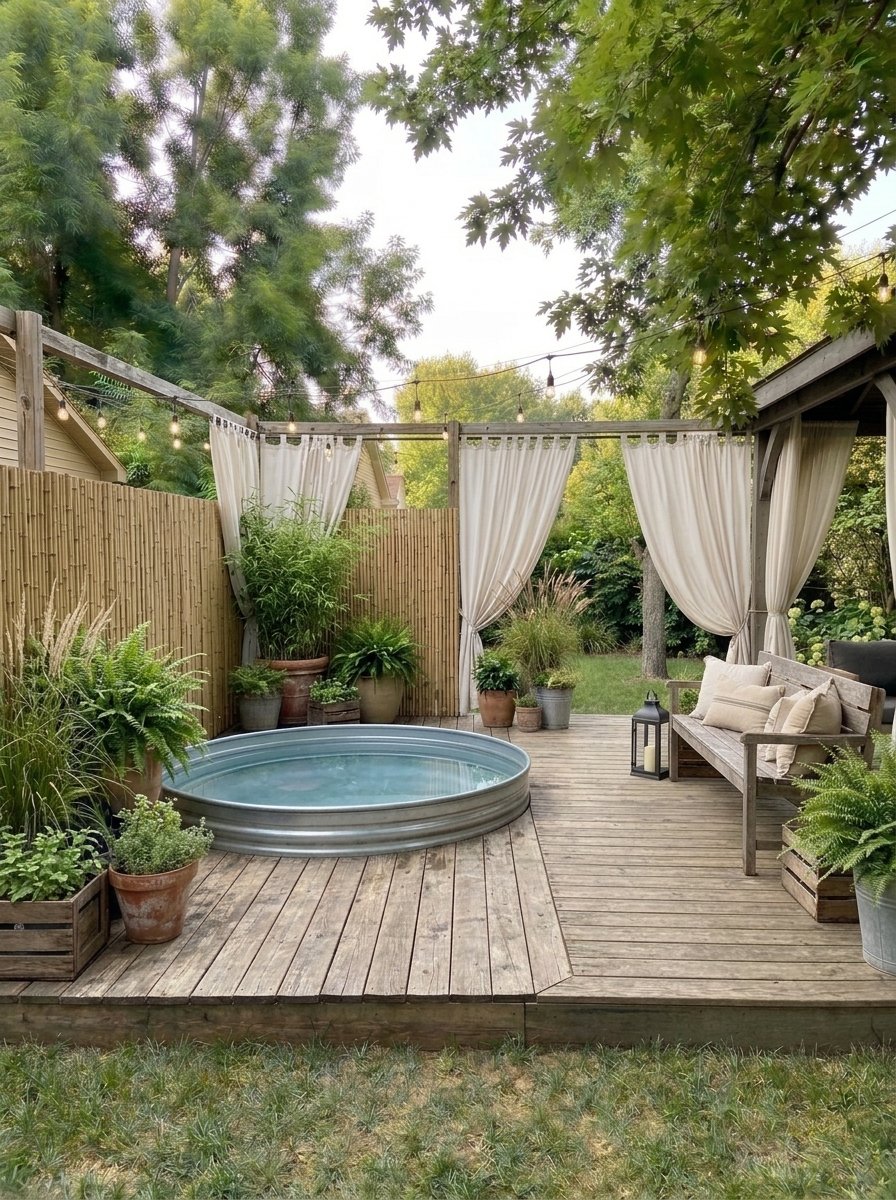
Privacy can matter as much as the pool itself. If neighbors can see everything, you may not want to use it as often.
Create a private pool zone with screens, fences, or plants. A privacy fence is good for safety too, since it doubles as a barrier when it meets local code.
Affordable privacy options:
- Bamboo or reed fencing panels
- Tall planters with clumping bamboo or arborvitae
- Outdoor curtains on a simple frame
- Lattice panels with climbing plants
Good to know: Some plants drop leaves, petals, or berries into the water. Choose evergreen, low-litter plants near the pool, and keep messy ones farther away.
22. Multilevel Pool Deck
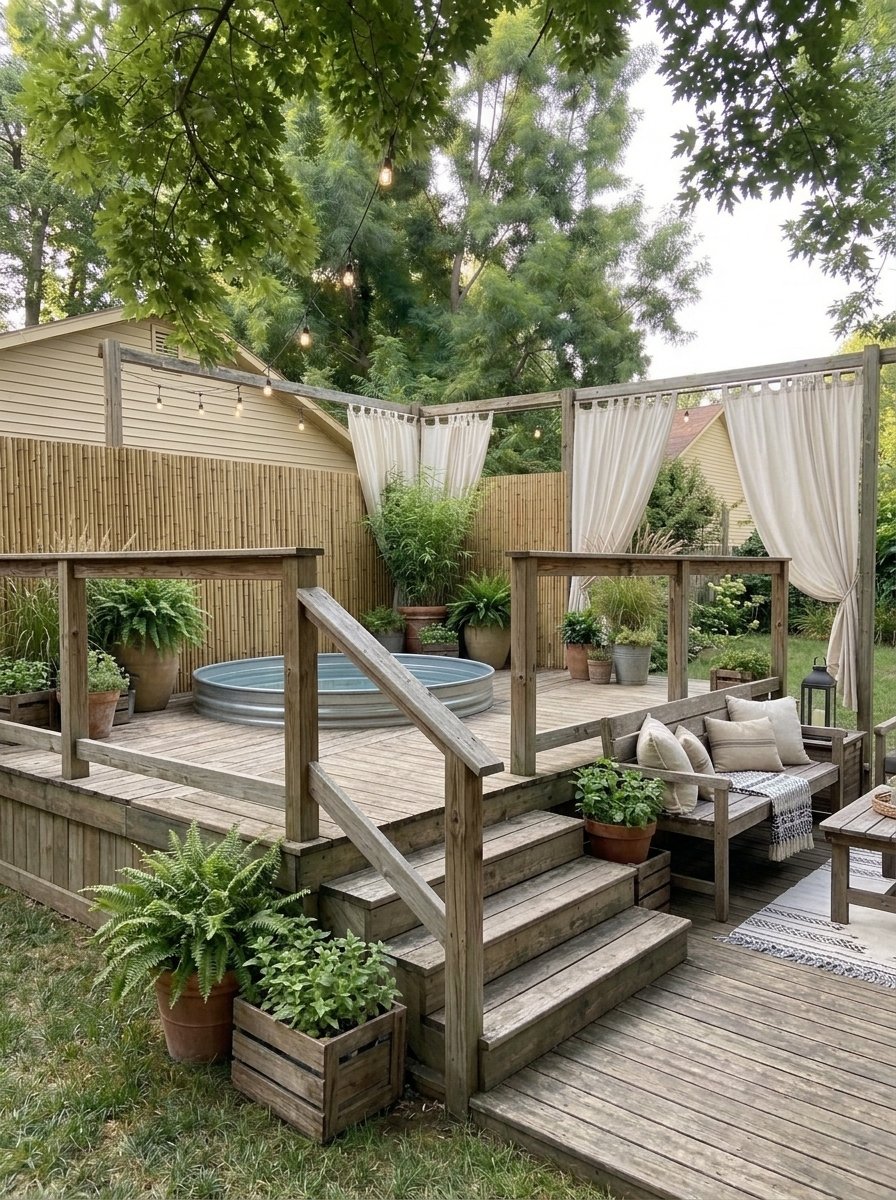
A multilevel deck adds depth and visual interest, even in a small space. It can also solve a sloped yard problem.
One level might hold the pool, a lower step might hold a lounge area, and a third might be a small dining spot. Steps connect the levels and break up the straight lines.
Keep costs in check:
- Build only two levels instead of three
- Use the natural slope of your yard
- Choose a simple railing style
Watch out for: Multilevel decks need solid planning and permits in many areas. Mark safe, well-lit paths and install handrails where code requires them.
23. An Interesting Pool Design
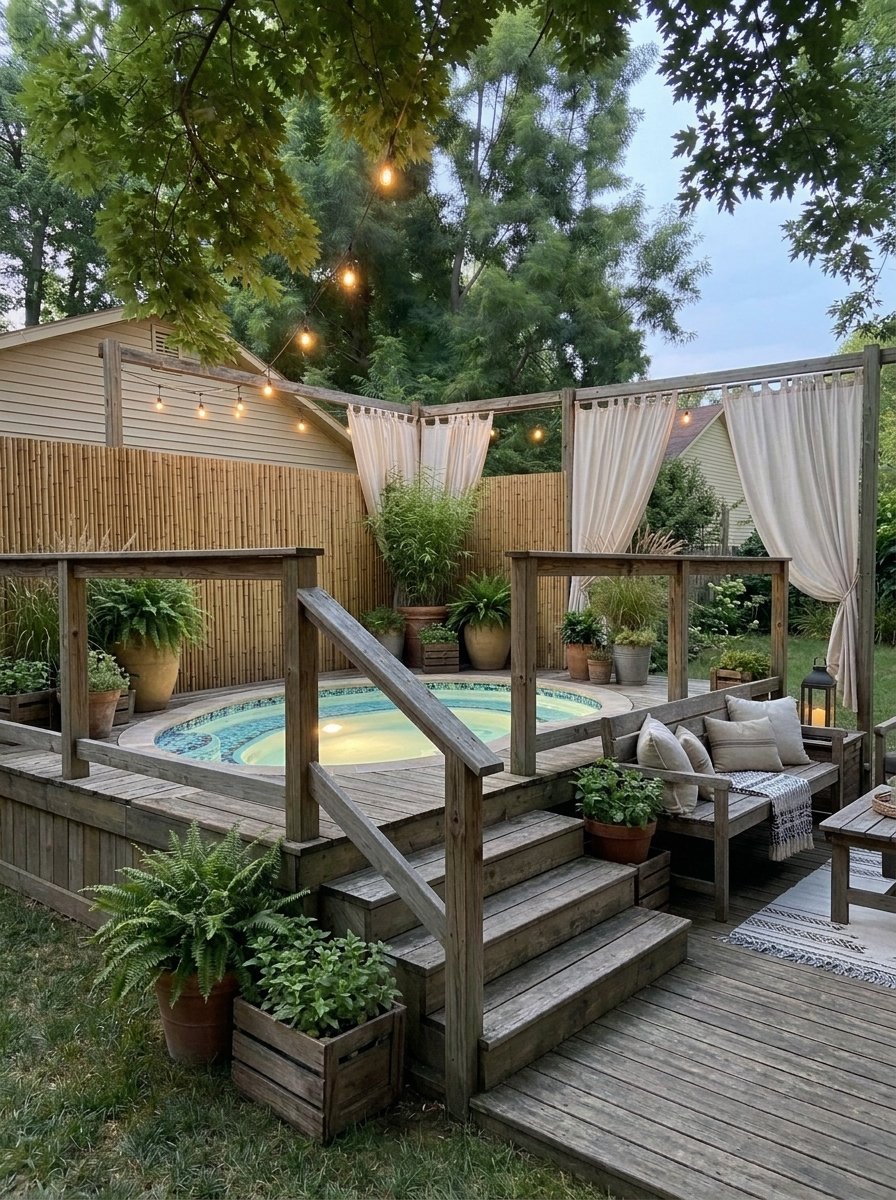
Sometimes a small pool is more fun when it breaks the rules. A circle, a kidney shape, or an L-shape can fit awkward corners and make the most of what you have.
Custom shapes usually cost more for in-ground pools, but they’re easier with modular, stock tank, and above-ground options.
Creative ideas:
- A round stock tank sunk partly into the ground
- A narrow pool along a fence line
- A pool tucked into a corner with a curved bench
- A tile mosaic on the pool’s floor or step
For an inexpensive wow factor, add underwater LED lights designed for above-ground pools. They make the water glow at night without needing major construction.
24. Solar-Heated Mini Pool
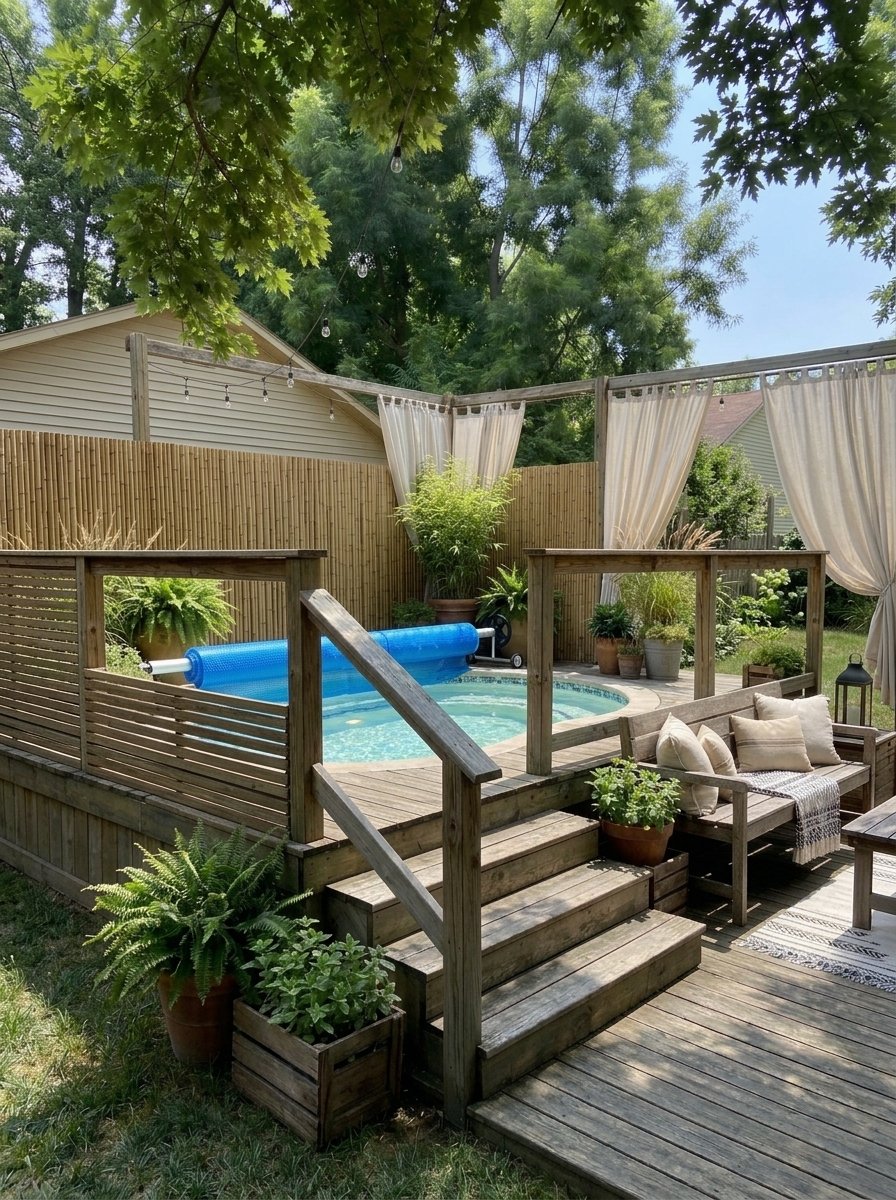
Heating can be the biggest ongoing cost of a pool. A solar cover or solar rings use sunlight to warm the water for almost nothing after the initial purchase.
Look for a solar blanket that fits your pool shape. It traps heat and slows evaporation, so you also save water and chemicals. Solar-heated pools are especially nice in sunny climates.
Quick tips:
- Place the pool where it gets six or more hours of direct sun
- Roll up the cover when swimming and cover it again afterward
- Pair it with a wind barrier, since breezes steal heat
If you plan a little extra investment later, a small heat pump can extend your swimming season, but a solar cover is the cheap place to start.
25. Tropical Garden Pool
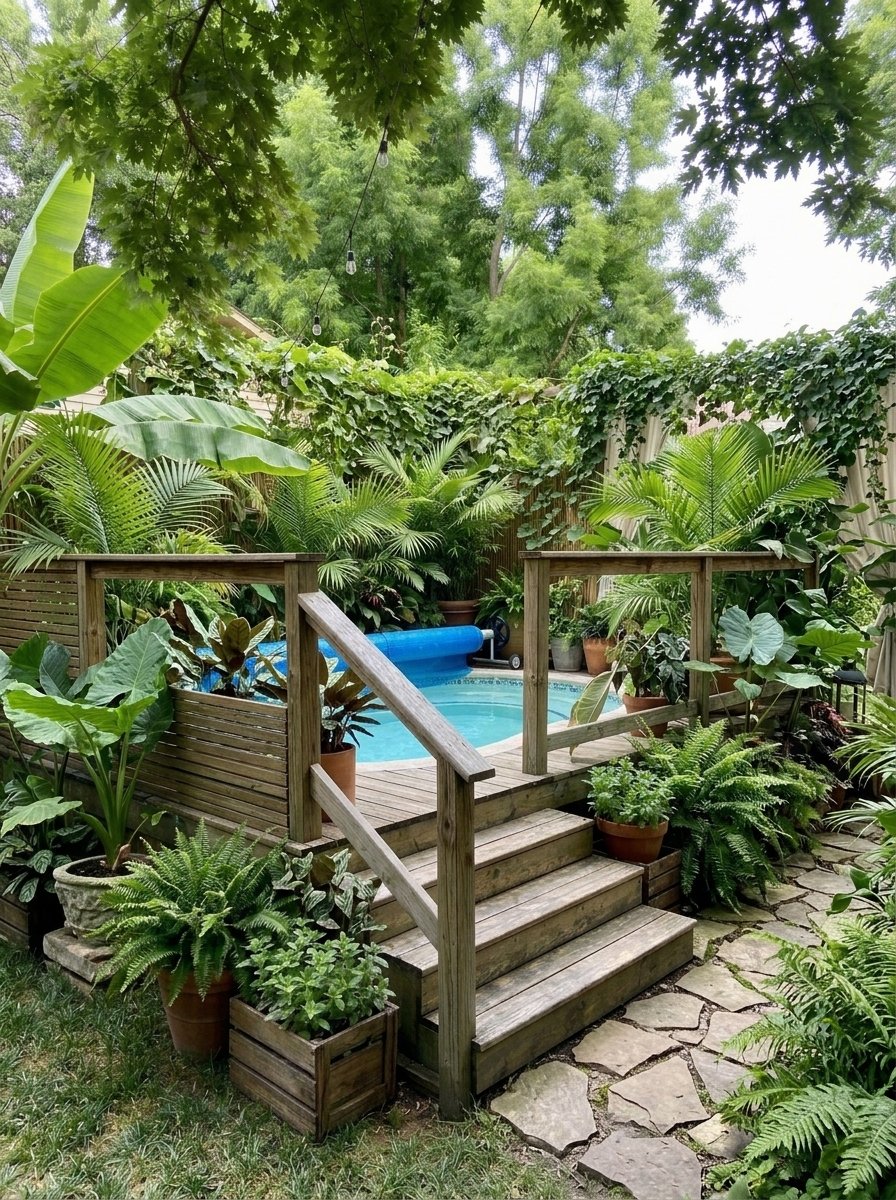
Plants can turn a basic pool into a mini resort. Big leaves, tall grasses, and flowering shrubs make the space feel lush and private.
Choose plants that suit your climate. In warm areas, banana plants, palms, and elephant ears give a tropical feel. In cooler places, ornamental grasses, hostas, and hardy ferns do the job.
Budget-friendly planting tips:
- Buy smaller plants and let them grow
- Use containers so you can move plants indoors for winter
- Group plants in clusters of three for a fuller look
Pool-friendly note: Avoid plants with thorns near walkways and keep roots away from pool walls and plumbing.
26. Mini Pool With a Water Feature
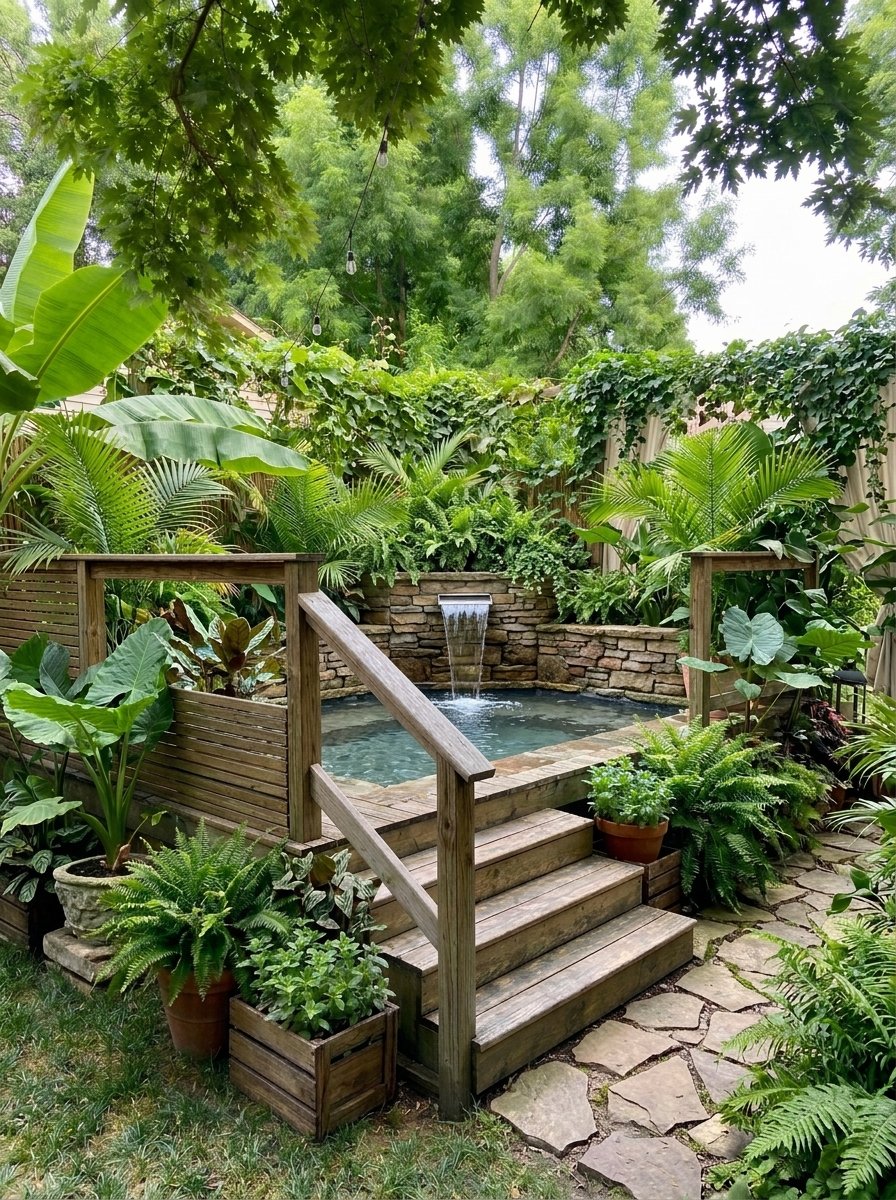
A small waterfall, bubbler, or spout adds sound, movement, and a luxe touch. The gentle splash also masks street noise.
Some water features can be added to existing above-ground or stock tank pools using a small pump and tubing. Others are built into the wall of an in-ground pool.
Affordable options:
- A copper or stainless steel spout that attaches to the edge
- A simple spillway into the pool from a raised planter
- A solar-powered fountain for the shallow end
Note: Running a pump all day adds to your energy use. Use a timer, so the feature runs only when you’re around.
27. Courtyard Pool
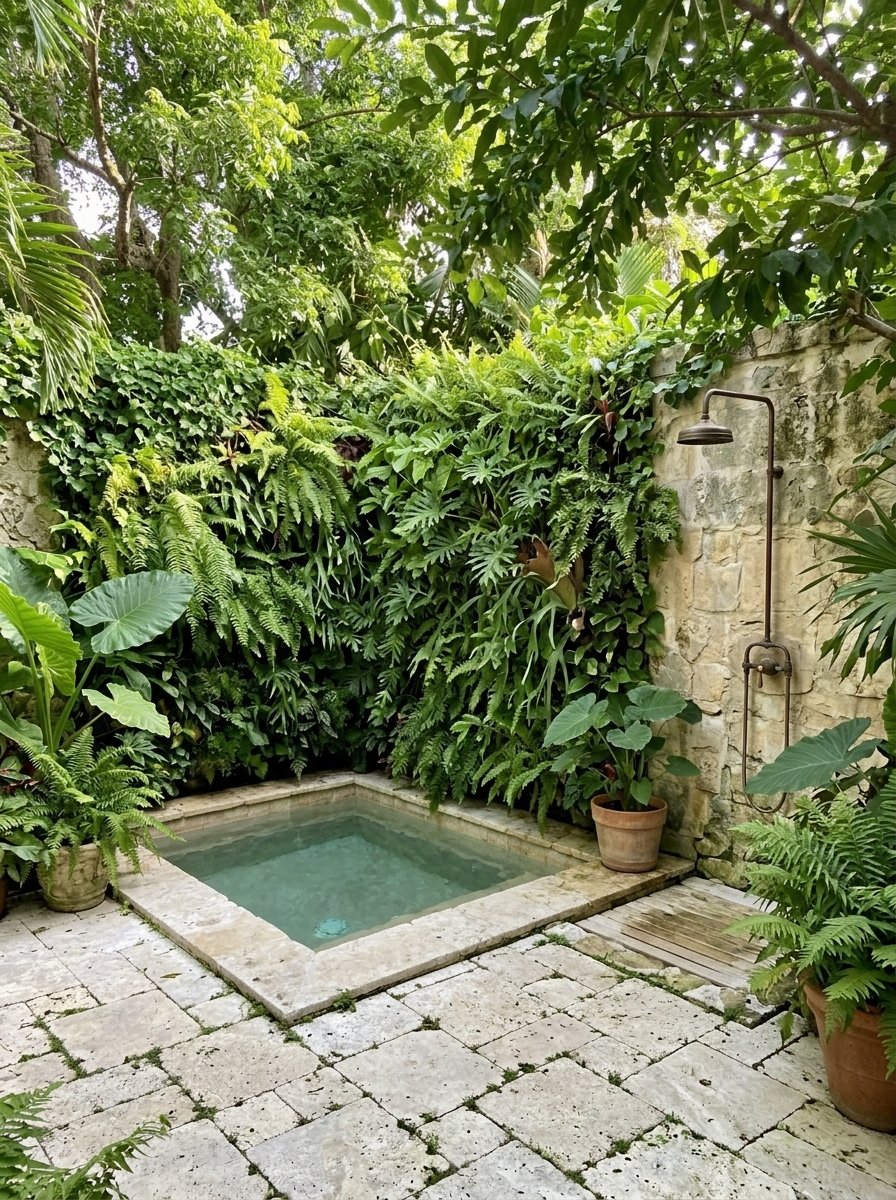
A courtyard pool uses the space between walls, fences, or building sides. Because the area is already enclosed, it feels private and protected from wind.
This is a smart option for townhomes and narrow urban lots. A small plunge pool or stock tank in a courtyard can feel like a hidden retreat.
Design ideas:
- Tile or paver flooring in a light color
- Vertical gardens or wall planters
- A simple outdoor shower on the wall
Check first: Access can be tricky. Measure gates and doorways before ordering any pool or tank, and consider how repair crews would reach the area later.
28. Pool and Fire Pit Combo
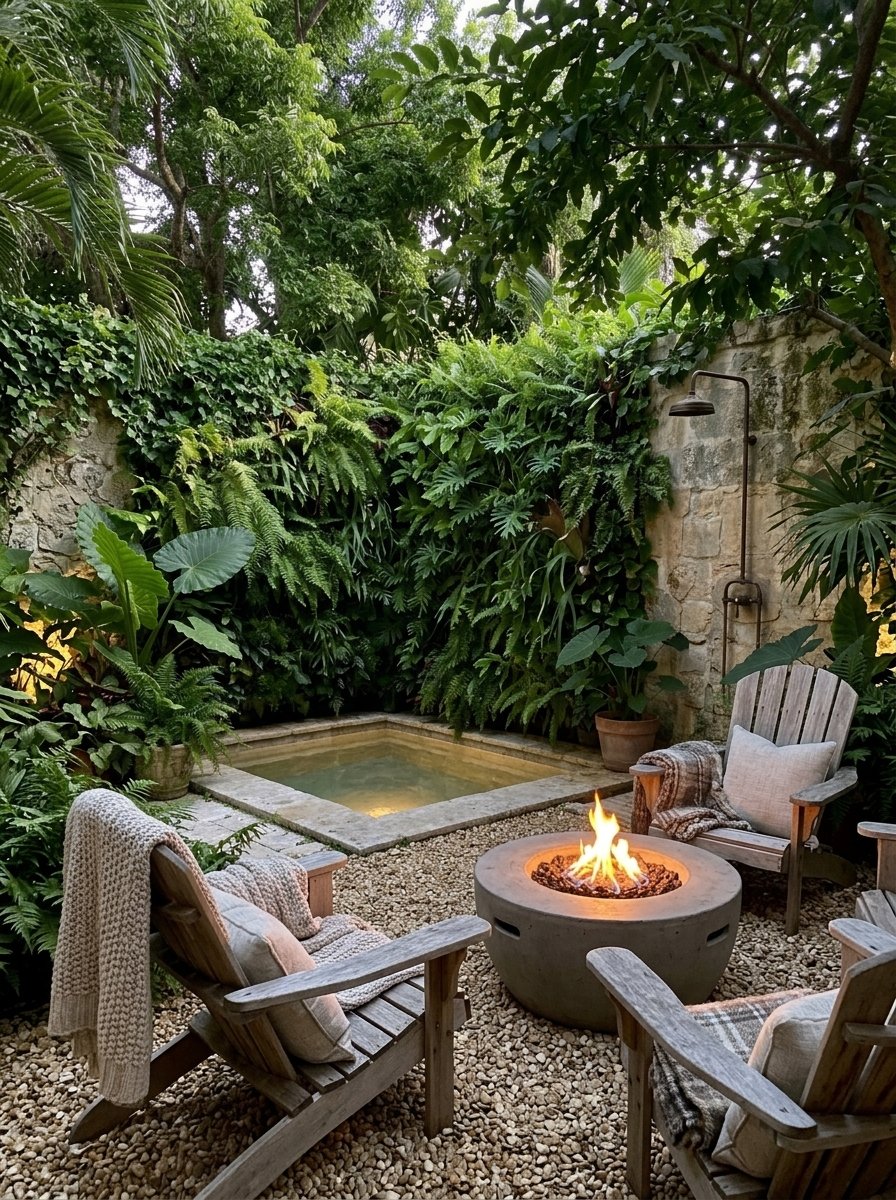
Add a small fire pit area beside your pool and you extend the season. You can swim in the afternoon, then warm up by the fire in the evening.
Use a propane fire table or a freestanding steel fire bowl for the simplest setup. Keep it a safe distance from the pool, structures, and anything flammable, and follow your area’s fire rules.
Cozy touches:
- Adirondack chairs or simple stools
- Outdoor blankets stored in a bench
- Gravel or pavers beneath the fire area
Safety note: Never place the fire pit under a low pergola or branches. Keep a fire extinguisher or bucket of sand nearby.
29. Pool With a Safety Cover
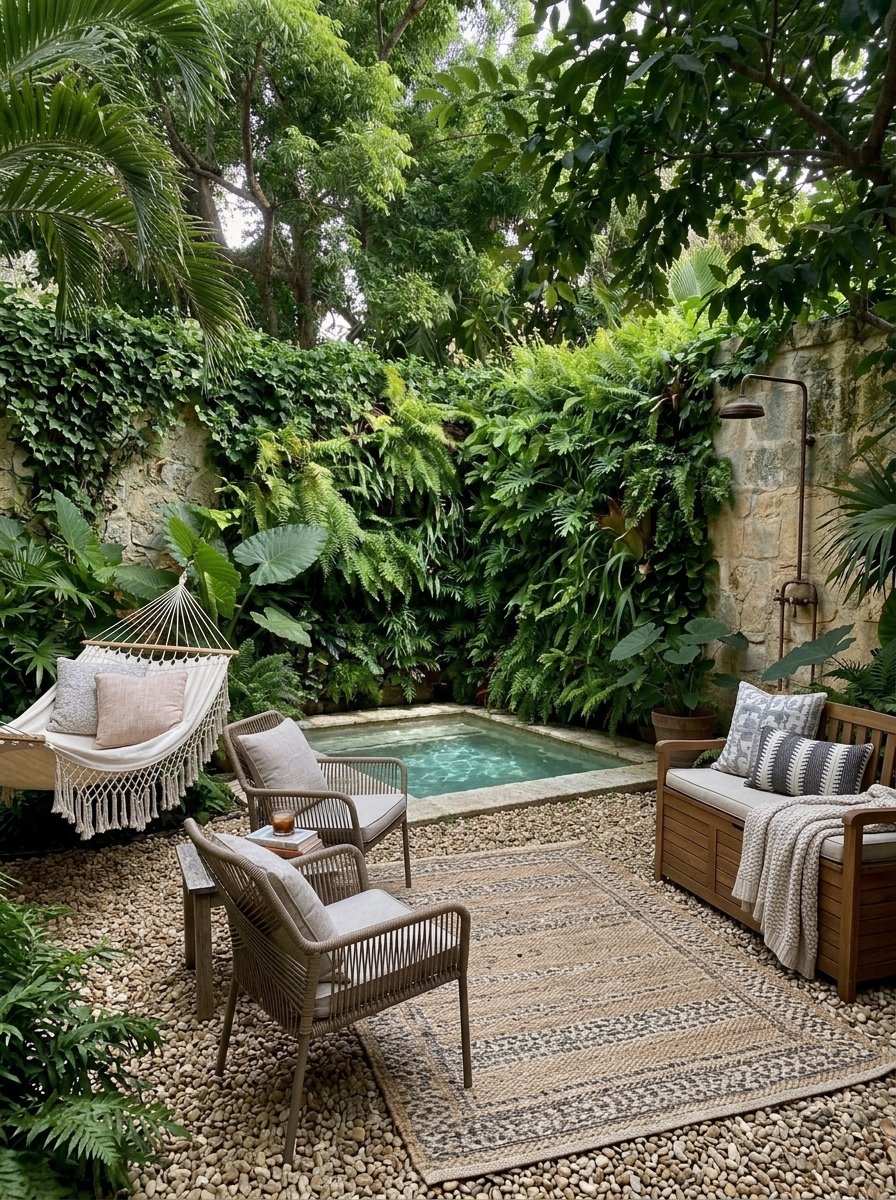
A good cover is one of the smartest budget moves you can make. It keeps out leaves, saves chemicals, holds heat, and helps keep kids and pets out.
There are several types:
| Cover Type | Main Benefit | Good For |
|---|---|---|
| Solar blanket | Heat retention | Sunny climates |
| Leaf net | Keeps debris out | Tree-lined yards |
| Winter cover | Protects off-season | Cold climates |
| Safety cover (rated) | Added protection | Homes with children or pets |
Note that not every cover is a safety cover. Only covers specifically rated and installed as safety covers should be treated that way. Check the product details and local code.
30. Poolside Lounge on a Budget
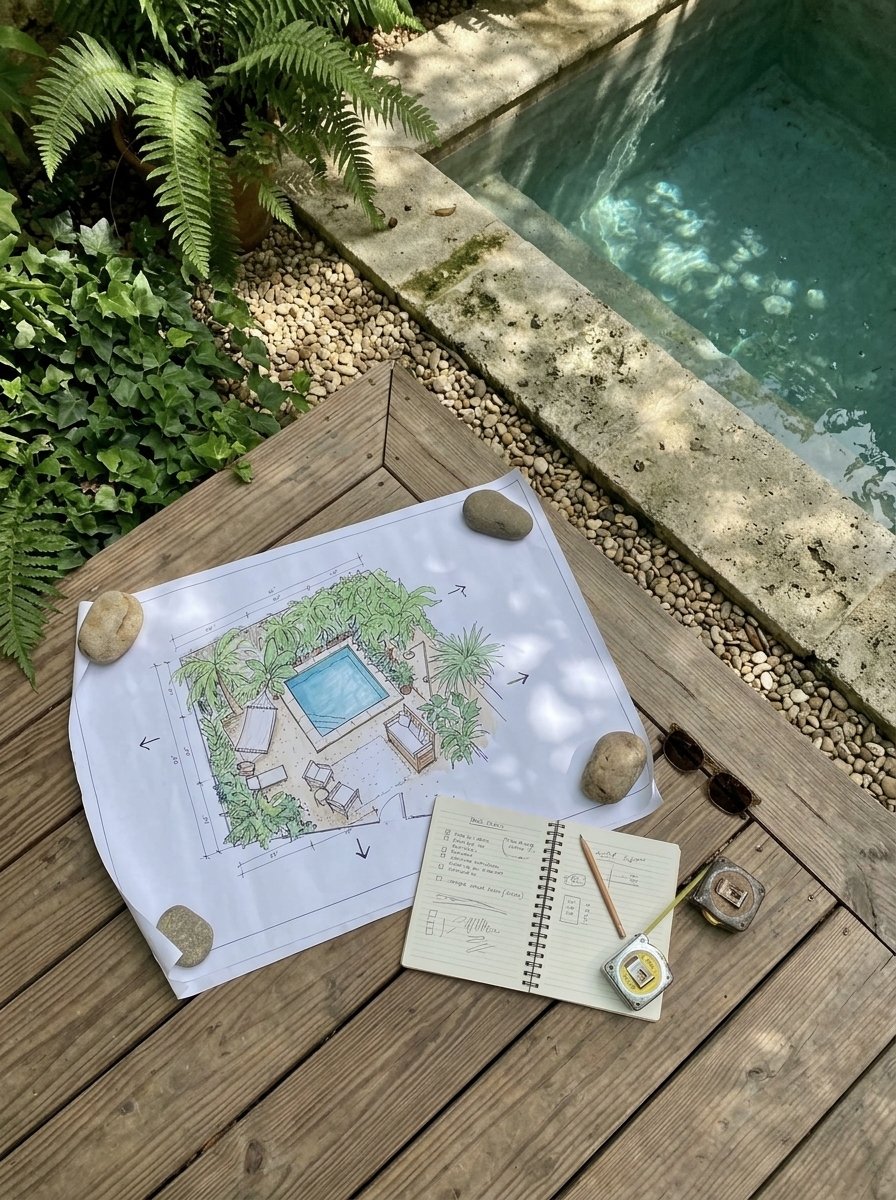
You don’t need expensive furniture to make a pool area feel special. A few well-chosen pieces go a long way.
Affordable lounge ideas:
- Two stackable chairs and a small side table
- A hammock between two posts or a stand
- Outdoor floor cushions and a low table
- A weather-resistant storage bench for towels
Shop secondhand, wait for end-of-season sales, and choose quick-drying fabrics. A simple outdoor rug and a few potted plants complete the look.
Factors to Consider When Choosing a Type of Small Pool
Before you buy anything, run through these factors. Most pool regrets come from skipping one of them.
1. Your Real Budget
Count more than the pool itself. A realistic budget includes:
- The pool or tank
- Pump, filter, and ladder
- Ground prep or excavation
- Electrical work
- Fencing or safety barrier
- Cover
- Chemicals and test kit
- Permits and inspection fees
- Deck, patio, or landscaping
A cheap pool with expensive extras can end up costing more than a mid-priced one that’s complete. Add a cushion of about 10 to 20 percent for surprises.
2. Yard Size and Shape
Measure your space, then add room for walkways, a fence, and equipment. Leave clear access for cleaning and repairs. A pool jammed against a fence is hard to maintain.
Also check the slope. Flat ground keeps costs low for above-ground and stock tank pools. Sloped yards may need leveling or a retaining wall.
3. Sun, Shade, and Trees
Sun warms the water. Trees drop leaves and sap. Aim for a spot with plenty of morning and midday light, and keep it away from large overhanging branches when possible.
Check for underground utilities too. Call your local utility-locating service before digging.
4. Local Rules and Permits
Pool rules vary by city and county. Many places require permits, setbacks from property lines, and barrier fences. Homeowners associations may have extra limits on pool type, color, or visibility.
Call your building department and HOA first. Learning the rules after buying a pool is expensive.
5. How You’ll Use the Pool
Be honest about your habits.
| If You Want To… | Consider |
|---|---|
| Swim laps | Lap pool or swim spa |
| Cool off on hot days | Stock tank, plunge, or dip pool |
| Play with kids | Above-ground or inflatable pool |
| Entertain friends | Cocktail pool with seating |
| Add home value | In-ground plunge or fiberglass pool |
| Try it with low risk | Inflatable or stock tank pool |
A pool you actually use is a better deal than a fancy one that sits empty.
6. Maintenance Time and Cost
Every pool needs cleaning, water testing, and some chemicals. Smaller water volume means lower costs, but the work is still regular.
Here’s a basic routine:
- Skim leaves and debris often
- Test water several times a week in hot weather
- Keep chlorine and pH in the ranges recommended by your test kit and pool maker
- Clean the filter on schedule
- Cover the pool when not in use
If you don’t enjoy upkeep, look at options with simple systems, like a saltwater setup or automated chlorination, or choose a drainable pool you can refill seasonally.
7. Lifespan and Resale Value
Inflatable pools last a season or a few. Above-ground and stock tank pools can last several years with care. In-ground fiberglass and concrete pools last decades.
Permanent in-ground pools may add appeal for some buyers, but they can also turn others away. Above-ground pools usually don’t boost resale value much, so choose based on your own enjoyment, not an expected return.
8. Safety Requirements
Safety isn’t optional. Your plan should include:
- A compliant fence and self-latching gate
- Pool alarms or door alarms if kids are in the home
- A reachable rescue tool and a phone near the pool
- Basic CPR knowledge for adults in the household
- Clear rules for kids and guests
If you have toddlers or pets, treat barriers as the first line of defense.
Money-Saving Tips for Any Small Pool
These habits keep costs low whichever pool you choose.
- Shop off-season. Pool kits and tanks often go on sale in fall and winter.
- Compare complete kits. Bundles with a pump, filter, and ladder usually beat piecing parts together.
- Do the easy work yourself. Leveling, assembly, and landscaping are DIY-friendly. Leave electrical and structural work to licensed pros.
- Use a cover. It cuts cleaning, evaporation, and heating costs.
- Get multiple quotes. For any contractor work, compare at least three quotes in writing.
- Pick a simple shape. Rectangles and circles are cheaper than custom curves.
- Run the pump smartly. Use a timer and an energy-efficient pump.
- Phase your upgrades. Start with the pool and safety features, then add decks, lights, and furniture over time.
Common Mistakes to Avoid
- Building on uneven or soft ground
- Forgetting to check permits and HOA rules
- Skipping the safety barrier
- Ignoring the cost of power, water, and chemicals
- Placing the pool under trees
- Choosing a pool that’s too large for the yard
- Buying the cheapest equipment, then replacing it a year later
A few hours of planning can save you hundreds, even thousands, of dollars later.
Step-by-Step: How to Plan Your Small Pool
- Set your total budget (pool plus extras).
- Measure your yard and mark the possible pool spot.
- Check local rules and HOA requirements.
- Choose your pool type using the idea list above.
- Get quotes or compare kits.
- Plan safety: fence, gate, cover, and alarms.
- Prepare the site: level the ground, call utility locators, and add a base.
- Install and fill following the manufacturer’s guide.
- Balance the water and run the pump before swimming.
- Add comfort and style over time.
Conclusion
A small pool can be the best upgrade your backyard ever gets, and it doesn’t have to cost a fortune. Whether you pick an inflatable, a stock tank, an above-ground pool, or a compact plunge pool, the best choice is the one that fits your yard, your habits, and your wallet.
Start with safety and local rules. Then choose a type, set a realistic budget, and add style touches like decking, plants, and lighting step by step. Small pools reward smart planning more than big spending.
Pick one or two ideas from this list that match your space, price them out, and take the first step.
FAQs
What is the cheapest type of small pool?
Inflatable pools usually cost the least upfront, followed by stock tank pools. Above-ground pools offer better long-term value for real swimming.
How much does a small pool cost?
It ranges from under a few hundred dollars for an inflatable to tens of thousands for an in-ground plunge pool. Get local quotes for an accurate number.
What size is a small pool?
Most small pools are about 6 to 15 feet across or long. Plunge pools are often at the smaller end of that range.
Is a stock tank pool a good idea?
Yes, it’s a low-cost, sturdy option for cooling off. You’ll still need a pump, filter, sanitizer, and a safe, level base.
Can I put a pool in a small backyard?
Yes. Plunge pools, stock tank pools, dip pools, and compact above-ground pools are made for tight spaces.
Do small pools need a fence?
Often yes, depending on local code and pool depth. Check with your building department before you buy.
Do I need a permit for an above-ground pool?
Many areas do require one, especially above a certain depth. Rules vary, so confirm locally.
Are small pools cheaper to maintain?
Generally, yes. Less water means fewer chemicals and lower heating costs, but regular cleaning and testing are still needed.
How can I keep my small pool warm?
Use a solar cover, place the pool in full sun, and block the wind. A small heater or heat pump can extend the season.
What is the best small pool for kids?
A sturdy above-ground or inflatable pool with a safety barrier and constant adult supervision works well.