
Some decks are just a platform with a grill on it. Others make you want to cancel your plans and stay home. The difference usually isn’t size or budget, it’s a handful of design decisions most people never think to make.
I used to think a luxury deck meant exotic hardwood and a price tag to match. Then I spent an evening on one that was actually well designed, with layered lighting, comfortable lounge seating, and a view that felt framed rather than accidental, and realized the magic is in the planning.
If your current deck feels more “functional” than “I never want to leave,” let’s fix that. These ideas work whether you’re building from scratch or upgrading what you already have.
What Makes a Deck Feel Genuinely Luxurious
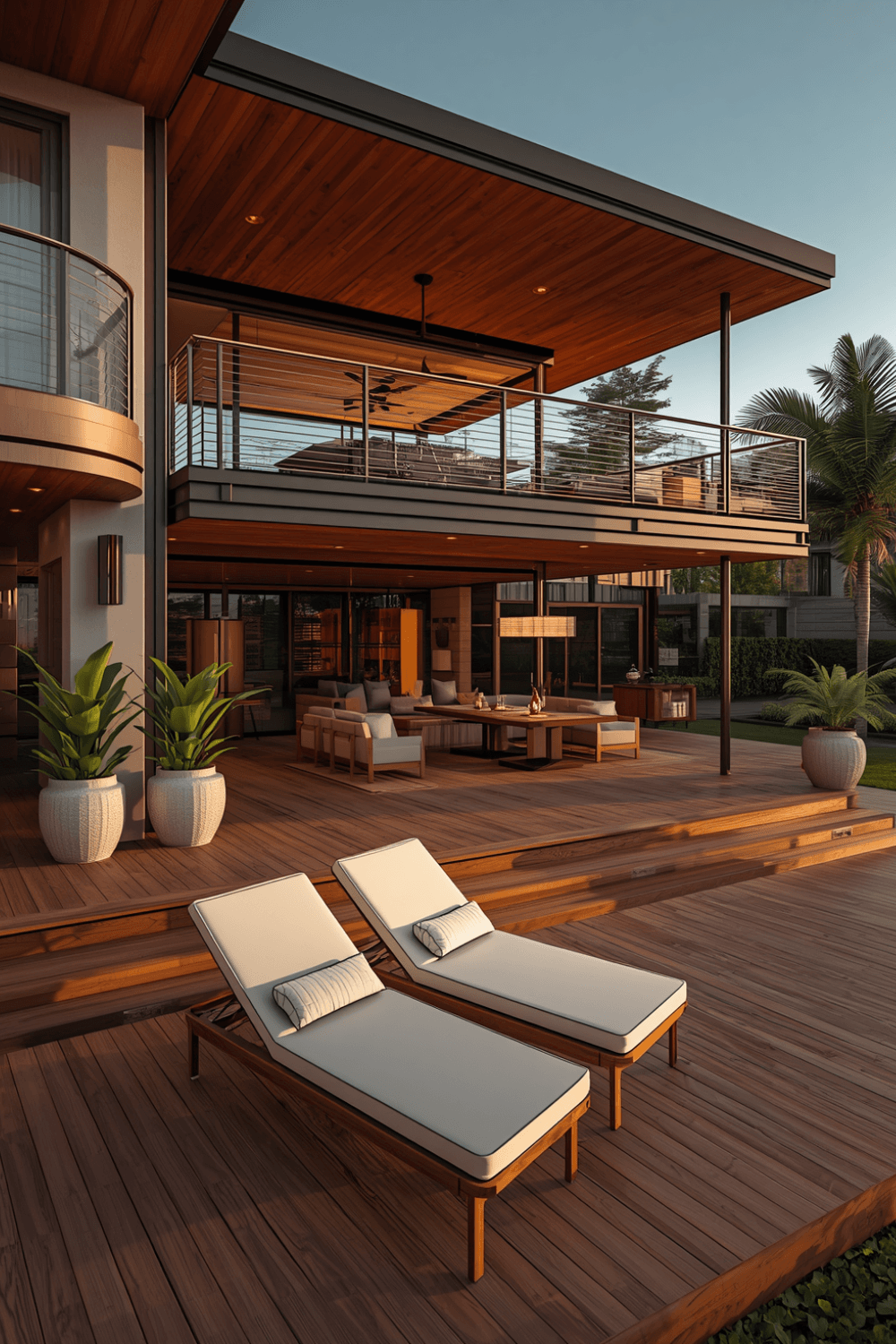
Before we get into specifics, let’s define the goal. Luxury outdoors isn’t about stuffing in more stuff. It’s about intention.
A great luxury outdoor space usually combines:
- Distinct zones for dining, lounging, and relaxing
- Quality materials that look good and age well
- Layered lighting that works after sunset
- A seamless connection to the landscaping around it
Miss these, and even an expensive deck can feel like an empty stage. Get them right, and a modest footprint feels like a resort.
Multi-Level Deck Design for Built-In Zoning
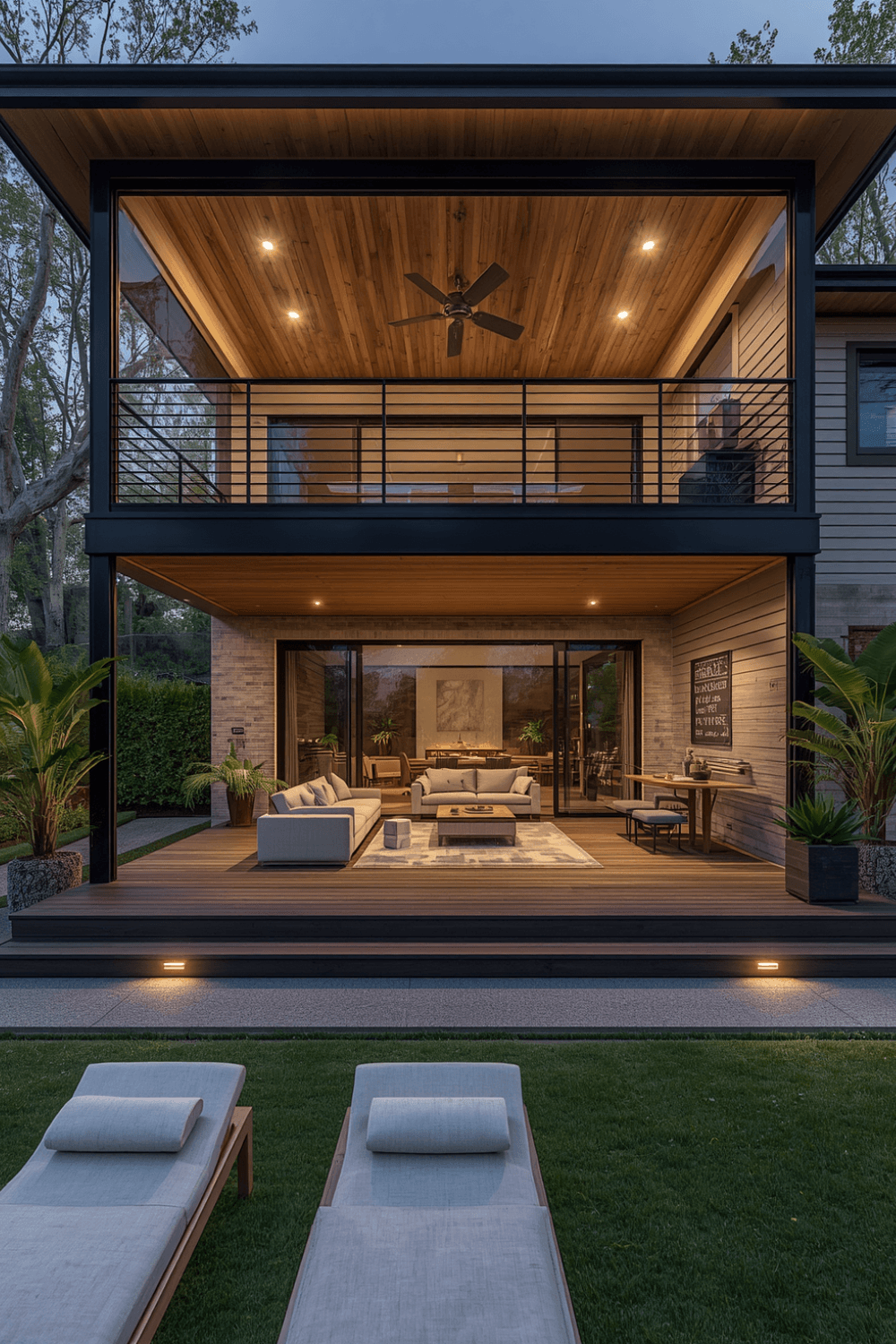
If your yard has any slope, or you simply want more architectural interest, a multi-level deck is one of the best moves you can make.
Instead of one big flat surface, you get naturally defined areas without any walls:
- An upper level for dining, close to the kitchen door
- A mid-level for lounging or a fire feature
- A lower level that steps down toward the garden
Why it works: Changes in elevation create a sense of journey and make the whole space feel larger than its square footage. Each level also feels like its own little destination.
Practical tip: Keep steps wide and shallow, ideally with built-in lighting on each riser. They’ll feel generous rather than awkward, and you’ll be safe walking down after dark.
Wooden Deck Choices That Age Beautifully
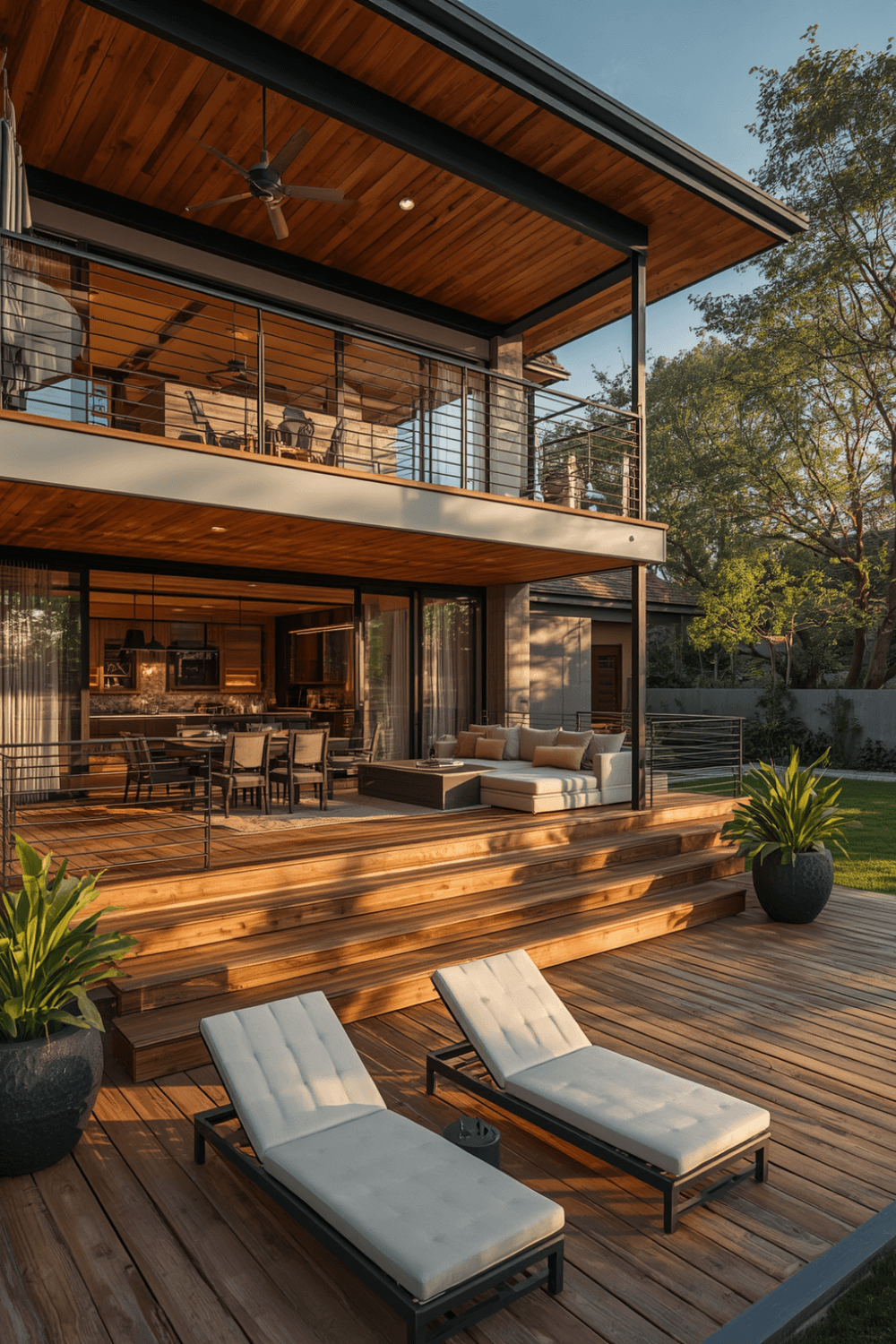
Material is where the quality really shows, and a wooden deck brings warmth that few alternatives match.
Popular options:
- Ipe or tigerwood for dense, rich hardwood with a high-end look
- Cedar for a lighter, naturally rot-resistant option that weathers to a soft gray
- Thermally modified wood for stability and a deep, consistent color
Reality check: Real hardwood needs occasional sealing to keep its color. If you want the look without the upkeep, premium composite decking has come a long way and can be remarkably convincing.
Cable Railing for Open, Unobstructed Views
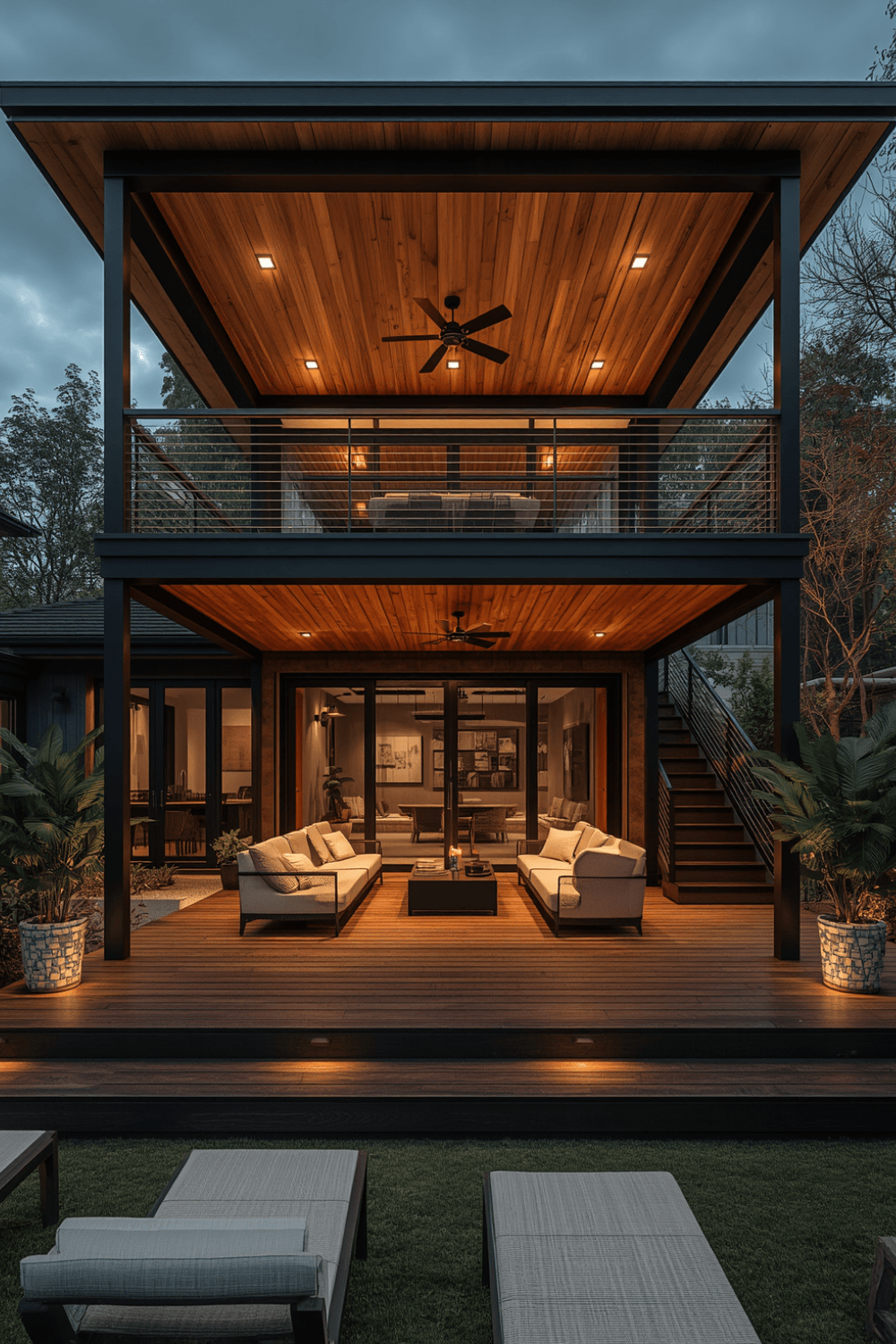
Here’s a detail that changes the whole feel of a deck. Cable railing uses thin stainless steel cables instead of chunky balusters, so your view of the yard stays almost completely open.
Why designers love it:
- It keeps sightlines clear, especially valuable if your backyard is something to look at
- It pairs beautifully with contemporary architecture
- It reads as light and refined next to warm wood decking
Quick tip: Pair cable infill with a solid wood top rail. The warmth under your hands balances the cool metal and makes the whole railing feel more inviting.
Deck Staircase Details That Elevate the Whole Design
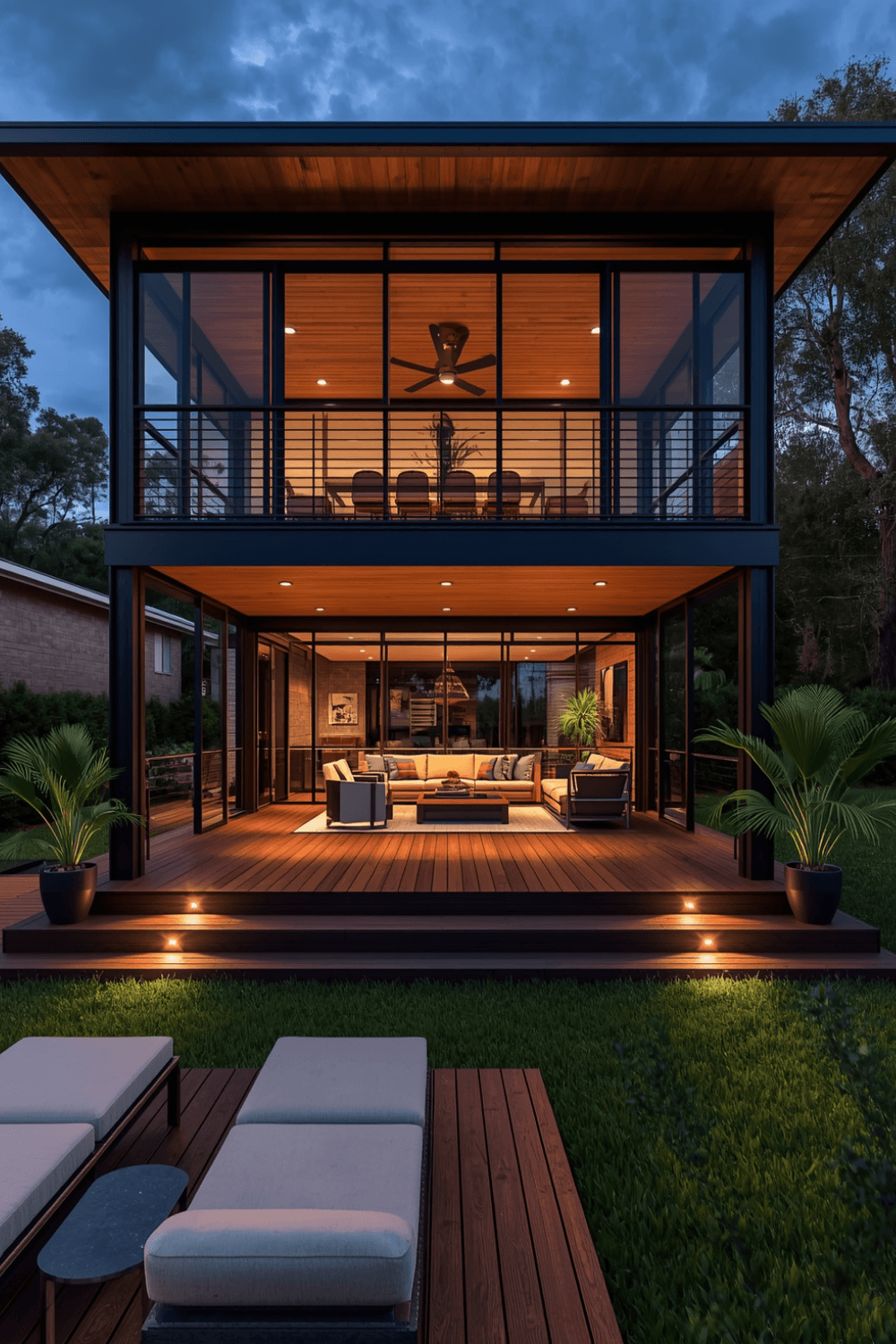
A deck staircase is easy to treat as an afterthought, but it’s the first thing people experience when they step into your yard.
- Wide, generous treads that feel more like a gentle descent than a ladder
- Integrated step lighting for safety and ambiance
- A landing or small platform at the base to transition into the garden
When the staircase echoes the deck’s materials and railing style, the whole structure feels like a single, deliberate design.
Outdoor Dining Area That Actually Gets Used
Many decks have a table that sits empty most of the year. A good outdoor dining area is placed and planned so it becomes a favorite spot.
What helps:
- Position it close to the kitchen so carrying food is effortless
- Choose a table large enough for your typical gathering, with room to push chairs back
- Add shade through a pergola, umbrella, or retractable awning
Quick gut check: Would you happily eat breakfast here on a Sunday morning? If not, adjust the sun exposure, seating comfort, or table size until the answer is yes.
Outdoor Lounge and Chaise Lounge Zones for Real Relaxation
Dining is for guests. Lounging is for you.
An outdoor lounge area works best a bit apart from the dining zone, so the energy shifts from meal-time to unwinding.
- A low sectional or pair of deep armchairs with weather-resistant cushions
- A side table within reach of every seat
- A chaise lounge or two positioned for sun or shade, depending on your preference
Practical tip: Angle seating toward the best view in your yard rather than toward the house. It makes the space feel like a retreat instead of an extension of the kitchen.
Outdoor Furniture That Survives the Seasons
Great outdoor furniture balances comfort, durability, and style.
Look for:
- Powder-coated aluminum or teak frames that resist rust and rot
- Quick-dry foam and solution-dyed fabrics that fight fading and mildew
- A cohesive palette, such as warm neutrals with one accent color, so everything looks planned
If a piece fails the comfort test in the showroom, it’ll fail it on your deck too. Sit in it for five minutes before buying.
Screened Porch Extension for Bug-Free Evenings
If mosquitoes or weather limit how much time you spend outside, a screened porch attached to your deck can double the season you actually use it.
- Place it adjacent to the main deck so it feels like a natural extension
- Use dark screen mesh for better visibility and a cleaner look
- Add ceiling fans and warm lighting so it feels like a real room
It’s also a lovely spot for a daybed or reading chair, since you get fresh air without the swatting.
Warm Deck Lighting for After-Dark Ambiance
Lighting is the secret weapon of a truly luxurious deck. Done well, it makes your space feel entirely different at night.
Warm deck lighting ideas:
- Recessed lights in stair risers and along the deck edge
- Post cap lights on railing posts
- Overhead string lights or pendant fixtures above the dining area
- Low landscape lights to wash nearby plants and trees
Quick tip: Stick to warm white (around 2700K). Cool white outdoors feels harsh and makes people look washed out.
Modern Patio Extensions Below or Beside the Deck
A modern patio can complement your deck beautifully, especially on a multi-level layout.
- A stone or concrete patio at the base of the deck stairs for a fire pit or grilling zone
- Large-format pavers that echo the clean lines of the deck
- A transition area with gravel or groundcover so the two surfaces feel connected
Mixing materials adds richness, as long as you keep the palette consistent.
Contemporary House Meets Deck: Matching Architecture
Your deck should feel like it belongs to your home, not like it was added later. For a contemporary house, that usually means:
- Clean, horizontal lines in the decking pattern
- Minimal ornamentation on railings and posts
- Materials that echo the house’s exterior, such as black window frames matched by black metal railing posts
Modern backyard design thrives on this consistency. When the deck, house, and landscape speak the same visual language, everything feels calm and cohesive.
Backyard Landscaping and Lush Green Garden Integration
A deck surrounded by bare lawn feels unfinished. Backyard landscaping is what makes it feel like part of a living space.
- Layer plants at different heights, from tall grasses and shrubs to low groundcover
- Use large planters at deck corners to soften hard edges
- Choose a restrained palette of greens with a few flowering accents
A lush green garden right beside your deck also gives you something beautiful to look at from every seat. Even a modest planting bed transforms the whole mood.
Modern Landscape Design Principles
Modern landscape design keeps things clean and intentional:
- Repeat a small number of plants for a cohesive look
- Use structural elements like boulders, stepping stones, and clean-edged beds
- Leave some open space, since breathing room is part of the luxury
- Light key features such as a specimen tree so they glow at night
Final Thoughts: Luxury Is in the Planning
At the end of the day, a luxury deck isn’t defined by price. It’s defined by zones that make sense, materials that age well, lighting that flatters, and a connection to the landscape around it.
Key takeaway: Start with the layout and views, choose quality materials and a clean railing, then layer in lighting and comfortable furniture. That order keeps the design cohesive and prevents expensive mistakes.
Frequently Asked Questions
1. How much does a luxury deck cost?
It varies widely based on size, materials, and complexity. Hardwood, multi-level designs, and built-in lighting cost more than a simple single-level composite deck. Getting a few quotes and prioritizing the features you’ll use most helps control the budget.
2. Is cable railing safe and code-compliant?
Yes, when installed correctly. Cable spacing and tension must meet local building codes, which typically limit gaps to under 4 inches. A professional installer will make sure it passes inspection.
3. What’s the best decking material for a high-end look?
Tropical hardwoods like ipe offer a premium appearance and long lifespan, while premium composites provide a similar look with less maintenance. The right choice depends on your climate, budget, and tolerance for upkeep.
4. How do I make a deck feel private?
Use tall planters, privacy screens, pergola panels, or strategically placed evergreens. Layered plantings often feel more natural than a solid fence and still allow airflow.
5. Can I add a screened porch to an existing deck?
In many cases, yes, though it may require structural reinforcement and permits. A contractor can assess whether your deck’s framing can support a roof and screened walls.
6. What lighting works best for a deck?
Warm white, low-level lighting works best, combining step lights, post caps, and overhead string or pendant lights. Layering several sources creates depth and avoids harsh glare.