
Most backyards are an afterthought. The house gets all the attention, all the decisions, all the budget, and by the time everyone’s done with the interior, the yard gets whatever’s left over, which is usually a patio set from a big box store and some grass that needs mowing every two weeks. I’ve stood in a lot of those backyards over the years, and the feeling is always the same: potential that nobody quite got around to. The strange thing is that fixing it rarely requires the ground-up rebuild most people assume. It usually comes down to three or four decisions made with some actual thought, a defined place to sit, light that makes the space usable after dark, and one piece of structure that gives the yard a reason to exist beyond storage. The twenty luxury backyard landscaping ideas in this guide are built around exactly that, decisions with a logic behind them rather than a list of things to buy.
I walked through a backyard last year that genuinely stopped me. Not because it was large, it wasn’t. Not because it had a pool or an outdoor kitchen or any of the usual high-budget features. It had a low patio in large format stone, an L-shaped sofa under a timber pergola with climbing jasmine that was halfway through establishing itself, string lights above it all, and one large olive tree in the corner that had clearly been there for a few years. That was it. And it felt like somewhere a person would actually want to spend an evening, which is the whole point and also a lot rarer than it should be. Everything in that yard was a decision, not an accident. The twenty luxury backyard landscaping ideas below are about making those kinds of decisions, from the hardscape outward, in the order that actually makes a project come together.
Modern Patio Design and Outdoor Lounge Ideas
1. A large format stone or porcelain tile patio as the base
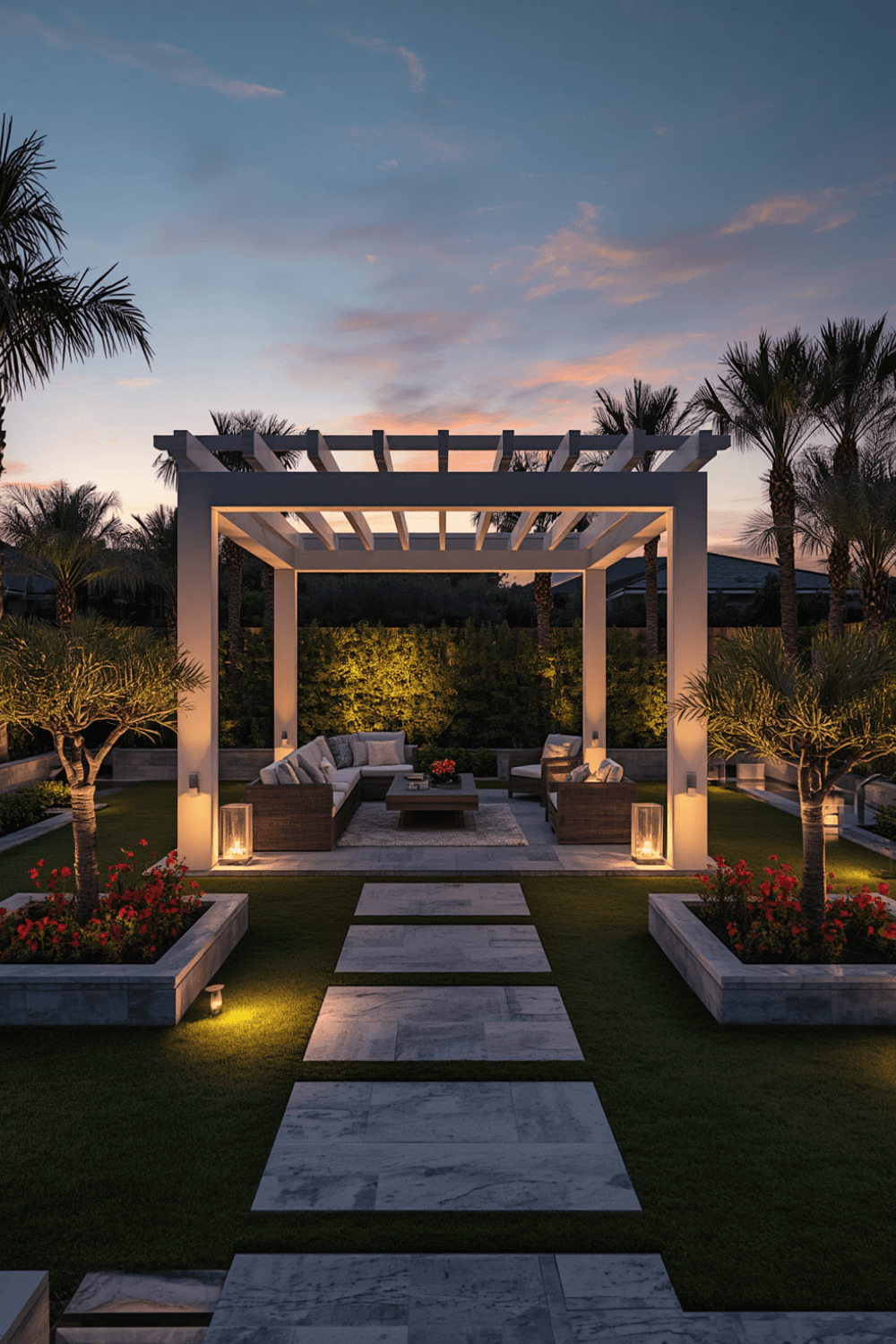
larger tiles in a warm grey, beige, or sandstone tone create the cleanest, most contemporary outdoor floor surface available. Fewer grout lines than smaller tiles, less movement in the eye, and a surface that reads as genuinely high-end without requiring any additional decoration.
2. A sunken lounge area as the patio’s centerpiece
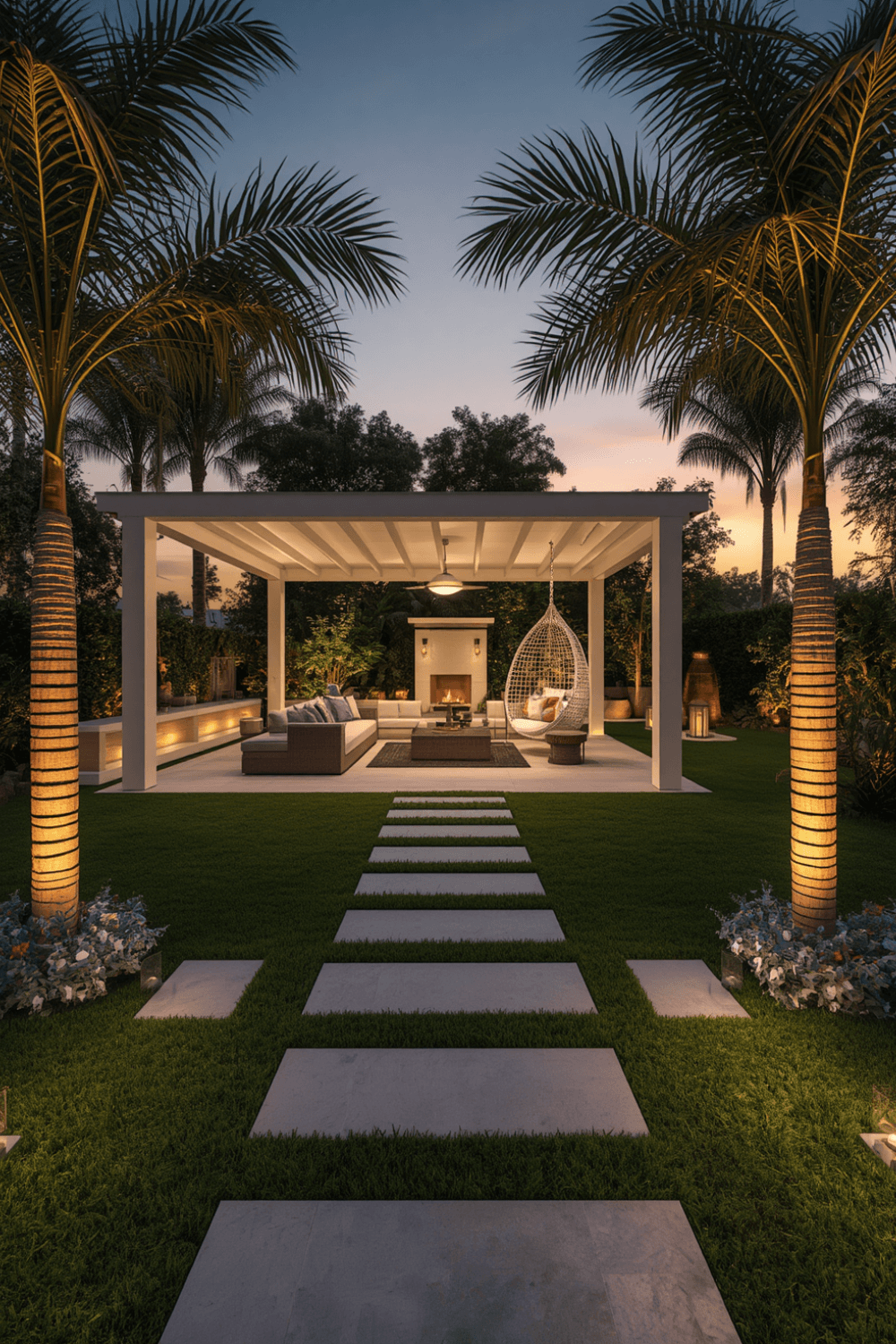
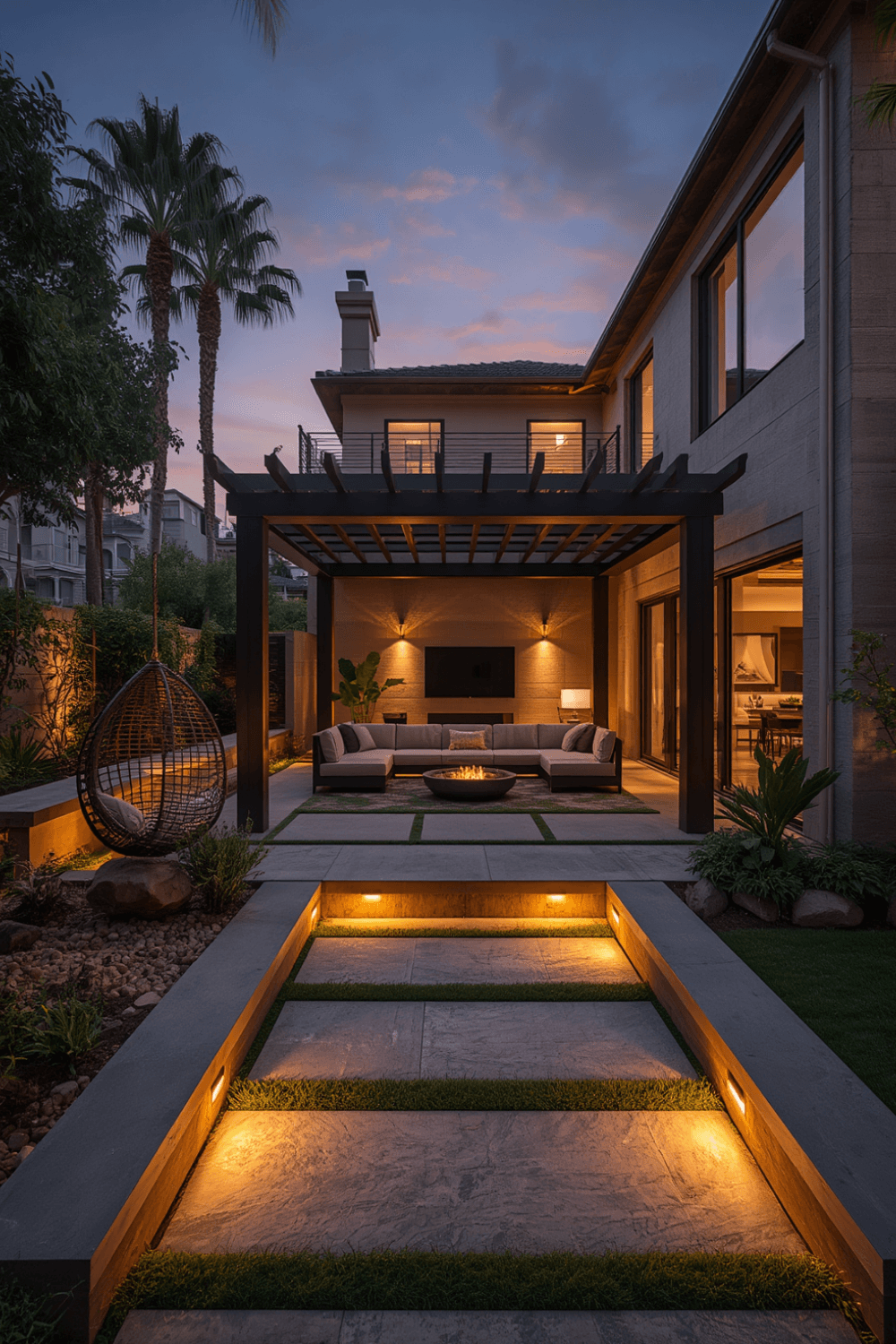
A section of the patio lowered by one or two steps, with low-slung seating and a fire pit or coffee table at its center, creates an enclosed, intimate feel within a larger open space. Sunken lounge areas are one of the most consistently used features in high-end outdoor living space design globally because they divide the seating area from the surrounding space without any walls or visual barriers.
3. A modular outdoor sofa in a weather-resistant fabric
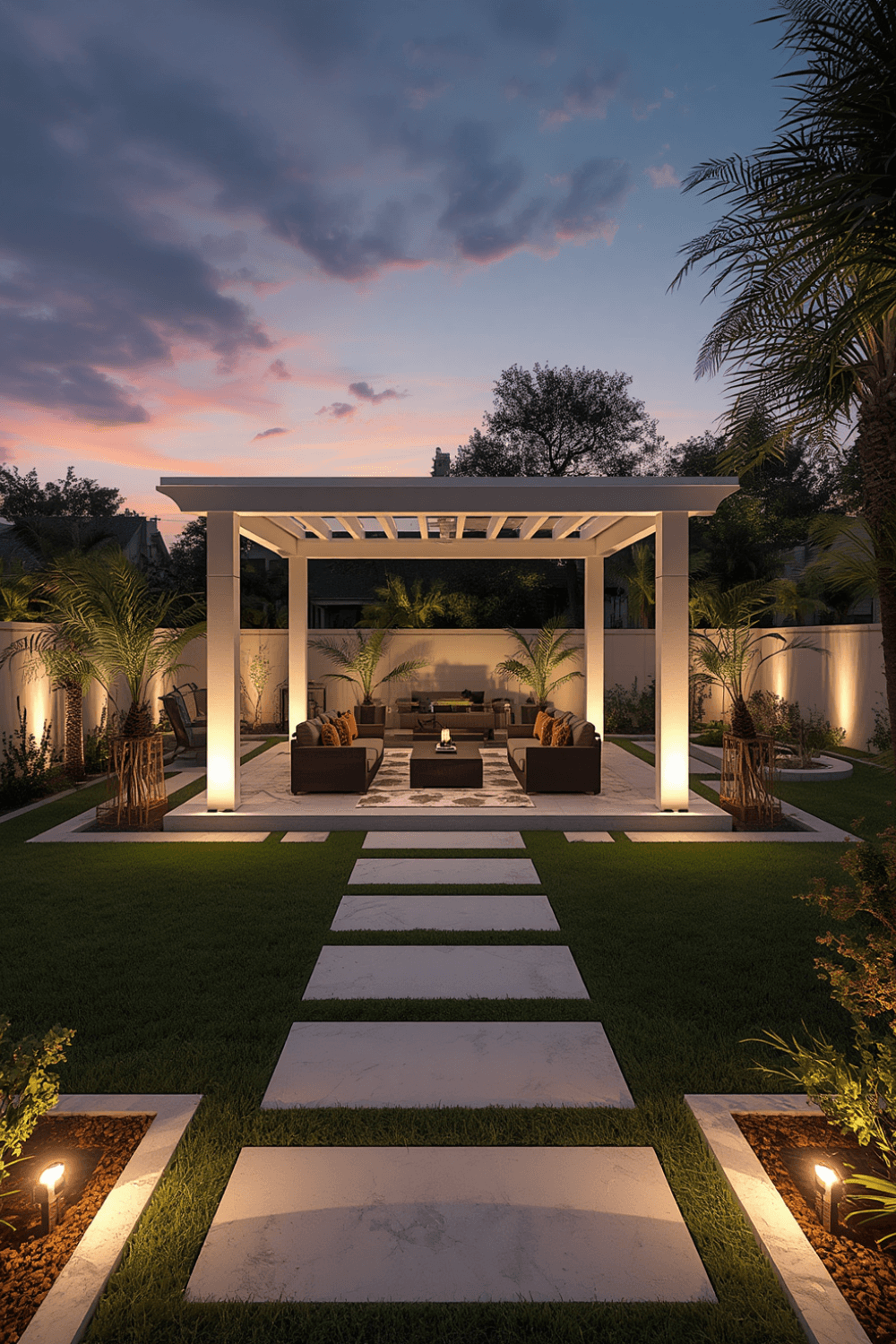
A large L-shaped or U-shaped modular sofa in a quality outdoor fabric in neutral grey, cream, or warm sand gives the lounge area the same comfort level as an indoor sofa while handling the elements. The size and configuration of the furniture is what defines the lounge zone, so going larger rather than more cautiously sized almost always reads as more intentional.
4. A built-in concrete or stone bench along a retaining wall or fence line
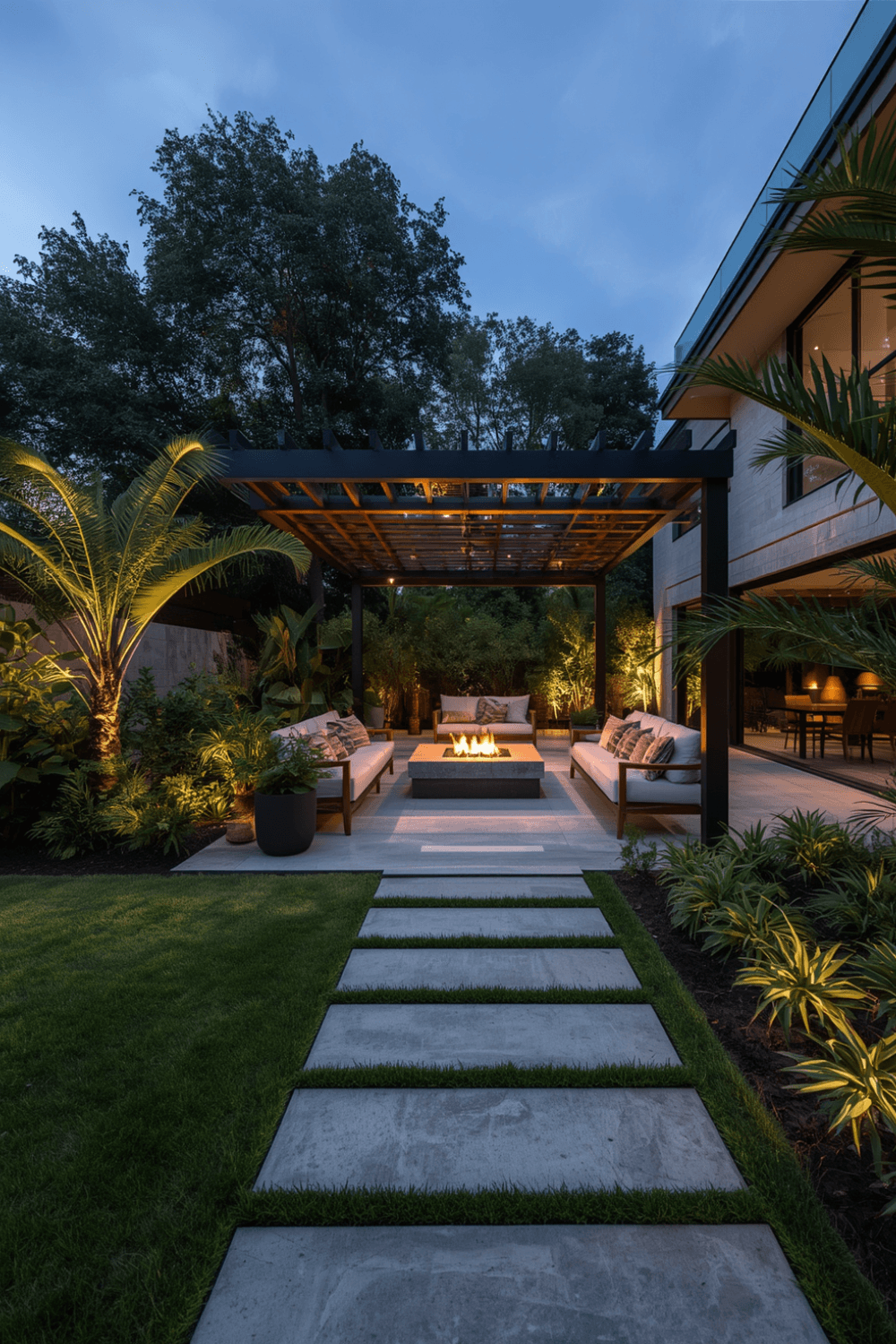
A built-in bench running along one edge of the patio creates fixed seating that doesn’t need to be stored or rearranged and reads as part of the architecture of the space rather than furniture placed in it. Paired with loose cushions in a weather-resistant fabric, it’s both practical and considerably more polished than standard garden furniture.
5. A daybed or outdoor lounger beside a pool or garden feature
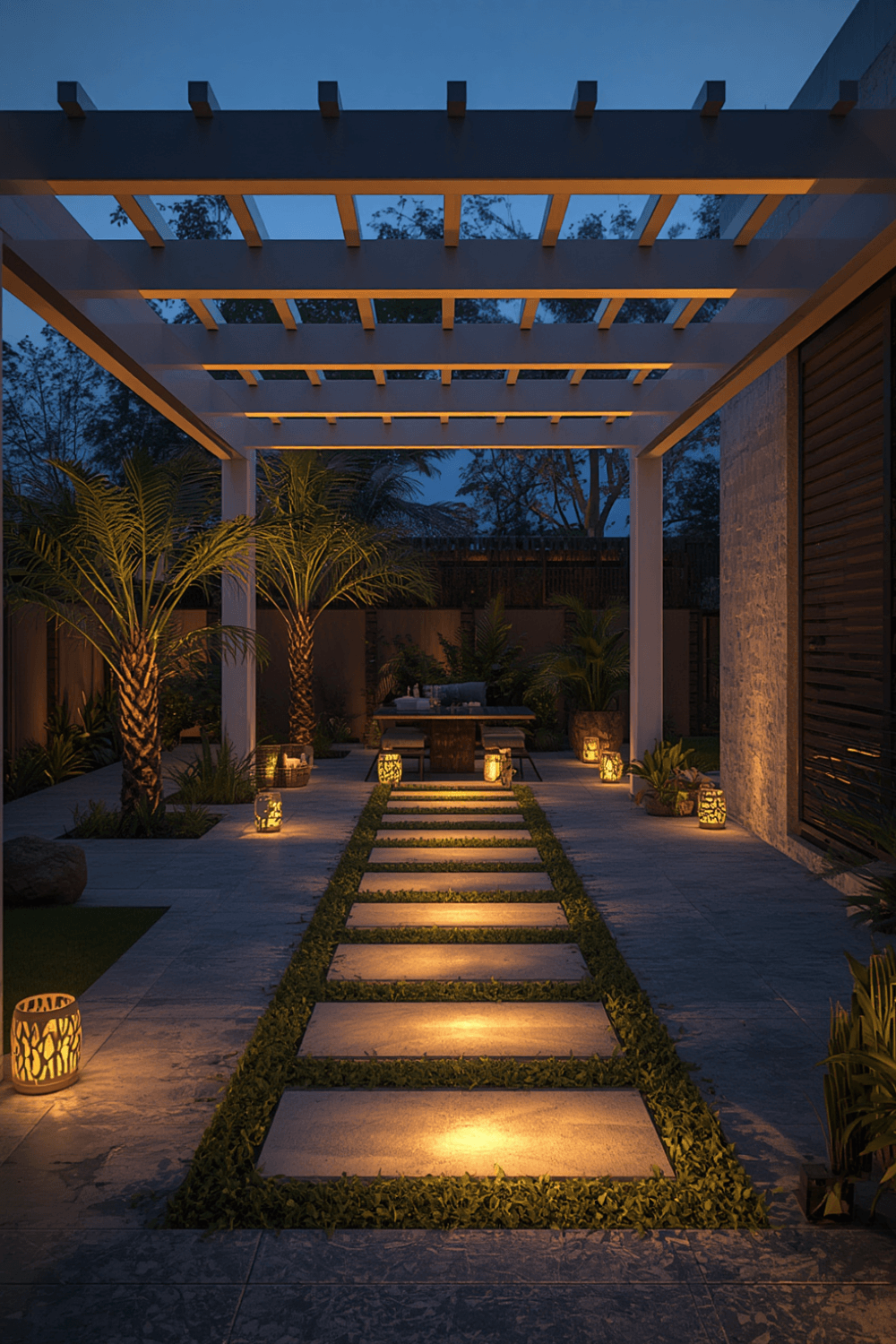
Even without a pool, a wide, cushioned outdoor daybed positioned to face the garden or a water feature creates a distinct lounging zone separate from the main seating area. It’s the kind of detail that makes a backyard feel resort-like rather than just well-furnished.
6. A timber or steel pergola over the lounge or dining area
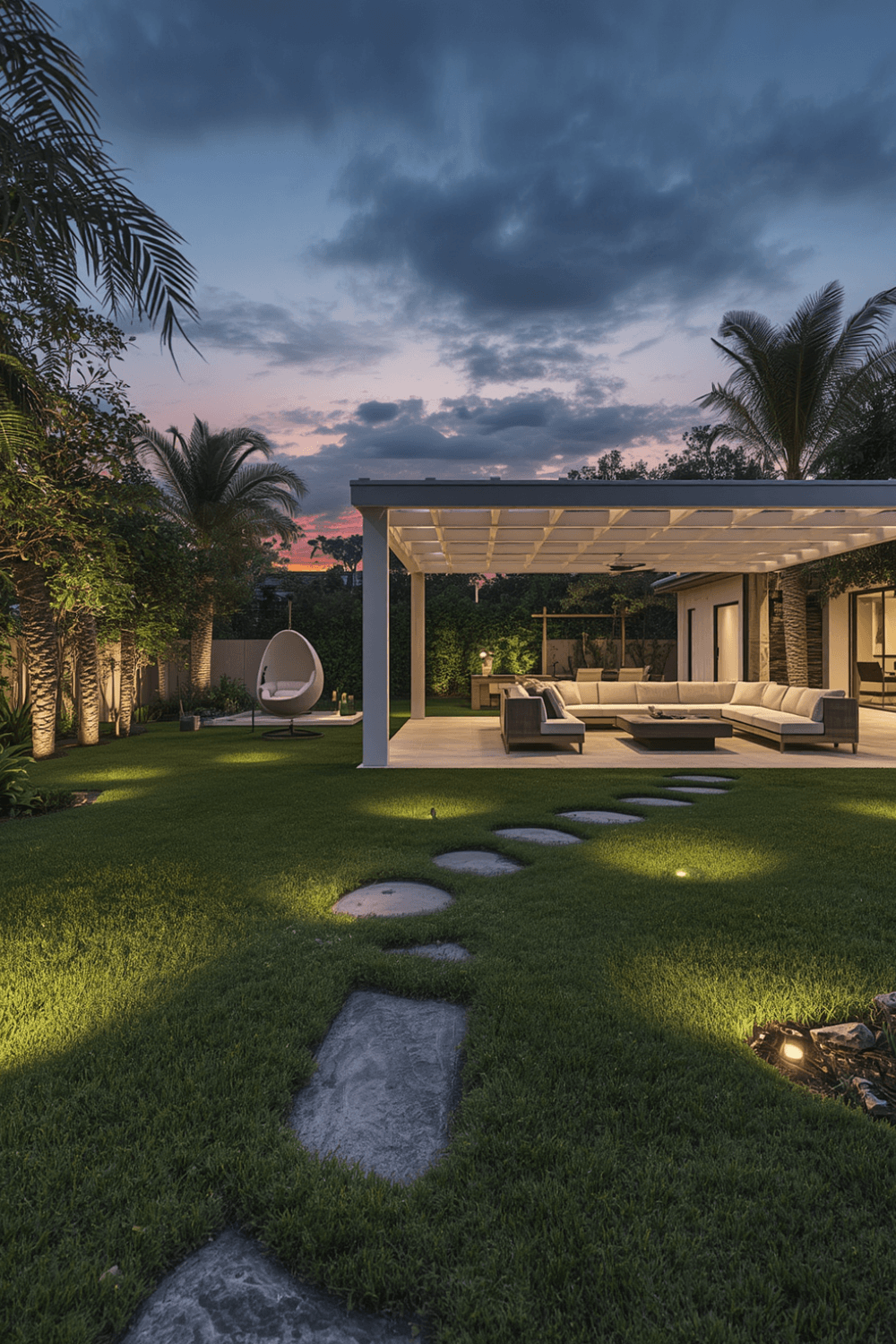
A pergola provides partial shade, a structure to hang lights and plants from, and a visual ceiling that makes the outdoor space feel more enclosed and intimate without blocking air or light. Steel pergolas read as more contemporary; timber reads warmer and suits a garden setting. Both need to be anchored properly and sized to cover the furniture beneath them generously, since an undersized pergola over a large outdoor sofa looks like a mistake.
7. A pergola with climbing plants for a more organic, garden feel
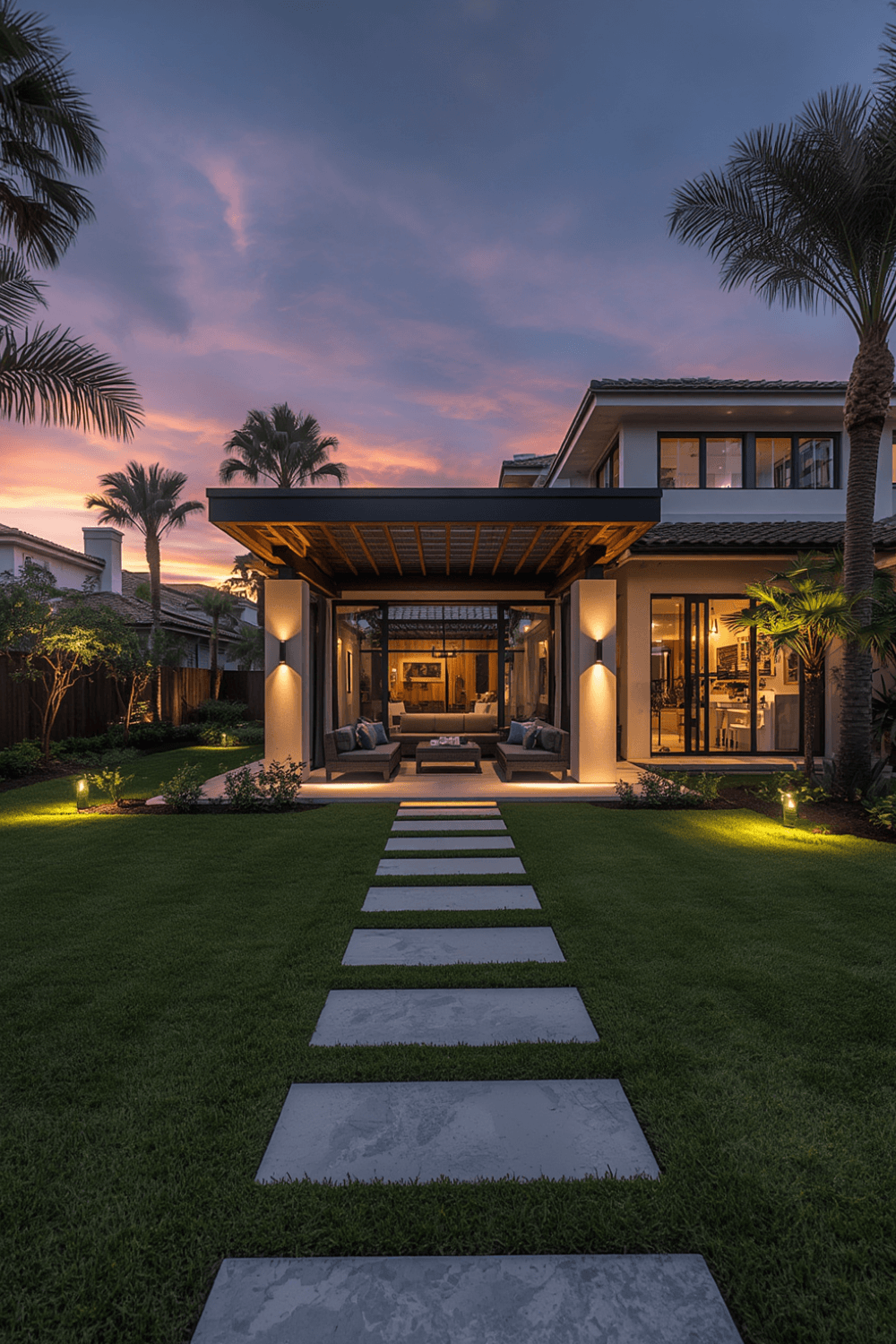
Wisteria, jasmine, or climbing roses trained over a pergola frame adds fragrance and living texture to what would otherwise be a purely architectural element. This takes a season or two to establish but transforms the structure in a way that no artificial covering can replicate. One primary material with one or two complementary materials always looks more considered.
8. A louvred roof pergola with adjustable slats
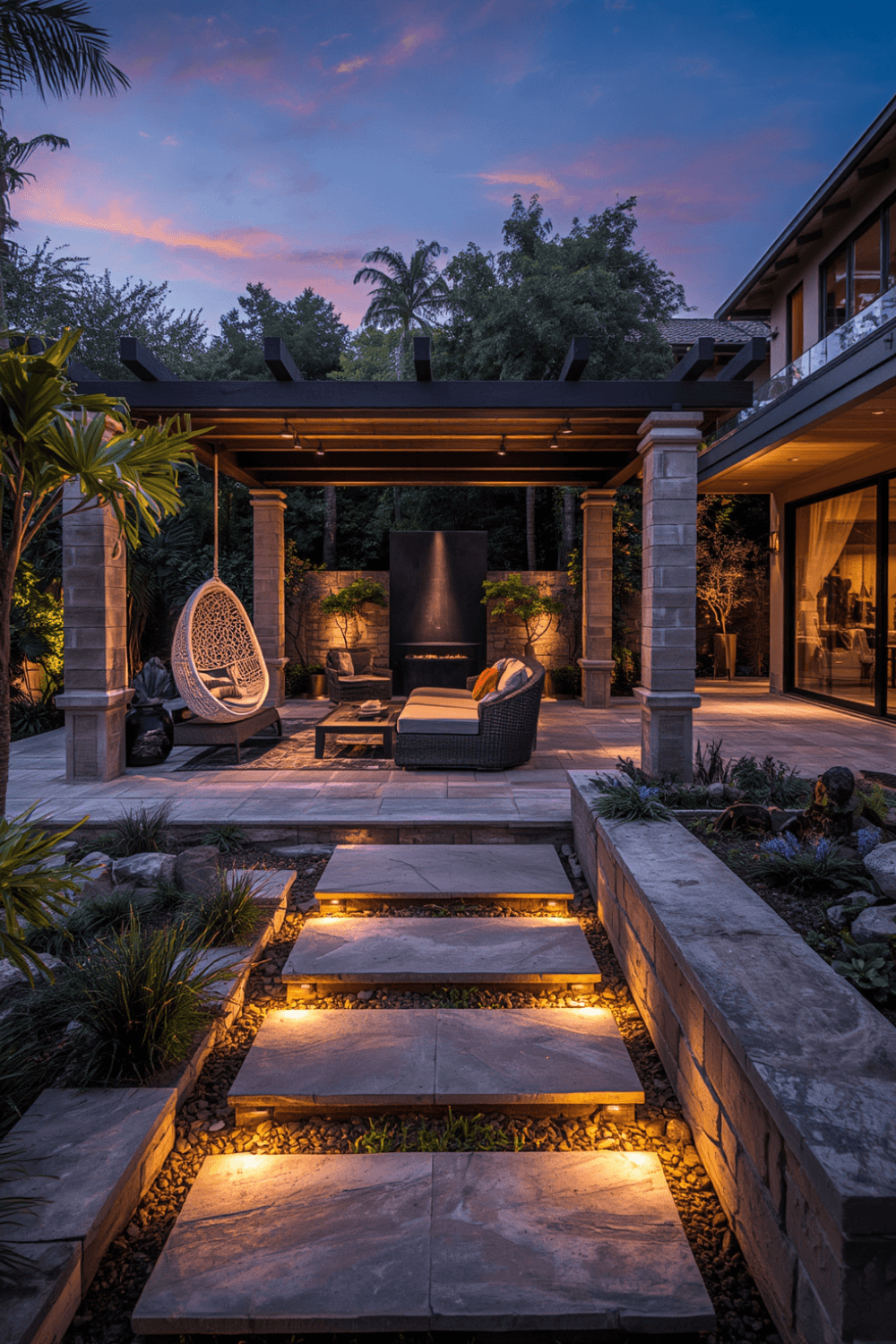
A more expensive option but increasingly common in contemporary garden design a pergola with motorized louvres that open for sun and close for rain, turning the outdoor area into a usable all-weather space. Combined with outdoor heating, it extends the usable season of the space significantly.
9. A feature wall or garden screen for privacy and structure
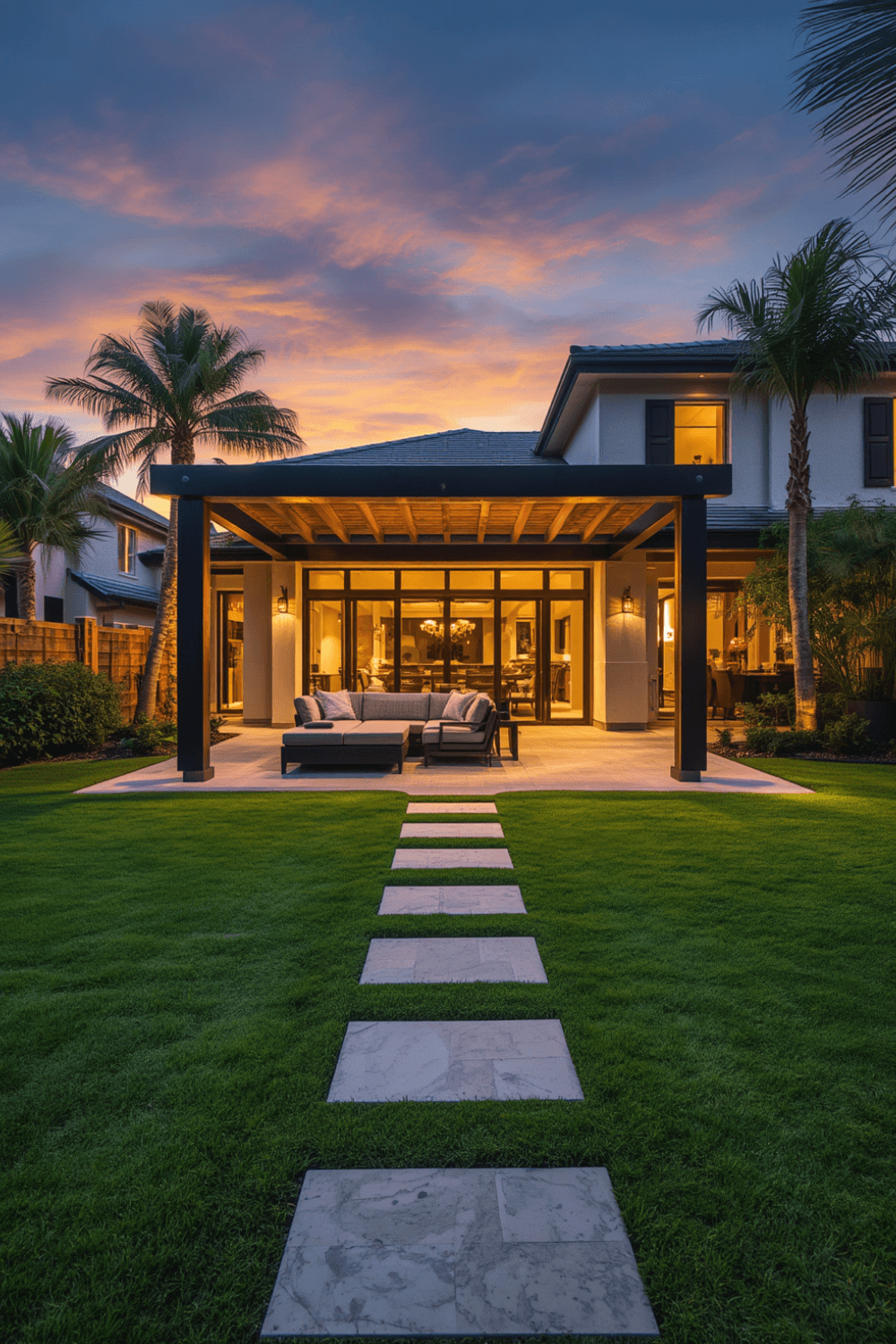
A rendered wall, a timber batten screen, or a steel frame with climbing plants creates vertical structure and privacy in a backyard without needing a full fence height. It also creates a backdrop for planting and lighting and gives the space a sense of enclosure that makes the seating feel more intimate. Outdoor furniture in a scale too small for the space.
10. A standalone shade sail in a contemporary geometry
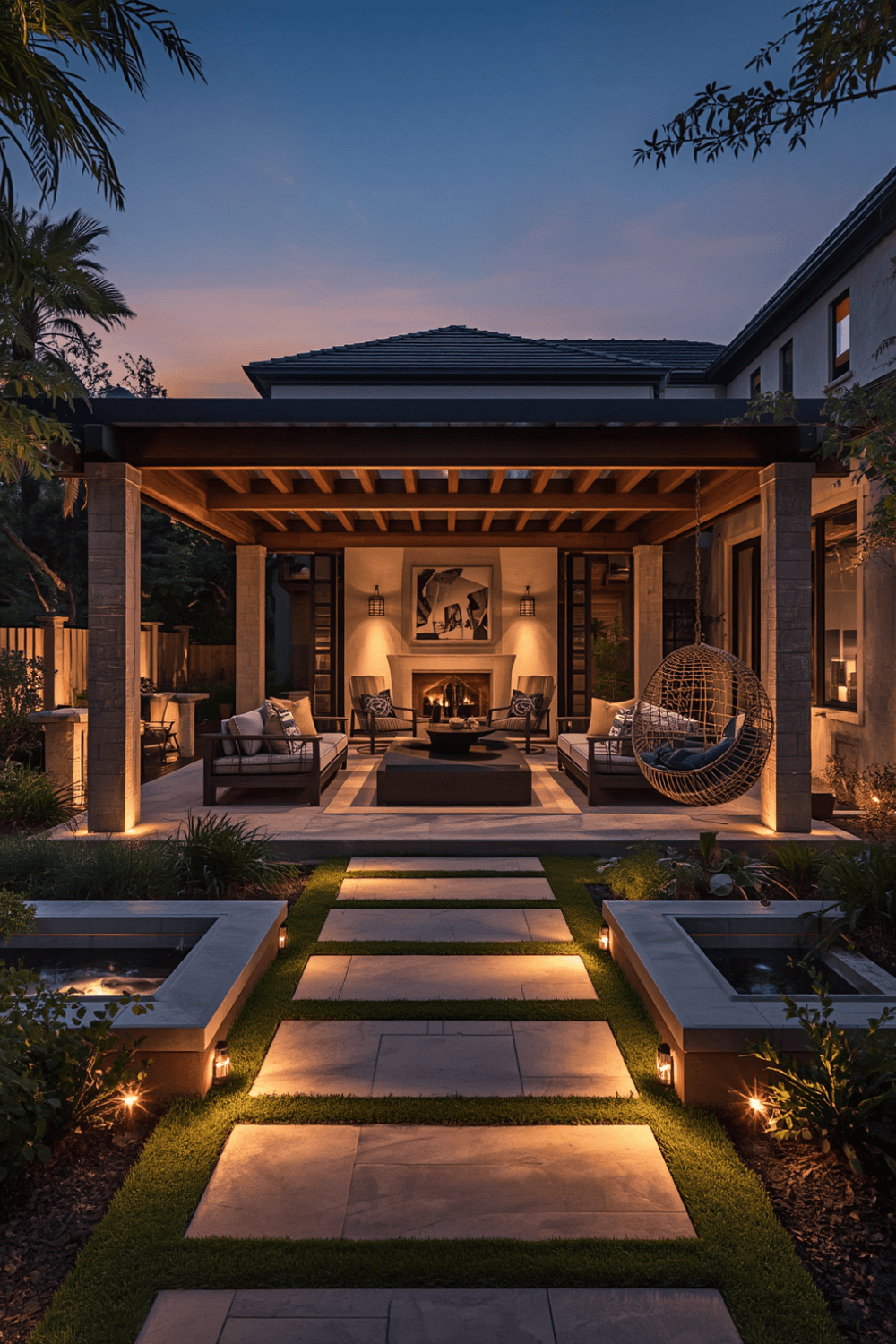
For spaces where a full pergola isn’t practical or budget-friendly, a large tensioned shade sail in a clean geometric shape (triangle or rectangle rather than a wavy organic shape) adds overhead shade and a visual roof to the seating area at a fraction of the cost. A single material used everywhere without variation. Stone paving, a stone retaining wall, stone steps, and stone planters all in the same material reads as monotonous rather than cohesive.
Landscape Lighting Ideas for After Dark
A backyard without a lighting plan has no evening life.
11. Path lights along garden walkways and edges
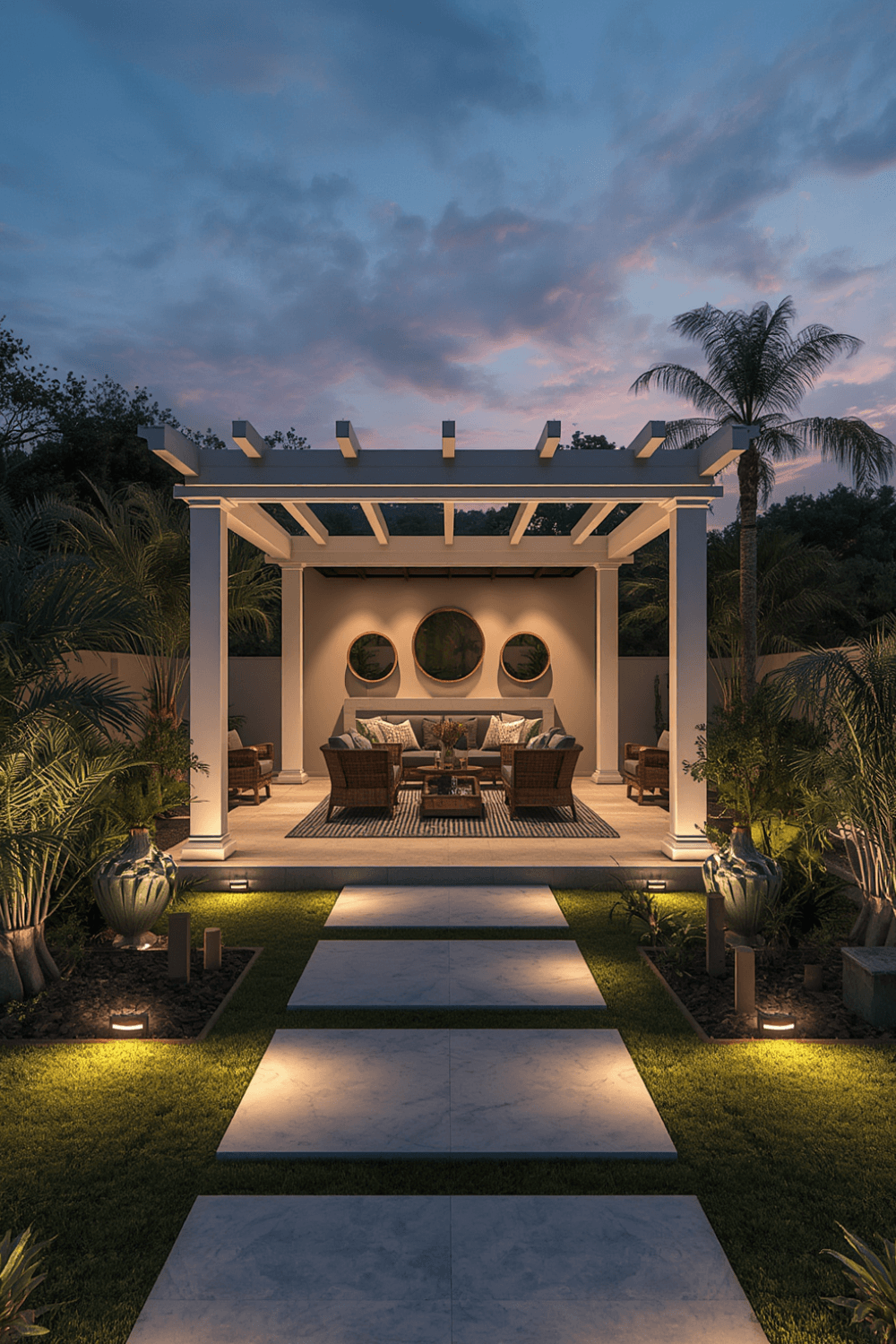
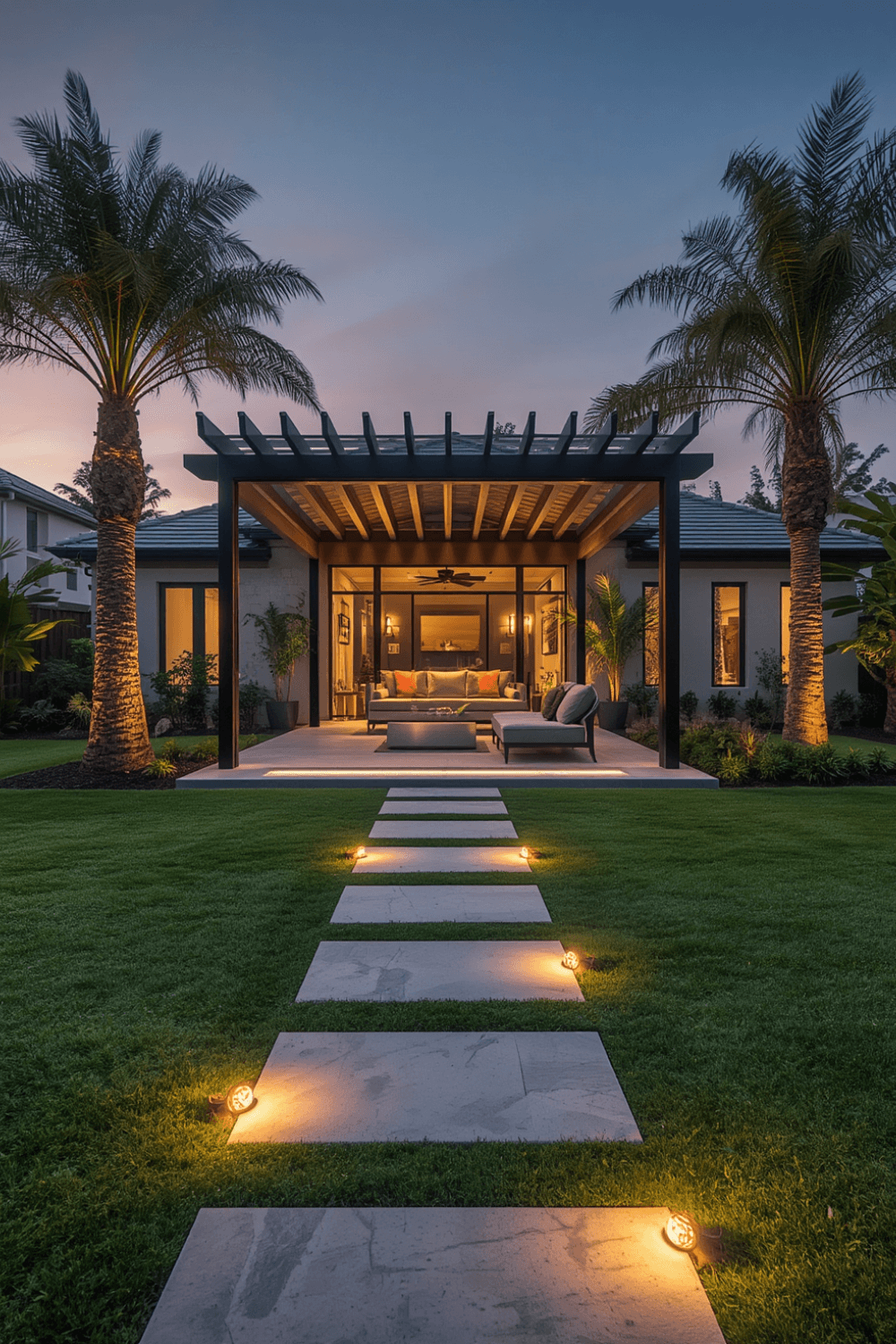
Low-voltage path lights set into planting beds on either side of a garden pathway create a lit route through the space that reads as both practical and designed. Space them 6 to 8 feet apart, staggered on alternating sides rather than placed in two parallel rows, which looks like a landing strip. Planting that’s too small at installation.
12. Uplighting on specimen trees and feature plants
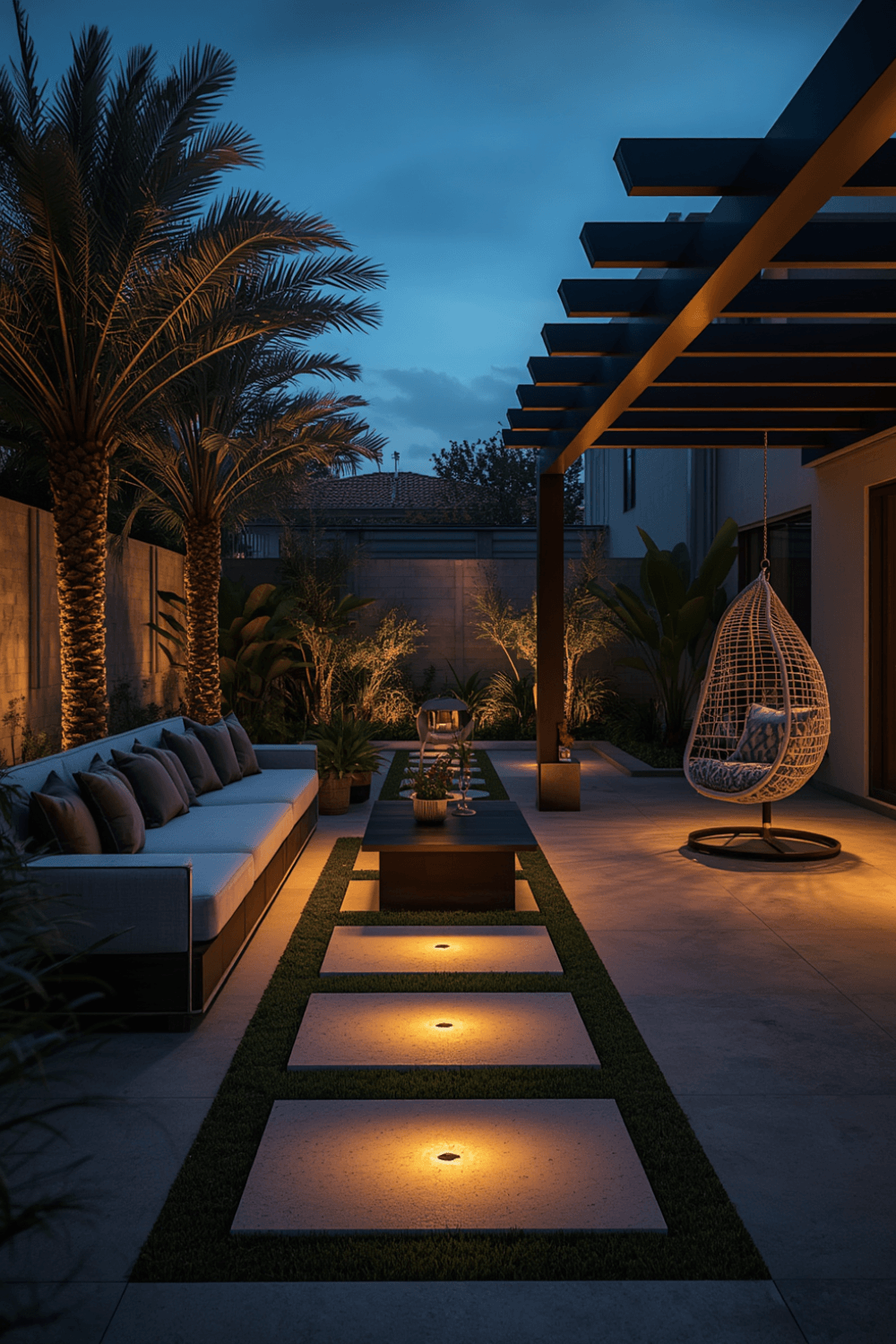
A spotlight at the base of a mature tree aimed upward through the canopy is one of the most photographed landscape lighting effects for good reason: it transforms a daytime feature into a genuine evening focal point and casts dappled shadow patterns on the ground that no interior light can replicate.
13. String lights or festoon lights above the dining or lounge area
Warm-toned festoon lights strung across the outdoor dining area or overhead between pergola posts create the single most immediately welcoming atmosphere of any outdoor lighting fixture. The key is warm color temperature and enough tension that the strings don’t sag into the space.
14. Underwater lighting in a pool, pond, or water feature
Submersible LED fixtures in any water feature turn it into a luminous focal point after dark. In a pool setting, they also significantly increase the practical usable hours of the pool. Color-changing options exist but warm white is almost always the most sophisticated choice. Landscape lighting as an afterthought, with wiring planned after construction rather than before.
15. In-ground or recessed step lighting along changes of level
Anywhere the garden changes level, a recessed LED fixture in the riser of each step is both a safety feature and a design detail. It keeps sightlines low and warm across the outdoor space rather than forcing people to look upward at overhead fixtures to navigate. Always wire for lighting during the hardscape phase, even if the fixtures are added later.
Garden Pathway Ideas and Modern Courtyard Design
16. A stepping stone pathway through planting beds
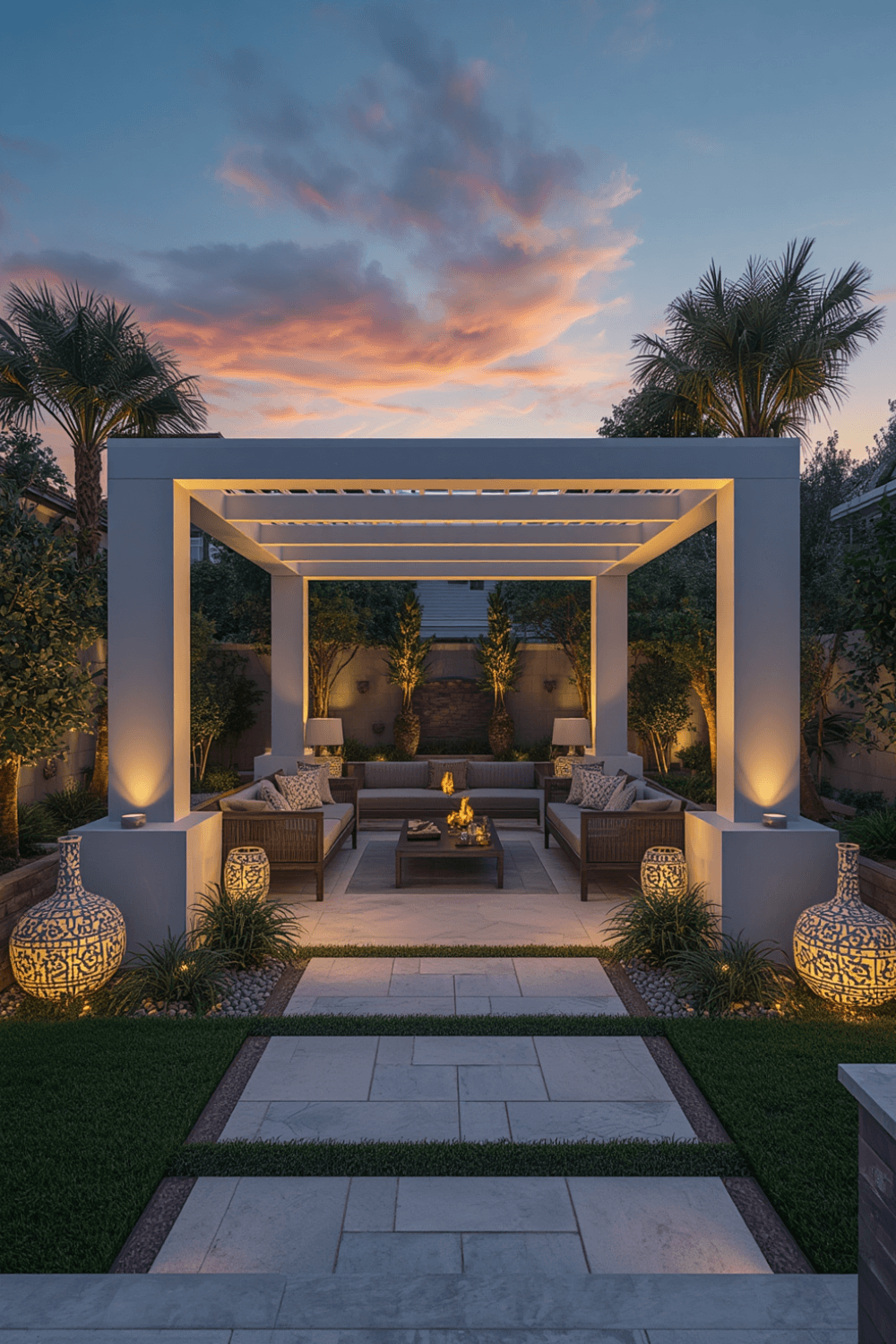
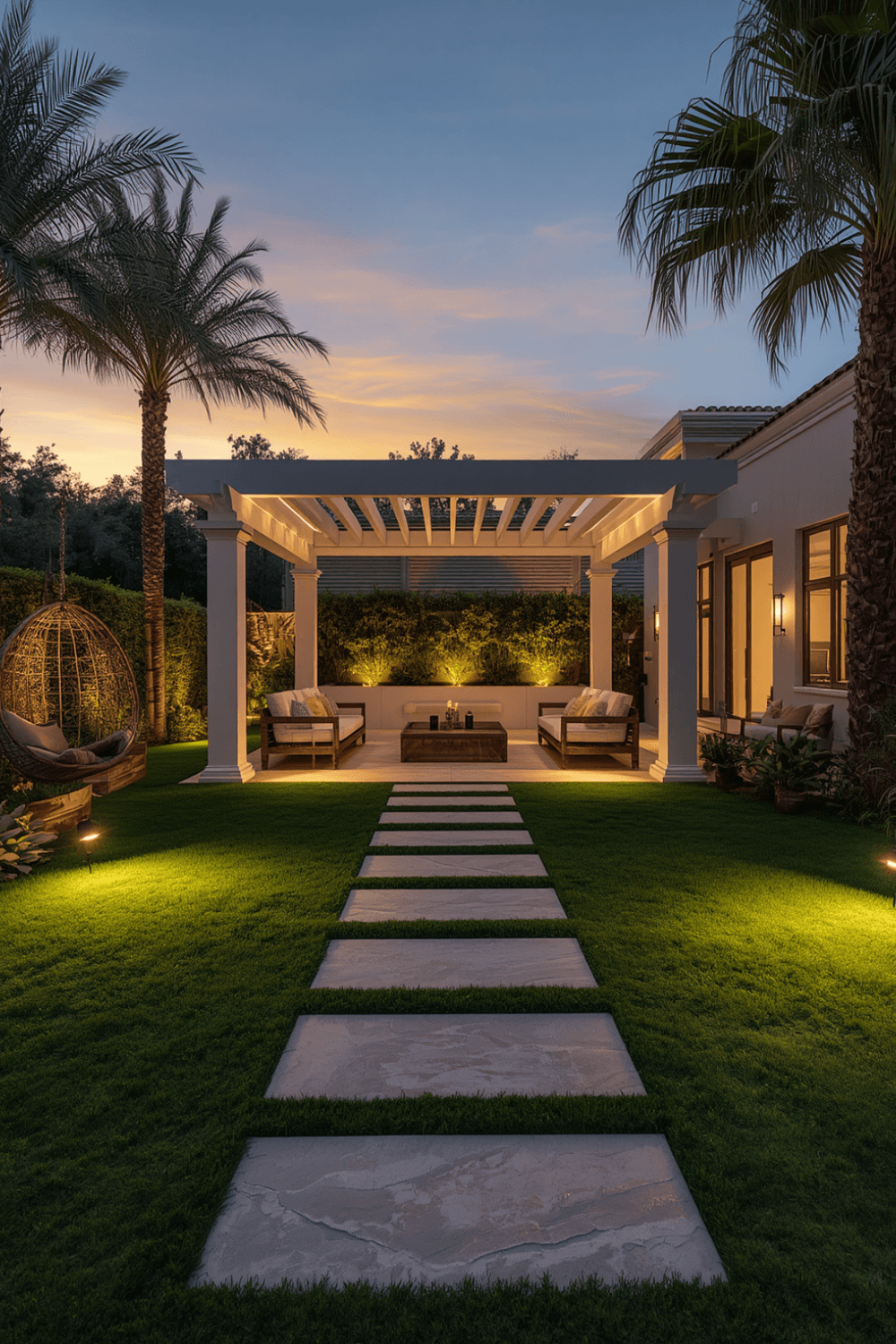
Large format stepping stones, in the same material as the main patio for consistency, set into low planting beds or lawn creates a garden path that feels like part of the design rather than a purely functional addition.
17. A gravel pathway bordered by low hedge or ornamental grasses
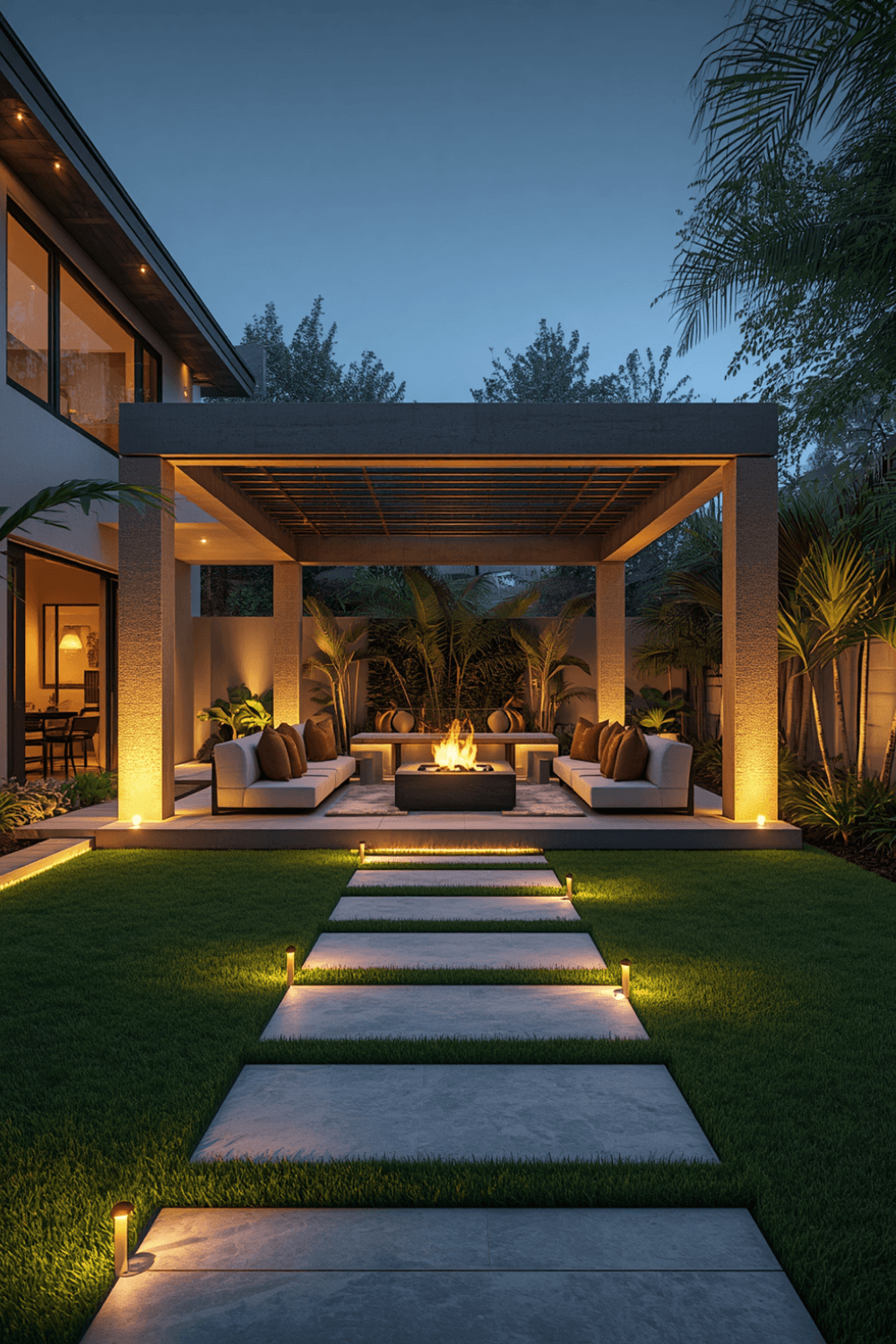
A raked gravel path in white or pale cream stone bordered by clipped boxwood or a contemporary ornamental grass creates a formal-feeling garden axis that suits a minimalist landscape design. It’s lower cost than paving and brings a distinct texture to the garden floor that hard paving doesn’t have. Buying patio furniture before the hardscape is finished. The furniture choice should follow the floor material, not lead it.
18. A concrete pathway with flush LED step lighting integrated into the edge
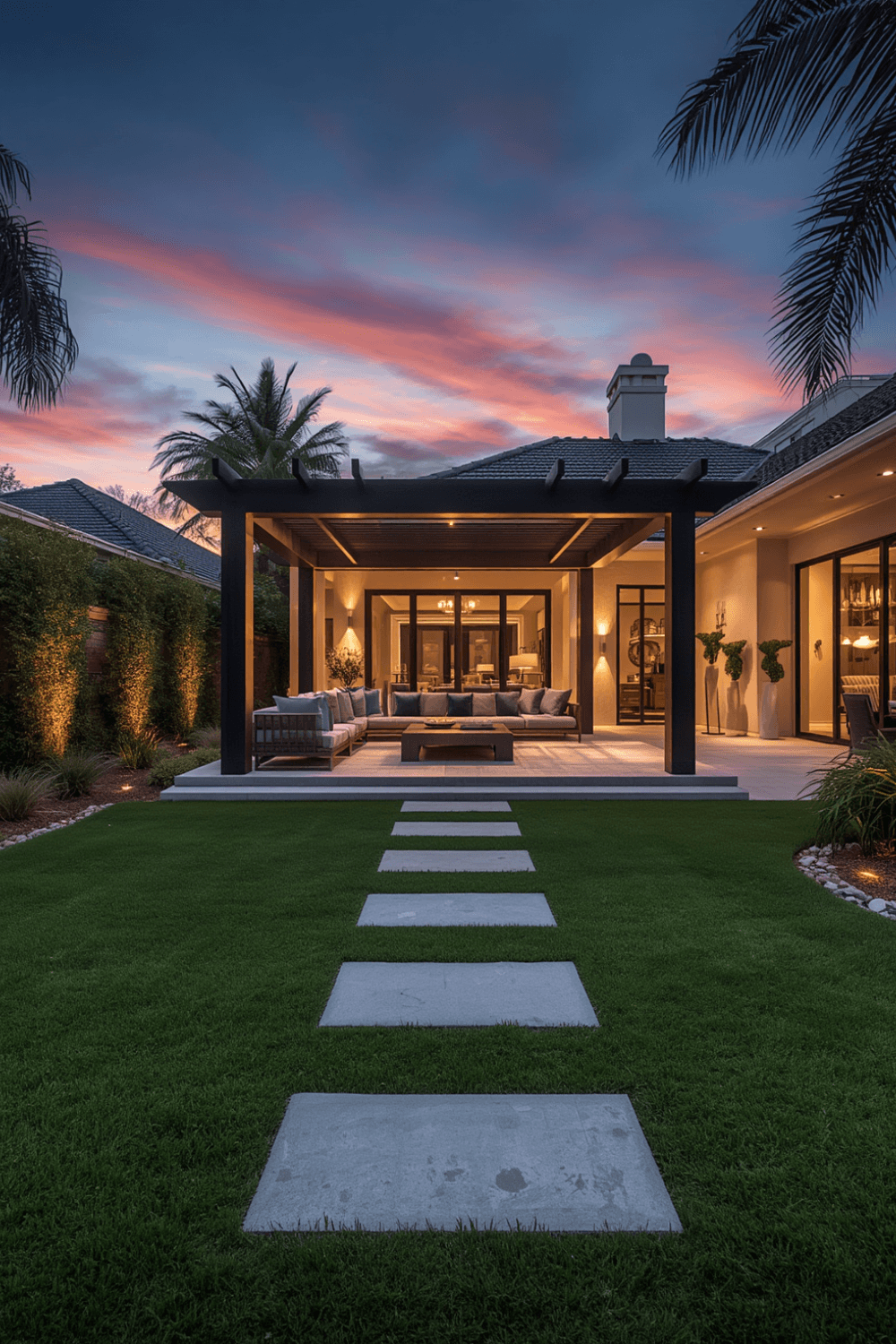
A continuous poured concrete path with LED strips recessed into the edge at ground level creates a clean, contemporary garden path that reads as architectural rather than decorative. It suits a modern courtyard design more than a traditional garden but is one of the more photographed contemporary landscaping details in high-end residential projects worldwide.
Elegant Garden Decor and Finishing Touches
19. A water feature as the garden’s focal point
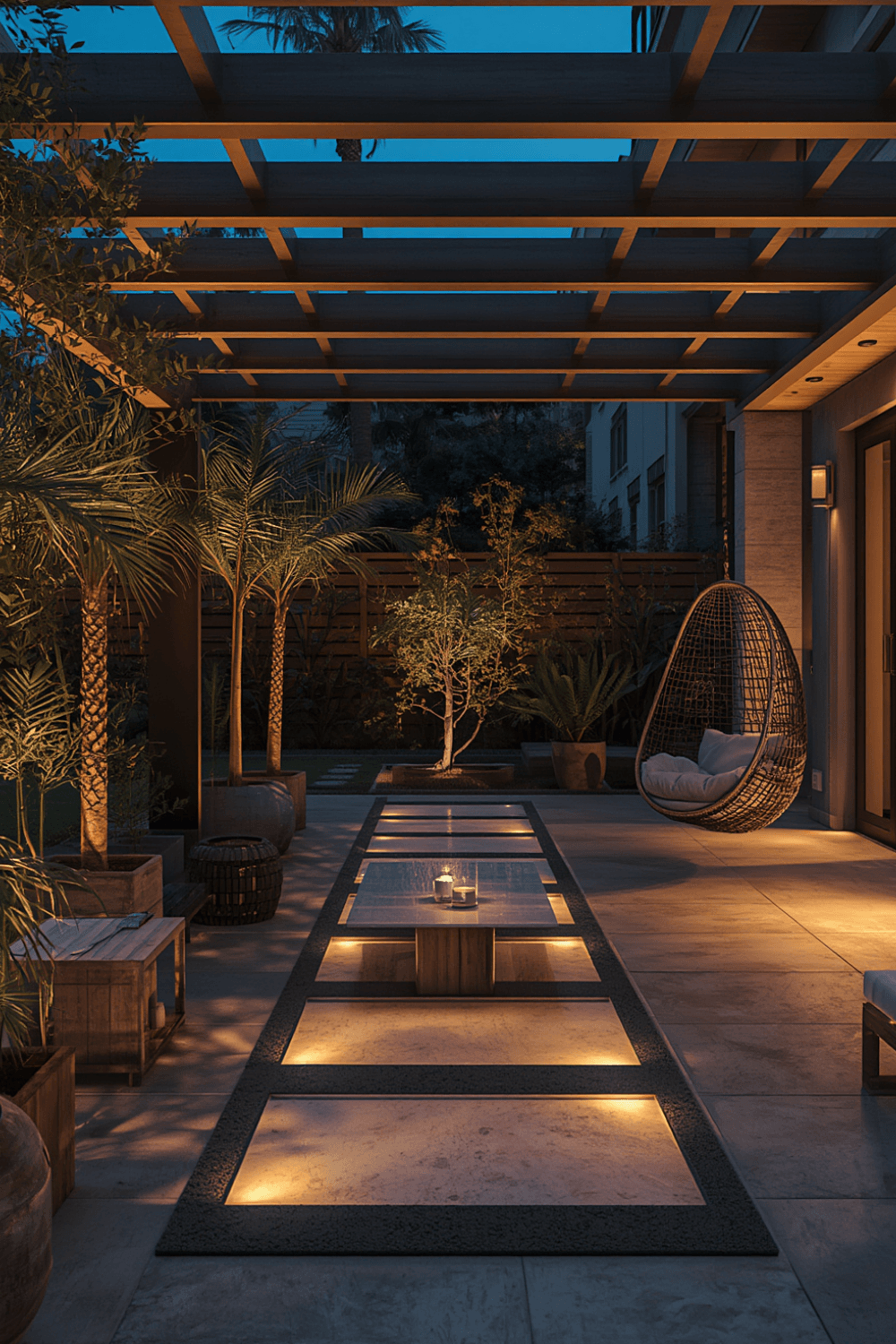
A wall-mounted water bowl, a narrow rill running along the edge of the patio, or a freestanding stone fountain adds sound and movement to a garden in a way that no planting or lighting achieves. The sound of moving water also masks urban background noise, which is an underrated practical benefit of water features in city gardens globally.
20. Specimen planting in oversized containers
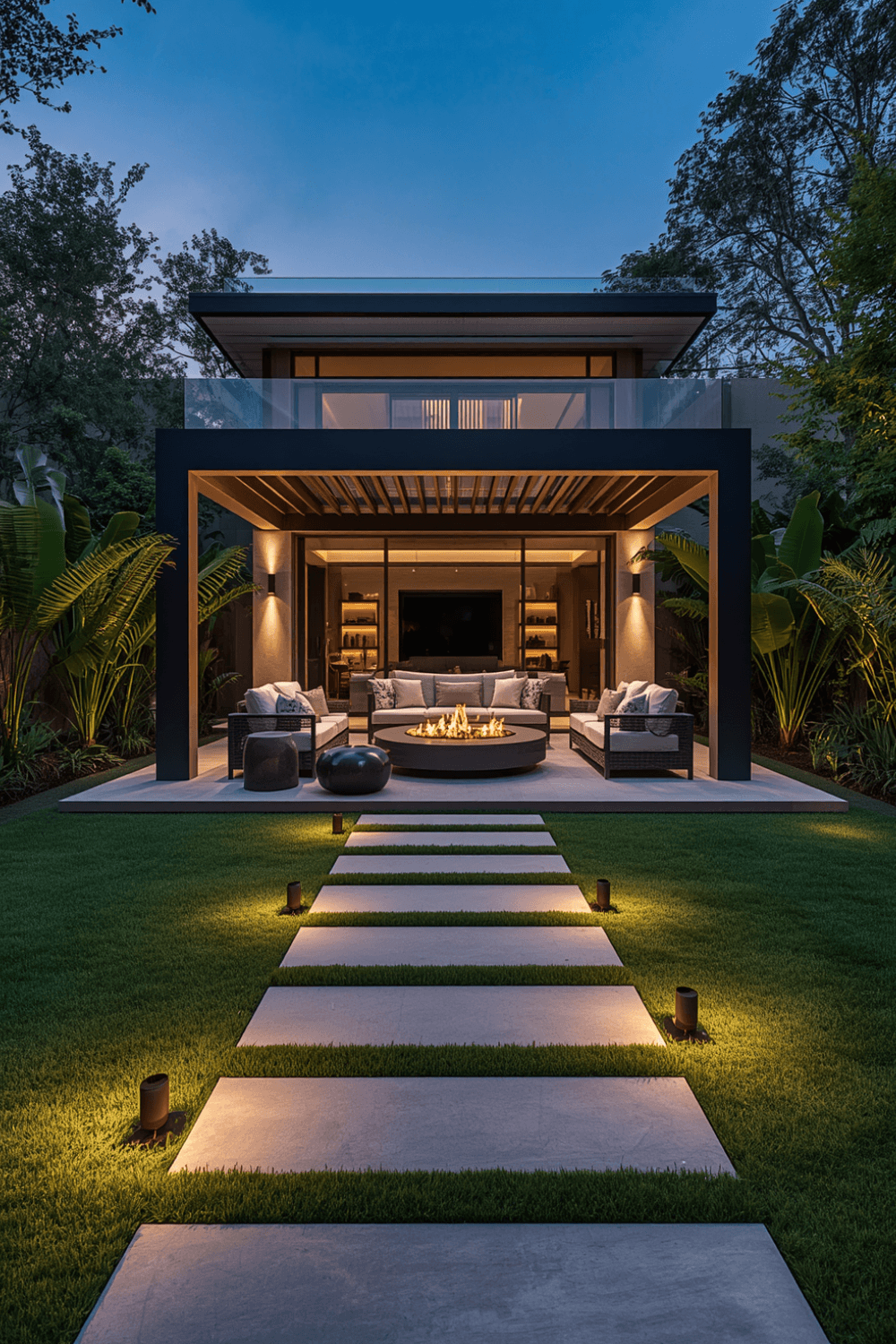
Large ceramic or concrete planters, at least in diameter, with a single specimen plant in each, olive trees, agapanthus, ornamental grasses, flanking a door, gate, or seating area reads as considered and symmetrical in a way that smaller pots scattered around the space rarely does. The scale of the container is the key detail: undersized pots beside large architectural elements look apologetic.
Frequently Asked Questions
What makes a backyard look luxurious?
Zoning, a consistent material language, and layered lighting after dark consistently create the luxury feel more than any single feature. A backyard with a defined lounge zone, a patio in one quality material, warm lighting, and considered planting reads as expensive regardless of the actual budget. A yard with many features but no cohesive plan rarely does.
What outdoor furniture holds up best in a luxury garden?
Powder-coated aluminum and teak are the two most widely used materials in high-end outdoor furniture because both handle weather well and age gracefully rather than degrading quickly. Quality outdoor fabrics like Sunbrella are worth specifying for cushions and upholstery since they resist fading and mold far better than standard outdoor fabric over multiple seasons.
How do I add privacy to a backyard without it feeling closed in?
Tall planting provides privacy without the visual weight of a solid fence. A timber batten screen or a steel frame with climbing plants adds structure without entirely blocking the view.
What lighting works best for a luxury outdoor space?
Warm white in multiple layers: uplighting on trees, path lights along walkways, festoon or string lights overhead for ambiance, and in-ground step lights wherever the garden changes level. The combination of these different sources at different heights is what creates the atmospheric quality that single-source outdoor lighting never achieves.
Bringing It All Together
A genuinely impressive backyard comes down to a short list of decisions made with some intention: a clear zone for lounging or dining, a floor surface that reads as continuous and considered, lighting that makes the space usable and beautiful after dark, and planting that softens everything else without competing with it. Whether you’re planning a full luxury backyard landscaping project with a pergola, a water feature, and specimen planting, or starting with a targeted update on an existing patio, the same fundamentals apply at any budget.