
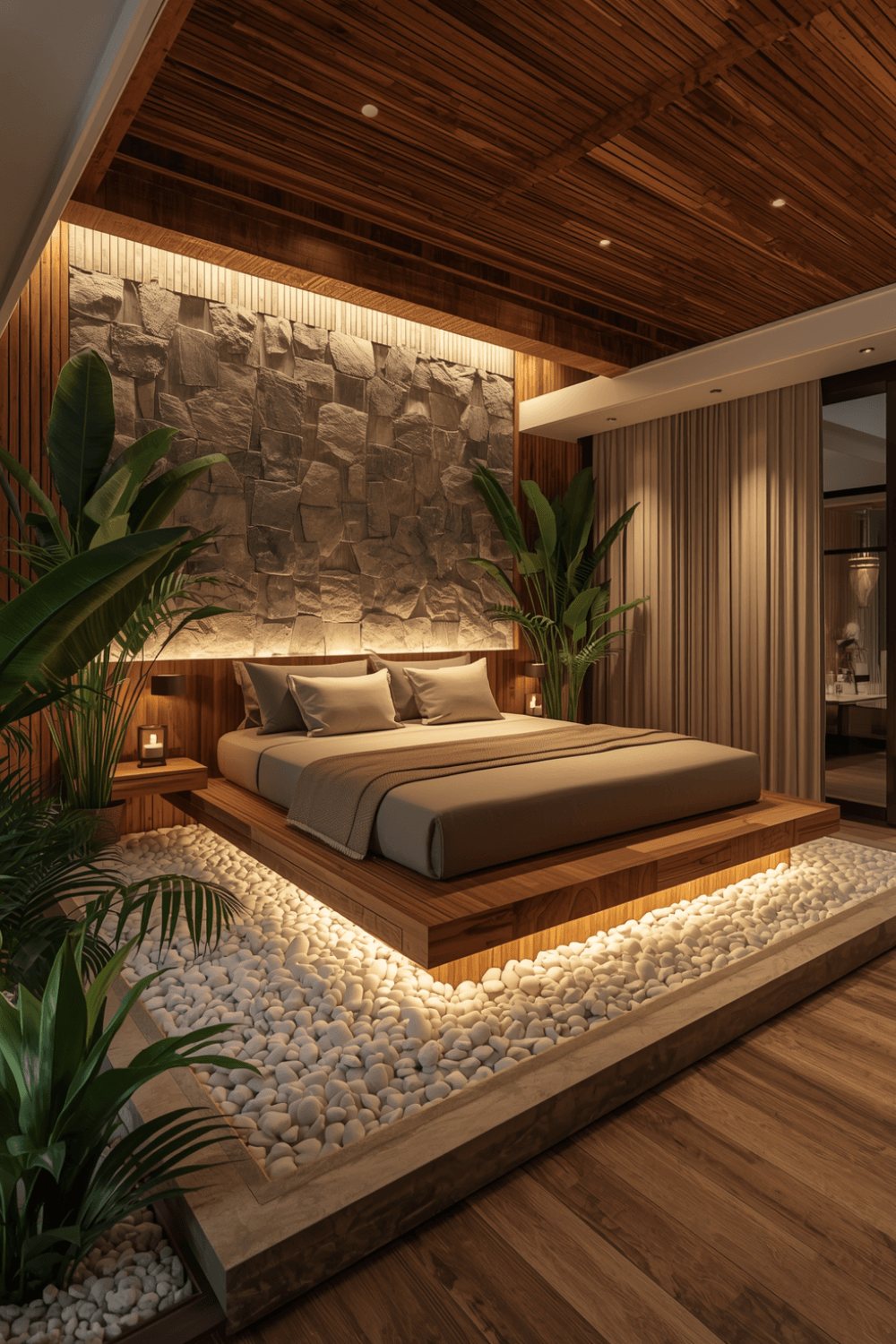
Most bedrooms do their job and nothing else. You sleep there, you get dressed, and that’s about it. But every once in a while you walk into a space, maybe a mountain lodge, maybe a riad in Morocco, maybe just someone’s house who got it right, and the room actually does something to you. Your shoulders drop. Your breathing slows. You want to sit down and not leave. That feeling has a formula, and it’s simpler than most people think. It’s stone or wood within arm’s reach, light that comes from somewhere low and warm, and a room that isn’t trying too hard. This guide is about recreating that feeling in your own bedroom, with twenty ideas that work in real homes at real budgets, not just in photoshoots.
It was a surface or two that felt like it came from the ground rather than a factory. It was the absence of things just as much as the presence of them. That’s what nature inspired bedroom ideas actually come down to: a handful of honest material choices and the discipline to stop before you’ve added too much. The twenty ideas below cover both.
Natural Stone Wall and Stone Interior Ideas
Stone is the material that does the most work in a luxury rustic bedroom design, but it’s also the easiest to get wrong.
1. A single stone feature wall behind the bed
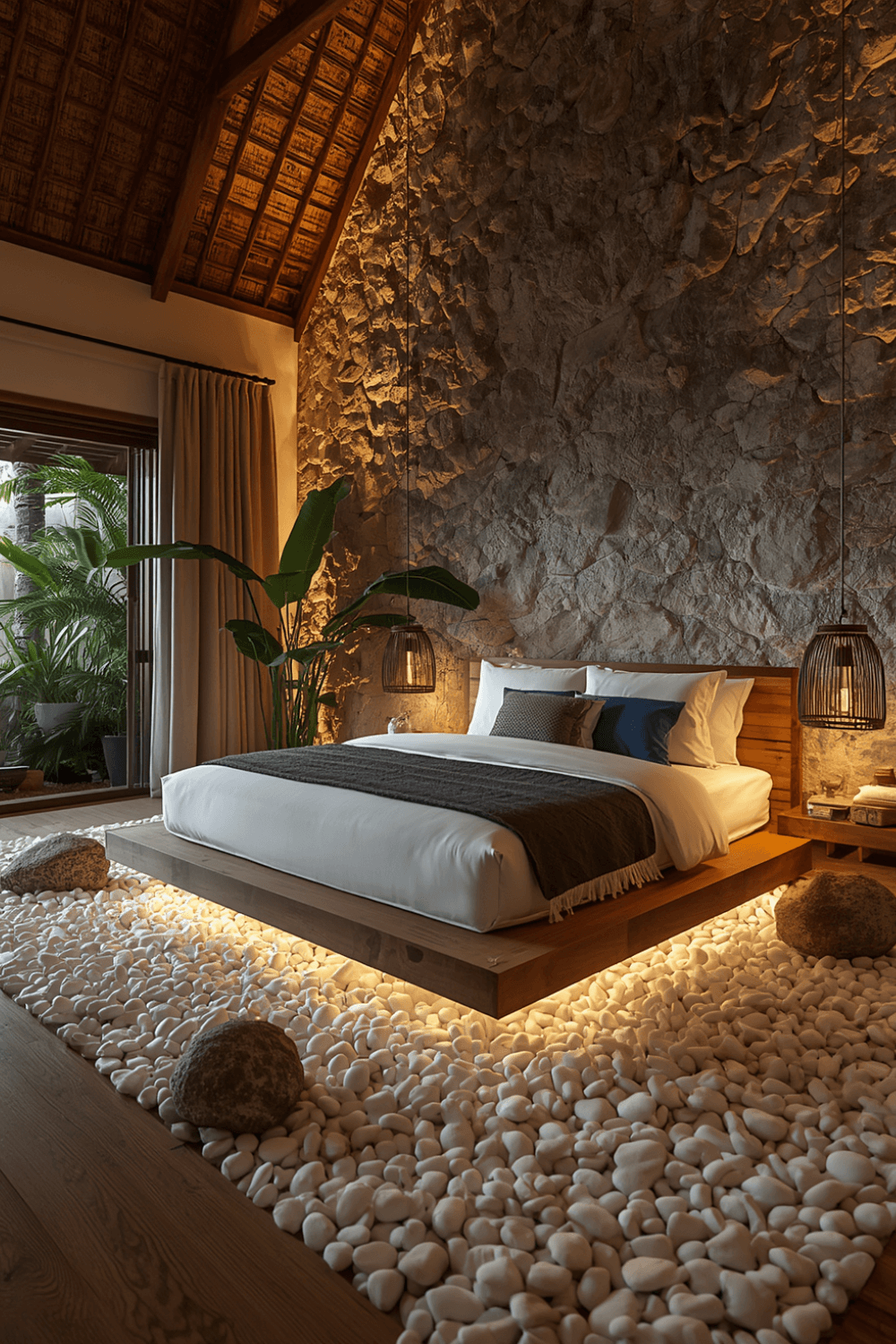
One wall of natural or stacked stone, ideally the one the headboard sits against, gives the whole room its character without overwhelming it. Stack ledger stone is more affordable than full masonry and installs over drywall, which makes it genuinely accessible for a renovation that isn’t touching the structure.
2. A river rock or pebble accent panel as part of a headboard
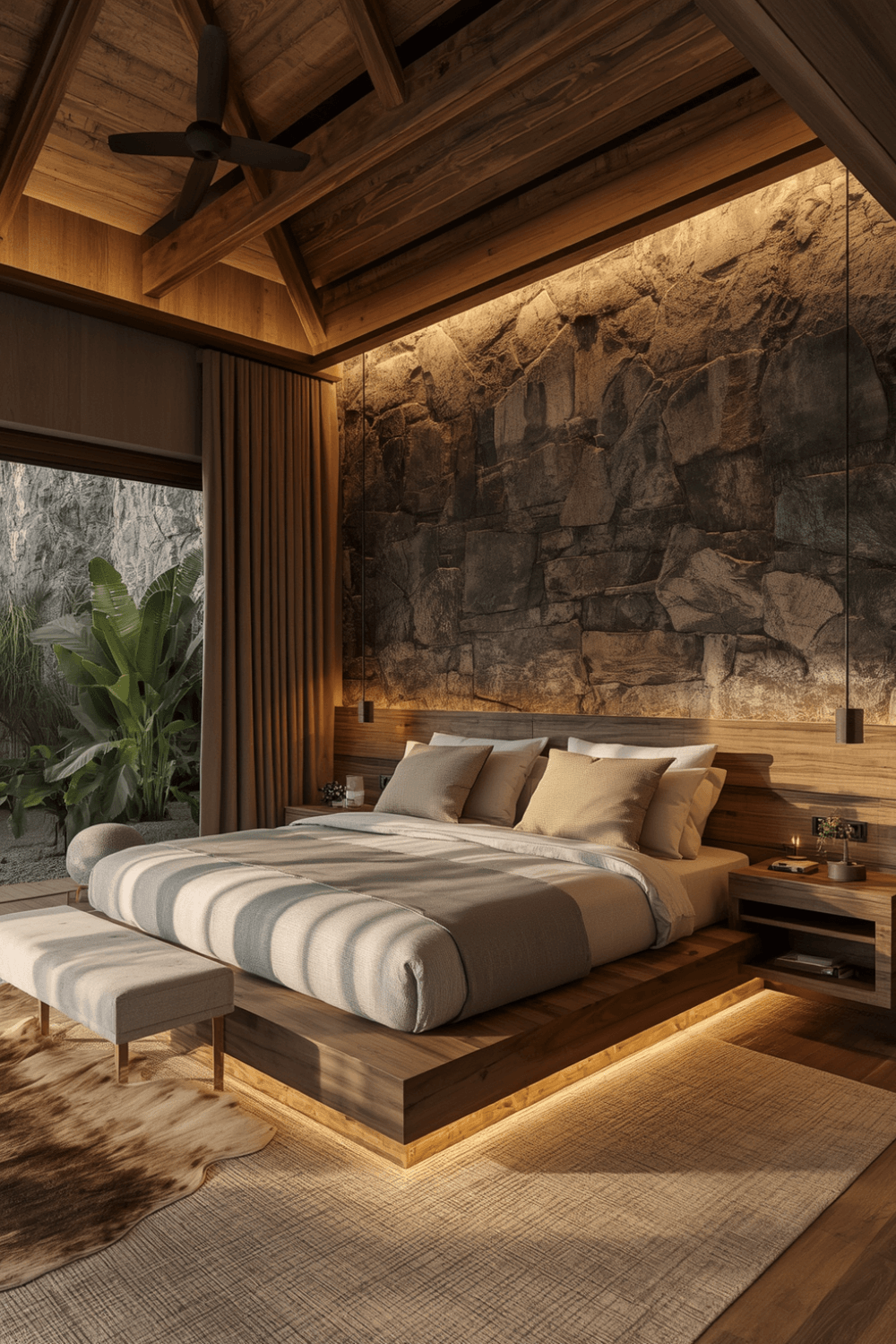
A narrower strip of smooth river stone framed between wood panels creates texture and warmth right at eye level in the bed, which is where it matters most. This kind of detail photographs beautifully and costs a fraction of a full feature wall.
3. Natural stone tile on the bedroom floor, with a layered rug
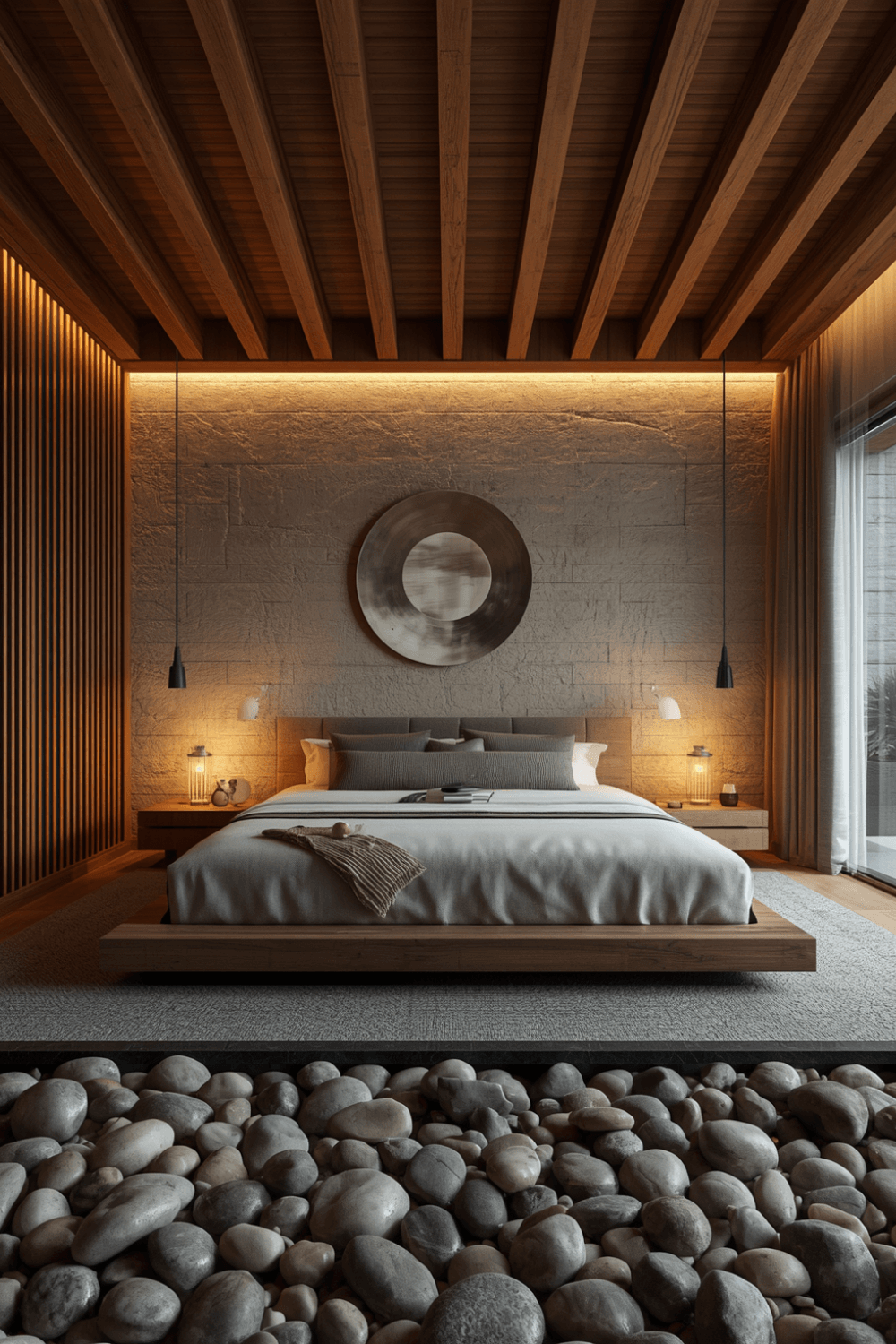
Slate, sandstone, or honed travertine underfoot, with a thick, warm rug over the center of the room so the floor doesn’t feel cold, is one of the best ways to bring natural stone interior into a bedroom without dominating the visual space.
4. A stone or concrete bedside surface
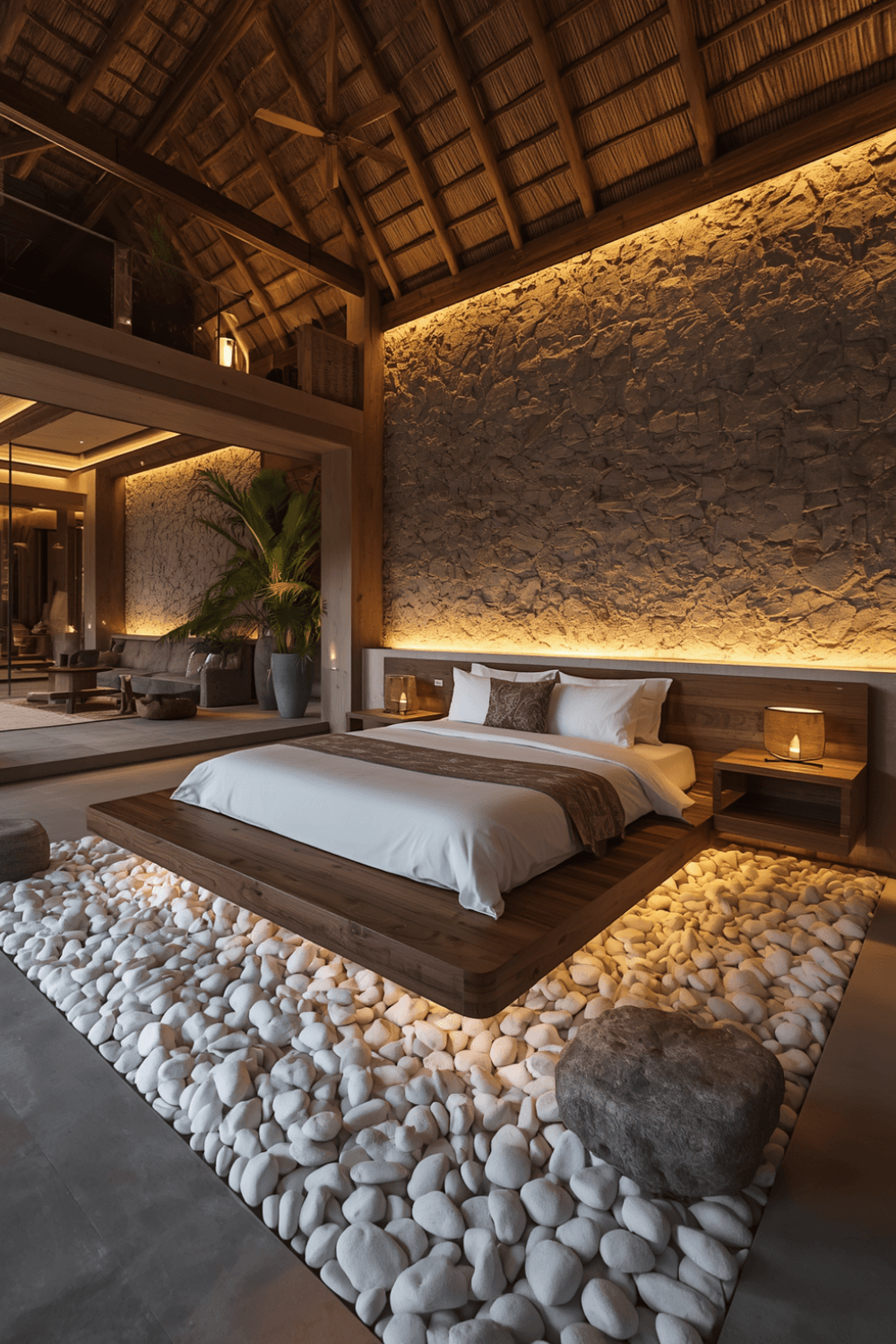
A small cast concrete nightstand or a raw stone slab on a simple base adds material interest without committing to a full stone wall. It’s an easier entry point for anyone who wants the look but isn’t ready to tile an entire surface.
5. A fireplace with a stone surround
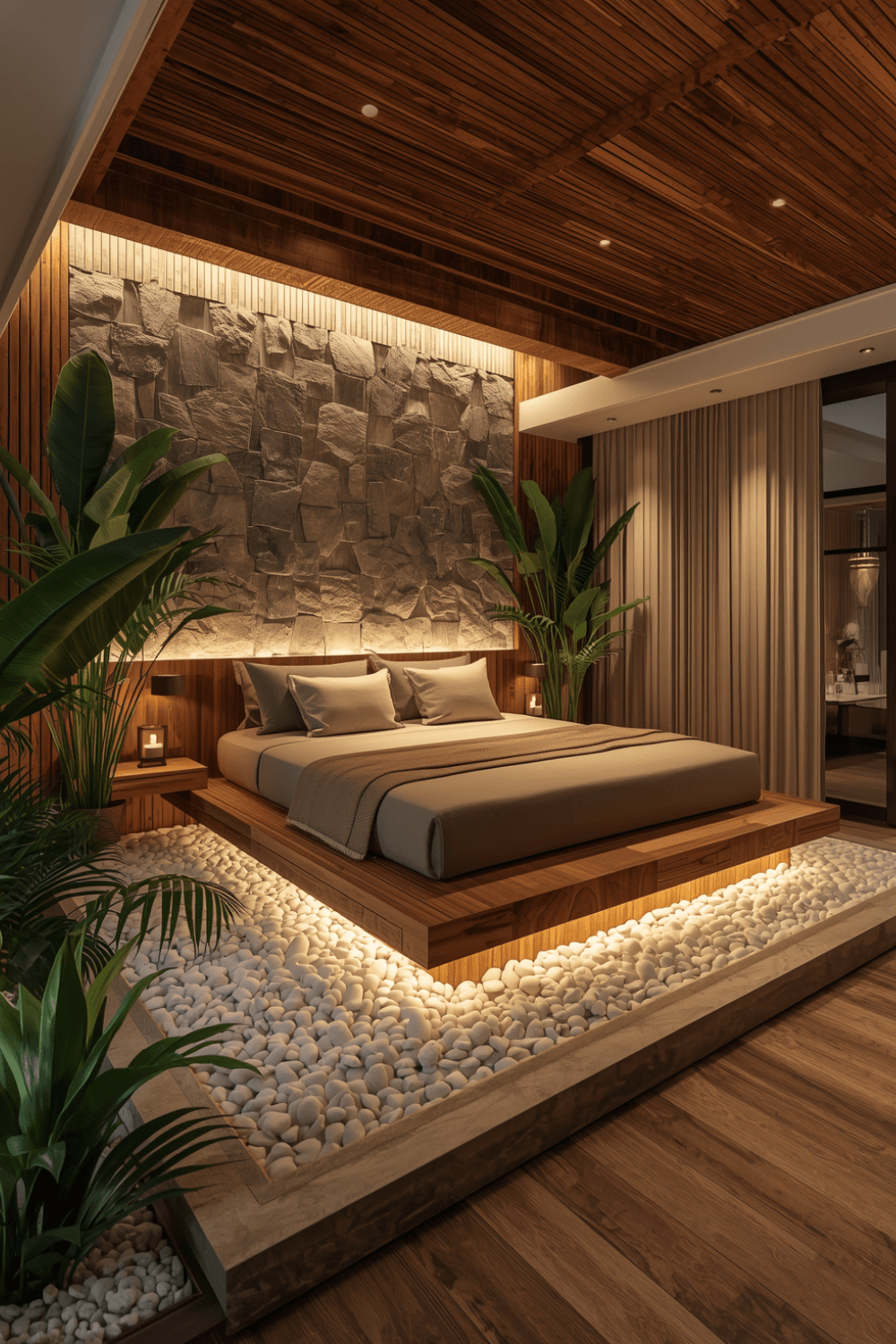
Even a gas or electric insert with a real stone surround adds both the visual warmth and the low flickering light that makes a cozy retreat bedroom feel genuinely different after dark.Overhead light that’s too bright at night is probably the single biggest enemy of a calming bedroom.
How to Use Stone Without Making a Bedroom Feel Cold
The short answer: always pair stone with warm wood, warm light, and soft textiles. Stone on its own trends cold and hard. Stone next to a wooden platform bed, under warm LED or lamp light, with linen or wool nearby, reads as grounded and calm rather than uncomfortable. The materials need each other.
Wooden Platform Bed and Luxury Wooden Bedroom Ideas
Wood is the other anchor material in any nature inspired bedroom, and the platform bed is usually where it makes the most impact.
6. A low, solid wood platform bed with no visible hardware
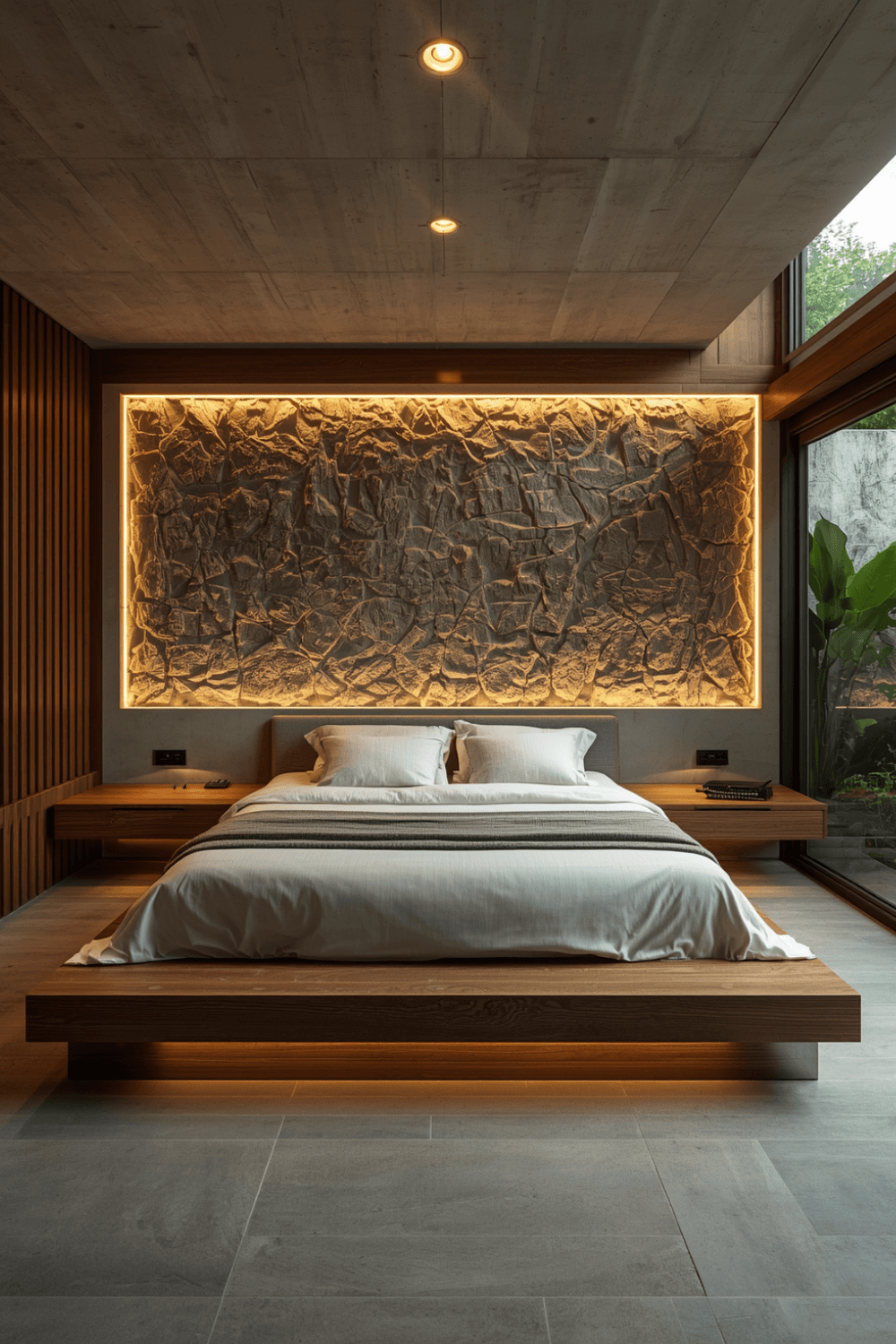
The low profile keeps the ceiling feeling higher, which matters in smaller bedrooms. No decorative hardware means nothing competes with the grain of the wood itself, which is usually doing more than enough on its own.
7. A live-edge wood headboard
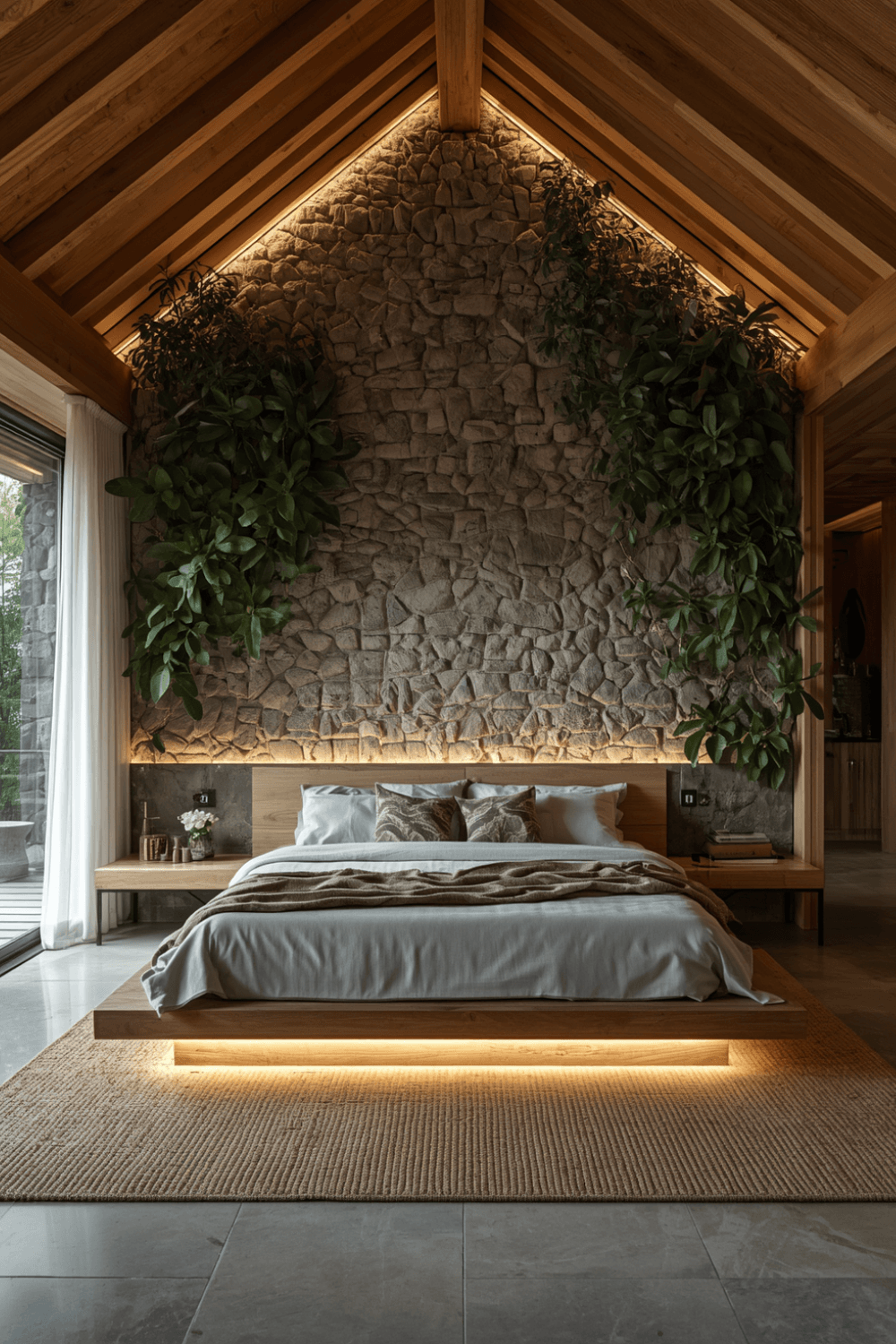
A slab of wood with the natural edge intact, no straight-cut, just the original shape of the tree, is one of the most recognized details in organic modern bedroom design right now. It’s a single piece, takes up no extra floor space, and works in rooms that couldn’t handle much else visually.
8. Exposed ceiling beams in reclaimed or stained wood
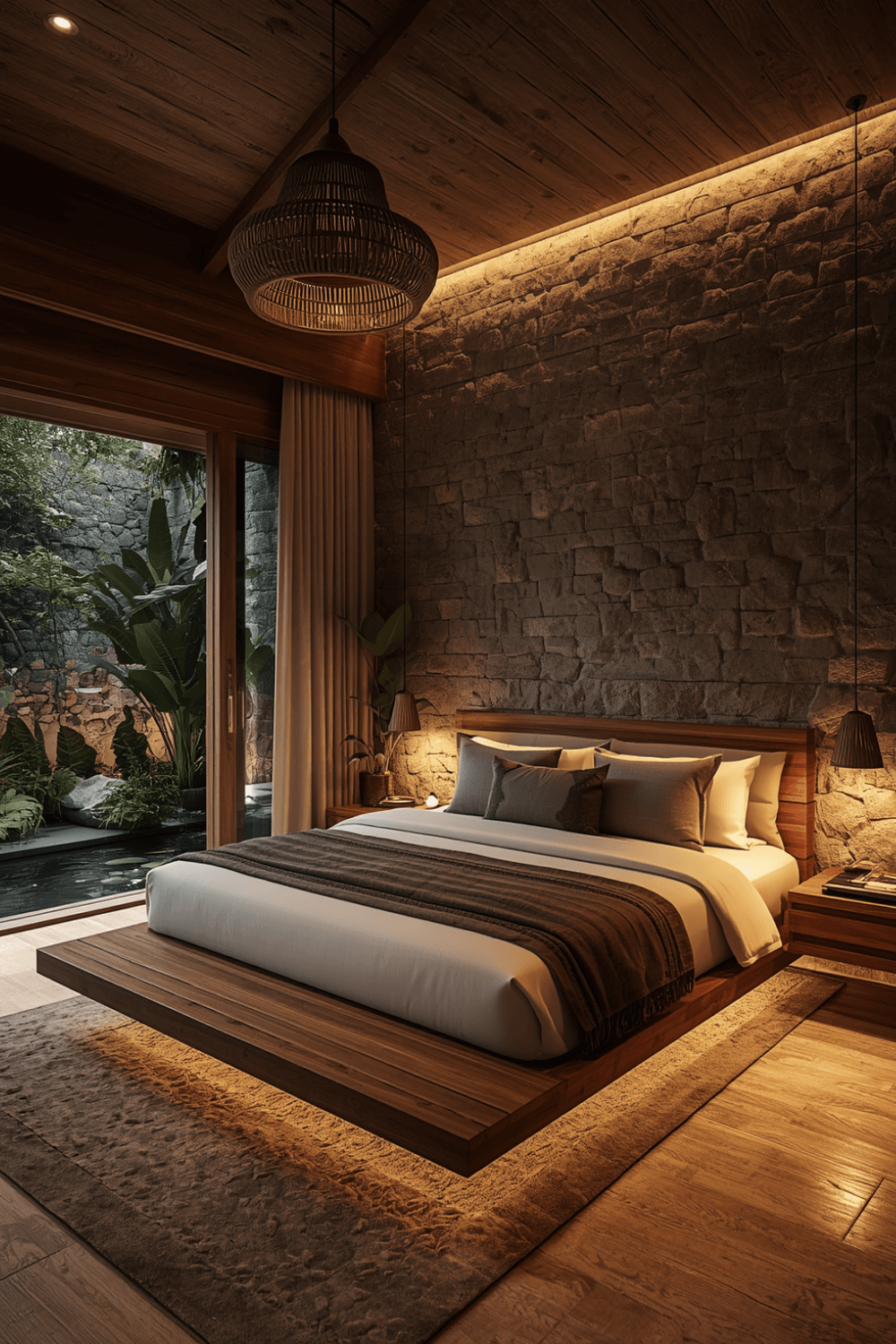
If the ceiling’s accessible during a renovation, exposed beams do more to transform a room’s character than almost any other single change. Faux beams have also gotten convincingly good and install over an existing ceiling without structural work.
9. A floating wood shelf instead of a bulky nightstand
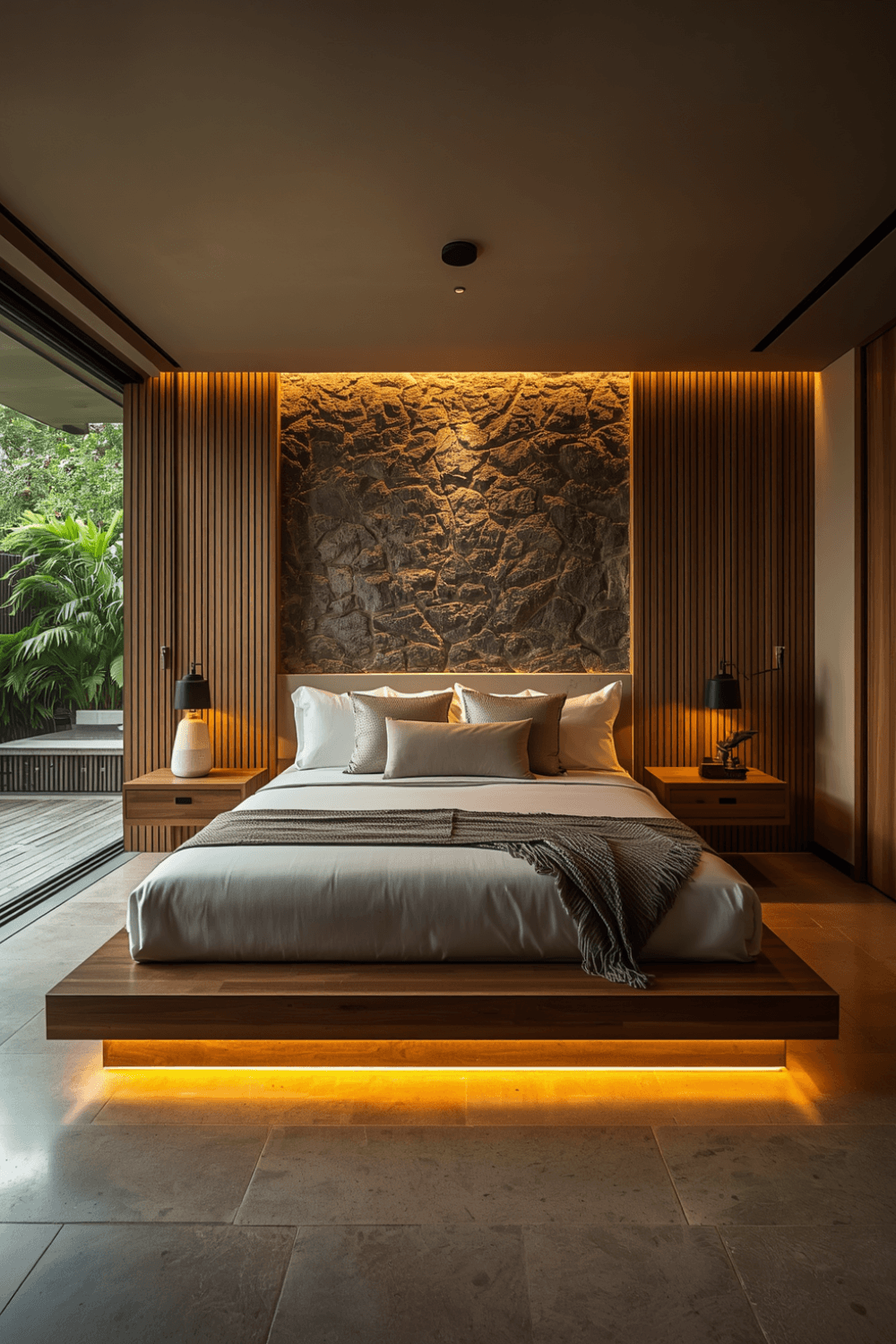
Wall-mounted, open, minimal. It keeps the floor clear, which makes the room feel bigger, and a small lamp or a single plant on it is enough to make the corner feel intentional.Real stone, real wood, real linen. Not everything has to be natural, but the things you touch and the surfaces your eye lands on most should be.
10. Built-in wardrobes with a wood veneer or natural grain finish
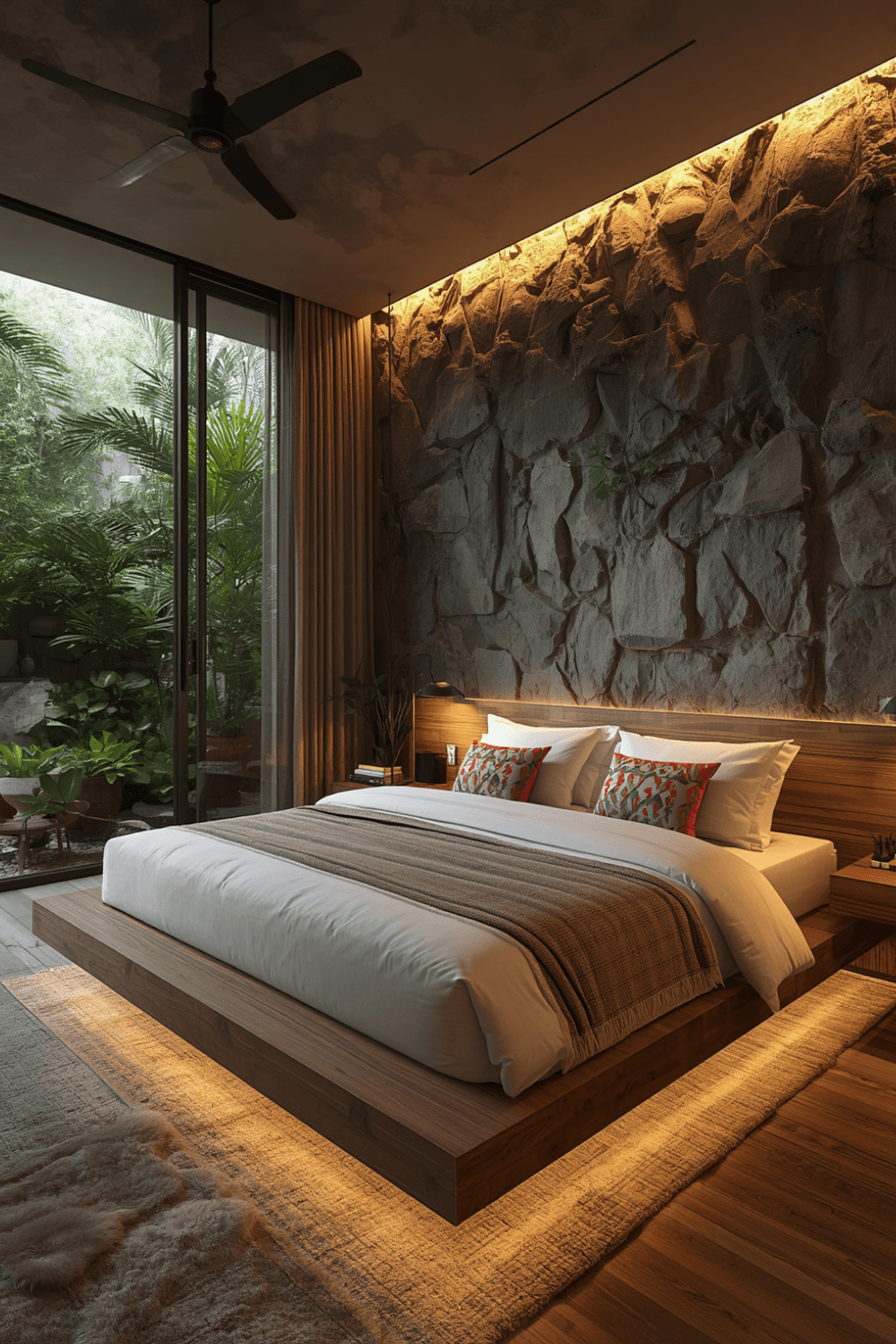
Floor-to-ceiling built-ins in a warm wood finish reduce visual clutter because everything has somewhere to go, and in a luxury wooden bedroom, they tie the room together in a way that freestanding furniture rarely does.
11. Futon-style or ultra-low platform sleeping arrangement
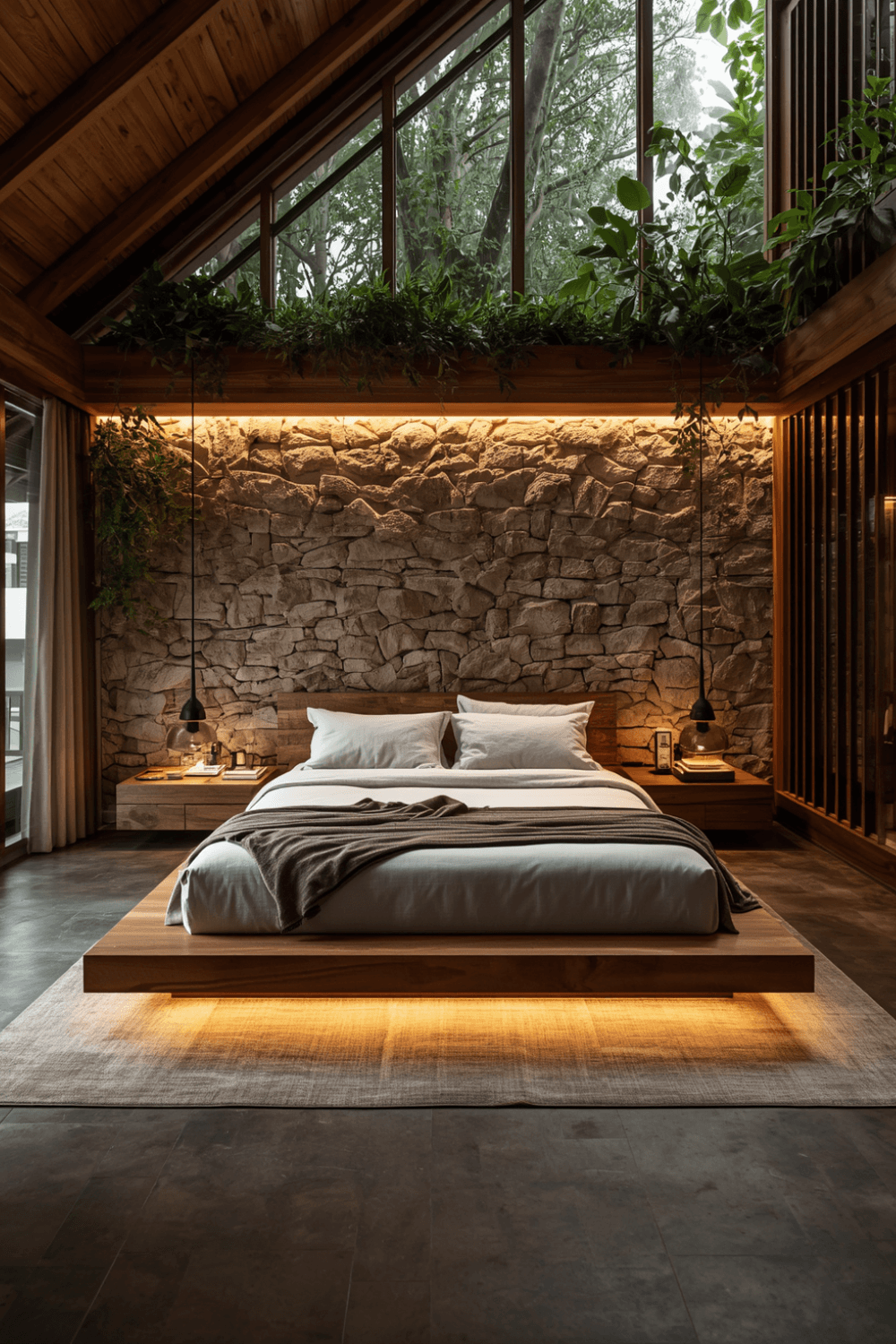
Sleeping close to the floor is a deliberate design choice in traditional Japanese interiors, not just a stylistic one. It creates a sense of groundedness in the room and makes the ceiling feel considerably higher by contrast.
12. Shoji-style sliding panels instead of curtains
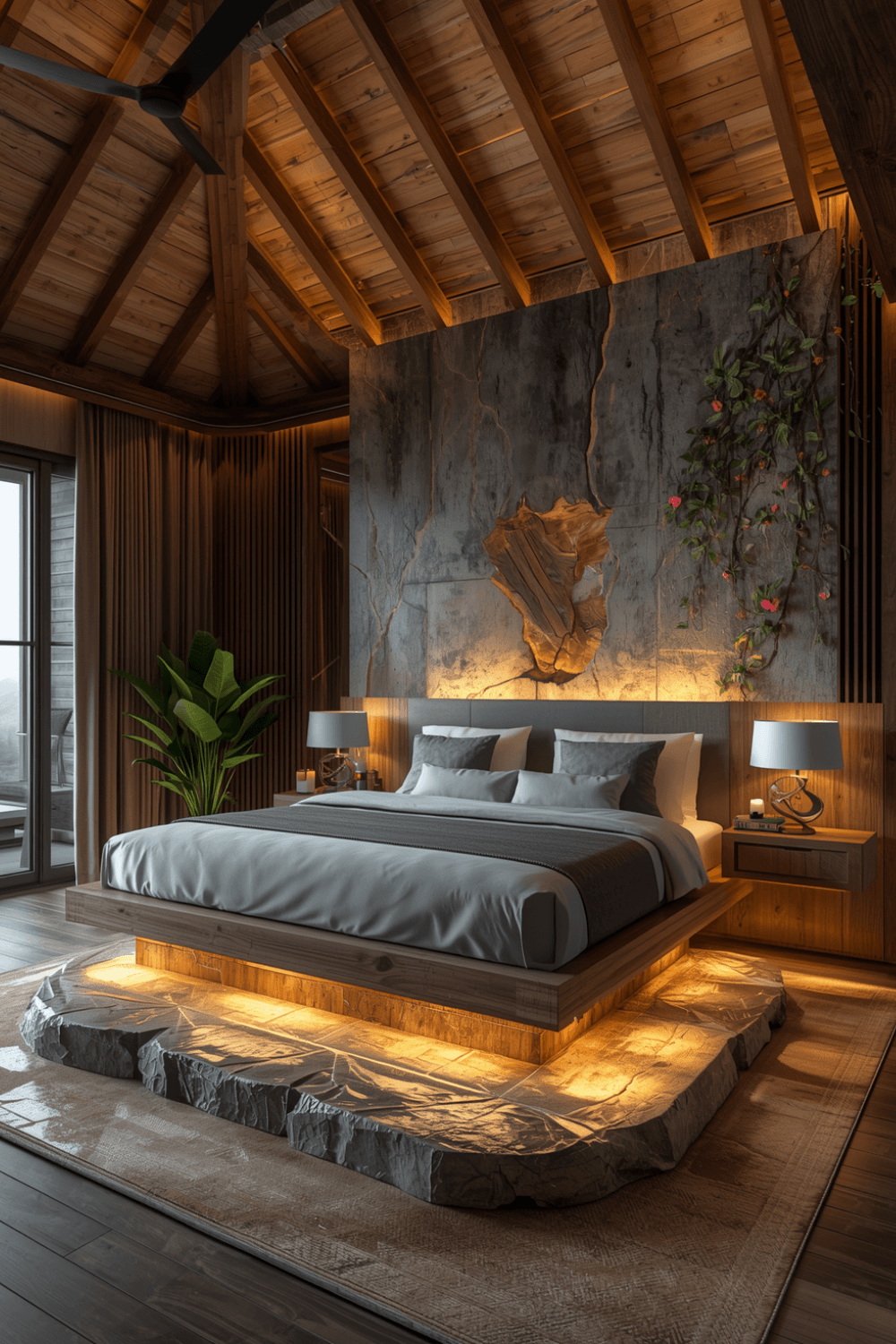
Paper or fabric panels in a simple grid frame, used to diffuse light rather than block it entirely. They filter morning light into something soft and even rather than letting it cut across the room. Low, warm sources, lamps, sconces, candlelight, are what actually shut the brain down for sleep.
13. A sand or pebble tray as an indoor rock garden element
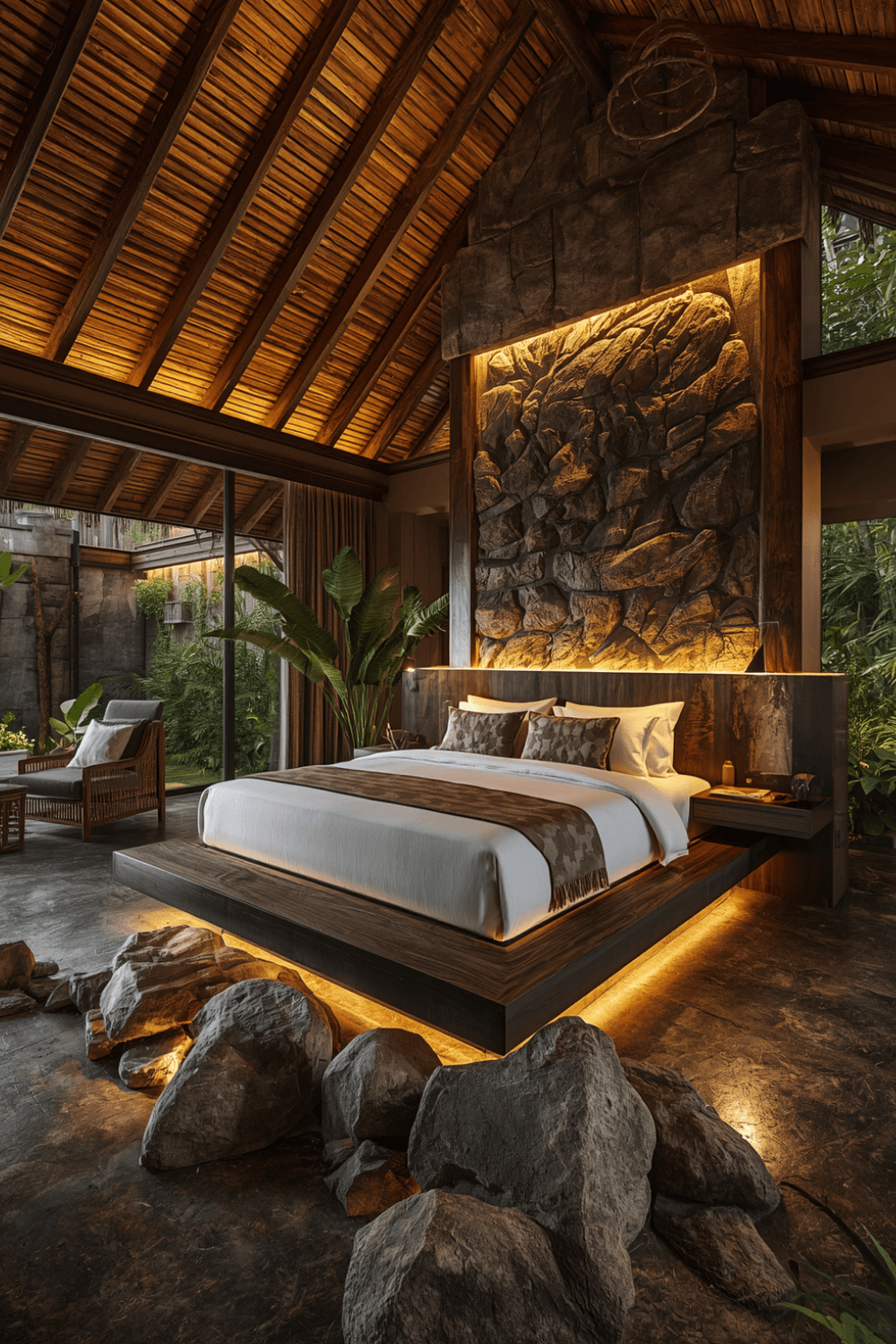
A shallow tray with raked sand or smooth river pebbles sitting on a low shelf is a small detail that adds texture and quiet intentionality. Indoor rock garden bedroom elements like this don’t need to be elaborate to read as considered.
14. Minimal color, maximum texture
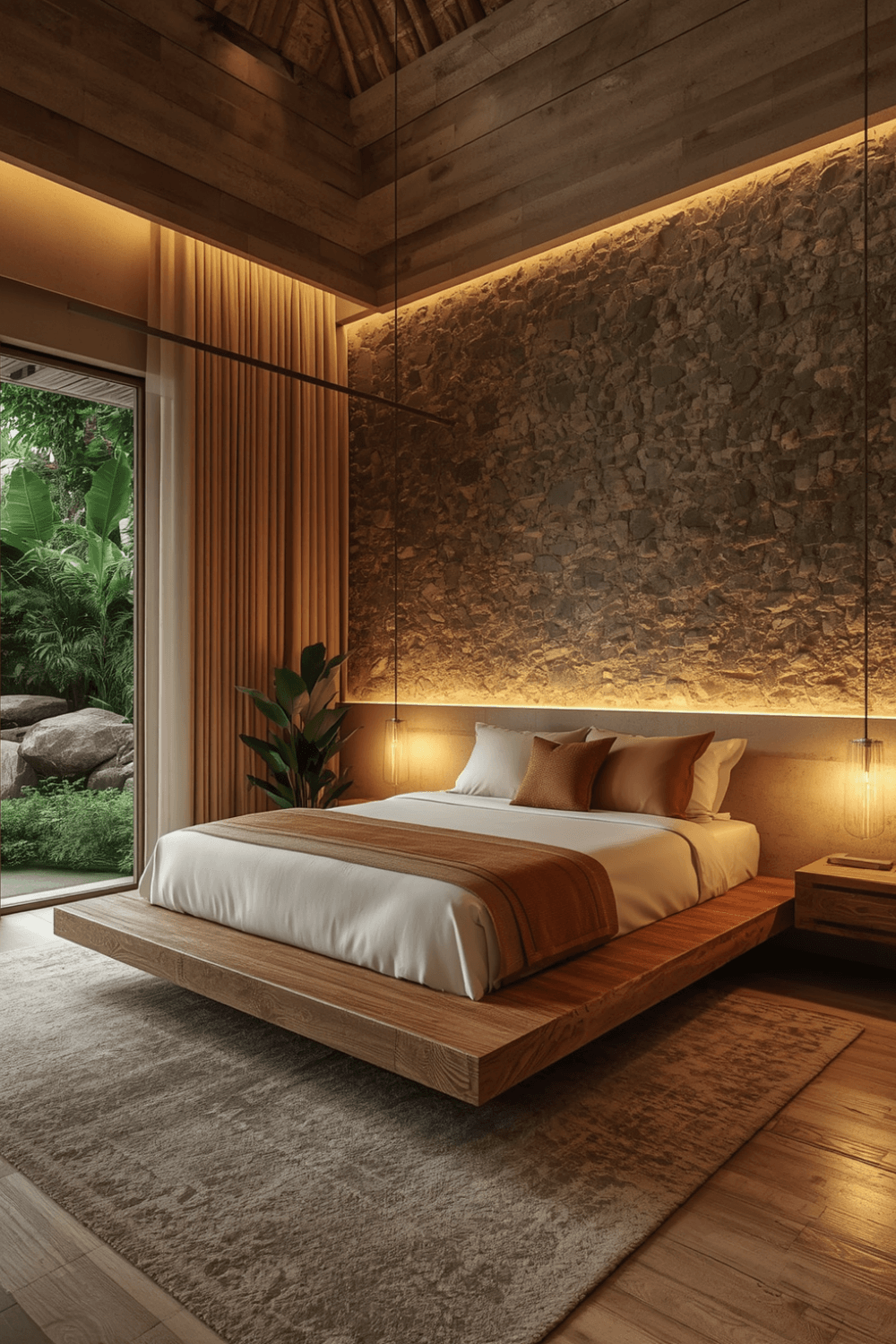
Undyed linen, natural wool, woven grass. A zen bedroom idea palette tends to be narrow in color and wide in texture, which is also why these rooms feel so calm. The eye isn’t being pulled in different directions by contrast; it’s resting.
15. Low washi or paper pendant lighting
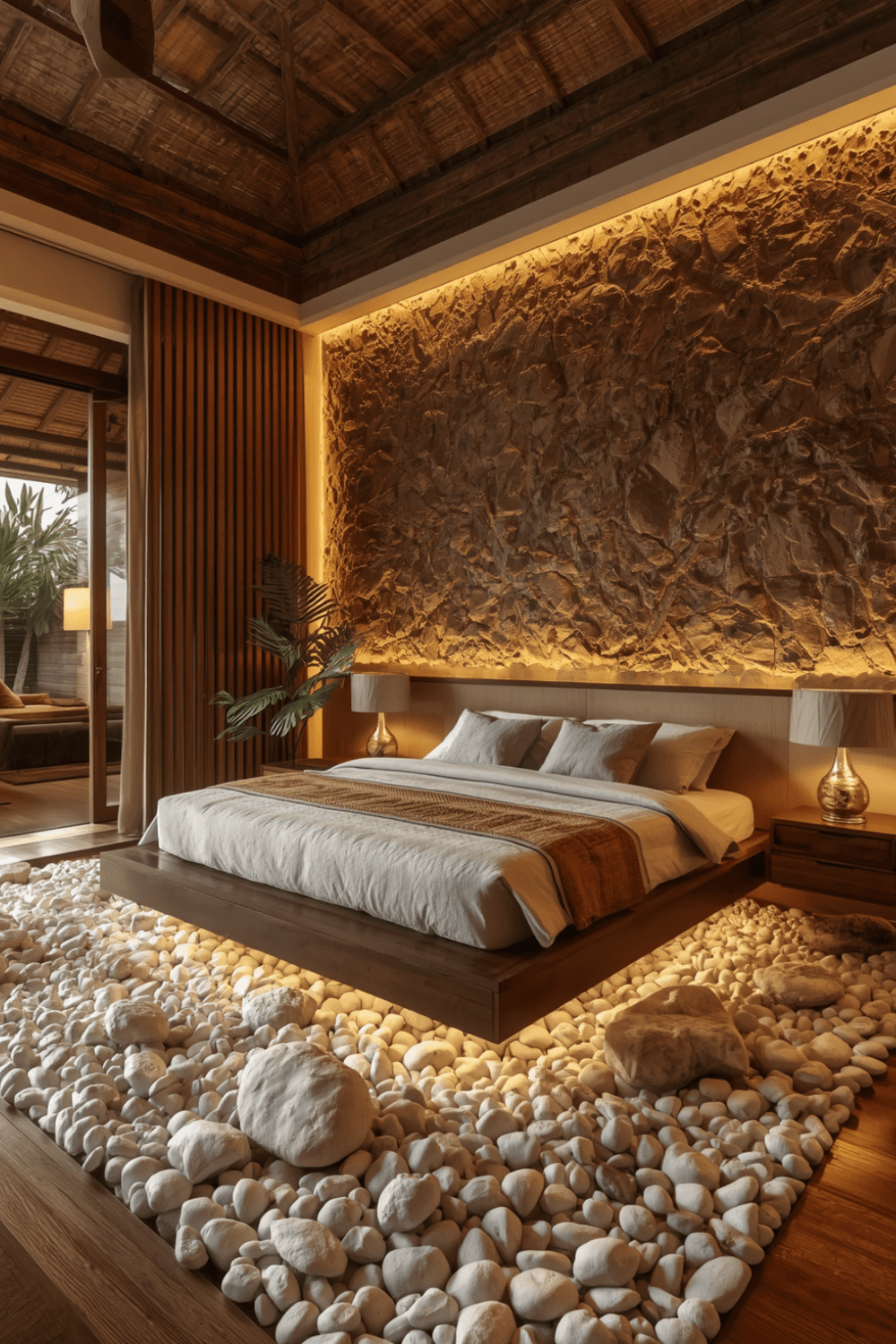
A single, large washi paper pendant, warm bulb inside, casts diffused light that’s both functional and visually very soft. It’s one of the most affordable ways to shift a room’s mood considerably. The spaces that feel most calming aren’t the ones with the most beautiful stuff, they’re the ones where things have been edited down.
16. A wall color drawn from clay, terracotta, or warm taupe
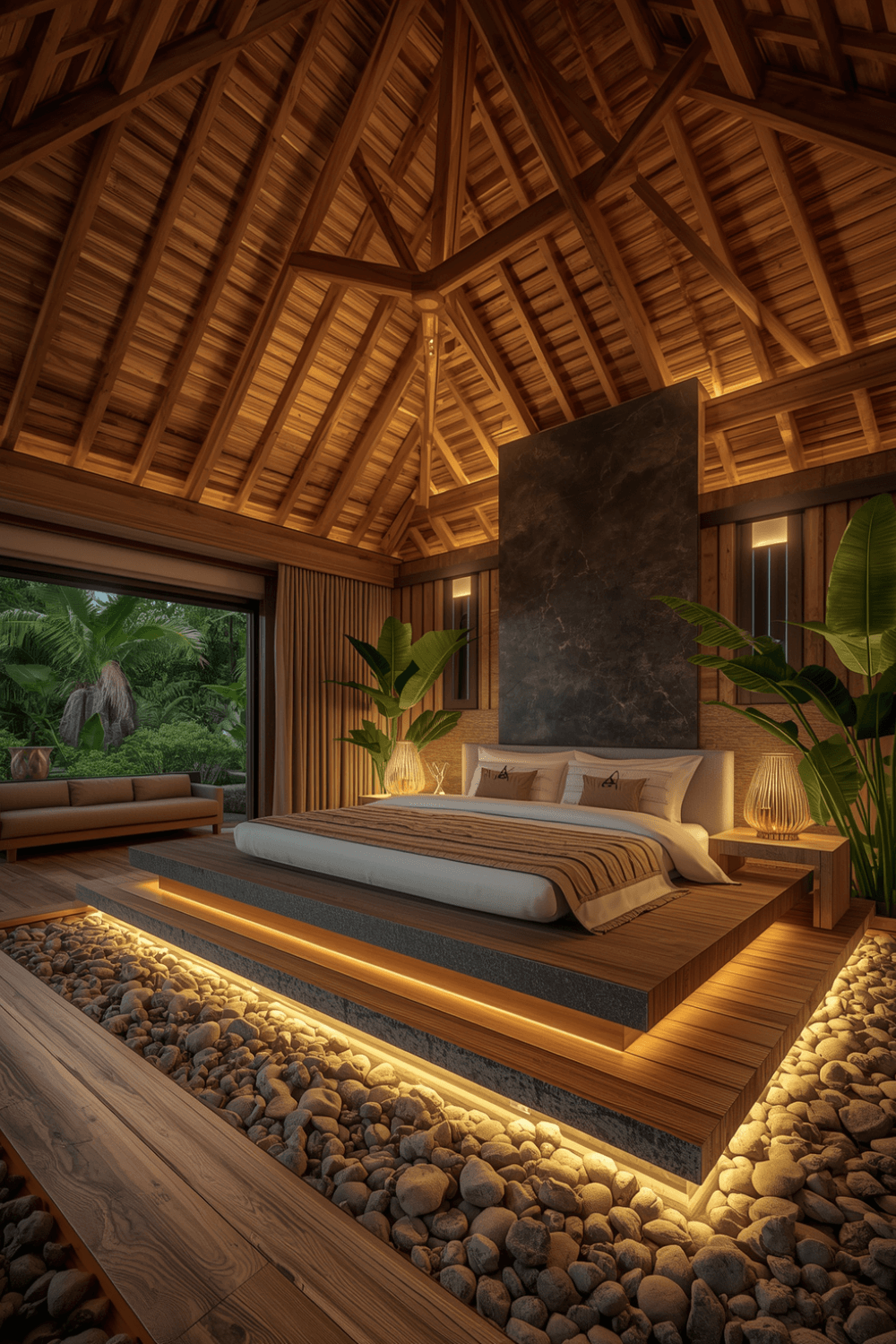
Not beige as a fallback, but a deliberate warm earth tone. Terracotta in particular has come back strongly in contemporary rustic spaces globally, partly because it photographs beautifully in warm light and partly because it genuinely makes a room feel warmer at night.
17. Linen or organic cotton bedding in undyed or naturally
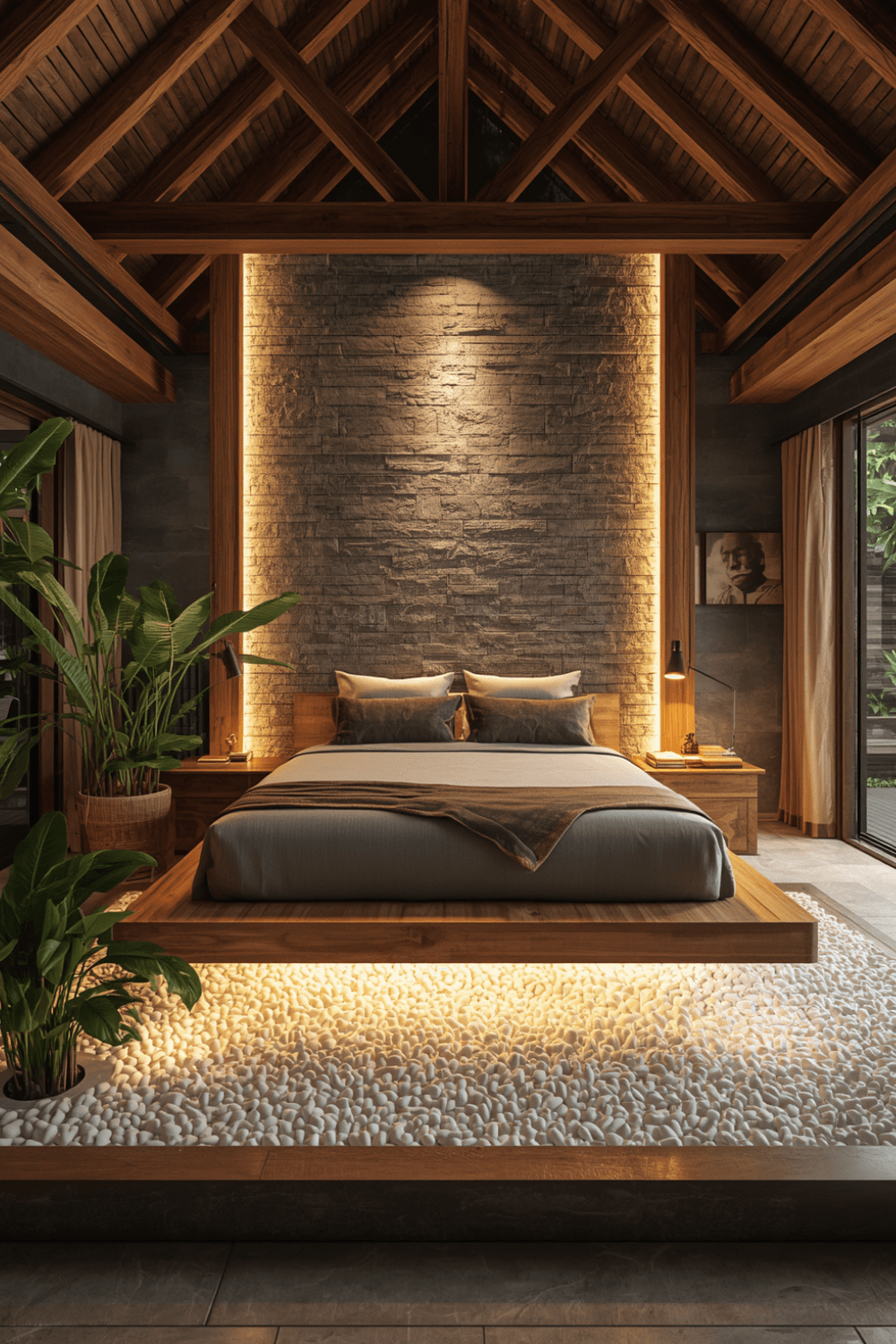
Bedding is probably the most touched surface in any bedroom, so the material matters more here than anywhere else in the room. Linen breathes better than cotton in warmer climates and softens considerably with washing, which makes it one of the most consistently recommended choices in eco friendly home decor.
18. A large indoor plant as a design anchor
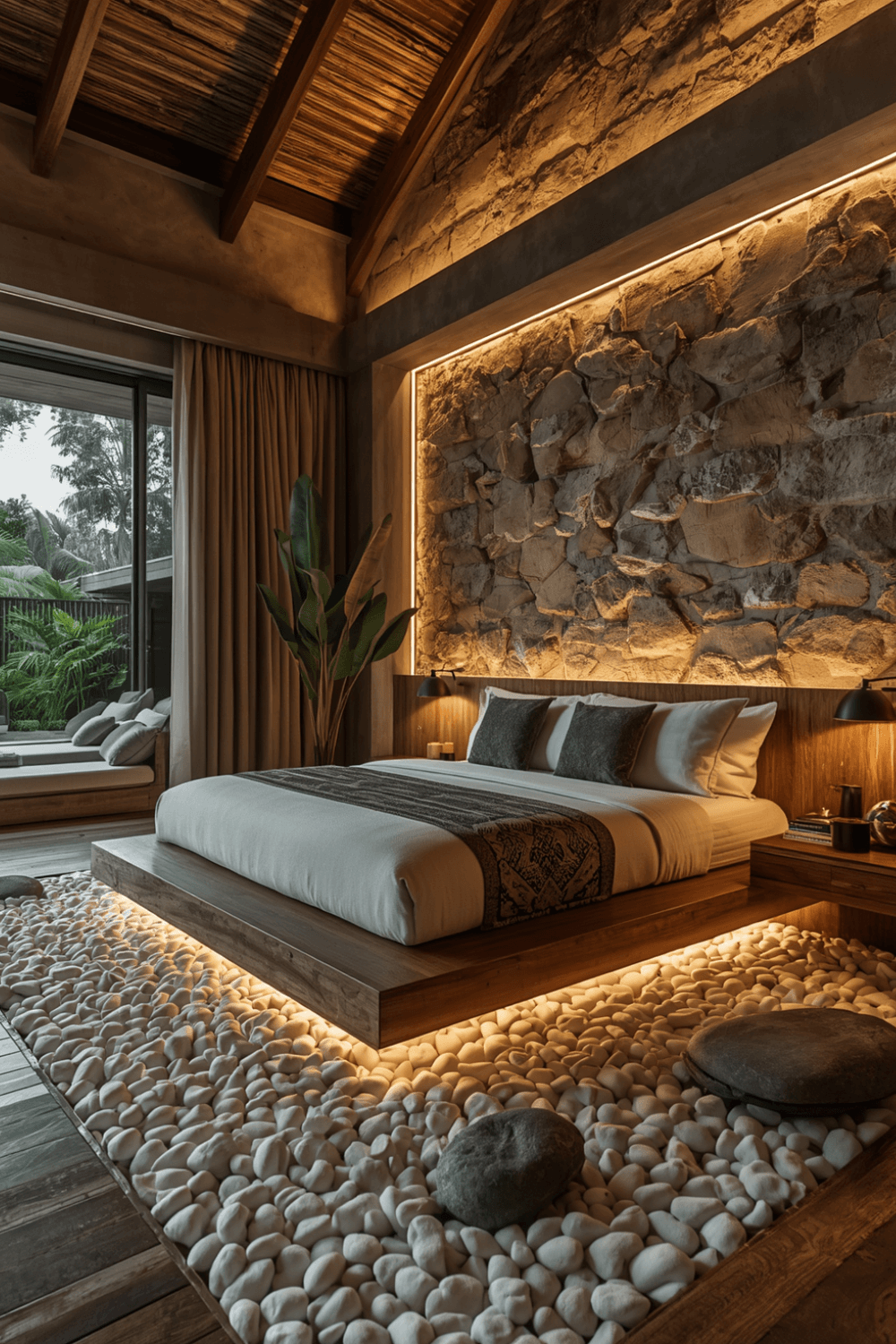
A fiddle leaf fig, a snake plant, or a sprawling pothos near a window does more to make a bedroom feel natural than almost any other detail on this list. It also genuinely improves air quality, though the visual effect is honestly the bigger reason to include one.
19. Woven or rattan accents, lamp bases, mirrors, trays
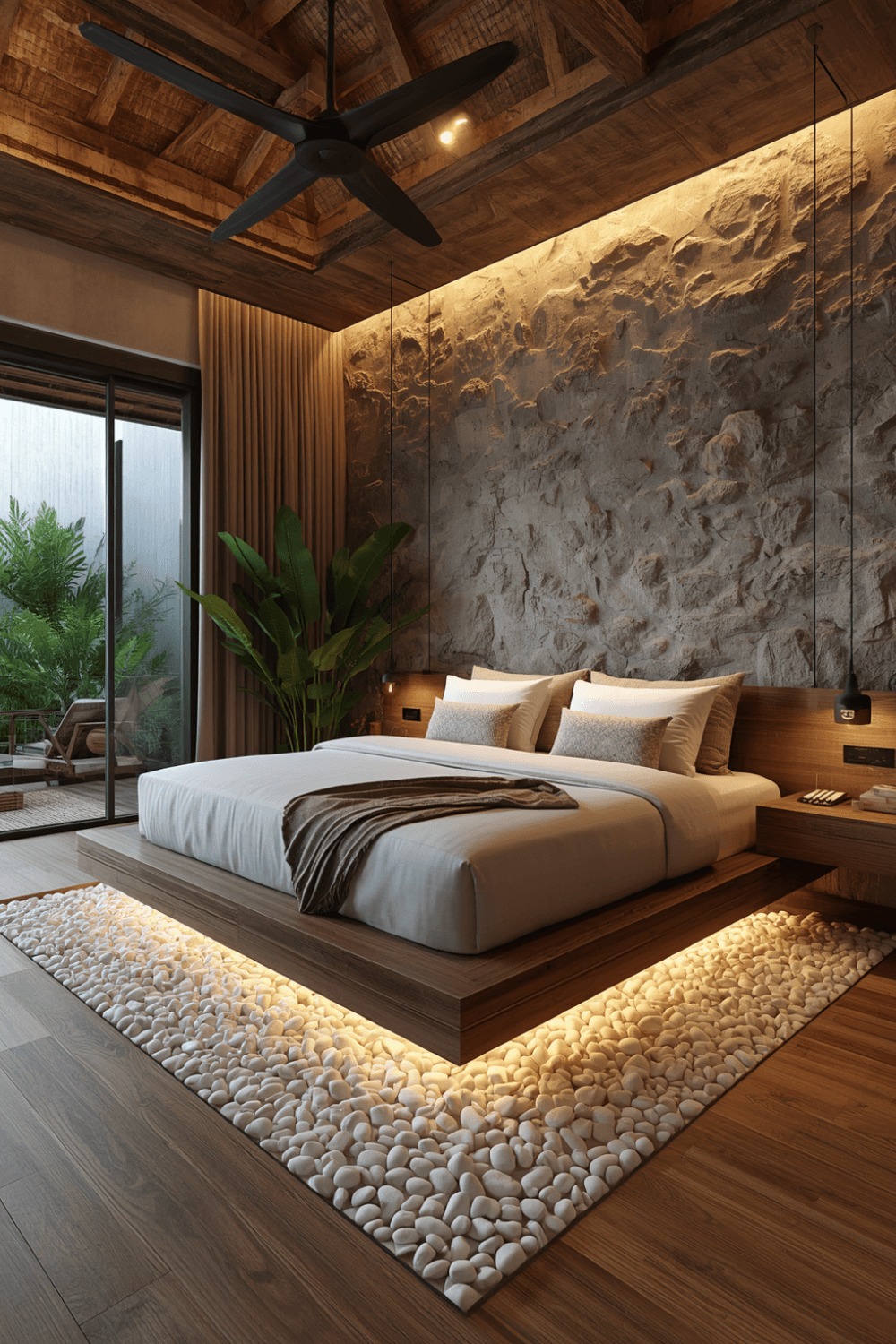
Small woven details scattered through a room add organic texture without weight. A rattan-framed mirror or a woven basket next to the bed reads as natural and warm without tipping into overly themed territory.
20. Warm ambient lighting through lamps
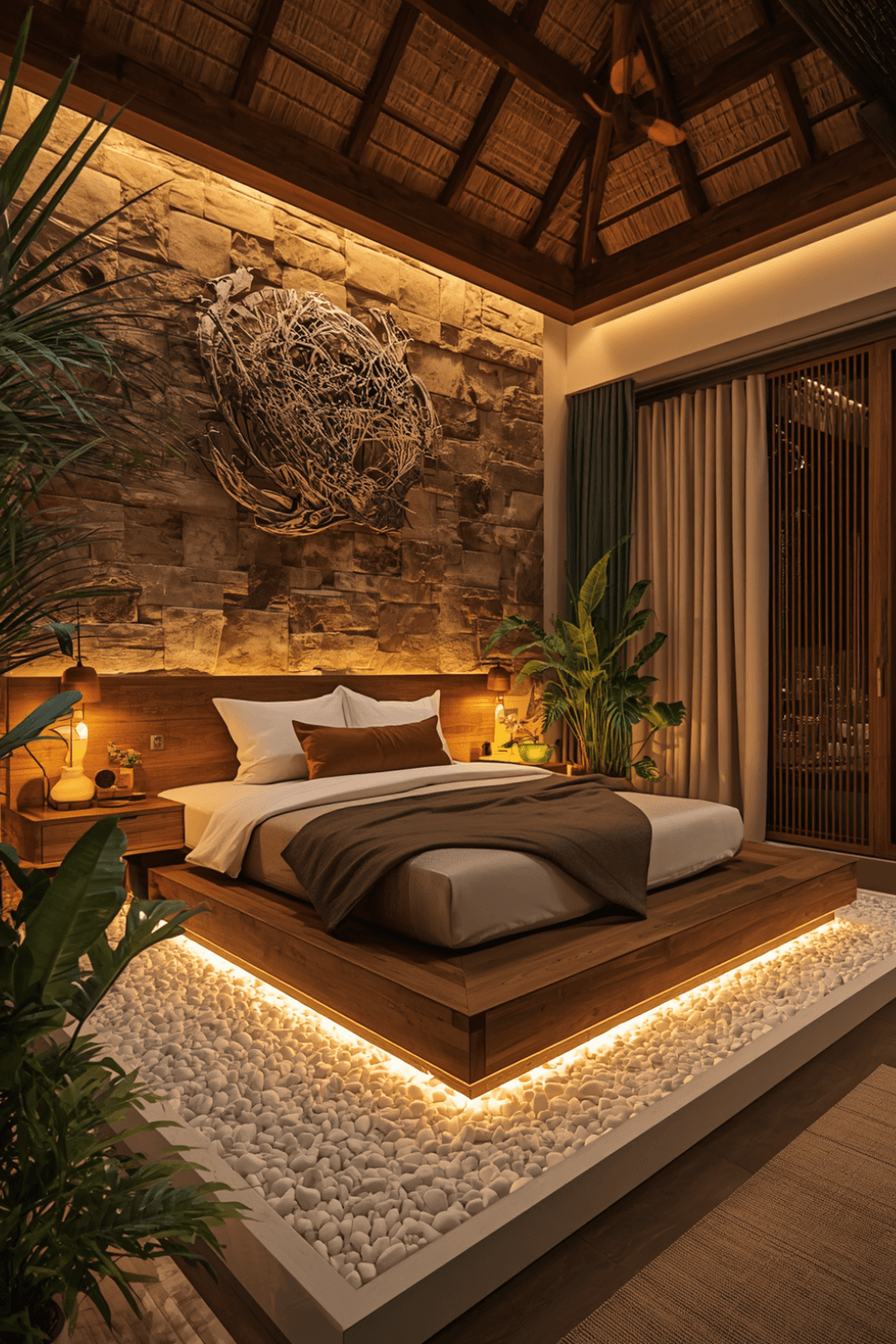
Two bedside lamps, a floor lamp in the corner, everything at a low, warm color temperature, This is the warm ambient lighting choice that quietly does more for a minimalist rustic decor bedroom than any material decision on this list. A gorgeous stone wall lit by a single harsh overhead fixture will always look worse than a plain white room lit by three warm lamps.
Worth saying plainly: a modern cabin bedroom doesn’t mean log walls and deer antlers. It means clean, architectural lines paired with natural materials, warm light, and a disciplined edit of what’s in the room. The rustic theme trap is adding too many “nature” props, wicker, twigs, woodland prints, until the room feels like a staged rental instead of an actual place someone sleeps. One or two strong natural elements, done well, always outperform ten smaller ones.
Frequently Asked Questions
What is biophilic interior design? Biophilic design is the practice of bringing natural elements, materials, light, plants, and organic textures into built interior spaces to improve the wellbeing of the people living in them. In a bedroom, it typically means natural stone or wood surfaces, plants, warm light, and a limited, earth-toned color palette rather than synthetic materials and cool artificial lighting.
How do I make my bedroom feel like a nature retreat without renovating? Start with warm lighting, swap any cool or bright overhead bulbs for warm, dimmable lamps on bedside tables and in corners. Add linen or organic cotton bedding, one or two plants, and a woven or natural-material accent. These four changes alone shift a room’s feel more than most people expect without touching a single surface.
What wood species work best for a luxury rustic bedroom? Oak, walnut, and reclaimed pine are the most consistently used in luxury rustic bedroom design because they’re durable, widely available, and age well rather than looking tired over time. Walnut’s darker grain tends to photograph most dramatically; oak is more versatile and easier to match across different pieces.
Is a stone wall in a bedroom too cold for everyday use? Not if it’s paired correctly. Stone with warm light, wood nearby, and soft textiles reads as grounded rather than cold. The issue usually comes when stone is used on too many surfaces at once, or in a room with cool overhead lighting and no soft materials to counterbalance it.
What color palette works best for a nature inspired bedroom? Earth tones consistently deliver the best results: warm taupes, terracotta, clay, moss green, and the natural colors of wood and stone. Keep the palette narrow, three to four colors, and vary the texture rather than the hue. This is what gives earth tone bedroom design its characteristic calmness.
Bringing It All Together
A bedroom that genuinely feels like a retreat comes down to a handful of honest decisions: natural materials in the places you touch and look at most, warm light kept low and layered, a color palette borrowed from the ground rather than the paint chip display, and the discipline to not fill every corner. Whether you’re drawn to the drama of a stone wall bedroom, the warmth of a wooden platform bed, or the quiet of a zen bedroom ideas approach, the same principles hold. Less, warmer, and more intentional always outperforms more.