Sage green is one of those colors that people discover by accident and then can’t stop thinking about. Someone changes their kitchen cabinets on a whim, or sees a photo in a renovation account they follow, and suddenly every white or grey kitchen they’ve ever seen looks a little boring by comparison. That’s not a coincidence. Sage does something that most kitchen colors don’t: it has actual presence without demanding attention.The twenty sage green kitchen ideas in this guide are built around getting those details right, not just showing you another pretty cabinet.
Same color in both cases. Completely different results. The difference was always the same things: the specific shade of sage chosen for that room’s light, warm hardware instead of chrome, a countertop with some warmth in it, and lighting that made the color look alive instead of washing it out. None of those decisions are expensive or complicated. They’re just the decisions most renovation guides skip over in favour of showing you twenty cabinet photos. This guide doesn’t do that. These twenty sage green kitchen ideas come with the reasoning behind them, so you can actually apply them to your own kitchen instead of just admiring someone else’s.
What Every Successful Sage Green Kitchen Gets Right
- The right shade of sage, not too yellow, not too grey. Sage sits between olive and mint on the spectrum. Too much yellow and it slides into khaki. Too much grey and it loses its warmth entirely. The best versions have a slight dusty quality that reads as sophisticated rather than muted.
- A countertop that complements rather than competes. White or grey veined stone, warm wood, or concrete all work with sage. Bright white quartz can look too high-contrast; warm tones almost always work better.
- Hardware in one warm finish. Brushed brass, antique bronze, or aged copper against sage green is one of the most consistently used combinations in current high end kitchen design worldwide, and it works because the warm metal brings out the warmth in the green rather than cooling it down.
1. Full handleless sage green cabinets in a matte finish
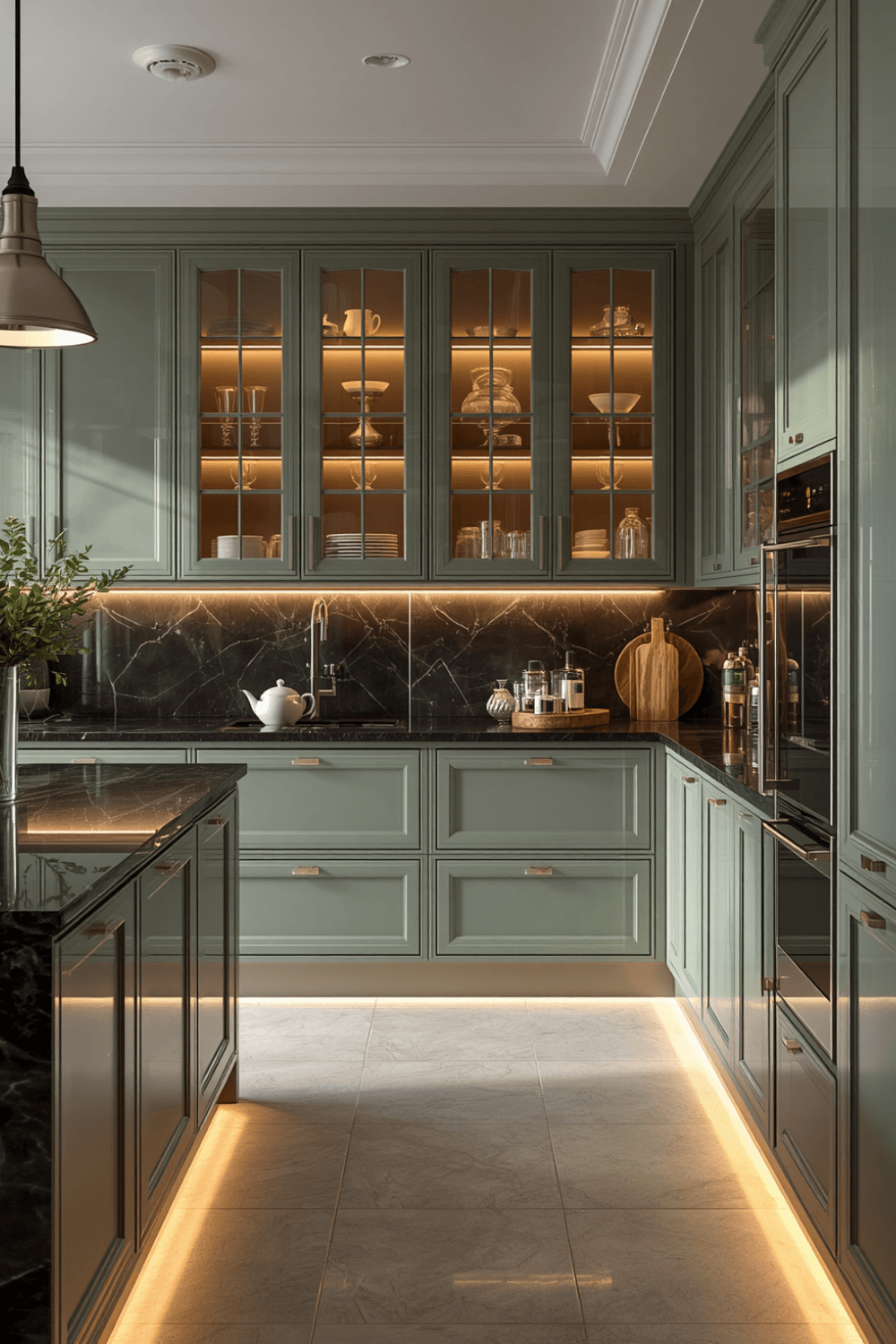
The combination of sage green and a completely flat, handleless door profile is the current gold standard in minimalist kitchen design. Nothing to catch the eye except the color and the surface quality, which means the countertop and the lighting do the rest of the work. Push-to-open mechanisms or integrated finger pulls keep the line completely unbroken.
2. Glossy sage green cabinets for a more dramatic, contemporary look
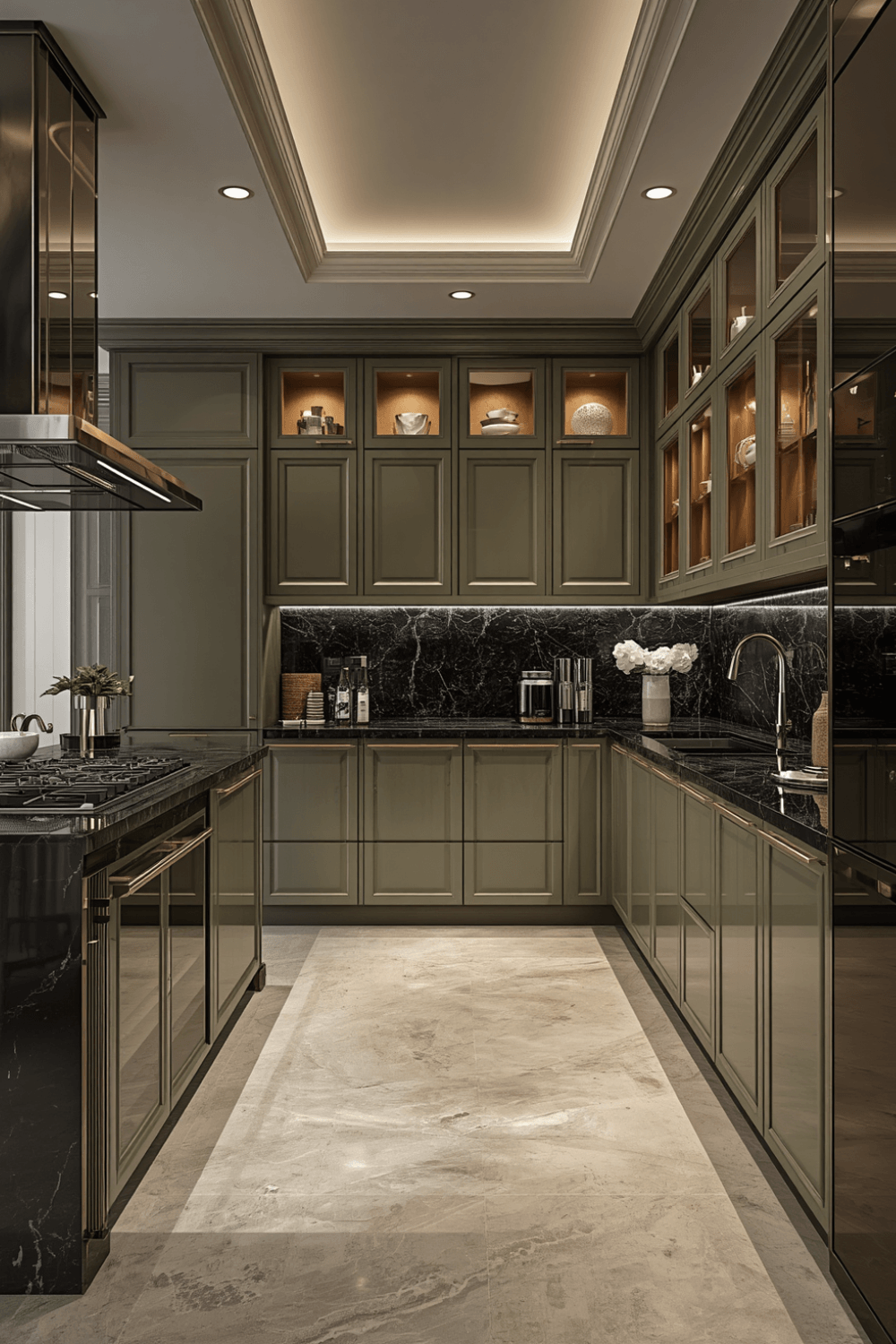
A high-gloss lacquer in sage green is a different proposition from the matte version. It reflects light, it shows fingerprints, and it reads as considerably more glamorous. In a glossy kitchen cabinets setup, a handleless door in high gloss sage against a white Carrara marble countertop is a combination that photographs almost impossibly well.
3. Sage green lower cabinets with white or cream upper cabinets
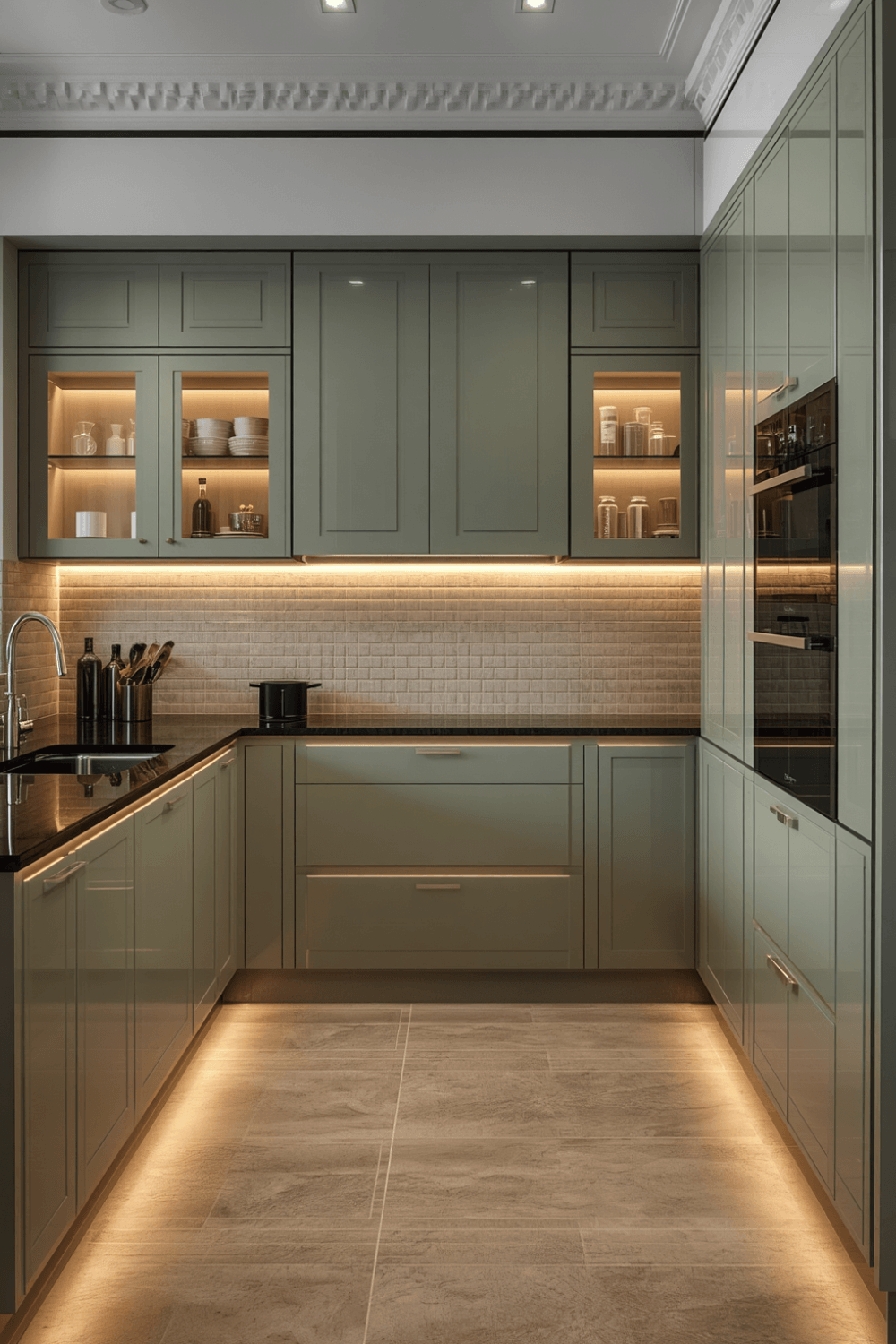
The most accessible entry point into a sage kitchen, and one of the most versatile. The sage stays close to eye level and below, grounding the kitchen, while the upper half stays light and airy. This approach also works well in smaller kitchens where full sage on every surface might feel heavier than intended. Pairing sage with chrome or stainless hardware. It can work, but it tends to push the green cooler and make the kitchen feel more clinical than most people want from a sage scheme.
4. Sage green handleless cabinets in a U-shape layout
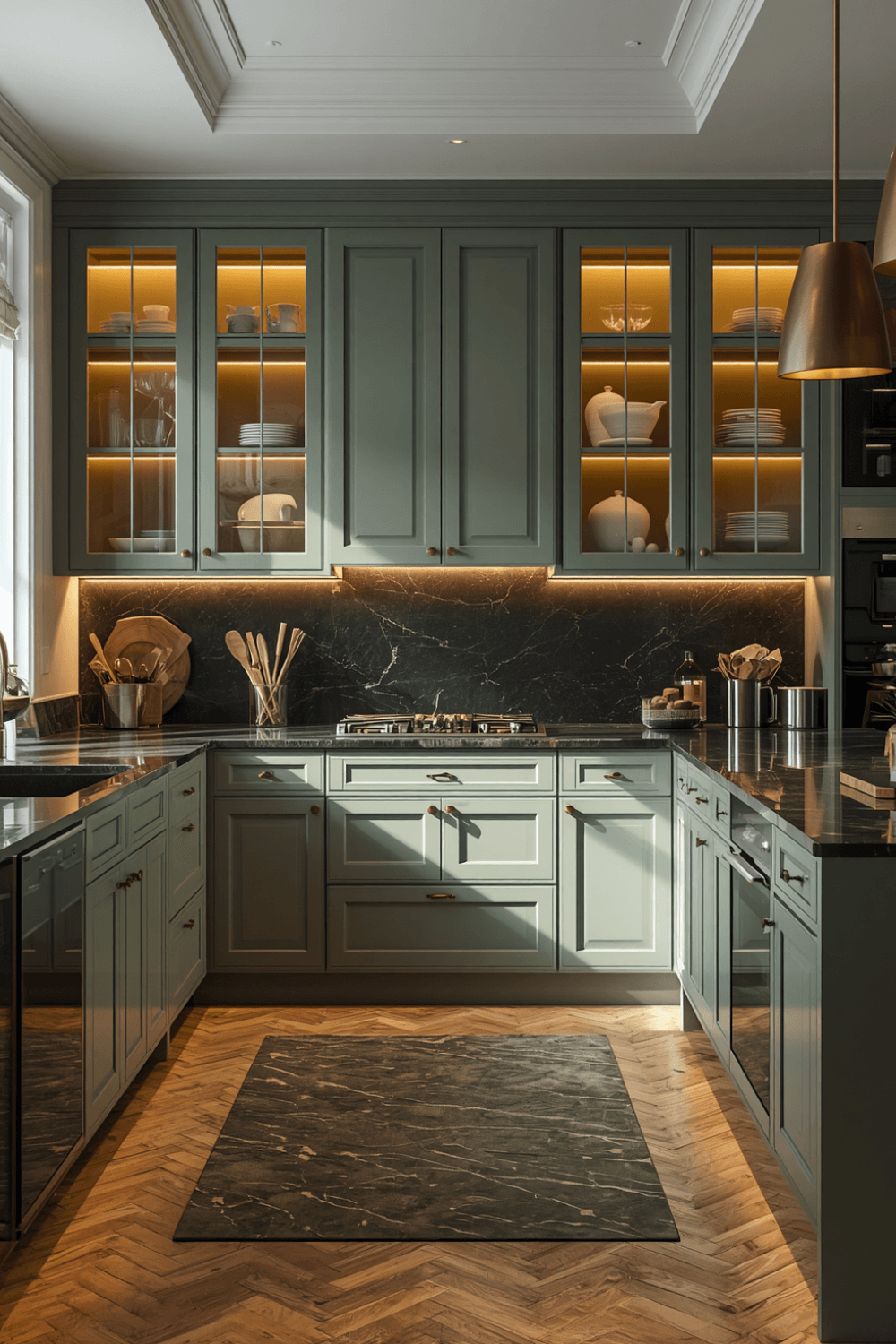
A U shape kitchen design in sage green, with handleless doors and integrated appliances, creates a wrapped, continuous color treatment that makes even a mid-sized kitchen feel considered and custom. The key in a U-shape is keeping the countertop material consistent across all three runs so the surface reads as one continuous element rather than three separate sections.
5. A sage green kitchen island in a contrasting tone to the perimeter cabinets
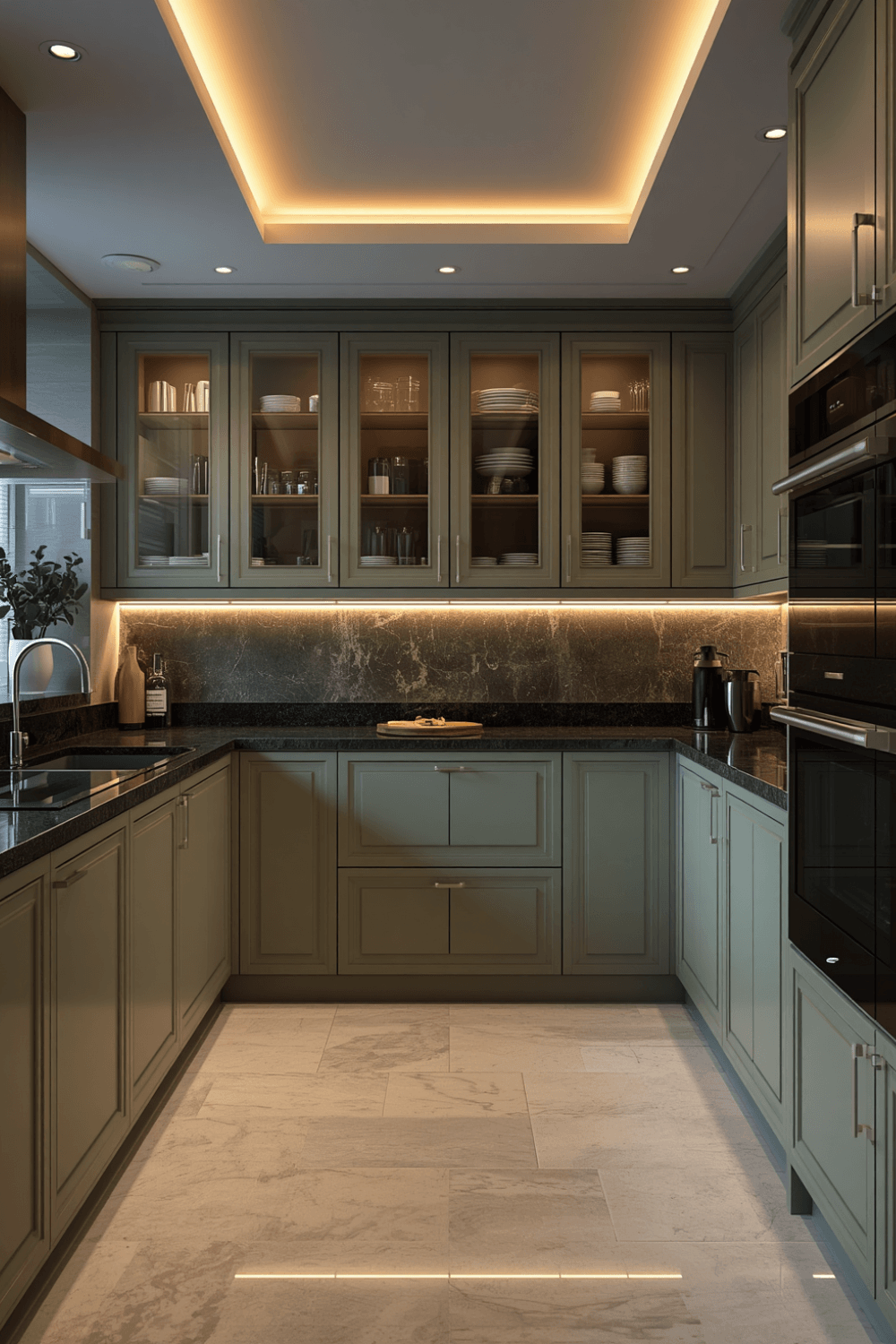
White or light grey perimeter cabinets with a sage green island is a quieter way to introduce the color than going full sage on everything. The island becomes the color moment and the focal point without the whole kitchen committing to the palette. It also means the kitchen can evolve: change the island later and the perimeter cabinets are still neutral enough to work with something new.
6. Sage green shaker-style cabinets for a more traditional kitchen
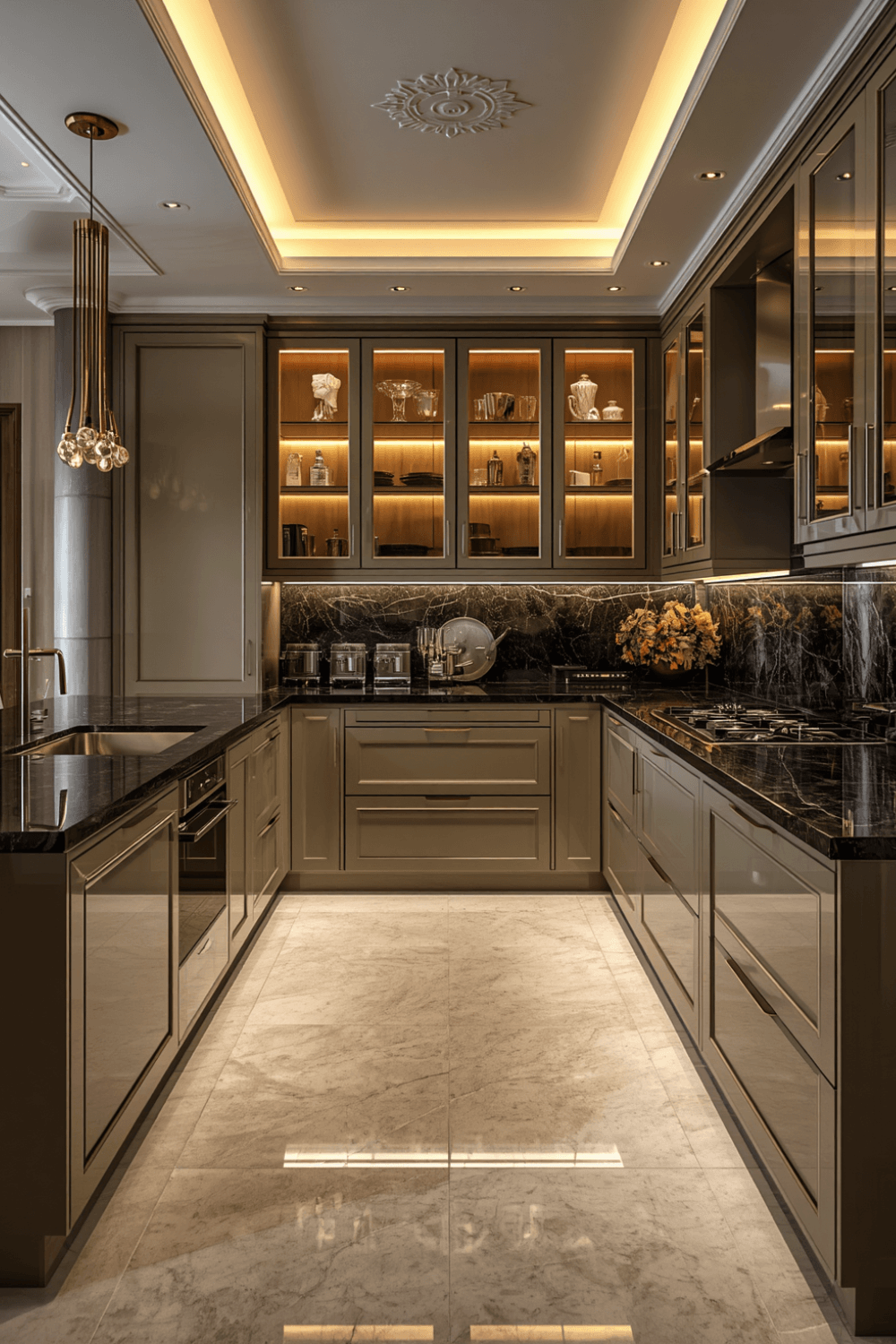
The handleless look suits contemporary spaces, but sage green also works beautifully in a shaker-style door, the simple recessed panel profile that sits naturally in more traditional or country kitchen contexts. In a modern kitchen interior with shaker doors, sage green and aged brass hardware reads as classic rather than trendy, which is part of why it’s held up better than most color trends of recent years.
7. Built-in sage green cabinetry running floor to ceiling
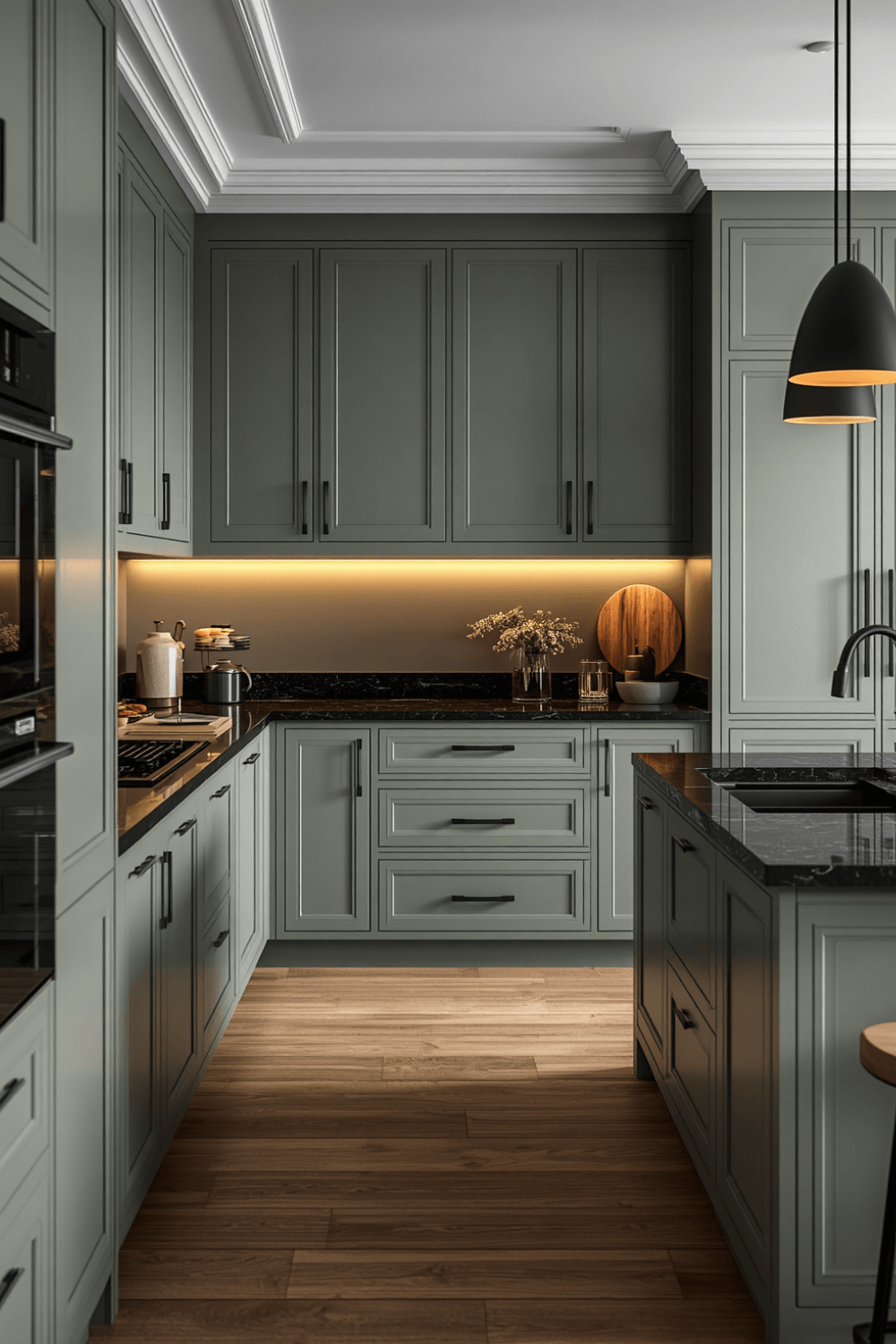
Floor-to-ceiling built in kitchen storage in sage green, including integrated pantry cupboards and appliance housings, makes a kitchen look significantly more custom and significantly less like a flat-pack installation. The ceiling-height cabinets also make the room feel taller, which matters especially in kitchens with lower ceiling heights.
LED Kitchen Lighting That Works with Sage Green
Lighting changes sage green more than it changes almost any other kitchen color, which makes getting it right more important here than in a plain white kitchen.
8. Warm LED under-cabinet strips directed at the countertop
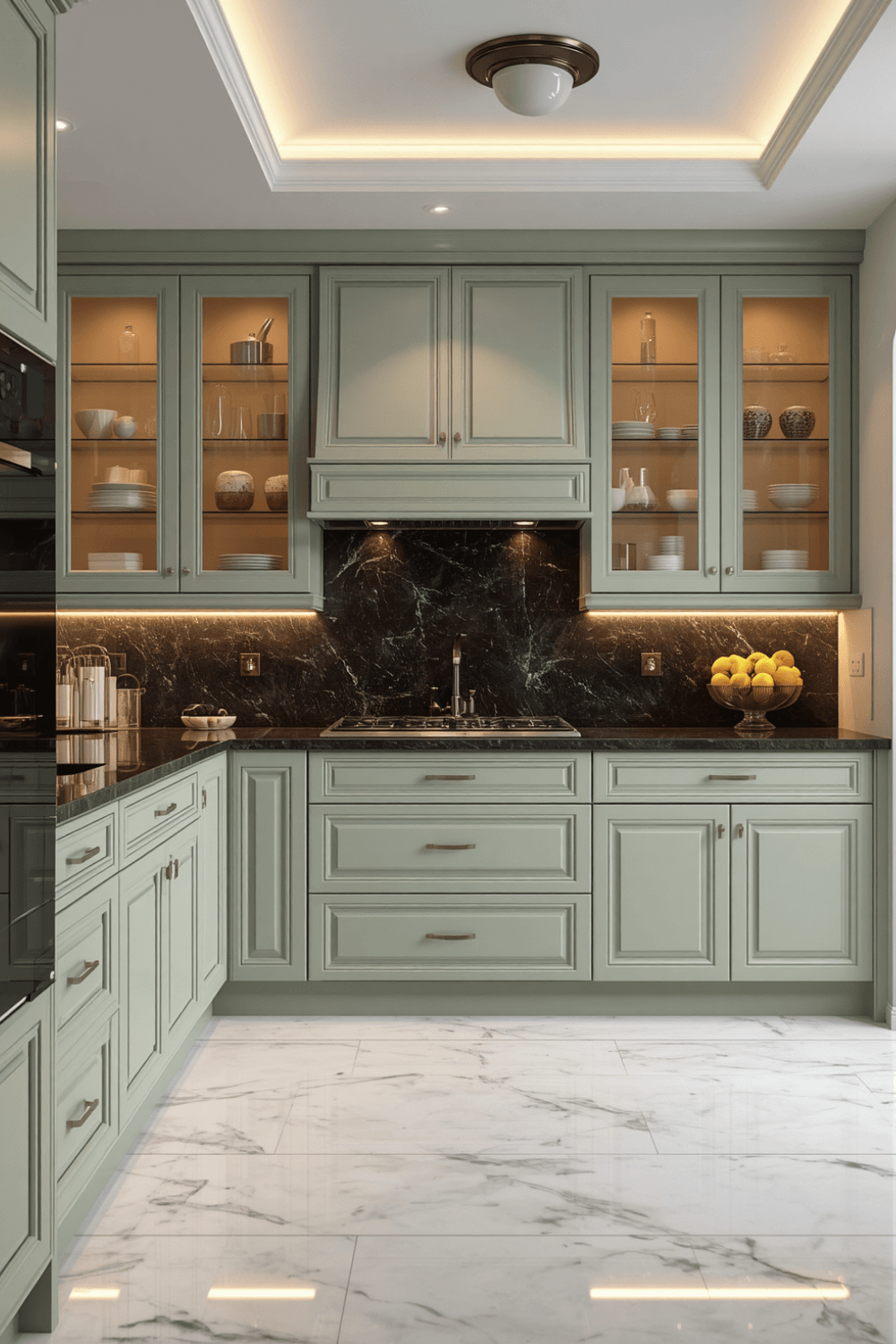
Warm white LED strips mounted to the underside of upper cabinets hit the countertop and bounce back up onto the sage green surface below, which brings out the warmth in the color rather than washing it out. Cool white strips have the opposite effect, pushing sage toward a flat, slightly lifeless grey-green that most people don’t want.
9. Statement pendant lights over a kitchen island in aged brass or bronze
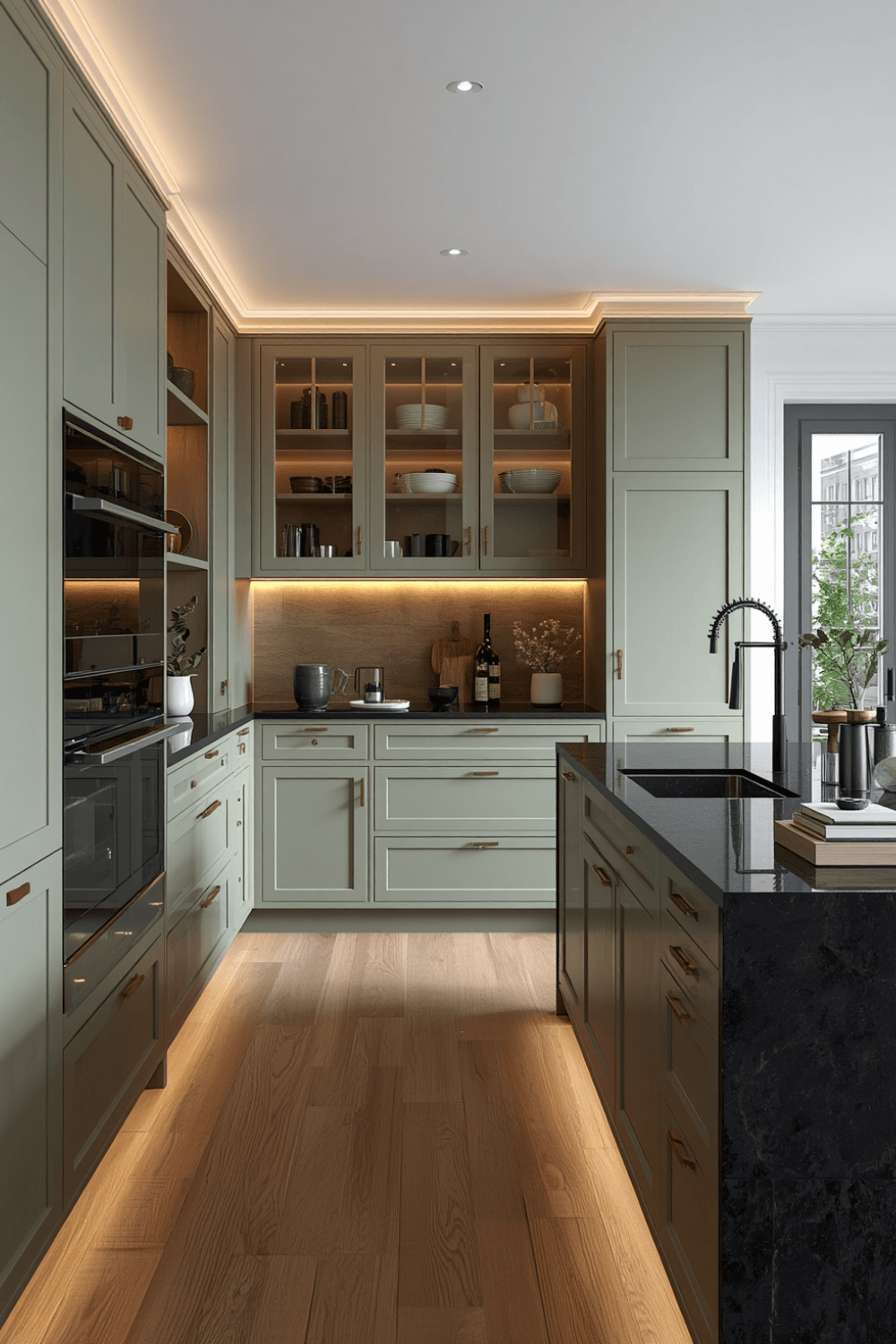
In a sage green kitchen, pendant lights in aged brass or bronze are the most consistently strong hardware choice because the warm metal warms the green. Two or three pendants over the island, evenly spaced, hung at 30 to 36 inches above the surface. In a polished brass finish rather than brushed, they add a more glamorous quality to the elegant kitchen decor than a brushed finish does.
10. LED strip lighting inside glass-fronted upper cabinets
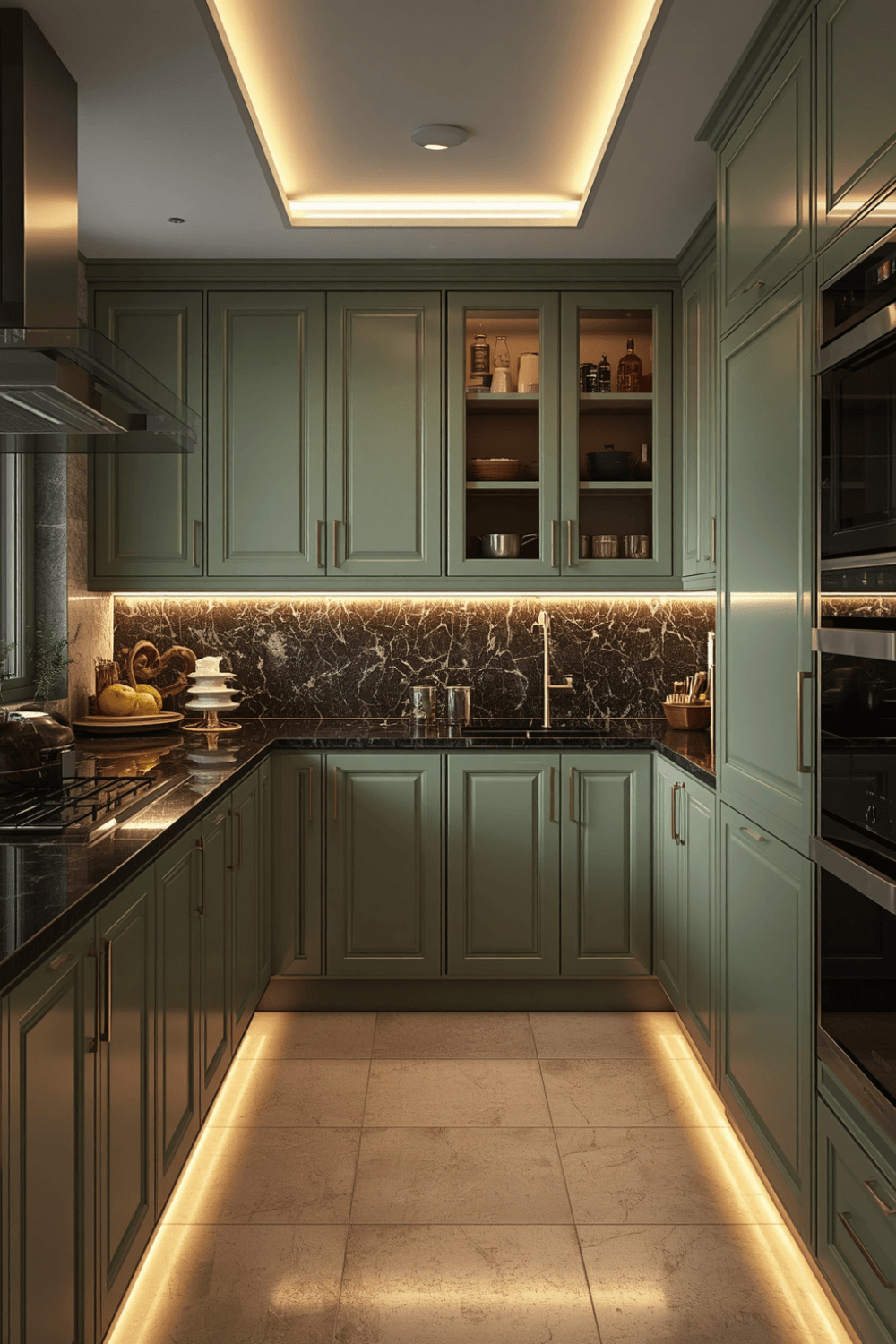
If any upper cabinets have glass fronts, a warm LED strip inside lights both the cabinet contents and adds a layer of light at mid-height that the room would otherwise be missing. On sage green cabinets, the internal glow also highlights the color of the door frame around the glass, which adds depth and detail to the cabinetry. . In a glossy cabinet scheme, a quieter, more understated countertop usually works better.
11. Recessed ceiling lighting on a separate dimmer circuit
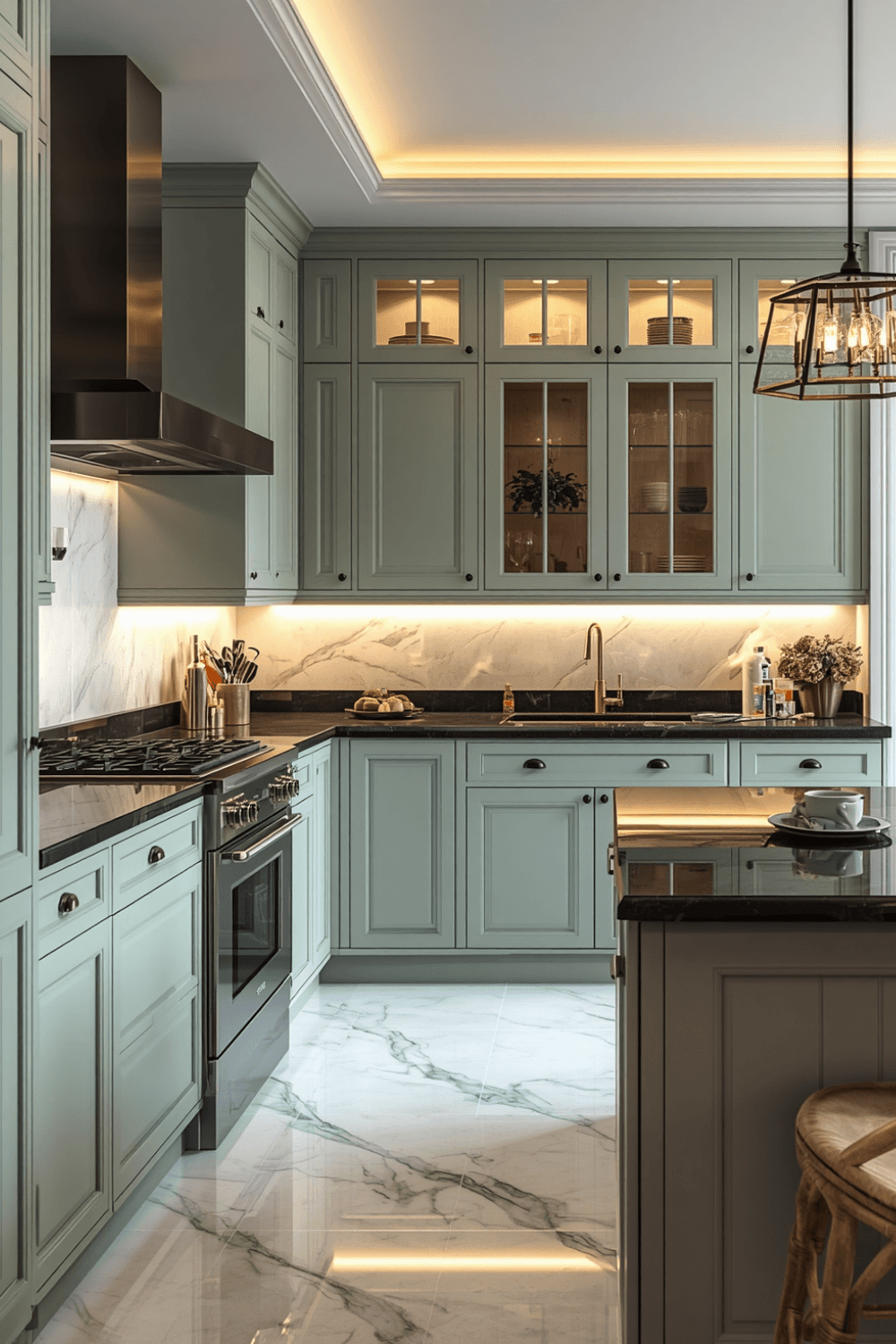
All recessed fixtures in a sage kitchen should be warm white and on a dimmer. The ability to lower the ambient light in the evening shifts the sage from daytime practical to evening atmospheric in a way that a fixed bright overhead simply can’t. This is the difference between a kitchen that feels good to cook in and one that also feels good to eat in.
12. Toe-kick LED lighting at floor level
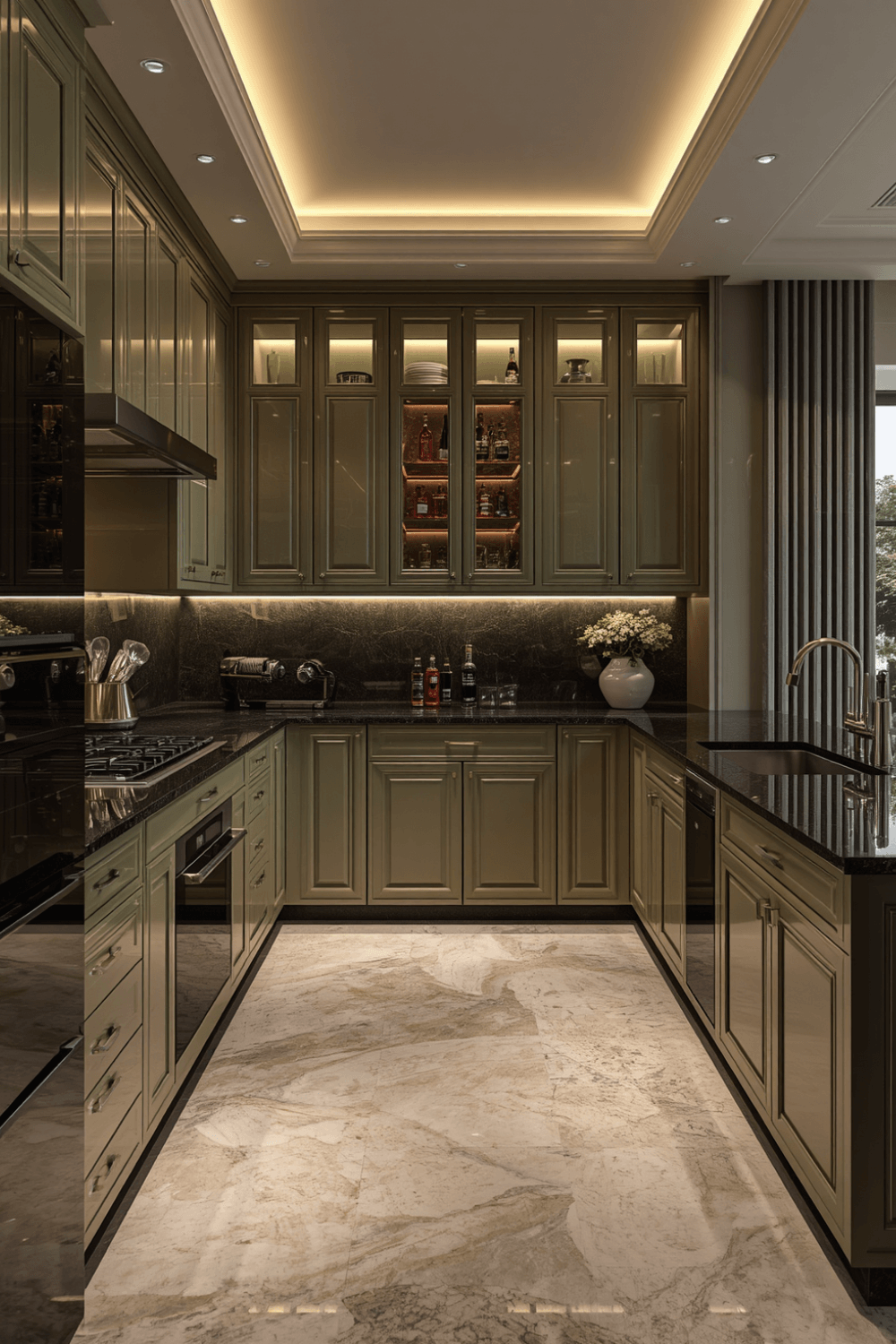
A warm LED strip along the base of the lower cabinets, at floor level, adds a floating quality to the cabinetry and a layer of soft ground-level light that no other fixture in the room replicates. In a handleless sage green kitchen where the design language is deliberately minimal, this kind of detail reads as sophisticated rather than decorative. Glossy sage with a busy marble. Both are high-interest surfaces and they compete
Best LED Color Temperature for a Sage Green Kitchen
A warm white across every light source in the room. Sage green is a naturally cool-leaning color, and warm light counterbalances that, bringing out the depth and warmth in the hue. Cool or daylight-temperature LEDs push sage toward a flat, washed-out grey that makes even a beautifully designed kitchen look slightly unloved.
Kitchen Backsplash Ideas and Countertop Pairings for Sage Green
13. White or light grey marble countertops with a full-height marble backsplash
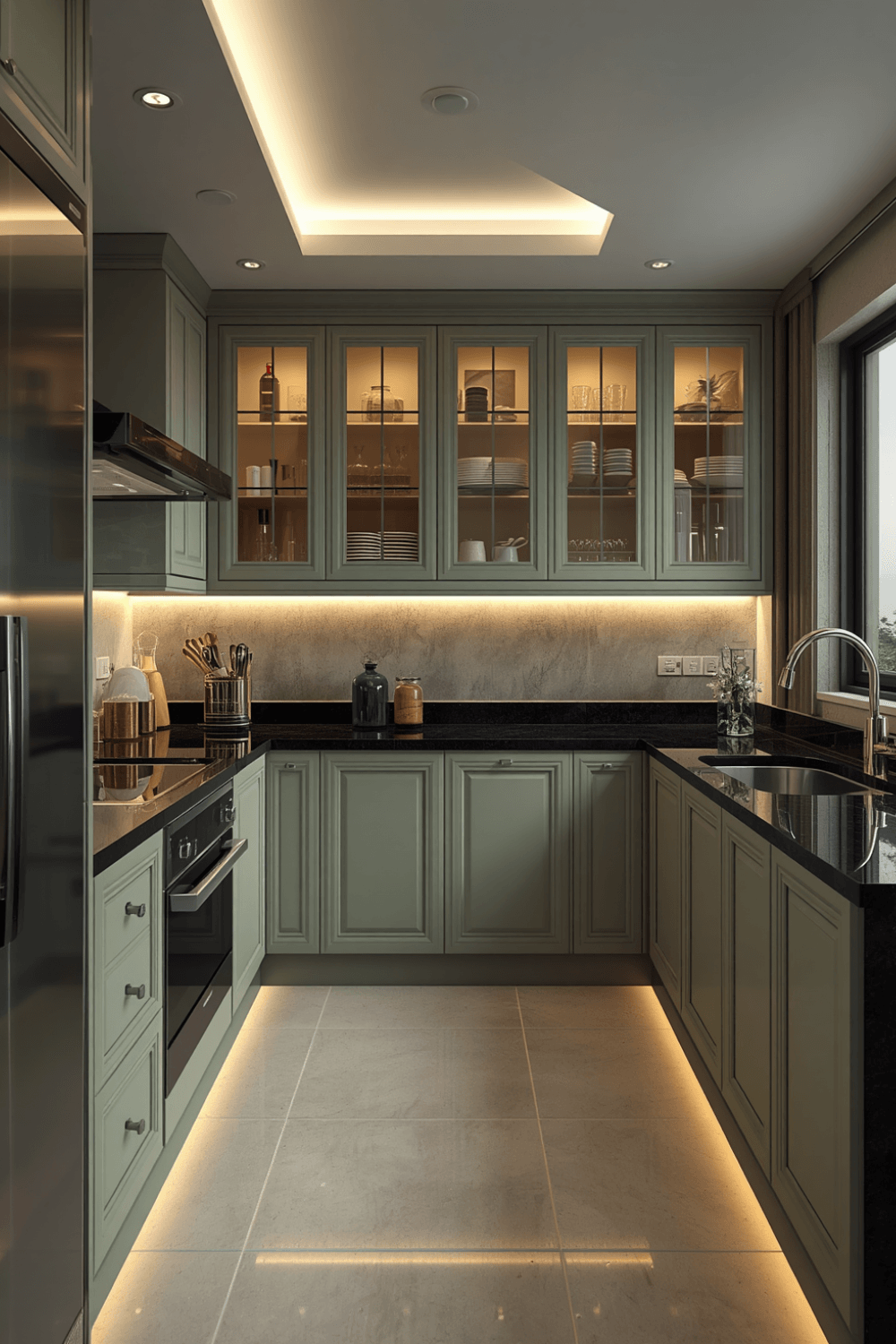
The softest possible contrast against sage green cabinets, and one of the most reliable combinations in current luxury kitchen inspiration. The veining in white marble adds visual movement to what is otherwise a very calm, monochromatic scheme. Keep the marble tones warm (Calacatta or Volakas) rather than cool grey (Silver Wave or similar) to stop the kitchen from feeling cold.
14. A warm wood countertop or breakfast bar alongside sage green cabinets
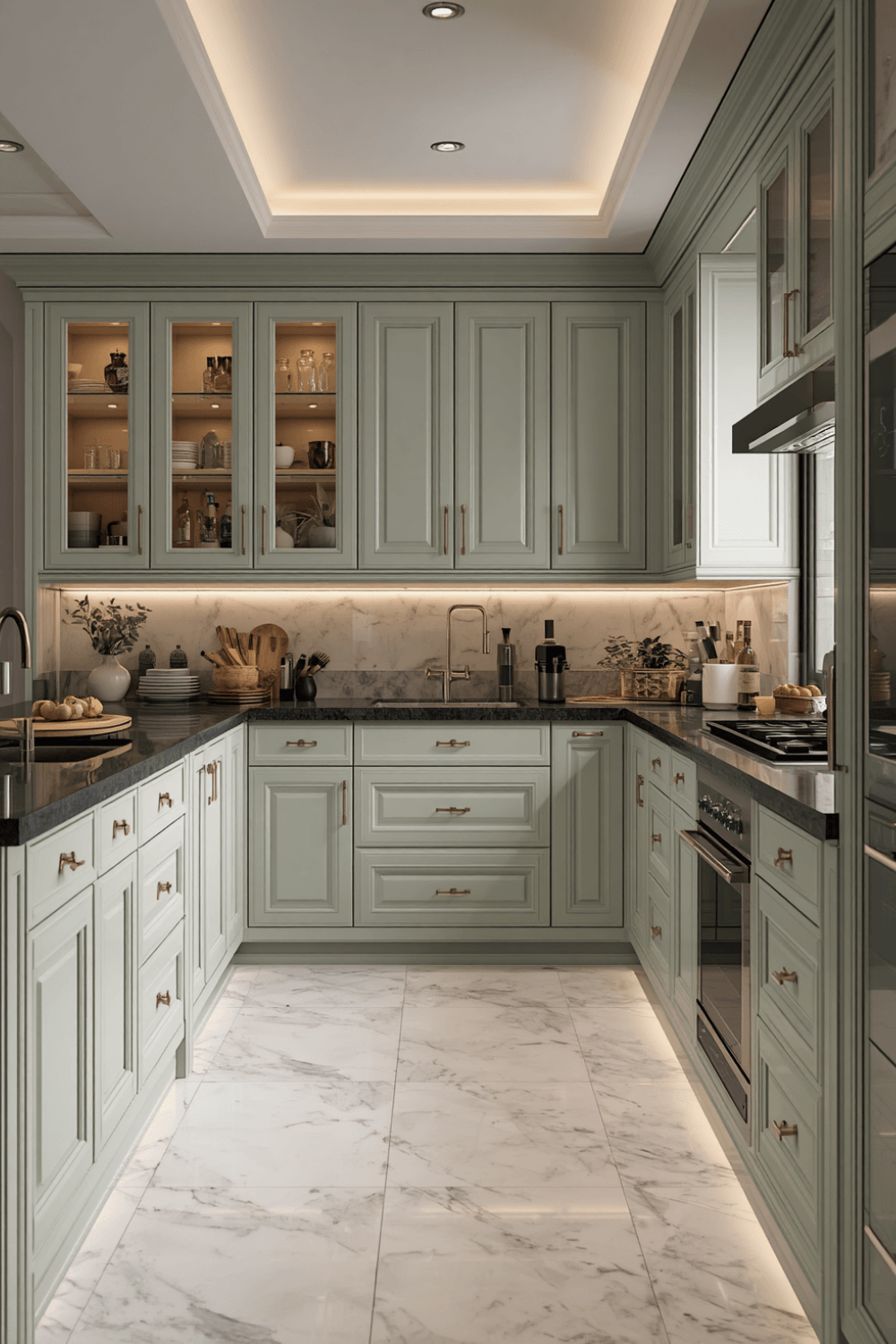
A butcher block or solid oak worktop section beside sage green cabinetry is a combination that appears constantly in Scandinavian and New Nordic kitchen design, which has influenced high-end residential kitchens worldwide. The organic warmth of the wood grounds the green in a way that stone doesn’t, and it’s the combination that makes sage green feel genuinely welcoming rather than just sophisticated.
15. A concrete or honed stone countertop for an industrial-modern feel
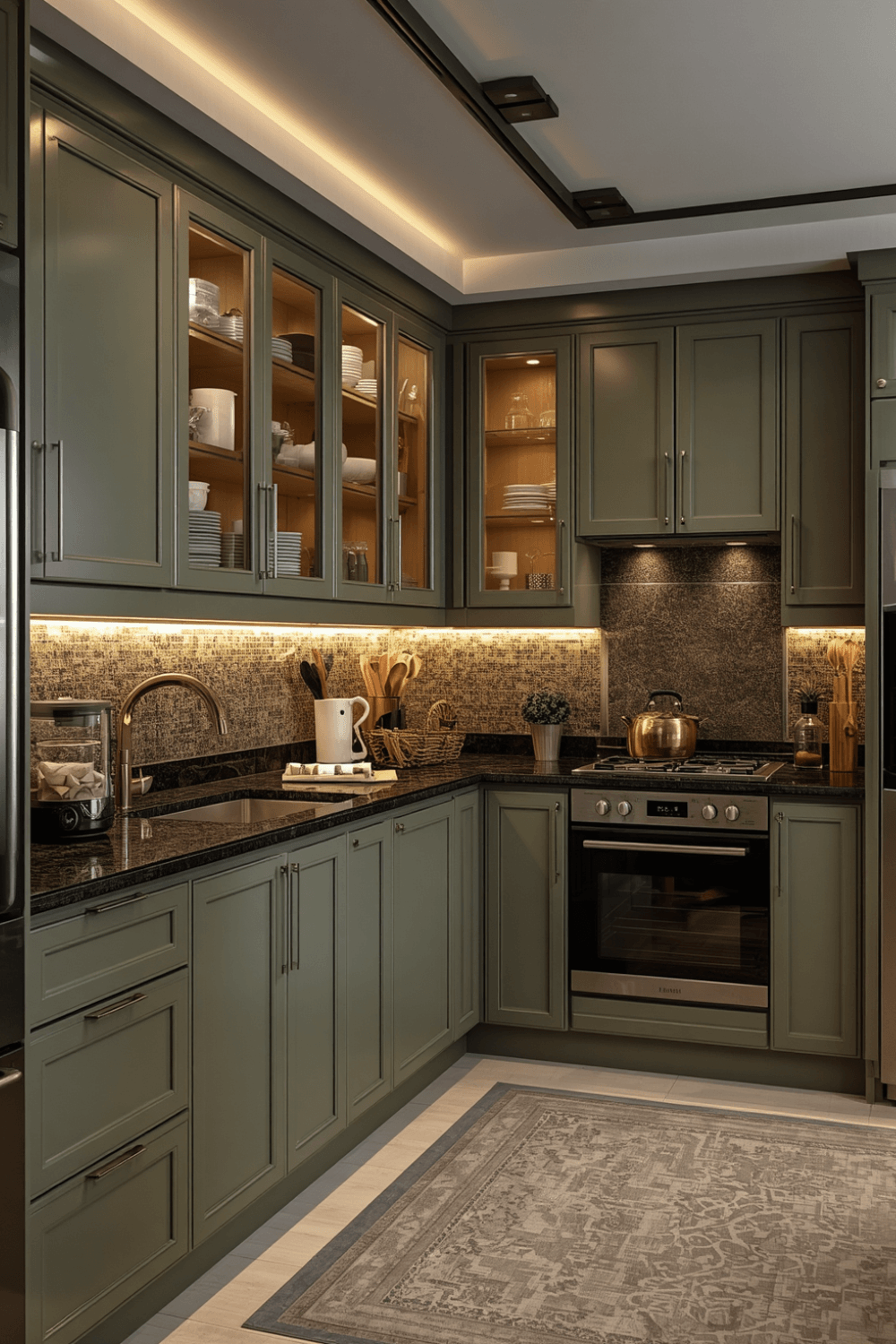
Poured concrete or honed limestone in a warm grey against sage green cabinets creates a more textural, slightly industrial version of the palette. It’s less obviously glamorous than marble and more understated, which suits a contemporary kitchen ideas aesthetic that’s aiming for understated rather than luxurious. Using cool-white LED lighting that washes out the green entirely. Warm white throughout, always.
16. A zellige or handmade ceramic tile backsplash in cream or warm white
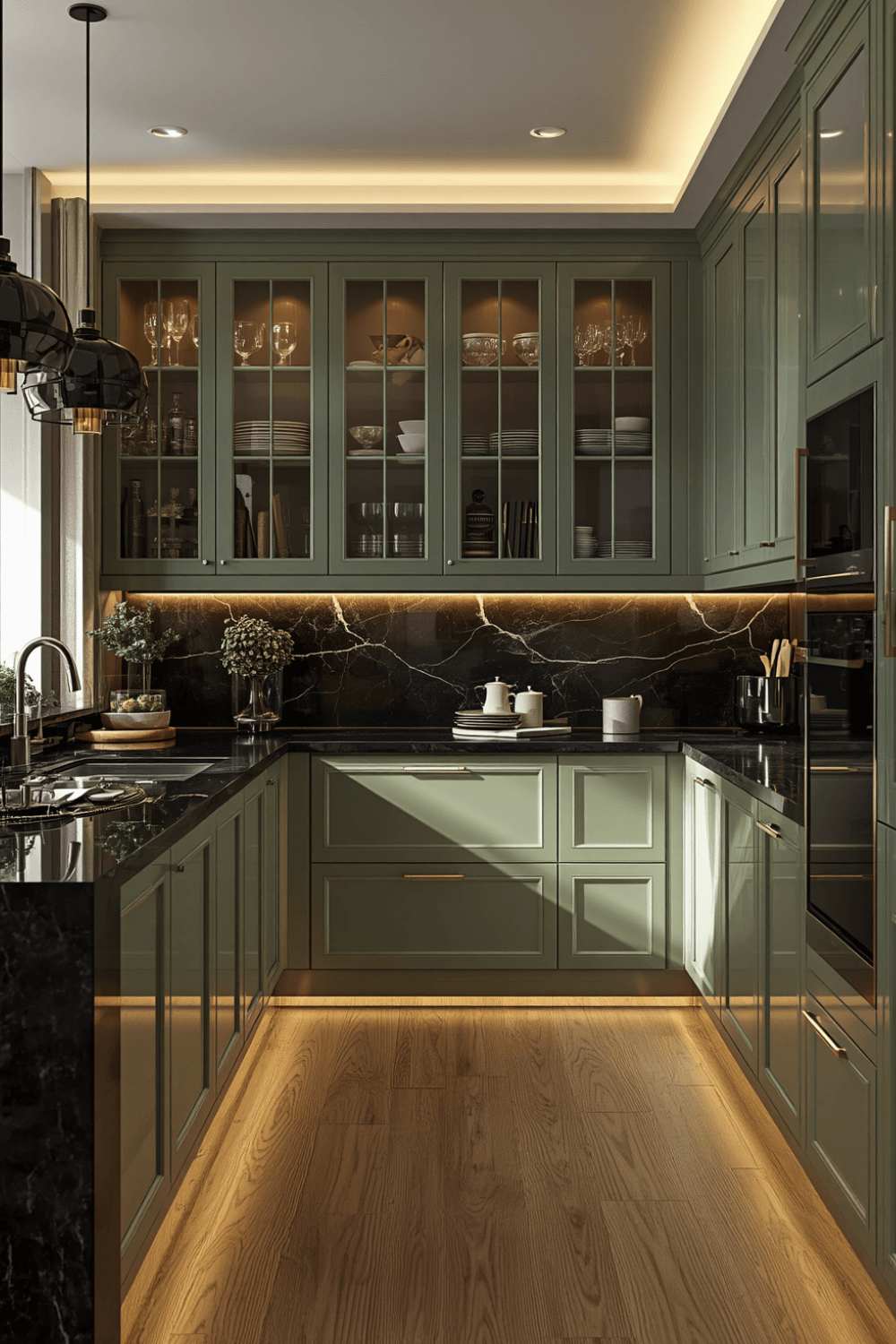
The slight imperfection and handmade quality of zellige tile adds texture and movement to a kitchen backsplash in a way that standard subway tile doesn’t. In a kitchen backsplash ideas context, cream or ivory zellige behind sage green cabinets creates a warmth and depth at the wall surface that plain grout-line tile simply can’t match.
17. A brass or bronze tap and sink hardware as the backsplash focal point
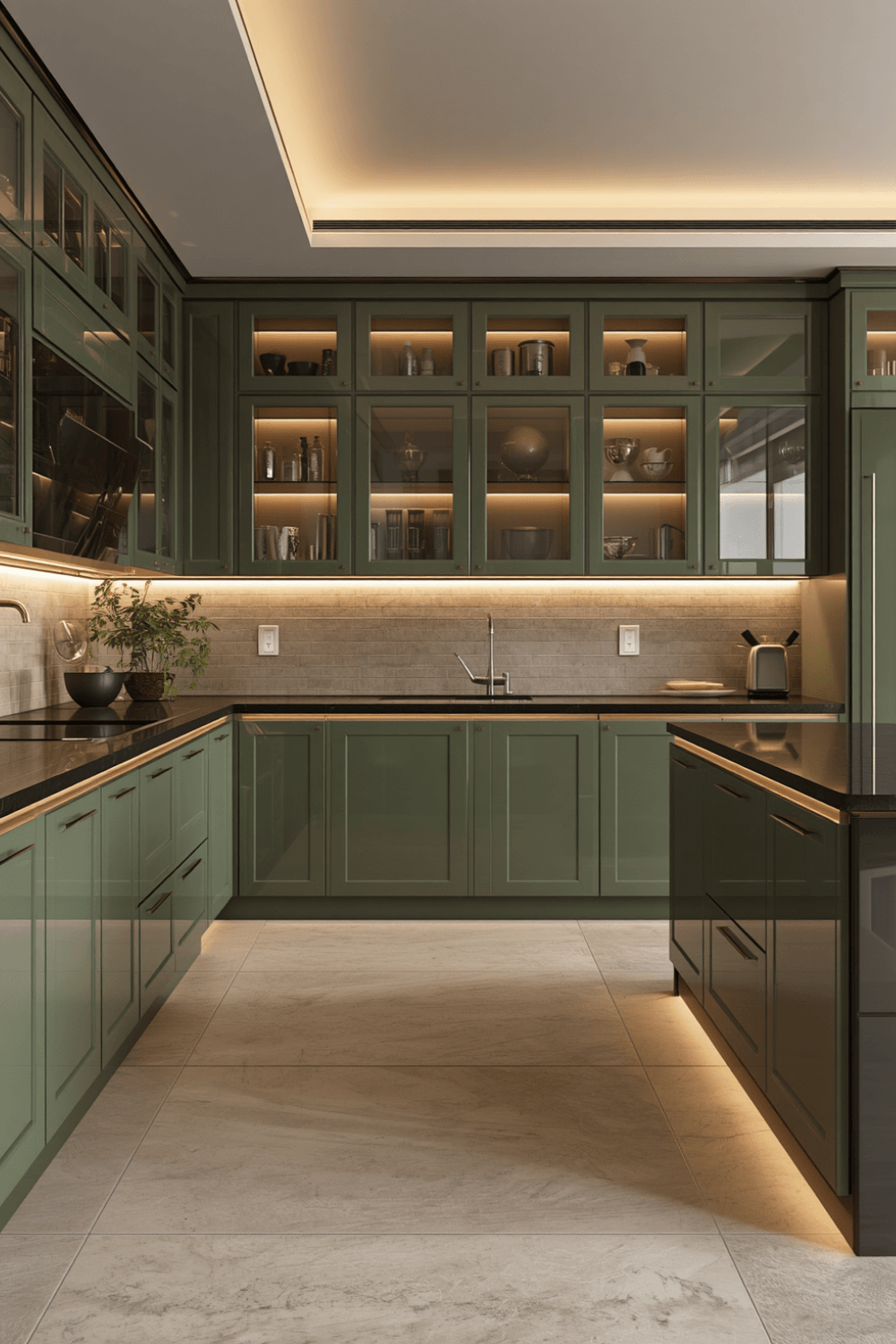
In a kitchen where the backsplash is kept simple (plain tile or stone), the tap and sink hardware becomes the visual focus of that wall section. An unlacquered brass tap over a white ceramic or stone sink, against a simple backsplash and sage cabinetry, creates a moment of warmth and intentionality without requiring any extra surface treatment.
18. A sage green kitchen with fully integrated appliances and push-to-open drawers
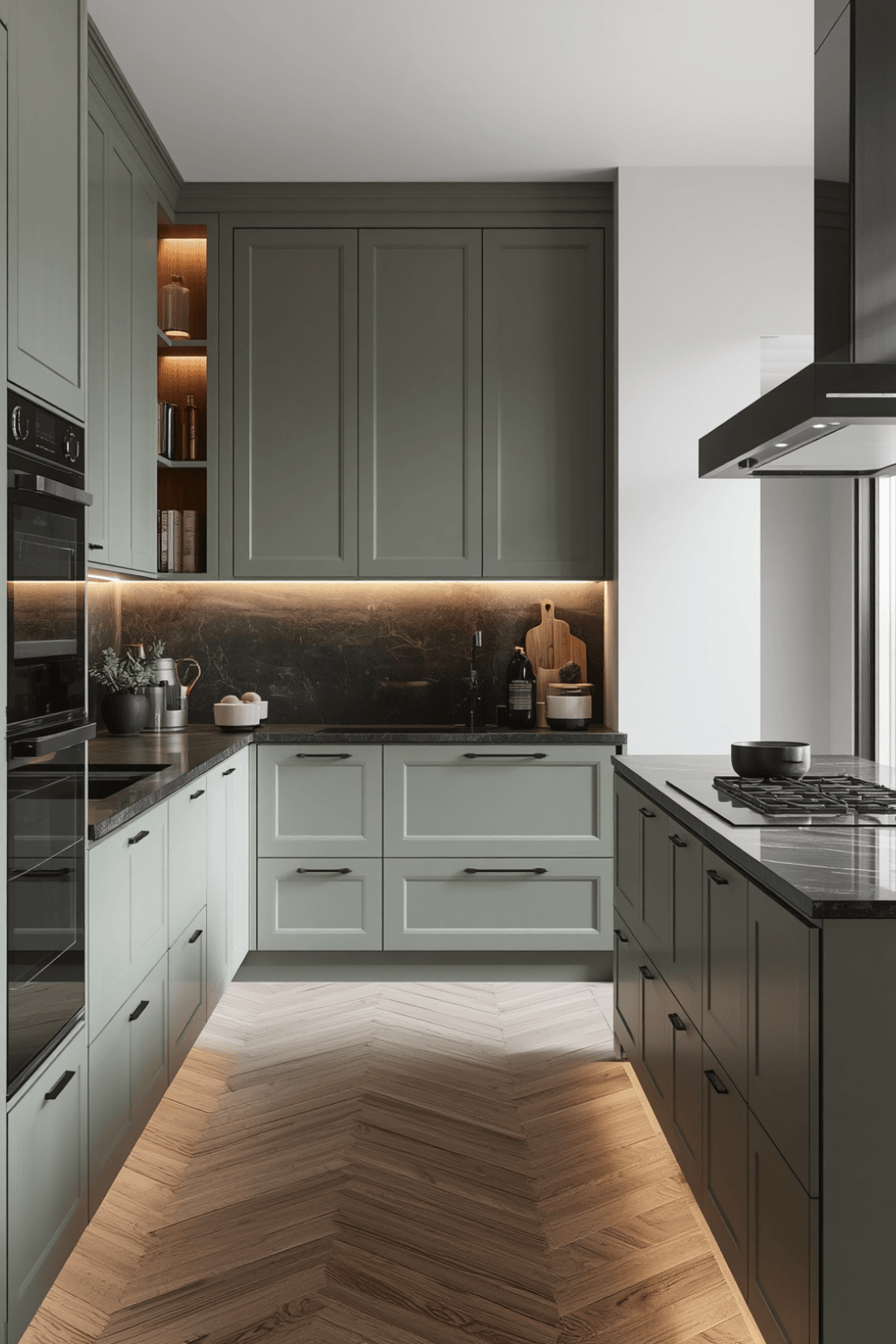
The fully integrated approach, where the refrigerator, dishwasher, and oven are all fronted with the same sage green panel as the surrounding cabinets, creates a kitchen that reads as completely seamless from every angle. Combined with push-to-open mechanisms rather than handles, it’s the definition of a handleless kitchen cabinets design and the highest expression of the minimalist approach to this color.
19. Open shelving in one section of the kitchen in a contrasting material
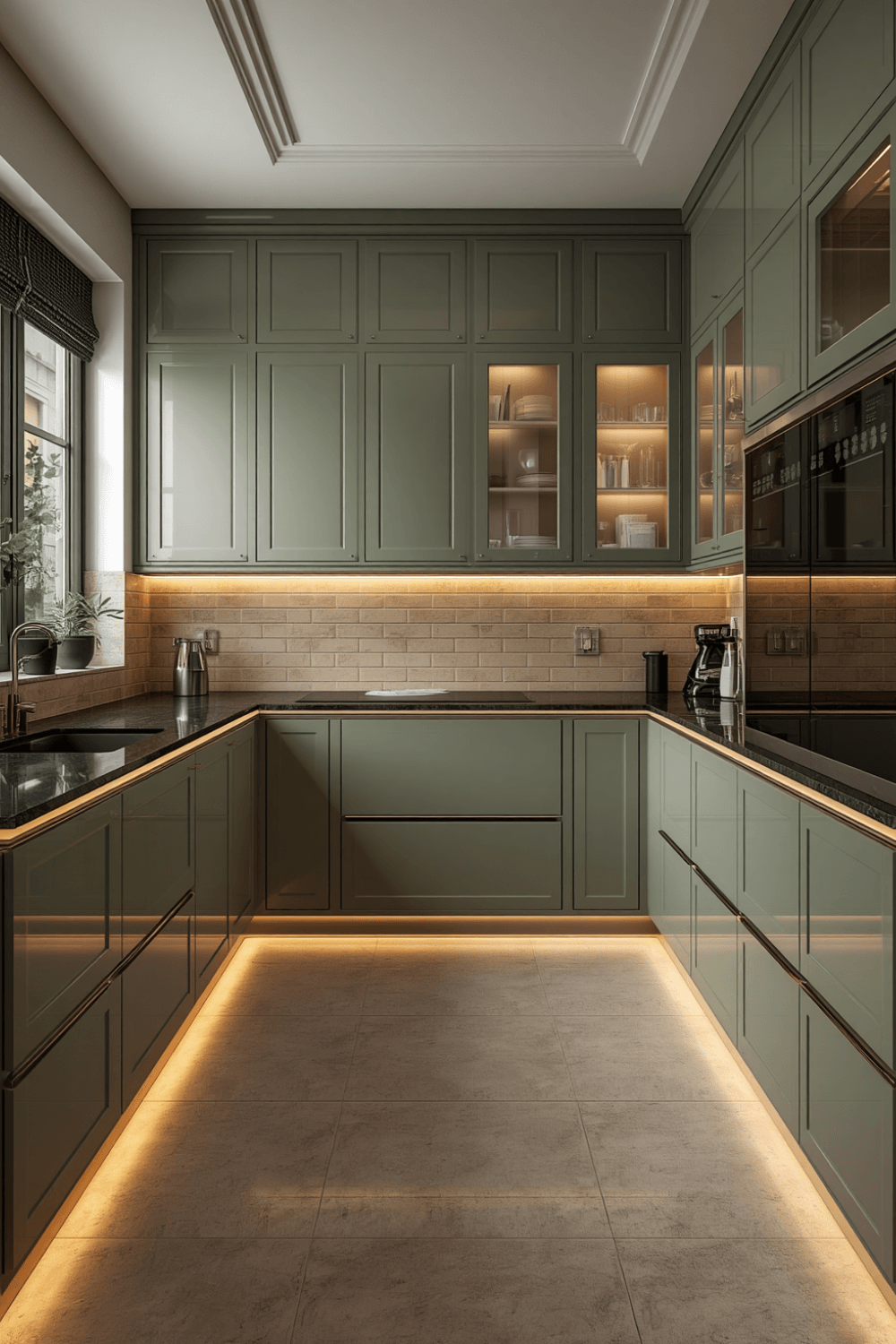
A run of open shelves in natural oak or white above one section of sage green lower cabinets creates both practical display space and a visual break in the cabinetry. Styled with a few ceramics, a plant, and some kitchen basics, it adds personality to a scheme that might otherwise feel slightly anonymous in its precision. Sage works best as the lead color supported by neutrals (stone, wood, white) rather than as one of three or four colors competing equally.
20. A sage green kitchen with black accents for a bolder, more editorial look
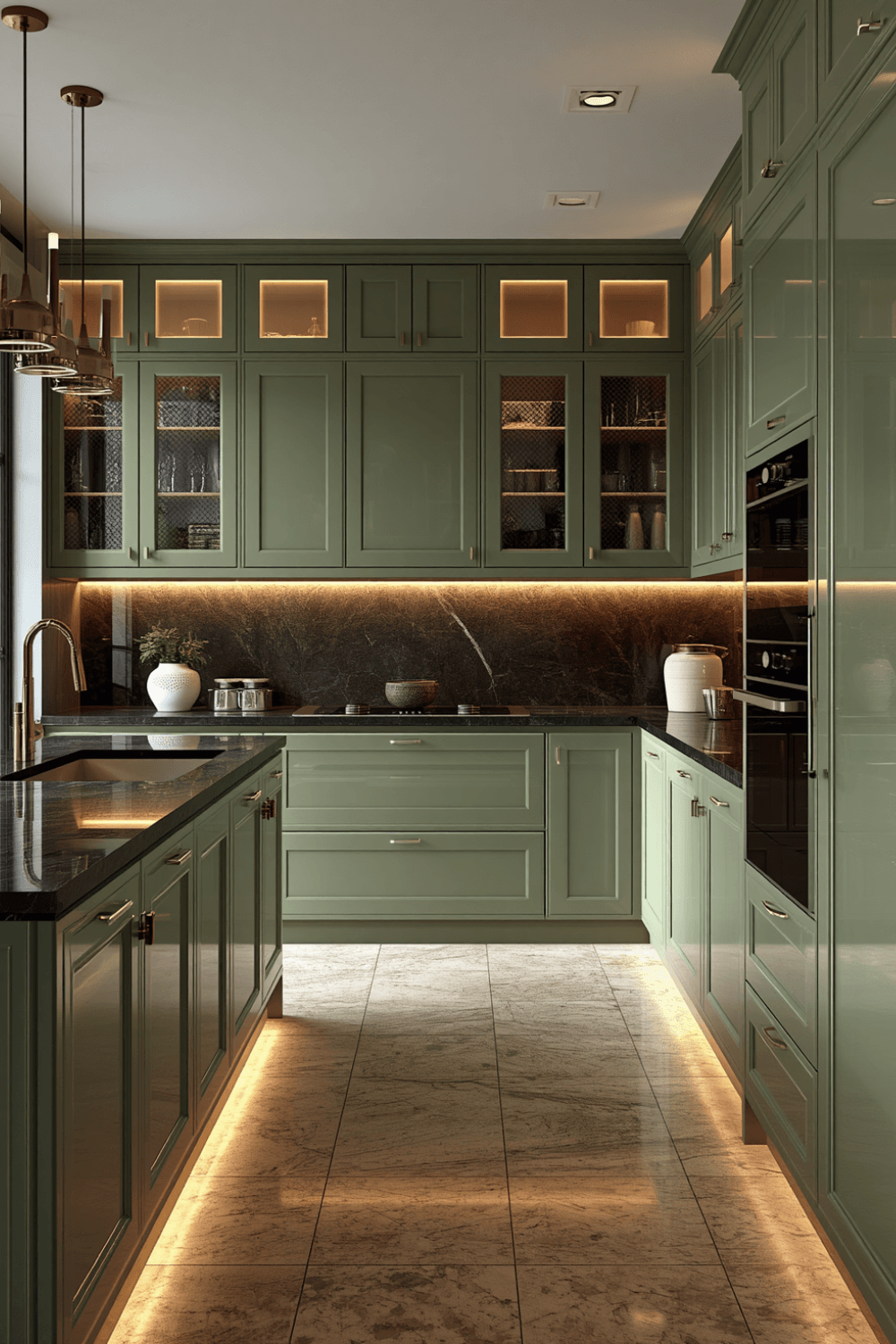
Matte black handles on sage green cabinets, a black sink, black tap, black pendant shades. It’s a more graphic interpretation of the palette than the standard brass-and-sage combination, and it suits a stylish kitchen remodel that wants a more contemporary, slightly more masculine edge to the design. The black creates clarity and contrast that stops sage from reading as soft or indecisive.
Frequently Asked Questions
Is sage green a good color for kitchen cabinets?
Yes, and it’s one of the more durable color trends in recent kitchen design precisely because it works as a near-neutral rather than a statement color. It ages well, pairs with a wide range of countertop materials, and reads differently in different lights in a way that keeps it interesting rather than monotonous. It’s also been widely adopted in high-end kitchen projects globally, which gives it a longevity that more trend-driven colors don’t have.
What countertop color goes best with sage green cabinets?
Warm white or grey-veined marble (Calacatta or Volakas rather than cool grey stones) is the most popular pairing in current high-end kitchen design. Warm wood sections, either as a full worktop or a breakfast bar, are also very strong with sage. Avoid bright white quartz without any warmth in it, since the high contrast can make sage look slightly muddier rather than richer.
What hardware finish works best with sage green?
Brushed brass, aged brass, or unlacquered brass that develops a natural patina over time. Antique bronze or aged copper also work well. These warm metals bring out the warmth in sage green and prevent the kitchen from reading as cool and clinical. Matte black is a stronger, more graphic alternative that suits a more contemporary aesthetic. Avoid polished chrome as the primary hardware finish: it pushes sage cooler and gives the kitchen a slightly colder quality than most people want from this palette.
Is a glossy or matte finish better for sage green kitchen cabinets?
Both work, but they give very different results. Matte sage reads as quieter, more contemporary, and more forgiving on fingerprints. Glossy sage is more dramatic, more glamorous, and more obviously a design statement. Matte suits minimalist and Scandi-influenced kitchens; gloss suits more overtly luxurious or high-glam schemes.
How do I stop sage green cabinets from looking dull?
Warm lighting, always. Warm LED strips under upper cabinets and warm-toned pendant lights over the island do more for the life of sage green than any other single decision. Beyond that, warm hardware in brass or bronze, a countertop with some veining or texture rather than a plain white surface, and at least one open shelf or display area styled with plants and ceramics all prevent the kitchen from looking flat.
Bringing It All Together
A sage green kitchen done well is one of those spaces that manages to feel both current and calm at the same time, which is a combination most kitchen colors don’t pull off. The color has enough depth to be interesting, enough restraint to stay out of the way of the room’s other materials, and enough warmth in the right light to make a kitchen feel genuinely welcoming rather than just elegantly composed. Whether you go full handleless modular in gloss sage, or start with sage lower cabinets and work from there, the fundamentals are the same: warm lighting, warm hardware, a countertop that complements rather than competes, and a shade of sage that you’ve actually tested in your own kitchen light before committing.