I started this blog after spending months trying to recreate rooms I’d saved online and ending up with something that looked nothing like them. Not because I had bad taste or a small budget. Because most decor content out there is written for spaces that nobody actually lives in. Perfect lighting, unlimited money, and a stylist standing just off camera. That’s not real life, and it wasn’t helping me.So I started writing about what actually worked in my own home. The rug layering trick I tested three times before it clicked. The rattan chair I found secondhand that changed an entire corner. The linen curtains I almost didn’t buy because they seemed too simple. This blog is all of that. Honest, practical ideas for making a home feel warm and personal, without the pressure of doing it all at once or doing it perfectly.
I’ve spent way too much time scrolling through Pinterest boards labeled “dream living room” and wondering why my actual living room looks nothing like them. The answer, I eventually figured out, wasn’t money. It was approach.Boho style living rooms look effortless because they’re built slowly, with pieces that feel personal. Not everything from one store, not everything bought in a weekend. That’s the secret nobody really talks about.If you want a cozy, neutral boho space that actually looks good in real life, not just in photos, these 20 ideas will help you get there.
What Boho Style Really Means
People throw this word around a lot, but bohemian decor has a pretty clear identity once you understand it. Boho style brings together handcrafted pieces, cozy textiles, and unique vintage treasures collected from different cultures around the world. Instead of relying on bold colors, it creates warmth through rich textures, natural materials, and layered details that make a space feel relaxed, inviting, and full of personality.And it welcomes imperfection in a way that most other styles don’t.
Modern boho has shifted a bit from what it looked like ten years ago. Right now, the popular version sits somewhere between Scandinavian simplicity and bohemian warmth. Clean enough to breathe, warm enough to feel like home. That’s the balance worth chasing.
1. Nail the Base Color First
Everything else in a boho living room depends on the wall color and your big furniture pieces getting along. Warm off-whites, creamy beiges, soft taupes. These give you room to play without things looking messy.
Once your base is right, almost any earthy accent you add, terracotta, rust, sage, looks like it belongs there. Skip the pure bright white. It reads too cold for this style.
2. Layer Two Rugs
One rug is furniture. Two rugs layered is a boho living room. Sounds simple because it is.
A flat kilim or jute rug underneath, something softer and smaller on top. The textures do the work. You don’t need matching patterns. In fact, slight contrast between the two looks better.
3. Go with a Cream or Linen Sofa
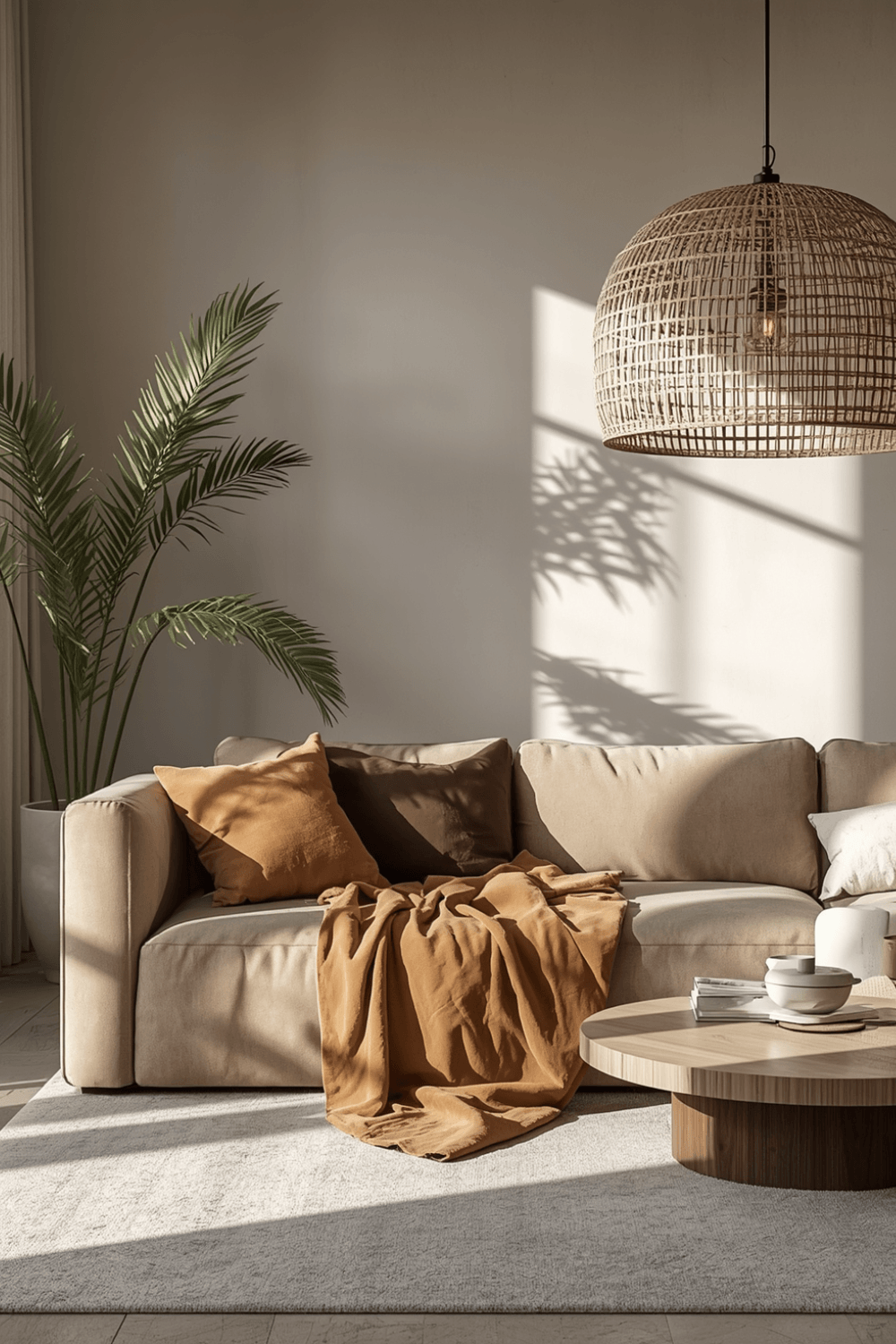
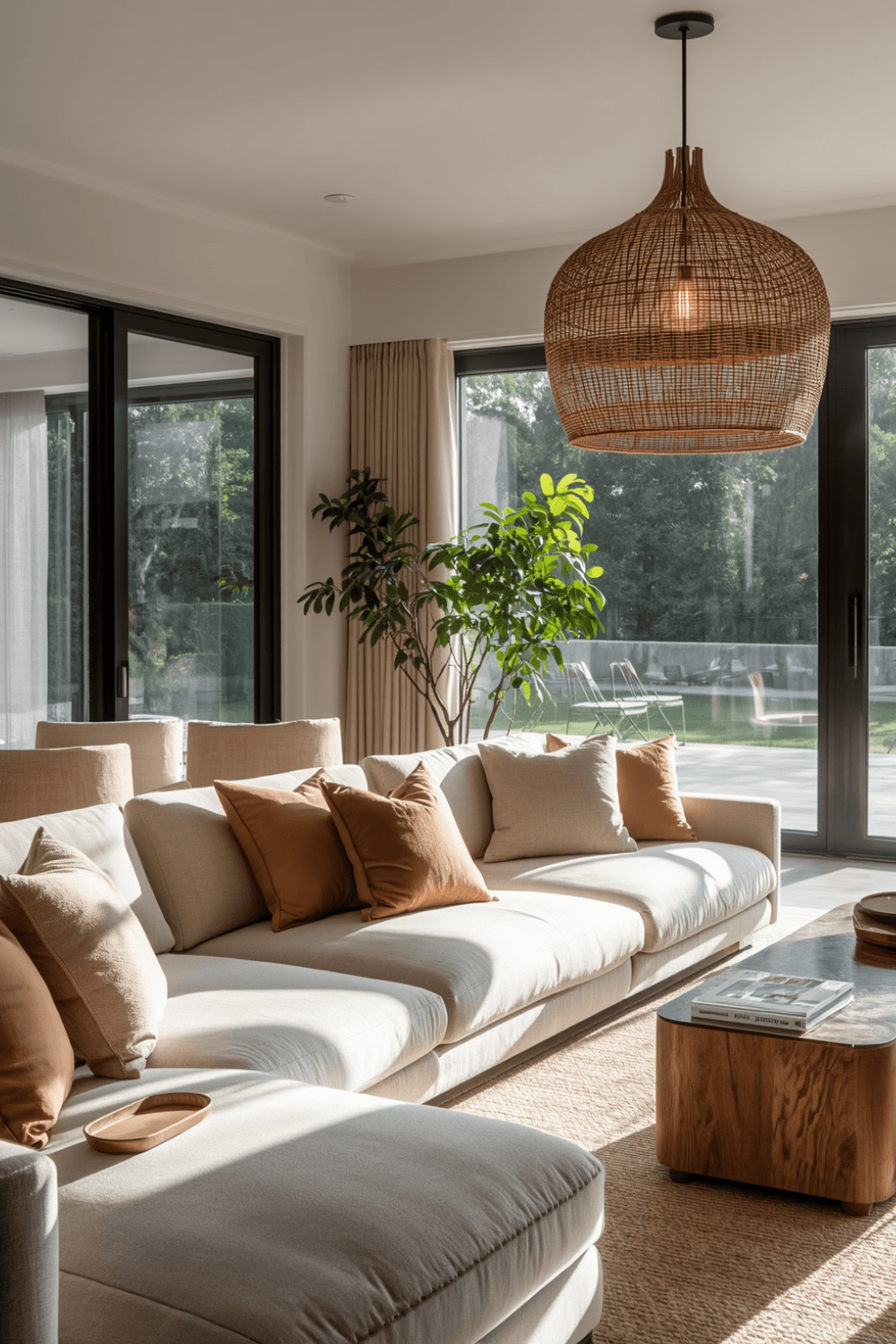
White sofa living rooms make people nervous, and fair enough. But a warm cream or natural linen sofa is one of the best anchors for a boho space. It works with everything and gives your cushions and throws somewhere to shine.
Slipcover sofas are a practical option here. They wash, they’re usually cheaper, and they can be replaced when you’re bored of the color. For a boho room, an oatmeal or undyed linen slipcover is honestly ideal.
4. Add Rattan Wherever You Can
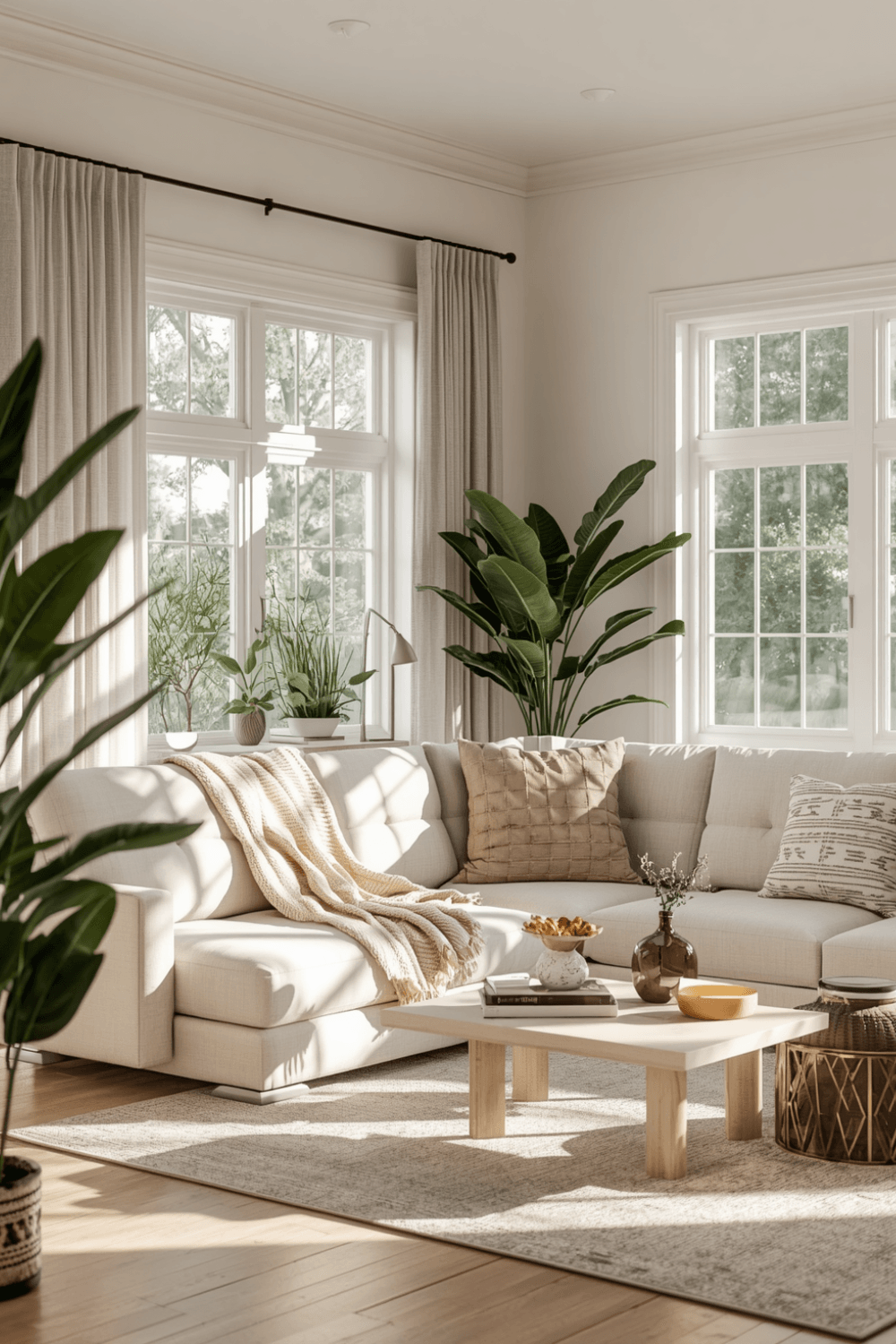
Rattan chair in the corner. Wicker basket under the console table. Cane detail on a sideboard door. These pieces bring texture into a room without adding more color, which is exactly what a neutral boho space needs.
A single rattan armchair with a floor lamp beside it becomes a proper reading corner. It’s one of the cheapest ways to shift a room’s energy.
5. Work with Earth Tones, Not Against Them
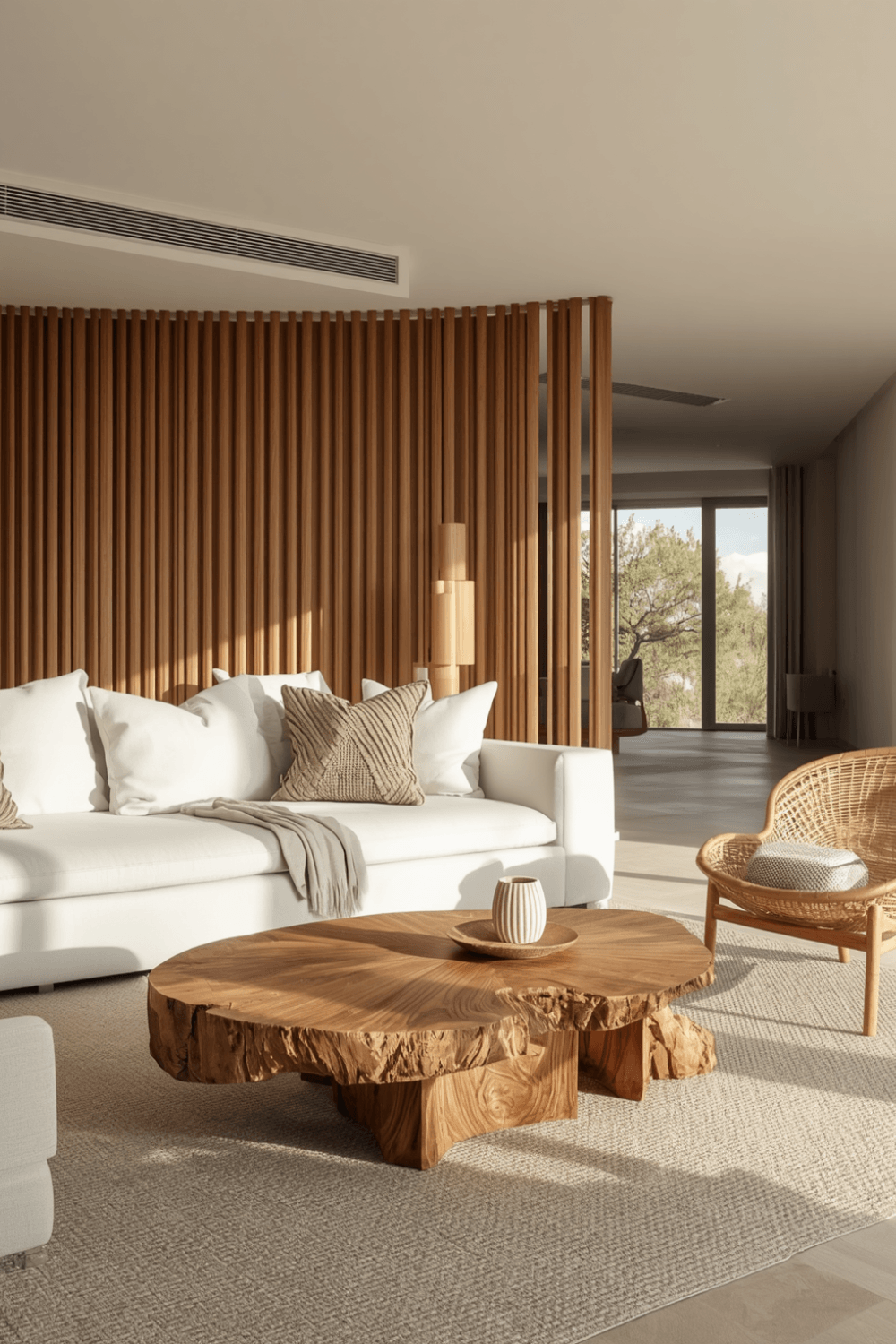
Terracotta, rust, ochre, olive, warm clay. These are the accent colors of a boho living room. They all exist together in nature, which is why they’re so easy to mix.
Pick one as your main accent and let the others show up in smaller ways. A terracotta throw pillow, an olive green ceramic pot, a rust-colored candle. You don’t need much. Three or four touches of warm color in a neutral room is plenty.
6. Use More Cushions Than Feels Normal
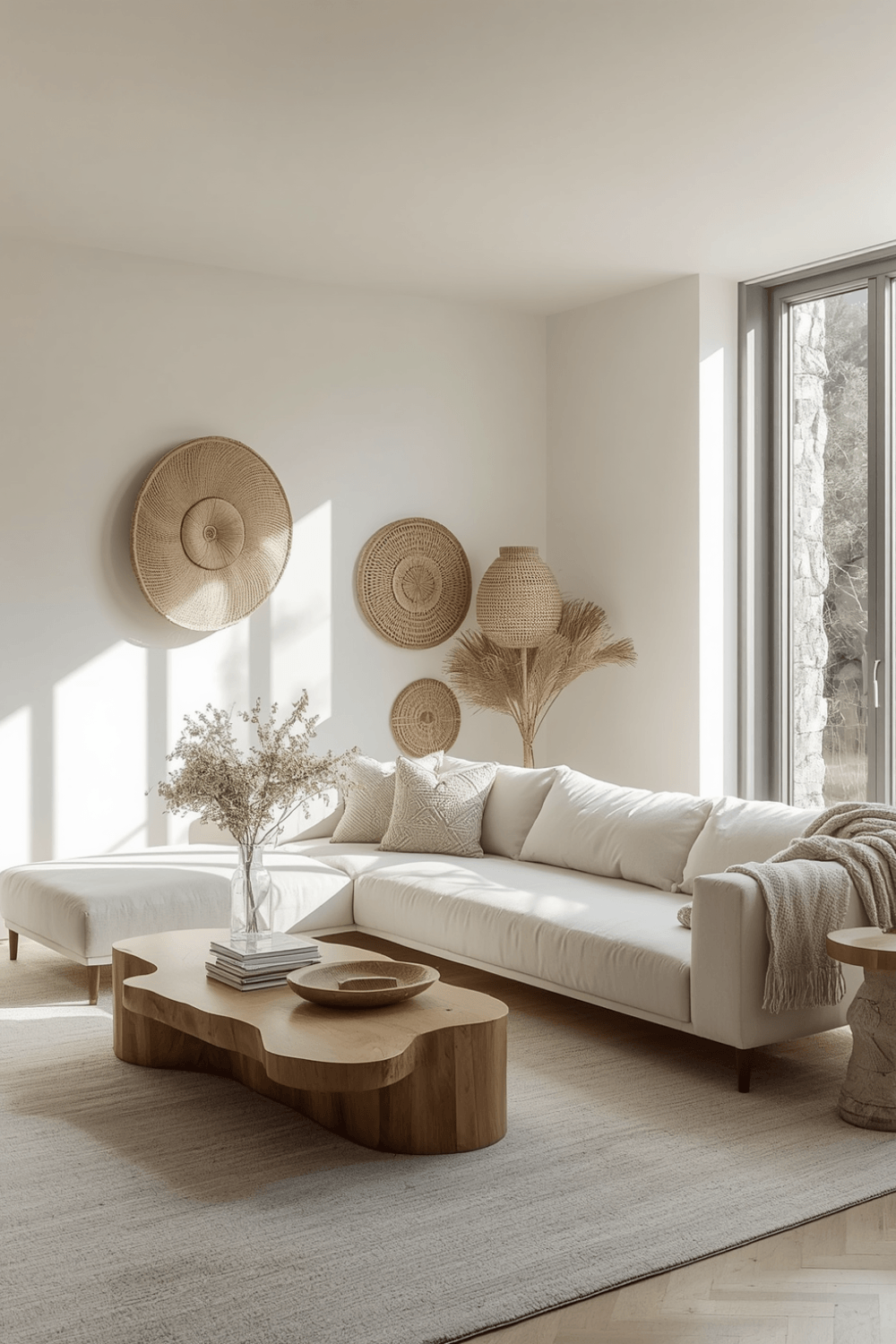
Boho rooms are soft. Lots of cushions in different sizes, different fabrics. Linen, velvet, cotton, something woven. Mix patterns and plains. Then drape a chunky knit blanket over the sofa arm and you’re done.
The one cushion rule I’ve seen work every time: always add one more than you think is enough. Boho rooms almost never look over-stuffed with soft furnishings.
7. Bring in Plants, Then More Plants
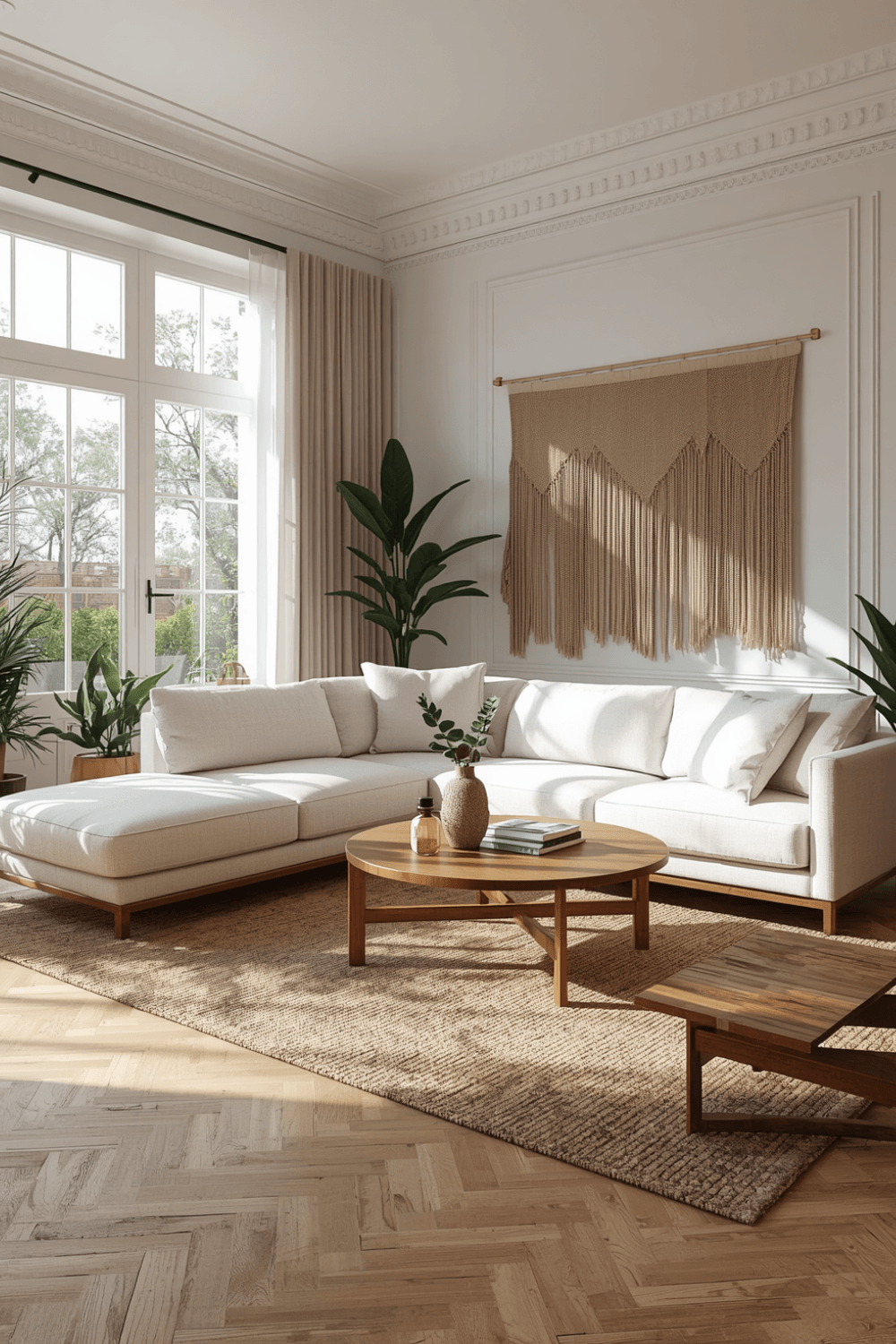
Plants are doing real work in boho living rooms. A large monstera or fiddle-leaf fig in a corner fills space nothing else fills as well. Trailing plants on shelves add life without taking up floor space. Small pots on the coffee table finish things off.
Cluster them in odd numbers when you can. Three plants of different heights in one spot looks intentional. One plant alone on a shelf looks lonely.
8. Mix Your Wood Tones
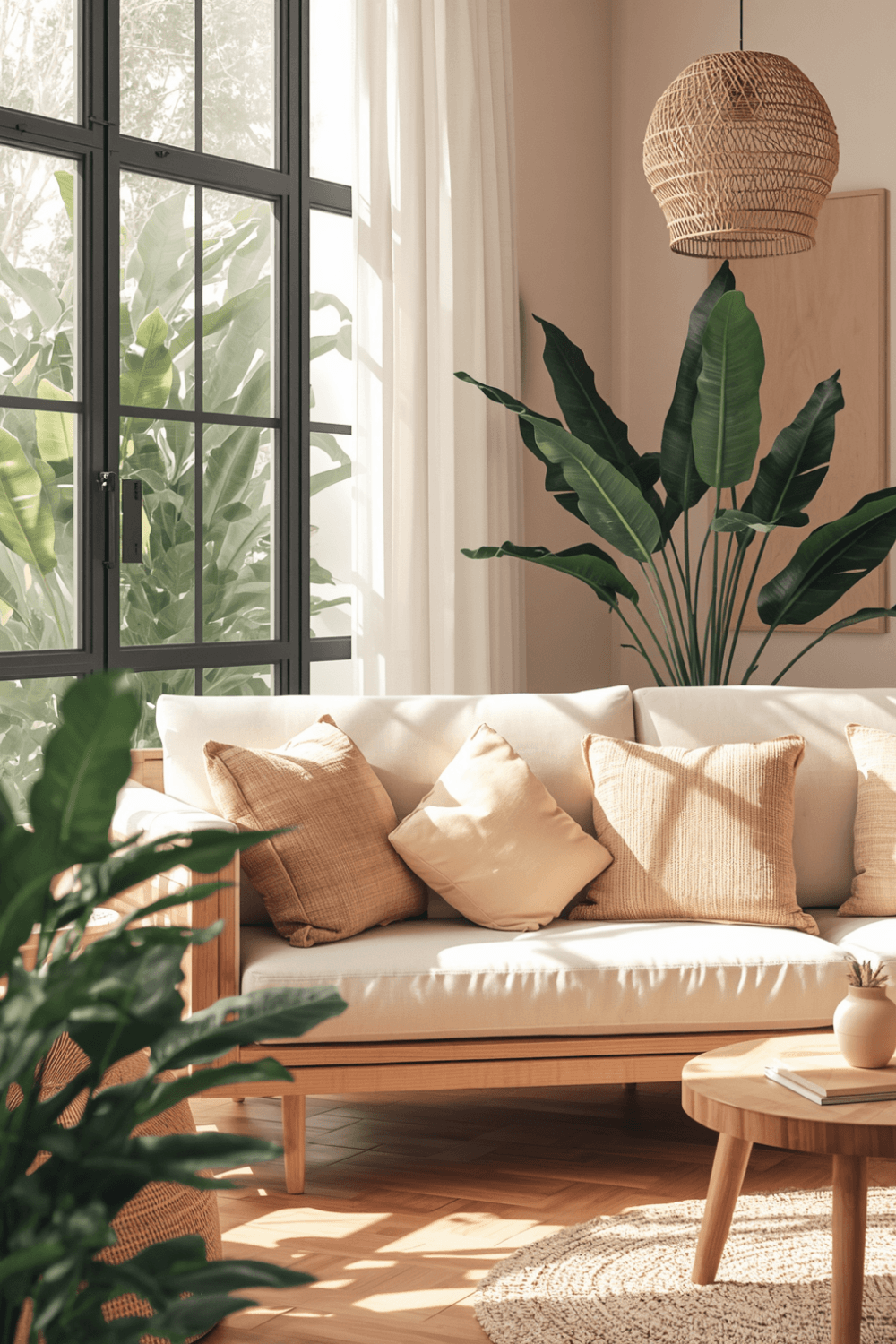
Please stop trying to match all your wood tones. In a boho room it looks wrong. Light ok coffee table, dark walnut shelves, bleached rattan chair, they can all be in the same room and it works.
The key is that the tones are different enough to look chosen. Very similar woods look like a mistake. Very different ones look collected.
9. Put Something Woven on the Walls
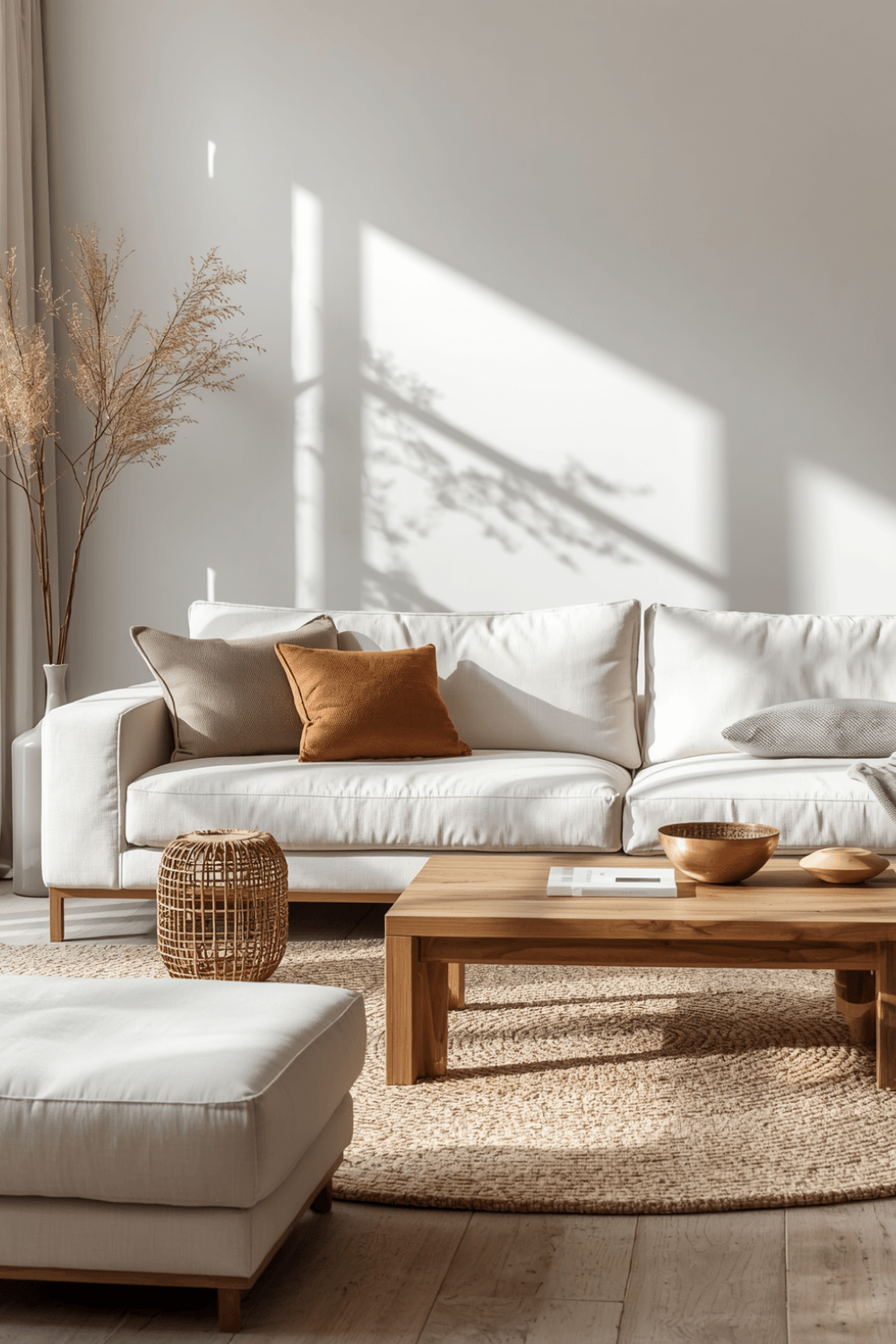
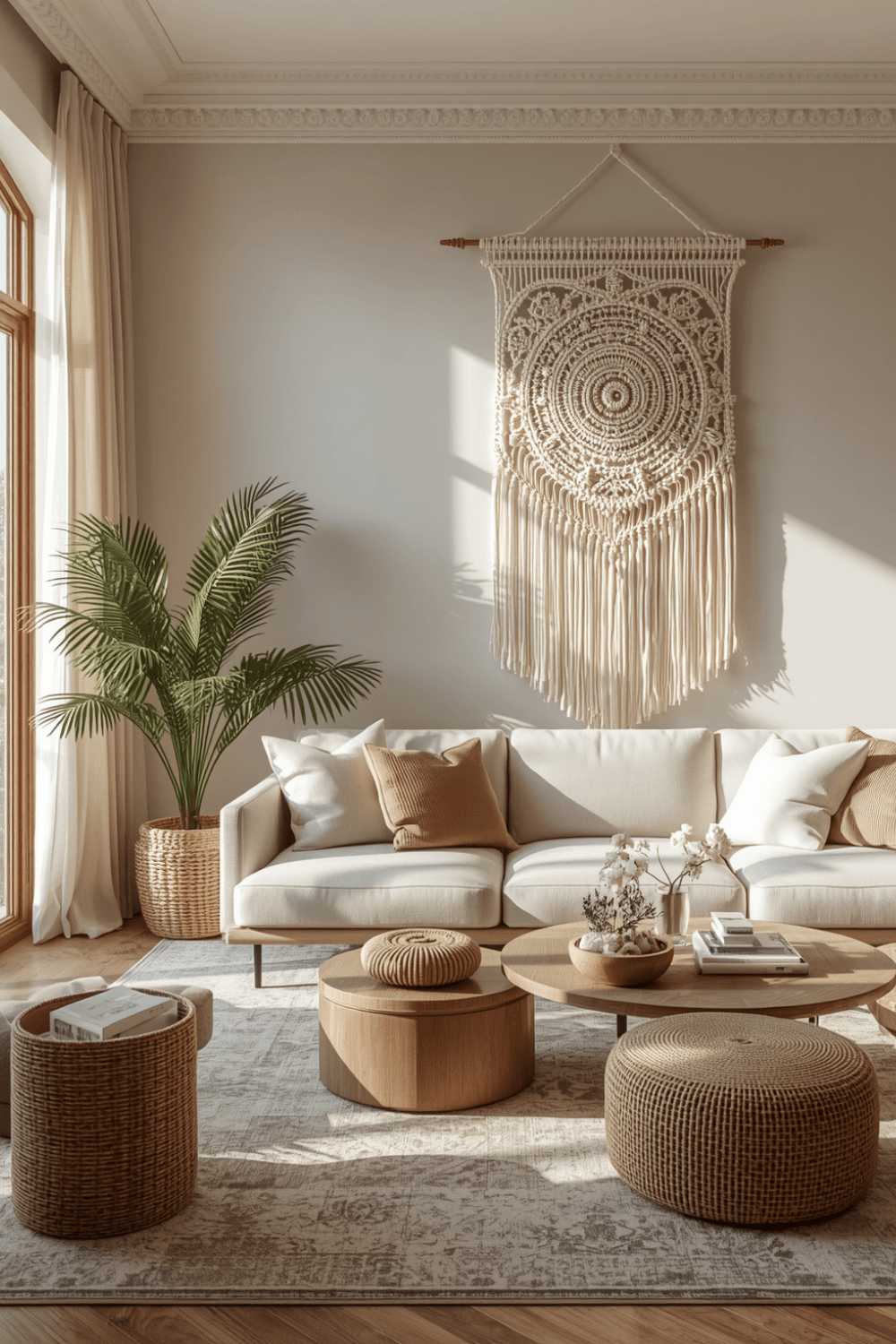
Macrame wall hangings, woven tapestries, a vintage kilim mounted on a dowel rod, a small collection of baskets arranged like a gallery wall. Boho wall decor goes well beyond framed prints.
One decent-sized macrame piece completely changes what a wall feels like. If you have any craft skills, it’s also one of the more affordable DIY projects out there.
10. Do a Gallery Wall with Mismatched Frames
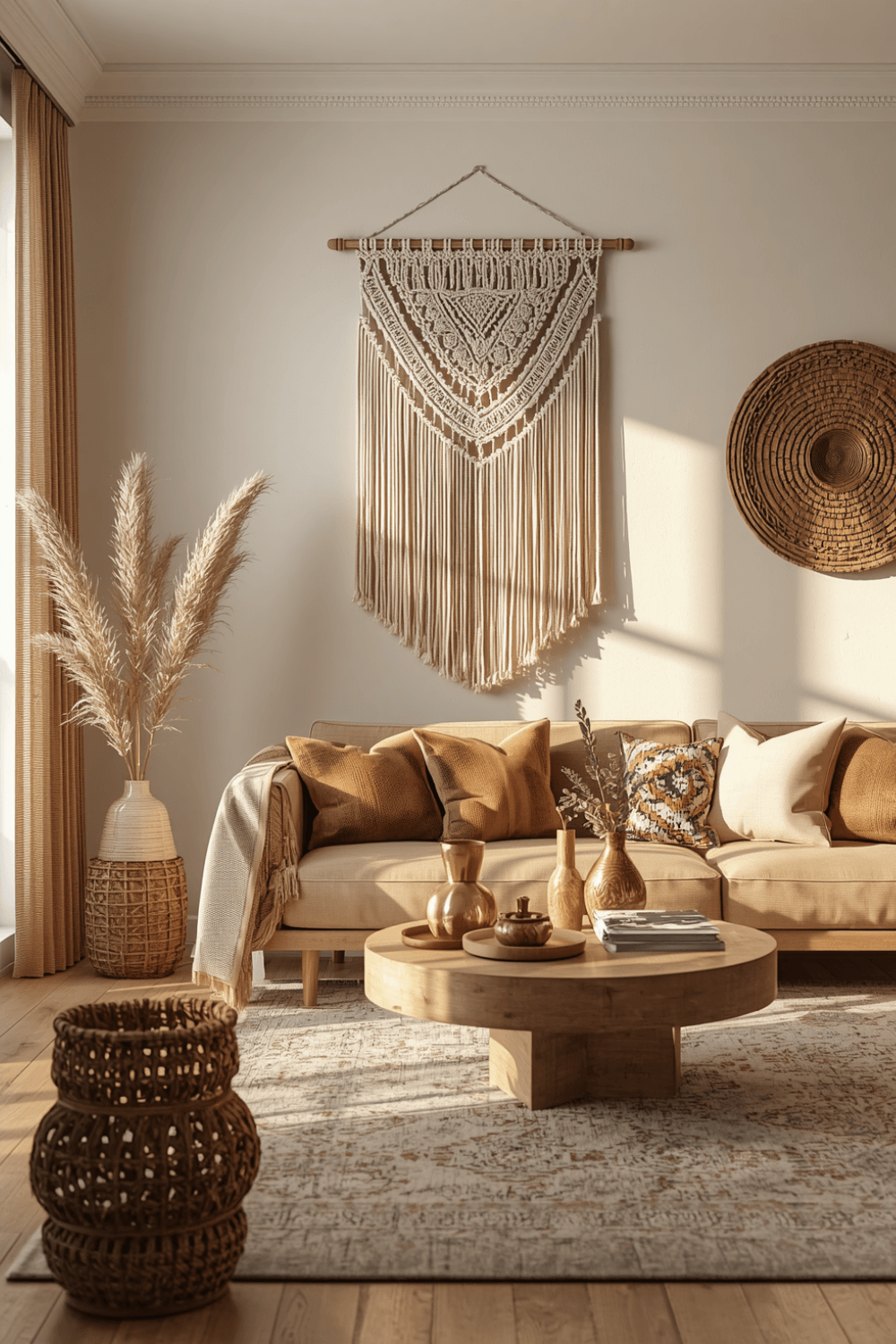
The rule with gallery walls in boho rooms is that the frames don’t have to match. Wood, brass, black, all of them can sit together. What ties a gallery wall together is the color palette inside the artwork, not the frames around it.
Botanical prints, abstract pieces, travel photos, old illustrations. Keep the tones earthy across all of them and the mix-and-match framing adds to the feel rather than fighting it.
11. Fix Your Lighting
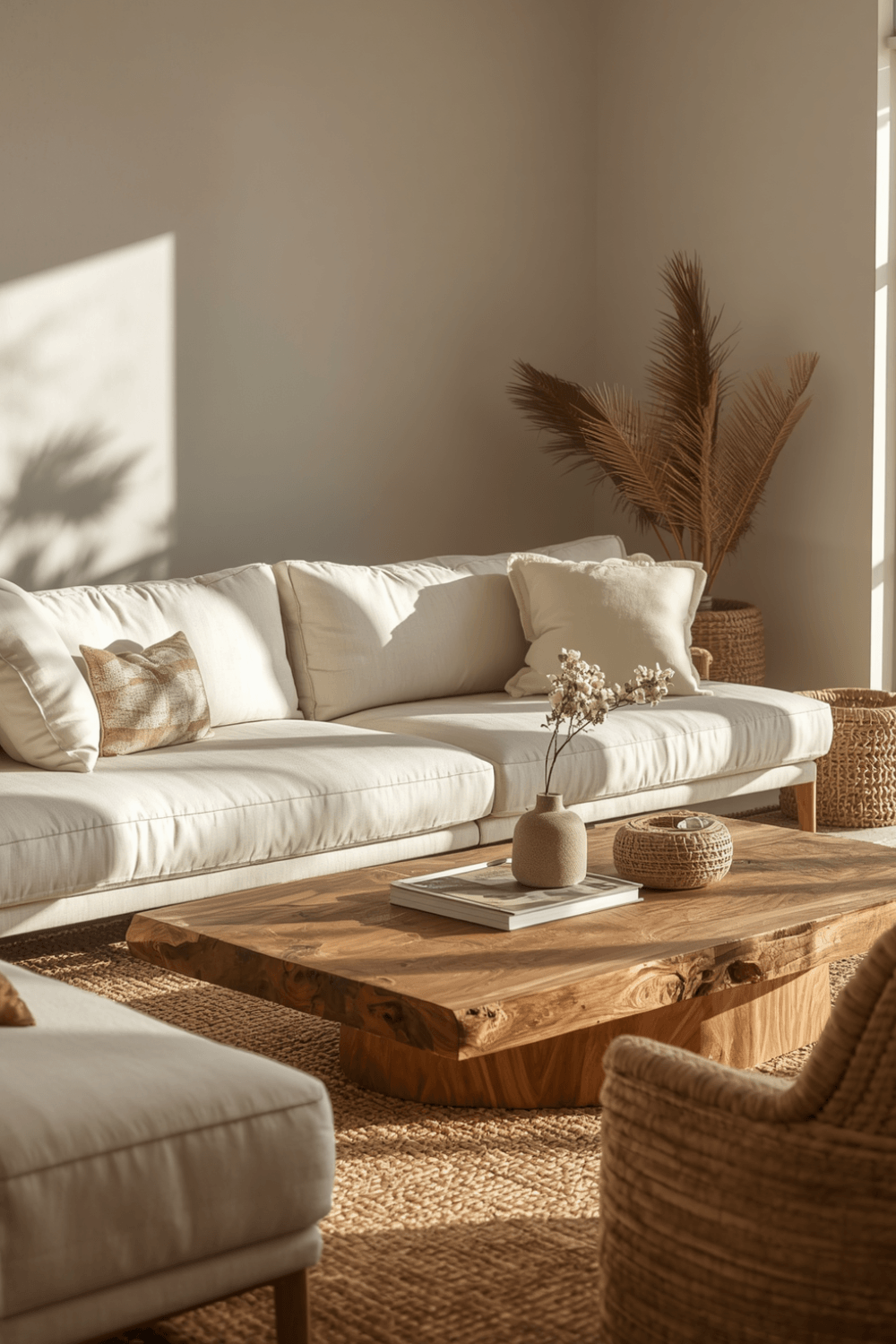
Most living rooms are lit wrong. One overhead light that flattens everything is the opposite of cozy. Boho rooms need multiple light sources at different heights: a floor lamp in a corner, table lamps on side tables, candles in the evening.
The bulb temperature matters too. Warm bulbs, around 2700K, make a room feel soft and golden. Cool white bulbs make even a beautifully decorated room feel like a waiting area.
12. Get Furniture Closer to the Ground
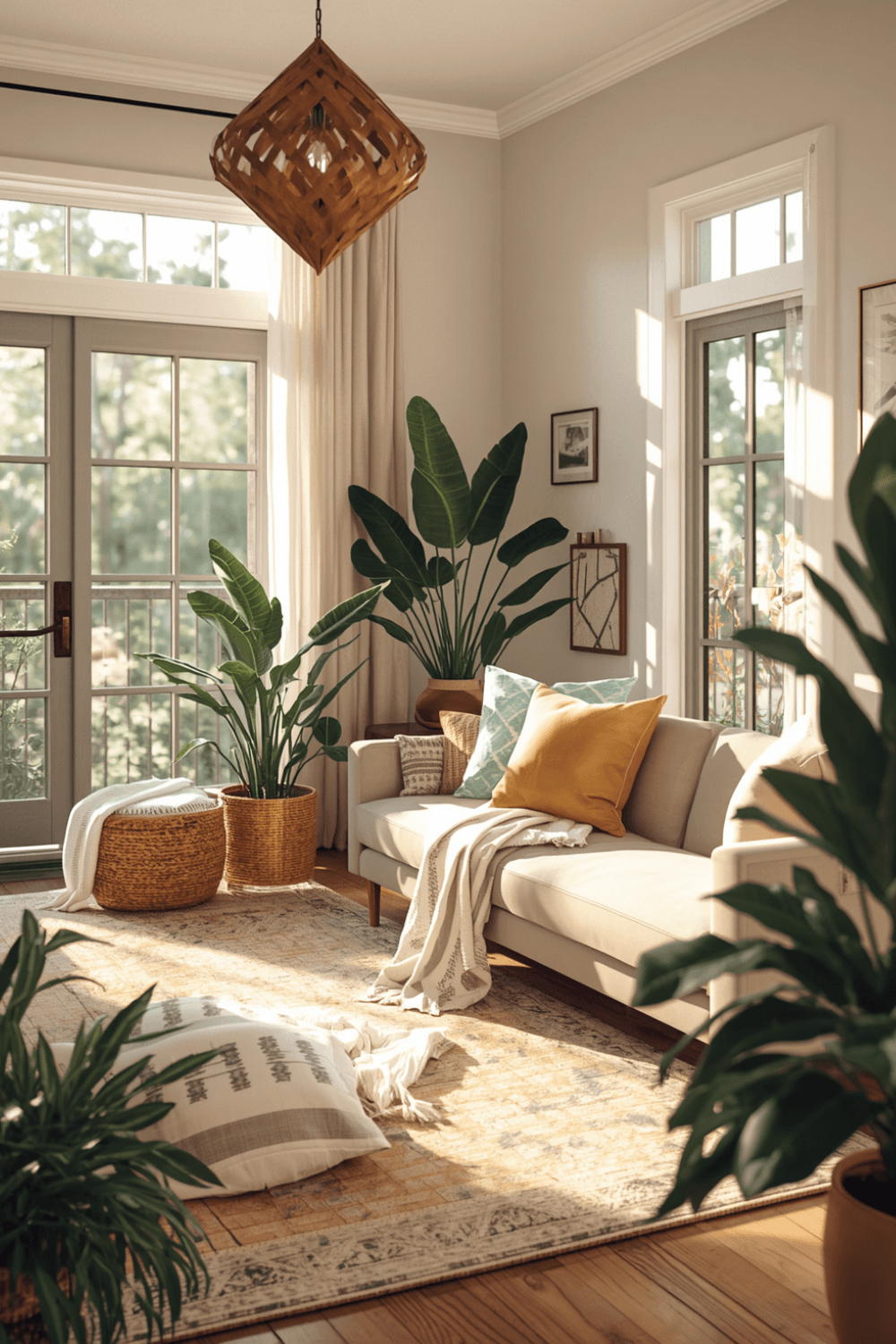
Boho rooms tend to sit low. Low sofas, floor cushions, poufs, low coffee tables. It creates a relaxed feeling you can’t really get any other way.
If your furniture is on the taller side already, add low-level elements to compensate. A large floor plant, a floor cushion, a pouf ottoman. The eye needs something at ground level to read the space as casual and relaxed.
13. Switch Your Curtains to Linen
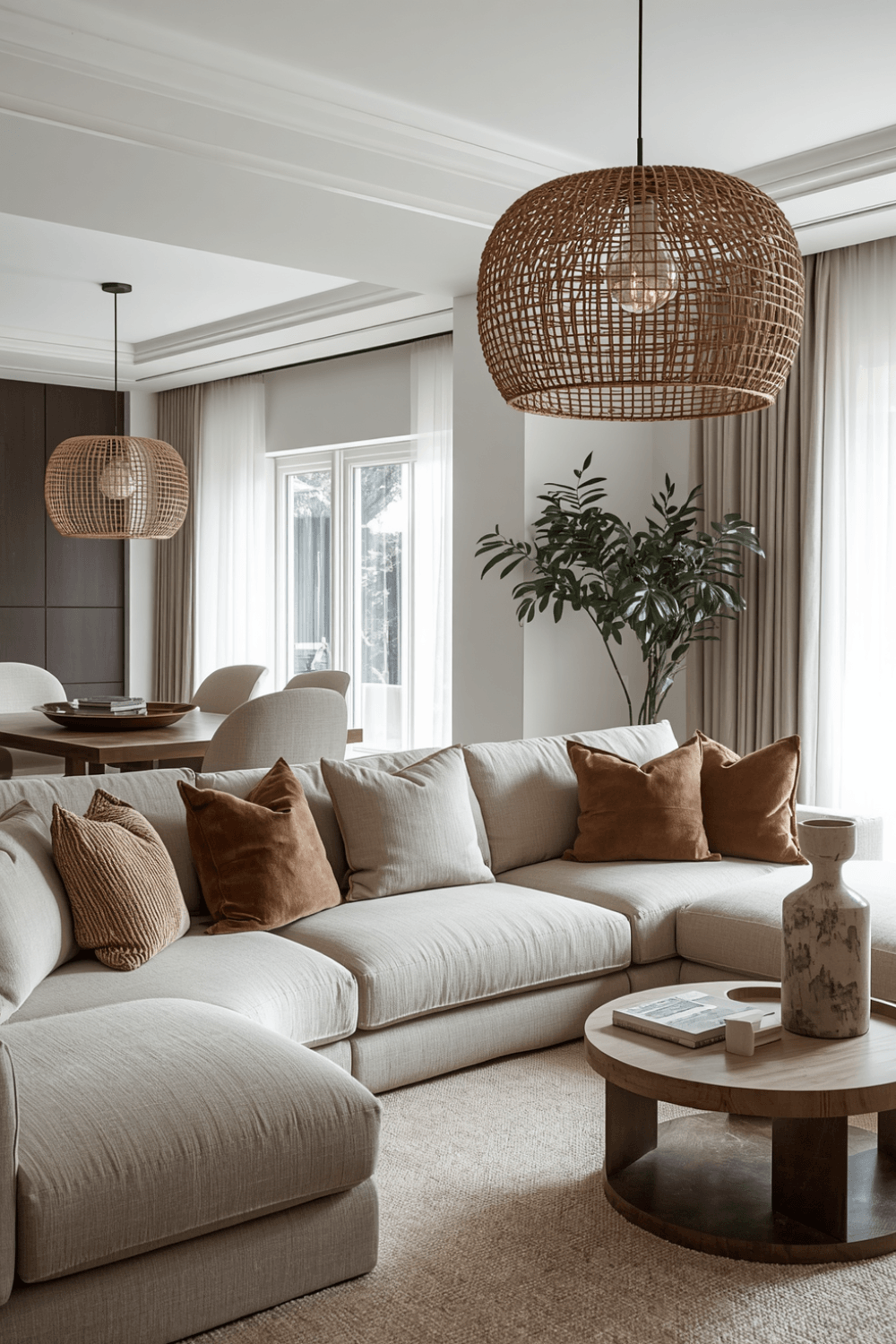
This is one of the highest-impact, lowest-effort changes you can make. Linen curtains in a warm neutral color change the quality of light coming into a room and immediately make the space feel softer.
Unlined linen filters sunlight beautifully during the day. Lined versions are better if you need blackout or insulation. Either way, even slightly wrinkled linen looks right in a boho room. It’s one of those cases where the “flaw” is part of the aesthetic.
14. Hunt for One or Two Vintage Pieces
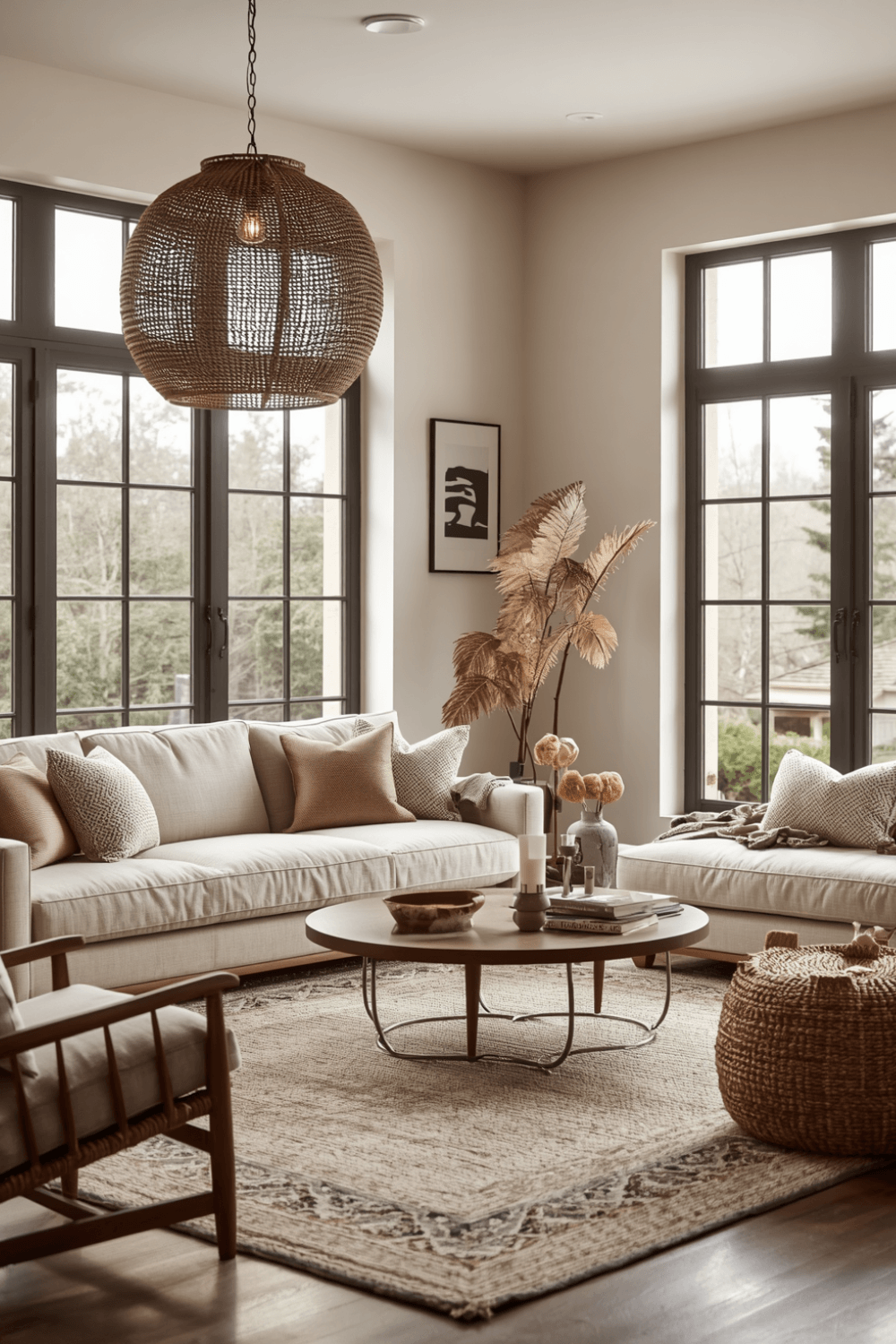
A worn leather armchair, an old wooden chest being used as a coffee table, a carved vintage mirror. These pieces add something new furniture genuinely can’t. They have history. They feel earned.
Thrift stores, estate sales, and Facebook Marketplace are better hunting grounds than most home stores for this kind of thing. You don’t need the whole room to be vintage. One or two genuinely old pieces are enough to anchor the boho feel.
15. Try the Farmhouse Boho Blend
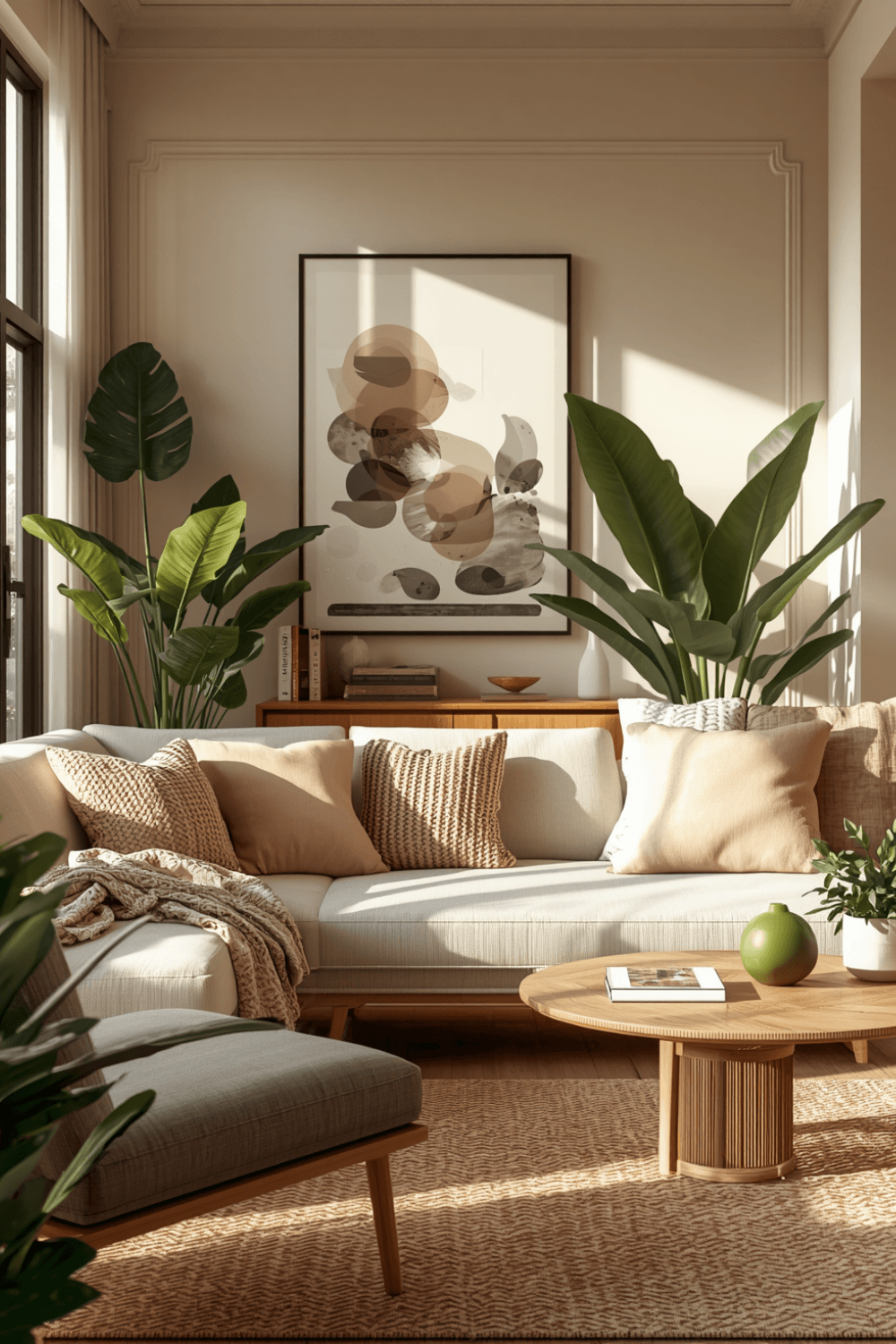
Farmhouse boho is its own thing now and it works well in suburban or rural homes. White walls, exposed wood accents, linen sofas, layered textiles. It’s cleaner and more structured than traditional boho but still warm.
If you find pure bohemian style a bit too eclectic to manage, this version is an easier entry point. The architecture of most regular homes actually suits it better too.
16. Add a Hanging Chair If You Can
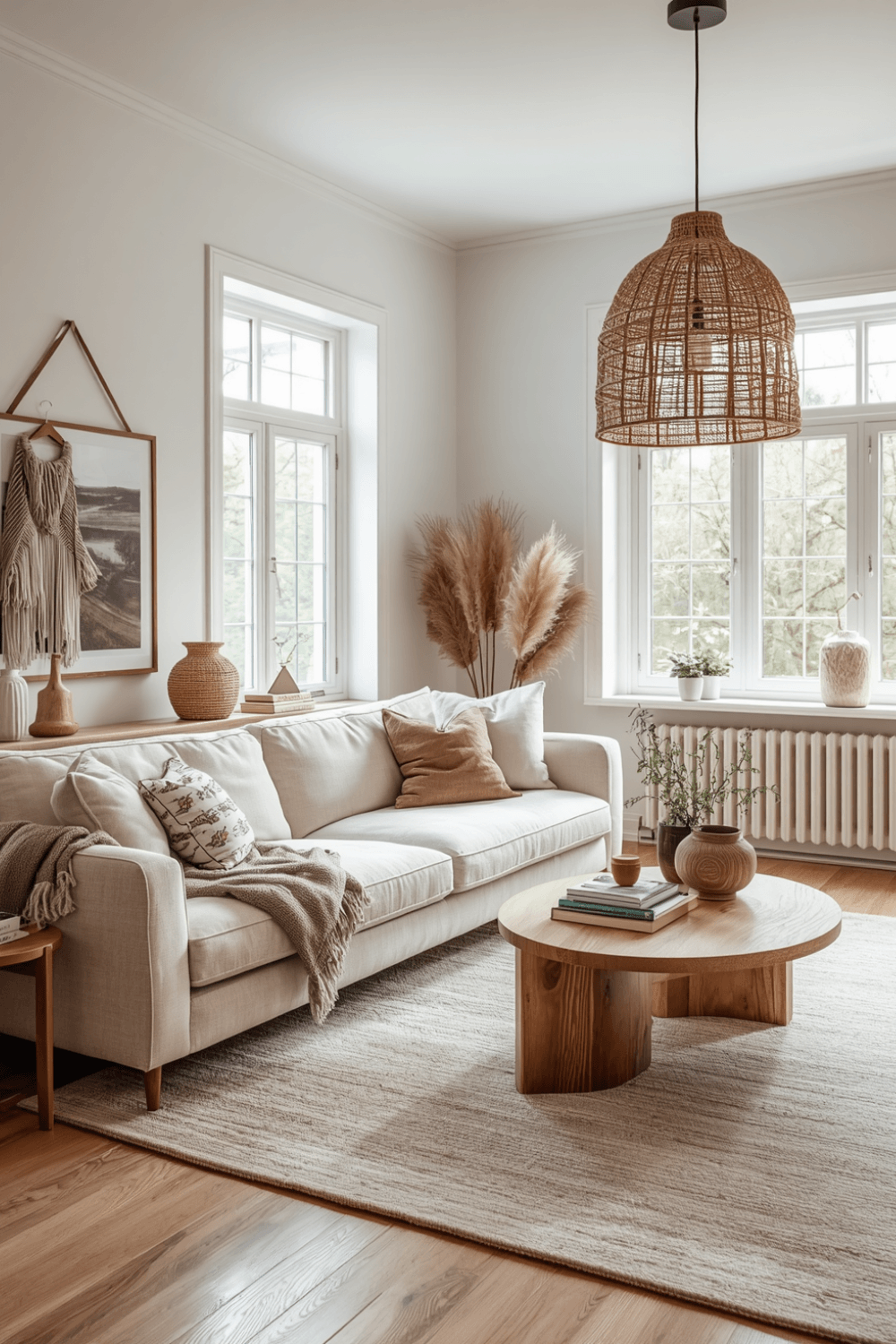
If your ceiling allows it, a hanging rattan chair is one of the most immediately boho things you can add to a living room. Even in a more contemporary space, it introduces a playfulness that’s hard to get any other way.
A hammock-style chair in a corner works if a full pendant chair isn’t practical. Less structural commitment, similar energy.
17. Use Baskets for Storage
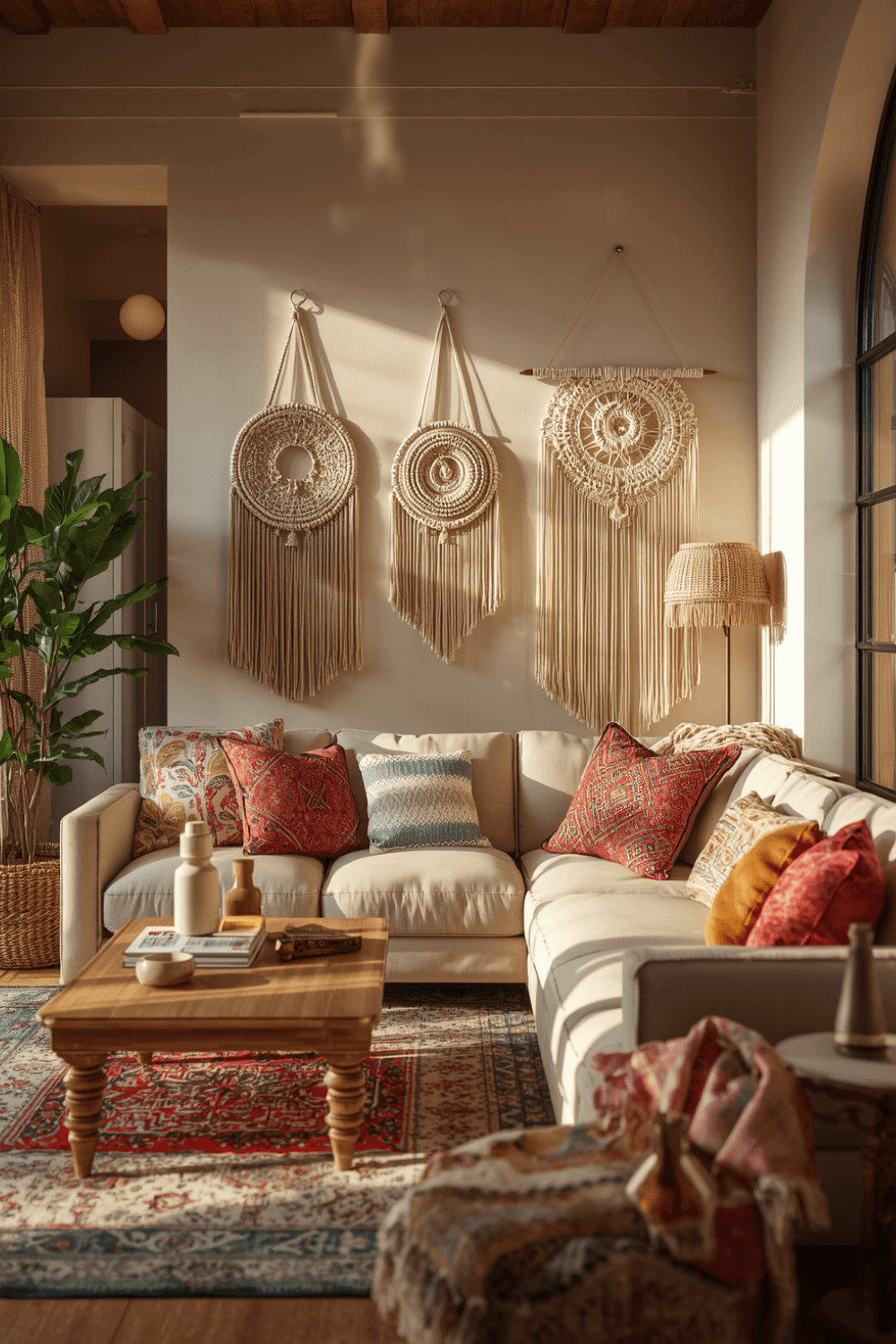
Baskets are pulling double duty in boho rooms. A large woven basket holds throws. Smaller ones on shelves keep clutter out of sight. A basket tray on the coffee table organizes the random small objects that collect there.
The more variety in weave and size, the more collected the shelves look. And because baskets are genuinely functional, they’re one of the easiest investments to justify.
18. Build a Cozy Corner
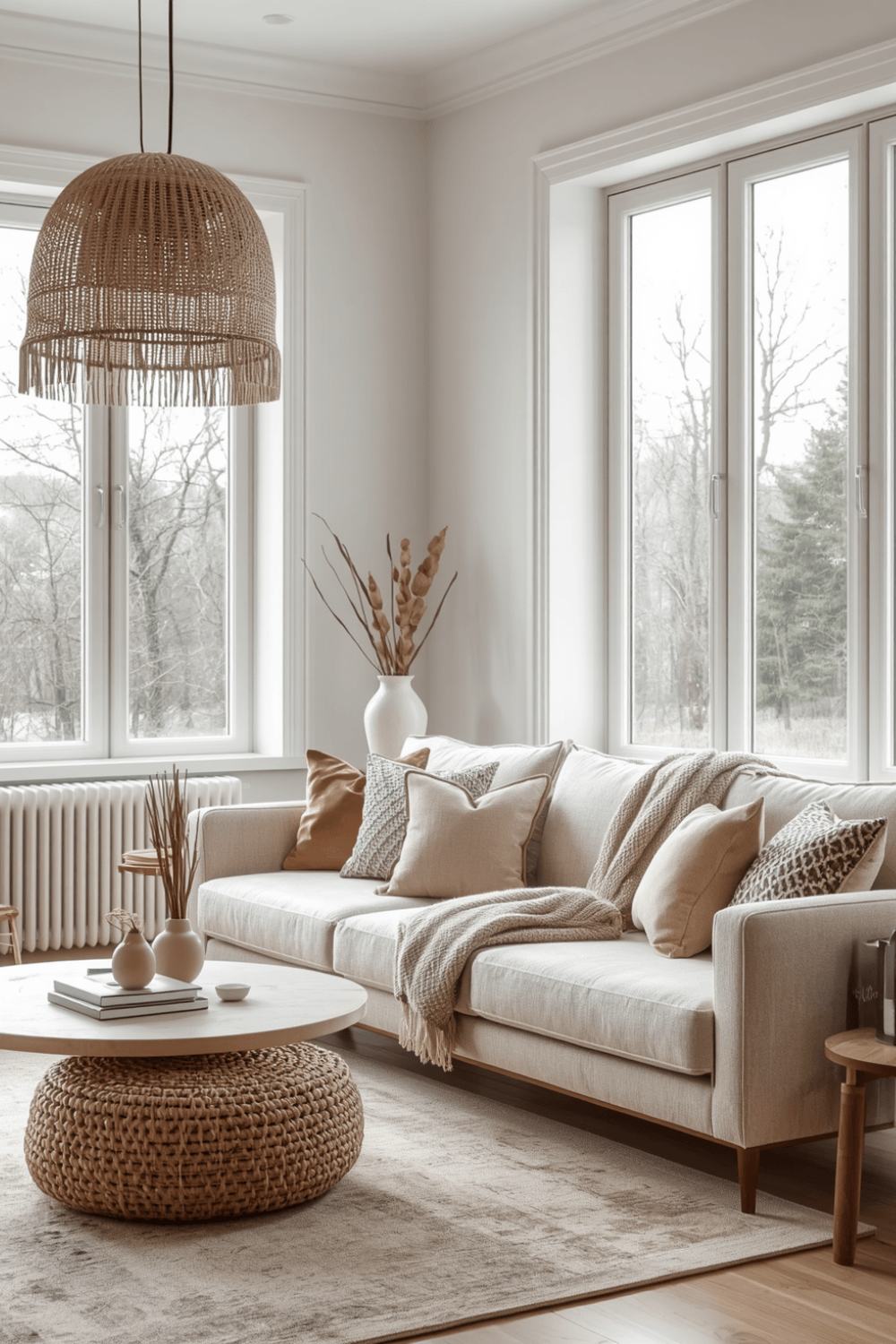
One thing that separates a well-done boho room from a mediocre one is having at least one spot that feels deliberately intimate. An armchair with a side table, a lamp, and a plant. A floor cushion next to a low bookshelf. A small meditation area with a candle and a few meaningful objects.
These little zones give a room depth and make it feel like someone actually lives there. Luxury living rooms use this idea too. Multiple seating arrangements that serve different moods.
19. Edit More Than You Think You Need To
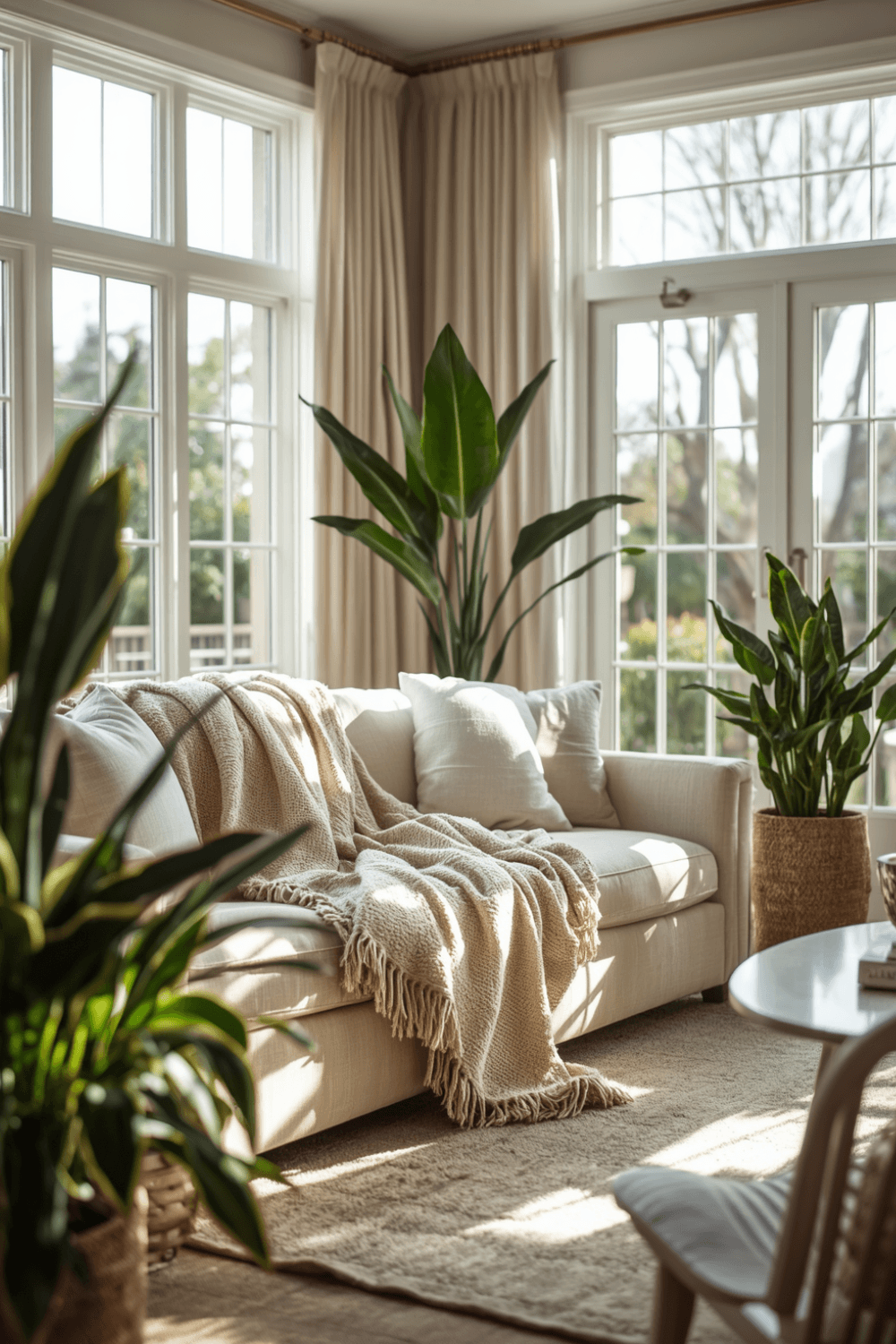
Boho style has a reputation for being maximalist, but the version that actually looks good in most homes is more restrained. Too many things on every surface reads as clutter, not bohemian.
The Scandinavian boho approach handles this well. Take the warmth and texture of bohemian decor and apply a stricter edit. Keep only what earns its place. The things you do keep will look better for the space around them.
20. Stop Trying to Finish It Quickly
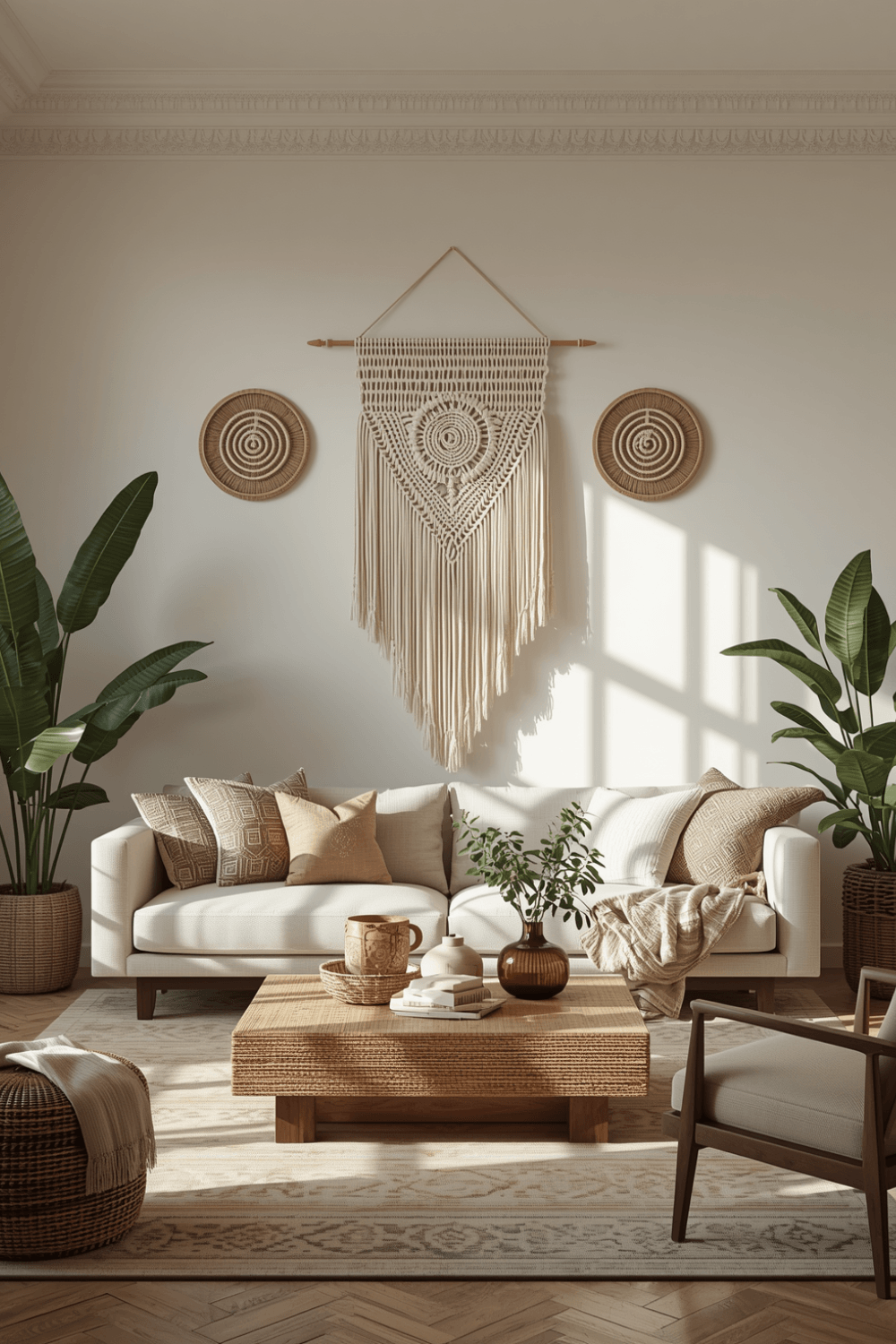
The boho rooms that look the best were built over years. Pieces found at markets. Things inherited. Objects brought back from trips. That randomness is what gives the style its authentic quality.
Give yourself permission to leave gaps and fill them slowly. Start with the foundation elements, a good rug, decent curtains, a neutral sofa, and add the rest as you find pieces that feel right. The space will be better for the patience.
How to Do This Without Spending Much
Boho decor is genuinely one of the more budget-friendly aesthetics because the best sources aren’t retail stores. Thrift shops, estate sales, and second-hand markets consistently produce better boho finds than most home goods retailers.
Spend your actual budget on three things: a rug (this anchors everything, cheap rugs undermine a whole room), curtains (same reasoning), and a couple of plants. Fill in the rest over time with found and vintage pieces.
Free changes that make a real difference: rearranging what you already have, moving one piece of furniture to a different room to see if you miss it, swapping cushion covers instead of buying new cushions, and putting plants in plain water glasses as vases.
FAQ
What colors work in a boho living room?
Start with warm neutrals as the base: cream, beige, warm white, soft taupe. Add earthy accents from there. Terracotta, rust, sage, ochre. The palette should read warm and natural rather than cool or crisp.
Can you do boho style in a small room?
Yes, but you have to edit harder. Pick one or two textural statement pieces rather than trying to fit everything in. Tall plants draw attention upward and make small rooms feel bigger. A tight color palette keeps a small space from feeling chaotic.
What’s the difference between regular boho and Scandinavian boho?
Traditional bohemian decor leans toward more patterns, more objects, more color. Scandinavian boho uses the same natural materials and warm textures but applies a stricter edit. Less stuff, more breathing room. The result is calmer but still warm.
How do I make a boho living room feel more high-end?
Use real natural materials where you can. Linen over polyester. Real rattan over plastic. Wool rugs over synthetics. Get your lighting right, warm bulbs at multiple levels. And remove things. A room with fewer, better objects almost always reads as more considered.
Do white or cream sofas actually work in real life?
With realistic expectations, yes. Cream and natural linen are more forgiving than bright white. Slipcovers are the practical solution. They wash, they look right in a boho room, and they can be replaced. The throws and cushions you pile on mean the sofa itself isn’t always fully visible anyway.
One Last Thing
The boho living rooms that look genuinely good aren’t the result of one big shopping trip. They’re the result of patience and paying attention to what you actually like, not just what photographs well.
Pick five ideas from this list that fit what you already have and work with your room’s actual proportions. Build from there. Skip the pressure to have it finished by next weekend.
The best part about this style is that an unfinished boho room often looks better than a finished one from any other aesthetic. Lean into that.