
I Renovated My Bathroom to Feel Like a Five-Star Hotel — Here’s What Actually Happened
Two years ago I stood in my bathroom at 6 a.m., freezing on cold tile, staring at a mirror with a bulb that had been flickering for three weeks, and I just thought: this is not it.
I’d stayed at a boutique hotel a month earlier where the bathroom had heated floors, a rainfall shower, and lighting that made me look like I hadn’t slept in a week (in a good way, somehow). I came home determined to get even a fraction of that feeling into my own space.
What followed was about eight months of research, three return trips to the tile store because I picked the wrong grout color, and one very expensive lesson about towel warmers. I’m sharing the real version of this, not the glossy “10 luxury bathroom ideas” version, because I think that’s more useful.
Luxury doesn’t start with money — it starts with what annoys you
Before I bought a single thing, I made a list of what actually bothered me every morning. Not what looked good in photos. What bothered me.
Mine were: cold floors, bad lighting, cheap-feeling faucets, and a shower that took forever to heat up.
That list ended up mattering more than any Pinterest board. If you’re planning something similar, do this first. A “luxury” bathroom that still has the thing that irritates you daily isn’t luxury, it’s just expensive.
The heated floor was worth every cent
I installed a Warmup electric radiant floor system under the tile, and honestly, it’s the single upgrade I’d redo without hesitation. It’s not just about comfort. There’s something about stepping onto warm tile that makes the whole room feel considered, like someone actually thought about you being there.
Installation isn’t a weekend DIY unless you’re genuinely comfortable working with electrical and tile at the same time. I hired someone for this part. It added roughly . which sounds steep until you experience a January morning with it running.
Small tip nobody told me: get the thermostat model with a programmable schedule (mine’s the SmartStat). You don’t need the floor warm all day, just 30 minutes before you usually wake up.
1. Consider book-matched marble for a genuinely timeless statement
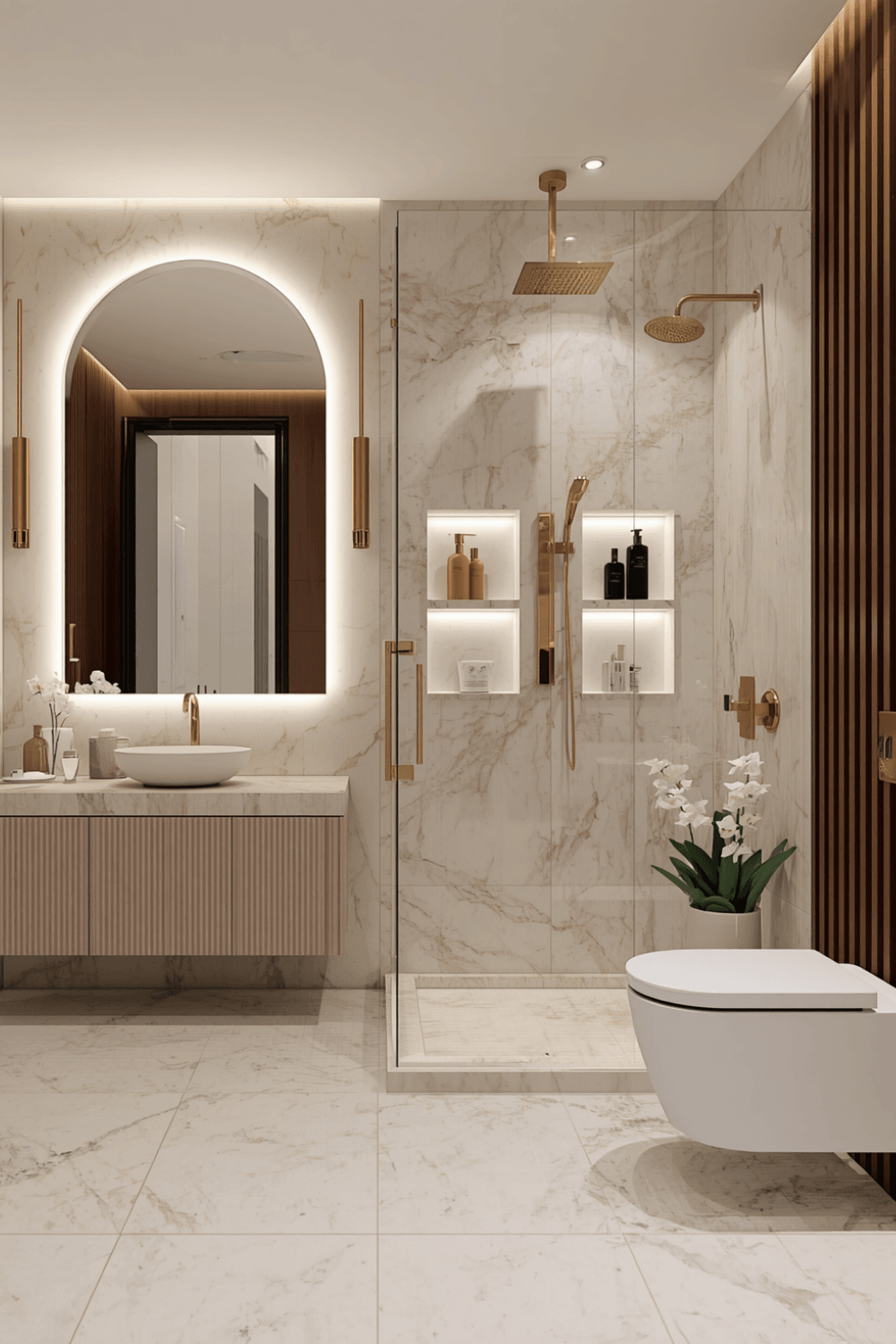
Book-matching, where two adjacent slabs are cut and mirrored to create a symmetrical pattern, has stayed consistently popular because it’s more about craftsmanship than a passing color trend. I added a small book-matched section behind my vanity mirror, and it’s held up as one of my favorite design choices two years in.
2. Pair marble with warmer metals for a currently popular but classic look
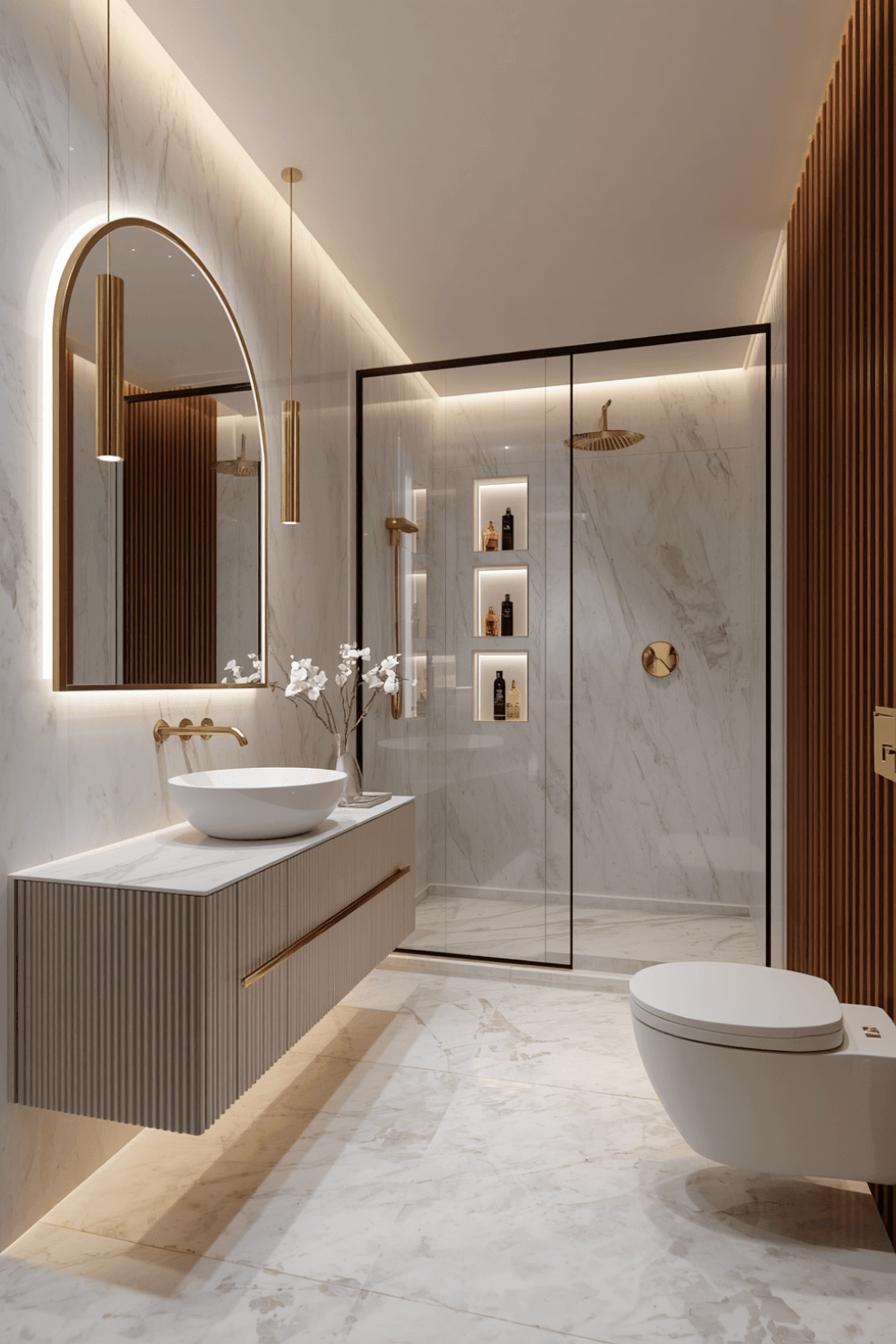
Brushed brass and warm gold hardware paired with marble has stayed a strong combination for years now rather than fading in and out like some other pairings. I paired my marble vanity with brushed brass faucets, and it’s aged well without feeling stuck in a specific design era.
3. Watch for marble-look alternatives if you want the trend without full commitment
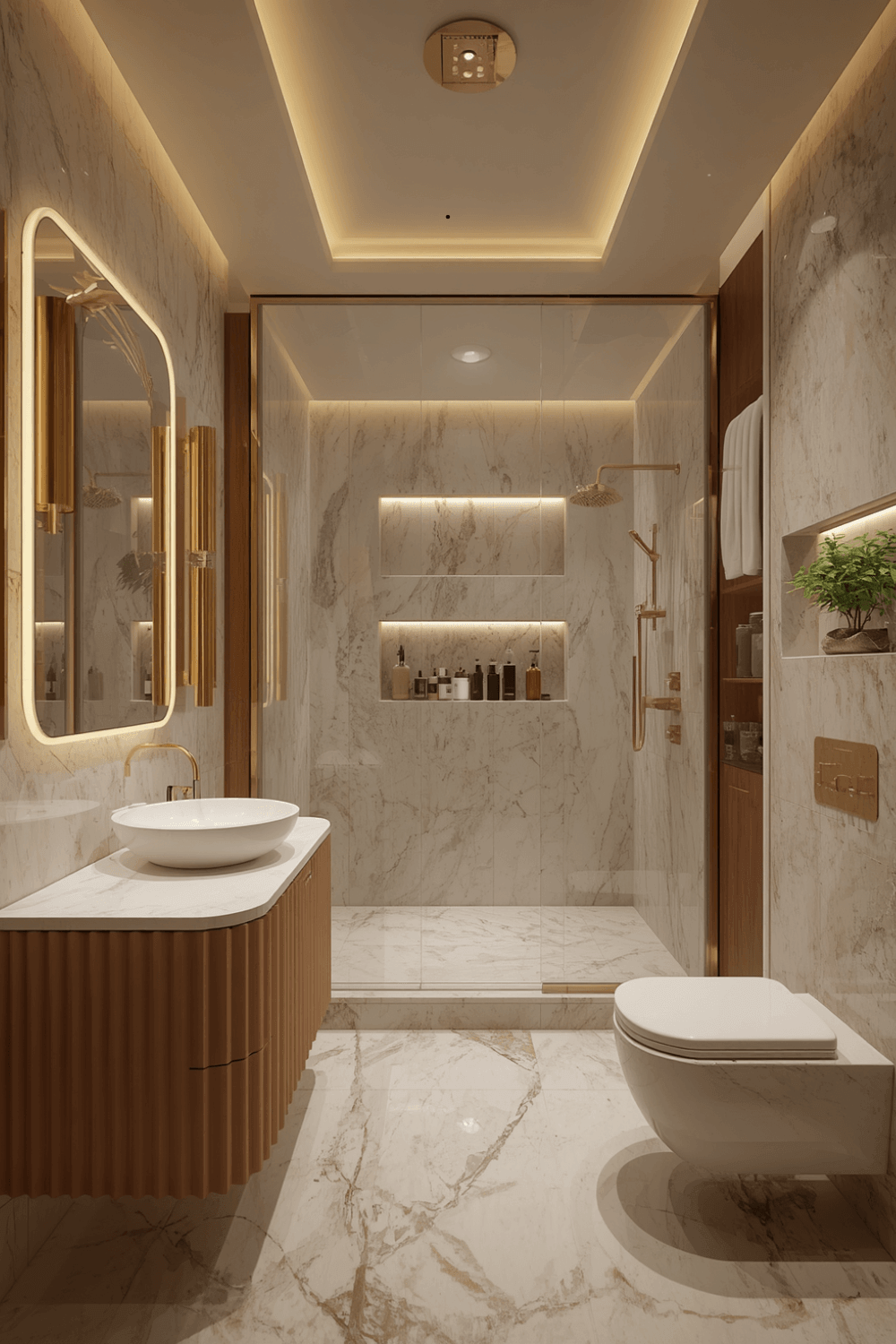
Porcelain and quartz slabs that mimic marble veining have gotten significantly more realistic in the last couple of years, according to what I’ve seen from tile showrooms and design accounts I follow. If you want to try a bolder, trendier marble look without the maintenance or cost of real stone, this is genuinely worth exploring for lower-commitment areas.
4. Balance heavy stone with softer materials to avoid feeling cold
The bathrooms I’ve seen age the best combine marble with warmer, softer materials like wood vanities, woven baskets, or linen textiles, rather than surrounding marble with more hard, cold surfaces. My own bathroom feels noticeably more current since I added a wood stool and a woven hamper alongside the stone.
Lighting made a bigger difference than the fixtures
I assumed the shower and vanity would be the stars of the room. They’re not. Lighting is.
My old setup was one flat overhead light, the kind that makes everyone look slightly ill. I replaced it with three layers:
- A dimmable overhead fixture for general light
- Vertical sconces on either side of the mirror (this is the one that changed everything — side lighting instead of overhead eliminates those harsh under-eye shadows)
- A small LED strip under the vanity cabinet, mostly for the middle-of-the-night bathroom trips so I’m not blasted with full brightness
I used Lutron Caseta dimmers on the main switches, and they connect to a basic app so I can set a “morning” scene and a “night” scene. It sounds like overkill until you’re getting ready for something and the light actually makes you look rested.
Storage that doesn’t look like storage
Every genuinely nice bathroom I’ve stayed in has almost nothing visible on the counters. That’s not because rich people own fewer things. It’s because everything has a place.
I added a recessed medicine cabinet (built into the wall, not sitting on top of it) and a small floating vanity with two drawers instead of the standard cabinet-with-doors. Floating vanities also make a small bathroom look bigger because you can see the floor underneath, which matters more than people expect.
If you’re not doing a full renovation, even swapping open shelving for closed drawers, or adding a simple over-toilet cabinet, does a lot of the same visual work for a fraction of the cost.
Step-by-step, if you’re starting from scratch
Here’s roughly the order I’d actually recommend, based on what I got wrong doing it out of order:
- List your daily annoyances first, before browsing anything for ideas
- Check your water pressure and heater capacity before buying any shower fixtures
- Plan lighting layers early — sconce and outlet placement needs to happen before drywall goes up, not after
- Choose flooring and grout in person, under your actual bathroom lighting, not store lighting or a screen
- Pick fixture finishes as a set (I went matte black for faucet, hardware, and shower fixtures) so nothing looks mismatched
- Save storage decisions for last, once you know what’s actually left uncovered by the layout
What it actually feels like now
It’s not a spa. It’s still my regular bathroom, in my regular house. But there’s a version of my morning now where the floor is warm, the light doesn’t make me flinch, and the water pressure actually does what I want it to. That’s genuinely most of what “luxury” turned out to mean, at least for me — fewer small daily frictions, not a marble waterfall or gold fixtures.
If you’re planning something similar, start with your list of annoyances, not a mood board. The mood board comes easier once you know what you’re actually solving for.