
Entryway Bench for Small Spaces: What I Learned After Mine Blocked the Front Door
I fell in love with a beautiful entryway bench online and ordered it without measuring my actual space first, assuming it would obviously fit since my entryway was, technically, a hallway with room for furniture. Once it arrived, the bench stuck out just far enough that my front door couldn’t fully swing open without bumping into it, which is a genuinely frustrating thing to discover after you’ve already assembled the piece.
That mistake sent it right back for a return, and it forced me to actually think through what a bench needs to do in a genuinely tight footprint rather than just picking whatever looked nice in photos. Here’s what I learned finding one that actually fit and worked.
Small Entryways Need a Completely Different Approach to Bench Selection
I initially assumed any entryway bench would basically work the same way regardless of space, just scaled down if needed. What I learned is that a small entryway needs specific dimensional and functional considerations that a standard-sized bench often doesn’t account for, especially around depth and door clearance.
Once I started measuring and thinking through actual daily use in my specific tight space, rather than just browsing for something pretty, finding the right bench got significantly easier.
My Mistake: Not Measuring Door Swing Clearance Before Buying
My original bench had a 20-inch depth, which seemed reasonable on paper. What I hadn’t accounted for was that my front door swings inward and needs a clear arc of space to open fully, and that bench sat directly in that path.
I returned it for one with a 14-inch depth instead, specifically chosen after measuring my door’s actual swing clearance first. That extra research before buying saved me from another expensive mistake and return shipping hassle.
Step-by-Step: Choosing an Entryway Bench That Actually Fits a Small Space
1. Measure your door swing clearance before anything else
 I now measure exactly how far my door swings open and mark that clearance zone on the floor with painter’s tape before even browsing for bench options. Any bench placement needs to sit completely outside that swing path, which often means a shallower depth than you’d initially expect.
2. Choose a bench under 16 inches deep for genuinely tight spaces
 My replacement bench’s 14-inch depth turned out to be the sweet spot for my specific space, providing enough seating surface to actually be useful without eating up walkway room. If your entryway is especially tight, look specifically for benches marketed as slim or narrow profile rather than standard depth options.
3. Consider a wall-mounted floating bench if floor space is extremely limited
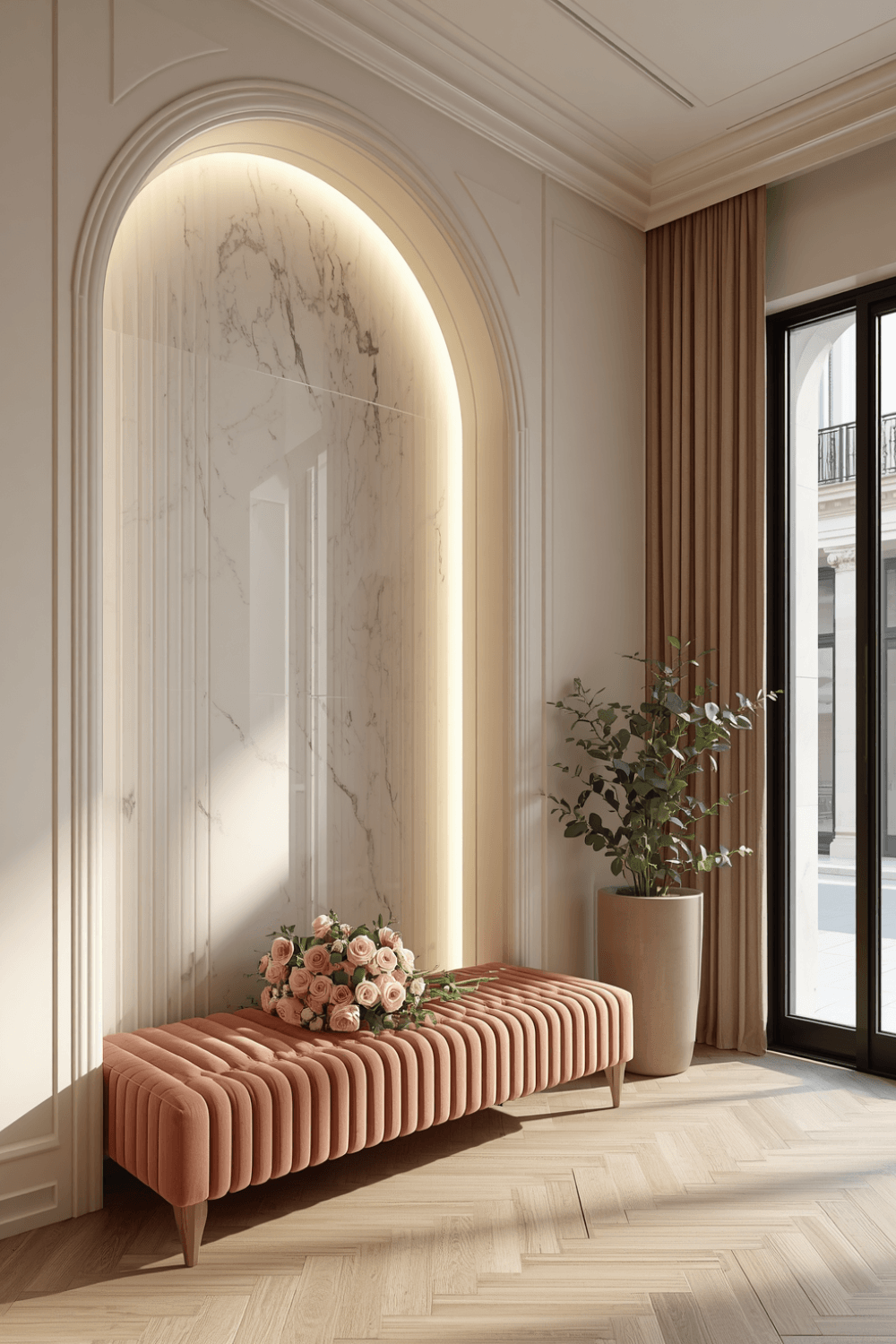 A friend with an even smaller entryway used a wall-mounted floating bench instead of a traditional freestanding one, which eliminated the need for floor-level legs taking up walking space entirely. It’s a more involved installation, but it can work in spaces too tight for any traditional bench option.
4. Prioritize a bench with built-in storage underneath
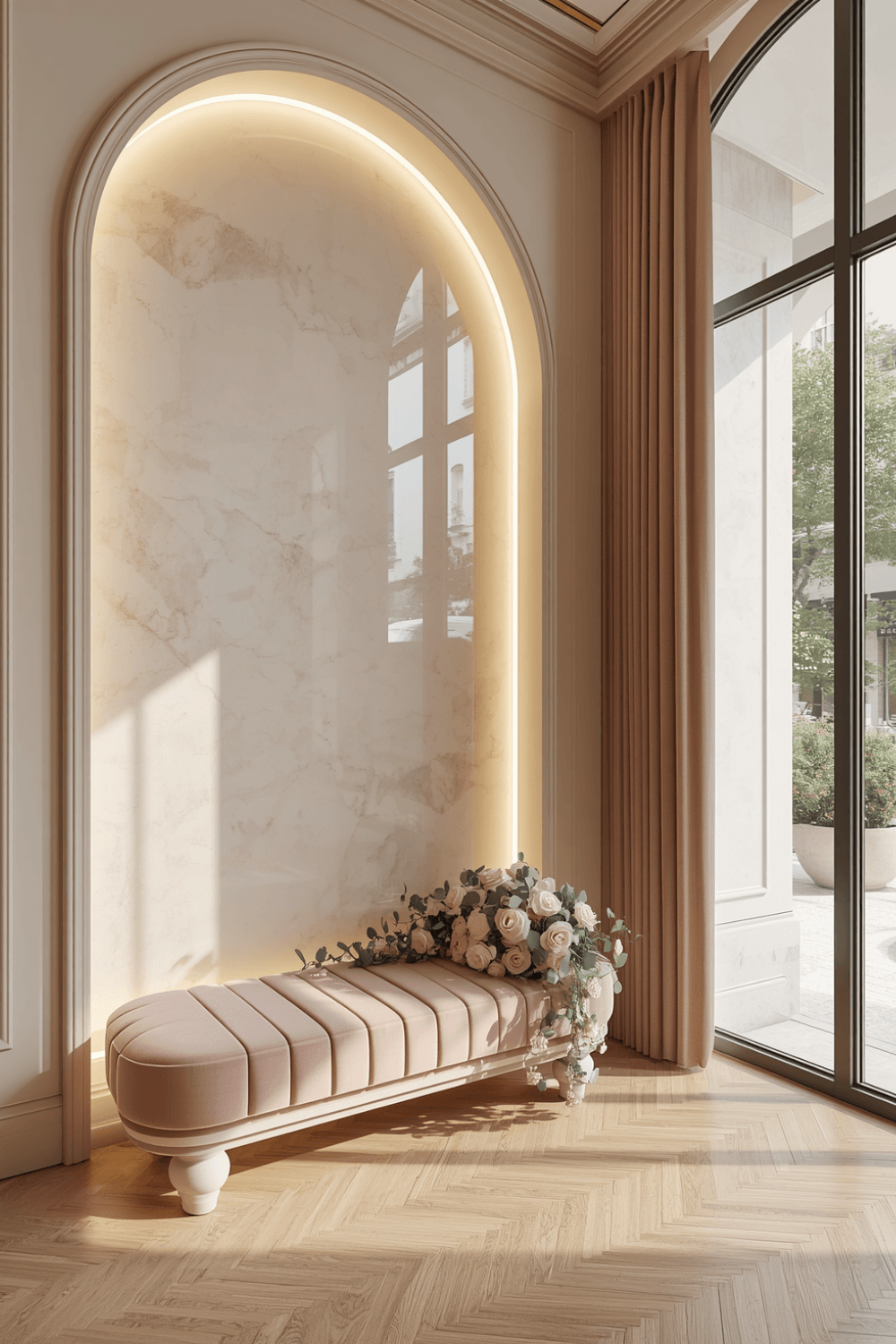 I chose a bench with a lift-up seat and hidden storage compartment inside, which let me consolidate shoe storage into the bench itself rather than needing a separate shoe rack competing for the same limited floor space. In small entryways, every piece of furniture should ideally handle more than one function.
5. Choose a bench length that matches your actual wall space, not a standard size
I measured my available wall length precisely and found a bench specifically sized to that measurement rather than assuming a standard 36 or 48 inch length would automatically work. Custom or made-to-order options exist for genuinely awkward spaces if standard sizes don’t fit your specific wall.
6. Add hooks or a small shelf above instead of a wider bench
Rather than trying to fit a bench wide enough for extensive additional storage, I added simple wall hooks above mine for coats and bags, which let the bench itself stay narrow while still providing the additional storage function I needed. Going vertical solved a problem the bench alone couldn’t in my tight footprint.
7. Test the bench’s placement with cardboard before committing
I cut a piece of cardboard to my prospective bench’s exact footprint and taped it to the floor in my entryway for a few days before ordering anything. Living with that placement temporarily revealed whether it actually worked for daily foot traffic before spending money on the real piece.
Real Examples From People I Know
A friend in a genuinely narrow apartment entryway used a small storage ottoman instead of a traditional bench, since even a slim bench wouldn’t fit her specific footprint. It provided a similar seating and storage function while taking up noticeably less visual and physical space than most bench options.
Another friend built a simple custom bench herself using a piece of finished plywood and two small support brackets, sized exactly to her oddly narrow entryway nook. It cost less than most pre-made options and fit a space that standard retail benches simply weren’t designed to accommodate.
Common Mistakes to Avoid
Buying a bench without measuring door swing clearance first. This alone caused my entire original return and reordering process.
Assuming standard bench depths will work in a genuinely tight space. Slim or narrow profile options exist specifically for smaller footprints and are worth seeking out.
Choosing a bench with no storage function in a space that can’t accommodate separate storage pieces. In small entryways, furniture should ideally serve more than one purpose.
Picking a standard length without measuring your actual available wall space. A bench that’s even a few inches too long can throw off the whole layout in a tight area.
Skipping a placement test before committing to a purchase. A simple cardboard mockup can reveal clearance issues before you’ve spent money on the actual piece.
Final Thoughts
My entryway bench mistake wasn’t really about choosing an ugly or poorly made piece, it was about not measuring the actual constraints of my space before falling in love with something online. The depth and clearance issue alone cost me a return and reorder that proper measuring would have avoided entirely.
If you’re shopping for an entryway bench in a genuinely small space, measure your door swing clearance first, look specifically for slim-profile options with built-in storage, and test the placement before committing to a purchase. That combination of steps is really what separates a bench that actually works daily from one that ends up blocking your own front door.