
Your neighbors probably don’t remember what your front door looks like. But they definitely remember a front yard that stops them mid-walk.
That’s the real power of good landscaping — it’s the first thing anyone sees about your home, before they even step inside. And yet most front yards get treated as an afterthought, just some grass and maybe a shrub or two shoved against the house.
If you want yours to actually make an impression, let’s talk front yard garden ideas that go beyond basic — specifically ones that borrow from Japanese design principles and modern minimalism to create something genuinely calming and impressive.
Why Your Front Yard Deserves Real Design Attention
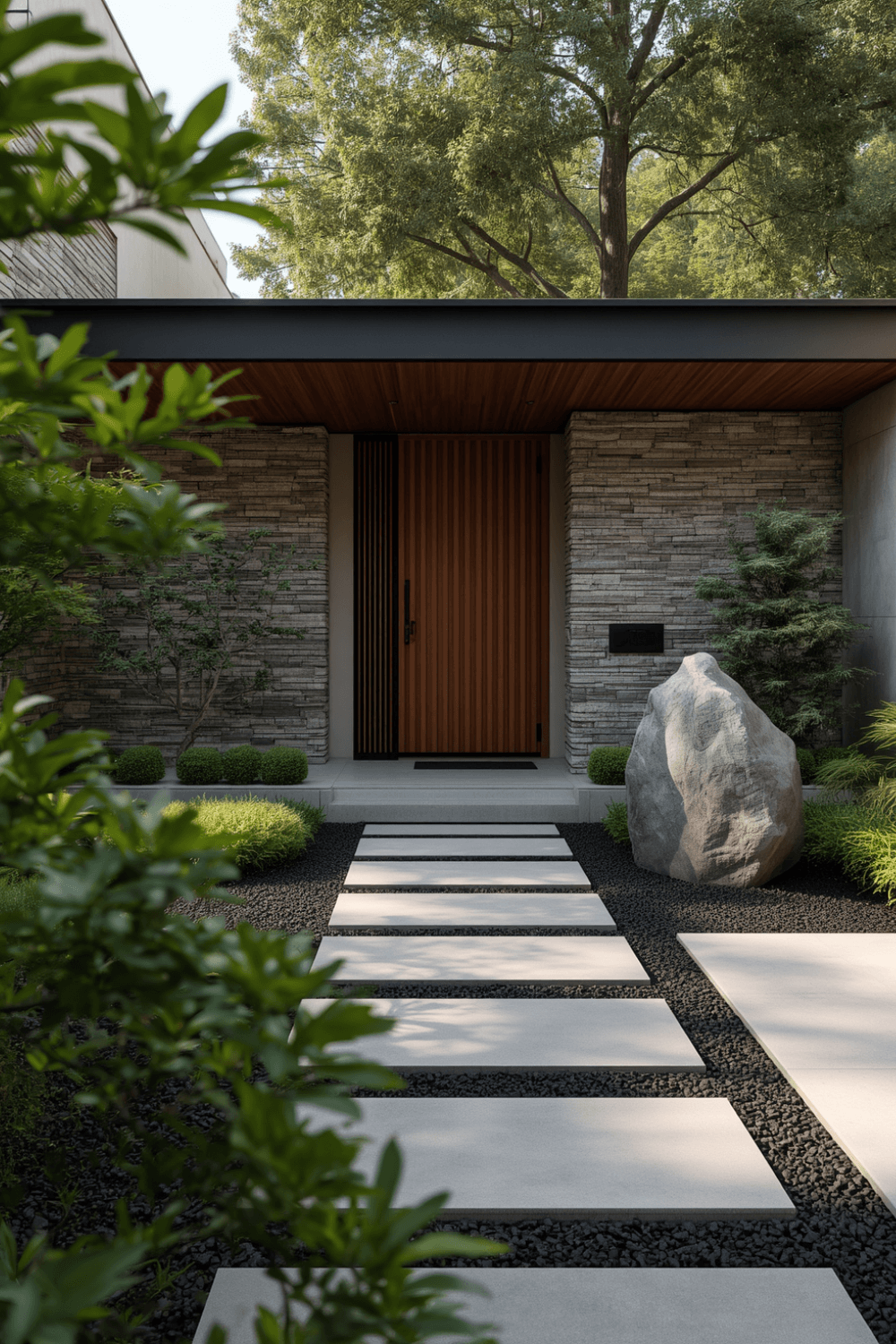
Here’s something worth sitting with for a second — your front yard is basically free advertising for how much care goes into your home, before anyone even rings the doorbell.
Good front yard garden ideas accomplish a few things at once:
- Create a genuine first impression that sets expectations for the rest of the home
- Add calm, intentional beauty to a space that’s often left purely functional
- Increase actual property value, not just aesthetic appeal
Skip it, and you’re leaving one of your home’s biggest visual assets completely on autopilot. Get it right, and even a modest house can look genuinely elevated.
Japanese Front Yard Design: Less Really Is More
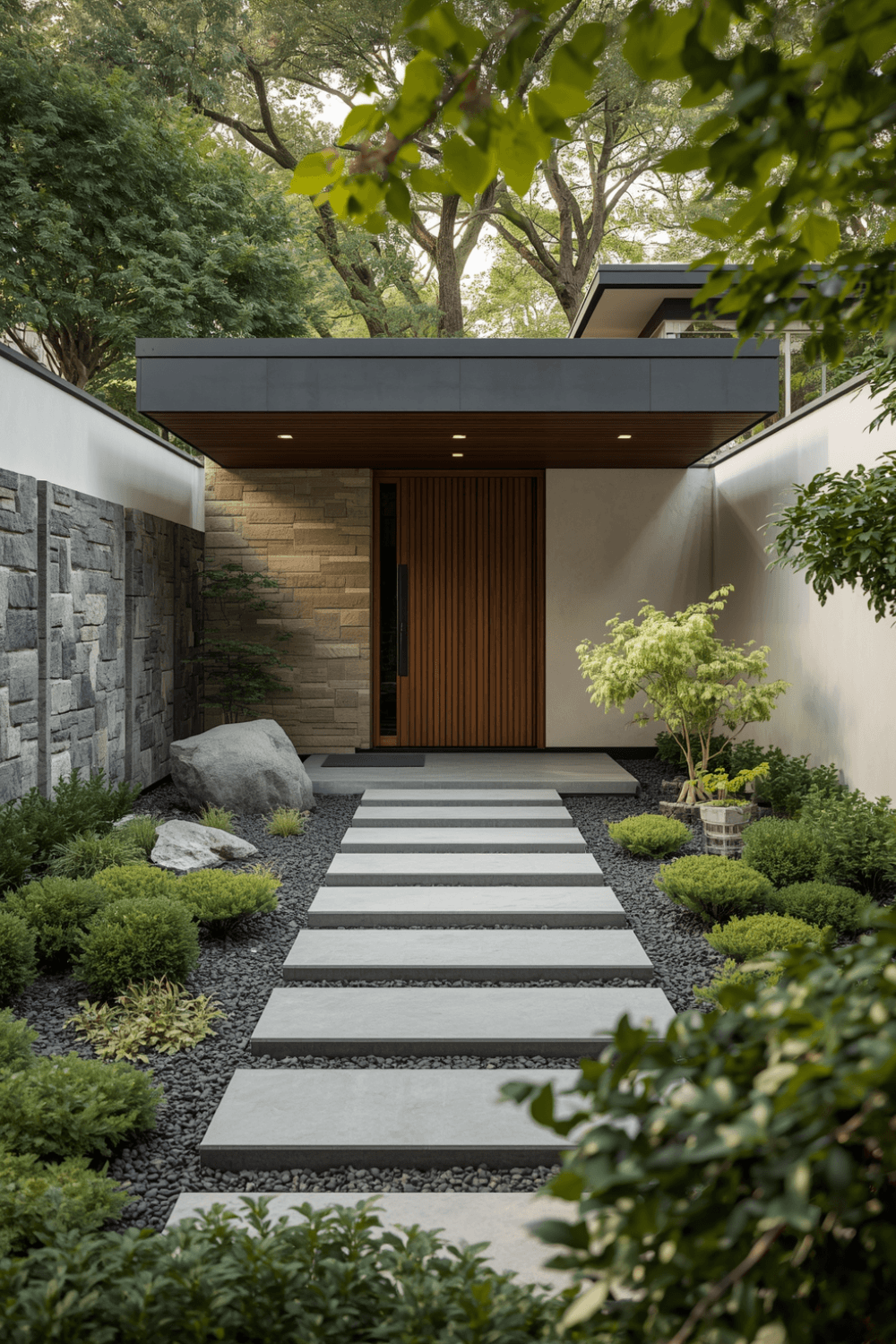
If there’s one design philosophy that transforms a chaotic front yard into something genuinely serene, it’s borrowing from Japanese front yard principles.
The core idea isn’t about literally recreating a temple garden — it’s about restraint, intentional placement, and letting a few well-chosen elements do all the visual work.
Key principles:
- Asymmetrical balance rather than perfectly matched, symmetrical plantings
- Negative space treated as a design feature, not wasted space
- A limited plant palette used repeatedly rather than one of everything
Quick tip: If you’re used to filling every inch of a garden bed, this style will feel like a real shift. Trust the empty space — it’s doing just as much work as the plants themselves.
Japanese Garden Design Elements Worth Borrowing
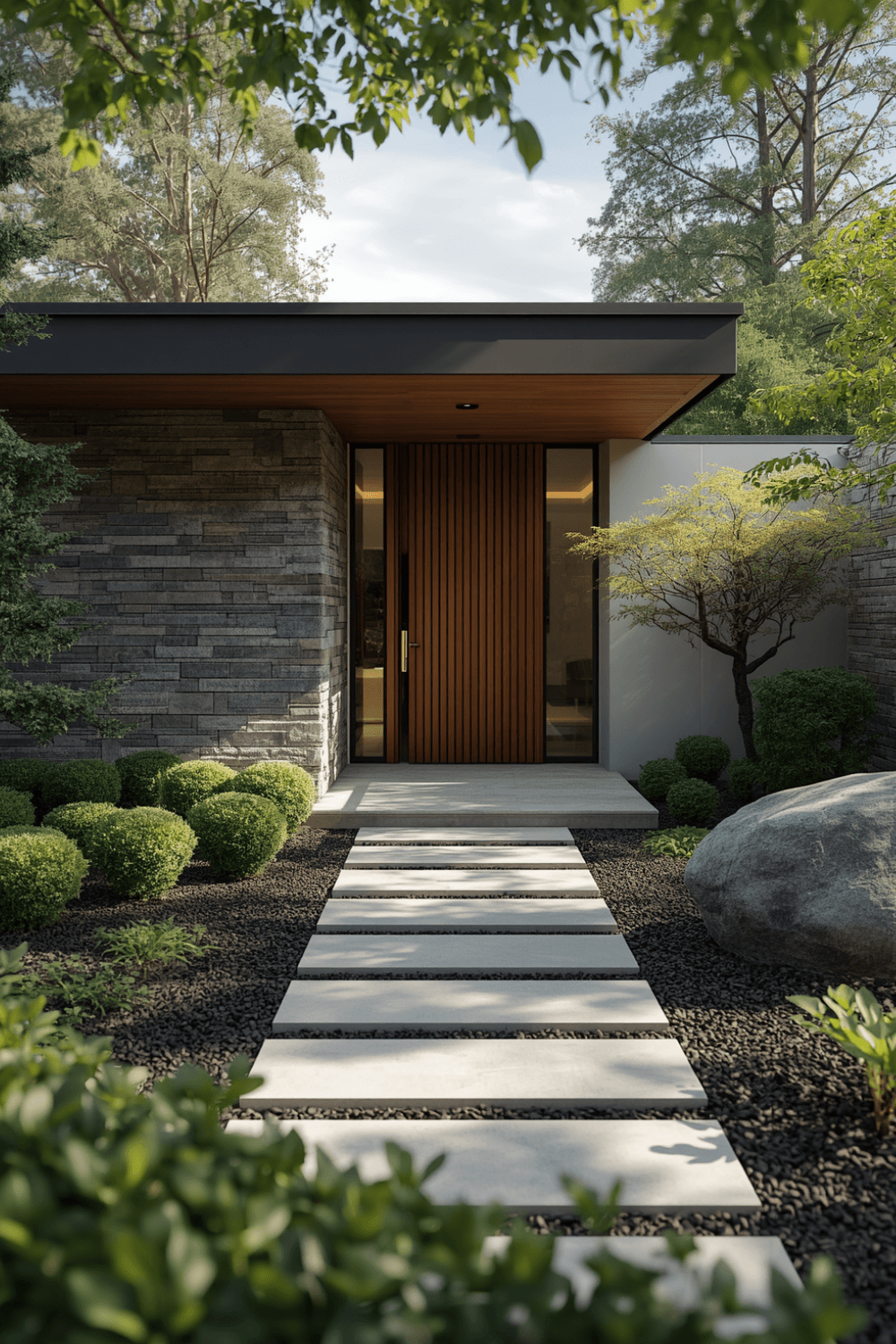
You don’t need to go full traditional to capture the feeling. A few Japanese garden design elements translate beautifully into a modern American front yard:
- Gravel or stone ground cover in place of large grass areas
- Pruned evergreens with clean, intentional shapes rather than wild growth
- A single specimen tree (like a Japanese maple) as a focal point rather than several competing trees
This approach genuinely works well for people who want low-maintenance beauty — once established, these elements need far less constant upkeep than a traditional flower-heavy garden.
Zen Garden Ideas for a Calming Entrance
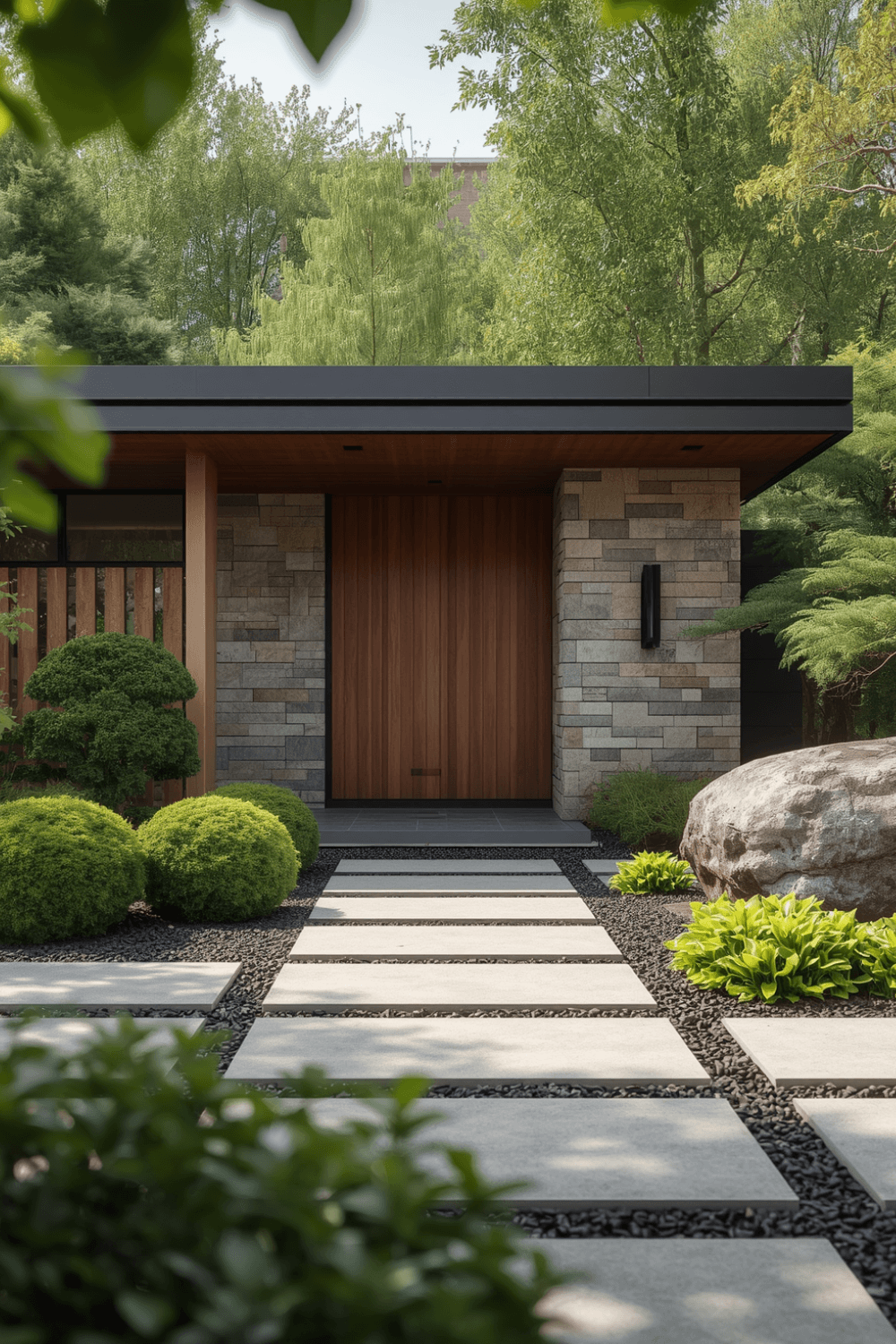
Want your front yard to feel less like a chore and more like a moment of calm before you even step inside? Zen garden ideas bring that intentional stillness right up to your front door.
- Raked gravel patterns as a textural, meditative visual element
- Smooth, rounded stones grouped in odd numbers
- Minimal but purposeful greenery — a single pruned shrub says more than ten scattered plants
Practical tip: Even a small section near your entryway done this way can shift the whole feel of your front yard, without requiring a full redesign of the entire property.
Large Stone Landscaping for Natural Structure
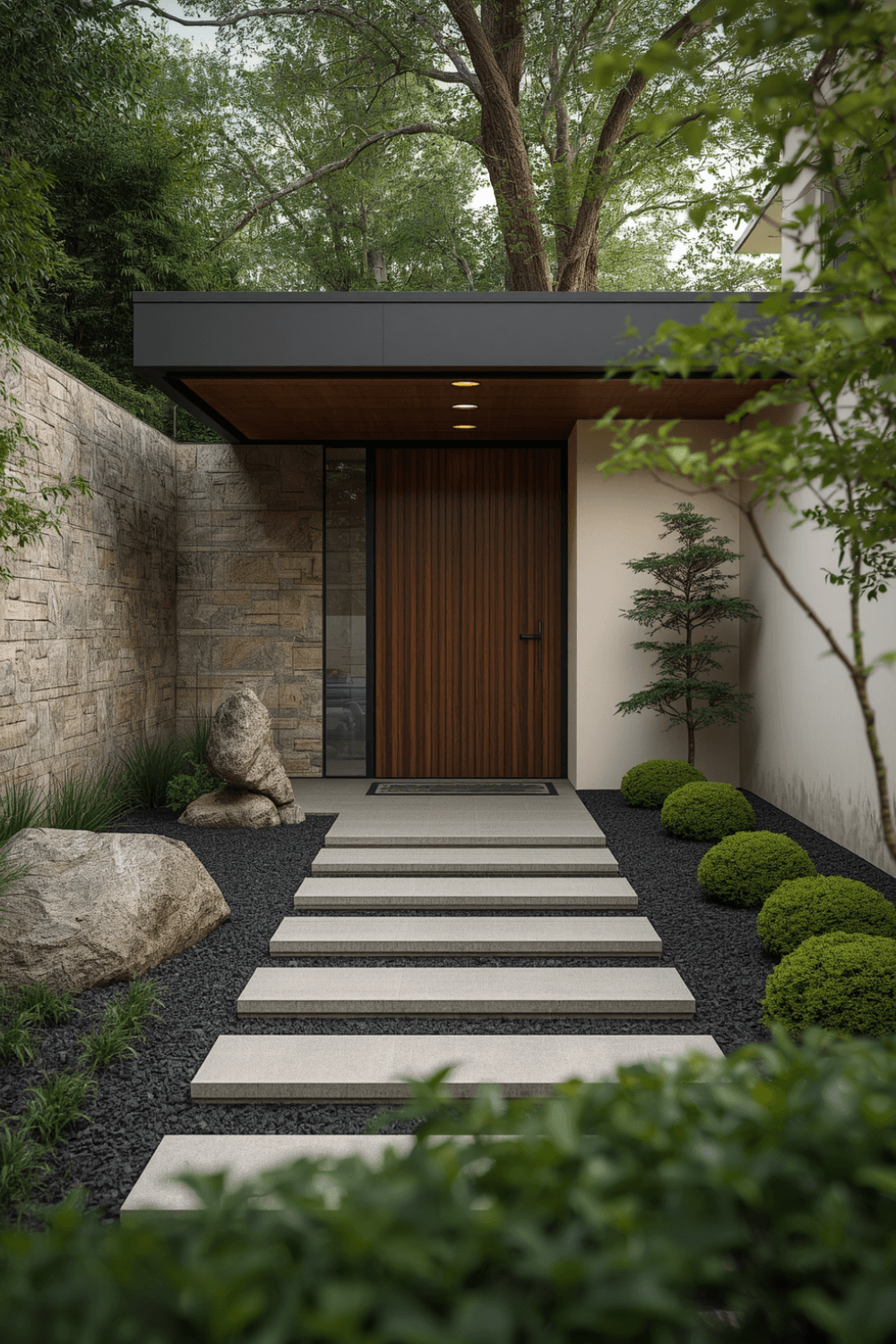
Stone isn’t just a Japanese-garden thing — it’s genuinely one of the most versatile materials in modern landscaping, period.
Large stone landscaping adds structure and permanence in a way that plants alone can’t achieve:
- Boulders placed strategically as natural focal points
- Stone edging to define garden beds cleanly
- Large flat stones used as informal seating or accent pieces
These elements also require essentially zero maintenance once placed, which is a nice bonus if you’re trying to balance beauty with realistic upkeep.
Natural Stone Garden Paths and Accents
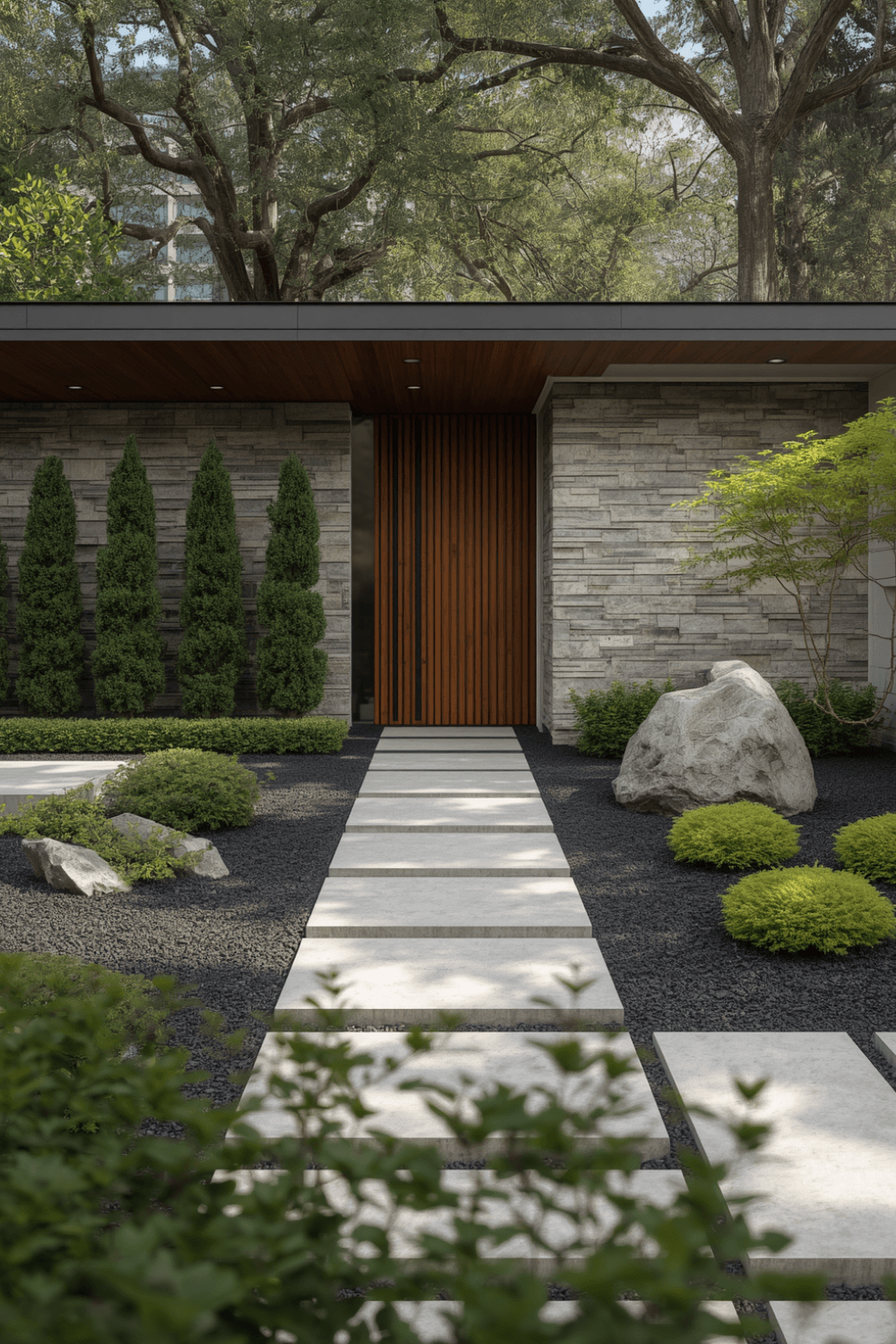
Beyond just boulders, a natural stone garden approach carries the material through smaller details too.
- Stepping stones set into gravel or groundcover
- A low stone border along planting beds
- Stone accent pieces (a small water basin, a simple sculpture) as focal points
Stone wall landscaping takes this even further — a low retaining wall or accent wall built from natural stone adds real architectural presence to a front yard, especially if your lot has any elevation change to work with.
Modern Walkway Ideas That Guide the Eye
The path from the sidewalk to your front door is genuinely one of the most important design elements in your whole front yard — it’s literally the route every visitor takes.
Modern walkway ideas worth considering:
- Large-format concrete pavers with grass or gravel joints
- A single, clean stone slab path rather than smaller, choppy stepping stones
- Linear, geometric layouts that echo modern architectural lines
Modern pathway design works best when it matches your home’s overall architectural style. A sleek, contemporary home calls for clean, linear pathway materials, while a more traditional home might call for something slightly softer, like natural stone with looser joint spacing.
Front Door Landscaping: Framing Your Entrance
Your front door deserves its own mini design moment, not just whatever happened to be planted nearby.
Front door landscaping ideas:
- Matching planters on either side of the door for instant symmetry
- A single striking plant (an upright evergreen, a sculptural grass) rather than a cluttered mix
- Simple, clean lighting to highlight the entrance after dark
Quick tip: Symmetry here reads as intentional and calm, even in a yard that’s otherwise more relaxed and asymmetrical elsewhere. It’s a nice way to signal “this is the entrance” without needing a sign.
Modern Front Yard Landscaping for Clean Curb Appeal
If your home’s architecture leans contemporary, modern front yard landscaping should follow that same clean, restrained language.
Core elements:
- Geometric planting beds with crisp, defined edges
- A limited plant palette repeated throughout rather than lots of variety
- Structural plants (ornamental grasses, boxwoods) over anything too wild or overflowing
This style pairs beautifully with the stone and gravel elements mentioned earlier — together, they create a cohesive, intentional look rather than a yard that feels randomly assembled over time.
Minimalist Landscape Design Principles
At its core, minimalist landscape design comes down to a simple idea — fewer elements, better chosen, arranged with real intention.
- Choose 3-5 plant varieties max and repeat them throughout the space
- Leave generous negative space (gravel, mulch, or lawn) between plantings
- Prioritize form and texture over colorful, busy plant combinations
This approach genuinely photographs beautifully too, since there’s less visual clutter competing for attention in every shot.
Evergreen Garden Design for Year-Round Structure
One of the biggest advantages of leaning into evergreen garden design is that your front yard looks good in every season, not just during peak summer bloom.
Popular evergreen choices:
- Boxwood for clean, structured shapes
- Japanese black pine for that classic sculptural, windswept look
- Arborvitae for vertical structure and privacy
Practical tip: Evergreens also mean significantly less seasonal maintenance — no cutting back dead perennial stems every fall, no bare patches waiting for spring growth to fill back in.
Modern Home Entrance Styling
Beyond just landscaping, your modern home entrance as a whole benefits from the same restrained design philosophy.
- Clean architectural lines in any hardscaping near the door
- Minimal but well-placed lighting fixtures
- A cohesive material palette (stone, wood, metal accents) that matches your home’s exterior
The goal is making the entrance feel like a natural extension of your home’s architecture, not a separate decision made without considering the bigger picture.
Luxury Modern Home Exterior Coordination
Your front yard doesn’t exist in isolation from your house itself. A luxury modern home exterior considers landscaping and architecture as one unified design.
- Landscaping materials (stone, gravel, wood) that echo materials used on the home’s facade
- Plant heights and placement that complement, rather than obscure, architectural details
- Consistent lighting temperature and style between the house and the yard
Modern Curb Appeal: Bringing It All Together
At the end of the day, modern curb appeal comes down to a few consistent principles, regardless of your specific style preference:
- Restraint over abundance — fewer, better-chosen elements
- Structure through stone, hardscaping, and evergreen plantings
- Intentional negative space rather than filling every available inch
- Cohesion between your home’s architecture and its surrounding landscape
Internal Linking Suggestions
If you’re publishing this on a home and garden blog, these related topics would connect naturally:
- How to Choose the Right Evergreen Plants for Your Climate
- Modern Pathway Materials Compared: Stone, Concrete, and Pavers
- Outdoor Lighting Ideas to Highlight Your Home’s Best Features
Final Thoughts: Your Front Yard Sets the Tone
At the end of the day, front yard garden ideas inspired by Japanese design and modern restraint aren’t about doing less work — they’re about doing the right work, with real intention behind every choice.
Key takeaway: Start with structure (stone, pathways, evergreens), keep your plant palette limited and repeated, and don’t be afraid of negative space. That balance is what makes a front yard feel calm and genuinely designed, not just landscaped.
Frequently Asked Questions
1. Do I need a large yard to create a Japanese-inspired front garden?
Not at all — Japanese garden principles actually work especially well in smaller spaces, since the focus is on a few well-chosen elements rather than filling every inch. Even a small entryway section with gravel and one specimen plant can capture the feeling.
2. What’s the most low-maintenance front yard landscaping style?
Evergreen and stone-based designs tend to require the least ongoing maintenance, since evergreens don’t die back seasonally and stone elements need essentially no upkeep once placed. This combination gives you year-round structure without constant gardening work.
3. How do I make my front yard look more modern without a full renovation?
Start with a limited, repeated plant palette and add some stone or gravel elements to break up large grass areas. Simplifying an overplanted garden bed alone can make a noticeable difference without touching your walkway or hardscaping.
4. What plants work best for a minimalist front yard design?
Structural plants like boxwood, ornamental grasses, and Japanese maples work particularly well, since they offer strong form and texture without needing colorful blooms to look intentional. Repeating just 3-5 varieties throughout the space usually looks more cohesive than a wide mix.
5. Is stone landscaping expensive to install?
It varies depending on the type and quantity of stone used, but smaller elements like stepping stones or a modest boulder accent can be added affordably. Larger features like retaining walls or extensive stone pathways represent a bigger investment but also add significant long-term value.
6. How can I add curb appeal to my front door area specifically?
Matching planters on either side of the door create instant symmetry, and a single striking plant often works better than a cluttered mix of smaller ones. Adding simple, warm-toned lighting also helps highlight the entrance once it gets dark.