
Nobody ever compliments a boring white vinyl railing. But a rich, warm wood railing with the light hitting it just right at golden hour? That’s the kind of thing people actually stop and ask about.
I never really thought much about deck railings until I saw one done well — deep walnut tones, evenly spaced balusters, little solar lights glowing on top of each post. It completely changed how I saw the whole deck, honestly more than the furniture on it did.
If your deck railing is currently just… there, doing its job but not much else, let’s fix that. These wood deck railing ideas will help you turn a purely functional feature into one of the best-looking parts of your outdoor space.
Why Your Deck Railing Deserves More Attention
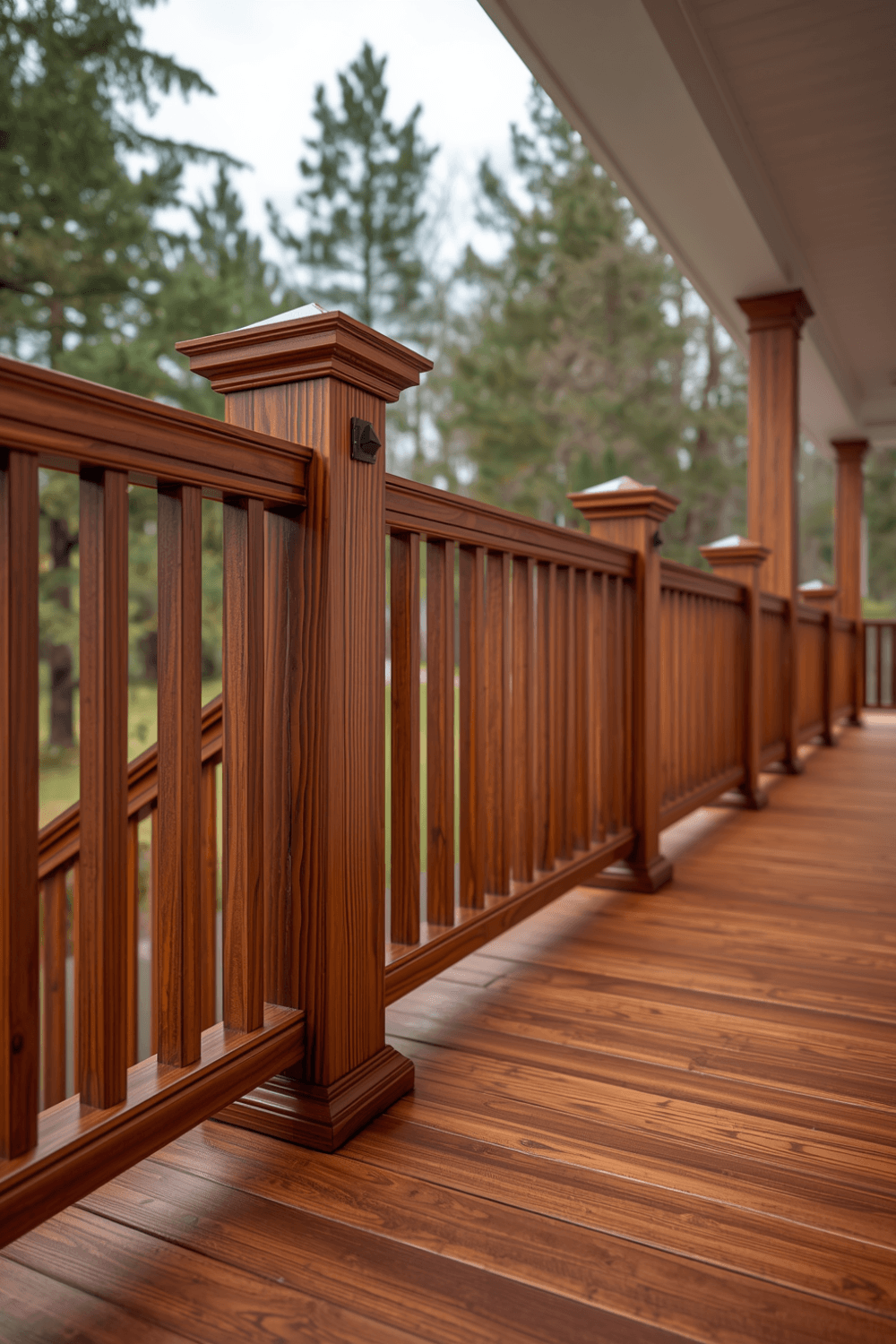
Here’s something people don’t think about enough — your railing isn’t just a safety feature. It’s basically a design element that runs the entire perimeter of your deck, which means it has a huge visual impact whether you plan for it or not.
Good wood deck railing ideas accomplish a few things at once:
- Frame your outdoor space the way a picture frame highlights art
- Add warmth and texture that composite or vinyl alternatives often can’t match
- Create a natural transition between your house and the surrounding yard
Ignore it, and you’re basically leaving one of your deck’s biggest visual features up to chance. Get it right, and even a simple deck starts to feel genuinely custom.
Deck Railing Design: Where to Start
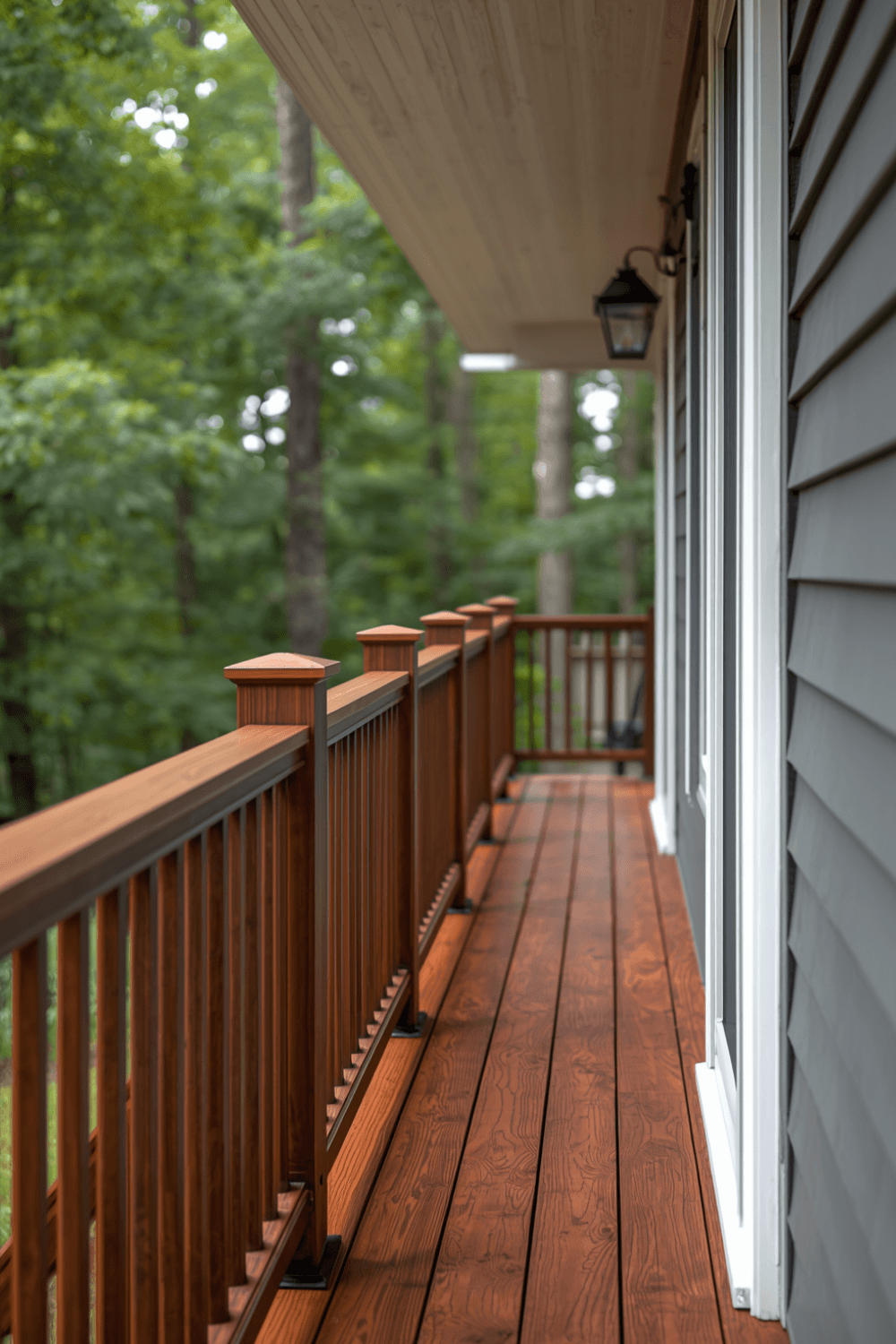
Before picking materials or finishes, it helps to understand the basic anatomy of a good deck railing design, since every other decision builds from here.
The core components:
- Top rail — the horizontal piece you’d rest your hand on
- Balusters — the vertical pieces spaced along the railing
- Posts — the sturdier vertical supports, usually spaced further apart
- Post caps — the decorative or functional tops finishing off each post
Getting the proportions right between these elements is what separates a railing that looks intentional from one that just looks like it came standard with the house.
Wooden Porch Railing Ideas for Warmth and Character
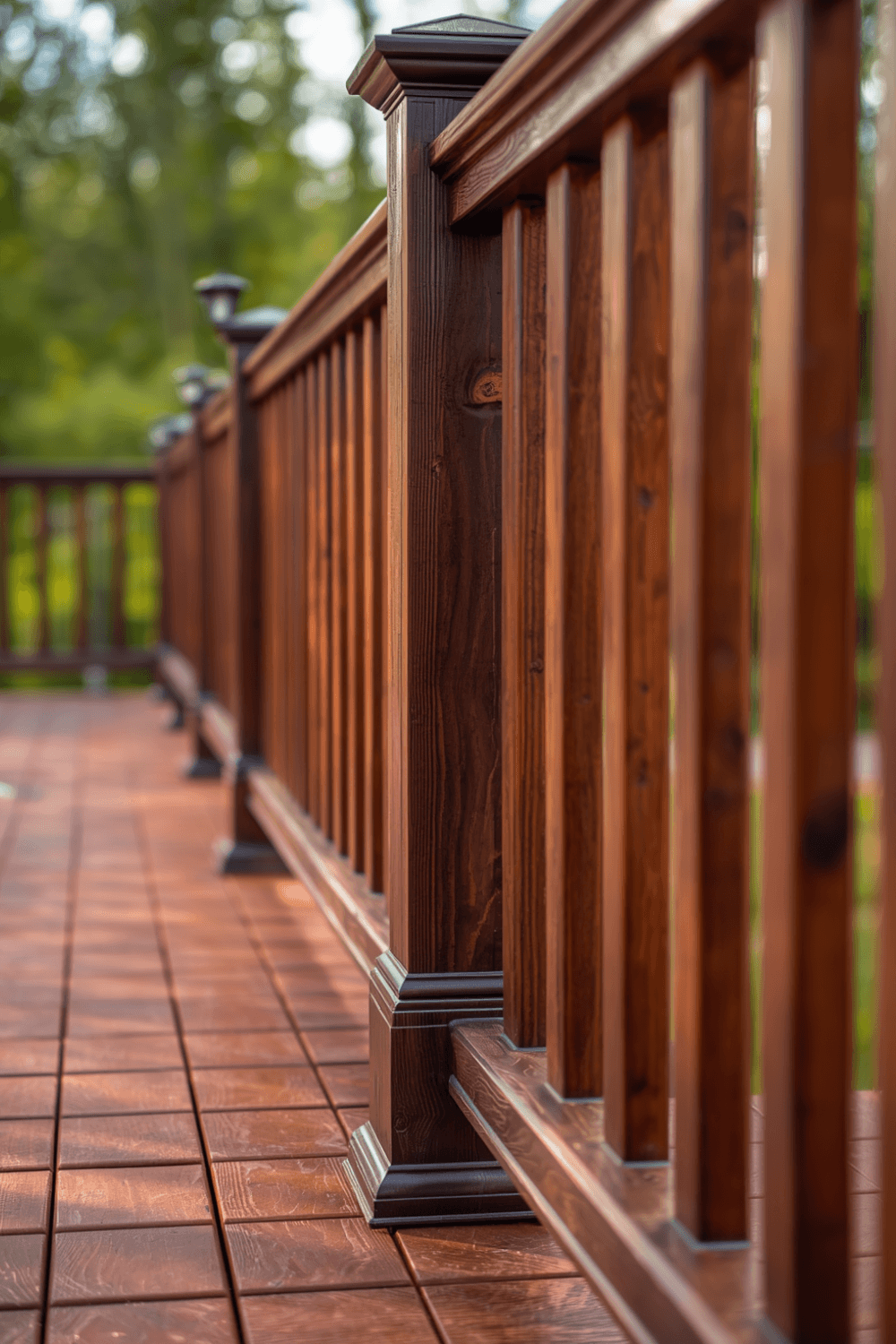
If you’re leaning toward real wood rather than composite, wooden porch railing ideas offer a warmth that’s genuinely hard to replicate with synthetic materials.
Popular wood choices:
- Cedar — naturally resistant to rot, ages to a beautiful silvery gray if left unfinished
- Redwood — rich, warm tone with good natural durability
- Pressure-treated pine — budget-friendly, takes stain well for a custom look
Practical tip: If you want that deep, rich mahogany or walnut look but don’t want to pay mahogany prices, a quality wood stain on pressure-treated pine can get you surprisingly close for a fraction of the cost.
Mahogany Deck Railing for That Rich, Upscale Look
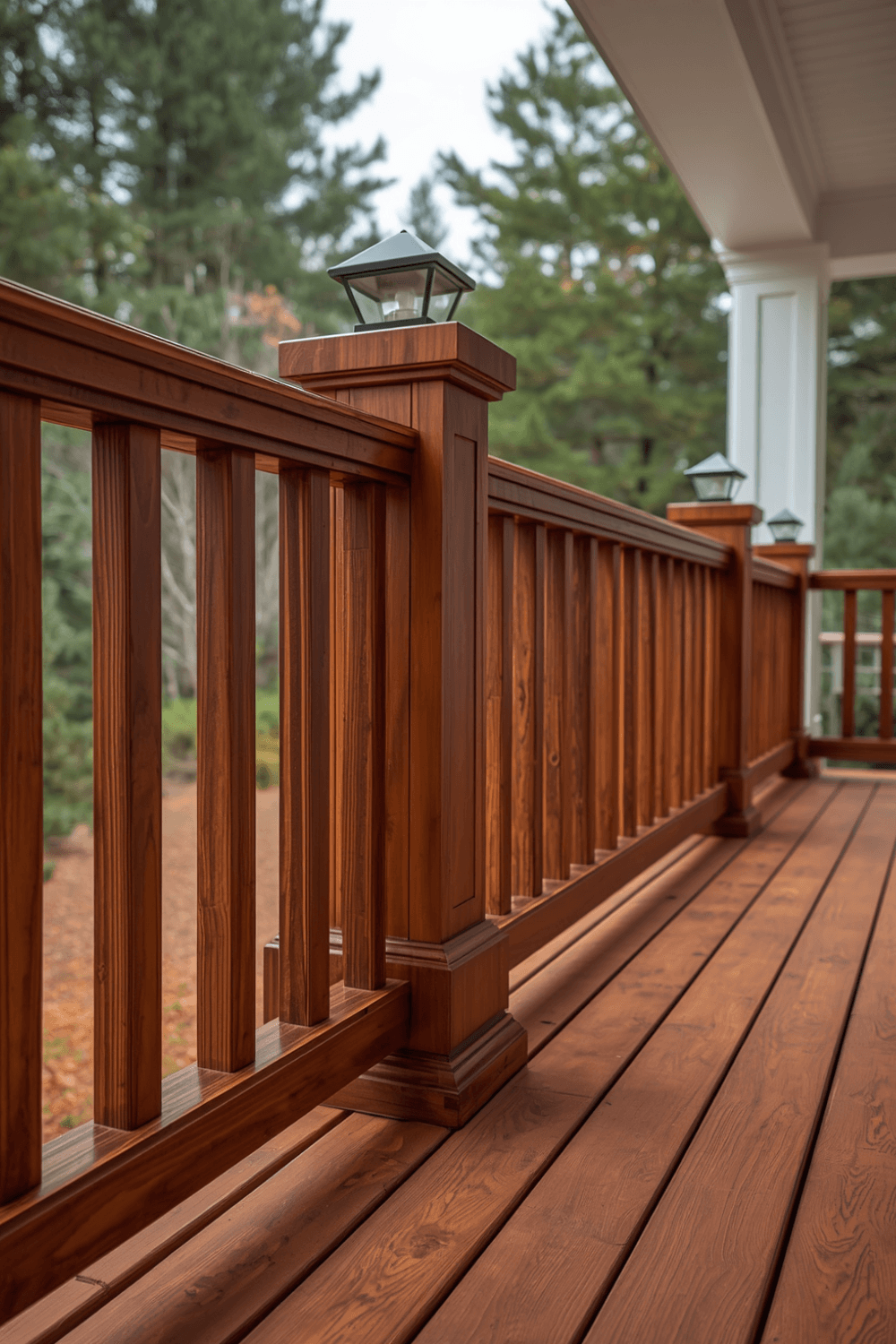
Speaking of rich tones, mahogany deck railing has become something of a gold standard for a reason. The deep reddish-brown color with visible grain reads as genuinely luxurious, especially when the wood is well-maintained and properly sealed.
Why people love it:
- The grain pattern adds natural texture and visual interest
- It photographs beautifully, especially in warm afternoon light
- It pairs well with almost any deck flooring tone, from matching mahogany to lighter composite boards
Maintenance reality check: True mahogany requires periodic resealing to maintain that rich color and protect against weathering. If low maintenance matters more to you than authentic wood, a mahogany-toned composite railing gets you the look without the upkeep.
Composite Deck Railing: The Low-Maintenance Alternative
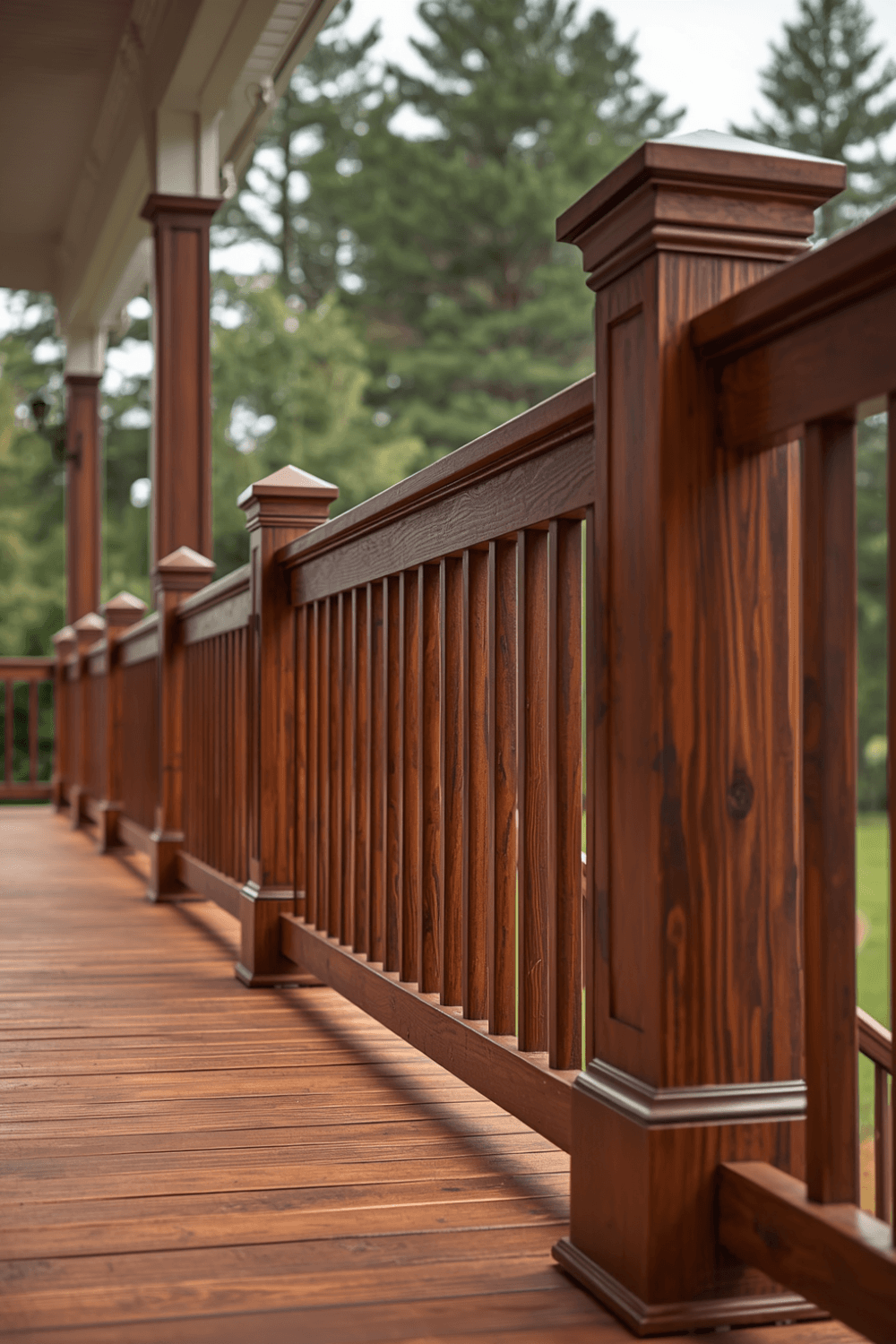
If the idea of annual staining and sealing sounds like a chore you’d rather skip, composite deck railing is worth serious consideration.
Composite decking ideas for railings specifically:
- Wood-grain textured composite that mimics real mahogany or walnut convincingly
- Solid color composite in warm brown tones for a cleaner, more modern look
- Mixed material designs — composite balusters with real wood or metal accents
The technology here has genuinely improved a lot in recent years. Modern composite railings can be tough to distinguish from real wood at a glance, especially once they’re installed and styled with the rest of your deck.
Deck Baluster Design: The Detail That Sets the Tone
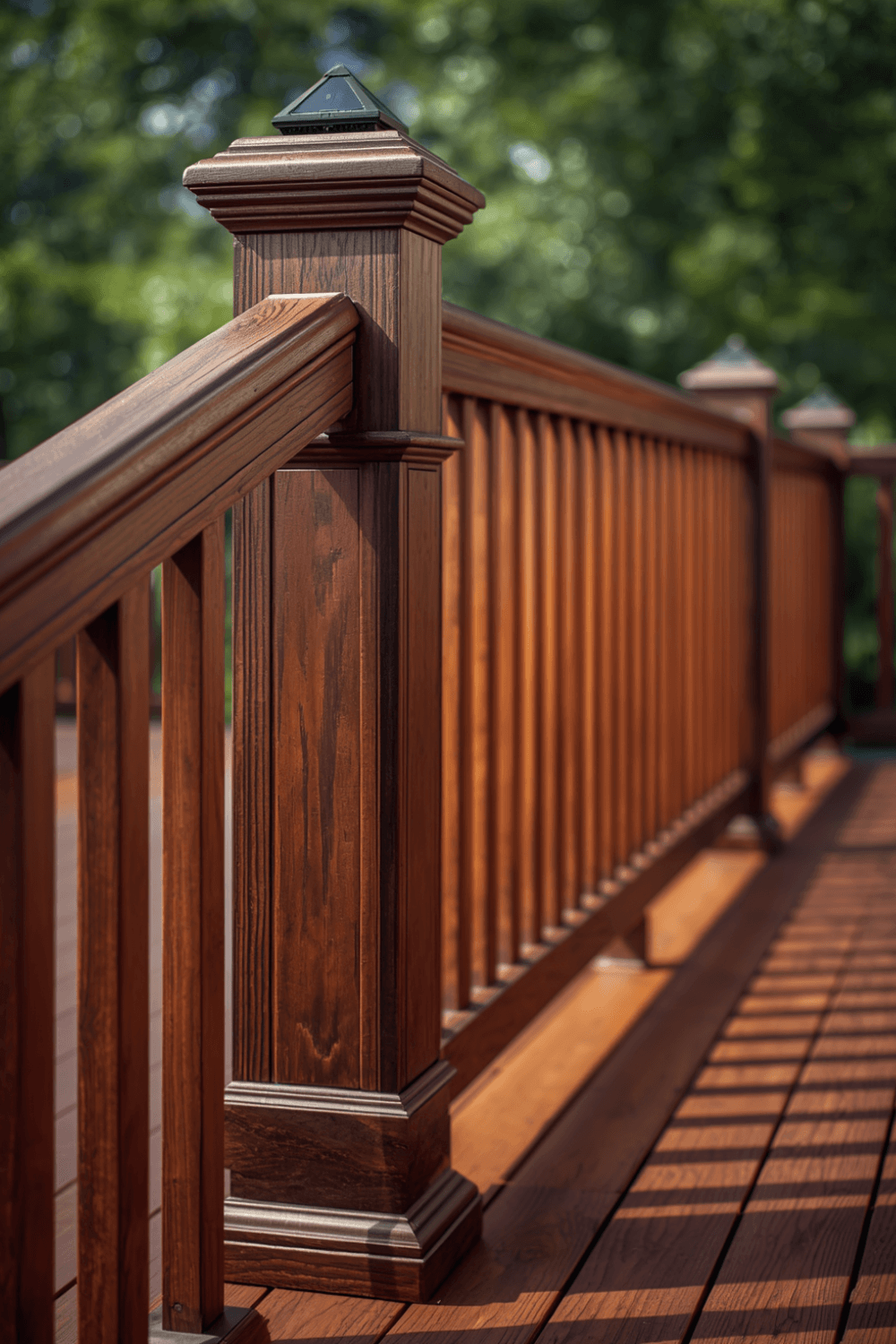
Balusters might seem like a minor detail, but their spacing, shape, and style genuinely change the entire feel of a railing.
Deck baluster design options worth considering:
- Square balusters — clean, simple, works with almost any style
- Turned or decorative balusters — adds a more traditional, ornate feel
- Wider-spaced balusters — creates a more open, modern look (within code-required spacing limits, of course)
Quick tip: Consistent, evenly measured spacing between balusters makes a huge difference in how polished the finished railing looks. Uneven spacing is one of those small details that quietly undermines an otherwise nice railing.
Wood Deck Post Caps for a Finished Look
Here’s a detail that’s easy to skip but genuinely elevates the whole railing — wood deck post caps.
A plain, flat-topped post can look a little unfinished, almost like the project stopped halfway. A decorative cap — pyramid-shaped, ball-topped, or simple molded trim — gives each post a proper, finished silhouette.
Styling options:
- Pyramid caps for a classic, traditional look
- Flat solar caps if you want lighting built directly into the post top
- Decorative molded caps for a more custom, upscale feel
This is genuinely one of those small, inexpensive upgrades that makes a railing look considerably more polished for very little extra cost or effort.
Deck Post Lighting Ideas for Evening Ambience
Once the sun goes down, a well-lit deck railing becomes a completely different experience. Deck post lighting ideas add both safety and serious atmosphere.
Popular lighting approaches:
- Post cap lights mounted directly on top of each post
- Small in-baluster lighting for a more subtle, integrated glow
- String lights draped along the top rail for a softer, more casual feel
Solar Deck Cap Lights: Easy and Efficient
If running electrical wiring to your deck sounds like more than you want to tackle, solar deck cap lights are genuinely one of the easiest upgrades available. They charge during the day and glow softly at night, no wiring required.
Practical tip: Choose warm white solar lights rather than the cooler blue-white tone some cheaper models default to. Warm light flatters wood tones far better and feels more inviting for evening use.
Covered Porch Deck Ideas for Year-Round Use
If your deck has any kind of roof or overhang, covered porch deck ideas open up a few extra design possibilities that fully exposed decks don’t have.
- Railings stay more protected from direct weather, so real wood options last longer
- You can add hanging elements (planters, string lights) without worrying as much about rain damage
- A covered space feels more like an extension of your indoor living area, so railing style can lean a bit more refined
This is honestly a great scenario for splurging slightly more on real wood or higher-end composite, since the covered structure protects your investment over time.
Rustic Deck Railing for a Cozy, Cabin-Like Feel
Not every deck needs to look polished and refined. Rustic deck railing styles lean into a more relaxed, natural aesthetic.
- Unfinished or lightly stained wood that shows natural grain and imperfection
- Log-style or branch-inspired balusters for a true cabin feel
- Wider board top rails with a slightly rough-hewn finish
This style works especially well for cabin properties, wooded lots, or anyone who just prefers a more relaxed, natural look over something sleek and uniform.
Backyard Deck Design: Tying the Railing Into the Bigger Picture
Your railing doesn’t exist in isolation — it needs to work with the rest of your backyard deck design as a whole.
Things to coordinate:
- Railing tone should complement (not necessarily match exactly) your deck flooring
- Post cap style should echo other architectural details on your house, if possible
- Lighting choices should feel consistent with any other outdoor lighting you have
A railing that clashes with everything else can make a deck feel disjointed, even if each individual element looks nice on its own.
Wood Grain Deck Flooring to Pair With Your Railing
Speaking of flooring, wood grain deck flooring — whether real wood or a wood-look composite — should generally coordinate with your railing choice for a cohesive overall look.
- Matching tones (railing and flooring in the same wood family) create a seamless, unified look
- Contrasting tones (dark railing, lighter flooring, or vice versa) add visual interest and definition
- Consistent grain direction and board width throughout keeps things feeling intentional
Wide Plank Deck Flooring for a Modern Touch
Wide plank deck flooring has become increasingly popular because fewer, larger boards create a cleaner, more modern look compared to standard narrow decking. It pairs particularly well with simpler, cleaner railing designs rather than heavily ornate ones.
Home Exterior Deck Design: The Bigger Context
Zoom out for a second — your railing and deck don’t exist separately from the rest of your house’s exterior. Good home exterior deck design considers the whole picture.
- Railing material and tone should feel intentional next to your siding color
- Overall deck style should match your home’s architectural style (modern, farmhouse, traditional, etc.)
- Lighting throughout the deck should feel consistent with any exterior house lighting
Deck Railing Styles for Every Home
At the end of the day, deck railing styles genuinely vary a lot depending on your home’s overall aesthetic:
- Modern: Clean square balusters, minimal ornamentation, often paired with composite materials
- Traditional: Turned balusters, decorative post caps, classic proportions
- Rustic: Natural wood grain, less uniform styling, cabin-inspired details
- Coastal: Lighter wood tones, simple horizontal cable or slat designs
Picking a style that matches your home’s existing architecture keeps the whole exterior feeling cohesive rather than like the deck was an afterthought.
Outdoor Deck Ideas Beyond the Railing Itself
While the railing is the star of this particular conversation, a few other outdoor deck ideas work alongside it to complete the space:
- Built-in bench seating that incorporates the same wood tone as your railing
- Planters attached to or near the railing for a bit of greenery at eye level
- A pergola or shade structure that echoes the railing’s material for visual consistency
Deck Renovation Ideas If You’re Starting From Scratch
If your current railing is looking tired or dated, here’s a simple deck renovation ideas starting point:
- Assess whether your existing structure is sound enough to just refinish, or if it needs full replacement
- Choose your material (real wood vs. composite) based on maintenance tolerance and budget
- Add post caps and lighting as a relatively simple upgrade if the structure itself is otherwise fine
- Coordinate flooring and railing tones for a cohesive final look
Internal Linking Suggestions
If you’re publishing this on a home improvement blog, these related topics would connect naturally:
- Composite vs. Real Wood Decking: Which Is Right for Your Home
- Outdoor Lighting Ideas for Decks and Patios
- How to Stain and Seal a Wood Deck for Long-Lasting Results
Final Thoughts: Your Railing Is Doing More Work Than You Think
At the end of the day, wood deck railing ideas aren’t just about safety compliance — they’re about finally giving one of your deck’s most visible features the attention it deserves.
Key takeaway: Start with your material choice (real wood versus composite), get your baluster spacing and post caps right, and don’t skip lighting if you want your deck to shine well after sunset too.
Frequently Asked Questions
1. What’s the most durable wood for a deck railing?
Cedar and redwood are both naturally resistant to rot and insects, making them solid long-term choices for real wood railings. Pressure-treated pine is a more budget-friendly option, though it typically requires more frequent maintenance to stay looking its best.
2. Is composite deck railing worth the higher upfront cost?
For most homeowners, yes — composite railing eliminates the need for regular staining and sealing, which saves both time and money over the years. If you want the wood look without the ongoing maintenance, it’s usually the more practical long-term choice.
3. How far apart should deck balusters be spaced?
Most building codes require gaps no wider than 4 inches between balusters for safety reasons, though exact requirements vary by location. Always check your local codes before finalizing your spacing plan.
4. Do solar deck post cap lights actually work well?
Yes, modern solar cap lights have improved significantly and provide a nice ambient glow for most evening needs. Just make sure your posts get enough direct sunlight during the day to properly charge the built-in solar panel.
5. Can I stain composite decking to change its color?
Generally, no — composite decking comes pre-colored and typically can’t be stained the way real wood can. If you want a different tone down the road, you’d usually need to replace the composite boards rather than refinish them.
6. What’s the easiest way to update an old, dated deck railing?
If the structure itself is still sound, refinishing the existing wood with a fresh stain and adding new post caps or solar lighting can make a big visual difference without a full replacement. This approach is often much more budget-friendly than a complete railing overhaul.