
Green Kitchen Ideas: What I Learned Painting My Cabinets Green (Twice)
The first time I painted my kitchen cabinets green, I picked the color at 9pm off my phone screen, ordered the paint the next morning, and had the whole kitchen done by Sunday night. By Monday morning, in actual daylight, it looked like a hospital break room. Too minty, too flat, completely wrong for the space.
I ended up living with that color for almost a year out of sheer exhaustion before I finally repainted. The second attempt turned out to be one of my favorite decisions in this house. If you’re thinking about going green in your kitchen, let me save you from repeating my first mistake.
Why Green Kitchens Have Stuck Around
Green isn’t just a passing trend the way some kitchen colors have been. It works because it sits close to neutral — closer to a warm gray or a deep charcoal than people expect — while still giving the space real personality. Sage, olive, hunter green, and deep forest tones all pair naturally with wood, brass, and stone, which is probably why this color keeps showing up in kitchen renovations year after year instead of fading out.
The catch is that “green” covers a huge range, and picking the wrong shade or the wrong finish can take a kitchen from elegant to overwhelming fast — which is exactly what happened to me the first time.
My Mistakes (Learn From Mine Before You Start)
Mistake number one was picking a color from a screen instead of testing it in my actual kitchen lighting. My kitchen gets strong afternoon light from a west-facing window, and that mint green looked completely different by 6pm than it did at noon.
Mistake number two was going with a flat matte finish on lower cabinets that get touched constantly. Fingerprints, water splashes, and general daily use showed up almost immediately, and flat finishes are notoriously hard to wipe clean without leaving marks.
Step-by-Step: Doing a Green Kitchen the Right Way
1. Test your actual shade in your actual kitchen
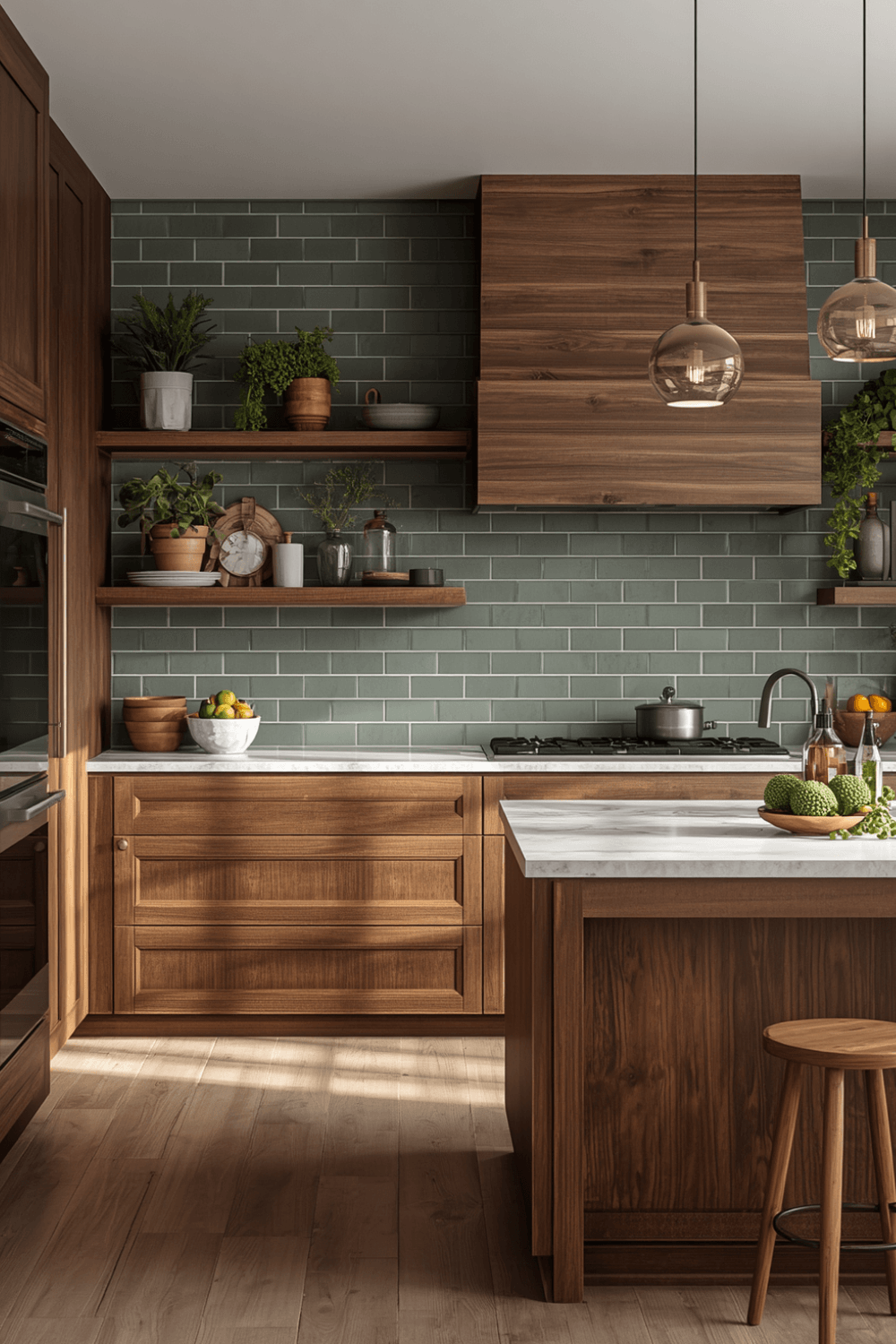
I now buy sample pots — Sherwin-Williams and Behr both sell small sample sizes for and paint a large poster-board swatch instead of testing directly on the cabinet. I move that swatch around the kitchen and check it in the morning, midday, and evening before committing to anything.
2. Pick a deeper, more muted shade if you’re unsure
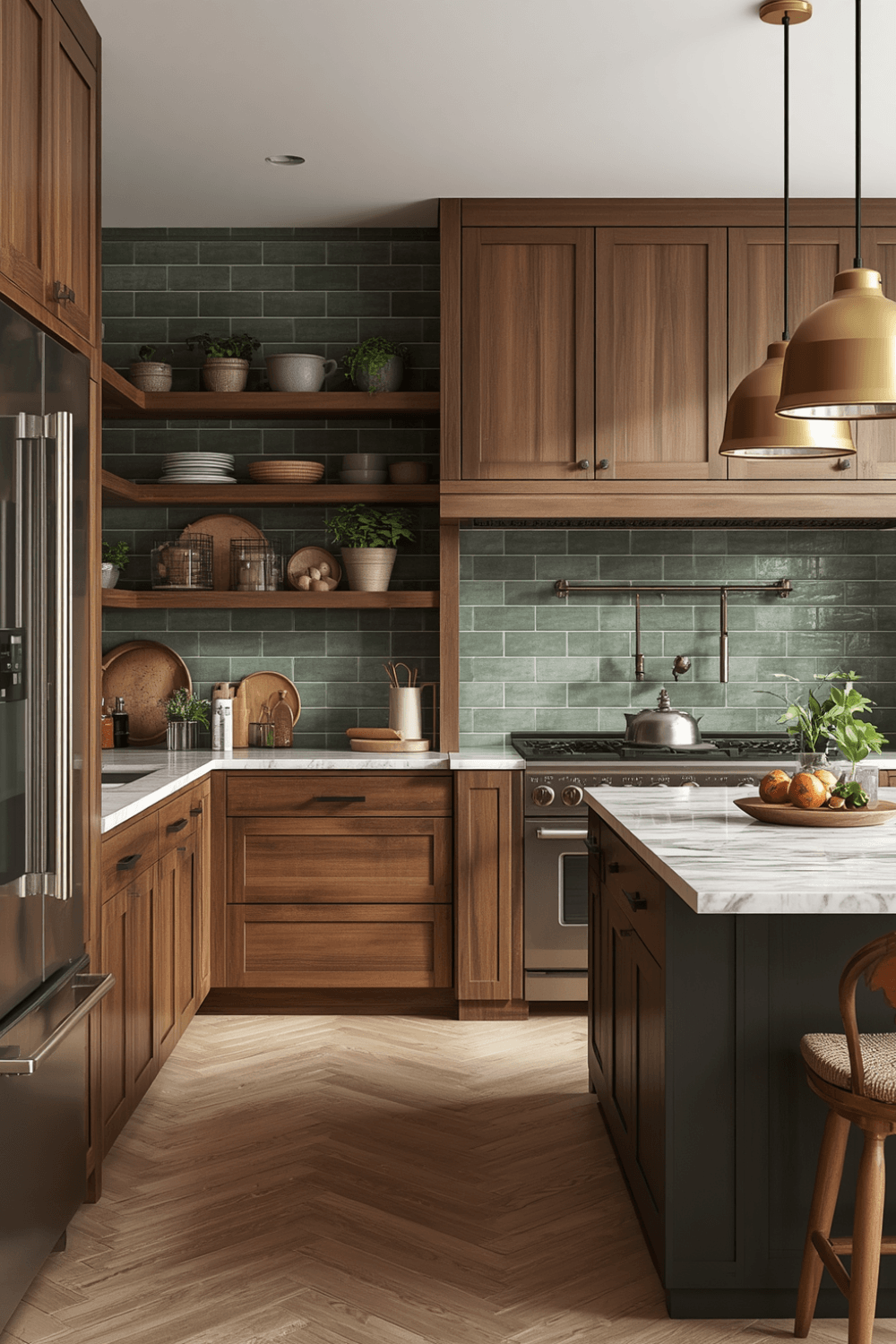
My second attempt used Sherwin-Williams “Evergreen Fog,” a soft, muted sage with gray undertones instead of a bright, saturated mint. Muted greens tend to read as more sophisticated and are far more forgiving across different lighting conditions throughout the day.
3. Use the right finish for cabinets that get touched daily
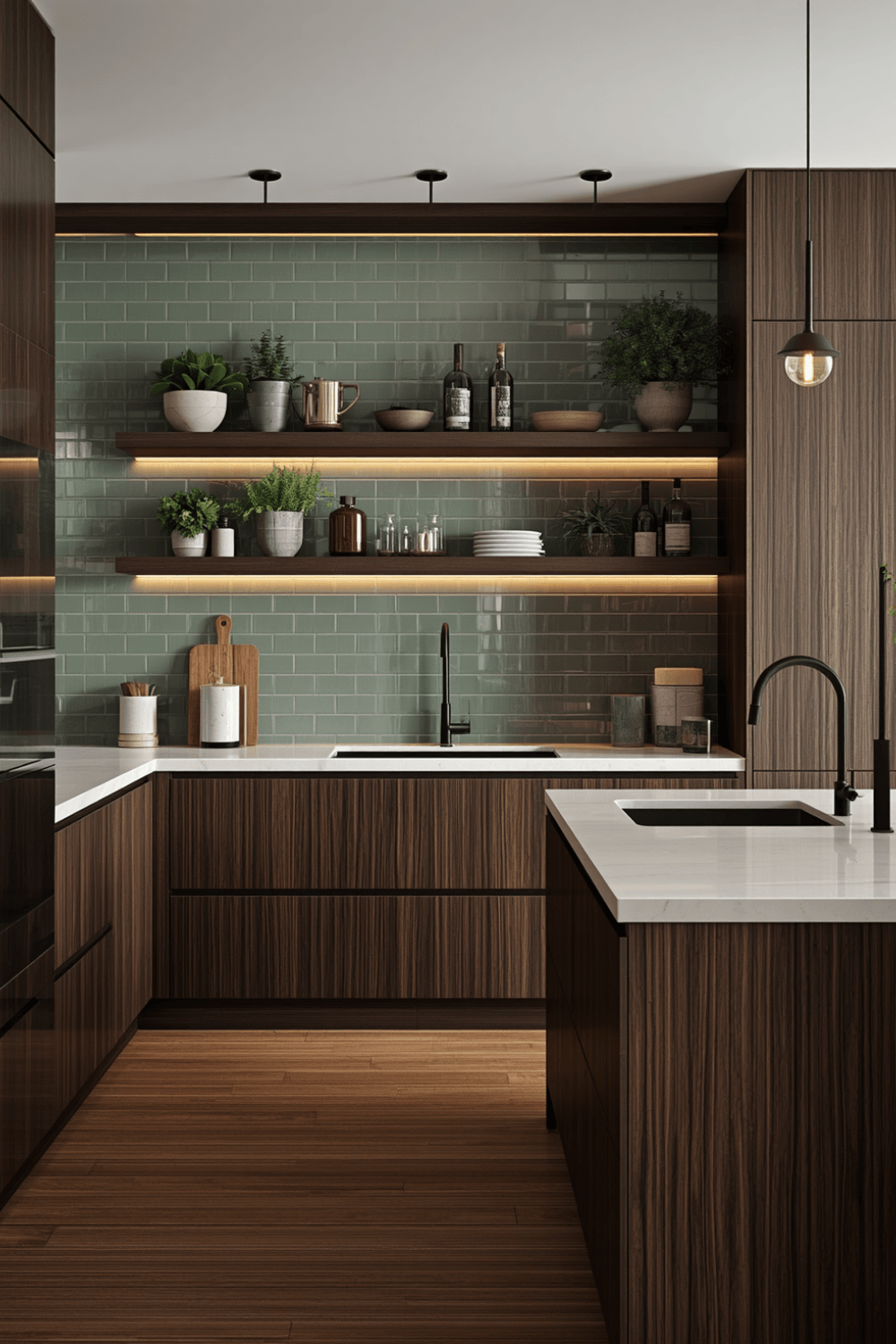
I switched from flat matte to a satin finish for my lower cabinets, which wipes clean much more easily and hides small marks better. I kept a slightly flatter finish on the upper cabinets since they get touched far less often.
4. Balance green cabinets with warm, neutral countertops
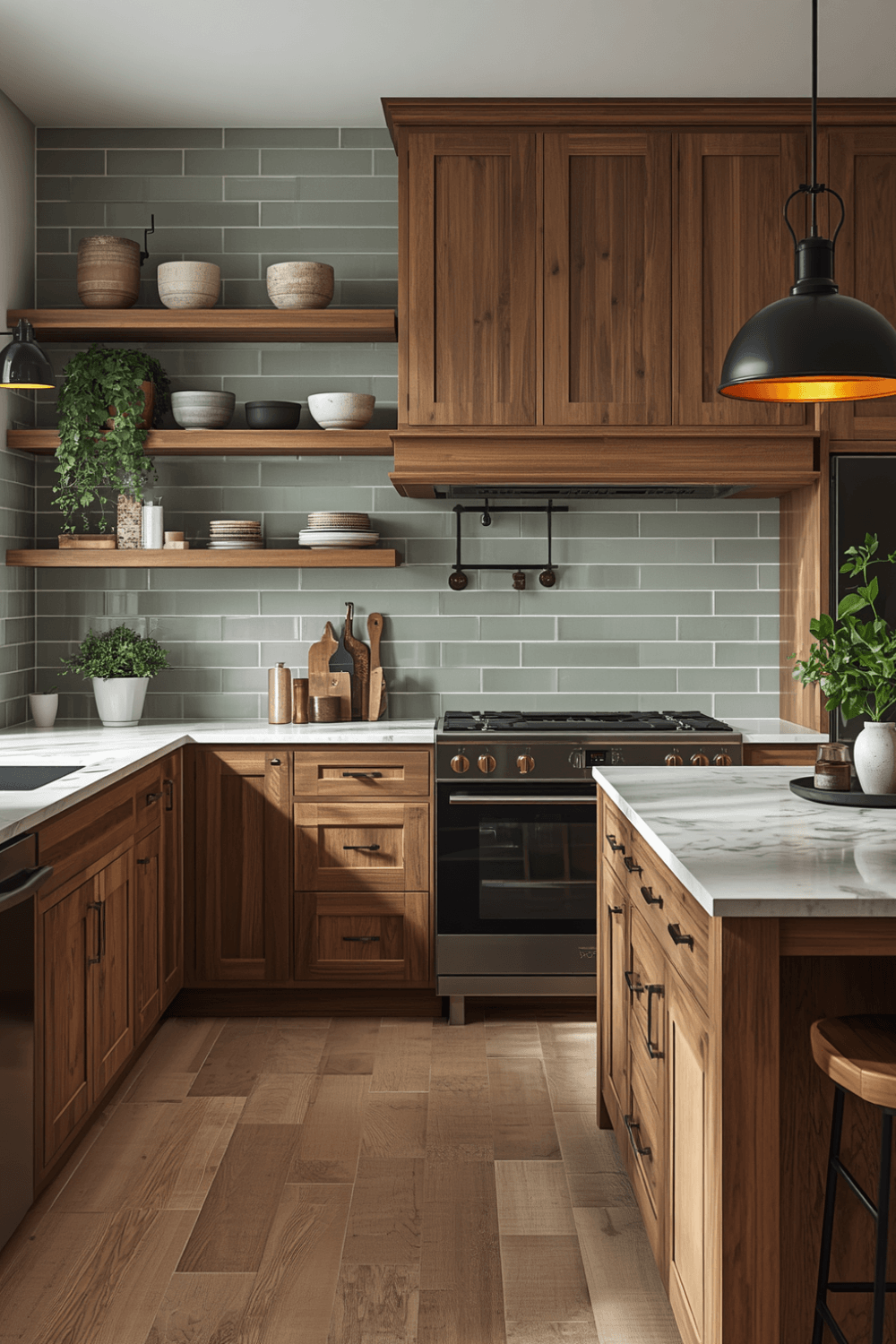
My countertop is a warm white quartz with subtle gray veining, which keeps the green from feeling too heavy or dominating the whole room. A busy, dark countertop paired with dark green cabinets can make a kitchen feel closed-in fast, especially in a smaller space.
5. Bring in brass or warm gold hardware
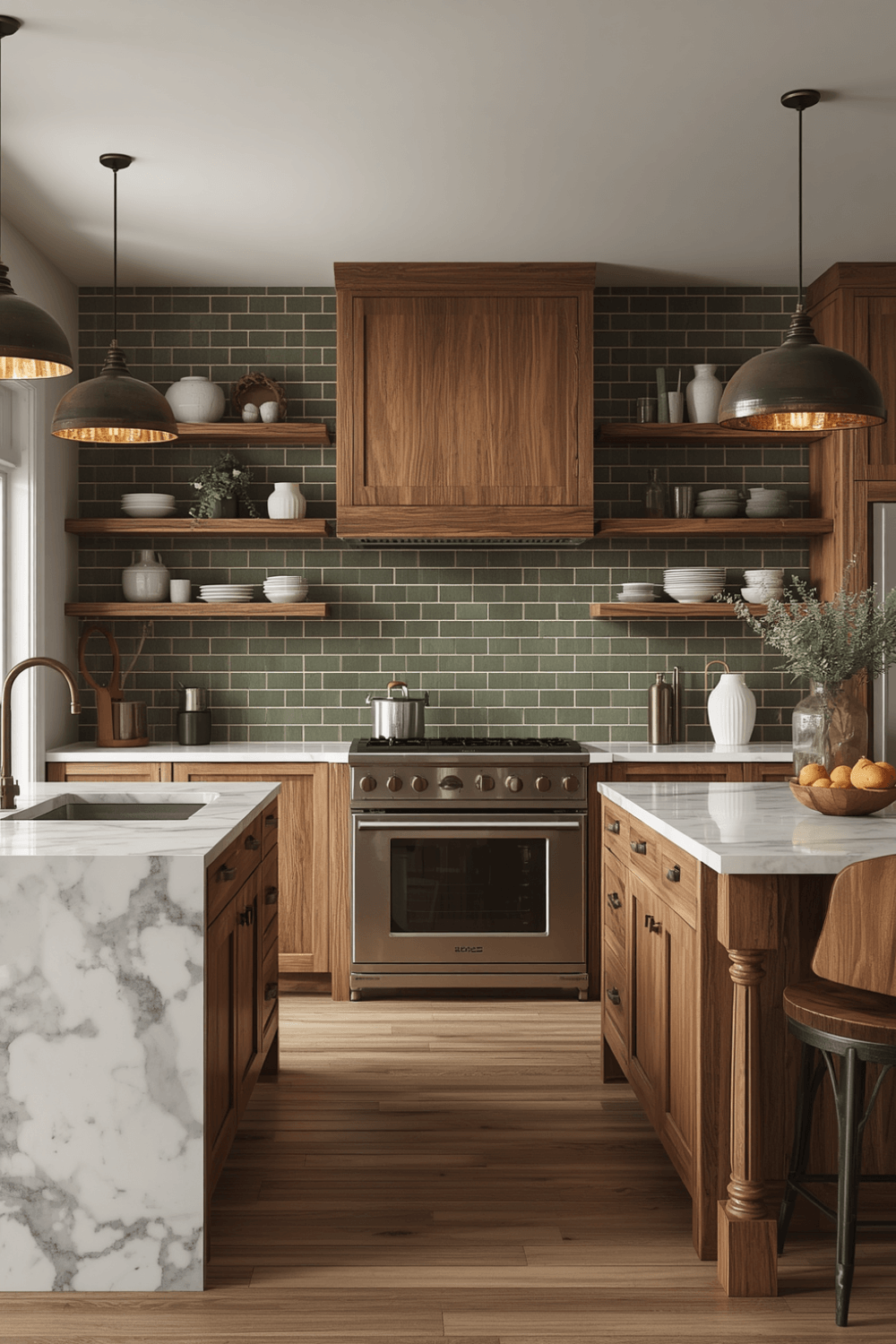
I swapped my cabinet handles from brushed nickel to unlacquered brass, and it made a noticeable difference in warming up the whole kitchen. Brass and green pair naturally together, similar to the material combinations you’ll see in a lot of high-end kitchen design.
6. Add wood elements to soften an all-green kitchen
I added open wood shelving on one wall instead of continuing cabinets all the way around, and it broke up the green nicely while adding some warmth and texture. Even a wood cutting board display or a butcher block section of counter can do a similar job on a smaller scale.
7. Test your backsplash tile against your specific green
I almost went with a plain white subway tile everywhere, but a small handmade zellige-style tile in a cream tone ended up working better with my specific sage shade. Bring an actual cabinet paint chip or sample with you when picking tile, since undertones can clash more than you’d expect from photos alone.
Real Examples From People I Know
A friend did just her kitchen island in a deep hunter green while keeping her perimeter cabinets white, which gave her a bold color moment without committing her whole kitchen to one shade. It’s a great option if you’re not ready to fully commit or if you’re renting and can only change specific pieces.
Another friend went full green — cabinets, an open shelf, even a green range — paired with warm wood floors and brass fixtures throughout. It sounds like it could be overwhelming, but because everything else stayed simple and warm-toned, it reads as intentional and cohesive rather than busy.
Common Mistakes to Avoid
Choosing a shade from a screen without testing it in your own lighting. This alone caused my entire first repaint.
Going too bright or minty unless that’s genuinely the look you want. Muted, deeper greens tend to age better and work with more lighting conditions.
Using a flat matte finish on high-touch lower cabinets. Satin or eggshell finishes hold up far better against daily wear.
Pairing dark green with a dark countertop in a small kitchen. This combination can make the space feel closed-in rather than cozy.
Skipping the tile test. Undertones between your green cabinets and your backsplash can clash more than expected once everything’s installed together.
Final Thoughts
My green kitchen almost didn’t happen because of how badly that first attempt went. But the second time around, with actual testing and a more muted shade, it turned into one of the rooms in my house I genuinely enjoy being in every single day.
If you’re considering it, take the testing step seriously, lean toward a more muted shade if you’re unsure, and balance it with warm wood or brass so the whole kitchen feels intentional instead of like a color experiment gone wrong the way mine did the first time around.