
Kitchen Pantry Ideas: What Actually Worked After Years of a Chaotic Cabinet
For years, my “pantry” was really just a deep cabinet next to the fridge where things went to get lost. I’d buy a new jar of cumin because I couldn’t find the one I already had, only to discover it later, expired, shoved behind three cans of beans I also forgot about. Grocery shopping was basically guesswork because I never actually knew what I had.
The turning point was pulling everything out on a Saturday afternoon, fully expecting it to take twenty minutes, and it took almost three hours. That’s when I realized the problem was never the amount of stuff I owned. It was that none of it had an actual system.
I want to walk you through what I changed, including the parts that didn’t work at first, because a lot of pantry advice online assumes you’re starting with a big walk-in space. Mine wasn’t, and most people’s aren’t either.
The Real Problem Wasn’t Space, It Was Visibility
My cabinet wasn’t actually small. It just felt small because everything toward the back was invisible unless I got down on my knees and dug around with a flashlight, which, embarrassingly, I did more than once.
Once I accepted that visibility was the actual issue, not square footage, the fixes became a lot more obvious.
1. Take everything out and sort by category, not by shelf
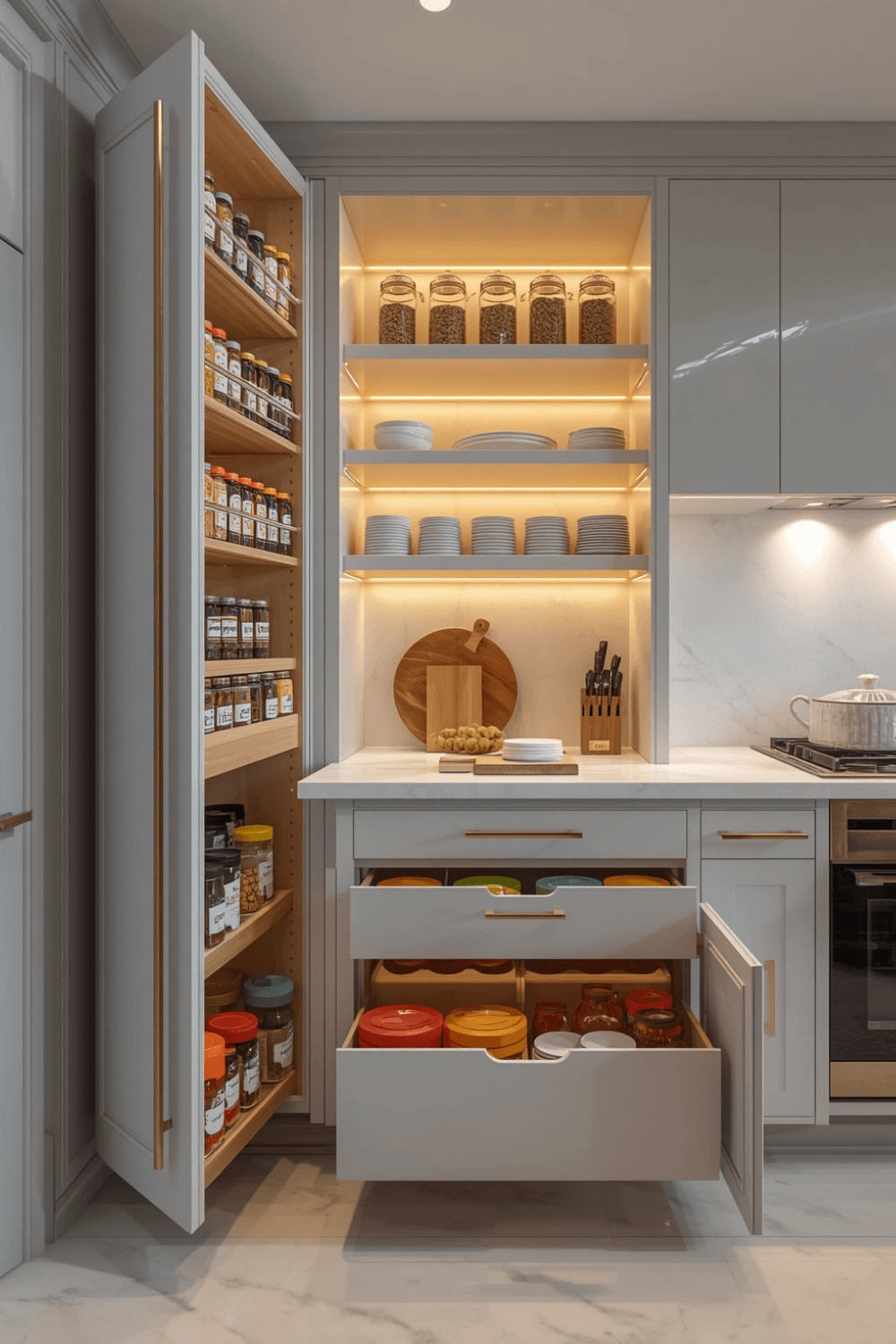
I made the mistake early on of trying to organize shelf by shelf while things were still inside the cabinet, which just meant shuffling clutter instead of solving anything. Pulling everything out onto the counter and grouping it (baking, canned goods, snacks, spices, grains) made the actual quantities obvious for the first time. I had four bags of the same pasta shape. Four.
2. Use clear bins instead of keeping things in their original bags
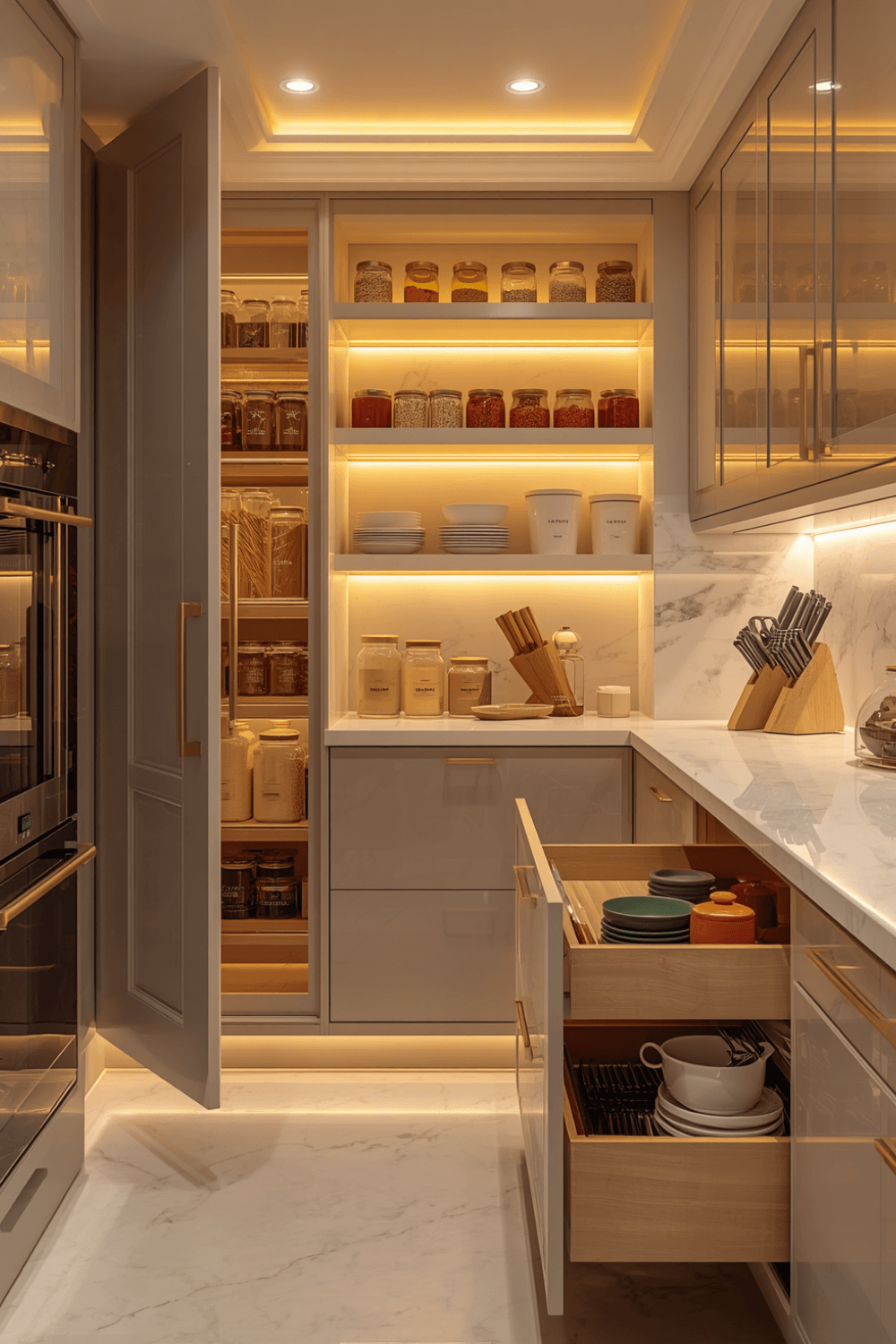
This was the single biggest fix. I moved flour, sugar, rice, oats, and pasta into clear airtight containers, the OXO POP containers specifically, since they stack well and the lids seal properly. Once everything was visible instead of hidden in bags, I stopped forgetting what I had and stopped overbuying duplicates.
3. Add a lazy Susan for anything that gets buried
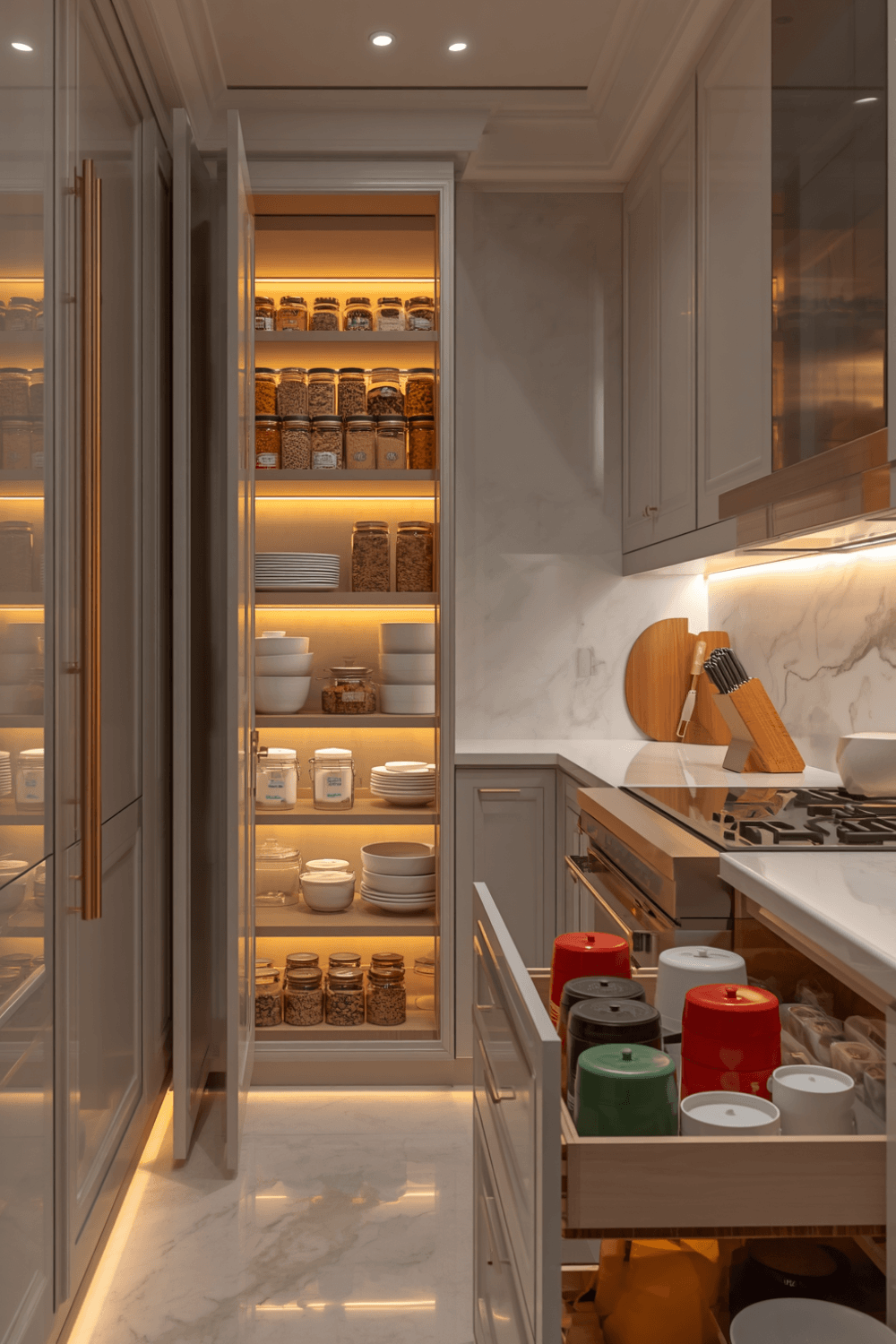
Small jars, sauces, and spice bottles used to disappear into the back corners constantly. A simple two-tier lazy Susan turntable fixed this completely. Now I just spin it instead of reaching blindly, and nothing gets lost behind anything else.
4. Group by how often you actually use things, not by category alone
I originally organized purely by food type, which sounds logical but wasn’t practical. Now my most-used items (coffee, oats, everyday spices) sit at eye level, and the things I use maybe once a month (specialty flours, holiday baking supplies) live on the top shelf, out of the way but still accessible with a step stool.
5. Label everything, even if it feels excessive
I resisted this step for a long time because it felt like overkill for a home pantry. Then I got a small label maker (the Brother P-touch, nothing expensive) and labeled every bin with the contents and, for baking staples, the date I transferred them. It took maybe thirty minutes total and completely ended the “wait, is this the flour or the sugar” guessing game since decanted containers can look identical.
6. Use the door space, it’s basically free storage
I installed a simple over-the-door organizer with clear pockets on the inside of my pantry door. It now holds spice packets, snack bars, and small condiment packets that used to just float around loose on shelves. It’s such an obvious spot, but I ignored it for two years before finally using it.
7. Do a five-minute check-in weekly instead of a big overhaul
My first organization attempt lasted about a month before it slowly slid back into chaos, mostly because I never maintained it. Now I do a quick five-minute check before my weekly grocery run, just scanning shelves and tossing anything expired. It’s a much smaller task than the giant reorganization I used to dread doing every few months.
A Real Example: My Pantry Now
Right now my setup is six clear OXO containers for staples like flour, sugar, rice, oats, pasta, and beans, all labeled with a small printed label. A two-tier lazy Susan holds oils, vinegars, and sauces. An over-the-door organizer holds snack items and spice packets. Everything I use daily sits at eye level, and the occasional-use stuff is up top. Total cost to redo it was around $95, mostly the containers and the lazy Susan, since I already had the shelving itself.
Grocery shopping actually makes sense now because I can see what I already have before I leave the house.
Common Mistakes to Avoid
Buying containers before decluttering. I almost did this myself, buying a big set of matching bins before I even knew what needed to go in them. Sort first, then buy exactly what you need.
Organizing purely by food category instead of frequency of use. Your most-used items should be easiest to reach, not buried alphabetically or by type on a shelf you have to bend down for.
Ignoring expiration dates during the reorganization. This is the perfect moment to actually check dates, since everything’s out anyway. I found spices from three years earlier during my first big sort.
Skipping labels because it feels unnecessary. Once staples are transferred into matching containers, they genuinely look identical. A cheap label maker solves this in minutes.
Not using door or vertical space. Flat shelves get all the attention, but door organizers and stackable shelf risers add real storage without needing more square footage.
Doing a huge overhaul with no maintenance plan. A perfectly organized pantry falls apart within weeks without a quick regular check-in. Five minutes a week beats another three-hour weekend project down the line.
Final Thoughts
Fixing my pantry didn’t require more space or a fancy renovation. It just required actually seeing what I had, which sounds so simple but made a genuinely bigger difference than I expected in how I shop and cook.
If your pantry currently feels chaotic, it’s probably not a size problem. It’s probably just things you can’t actually see, and that’s a much easier fix than it seems.