Modern Neutral Living Room: What Actually Makes It Feel Warm Instead of Empty
I redid my living room in neutrals about two years ago, expecting that calm, effortless look I kept seeing online. Instead, I got a room that looked like a furniture showroom display, technically nice, completely uninviting. Guests would compliment it politely and then immediately gravitate toward the one armchair with an actual blanket on it, which happened to be the only piece of furniture I hadn’t gotten around to redoing yet.
That was the moment I realized my “modern neutral” living room had a warmth problem, not a design problem. Everything matched, everything was tasteful, and none of it felt like a room anyone actually wanted to sit in for more than ten minutes. It took a solid six months of small changes to fix that, and I want to walk you through exactly what worked.
Neutral Doesn’t Mean Flat, But It’s Easy to Accidentally Make It That Way
My original mistake was treating “neutral” as a single beige-ish target instead of a full range of tones and textures. Everything I bought landed in roughly the same shade family, which created a room with almost no visual depth. Your eye had nowhere interesting to land.
Step-by-Step: How I Actually Warmed It Up
1. Layer at least three different neutral tones
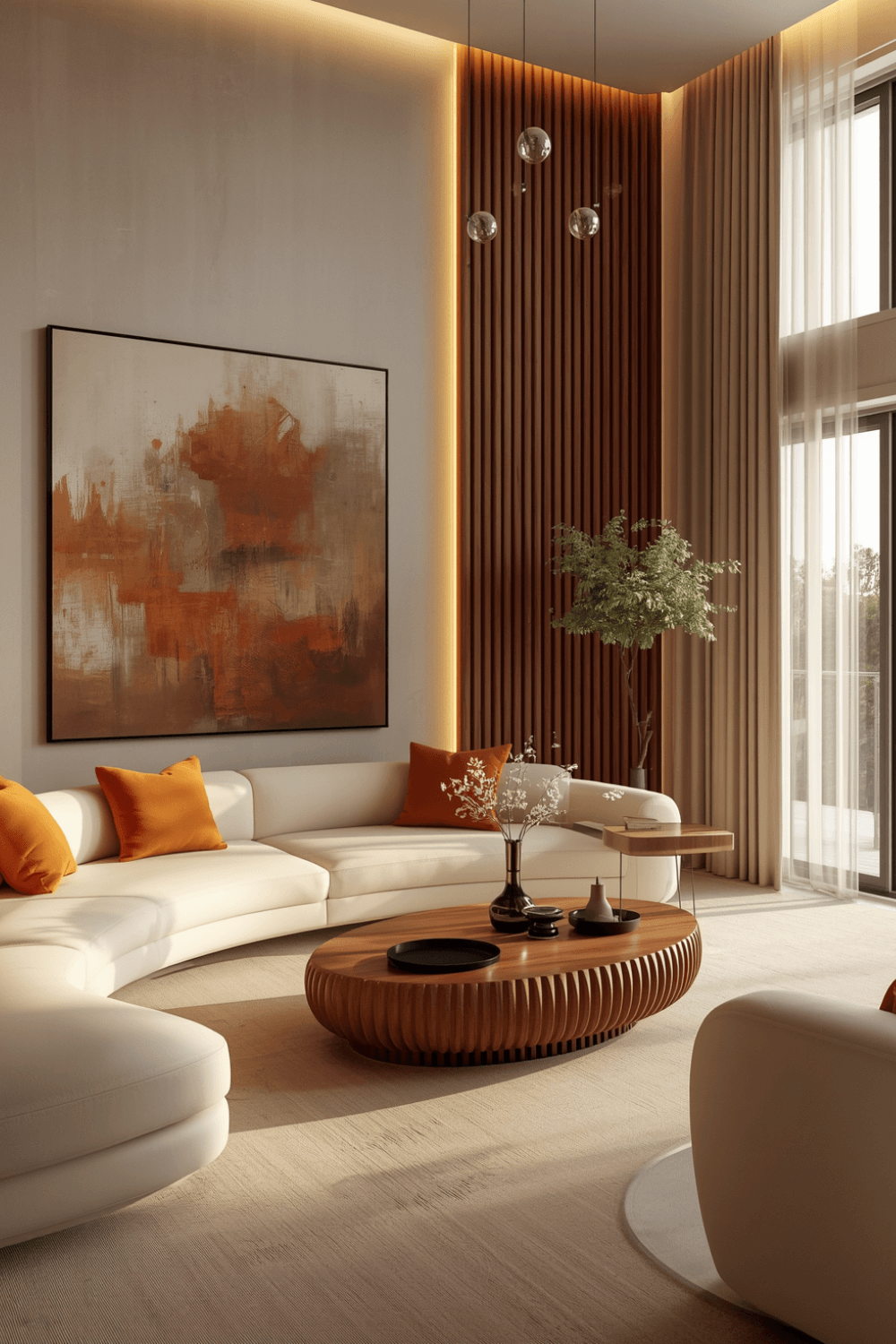
Instead of one consistent beige across the sofa, walls, and rug, I mixed a warm oatmeal sofa, a slightly darker taupe rug, and walls in a soft warm white. Even staying entirely within “neutral,” the contrast between those tones gave the room actual depth for the first time.
2. Introduce texture through materials, not just color
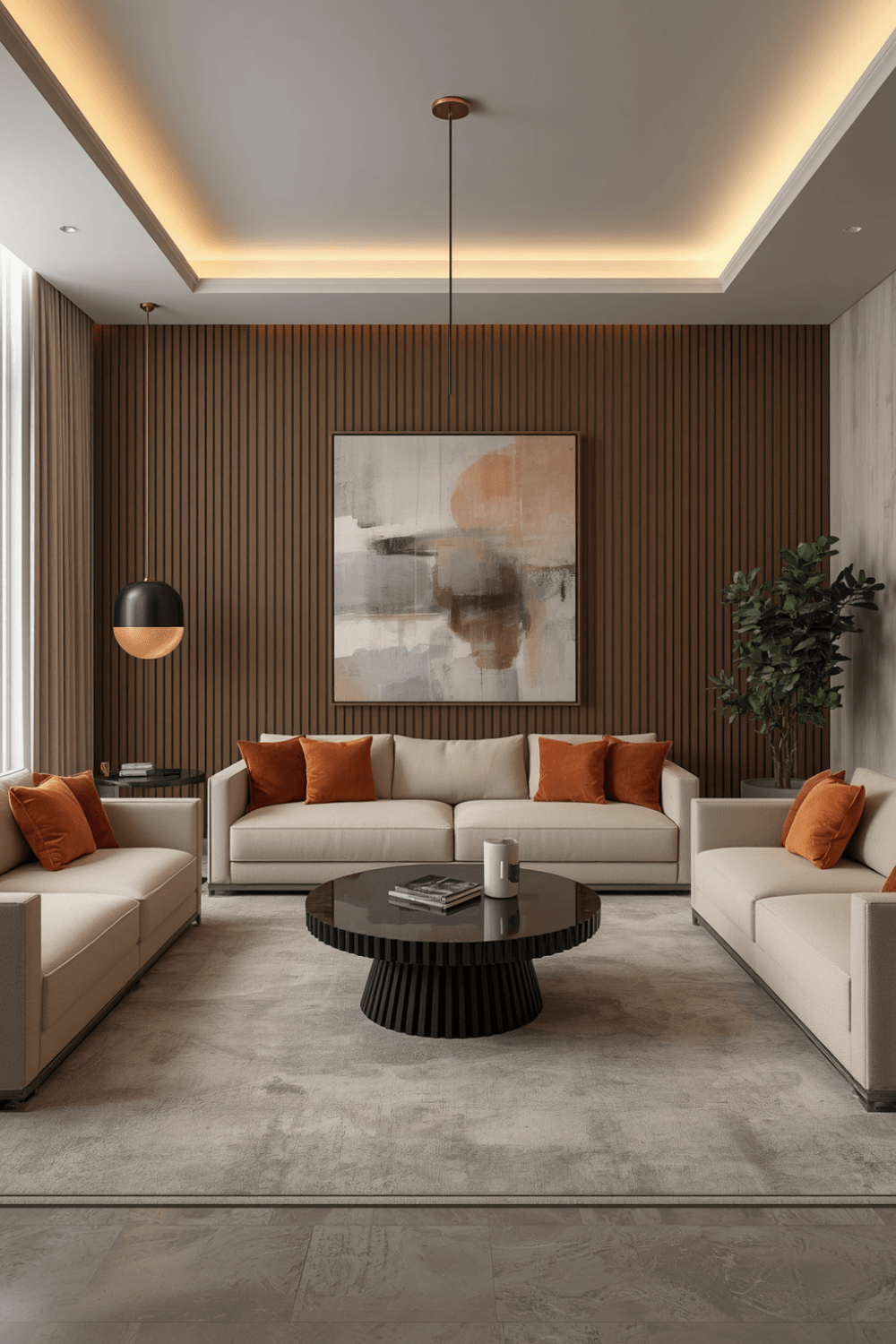
My original furniture was almost entirely smooth fabric and glass. I added a boucle accent chair, a chunky woven pouf as a secondary seat, and a linen throw pillow cover. Texture is what turns a flat neutral room into one that reads as intentional rather than just unfinished.
3. Bring in one or two darker anchor pieces
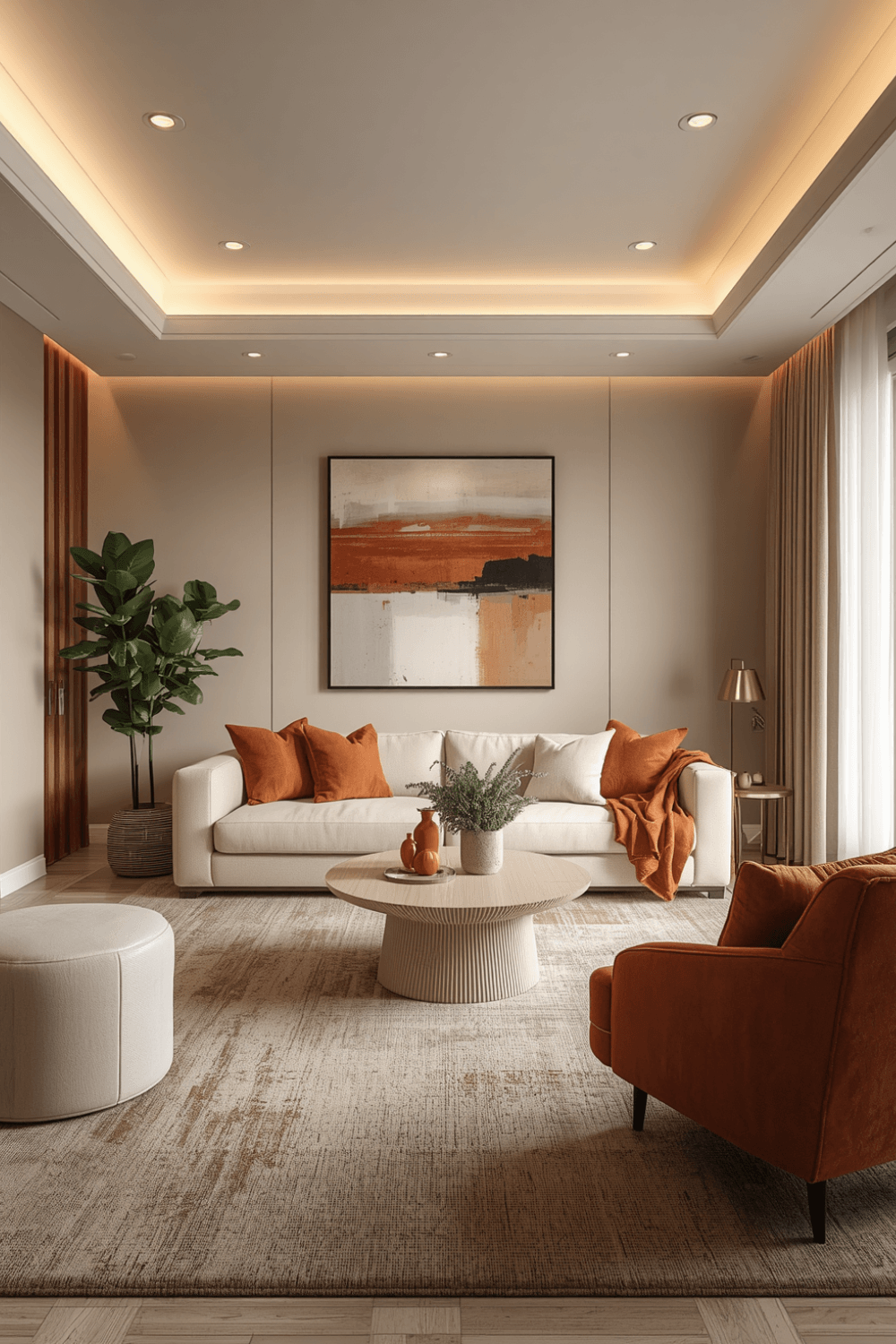
A fully light, neutral room can start to feel like it’s floating without any visual weight. I added a dark walnut coffee table and a black-framed piece of art, and both gave the eye somewhere to rest instead of everything blending into the same tonal soup.
4. Fix your lighting layers, not just your bulbs
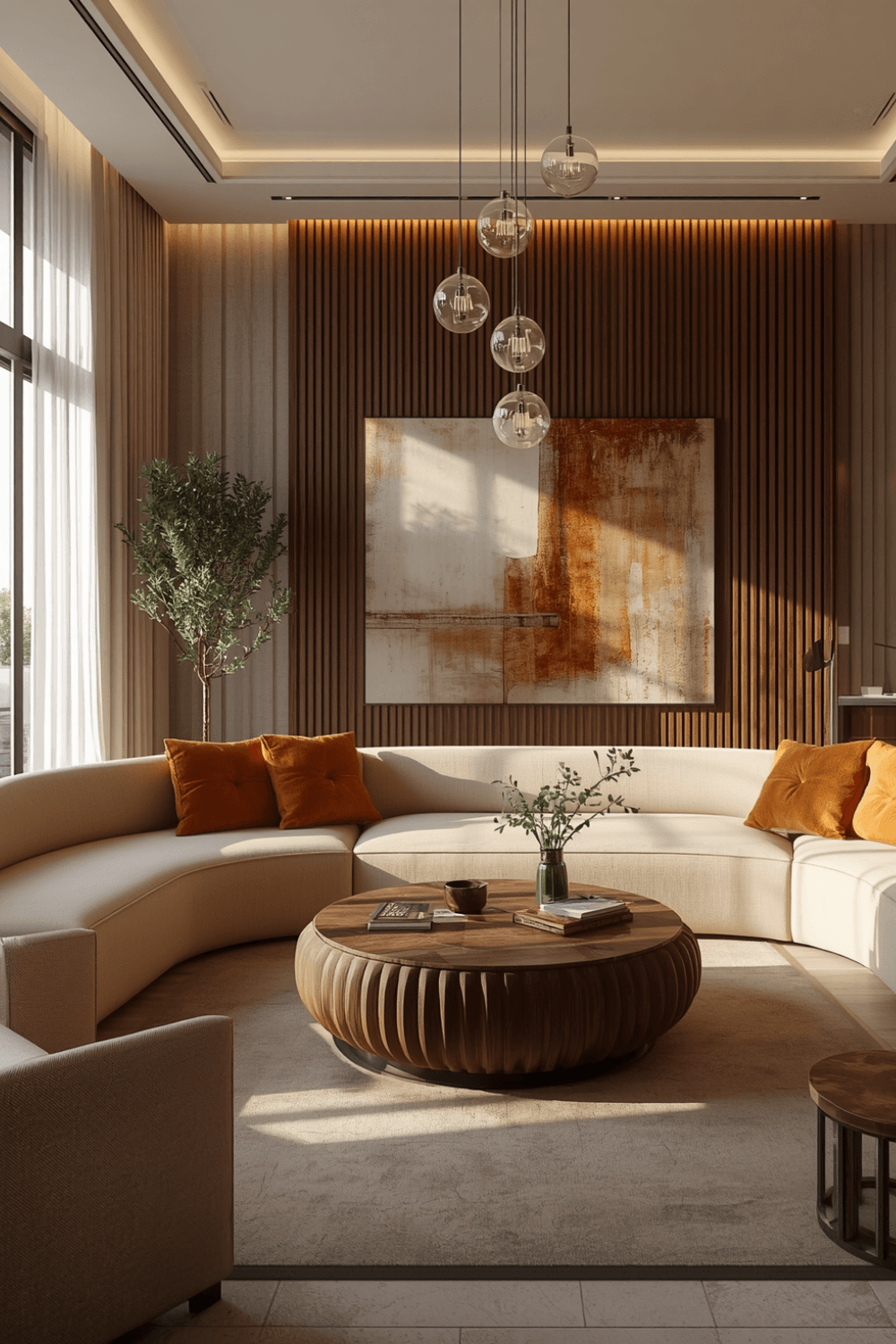
My original setup relied entirely on one overhead fixture, which is a common mistake in living rooms specifically since people tend to spend evening time in there. I added a floor lamp near the reading chair and a smaller table lamp on the console behind the sofa, both with warm 2700K bulbs. Having multiple light sources at different heights makes a bigger difference to the “cozy” factor than almost anything else on this list.
5. Don’t skip the rug, and size it correctly
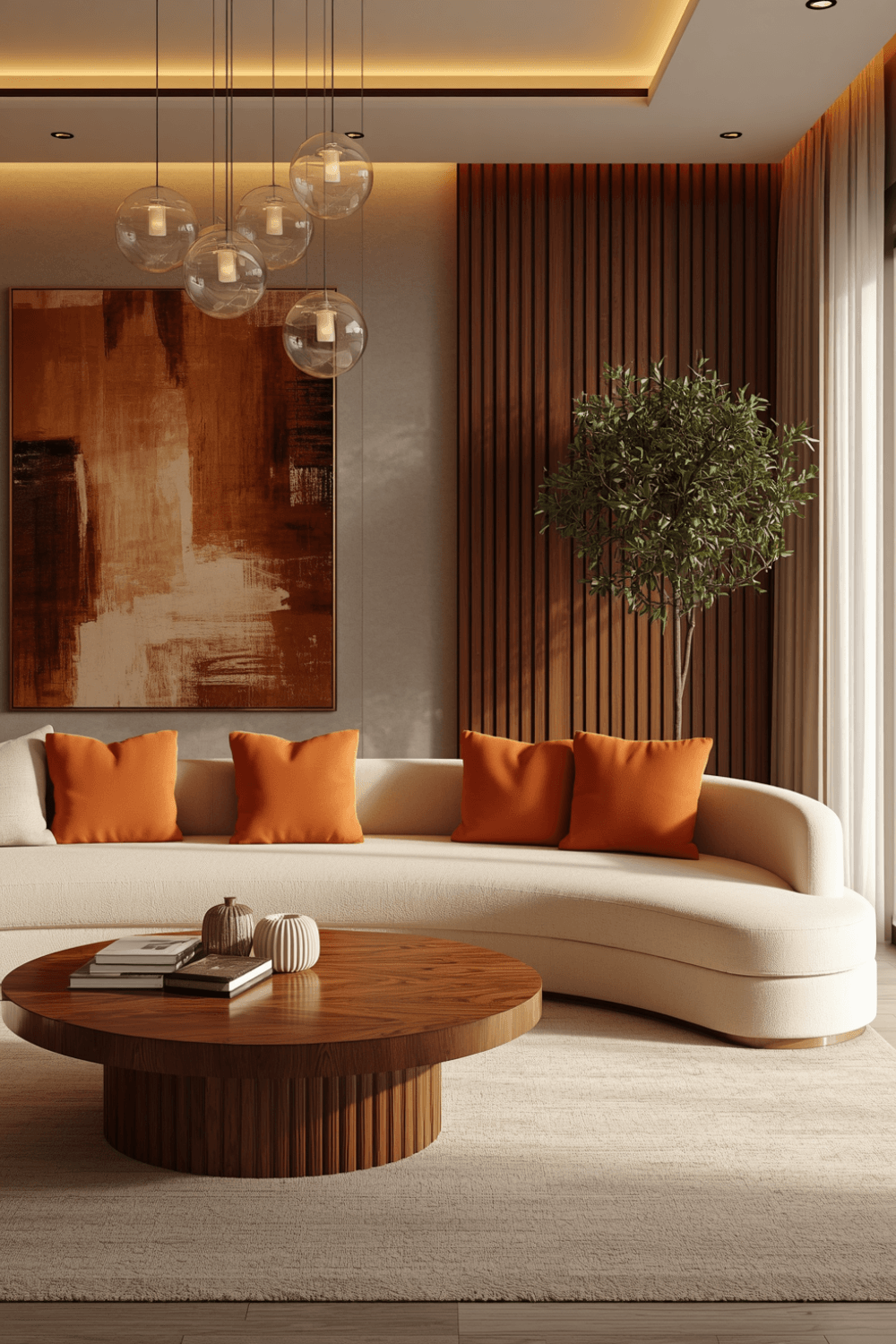
I had a rug that was genuinely too small for my seating area, which made the whole layout feel disconnected, like the furniture was just floating around it rather than anchored to it. The general rule that actually helped me: at least the front legs of every major piece of seating should sit on the rug. I sized up, and the room instantly felt more grounded and pulled together.
6. Add plants, real ones if you can manage it
I started with two faux plants because I didn’t trust myself with real ones. They looked fine, but there’s a subtle stiffness to fake greenery that I couldn’t quite place until I swapped one for a real fiddle leaf fig. It’s a genuinely low-effort way to add life and movement to an otherwise still, neutral space.
7. Personalize with something that isn’t from a matching set
My original room had zero personal items, no books, no framed photos, nothing that wasn’t specifically purchased to match the aesthetic. I added a small stack of books I actually read on the coffee table and one framed photo on the console. It sounds like a small thing, but it’s genuinely what stopped the room from reading as a showroom.
A Real Example: My Living Room Now
Right now my living room mixes an oatmeal linen sofa, a taupe wool-blend rug sized to fit under all the front seating legs, a boucle accent chair, a dark walnut coffee table, a black-framed abstract print, a floor lamp and table lamp both with warm bulbs, a real fiddle leaf fig in the corner, and a small personal stack of books on the coffee table. Total cost to fix the “showroom” problem after the initial neutral redo was around $850, mostly the rug upgrade, lighting, and the accent chair.
People actually sit in it now, including on the sofa, not just the one chair with the blanket.
Common Mistakes to Avoid
Keeping everything in the exact same neutral tone. This flattens the room and removes visual depth. Layer several different neutral shades instead of one uniform color.
Relying on smooth, matching fabrics throughout. A room full of similar-textured materials feels sterile no matter how coordinated the colors are. Mix in boucle, linen, wool, or woven textures.
Sizing your rug too small. A rug that doesn’t reach at least the front legs of your seating makes the whole layout feel disconnected and floaty.
Depending on one overhead light source. Living rooms especially need layered lighting at different heights for evening use, since overhead-only lighting tends to feel flat and slightly institutional after dark.
Going too dark or too light across the board. All-light rooms can feel like they’re floating; all-dark neutral rooms can feel heavy. A mix across the light-to-dark spectrum, even within neutrals, creates better balance.
Skipping personal touches entirely. A room with zero personal items, no matter how well designed, tends to feel like a display rather than a home.
Final Thoughts
A modern neutral living room can absolutely feel warm and lived-in, but it takes more intention than just picking a matching furniture set in similar tones. The moment mine actually started feeling like a room people wanted to sit in was when I stopped trying to keep everything perfectly coordinated and started layering instead, different textures, different tones, actual personal items.
If your neutral living room currently looks nice but feels a little empty, it’s probably not the color palette that’s the issue. It’s everything around it that still needs some warmth.