
Ever walk into a living room and the TV somehow disappears into the design instead of dominating it. That’s modern TV wall design doing exactly what it’s supposed to, quietly, without the screen becoming the whole room’s personality. That’s changed a lot in the last few years. A well-designed TV wall can genuinely be one of the best features in a living room instead of the thing everyone politely pretends not to notice mid-conversation. It’s not about hiding the TV either, it’s about giving it a real place in the room’s design instead of treating it as an unfortunate necessity. Let’s go through how to actually pull that off, whether you’re working with a full renovation budget or just want to fix a wall that currently looks like an afterthought.
For a long time, the TV just got mounted wherever it fit and the room got designed around that awkward black rectangle. That’s changed. A well-designed TV wall can genuinely be one of the best features in a living room instead of the thing everyone pretends not to notice. Let’s go through how to actually do it well. Most homes default to the easiest option: mount the TV on the first available wall, run a cabinet underneath, done. It’s functional, but it rarely feels intentional, and intentional is really the whole difference between a TV wall that looks designed and one that just looks installed. Whether you’re working with a small apartment living room or a large open-concept space, the same core principles apply, and none of them require ripping out a wall or spending a fortune to see a real difference.
Why Modern TV Wall Design Deserves Real Thought
The TV wall is usually the focal point of the main living space, whether people admit it or not. Seating tends to face it, and it’s often the first thing visible from an entryway or open kitchen. Treating it as an afterthought, just mount and forget, leaves real design potential on the table.
Good modern TV wall design solves two things at once: making the TV feel intentional rather than tacked on, and giving the wall a purpose beyond just holding a screen.
Getting the Basics Right
1. TV Wall Ideas for Any Room
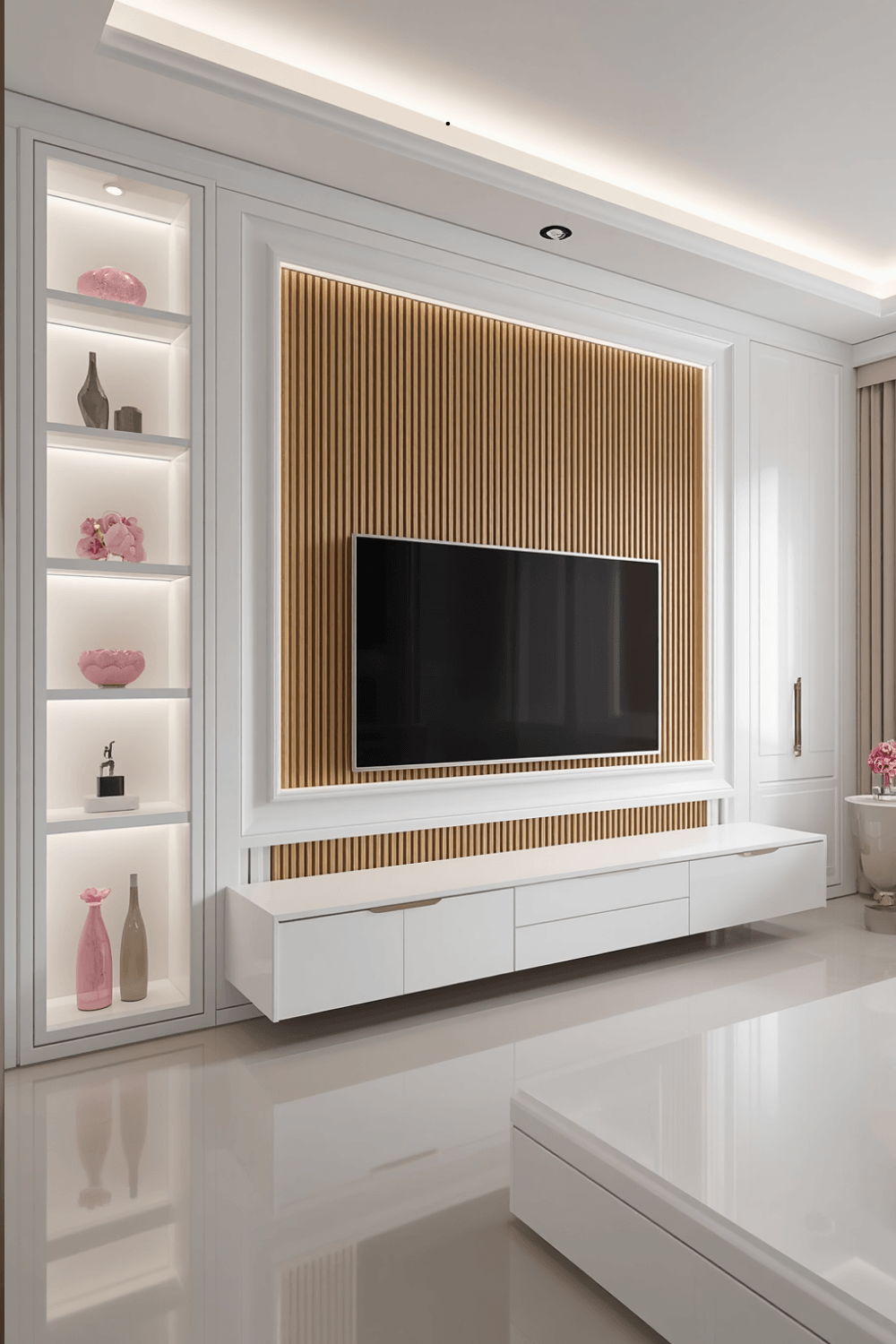
TV wall ideas start with a simple question: does the wall exist to showcase the TV, or does the TV exist within a wall that’s doing other design work too? The second approach almost always reads as more intentional, since the screen becomes one element within a bigger design rather than the entire point.
2. TV Wall Design for Living Room Spaces
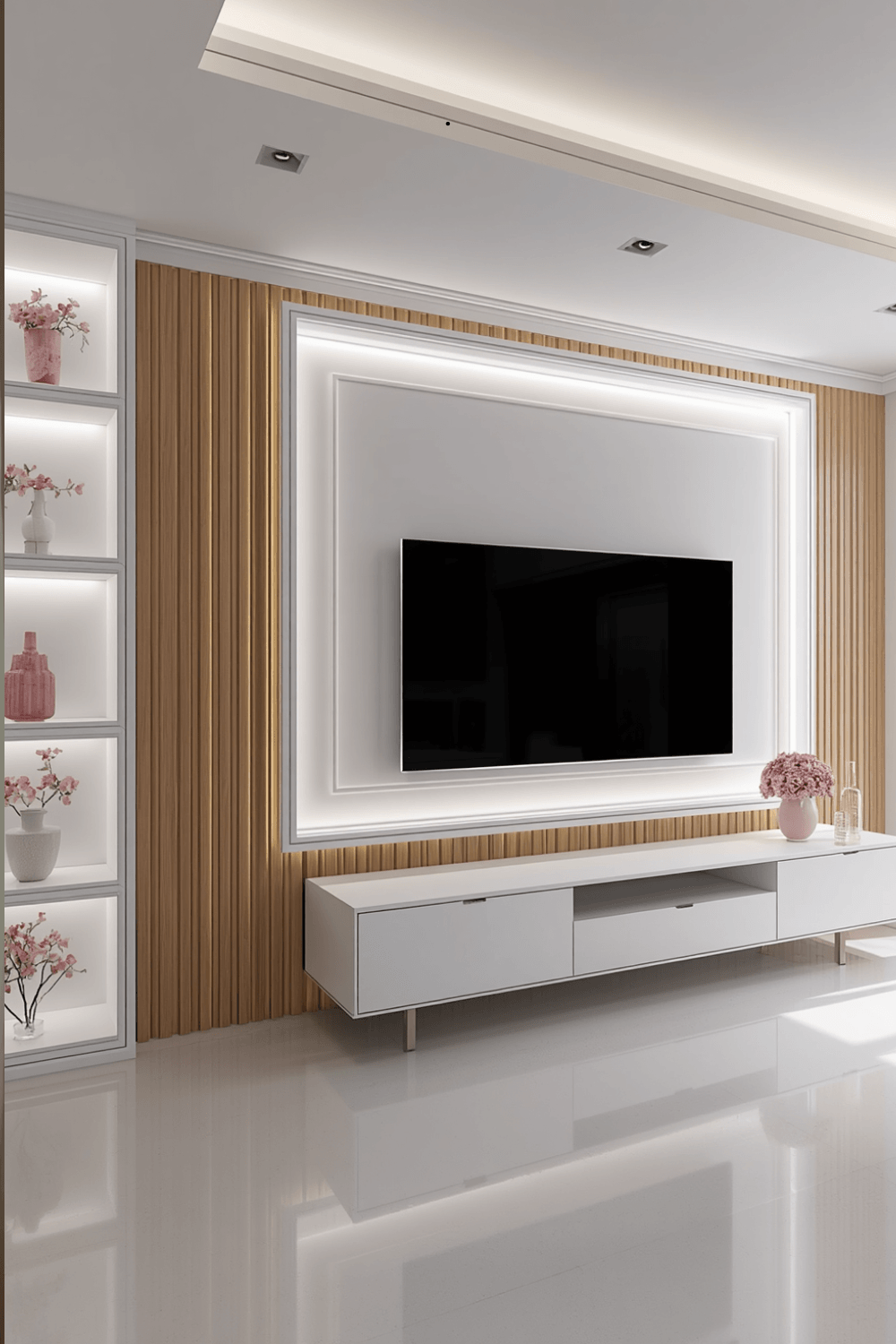
TV wall design for living room spaces needs to account for seating distance and viewing angle before anything decorative gets decided. A wall that looks stunning but puts the screen at an awkward height or too close to the seating undermines the whole point of the room.
3 Living Room TV Wall Placement
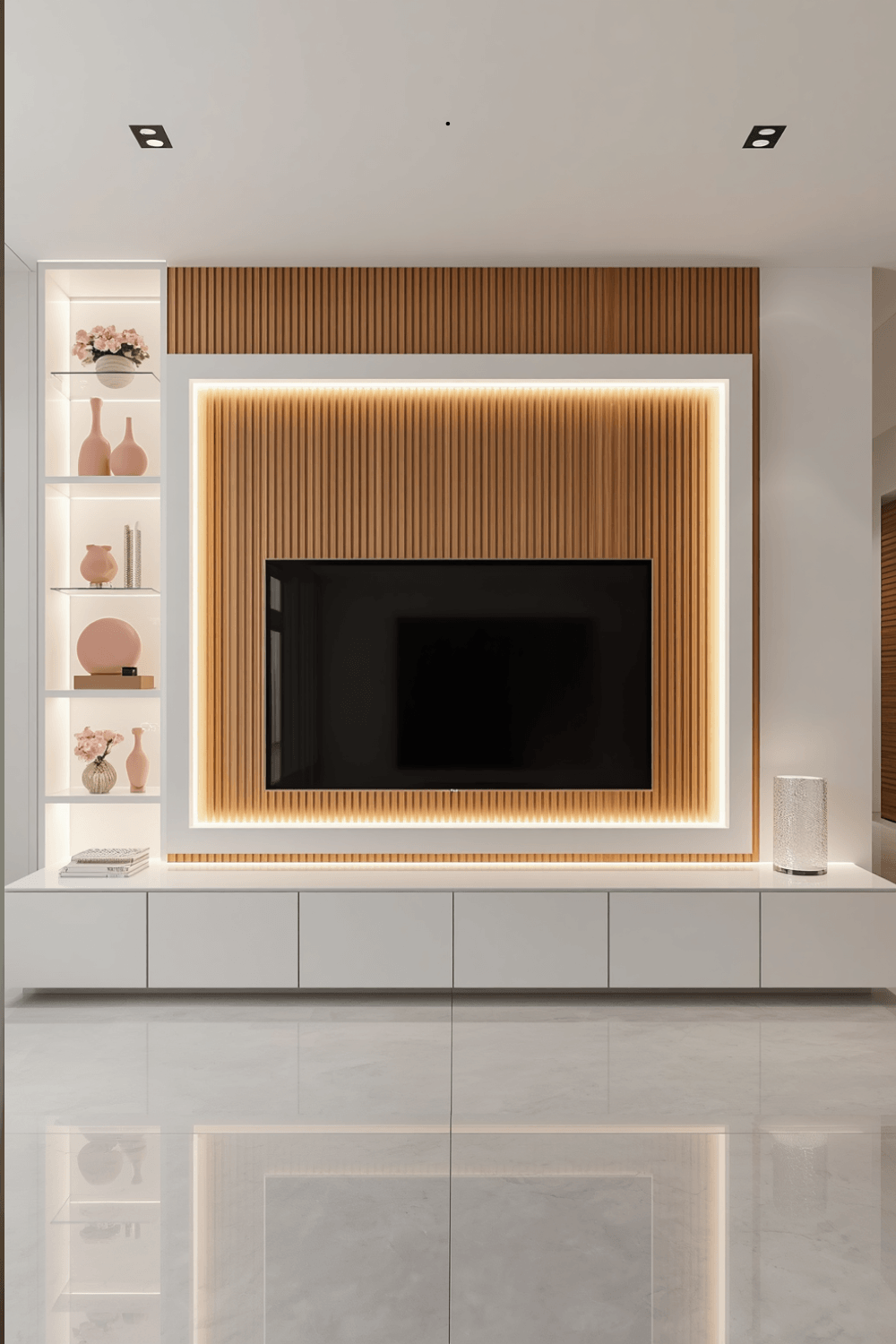
A living room TV wall works best when it’s positioned to avoid glare from windows and doesn’t force furniture into an awkward arrangement just to face it. Sometimes the “obvious” wall for the TV isn’t actually the best one once you account for natural light and traffic flow.
Built-In and Cabinet Options
4. Built In TV Wall Ideas
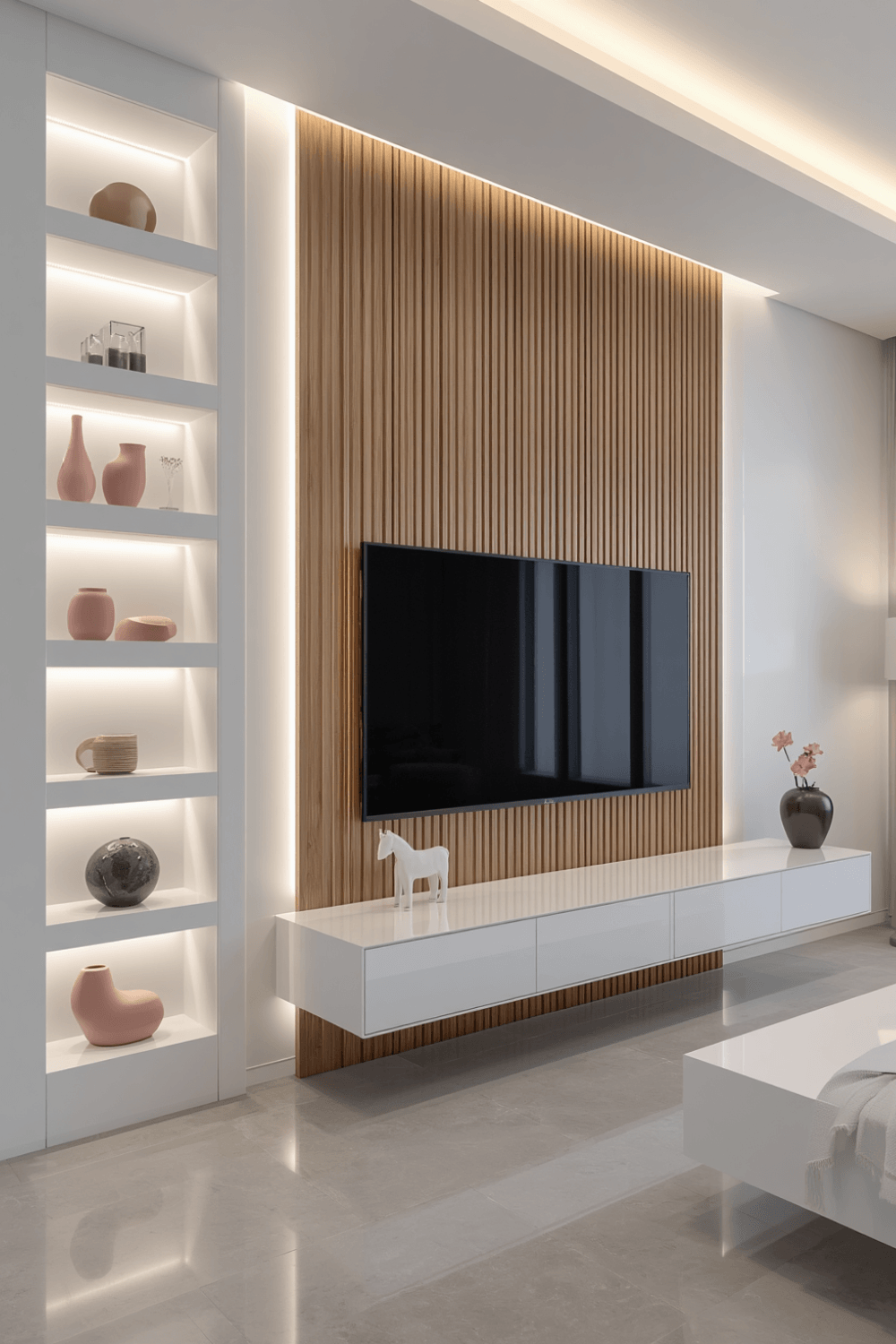
Built in tv wall ideas take the TV wall from furniture to architecture. Custom millwork surrounding the screen, often with shelving or cabinets flanking it, makes the whole setup feel like it was part of the home’s original design rather than added later.
5. TV Wall Cabinet Ideas
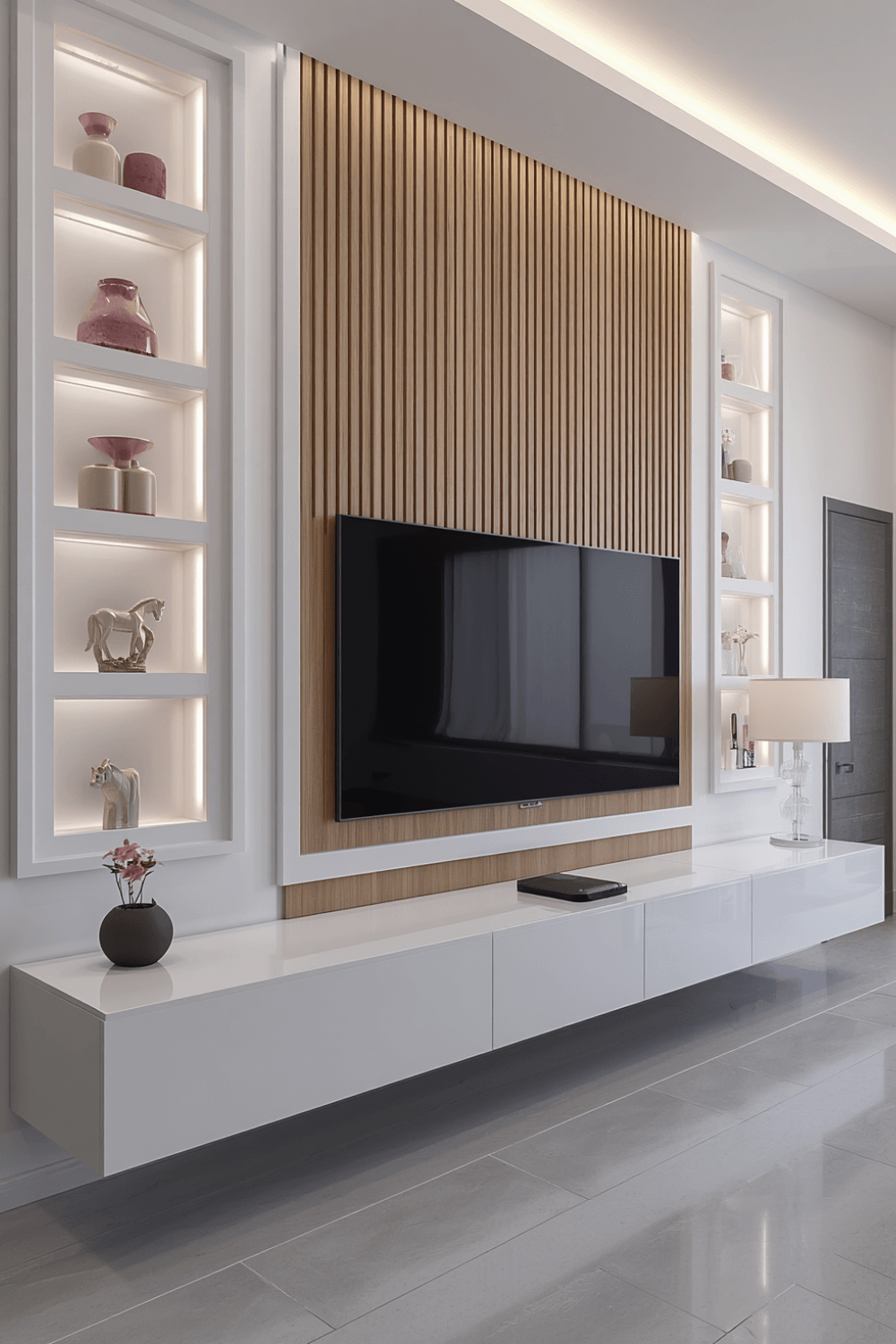
TV wall cabinet ideas solve a real problem: where do the router, game consoles, and cable box actually go. Closed cabinetry keeps electronics and cords out of sight while still keeping them accessible, which matters more once you actually live with the setup day to day.
6. Floating TV Unit Ideas
Floating TV unit ideas keep the console off the floor entirely, which does two things at once: it makes the room feel more open, and it makes cleaning underneath significantly easier than working around a floor-standing cabinet.
Wall Treatment and Materials
7. TV Wall Panel Ideas
TV wall panel ideas, think fluted wood, slatted paneling, or textured 3D tile, add depth and visual interest to what’s often just a flat, forgettable wall. The panel treatment also helps disguise cords and mounting hardware when done thoughtfully.
8. Wood TV Wall Design
Wood TV wall design brings warmth to a part of the room that can otherwise feel a bit cold and tech-focused. Walnut or oak slat paneling behind the screen is one of the most requested looks right now, largely because it softens the hard edges of a large, flat screen.
9. TV Feature Wall Ideas
TV feature wall ideas treat the whole wall as a design statement, not just a backdrop. A bold paint color, a textured material, or an architectural element like a fireplace integrated below the screen all turn the space into a genuine feature rather than just mounting hardware with a screen attached.
10. TV Accent Wall Ideas
TV accent wall ideas work well when the accent treatment, color, texture, material, extends slightly beyond the TV itself rather than stopping exactly at its edges. This makes the design read as intentional rather than like a frame built specifically around the screen’s dimensions.
Style Directions
Modern TV Unit Design
Modern TV unit design leans on clean lines, minimal visible hardware, and a restrained material palette, usually one or two finishes repeated rather than several competing textures fighting for attention.
Minimalist TV Wall Ideas
Minimalist TV wall ideas take that restraint further still: a simple flush mount, no visible cabinetry at all if storage isn’t a priority, and a wall treatment kept deliberately quiet so the room’s other elements can carry more visual weight.
Contemporary TV Wall Design
Contemporary TV wall design reflects whatever’s current rather than sticking to one fixed rule set, which means it shifts more over time than other directions. Right now that tends to mean mixed materials, warm wood paired with matte black, rather than the stark all-white walls of a few years back.
Modern Entertainment Wall
A modern entertainment wall extends beyond just the TV to include the full media setup, sound system, gaming, streaming devices, all integrated into one cohesive design rather than scattered across separate furniture pieces around the room.
Sizing to the Space
Small Living Room TV Wall
A small living room TV wall benefits from a floating console or wall-mounted shelving rather than a large, bulky media cabinet that eats into an already tight floor plan. Keeping the wall treatment simple also helps a small room avoid feeling visually crowded.
Going Bigger: Luxury Directions
Luxury TV Wall Design
Luxury TV wall design usually comes down to material quality: natural stone, real wood veneer, or a custom millwork surround rather than off-the-shelf furniture. These choices cost more but hold up and look considered for years rather than a season.
Luxury Living Room TV Wall
A luxury living room TV wall often integrates additional design elements beyond the screen itself, a fireplace below, sculptural lighting, or a stone slab surround, so the wall reads as a genuine architectural feature rather than furniture arrangement.
Decor and Styling
TV Wall Decor Ideas
TV wall decor ideas that work well around a screen: floating shelves styled with a few curated objects, sconces positioned to add ambient light without glare on the screen, and plants or art placed to draw the eye without competing directly with the TV itself.
Quick Recap: Modern TV Wall Design Priorities
If you’re short on time, here’s the shortlist:
- Solve viewing angle and glare before any decorative decision gets made.
- Choose between built-in, floating, or simple flush-mount based on your storage needs and room size.
- Add texture through wall paneling or a material treatment rather than leaving a flat, plain wall.
- Pick a style direction, modern, minimalist, or contemporary, and stay consistent.
- Finish with decor that complements the screen rather than competing with it.
Internal Linking Suggestions
If you’re building out related content on the site, these topics would connect naturally with this post:
- Living room accent wall ideas
- How to hide cords and cables in a media setup
- Small living room furniture arrangement tips
Final Thoughts
Modern TV wall design proves that even the most purely functional wall in the house can become one of its best features. Solve the practical basics, viewing angle, storage, cord management, first, then layer in material and texture that make the wall feel like a genuine design statement.
Look at your current TV setup with fresh eyes this week. Is it just mounted, or actually designed? That question alone usually points straight to the first improvement worth making.
Frequently Asked Questions
What height should a TV be mounted at? The center of the screen should sit roughly at eye level when seated, typically around 42 to 48 inches from the floor, depending on your specific seating height and viewing distance.
How do I hide cords on a TV wall? An in-wall cord management kit routes cables directly through the wall to a nearby outlet, while wall paneling or a built-in surround can also conceal cords as part of the overall design rather than needing a separate solution.
What material works best for a TV accent wall? Wood paneling, whether slatted or fluted, remains one of the most popular choices for warmth and texture, though textured tile or a bold paint treatment also work well depending on your overall room style.
Should I add a fireplace below my TV? It’s a popular combination and works well in many living rooms, but check manufacturer heat clearance guidelines for both the TV and fireplace to ensure the setup is safe, not just visually appealing.
Is a floating TV console better than a floor-standing one? For most rooms, yes, since it keeps the floor visually open and makes cleaning easier. A floor-standing cabinet still makes sense if you need significant additional storage a floating unit can’t provide.
How do I make a small living room TV wall feel less crowded? Keep the console slim and floating rather than bulky, limit the wall treatment to one simple material or color, and avoid stacking too much decor around the screen in a space that’s already tight.