
Tree Bookshelf Ideas: What I Learned After My Branches Started Sagging Under the Books
I bought a tree-shaped bookshelf for my daughter’s room because it looked genuinely magical in photos, branches reaching out at different heights to hold books and small decor. Within a couple of months, a few of the thinner upper branches had started visibly sagging under the weight of the books we’d loaded onto them, and one nearly snapped entirely when a slightly heavier hardcover got added to an already loaded branch.
That near-miss sent me back to actually think through how to load and arrange books on a tree bookshelf properly, since it turns out the whimsical branch design comes with genuinely different weight considerations than a standard rectangular shelf. Here’s what I learned keeping the piece both beautiful and structurally sound.
Tree Bookshelves Distribute Weight Very Differently Than Standard Shelving
I initially loaded my tree bookshelf the same way I would any regular bookshelf, heaviest books wherever there was room, without considering that each individual branch has its own specific weight capacity that’s usually much lower than a standard shelf’s uniform, evenly supported surface.
Once I understood that every branch essentially functions as its own small cantilever, appropriately sized for lighter loads, my approach to actually using the piece changed completely.
My Mistake: Loading the Thinnest Upper Branches With the Heaviest Books
My original setup put several oversized picture books on the thinnest, longest upper branches, purely because that’s where there happened to be open space at the time. Those upper branches simply weren’t designed to support that concentrated weight extending out from a single mounting point, which is exactly why one started sagging and eventually creaked ominously under an added book.
I completely reorganized, moving heavier books to the thicker, shorter lower branches and trunk-adjacent shelves, while reserving the thin upper branches for lightweight items only. That redistribution stopped the sagging immediately.
Step-by-Step: Using and Styling a Tree Bookshelf That Actually Holds Up
1. Identify your unit’s thickest, most structurally supported branches
I now specifically look at which branches connect closest to the main trunk or wall-mounted base, since those points generally handle more weight than branches extending further out. Understanding your specific unit’s structure before loading anything prevents the kind of overload that damaged my original setup.
2. Reserve thin, extended branches for lightweight items only
 I keep my thinnest upper branches limited to small decorative items, a single light paperback, or a small plant, rather than any heavier hardcovers. Those extended branches simply aren’t engineered the same way a standard shelf’s evenly distributed support is.
3. Load heavier books onto lower, shorter branches near the base
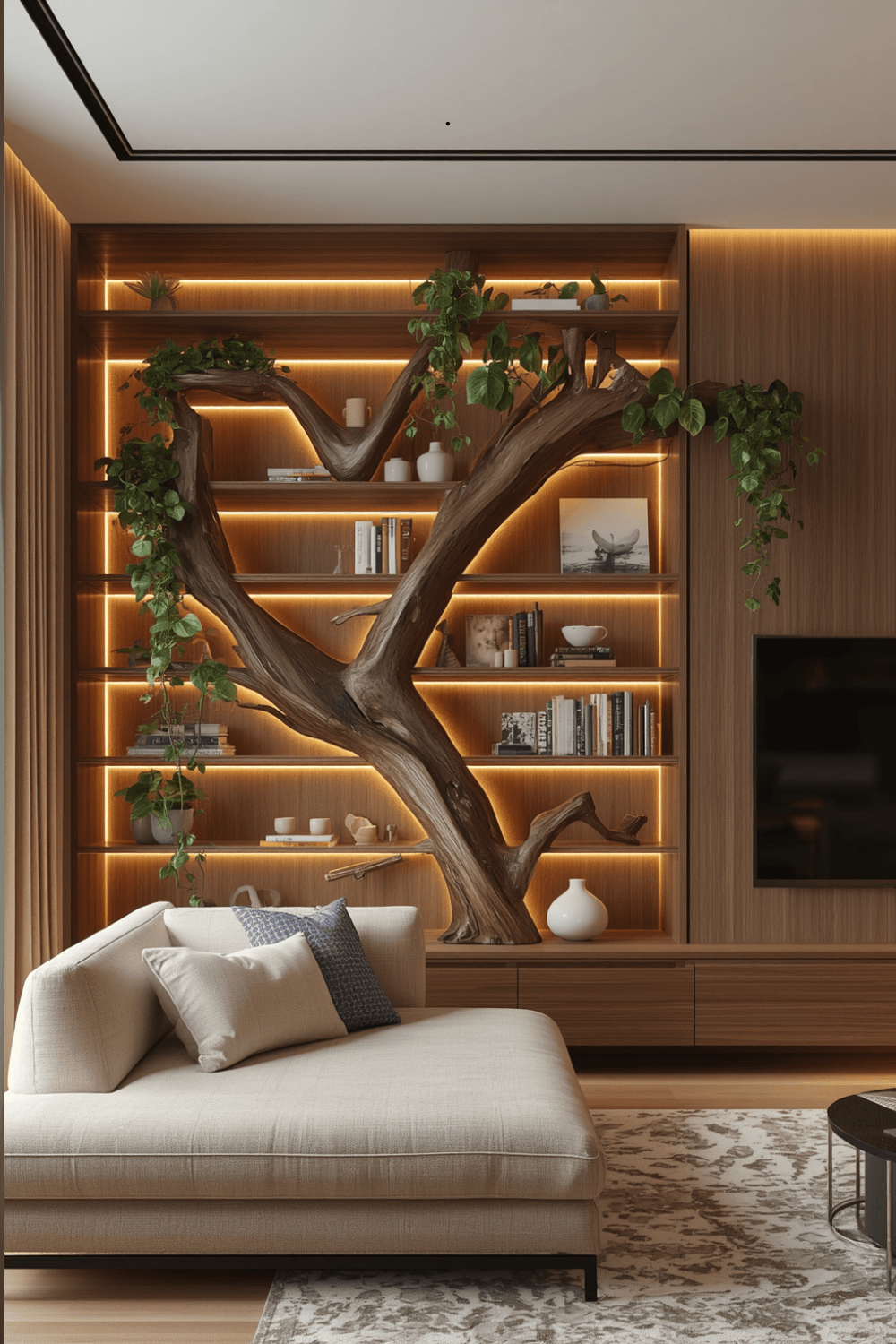 I moved all my genuinely heavy books, oversized art books and thick hardcovers, onto the shortest branches closest to the trunk or wall mount. Those points handle weight far better than anything extending further from the main support structure.
4. Check your specific manufacturer’s weight guidelines per branch
I contacted my bookshelf’s manufacturer directly to ask about weight limits for different branch positions, since this information often isn’t included in standard product listings. Getting that specific guidance helped me redistribute my books with actual data instead of just guessing based on how sturdy each branch looked.
5. Distribute weight evenly across the whole unit, not concentrated in one area
 I spread my books out across multiple branches instead of loading up just a couple that happened to be at convenient heights. Even distribution reduces stress on any single point and helps the whole piece maintain its structural integrity over time.
6. Secure the unit properly to the wall if it’s a wall-mounted design
I added additional wall anchors beyond what came standard with my unit, specifically because the combined weight of books plus the unit’s own branch structure put more stress on the mounting points than a simple flat shelf would. Extra securing hardware genuinely matters more here than with standard shelving.
7. Periodically check for any developing sag or stress points
I now do a quick visual check every couple of months, looking specifically for any new sagging, cracking, or stress marks on individual branches. Catching an overloaded branch early let me redistribute weight before my near-miss actually became a real break.
Real Examples From People I Know
A friend with a similar tree bookshelf in her classroom deliberately keeps only lightweight paperback books and small stuffed animals on the unit entirely, skipping heavier hardcovers altogether given how much daily handling the piece gets from young students. That conservative approach has kept her unit stable through years of heavy classroom use.
Another friend added small clear acrylic book stops to each branch on her unit, which helps keep books from sliding toward the outer, weaker end of each branch where the leverage and stress would be highest. It’s a small addition that meaningfully reduces strain on the branch tips specifically.
Common Mistakes to Avoid
Loading heavy books onto thin, extended upper branches. This alone caused my near-miss with a branch that nearly snapped under concentrated weight.
Treating a tree bookshelf’s weight capacity the same as a standard shelf’s. Each branch functions as its own smaller support point with a genuinely lower capacity than a uniform, evenly supported shelf.
Skipping manufacturer guidance on branch-specific weight limits. This information often isn’t obvious from looking at the piece alone and is worth requesting directly.
Concentrating weight on just one or two convenient branches. Spreading books across the whole unit reduces stress on any single structural point.
Never checking for developing sag or stress marks over time. Regular visual checks can catch a problem branch before it actually breaks.
Final Thoughts
My tree bookshelf’s near-miss taught me that this whimsical design genuinely requires different loading logic than a standard shelf, specifically around understanding which branches can handle real weight and which are meant for lighter, decorative items only. The redistribution alone stopped the sagging and creaking that had me worried about the whole unit’s longevity.
If you’re setting up your own tree bookshelf, identify your unit’s most structurally supported branches, reserve the thin extended ones for lightweight items, and check in on any developing stress points periodically. That combination is really what keeps a genuinely charming piece of furniture both beautiful and structurally sound over the long run.