
Creating a cozy backyard garden doesn’t require a landscape architect or a bottomless budget. What it does require is a little intention: choosing plants that feel lush rather than sparse, adding a water feature that does more than fill a space, and lighting that makes you want to stay out past sunset.
In this guide, you’ll find 20 genuinely usable ideas everything from backyard pond designs to tucked-away garden swing chairs, from romantic garden decor to the kind of small backyard makeover that makes your whole outdoor space feel twice its size. Whether you have a sprawling yard or a compact urban patch, there’s something here for you.
1–5: Small Garden Water Features That Actually Work in Compact Spaces
1. The Glazed Pot Fountain
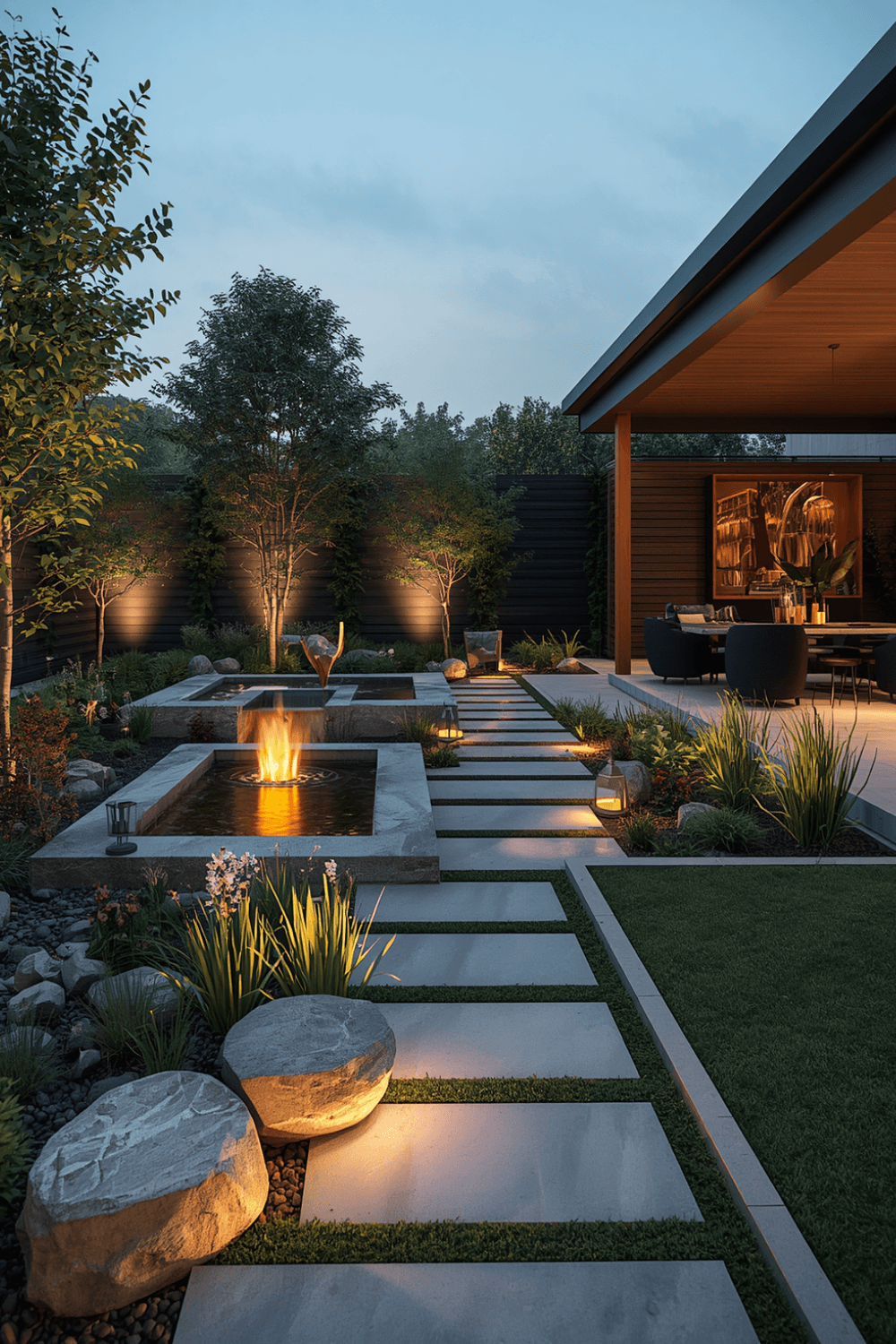
If you have zero space for a pond, a large ceramic pot with a submersible pump is your best friend. Fill it with river pebbles, add a few aquatic plants around the edge, and you have a garden water feature that fits on a balcony. The sound is soft, almost like rain. It works. Small backyard makeovers, balconies, courtyard gardens.
2. A Narrow Rill Running Alongside a Garden Pathway
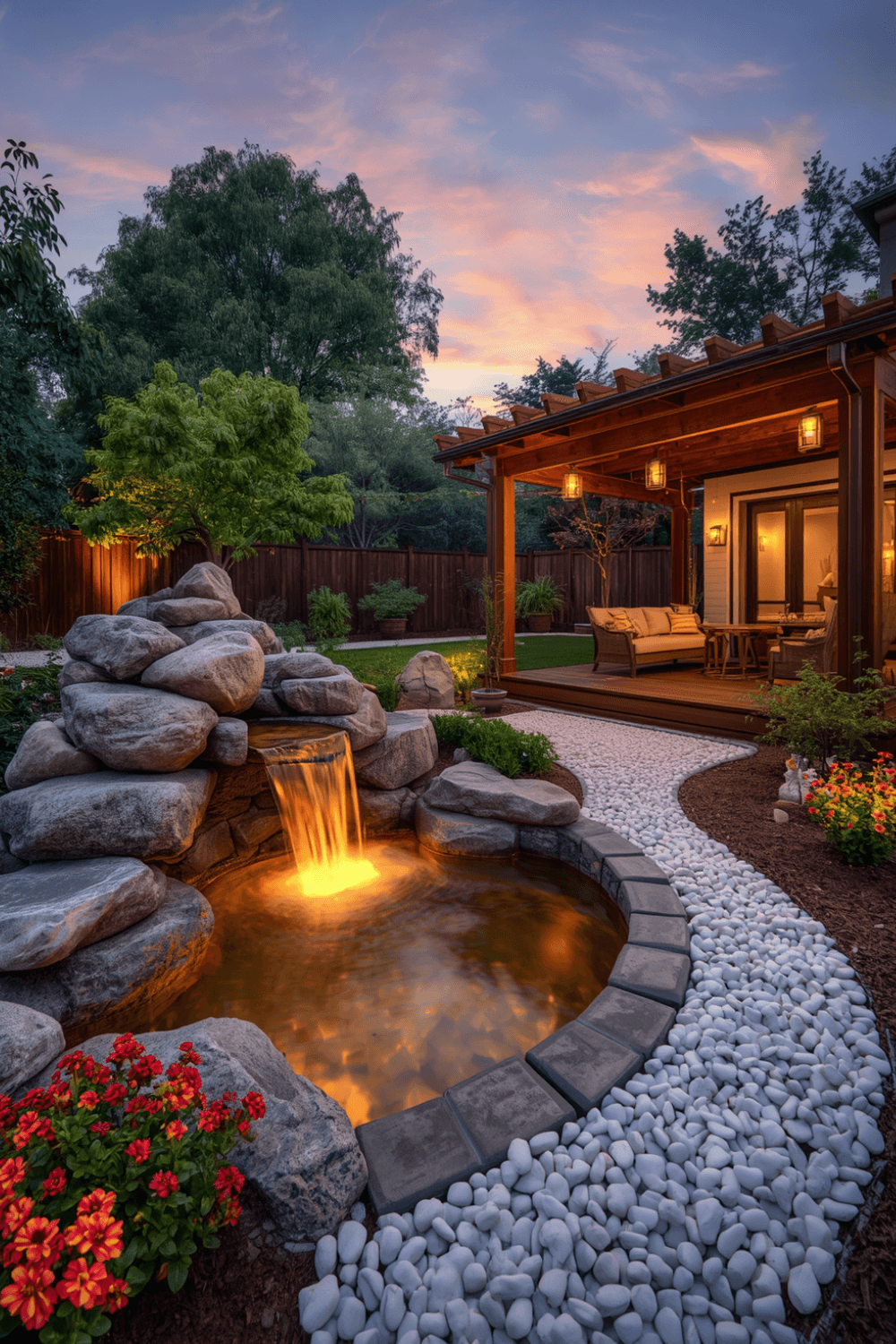
A rill is a linear channel of water, usually concrete or stone, that runs through a garden at ground level. It sounds fancy; it doesn’t have to be. A simple stone-edged channel, maybe 6 inches wide, running alongside a garden pathway idea creates a sense of movement and rhythm without needing much space. These work particularly well in cottage garden inspiration layouts, where the rill can be softened with low-growing plants at its edges thyme, mind-your-own-business, creeping Jenny.
3. Stacked Stone Waterfall Into a Small Basin
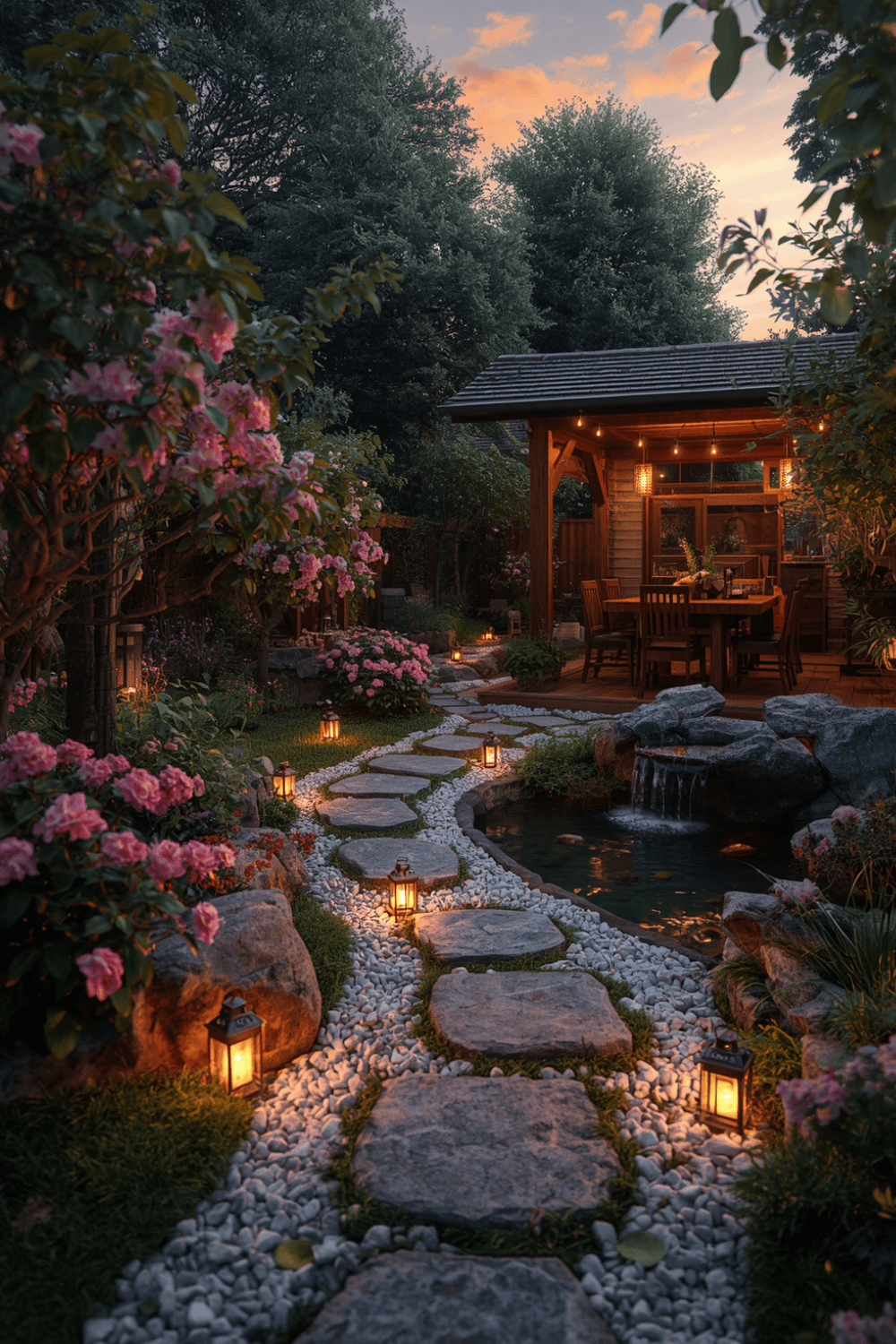
A short stacked-stone waterfall feeding into a shallow basin gives you the sound and visual interest of a proper water feature in a very small footprint. You can tuck this into a corner, behind a bench, or at the end of a garden pathway. The splash keeps algae down and the sound carries further than you’d expect. Corner spaces, patio garden designs, gardens that need a focal point.
4. A Raised Pond in a Planter Box
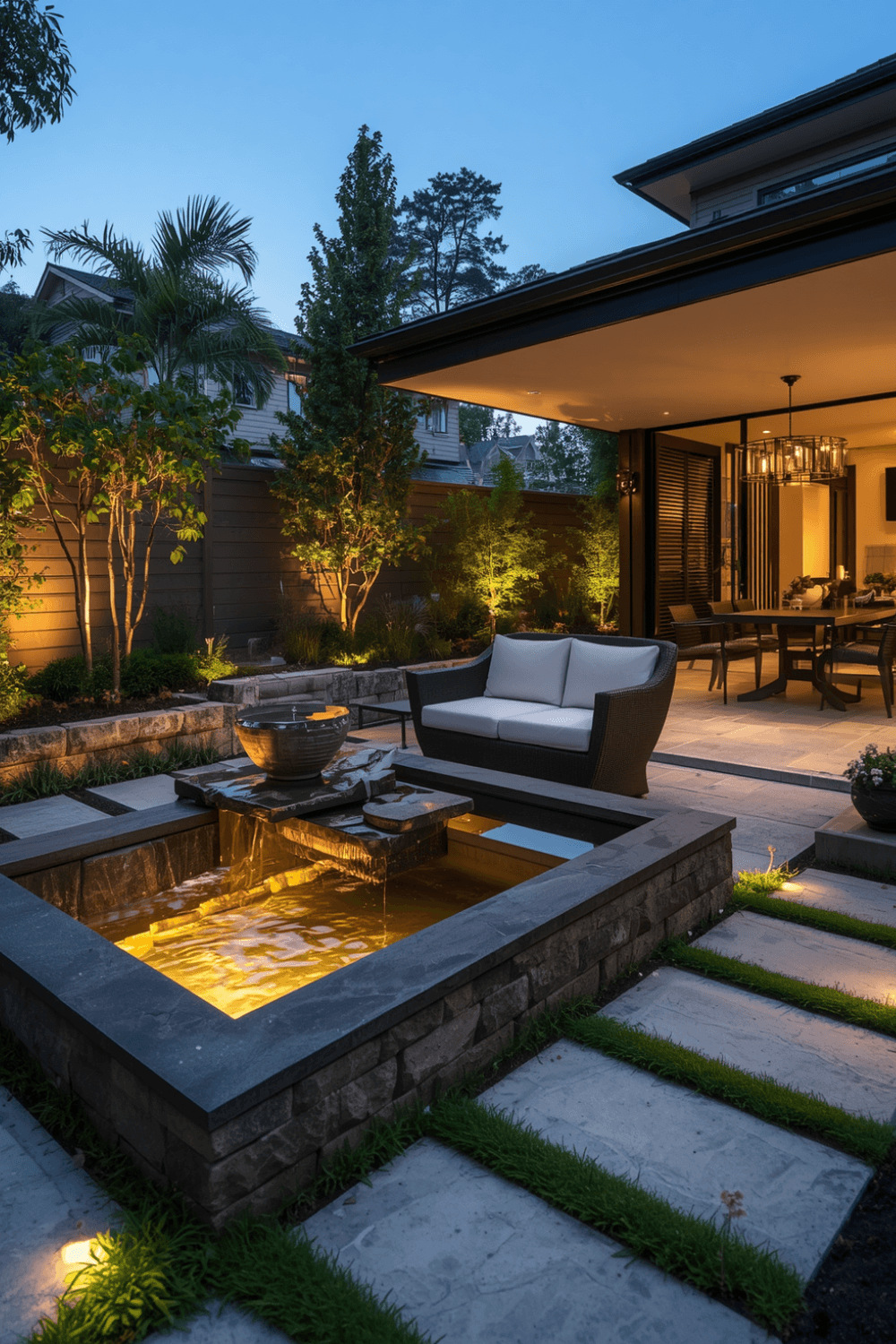
Raised ponds essentially deep planter boxes sealed and filled with water are underused. They sit at a better viewing height than in-ground ponds, they’re easier to maintain, and they can double as a seating ledge if built at the right height (around 18 inches). Add a few water lilies and a simple solar pump, and you’re done. Patios, decked areas, patio garden designs where digging isn’t an option.
5. The Self-Contained Millstone Fountain
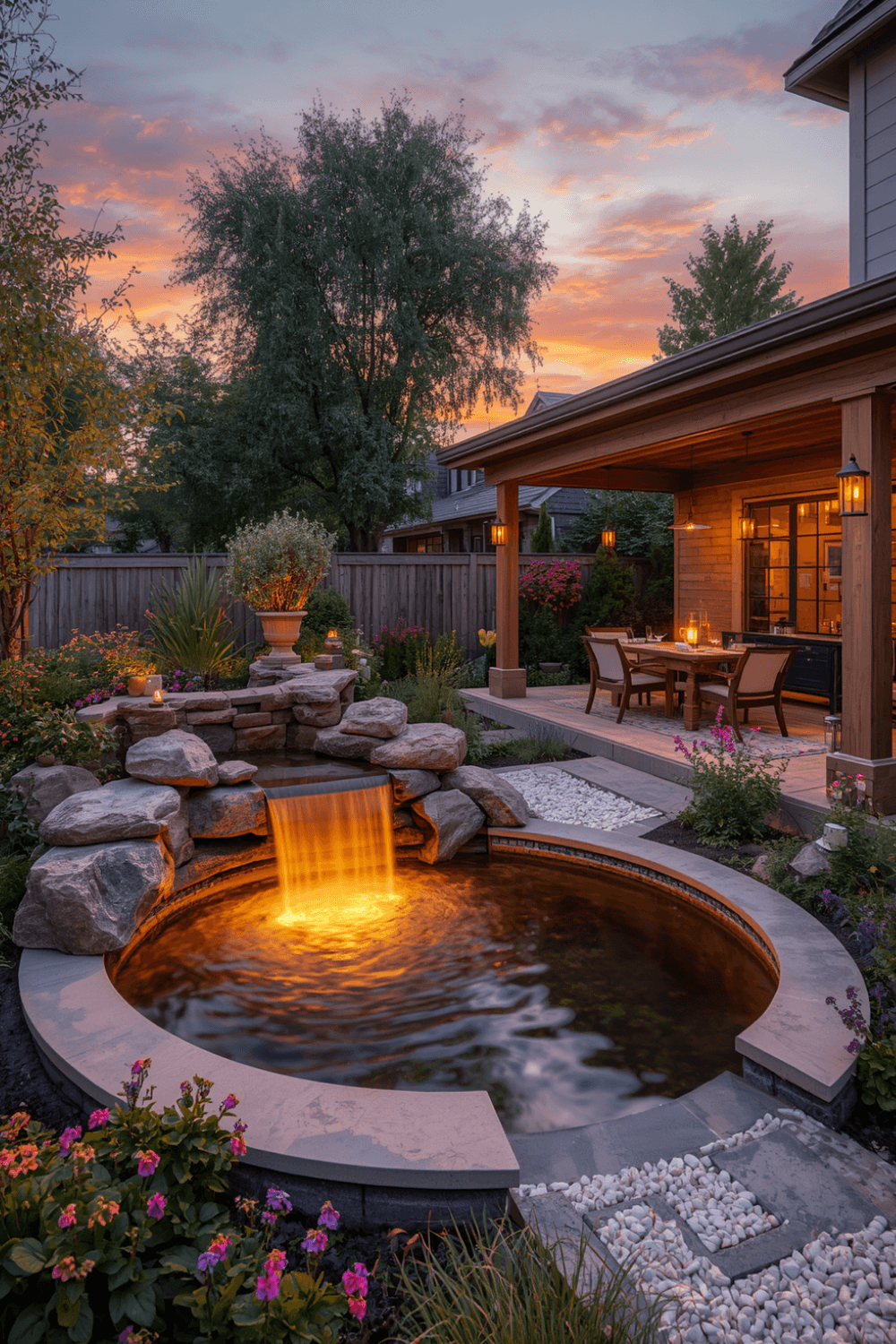
Millstone fountains are the old-school choice, and they’re still genuinely good. Water bubbles up through the centre of a stone disc and trickles down the sides into a buried reservoir. They’re low-maintenance, look good in both formal and informal garden styles, and blend well with surrounding planting. Cottage garden inspiration, traditional garden styles, small or medium outdoor spaces.
6–10: Outdoor Seating Areas Designed Around Calm
6. The Pergola Reading Nook
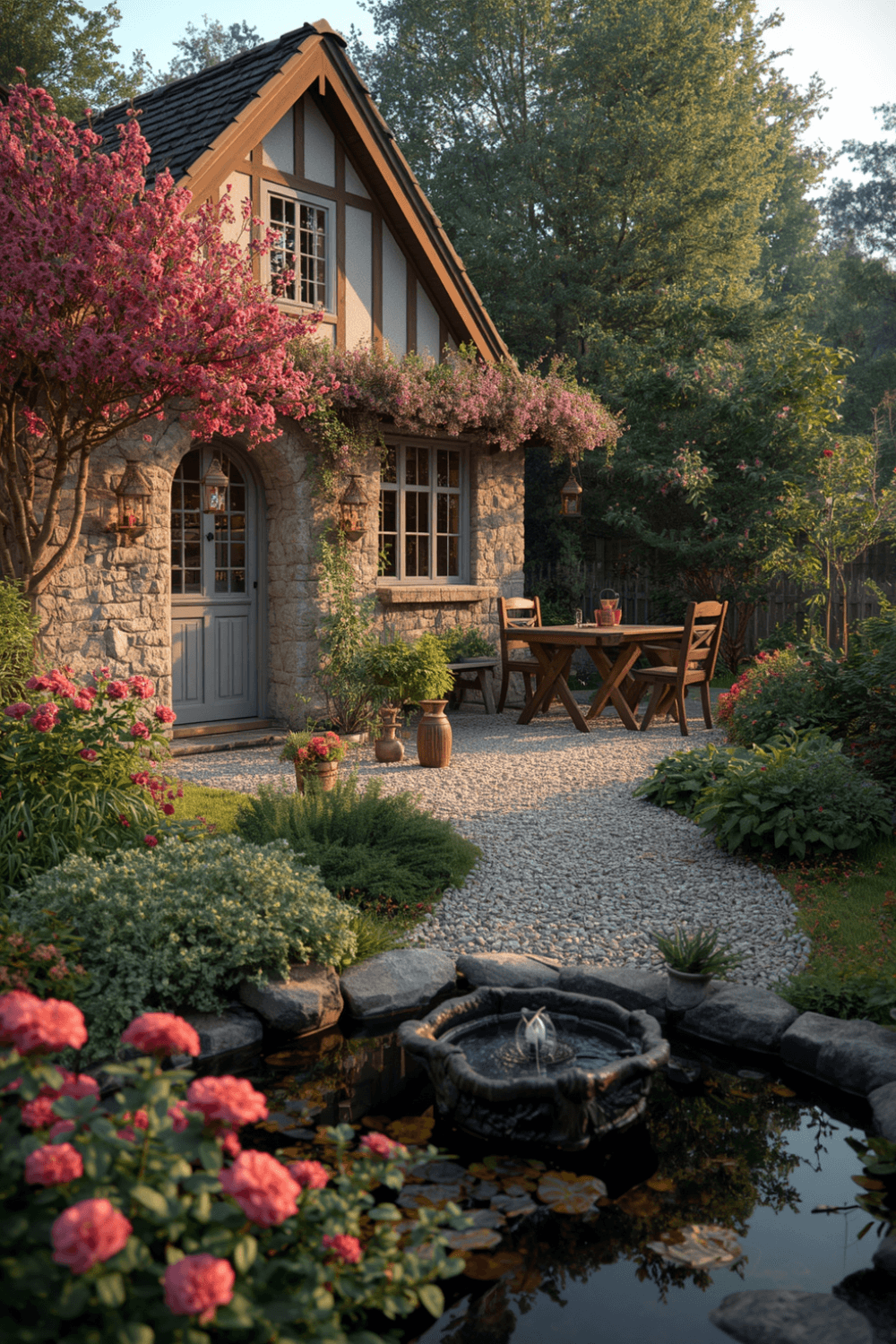
A simple wooden pergola with a climbing rose or wisteria overhead, two chairs, and a side table is one of the best investments you can make in an outdoor living space. It defines the area without enclosing it. Pair it with a small water feature nearby, and you have something that feels like a proper outdoor retreat. Pergola kits are widely available and manageable as a weekend project. If you’re in a warm climate, consider adding a ceiling fan it makes a real difference on hot days.
7. Sunken Seating Area With a Fire Pit
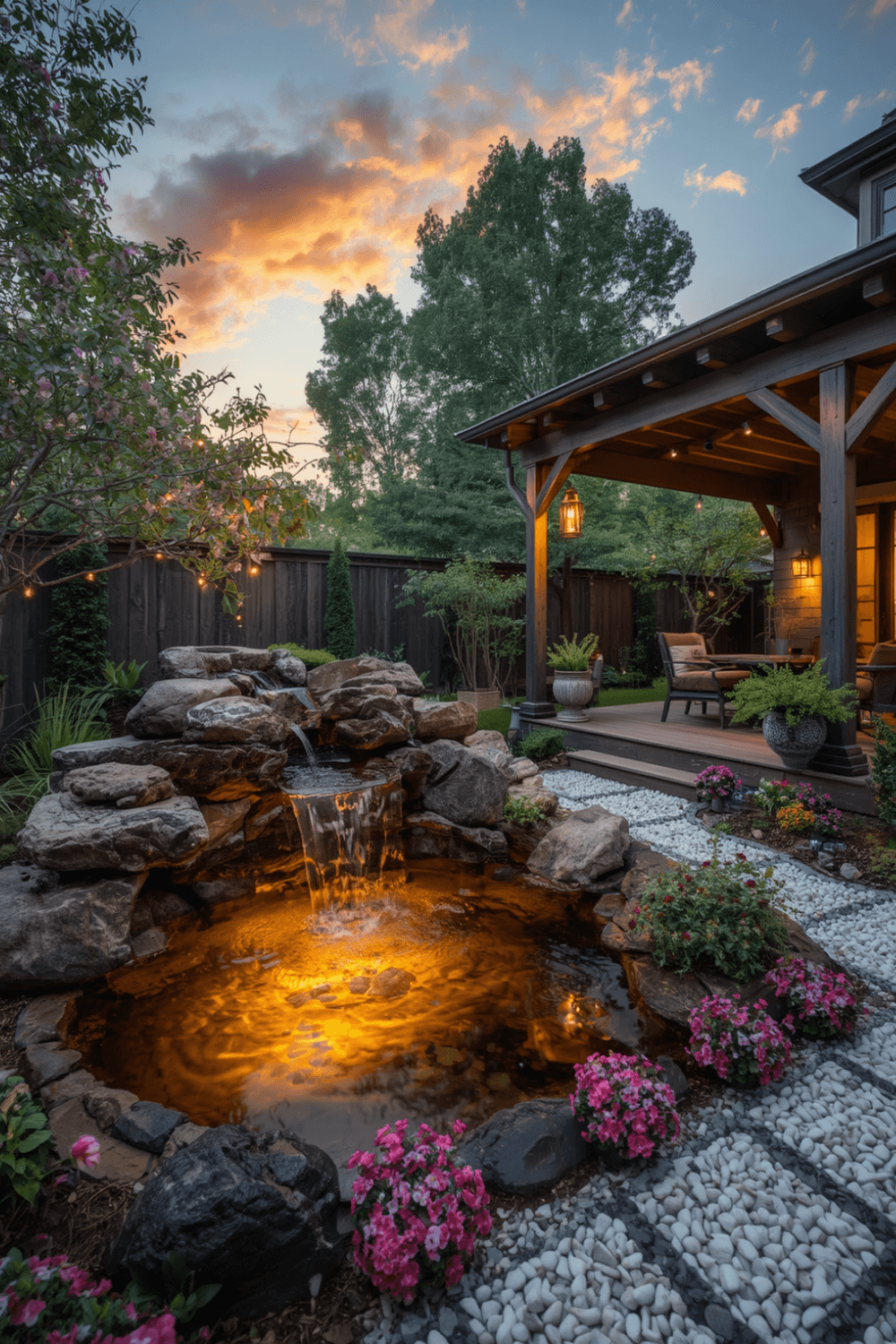
Sinking a seating area 1 inches below garden level does two things it creates shelter from wind, and it makes the space feel more intimate. Add a central fire pit, surround it with built-in benches, and you have a backyard oasis design that works from spring through to autumn.
8. A Curved Garden Bench Around a Tree
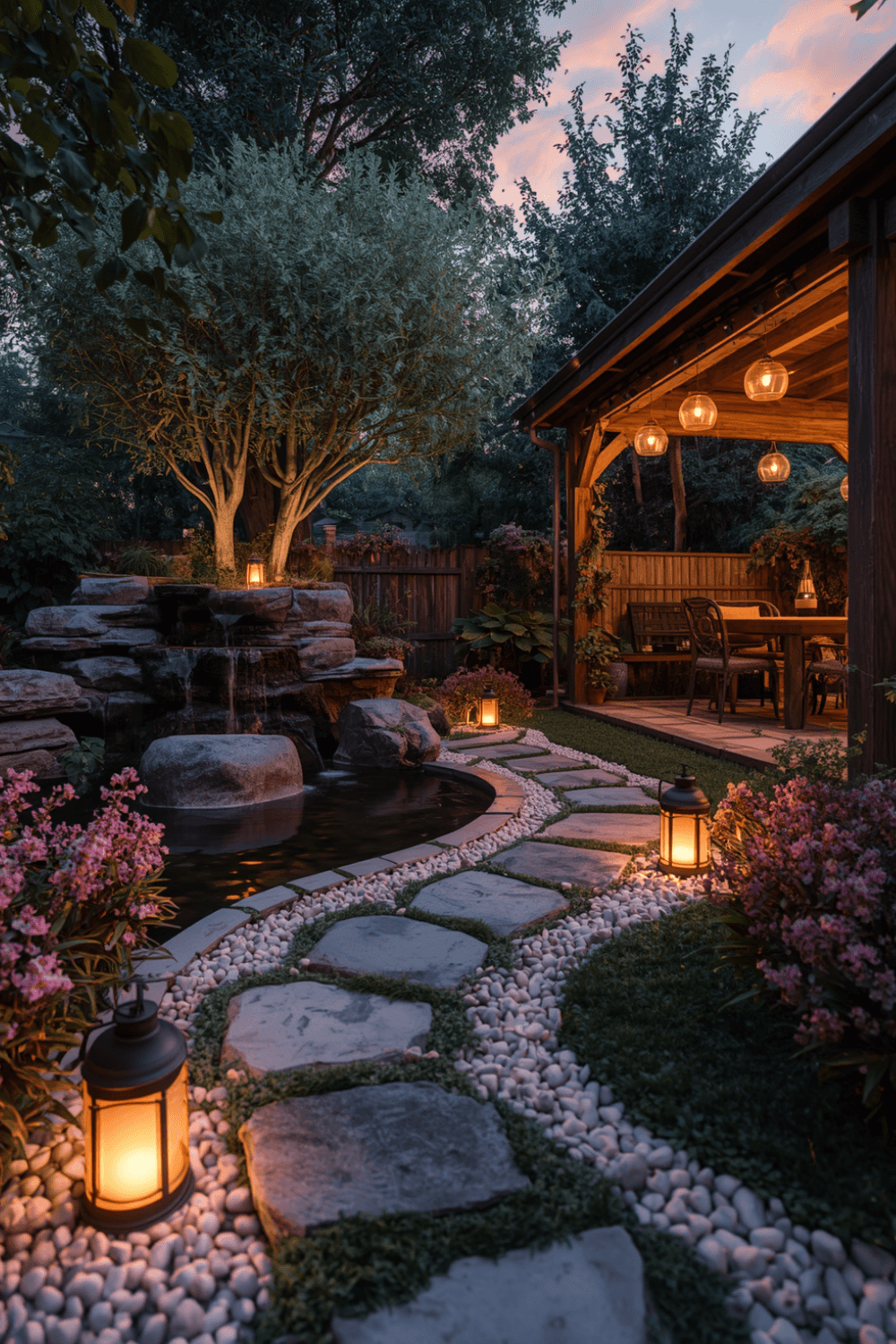
Big trees are often wasted in gardens. A curved wooden bench wrapping around the base of a mature tree gives you a shaded outdoor seating area that costs relatively little and looks good immediately. If the tree doesn’t have one, you can plant climbing plants at the base to add vertical interest.
9. The Garden Swing Chair Under a Canopy
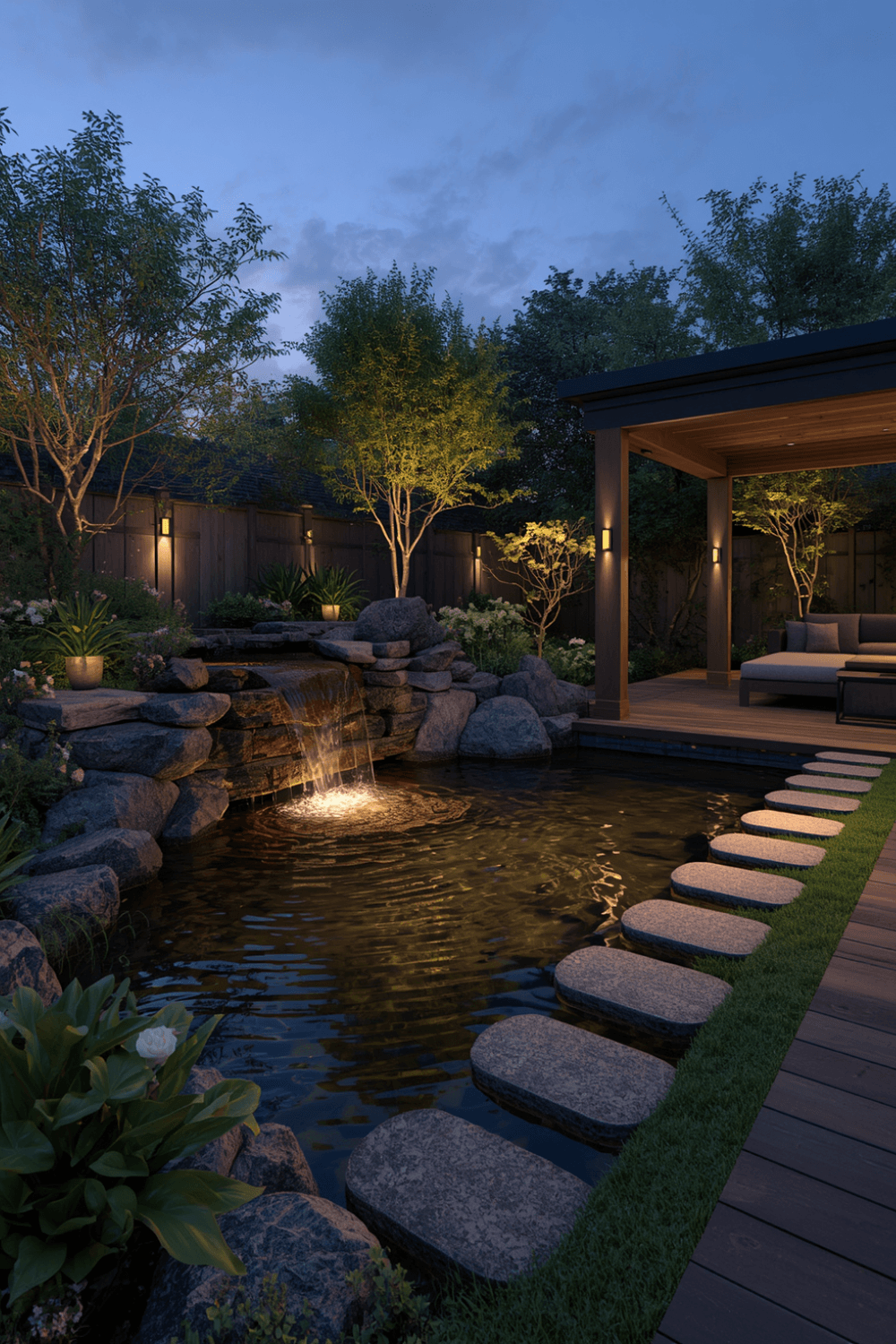
Garden swing chairs the hanging pod or egg-chair type, not playground swings are one of those things that look purely decorative but actually get used constantly. Tuck one under a canopy of shade trees or a simple sail shade, add outdoor cushions, and it becomes the most-used spot in the garden.
10. Built-In Planter Bench Combo
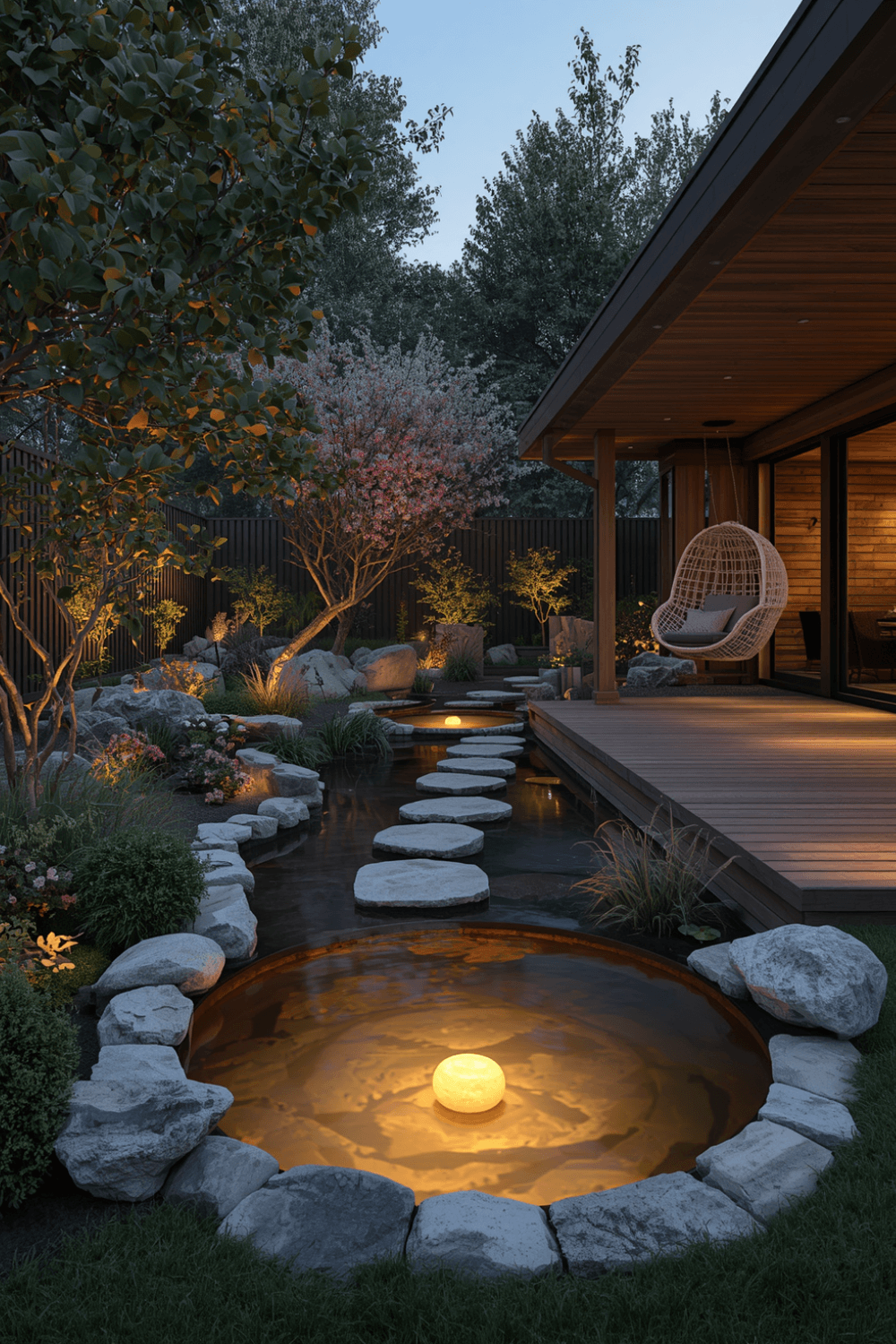
A bench with built-in planters at either end anchors an outdoor seating area and adds greenery at the same time. Use the planters for lavender, rosemary, or trailing geraniums — plants that smell good as you brush past them. This works well in small backyard makeovers where every element needs to do double duty.
11–15: Garden Lighting Ideas That Set the Mood
Lighting is probably the single most underrated element of backyard design. Get it right and the garden looks completely different at night — better, honestly, than during the day.
11. Warm String Lights Through Overhead Branches
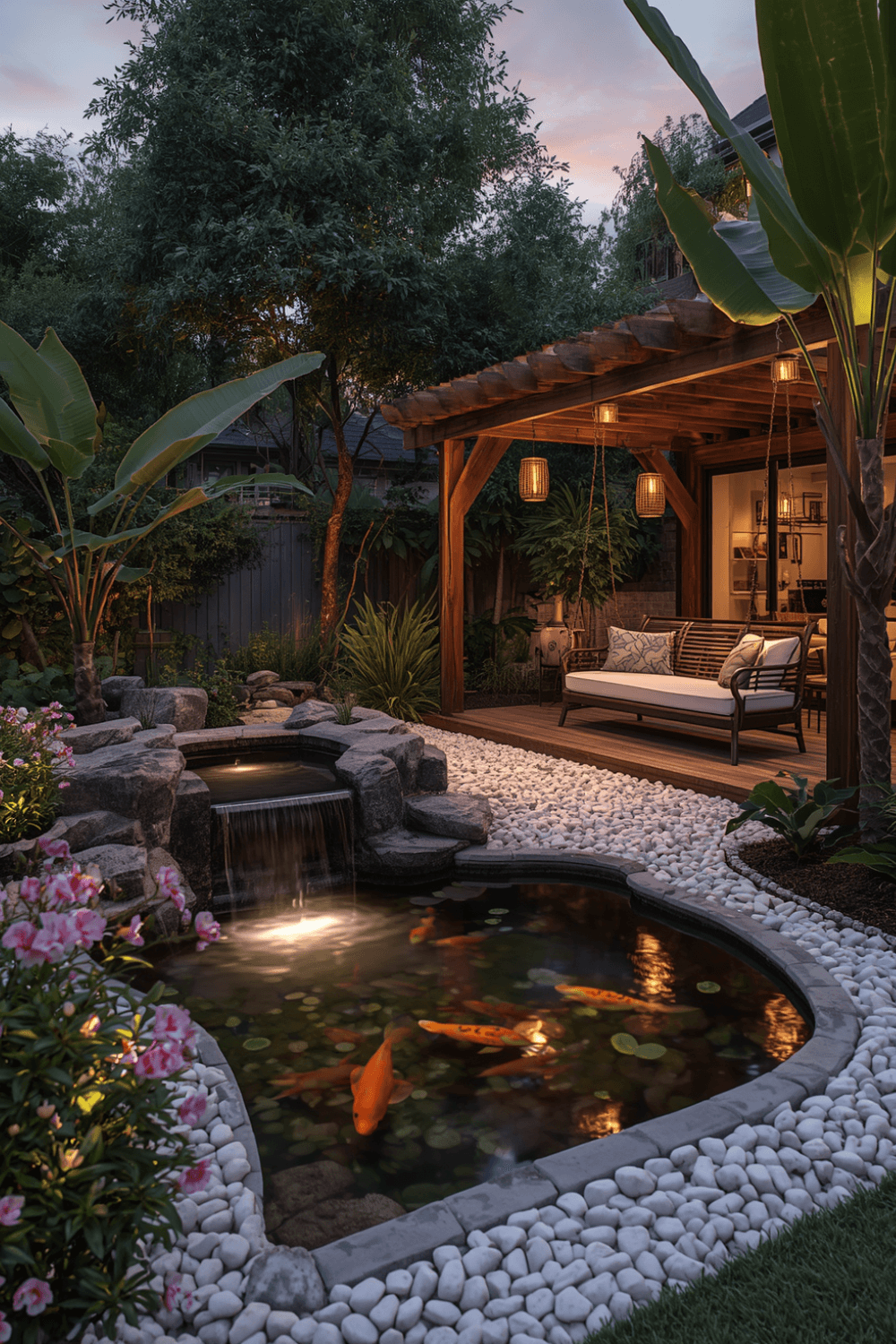
Warm-white string lights woven through tree branches or strung along a pergola are cheap, easy to install, and reliably good-looking. Go for 2700K bulbs, not cool white. The difference is significant.
12. Low Path Lighting Along Garden Pathways
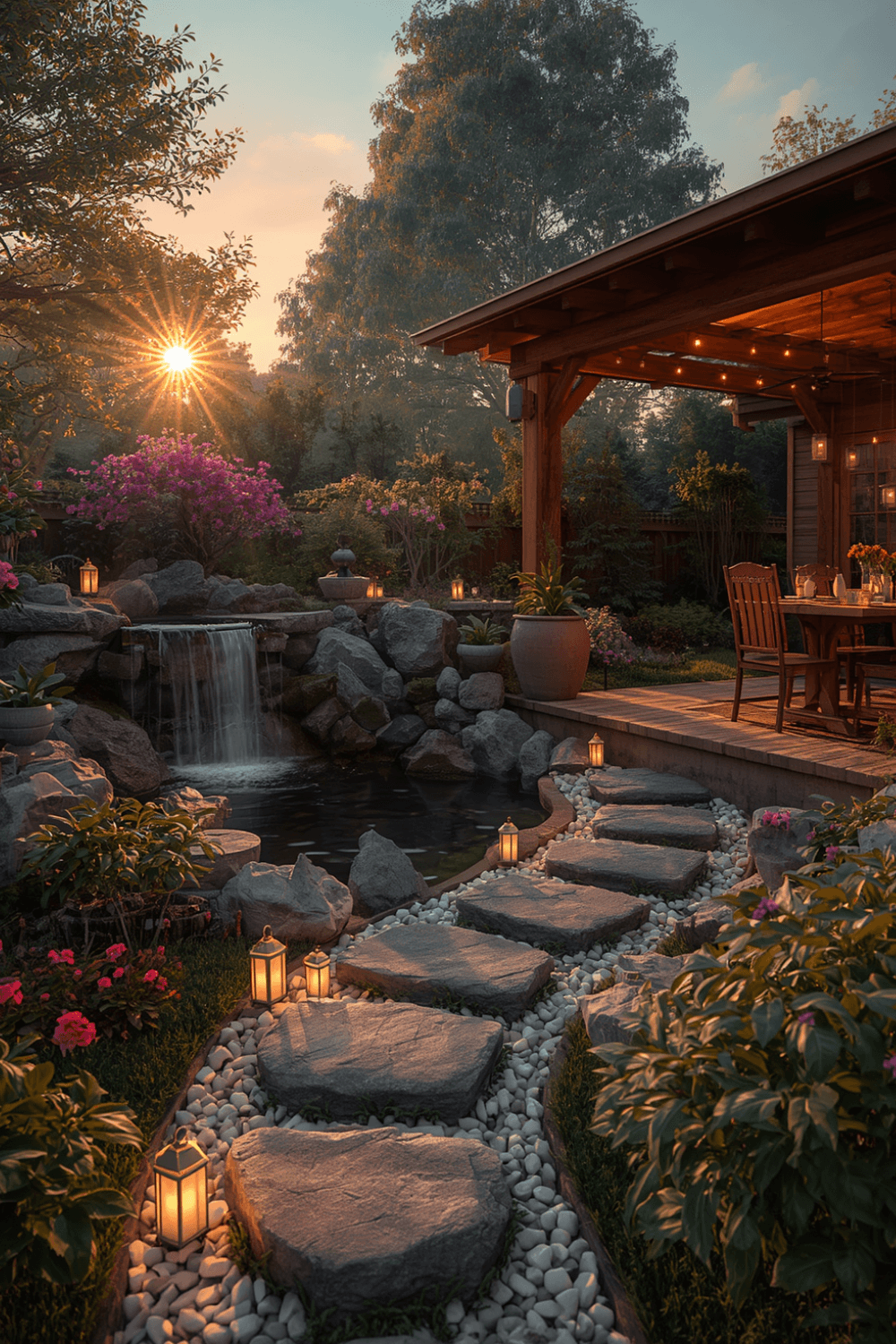
Small solar or low-voltage lights along garden pathway ideas serve two purposes: safety and atmosphere. The trick is spacing them further apart than feels intuitive (every 4–6 feet rather than every 2) so you get pools of light rather than a runway effect.
13. Underwater Lighting in Your Backyard Pond
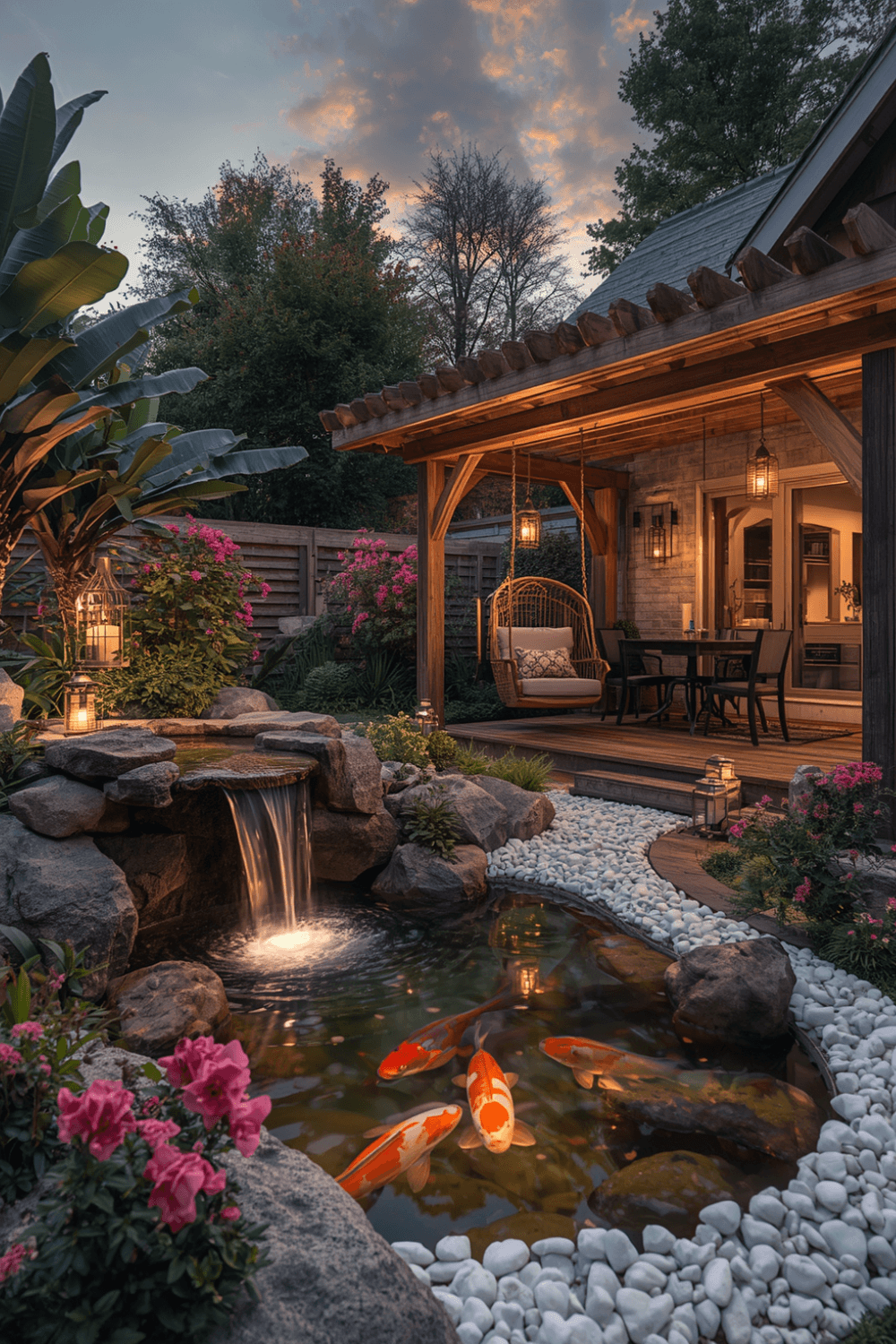
If you’re installing a backyard pond, seriously consider adding underwater LED lights. A pond at night with subtle uplighting from below looks completely different from the same pond in daylight. It becomes a focal point rather than a feature you stop noticing.
14. Uplighting Statement Plants and Trees
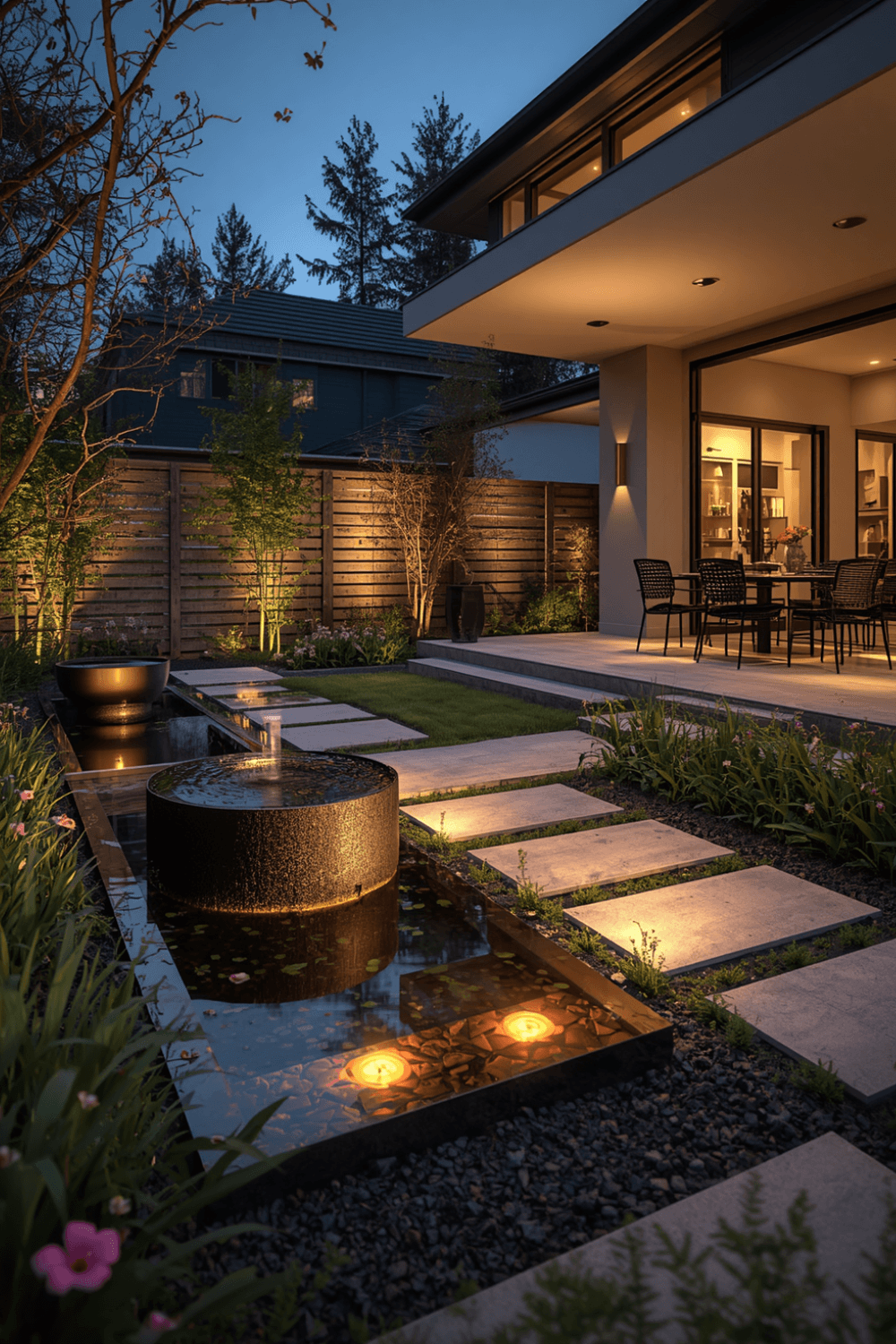
A single spotlight aimed up into a large fern, a bamboo clump, or a sculptural tree creates drama and depth in a garden lighting scheme. Use warm white for most plants; blue-toned light for grasses and palms if you want a more contemporary look.
15. Lanterns and Candle Holders for Romantic Garden Decor
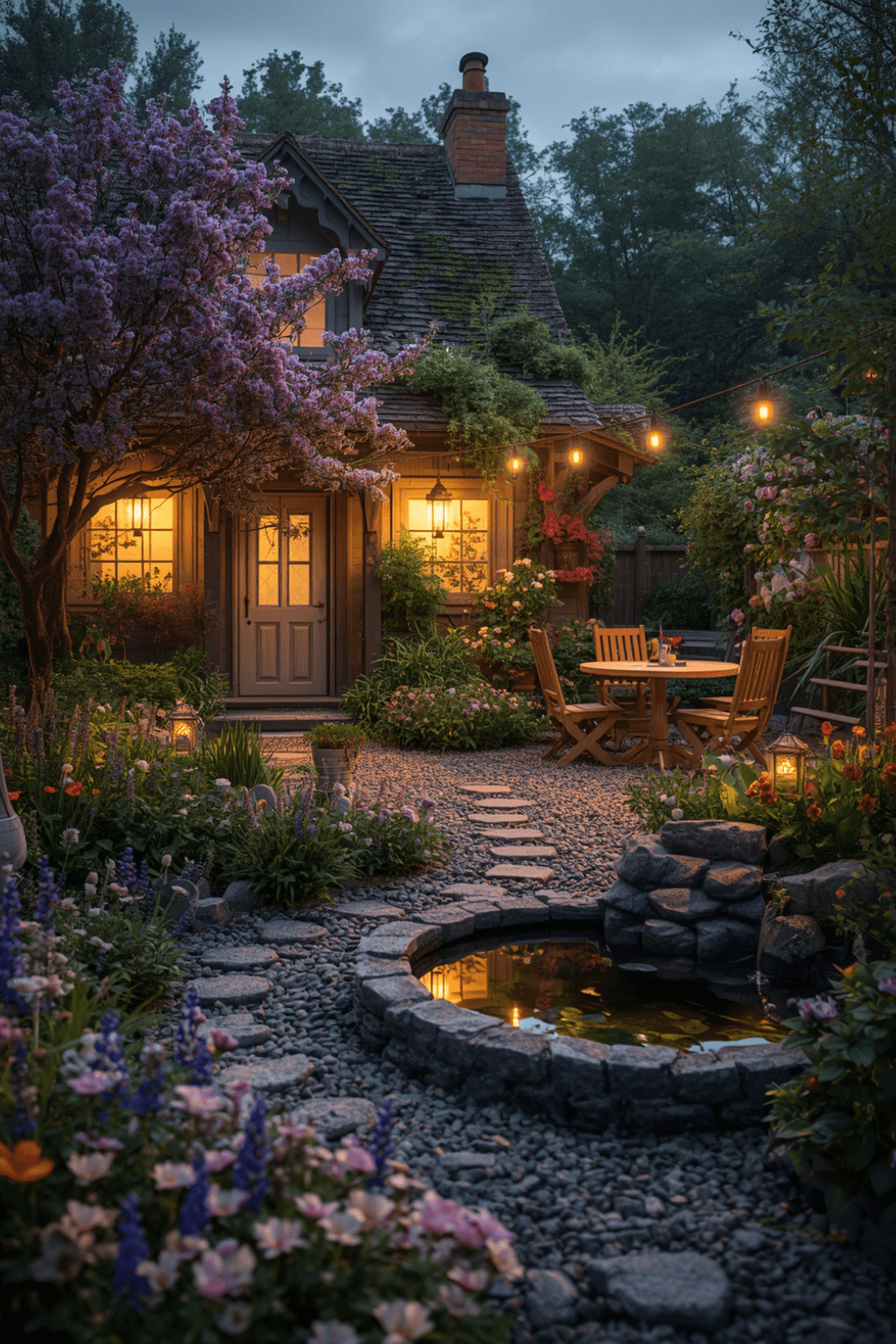
For romantic garden decor, nothing quite competes with candlelight. A cluster of different-height lanterns at the center of a dining table, a few hurricane lanterns along a path — it’s low effort and it works every time. For a windier climate, enclosed lanterns keep candles burning longer.
16–20: Landscaping Ideas That Bring the Whole Space Together
16. A Winding Gravel Path Through Cottage-Style Planting
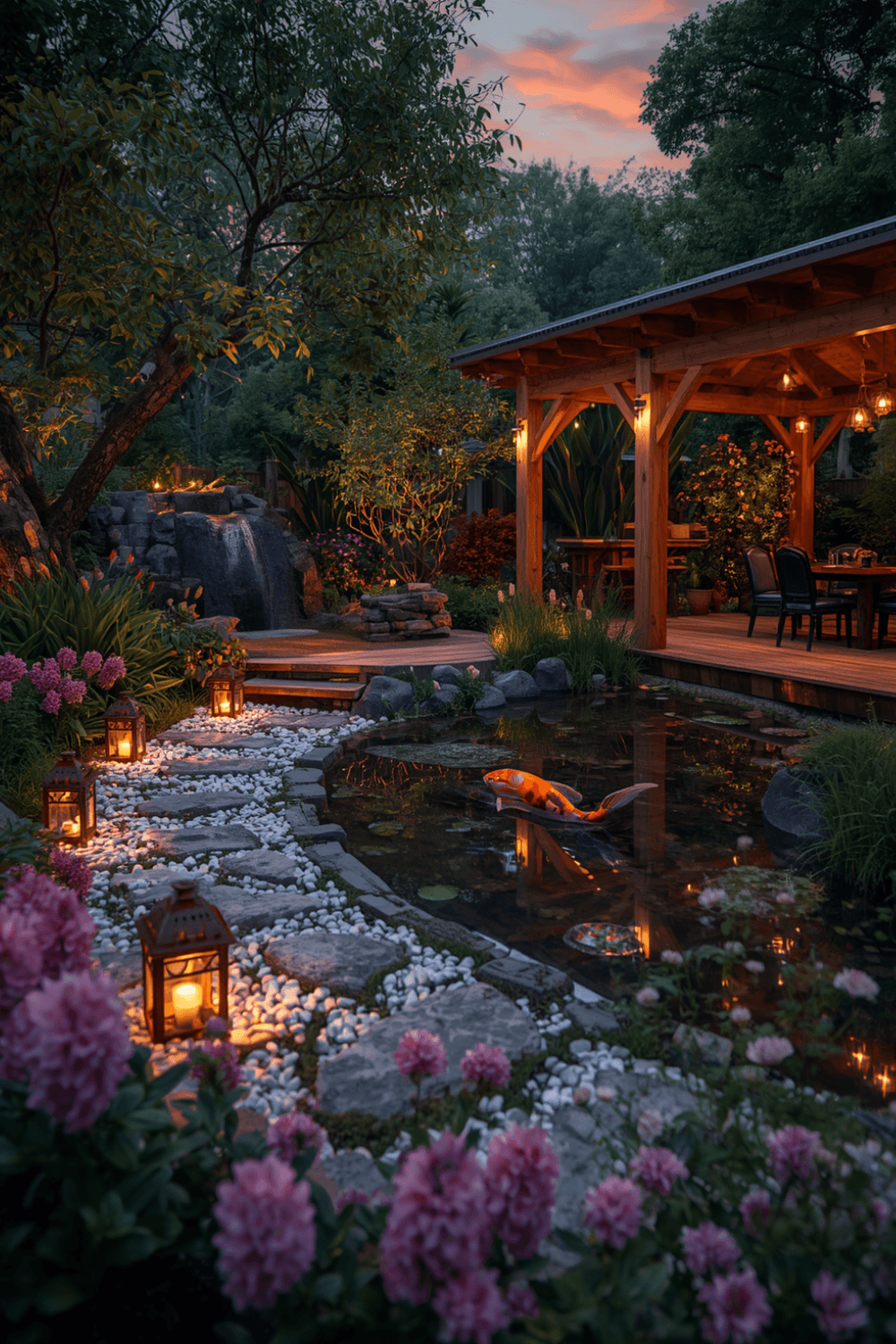
Straight paths feel formal. Winding paths feel like gardens. A simple gravel path that curves through densely planted beds foxgloves, geraniums, salvias, roses is the backbone of cottage garden inspiration. It slows you down and makes the garden feel larger than it is.
17. A Backyard Pond With a Planted Bog Area at One Edge
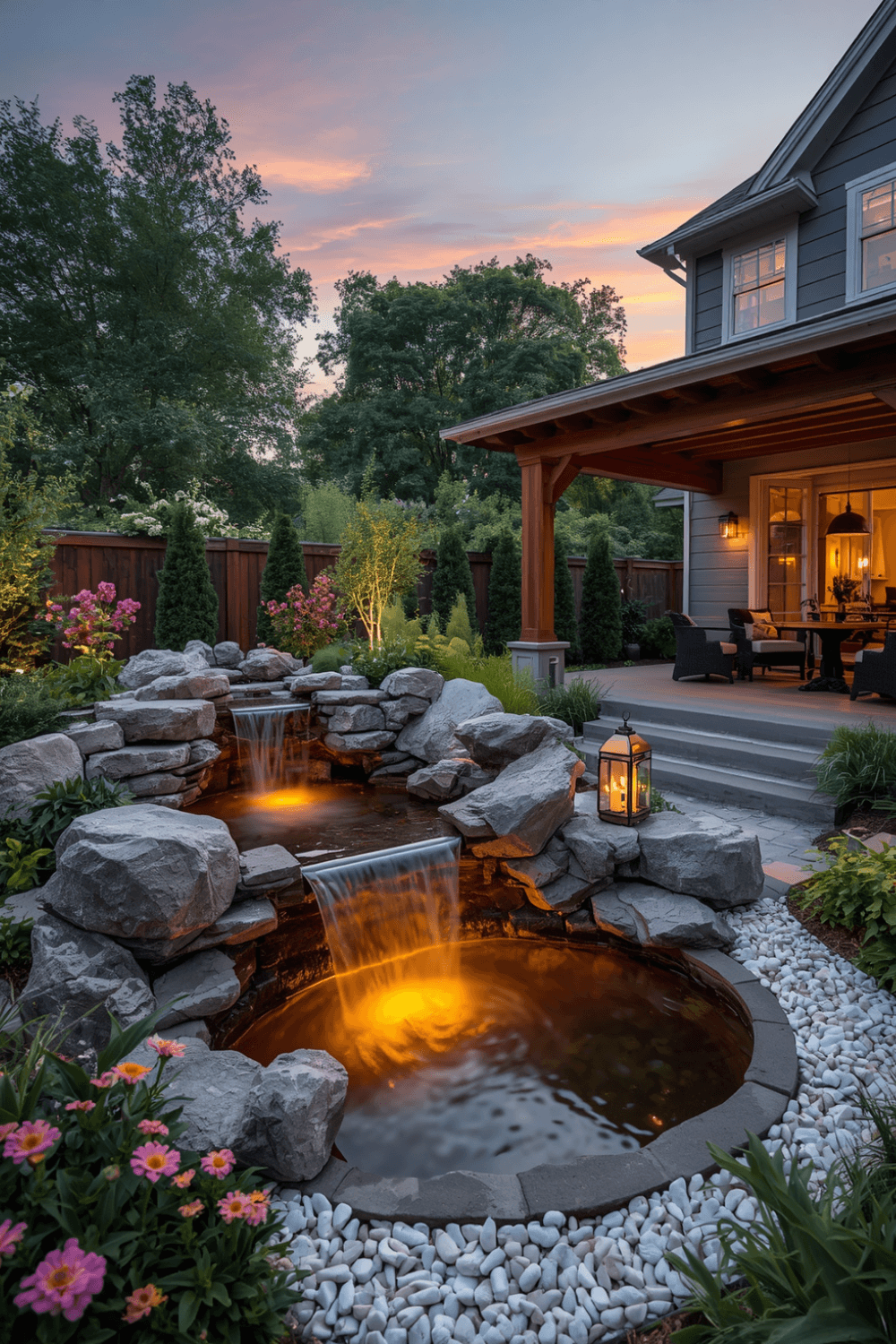
If you’re going to build a backyard pond, consider extending one edge into a shallow bog area rather than having a hard edge all the way around. Bog plants irises, marsh marigold, gunnera grow at the water’s edge and give the pond a much more naturalistic look. They also provide habitat.
18. Vertical Gardens on Boundary Walls
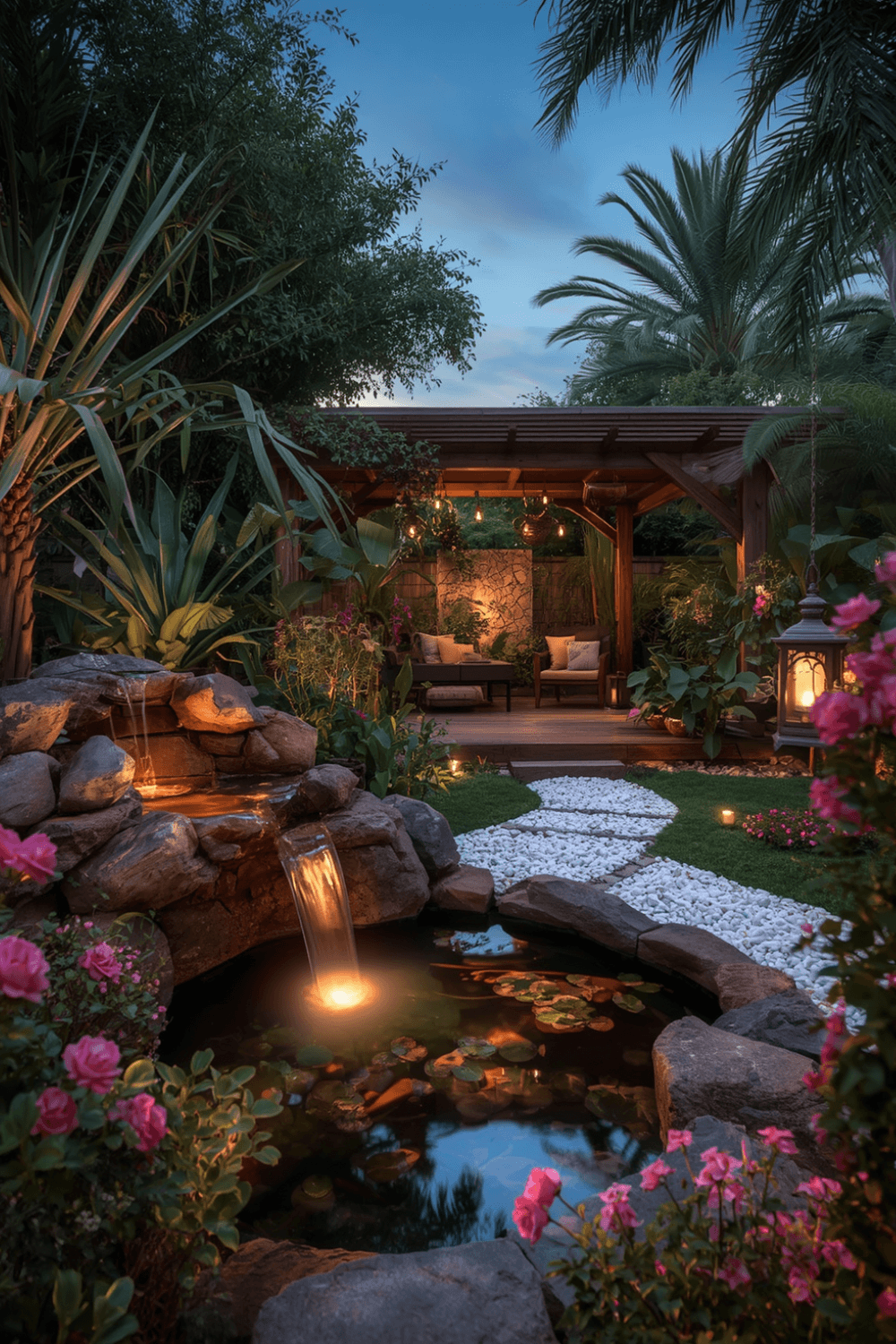
Blank boundary walls are wasted space, especially in small backyard makeovers. A simple framework of wooden battens, planted with ferns, succulents, or herbs in modular pockets, turns a dead wall into a feature. These work particularly well behind a water feature, creating a lush backdrop.
19. A Dedicated Dining Terrace With a Gravel Base
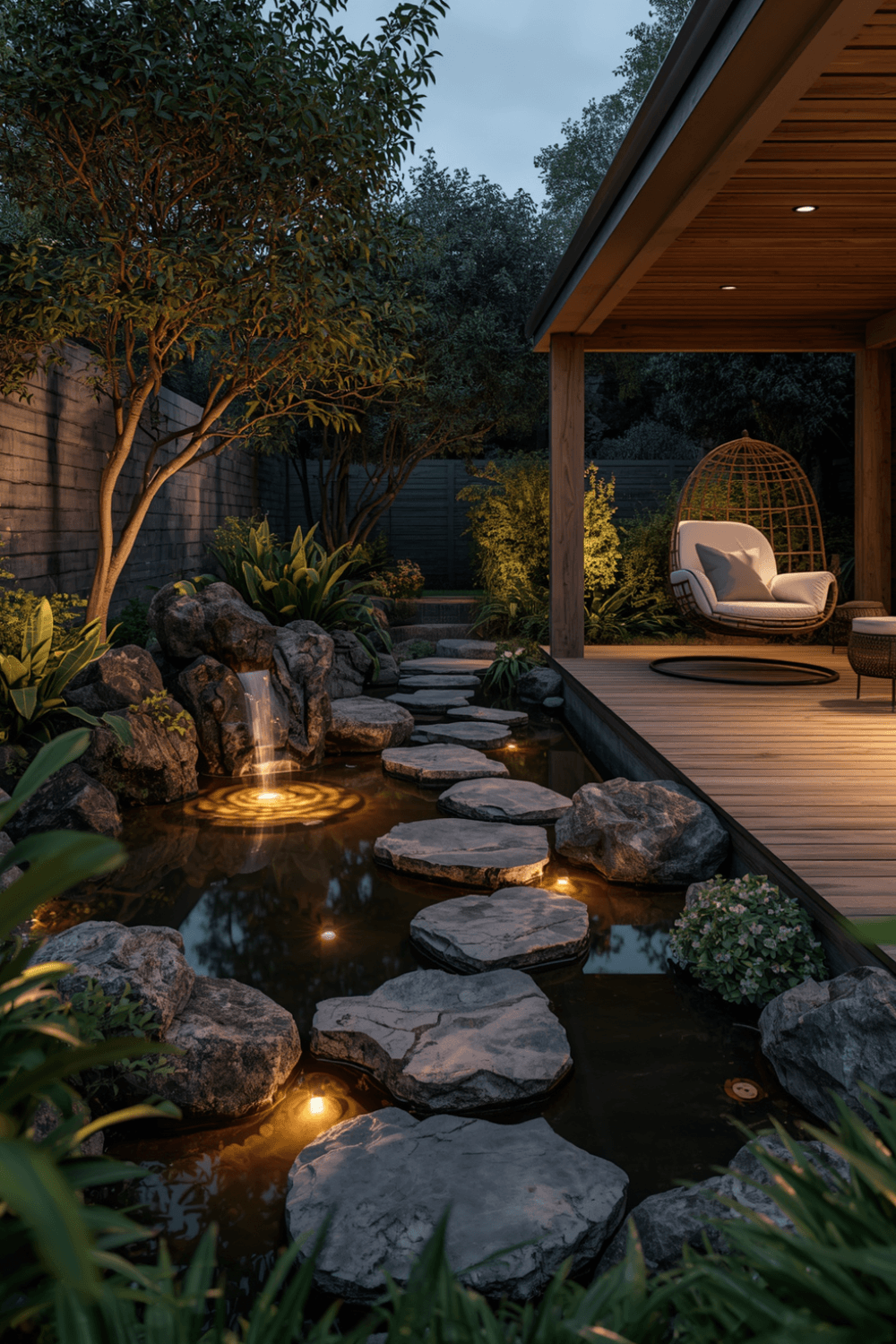
A separate terrace for outdoor dining even a small one, gives your garden structure. Gravel is often better than paving here: it drains well, it’s forgiving underfoot, and it has a texture that works well with planting. Surround it with low hedging or tall grasses for enclosure without complete privacy.
20. The Wild Corner Naturalistic Planting for Wildlife
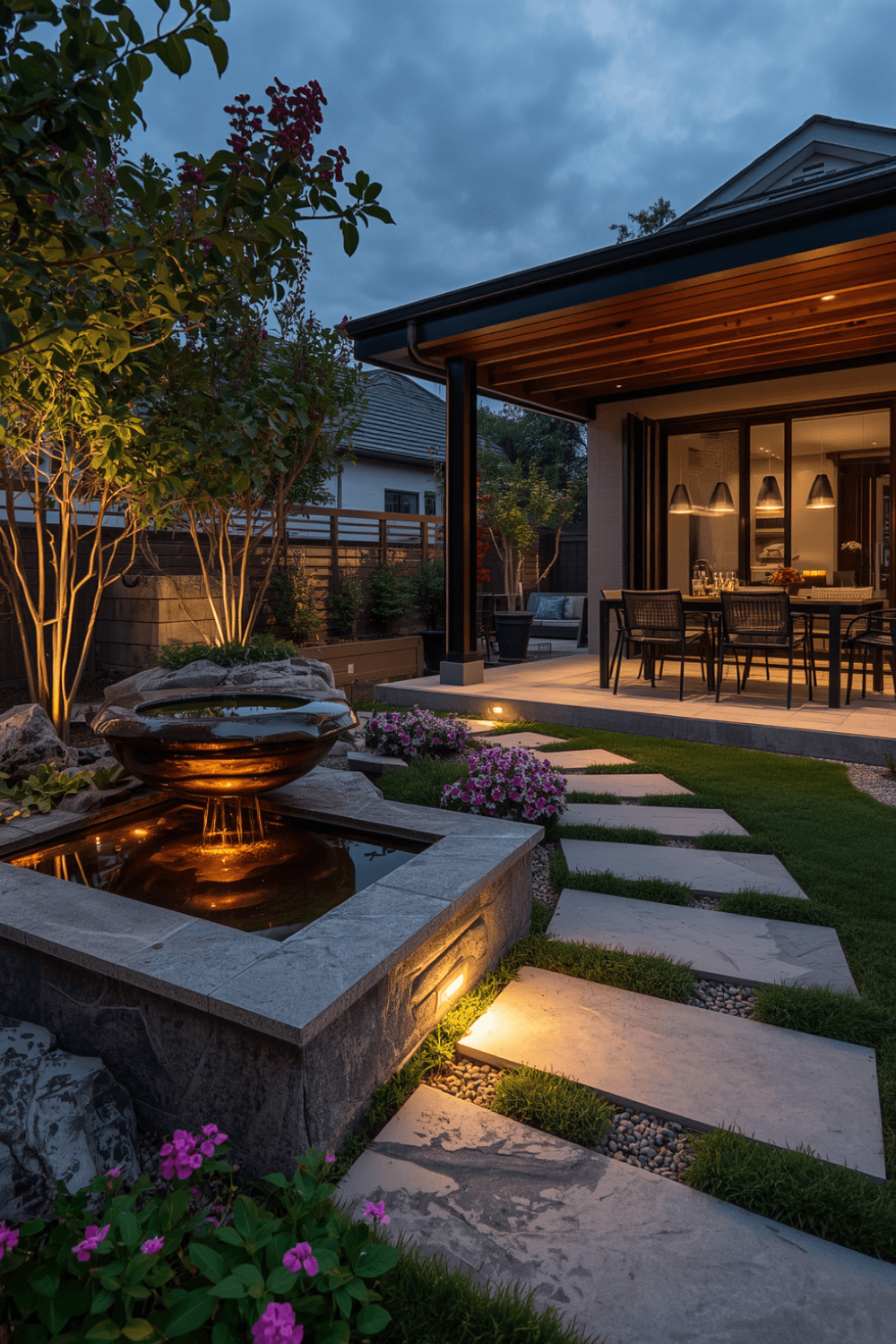
Leave one corner of the garden deliberately wild. A patch of long grass, a log pile, some native wildflowers. It requires almost no maintenance, it looks intentional if you frame it correctly (a small wooden sign or a simple edging keeps it from looking neglected), and it does more for local wildlife than any bird feeder. This kind of intentional naturalism is increasingly common in luxury garden landscaping it reads as a design choice rather than laziness when it’s done with purpose.
Frequently Asked Questions
What is the easiest water feature to add to a small garden?
A self-contained pot fountain is the easiest entry point. You need a large waterproof container, a submersible pump (widely available for under $40), some river pebbles, and a power outlet. Setup takes an afternoon and the effect is immediate. It’s the most achievable garden water feature for renters or anyone who doesn’t want to commit to major landscaping work.
How much does a backyard pond cost to install?
A simple in-ground backyard pond — around liner, basic filtration, and some surrounding planting — typically costs between to have professionally installed, if you do the digging and liner work yourself. Larger ponds with pumps, waterfalls, fish, and stone surrounds can run significantly higher. Costs vary by region and materials.
How do I make a small backyard feel cozy and larger at the same time?
The short answer: layer it. Plants at different heights (ground cover, mid-height shrubs, taller specimens), lighting that creates depth at night, and defined zones — a seating area, a dining terrace, a path — all make a small space feel considered rather than cramped. Mirrors fixed to boundary walls also create the illusion of depth, particularly in very urban gardens.
Do garden water features require a lot of maintenance?
Most small, self-contained water features need very little: a top-up with water every week or two in warm weather, and an occasional clean of the pump filter. Backyard ponds with fish require more attention — regular water quality checks, feeding, seasonal care. A wildlife pond with no fish sits somewhere in between: occasional dipping to manage blanket weed is usually all it needs.
What lighting works best for outdoor seating areas at night?
Warm white (2700K–3000K) LED lighting is the standard for good reason — it’s flattering and it looks good in photography. For outdoor seating areas specifically, you want ambient overhead light (string lights, a pendant under a pergola) combined with lower accent lighting. Avoid bright white or cool-toned lights; they make a garden look clinical rather than welcoming.
Conclusion: Start Small, Build Toward the Garden You Actually Want
The biggest barrier to a good backyard is waiting until you can do the whole thing at once. You can’t, and you don’t need to. Pick one thing from this list. If you have a blank wall, put up a vertical planter.
The best outdoor living spaces tend to be built in layers, over time, by people who actually use them and figure out what they need. Start somewhere. The cozy backyard garden you want is usually a few intentional decisions away from the one you have.