
A good patio does something a great living room rarely manages: it makes you forget about time. You sit down to read for twenty minutes and look up two hours later. That’s the goal.
Whether you’ve got a narrow urban terrace or a sprawling suburban yard, the difference between a space you ignore and one you actually use comes down to a handful of design decisions. The right furniture arrangement, lighting at the right height, a bit of shade these things add up fast.
This guide covers 20 outdoor patio ideas that work across a wide range of budgets and yard sizes. Some are quick weekend projects. Others take more planning. All of them are genuinely worth it.
1. Layer Your Lighting
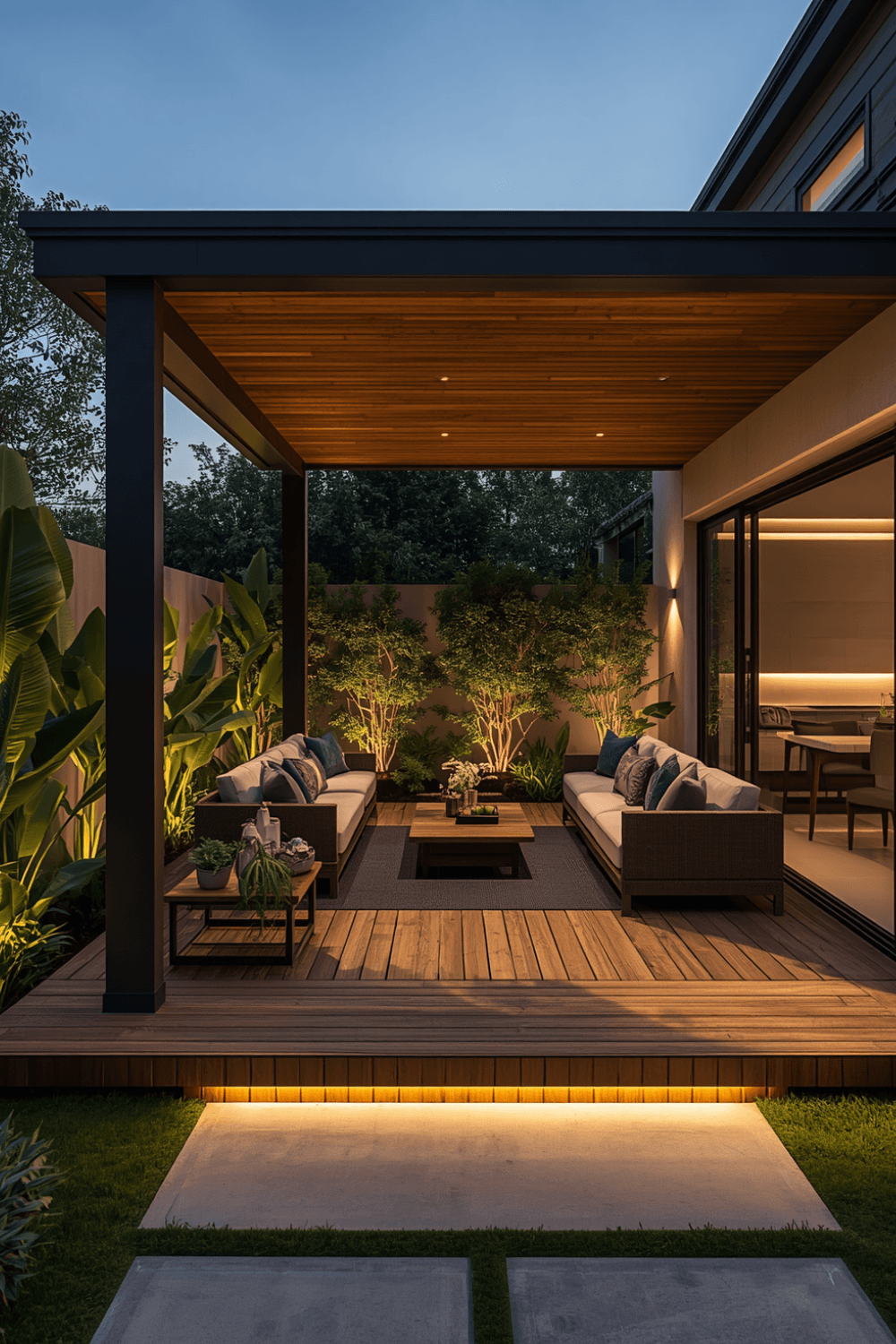
String lights alone look cheap after about a year. Real patio lighting ideas involve layers: ambient string lights overhead, a couple of lanterns or floor lights at mid-height, and path lights at ground level. Three heights, three different light sources. The effect is warm and intentional rather than “backyard birthday party.” Solar-powered stake lights have gotten genuinely good in the last few years. They’re worth using for path lighting so you’re not running extension cords everywhere.
2. Go Bigger With the Rug
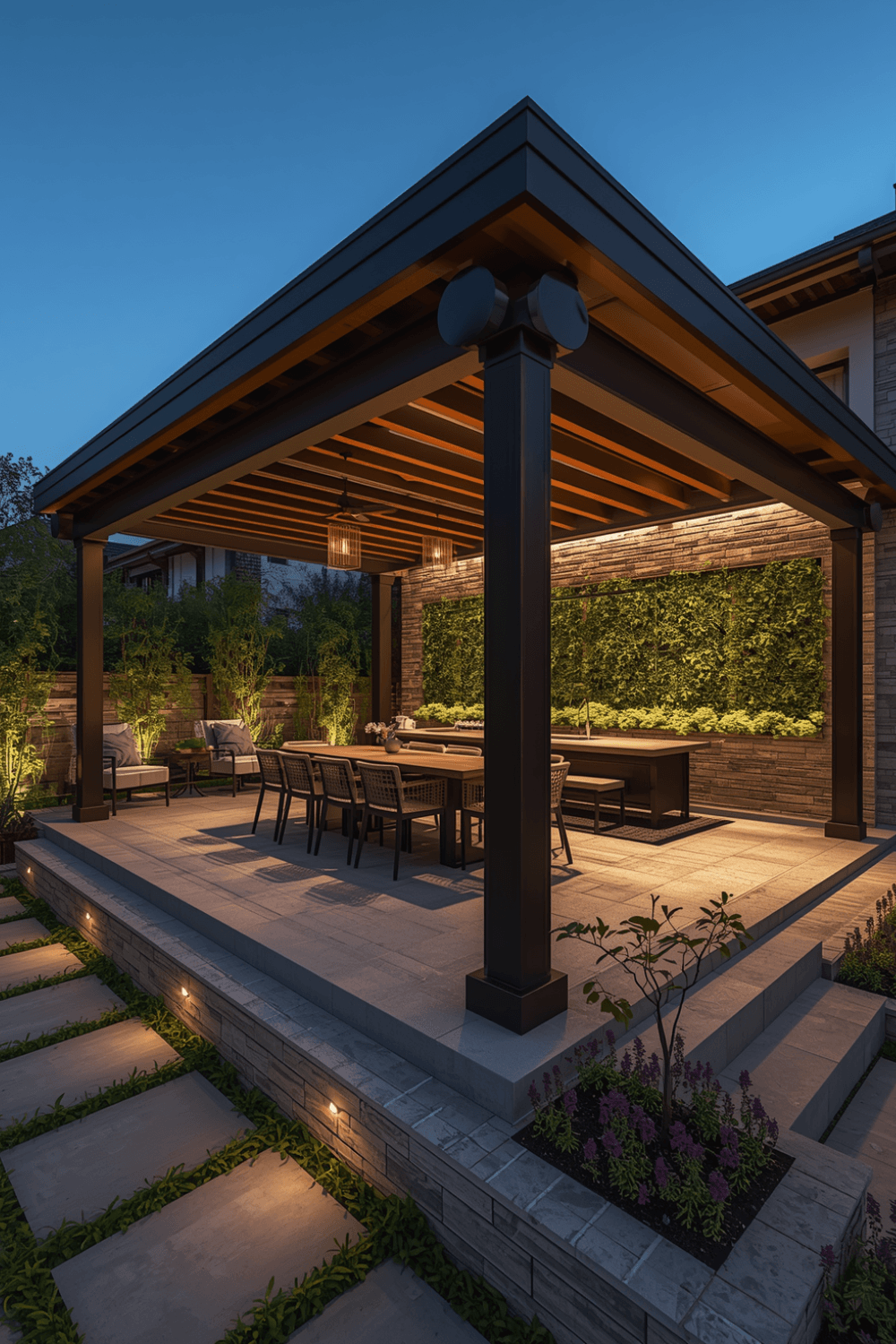
Outdoor rugs are one of the most effective things you can do to make a patio feel like a room. Most people buy one that’s too small. If your dining table has six chairs, get a rug that keeps all six chair legs on the rug even when pulled out. Bigger than you think, every time. Polypropylene rugs hold up best outdoors — they handle rain, UV exposure, and mildew better than anything else at the price point.
3. Build a Pergola Patio Design
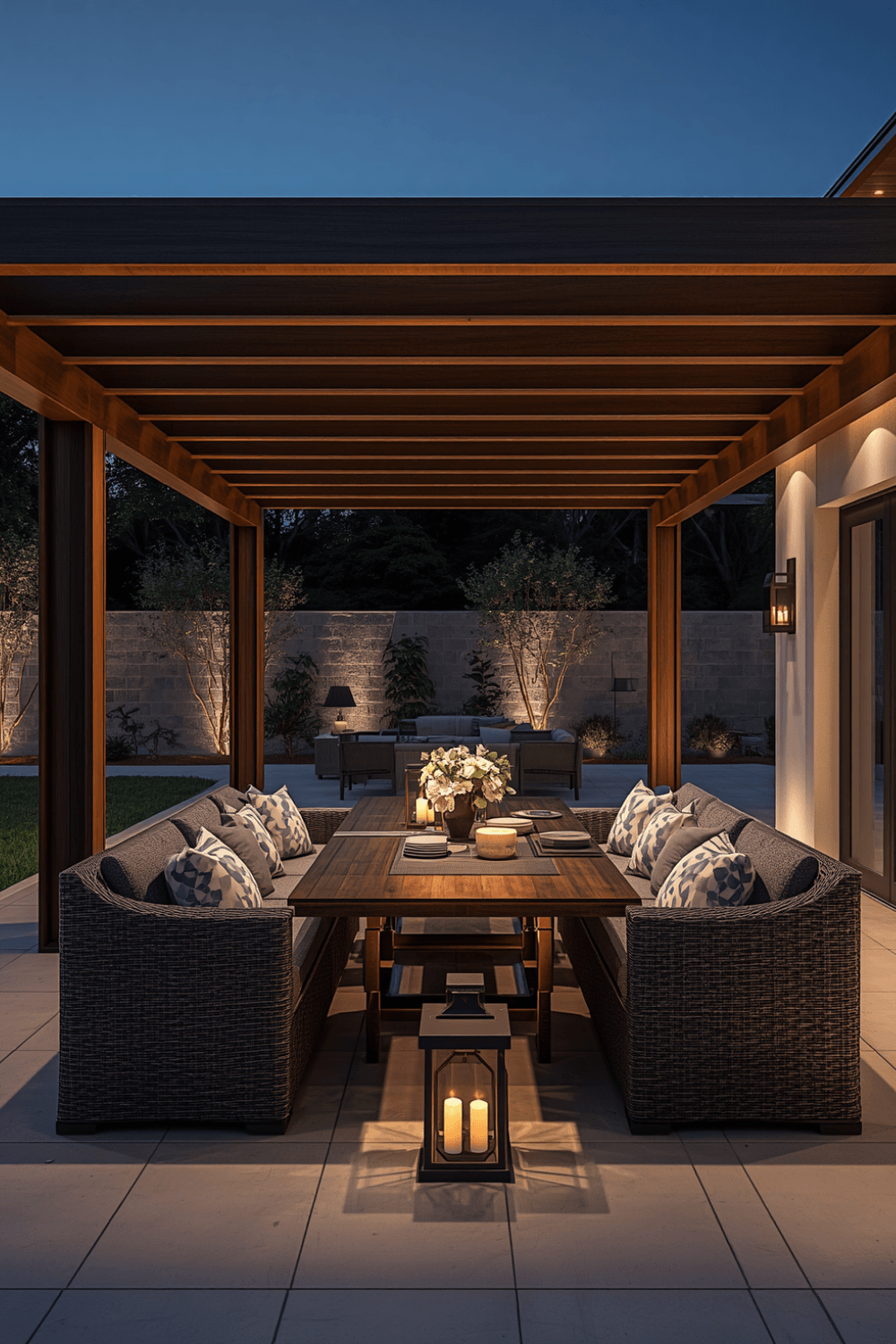
A pergola is the fastest way to give a flat patio some architectural interest. It frames the space, gives you something to hang lights or climbing plants from, and provides partial shade without blocking all the light. Aluminum pergolas have largely replaced wood for most homeowners — they don’t rot, don’t need staining, and the louvered versions let you adjust shade on the fly. They’re not cheap, but they last twenty-plus years and require almost no maintenance.
4. Create a Defined Dining Zone
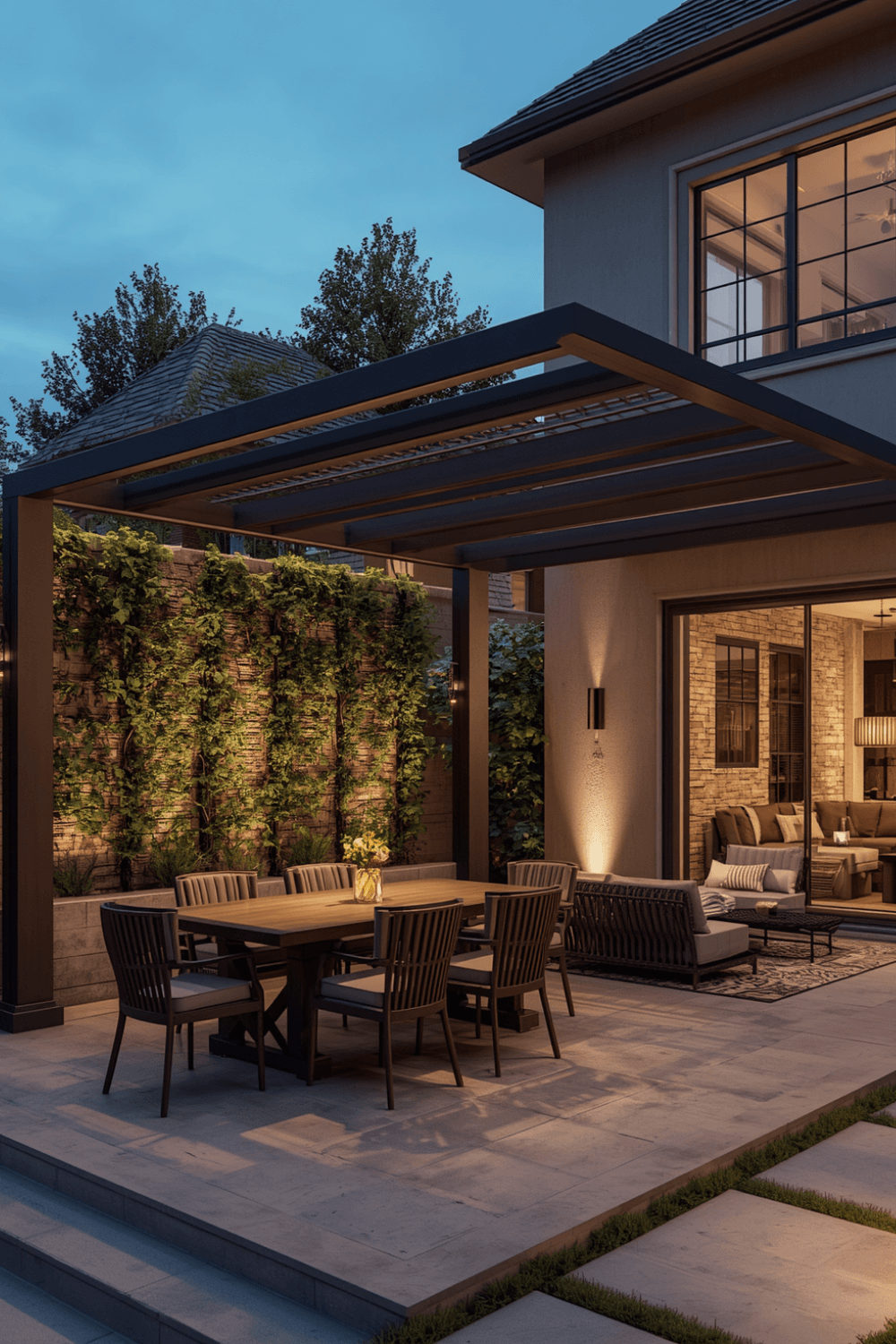
A backyard entertainment space works better when the dining area feels distinct from the lounging area — even if they’re only a few feet apart. Use the rug to anchor the dining set. Add a pendant light or string lights directly overhead. Put the dining table slightly closer to the kitchen door if you can. These small separations make the whole space feel more intentional.
5. Add a Water Feature
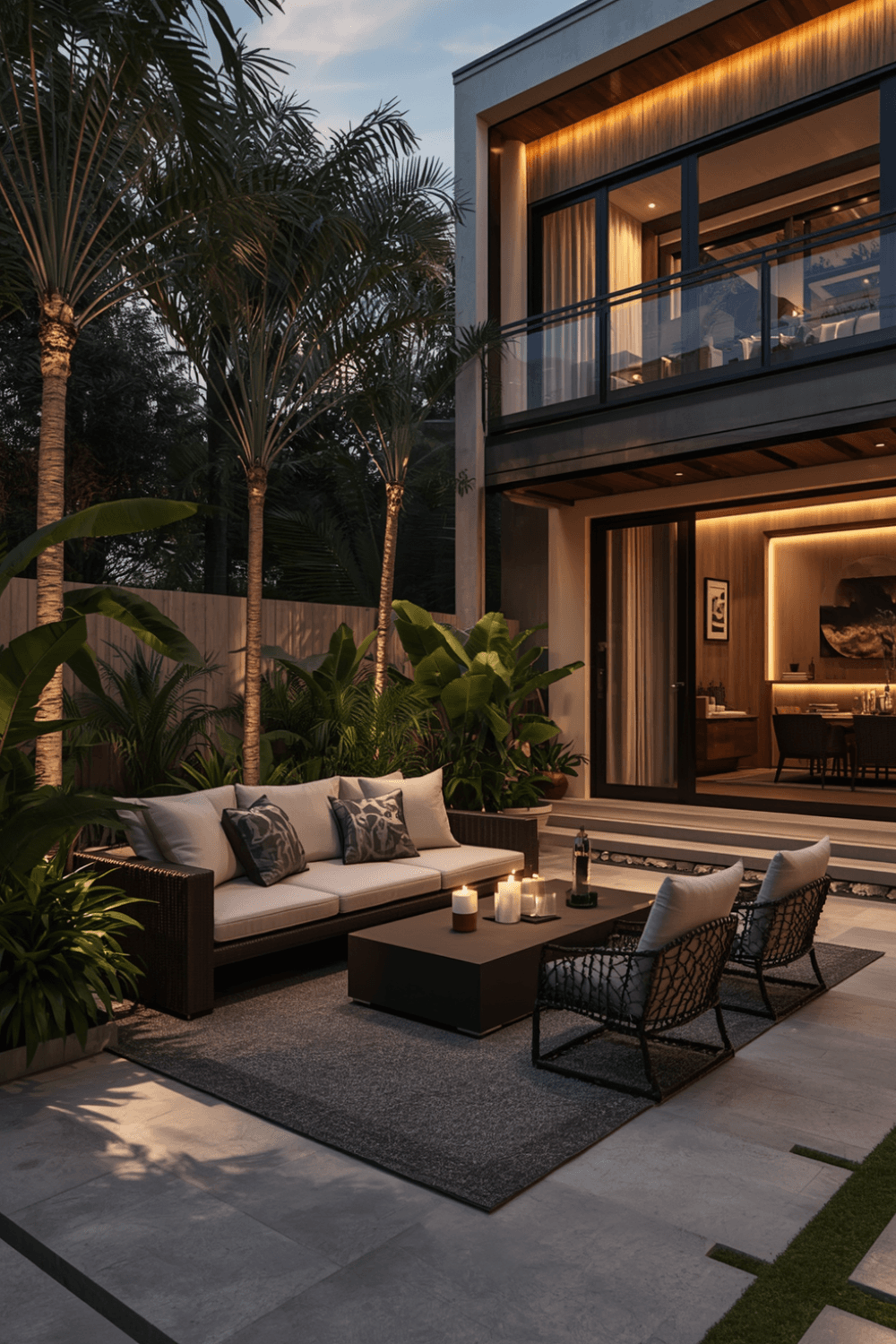
A small fountain or wall-mounted water feature does two things: it adds ambient sound that makes conversation easier (less echo, less carrying), and it’s genuinely relaxing. You don’t need a koi pond. A simple ceramic pot fountain from a garden . This is one of the cheaper upgrades that makes the biggest sensory difference in a cozy backyard retreat.
6. Use Vertical Space With Garden Wall Decor
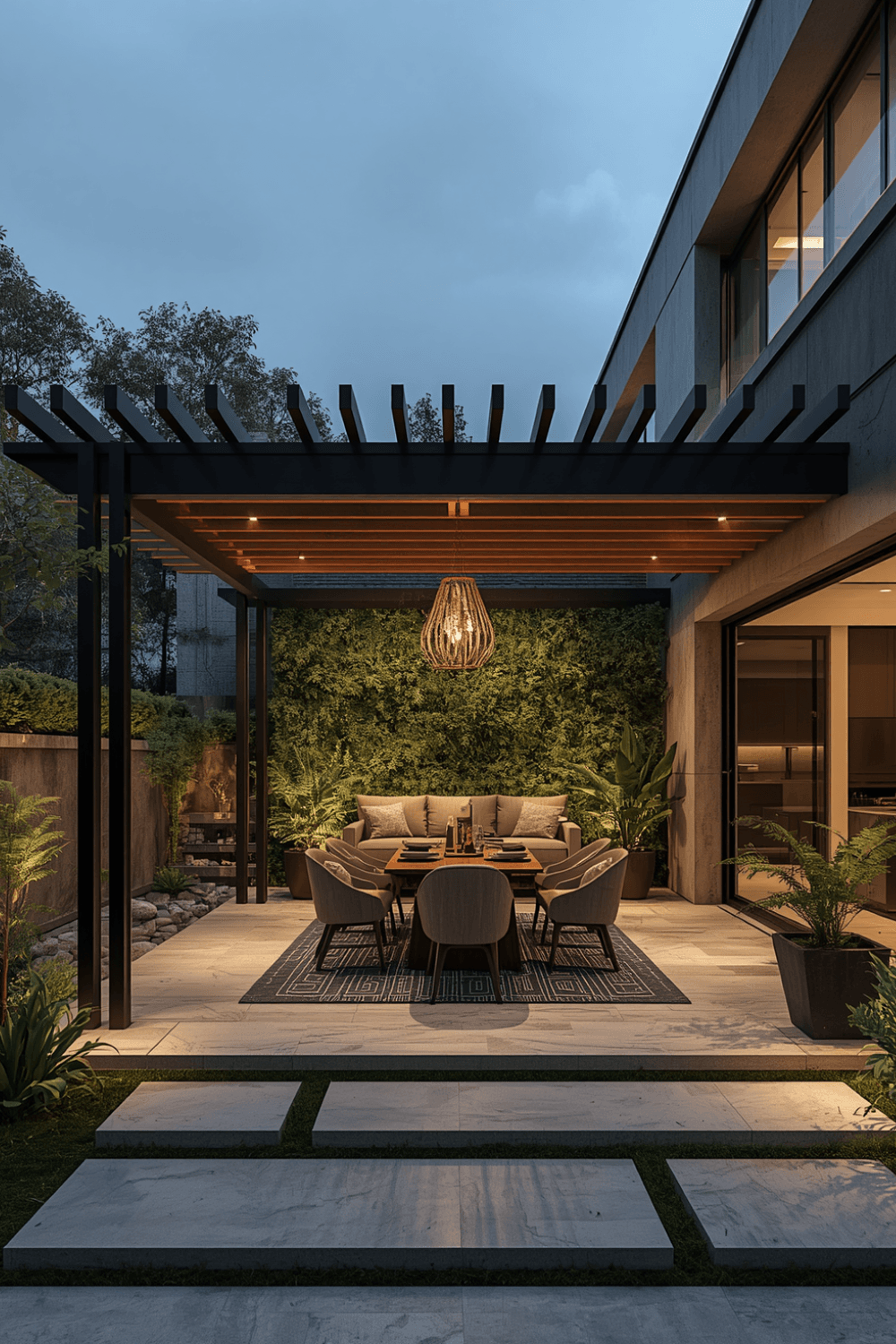
Small patios can’t sprawl outward, but they can go vertical. A wall of mounted planters, a trellis with climbing plants, or large-scale garden wall decor breaks up a flat fence and makes the space feel lush rather than cramped. This is especially useful in urban yards where you’re essentially surrounded by fence panels on three sides. Mounted metal planters with drip trays are low-maintenance and look sharp. Filled with trailing plants like ivy or sweet potato vine, they fill in quickly through the growing season.
7. Build In a Fire Pit Area
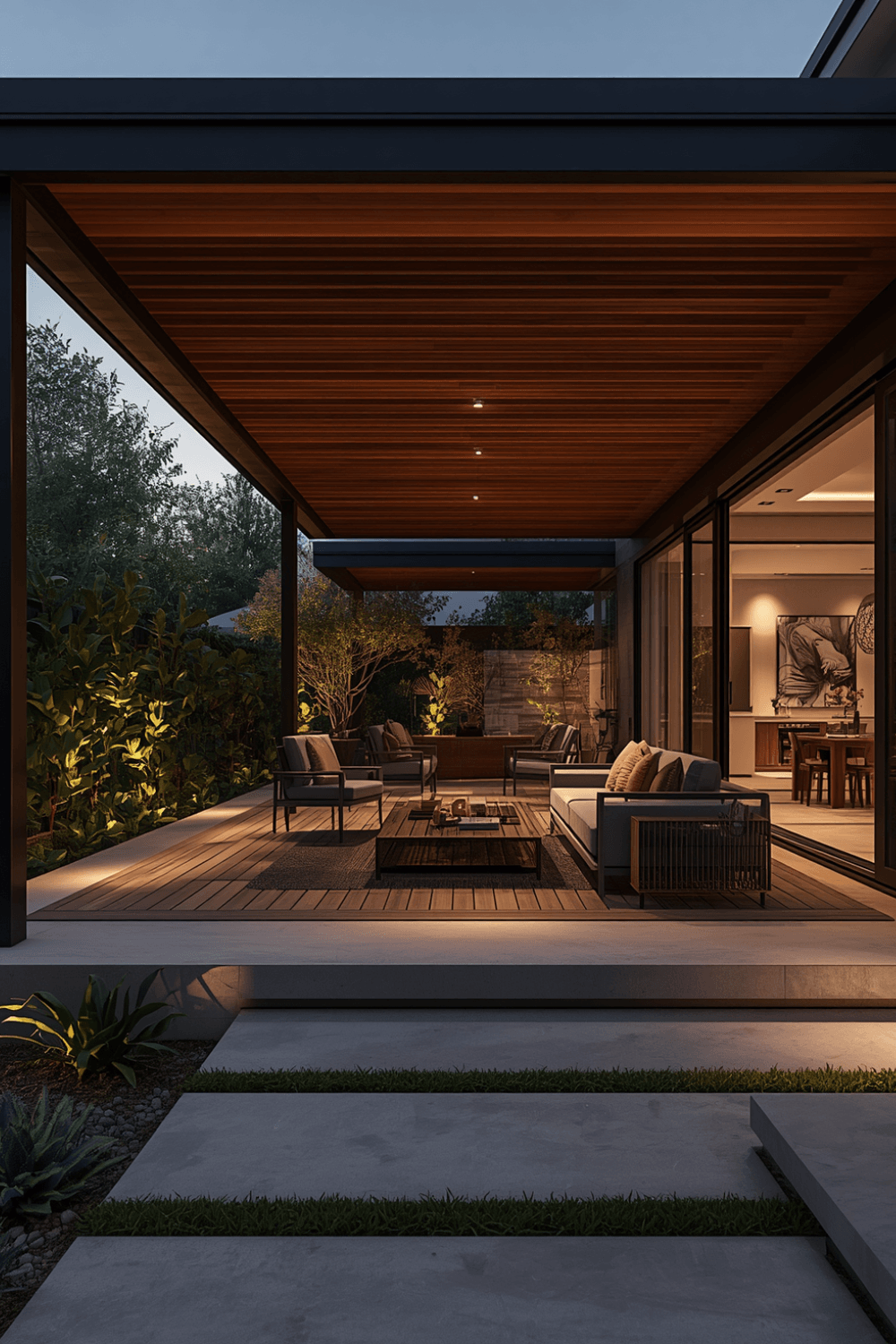
A fire pit extends outdoor living into cooler months and gives every gathering a natural focal point. People cluster around fire. It’s an evolutionary thing. The simplest approach is a freestanding metal fire pit bowl with a spark guard, a few chairs pulled up in a loose circle, and a dedicated place for firewood nearby. If you want something more built-in, a gas fire table gives you the effect without the ash cleanup.
8. Plant a Privacy Hedge or Screen
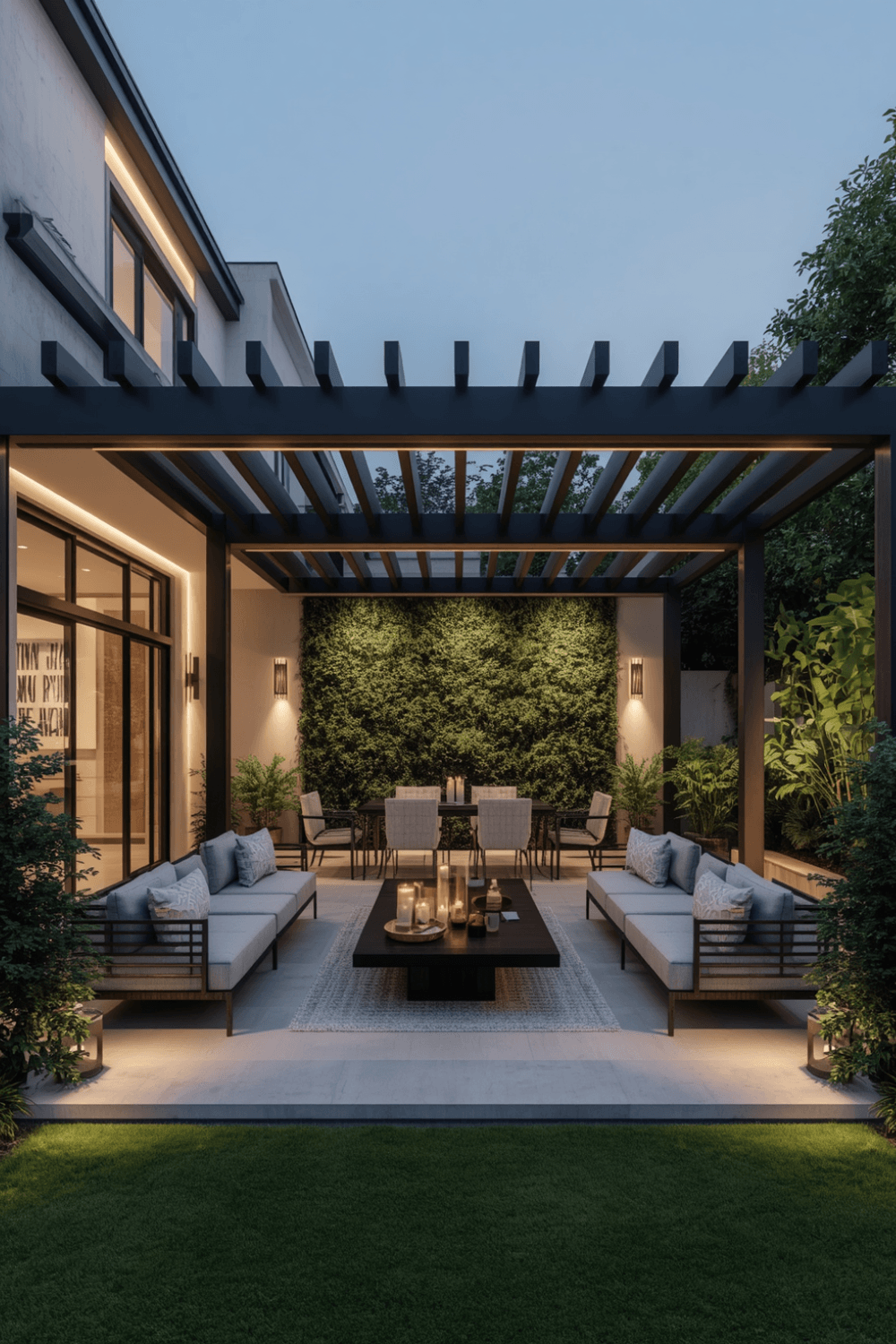
Bamboo screens, lattice with climbing plants, tall ornamental grasses, or a proper hedge all work. Fast-growing options like arborvitae or privet fill in within two to three growing seasons. Instant privacy screens (pre-grown bamboo or cedar panels on frames) work immediately but cost more.
9. Try a Daybed or Oversized Lounger
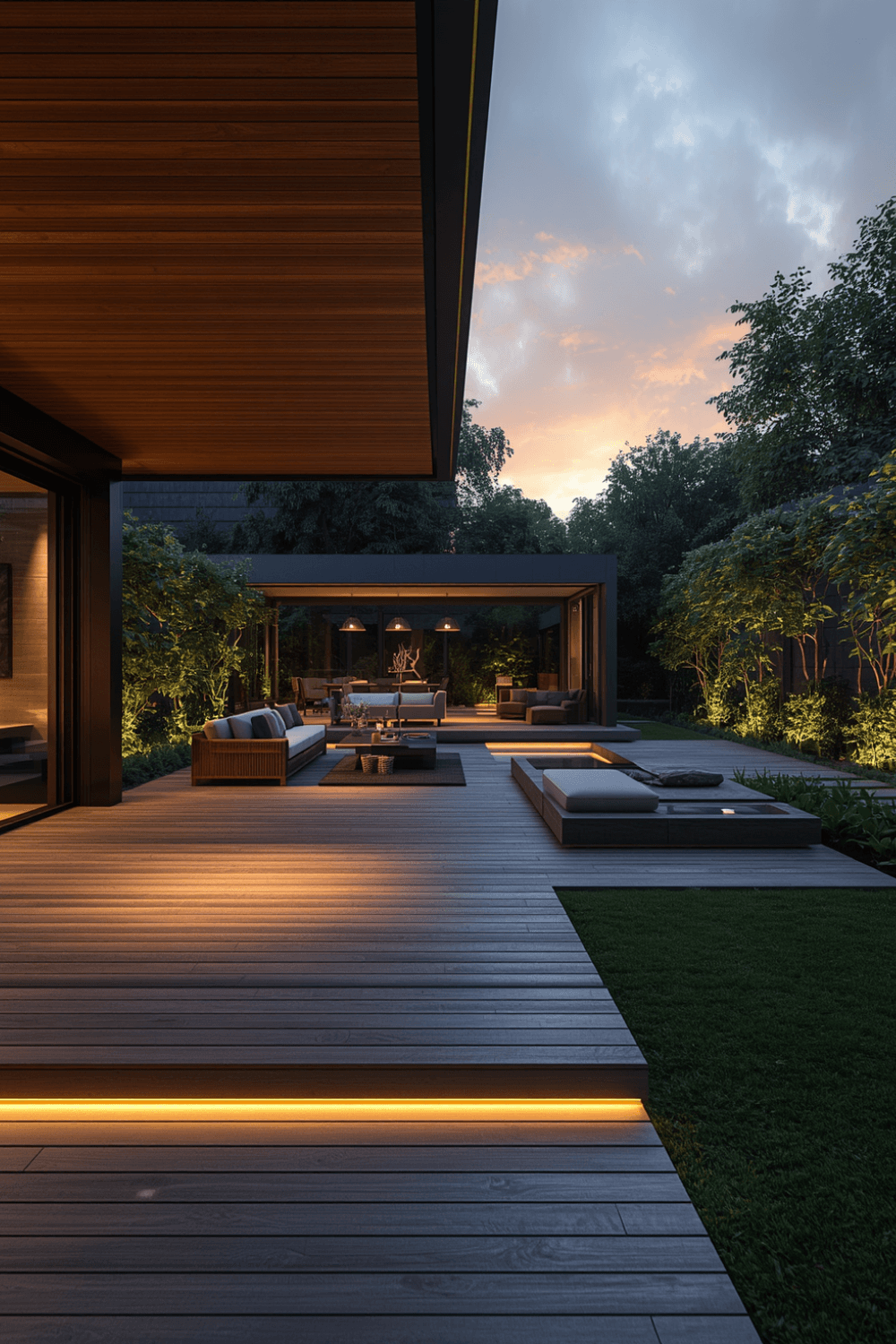
Most outdoor seating is built for sitting upright. One deep chaise lounge or an outdoor daybed changes the whole energy of a space. It signals that this is somewhere you actually lie down and read, not just somewhere you sit with guests for exactly the length of a dinner. Teak daybeds with all-weather cushions are the gold standard. A more affordable route: a hanging egg chair or hammock stand, which takes less floor space and tends to become the most-used seat on the patio within a week.
10. Use Large-Format Pavers
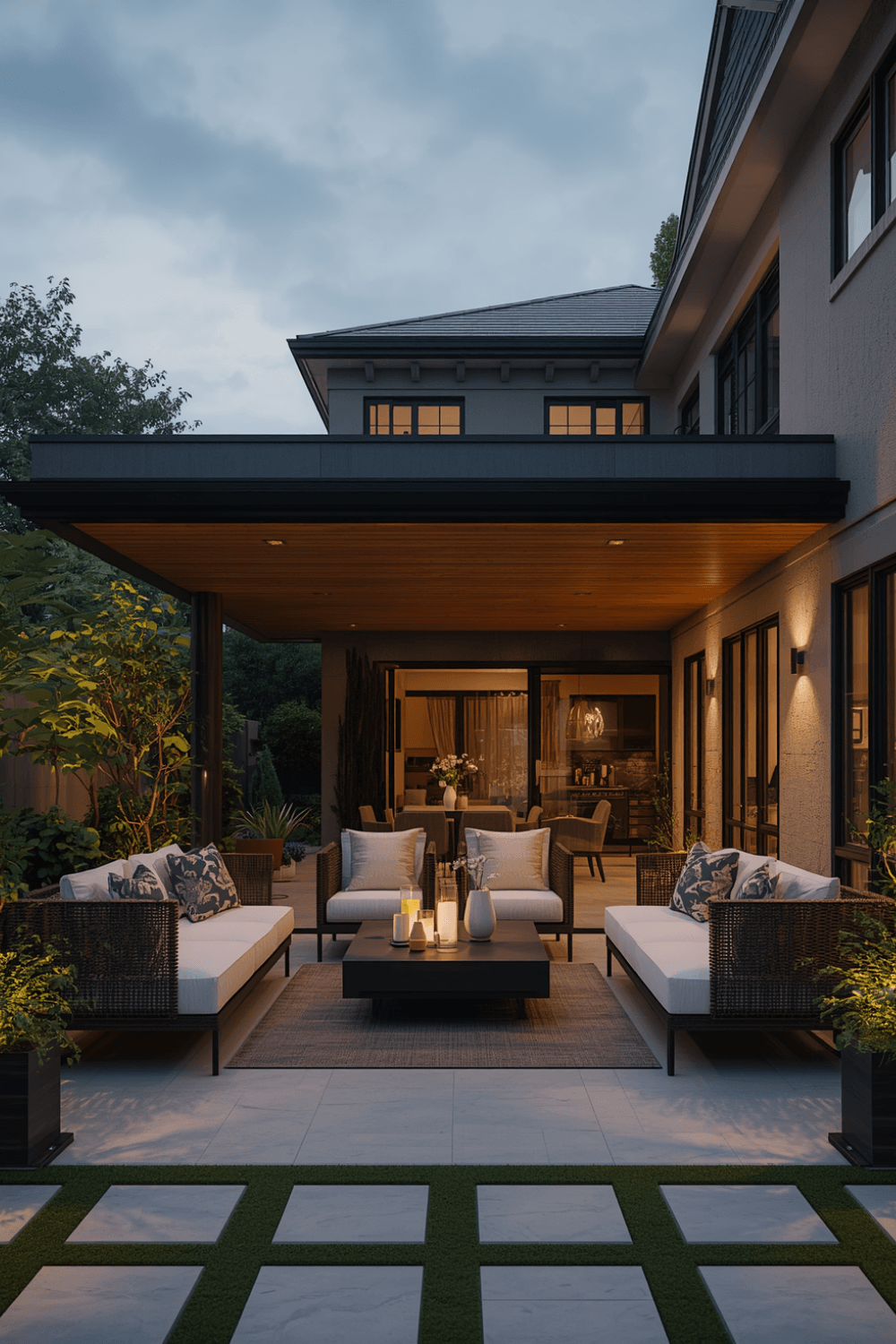
Small, busy paving patterns make spaces feel choppy. Large-format. They make a small patio feel more expansive and are actually easier to install than smaller tiles because there are fewer cuts and fewer joints to fill. Concrete pavers are affordable. Natural stone (travertine, bluestone) costs more but looks genuinely elegant and holds its value well.
Modern Patio Design: The Details That Separate Good From Great
11. Go Tonal With Your Color Palette
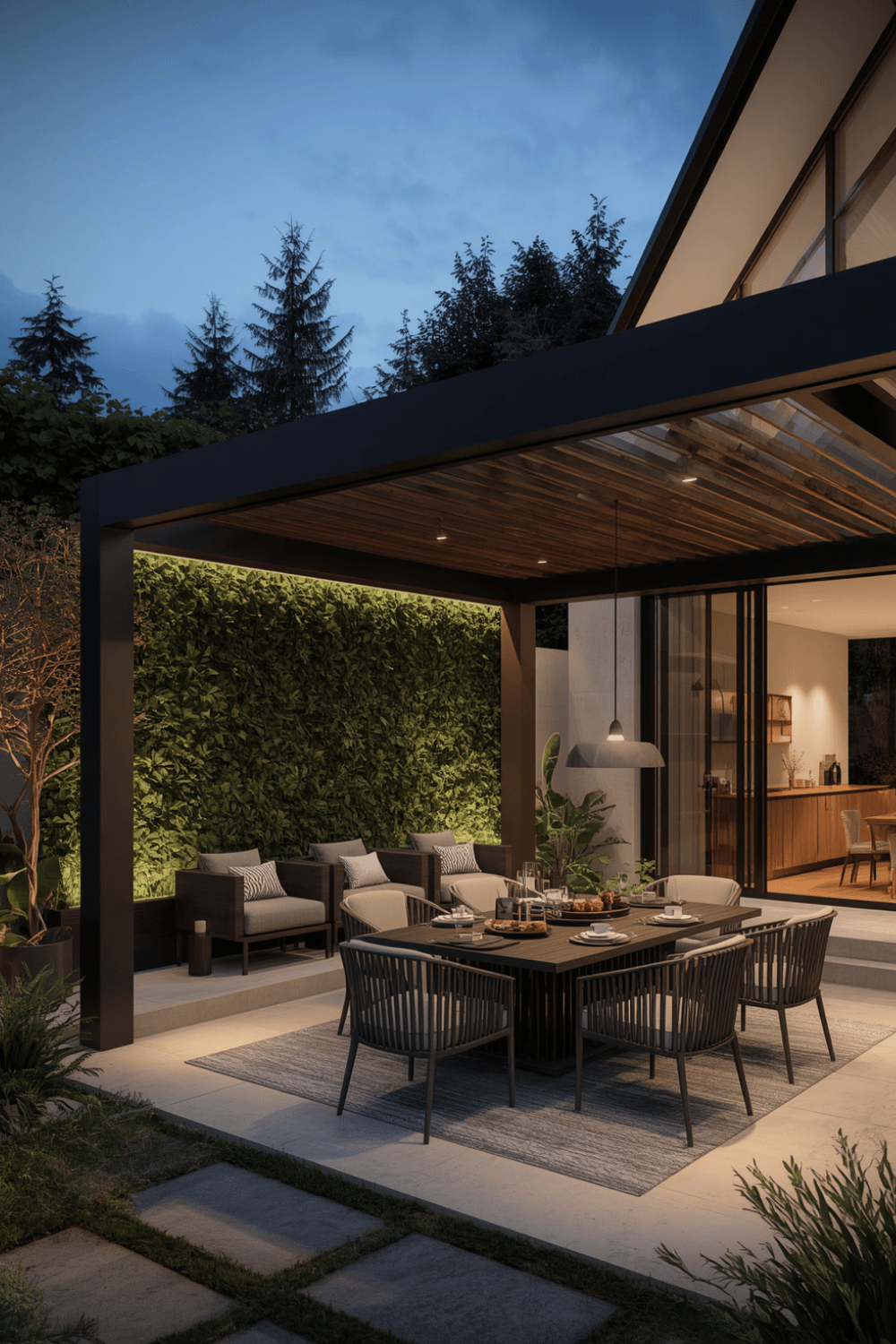
Pick two or three colors and stick with them. Outdoor spaces tend to accumulate random cushions, pots, and accessories in twenty different colors, which reads as visual clutter. A simple palette — say, cream, terracotta, and natural wood — holds together regardless of what specific pieces you add. This applies to cushion covers, planters, throw pillows, and even the colors of your plants.
12. Hang Curtains
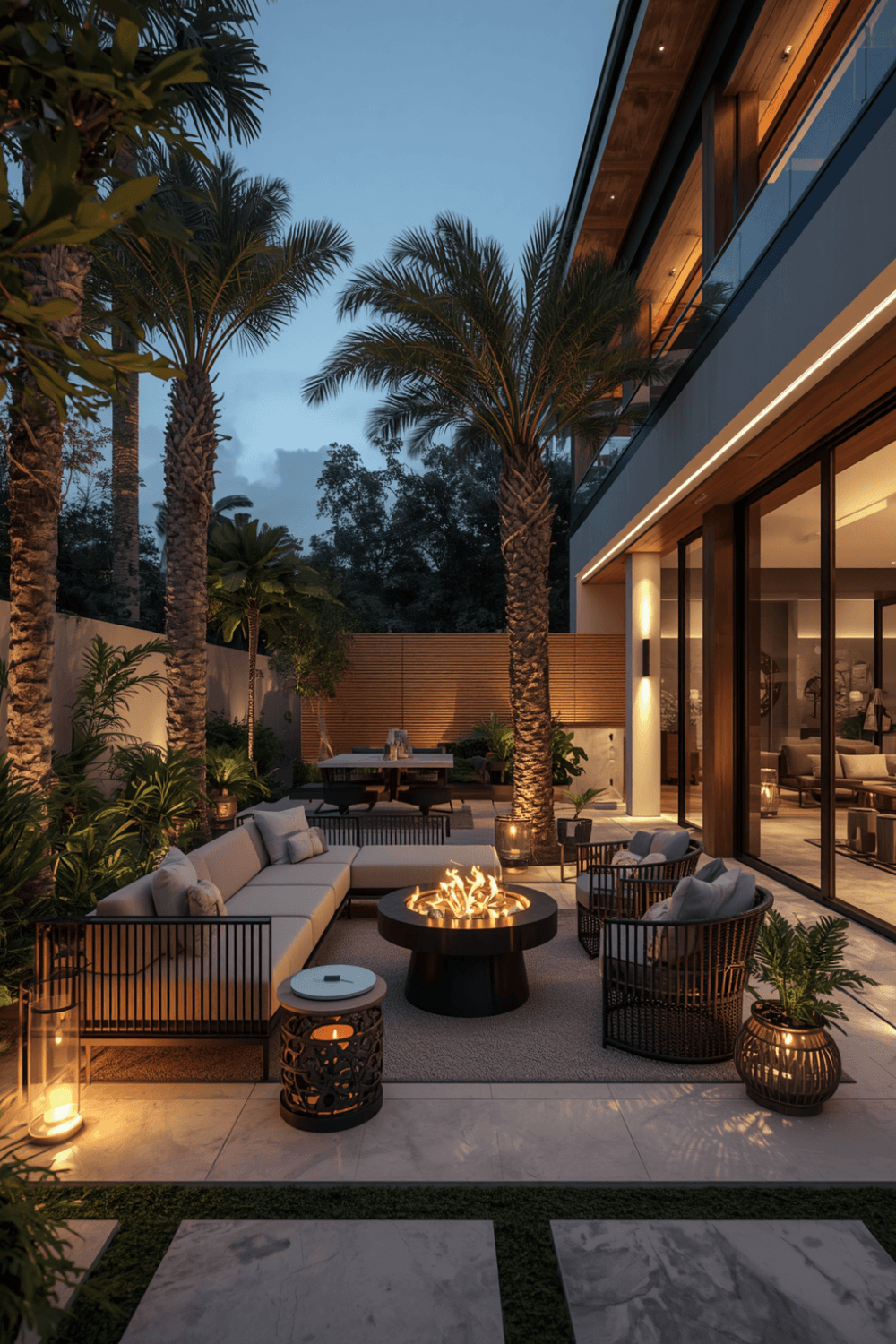
Outdoor curtains are underused. Long panels on a pergola or mounted rod create privacy, add softness to a space that’s otherwise all hard surfaces, and look genuinely elegant. Fade-resistant Sunbrella-type fabric holds up for years. This is especially effective on covered patio ideas where you already have some overhead structure to work with. Draw the curtains in, open space. Draw them out, defined room.
13. Layer Plants at Different Heights
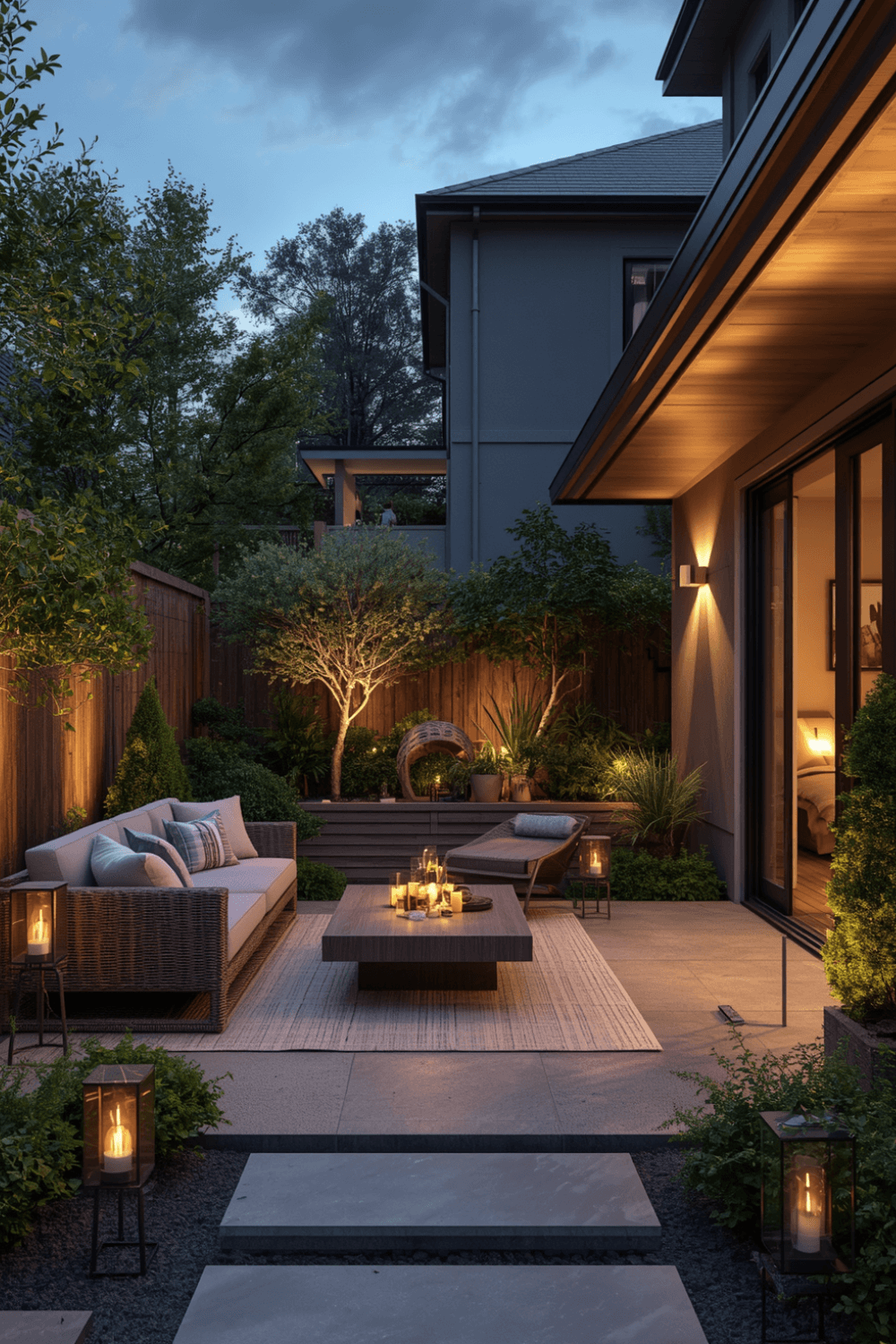
A flat row of potted plants along a fence looks like a plant display, not a garden. Mix heights: tall architectural plants (bird of paradise, ornamental grasses, olive trees in pots) in the back corners, mid-height shrubs or flowering perennials in the middle, low trailing plants and groundcovers at the front. This creates depth and makes the borders of a small patio feel farther away.
14. Add a Side Table Beside Every Seat
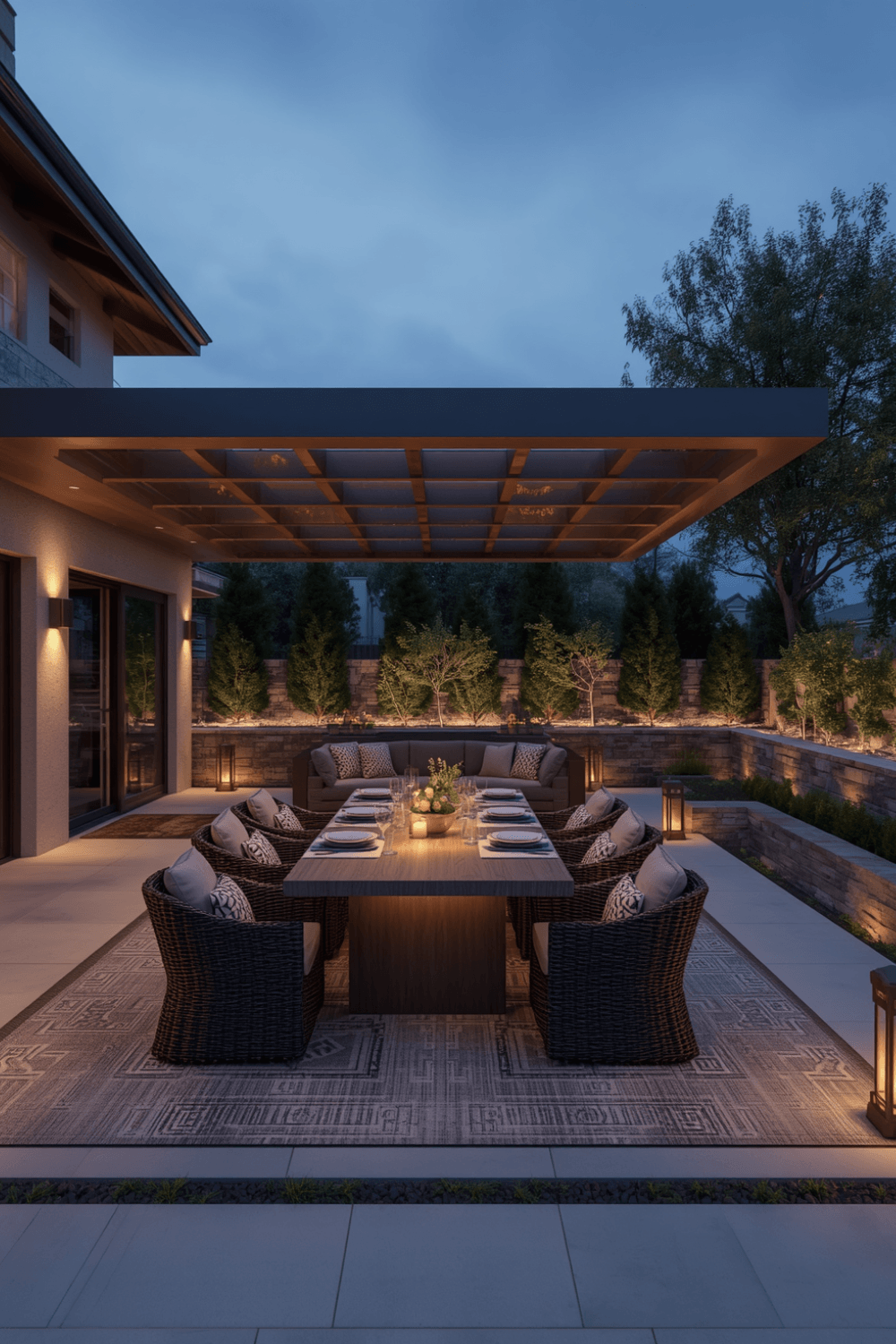
This sounds obvious and yet most patios have one table for eight chairs. Somewhere to set a drink without getting up is the baseline comfort requirement. Add a small side table beside every primary seat. Stackable metal accent tables work well and store easily in winter.
15. Install an Outdoor Ceiling Fan
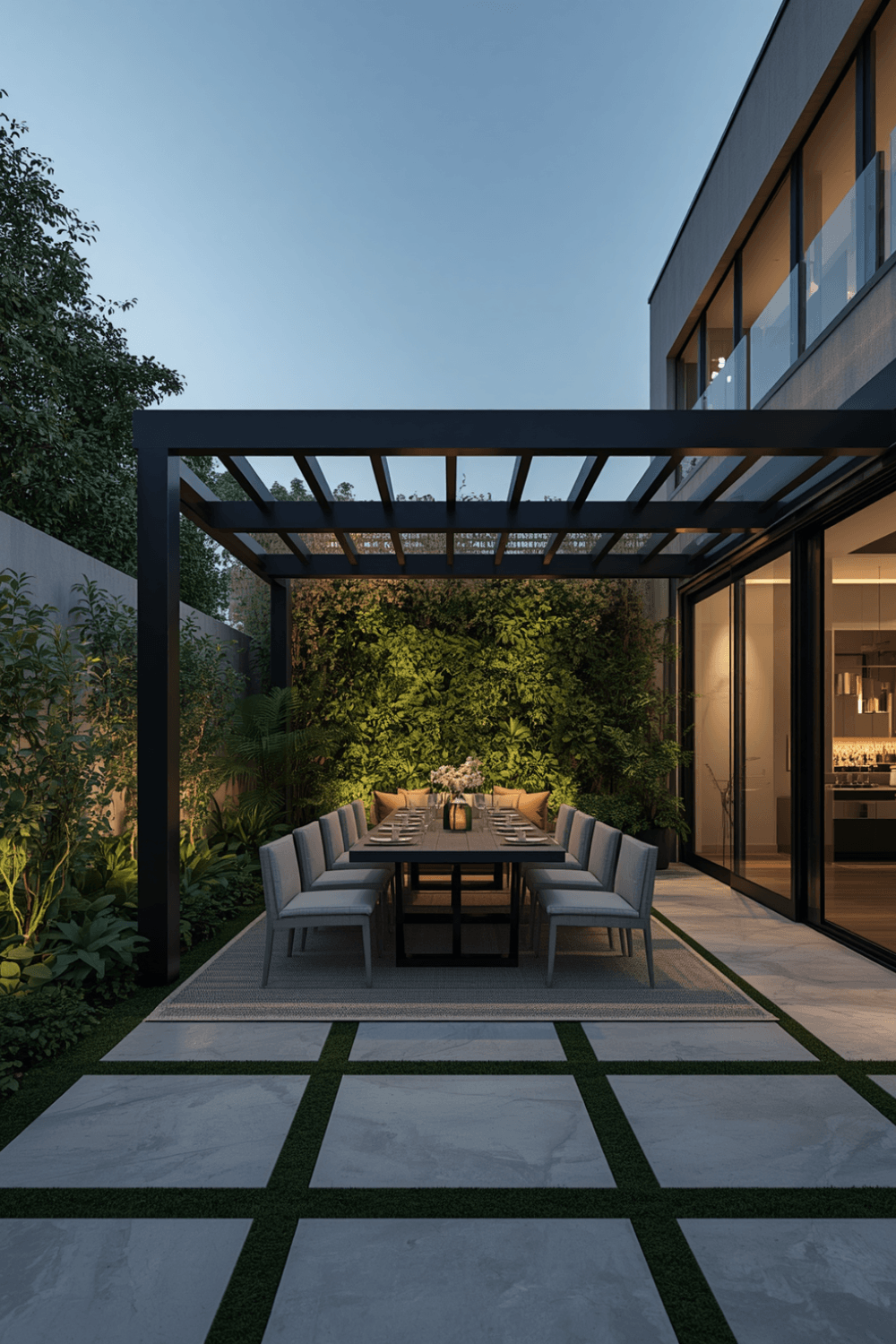
If you have a covered patio or pergola, a ceiling fan cuts perceived temperature by five to seven degrees on hot days and keeps bugs moving. Most outdoor-rated fans (look for “damp” or “wet” rated) are quiet enough that they don’t interfere with conversation. This single addition can extend the usable season on a hot-climate patio by weeks.
Small Backyard Makeover: Making a Tight Space Work
Small patios require slightly different thinking. The goal is to avoid anything that makes the space feel more crowded than it is.
16. Choose Furniture That Folds or Stacks
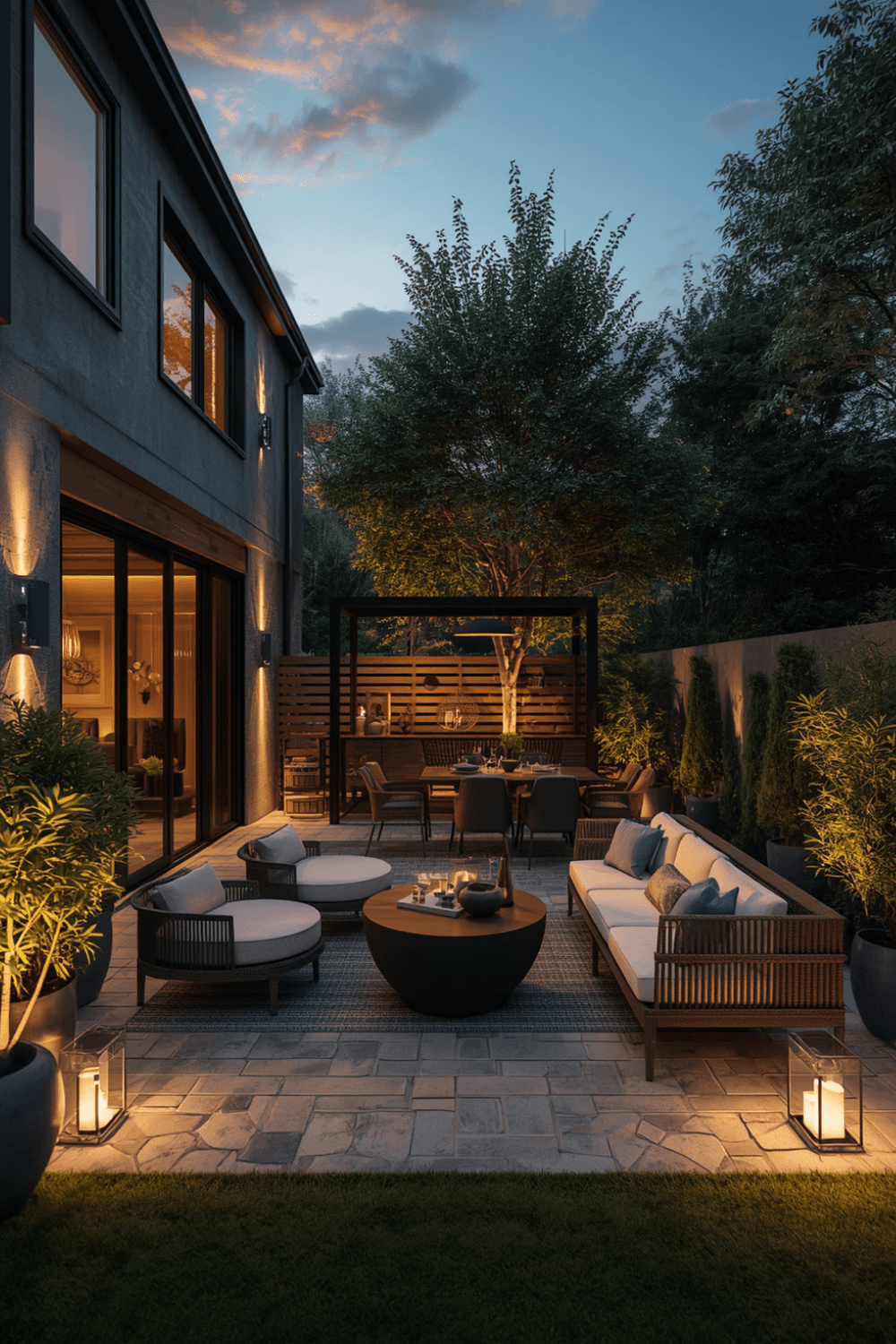
Folding bistro chairs, stackable stools, and folding tables let you reconfigure as needed and pull extras inside when not in use. A small table for two that expands to four is worth the small premium for limited-space outdoor living.
17. Use Mirrors to Reflect Light
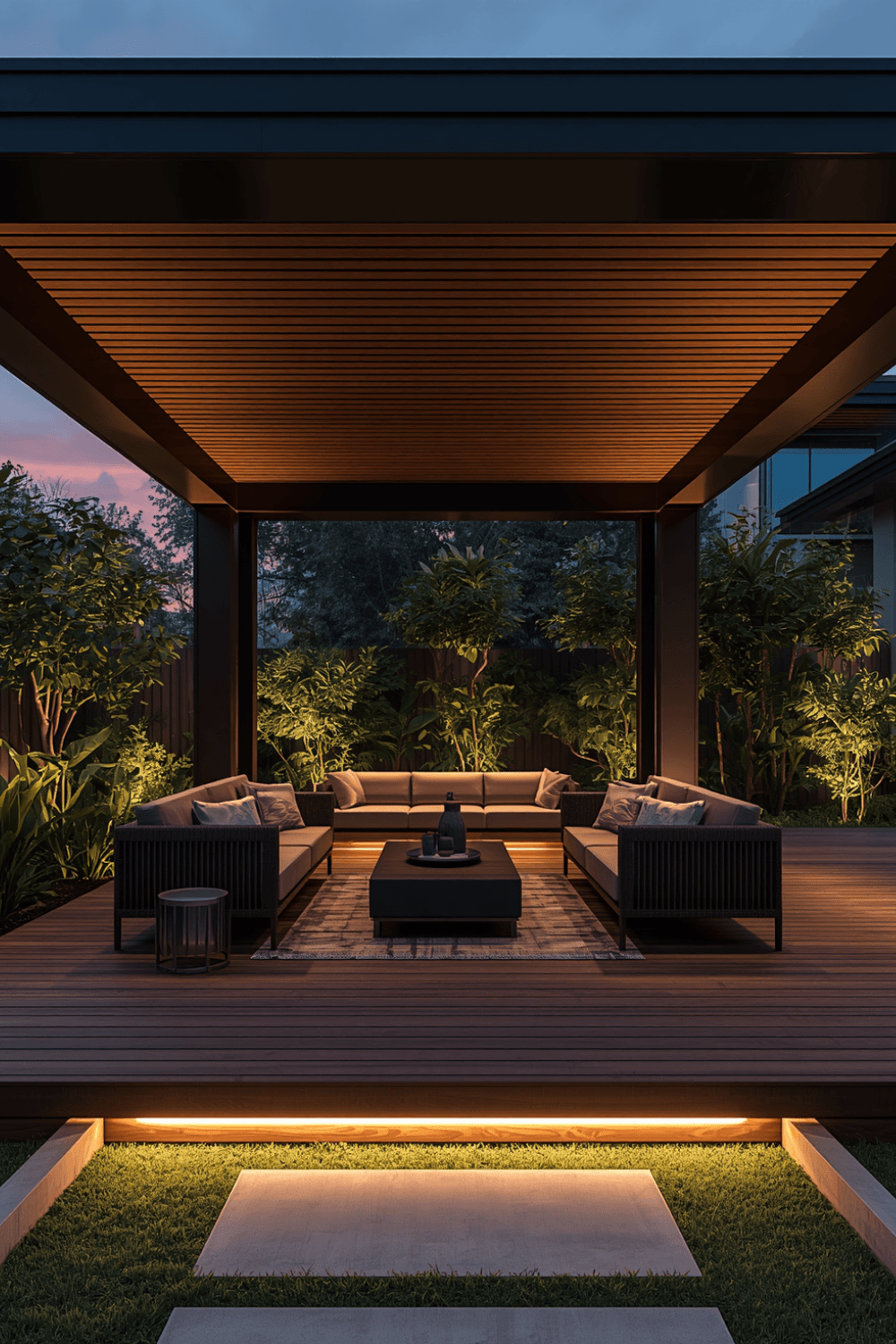
Outdoor-rated mirrors (sealed frames, UV-resistant backing) mounted on a fence or wall bounce light around and visually expand a tight space. This is a classic interior design trick that works just as well outside. One large mirror is more effective than several small ones.
18. Keep the Ground Surface Continuous
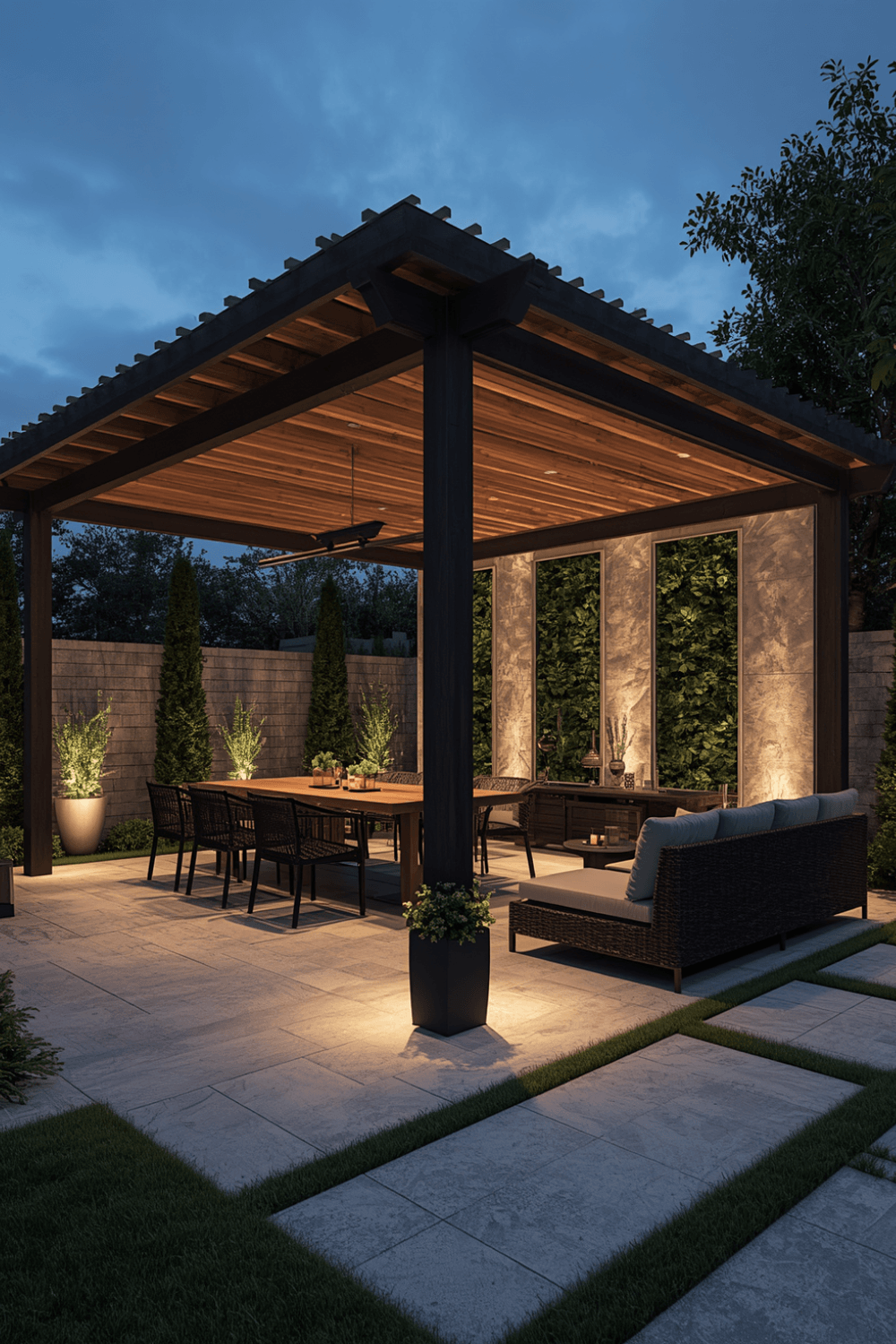
In small spaces, using the same paving material throughout rather than mixing surfaces helps the eye read the space as larger. Interrupting a small patio with a strip of different material or a step down creates visual breaks that emphasize the edges.
19. Invest in One Statement Piece
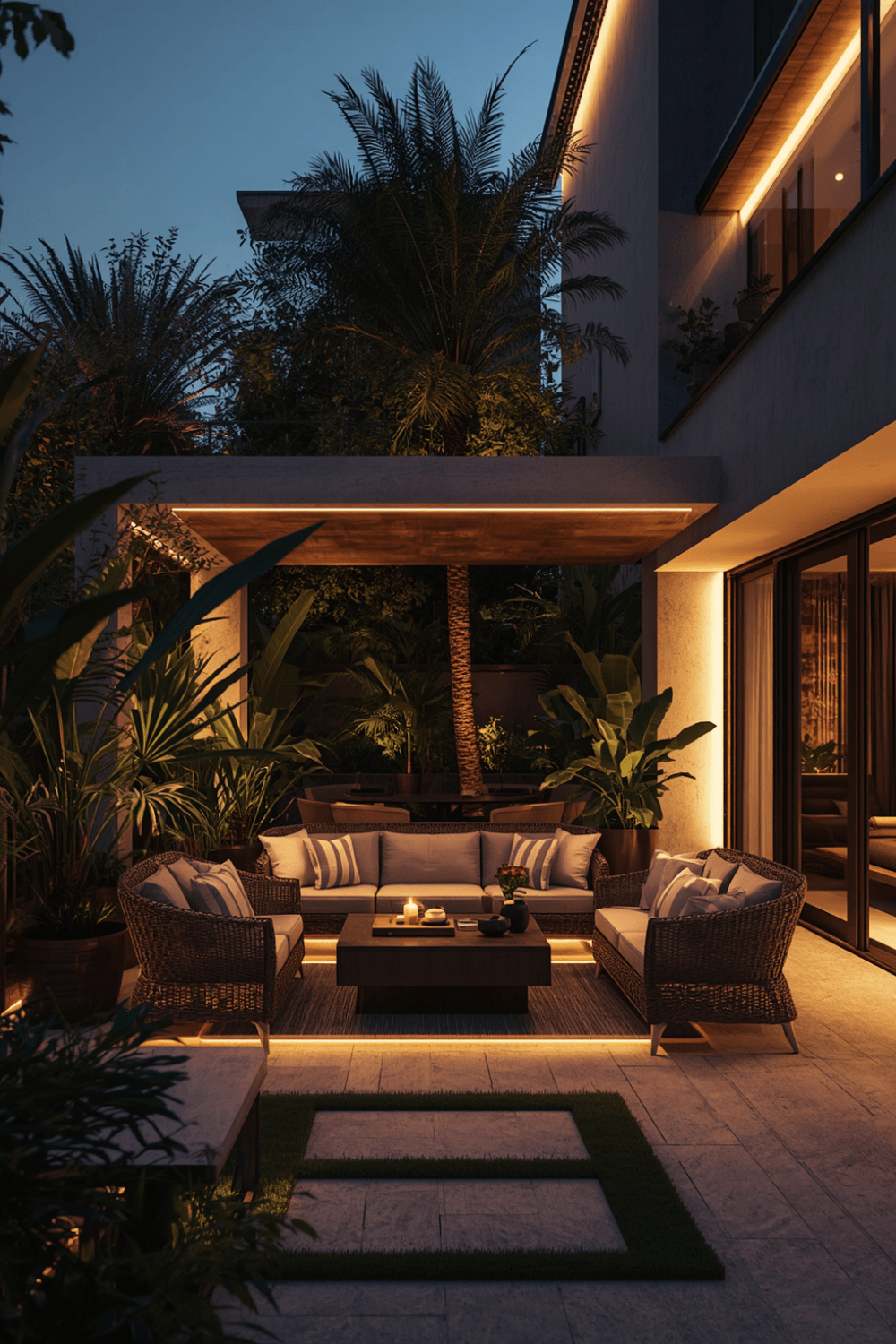
One beautiful, well-made item — a sculptural planter, a properly nice outdoor sectional, a hand-thrown ceramic side table — elevates everything around it and makes even inexpensive basics look intentional. Figure out what that statement piece is for your space and spend real money there. Save everywhere else.
20. Keep It Consistently Maintained
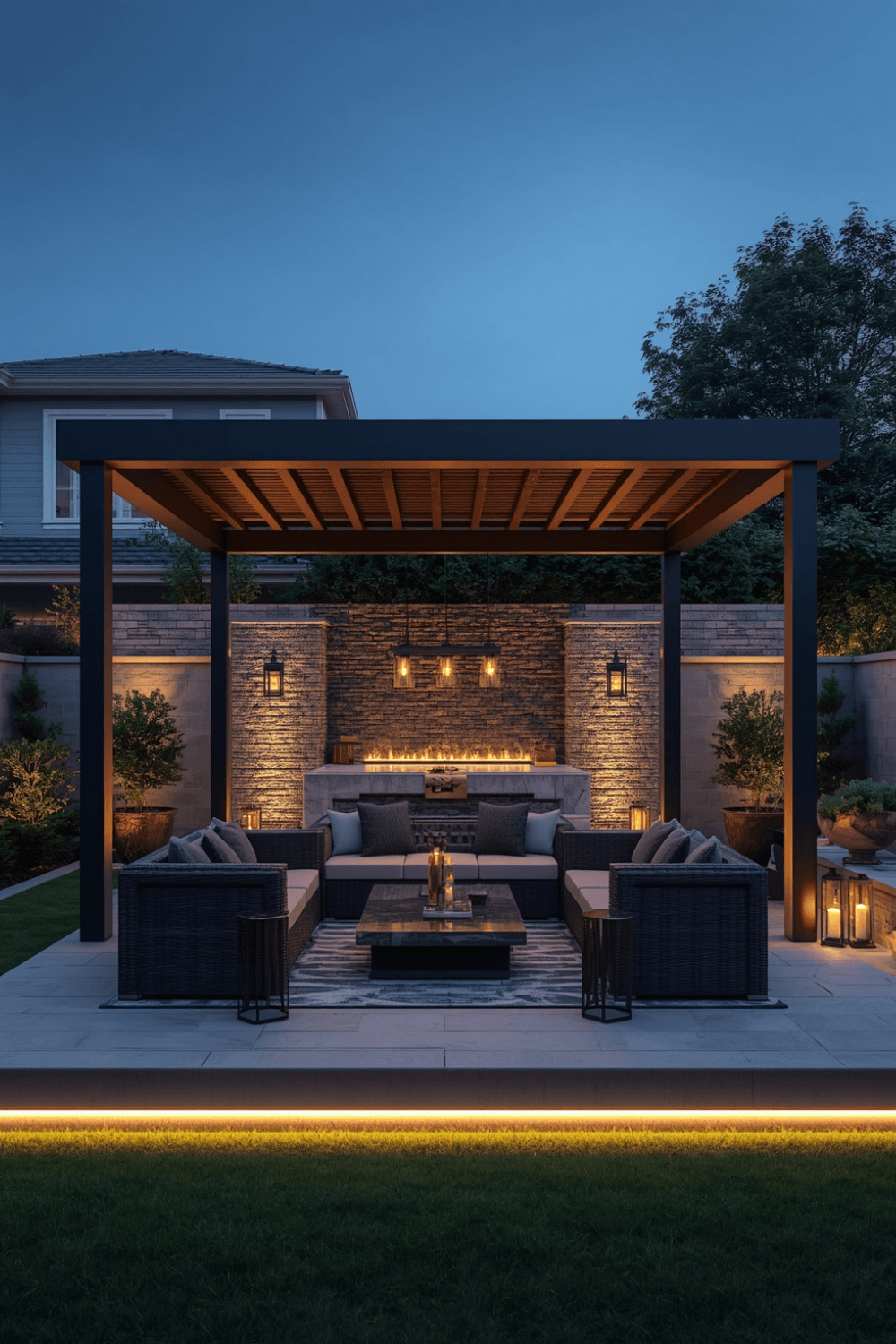
The single biggest difference between a luxury outdoor living space and one that just looks expensive in photos is upkeep. Cushions put away when it rains. Furniture wiped down. Planters regularly watered and dead-headed. Weeds pulled from between pavers. It sounds mundane, but a space that’s consistently tidy and cared-for reads as more luxurious than a more expensive patio that’s let go. Every time.
FAQ: Common Questions About Outdoor Patio Design
What’s the best material for outdoor patio furniture that actually lasts?
Teak, powder-coated aluminum, and high-density polyethylene (HDPE) all hold up well long-term. Teak is the nicest looking but requires occasional oiling. Powder-coated aluminum is the most maintenance-free. HDPE (used in many Adirondack chairs) is nearly indestructible and often made from recycled materials. Avoid untreated iron and most wicker for anything that will stay outside year-round.
How do I make a small patio feel bigger?
Large-format pavers, a single continuous ground material, large rugs (not small ones), mirrors, vertical planting, and furniture that folds or stacks all help. The most important thing is to avoid filling every inch of floor space — leaving some open space makes the patio feel more generous, not less.
What’s the most cost-effective way to create a covered patio?
A shade sail is the cheapest option and installs in an afternoon. Pergolas with polycarbonate roofing panels are mid-range and look more permanent. For a full covered patio with a proper roof, you’re generally looking at a permitted construction project — more expensive, but it genuinely extends how many days per year the space is usable.
Do I need planning permission for a patio?
In most places, a ground-level patio doesn’t require planning permission. A raised deck, pergola, or roofed structure may, depending on local regulations. Check with your municipality before building anything that adds significant height or covered square footage — rules vary a lot by location worldwide.
What outdoor plants work best near a seating area?
Plants that won’t drop messy fruit or sticky sap directly onto furniture, won’t attract excessive insects, and look good through the main seasons you’ll use the patio. Lavender, rosemary, ornamental grasses, boxwood, and citrus trees (in pots, in warm climates) are all good options. Avoid flowering plants known for attracting bees if anyone using the space has allergies.
Ready to Build Your Backyard Retreat?
The best patio is the one you actually use. Start with one or two changes from this list rather than trying to redo everything at once. Get the lighting right first — it’s the single change that makes the most immediate difference for evening use. Add a defining piece of furniture. Figure out shade. Work from there.
Most people who genuinely invest in their outdoor space say the same thing afterward: they should have done it sooner. The year you spend thinking about it is a year of summer evenings you could have been outside.
If you’re starting from scratch, a designer consultation (even a single hour with a landscape designer) can save you expensive mistakes. For existing patios, a weekend with some plants, new cushions, and a string of proper lights can change the entire feeling of the space. Either way, the investment is worth it.