
That’s not luck. Somebody walked that property at dusk with a notepad and decided exactly where the light should fall and where it shouldn’t. Most backyards skip that step entirely. The sun goes down, one porch light flicks on, and the rest of the yard just disappears.
I’ve walked a lot of properties at that exact hour, flashlight in hand, marking spots where a fixture would actually earn its keep instead of just adding glare. What I’ve noticed is that luxury garden lighting ideas almost never come down to expensive fixtures. They come down to restraint, the right color of light, and putting it in the two or three places that matter instead of everywhere at once. Below are twenty ideas pulled from that kind of walk-through, organized by where they go and what problem they solve, plus the planning details that keep a project from turning into a mess of cords and mismatched bulbs.
Luxury Garden Pathway Lighting Ideas
Path lighting is the first thing guests notice, and also the easiest place to mess up. Too tight, and you get a runway. Too sparse, and people are squinting at the ground looking for the next step. Six to eight feet apart, staggered on alternating sides rather than lined up like dominoes, tends to be the sweet spot.
1. Recessed path lights along stone or paver walkways.
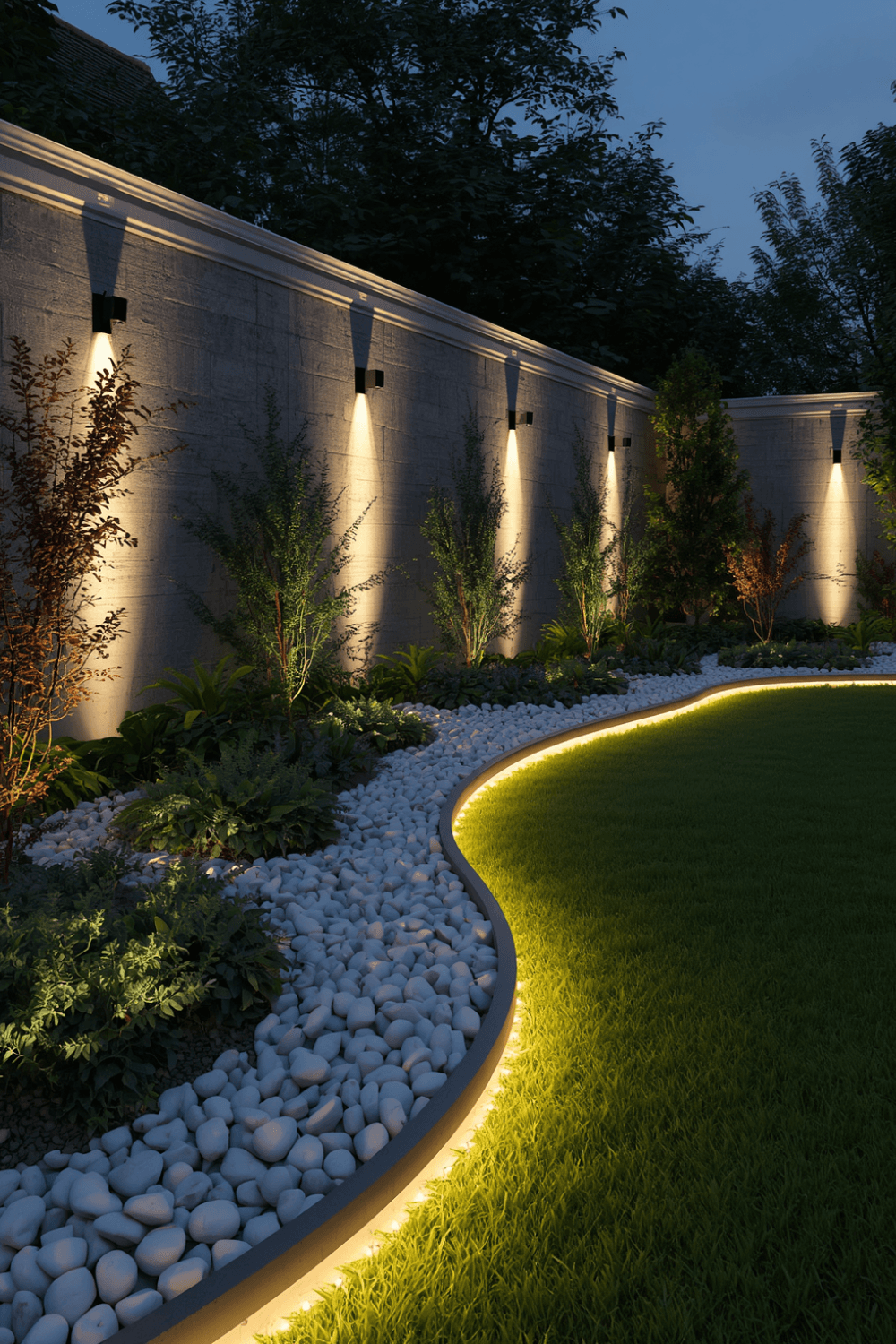
Nearly invisible in daylight, just a soft glow at night. Clean, modern, doesn’t fight with the materials around it.The background glow, string lights, lanterns, light filtering down through a tree canopy. This is what makes a space feel like somewhere you’d want to sit, not somewhere you’re just passing through.
2. Bollard lights for a contemporary entrance.
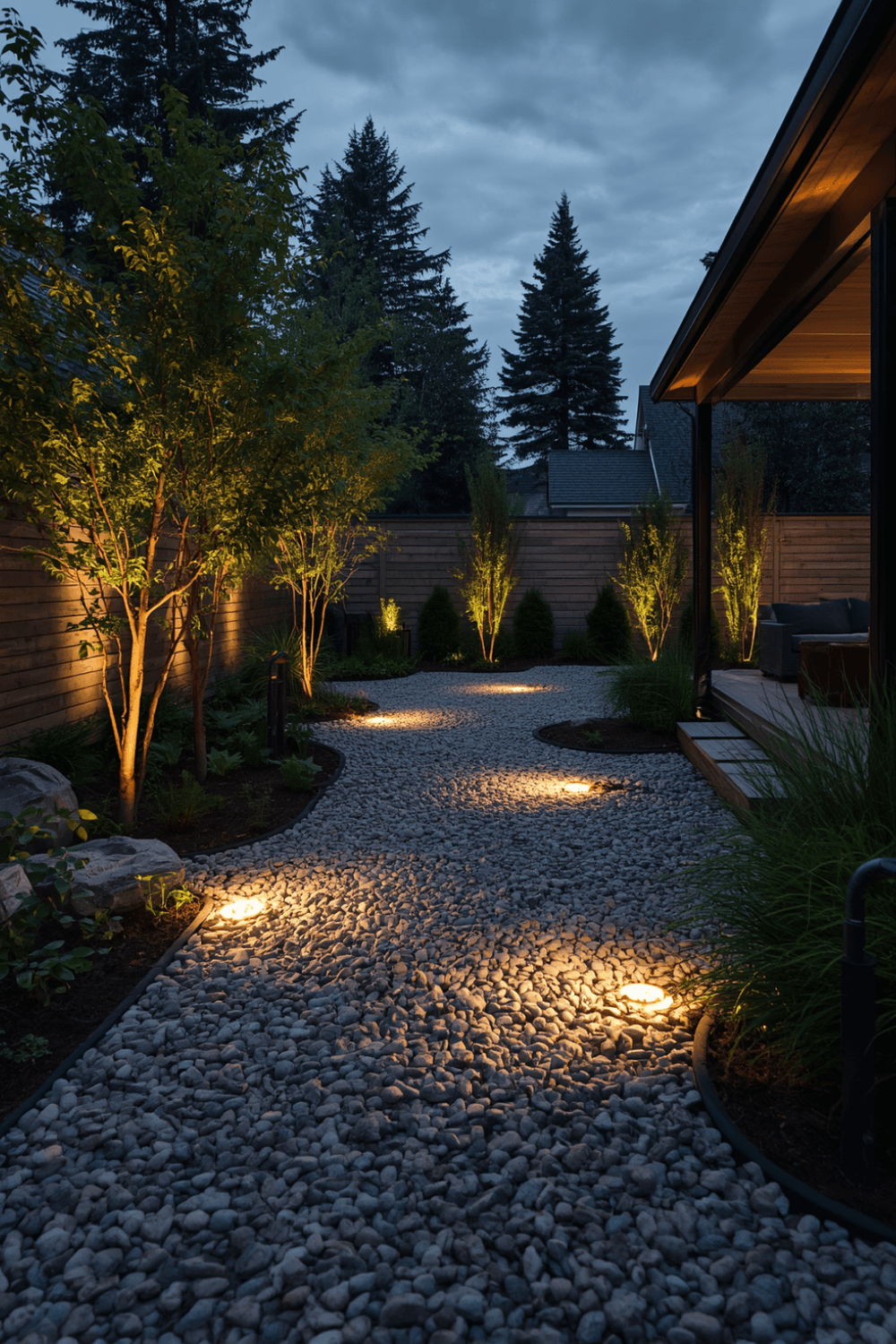
Taller, more sculptural, good for modern front yard landscaping where you want a defined edge along a driveway. They read as architecture, not as an accessory.
3. In-ground uplights along garden borders.
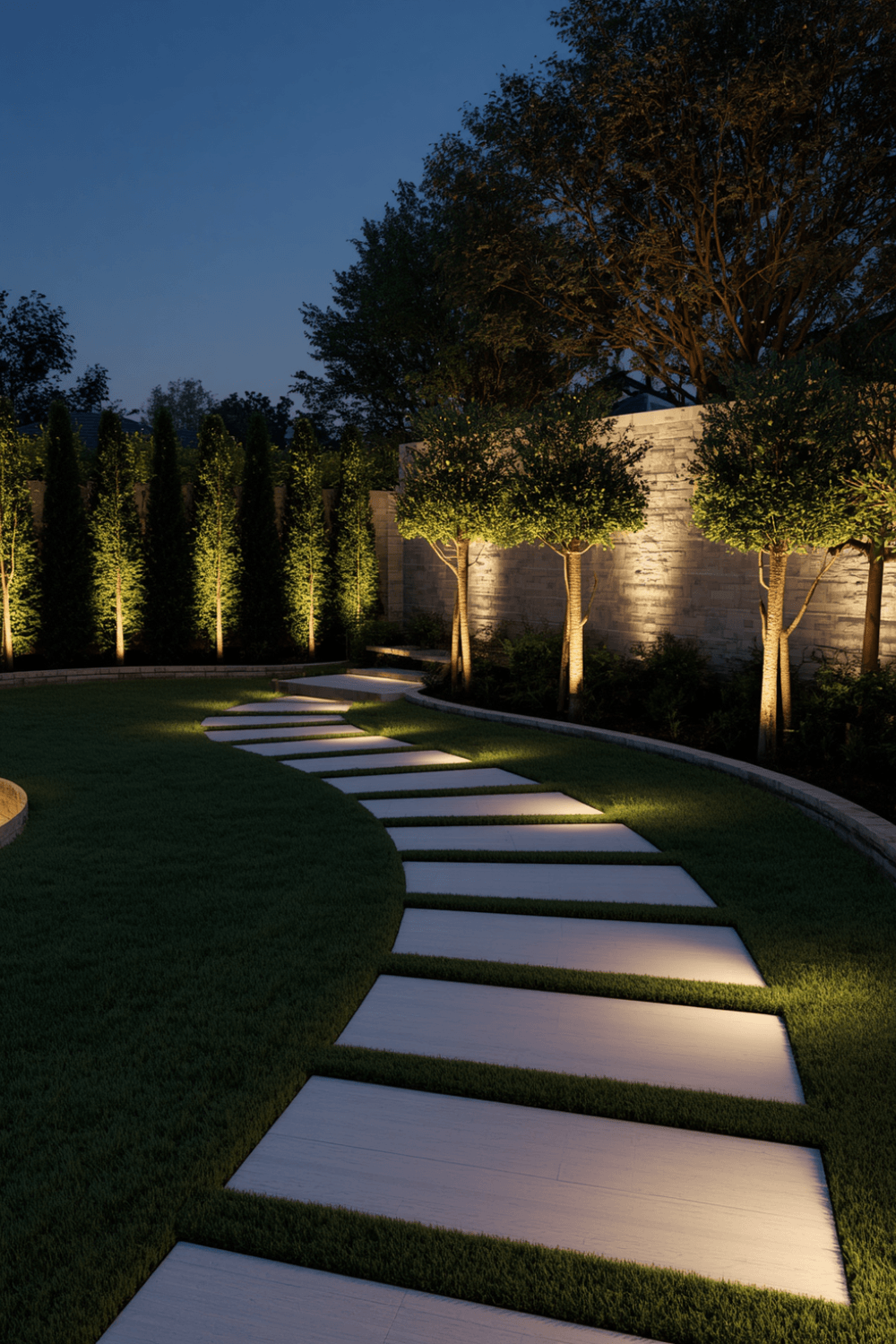
Small well lights tucked into modern garden border ideas, washing light upward through grasses or low shrubs. This one softens the hard line between lawn and bed in a way that’s hard to describe but easy to notice once you’ve seen it done well.
4. Step and stair lighting for split-level yards.
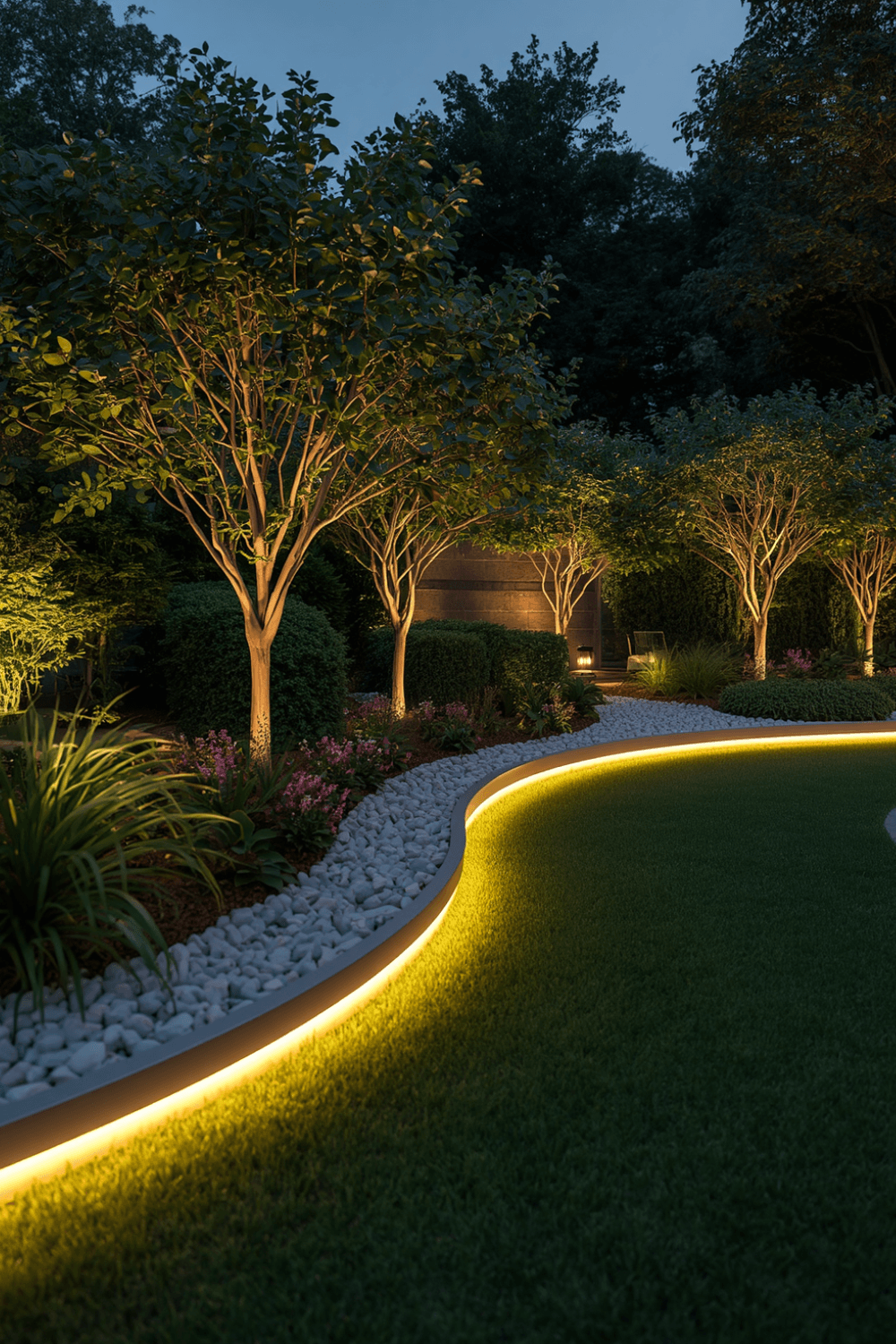
Anywhere the ground changes height, a small light in the riser earns its place twice over, once for safety, once because it just looks expensive. pathway lights look noticeably more put-together when there’s clean physical edging defining the path. Steel, aluminum, or stone edging gives those low-voltage fixtures a line to follow instead of looking scattered through mulch.
5. Lantern-style fixtures for a traditional or Mediterranean feel.
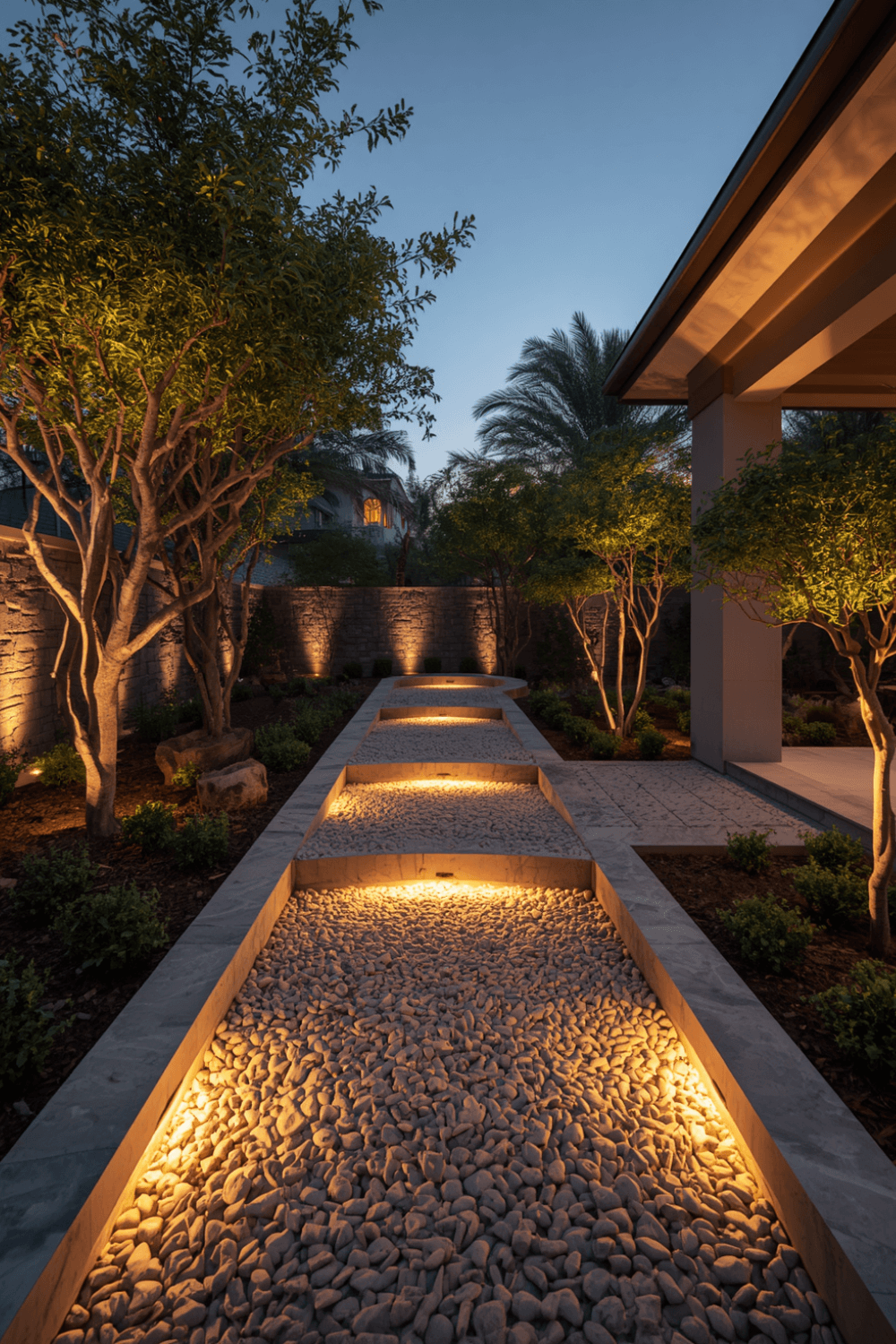
Not every home wants the minimalist look. Freestanding lanterns along a path bring warmth without veering into strip-mall territory, which is a real risk with the wrong fixture.
Outdoor Wall Lighting and Architectural Accents
Most homes treat the exterior wall as dead space after sunset, one porch light and nothing else. That’s a missed opportunity, honestly, because outdoor wall lighting can change the entire personality of a facade for not much money.
6. Sconces flanking the entry door.
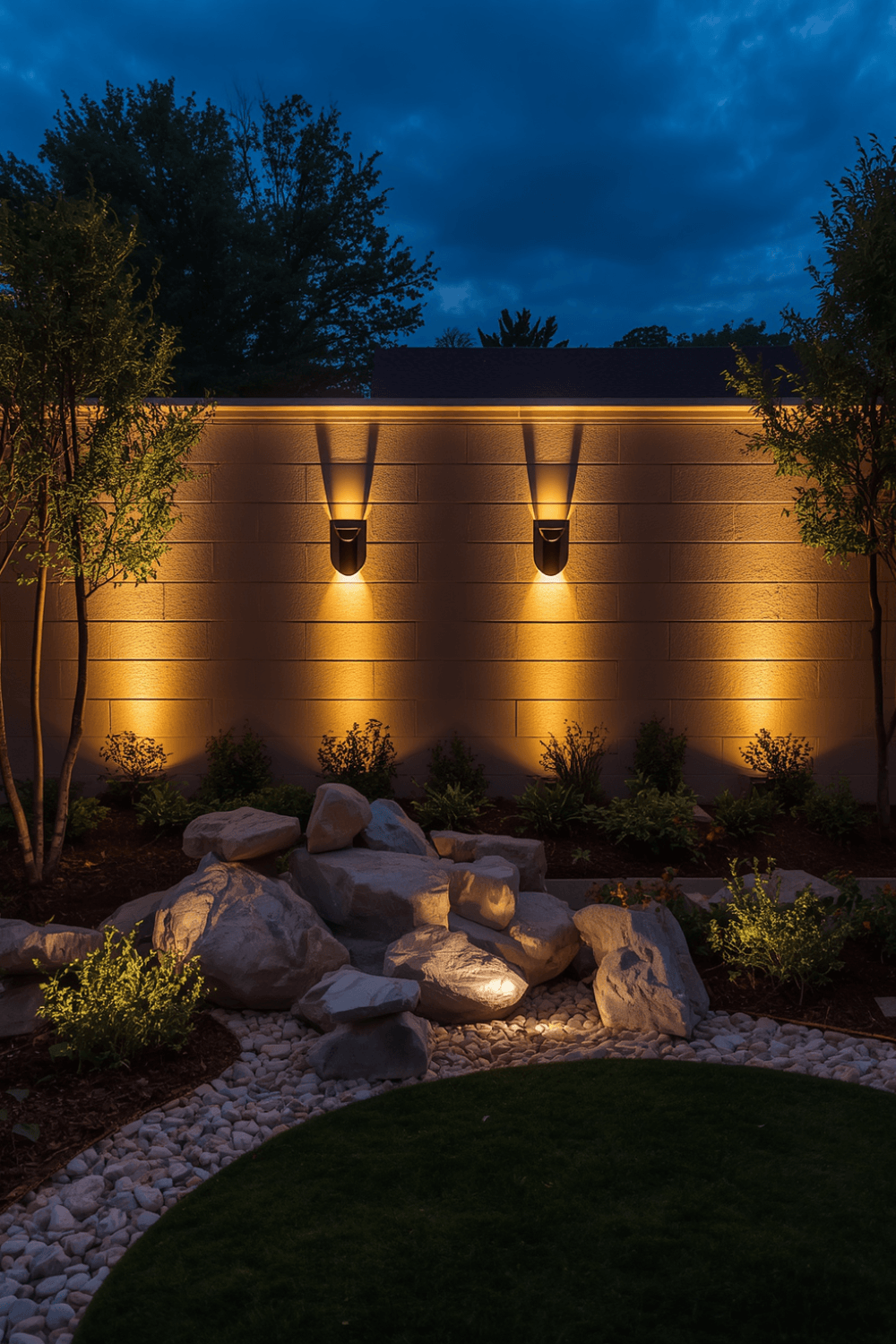
Simple, symmetrical, and one of the highest-impact changes for the lowest effort. Warm brass, bronze, or matte black tends to age well here.starts making people ask who did your landscaping. Garden feature lighting points the eye toward whatever’s actually worth looking at.
7. Up-and-down wall washers on stone or brick.
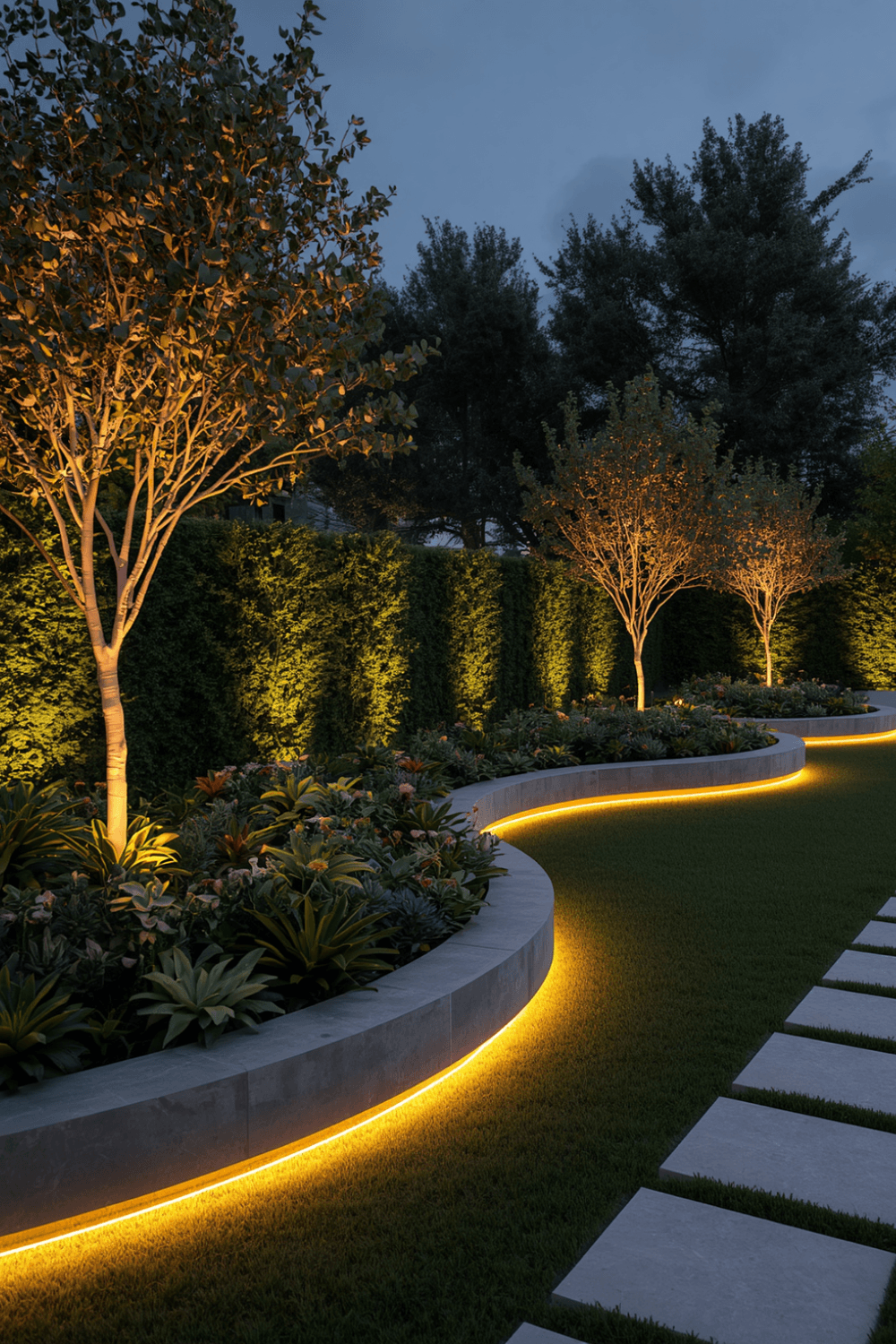
These throw light both toward the eaves and down toward the ground, which brings out texture you’d otherwise lose entirely after dark. Most DIY lighting jobs stop at task lighting. Fine for safety, forgettable for everything else. Real landscape lighting design layers all three and zones them separately, so the same yard can go from bright.
8. Step lights on exterior staircases or retaining walls.
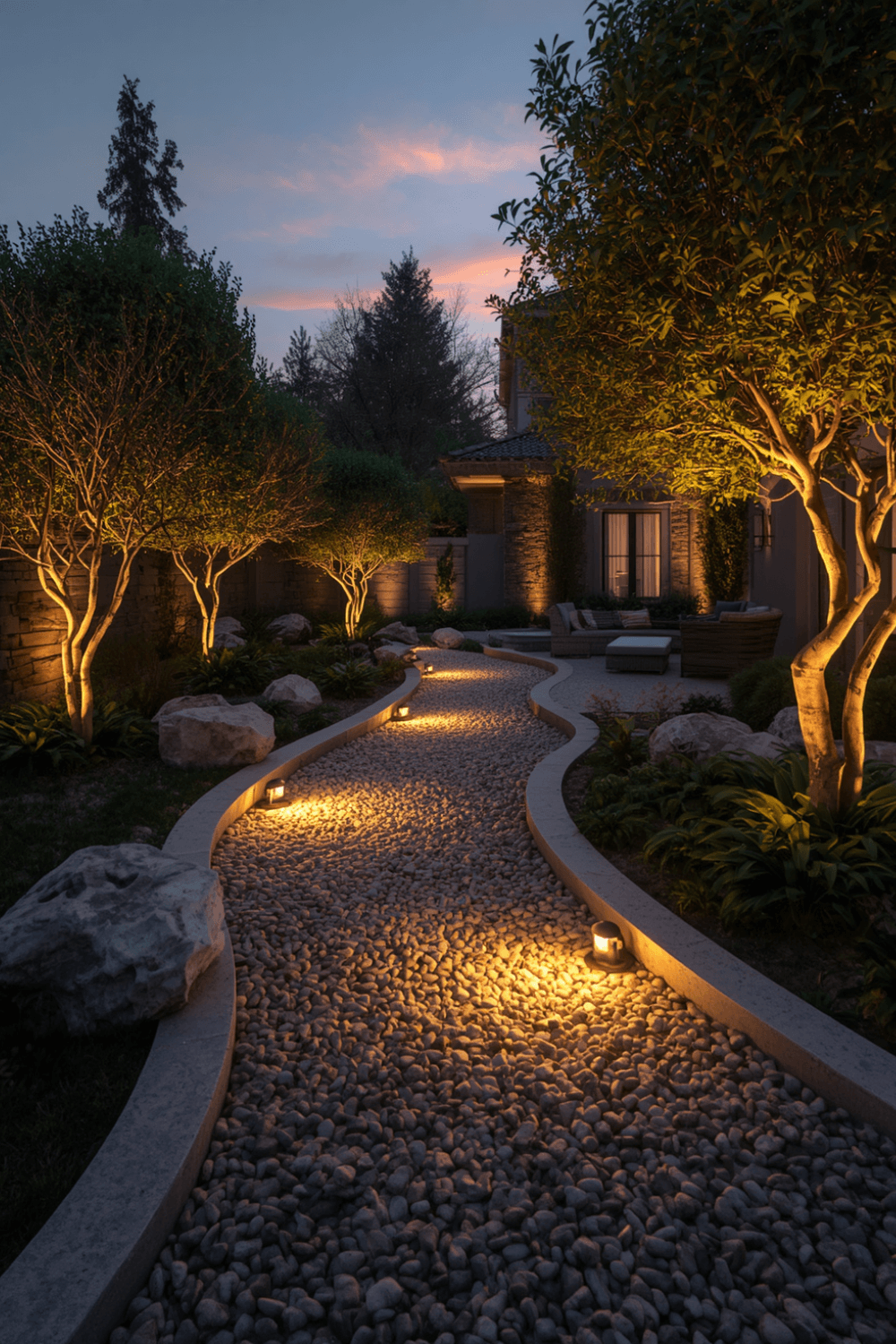
Same logic as indoor stair lighting, just outside. A thin horizontal line of light along the wall, functional and good-looking at once. Think about how a nice living room is lit. Nobody just flips on one ceiling fixture and calls it a day. There’s a lamp in the corner, a sconce near the art, maybe a dimmer on the overhead. Outdoor lighting works the same way, in three layers:
9. Soffit or eave lighting for a subtle wash.
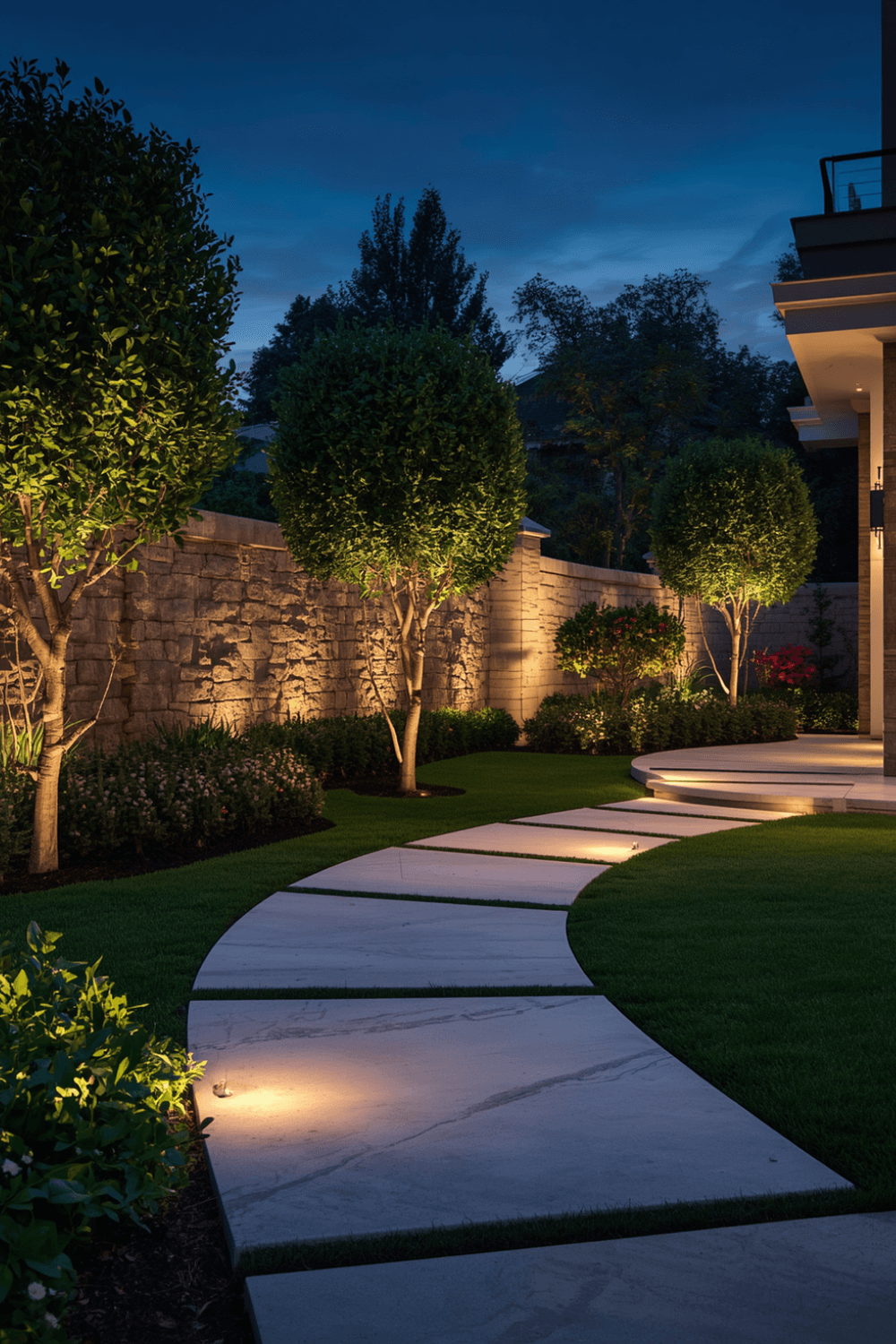
Small fixtures tucked under the roofline, casting light down the face of the house. Borrowed straight from boutique hotel exteriors, and it’s one of those details guests notice without quite knowing why. There’s a practical bonus here too. A well-lit exterior makes most people think twice before lingering near windows or side doors. So this category of luxury outdoor decor is doing double duty, looks good, and quietly functions as a deterrent.
Garden Feature Lighting That Adds Drama
This is the part where a lighting plan stops being “fine” and starts making people ask who did your landscaping. Garden feature lighting points the eye toward whatever’s actually worth looking at.
10. Tree uplighting, sometimes called moonlighting.
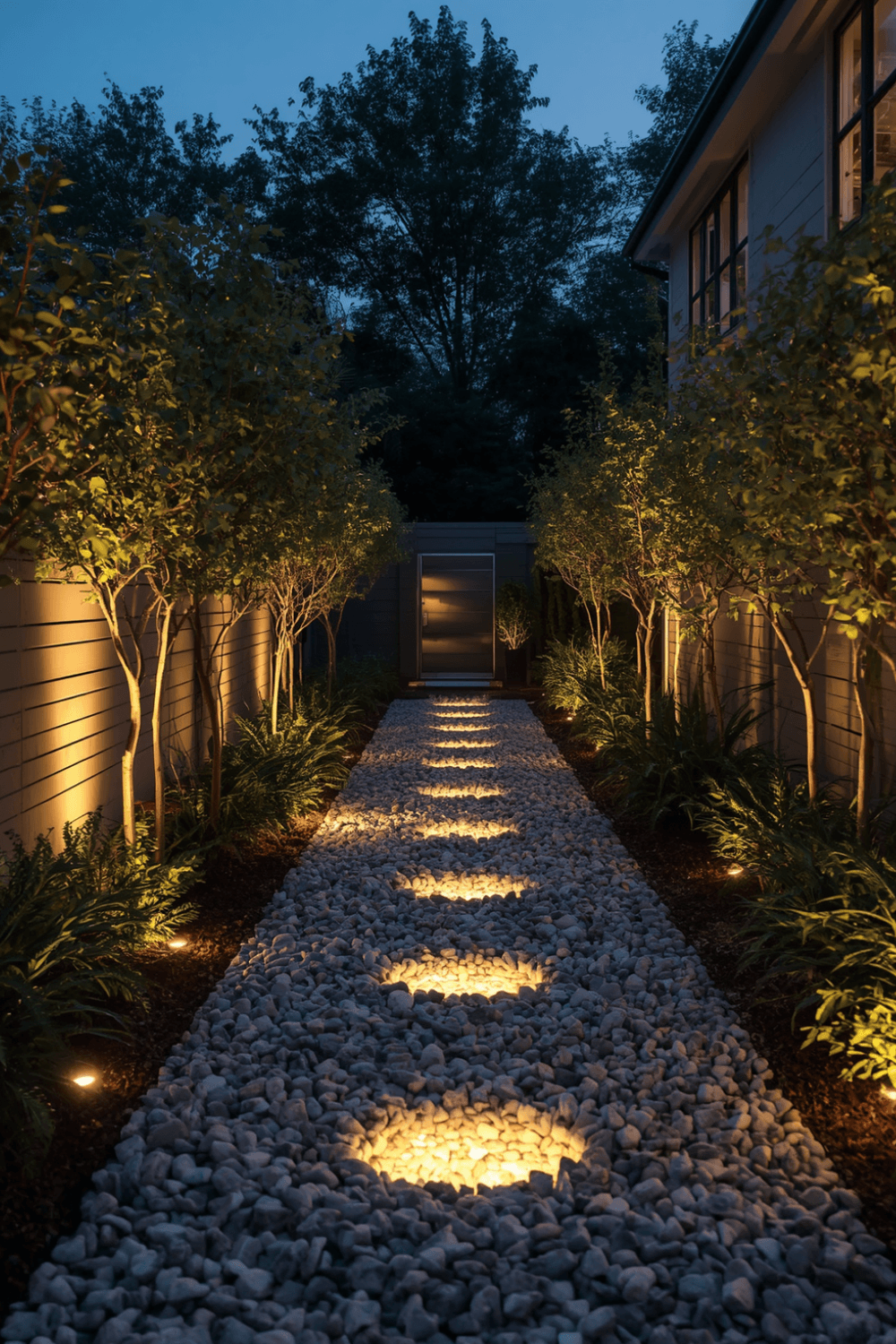
A spotlight at the base of a mature tree, aimed up through the branches. The shadows it throws on the ground are genuinely one of my favorite effects in this whole list.
11. Spotlights on sculptures or focal pieces.
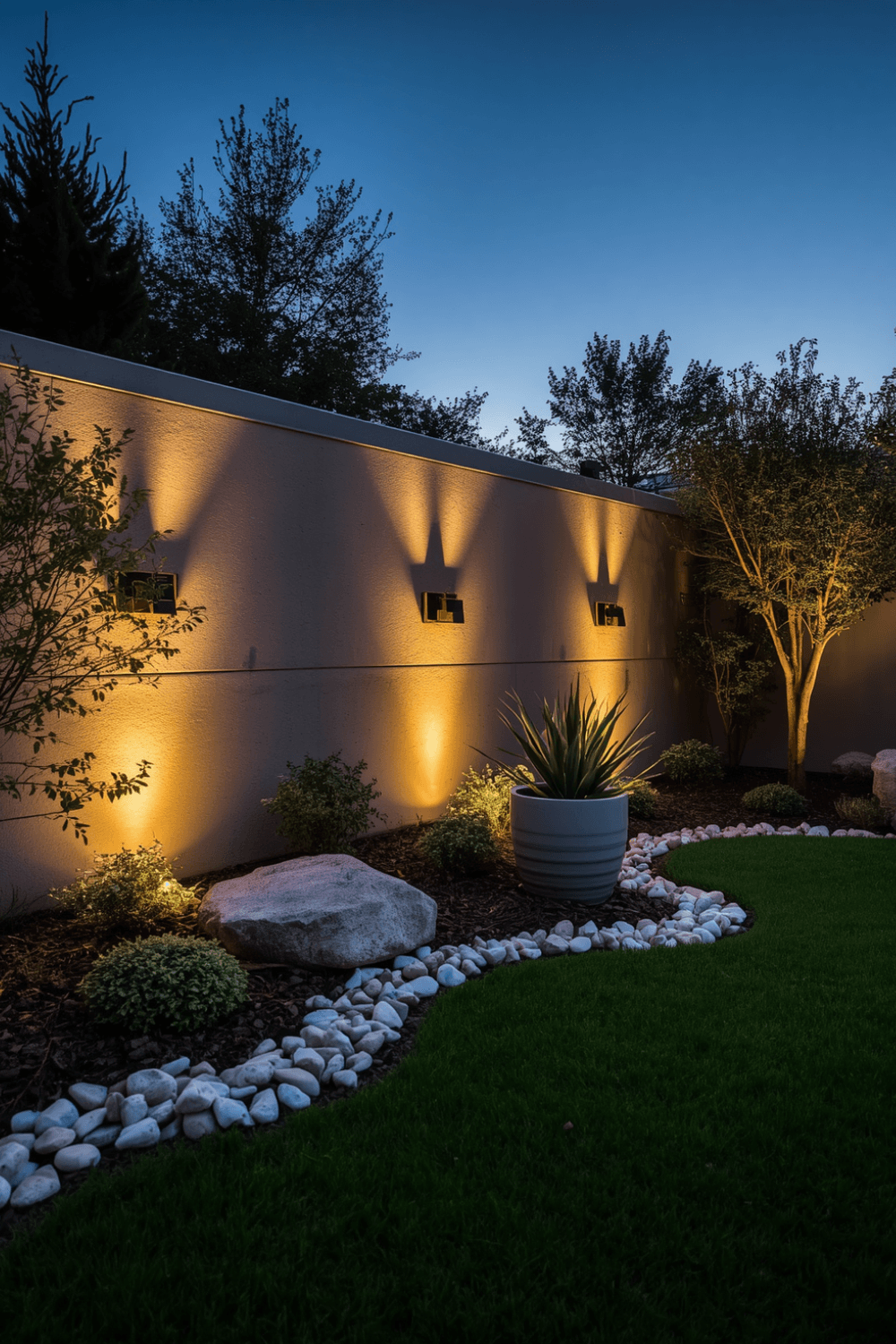
One well-aimed beam on a statue or a water bowl does more for character than a dozen scattered path lights ever will. Accent light. The fun part, honestly. A spotlight on a sculpture, a tree lit from below, a stone wall with light raking across the texture.
12. Illuminated decorative garden stones and boulders.
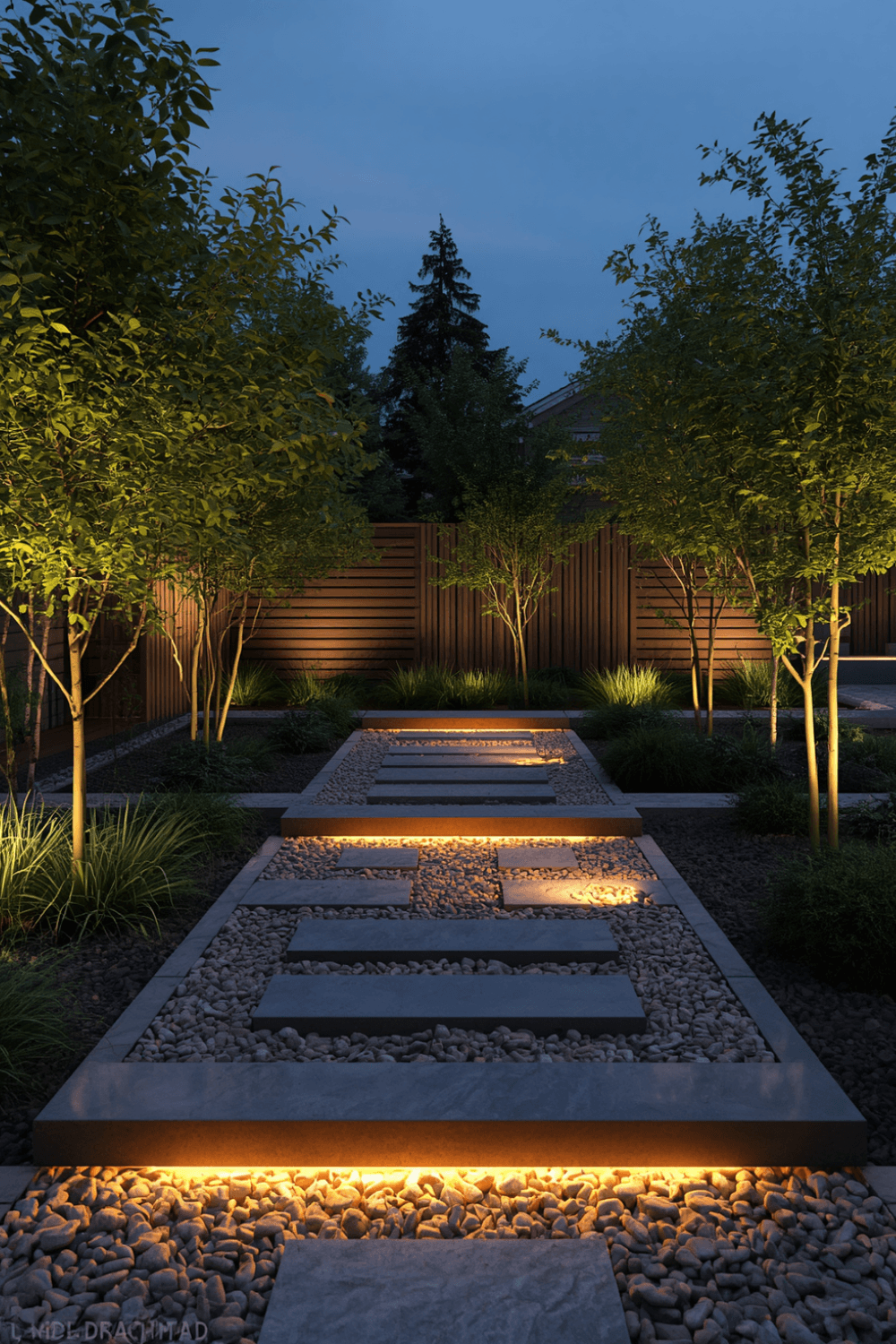
Large natural boulders or decorative garden stones, lit from a low angle, catch shadow and texture beautifully. Cheap fix, big payoff, especially in beds that feel a little empty.
13. Underwater lighting for ponds, fountains, or pools.
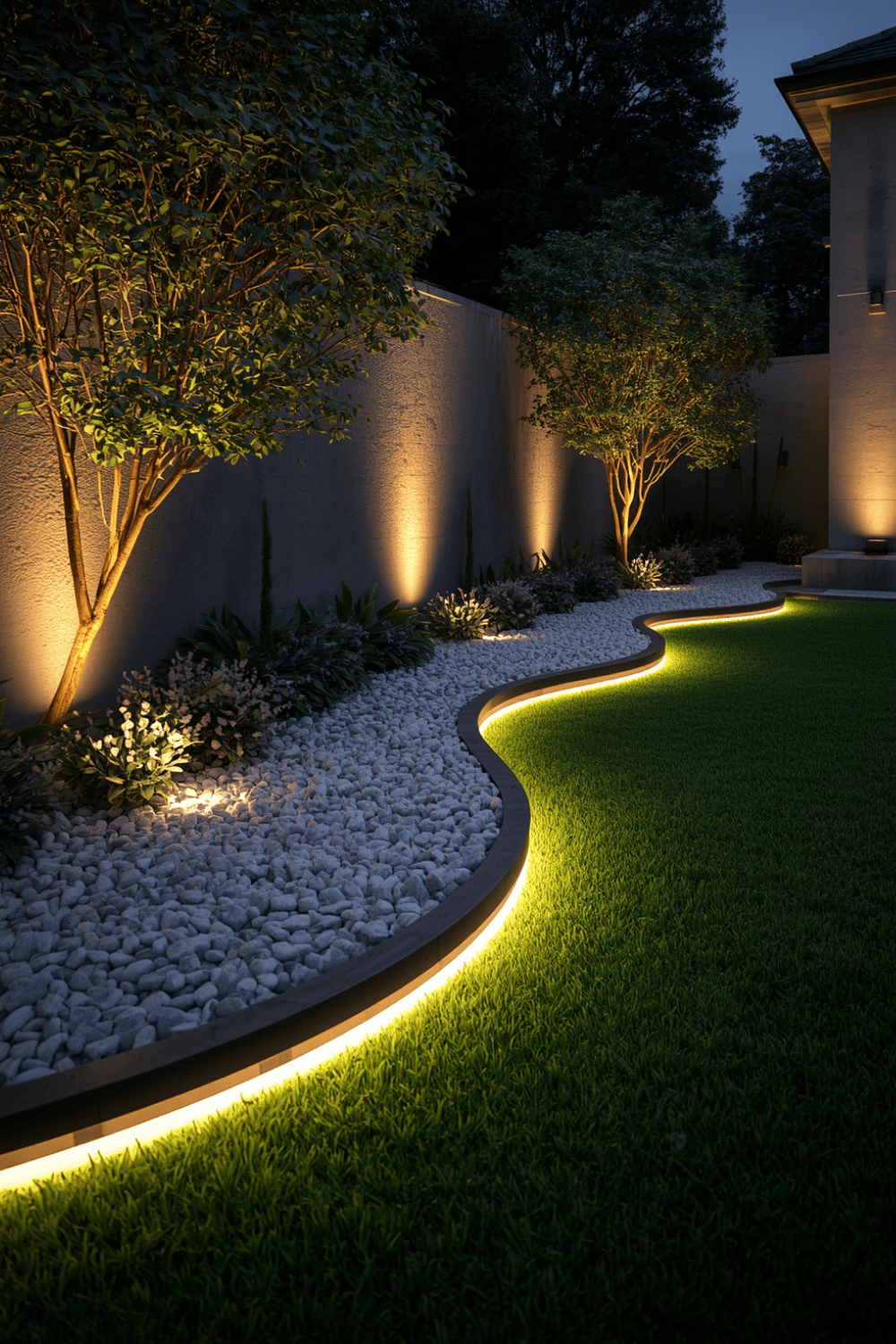
Submersible LEDs turn a daytime water feature into the actual centerpiece once the sun’s down. Most current units are sealed and low-voltage, so safety isn’t really a concern.
14. Backlit pergolas and arbors.
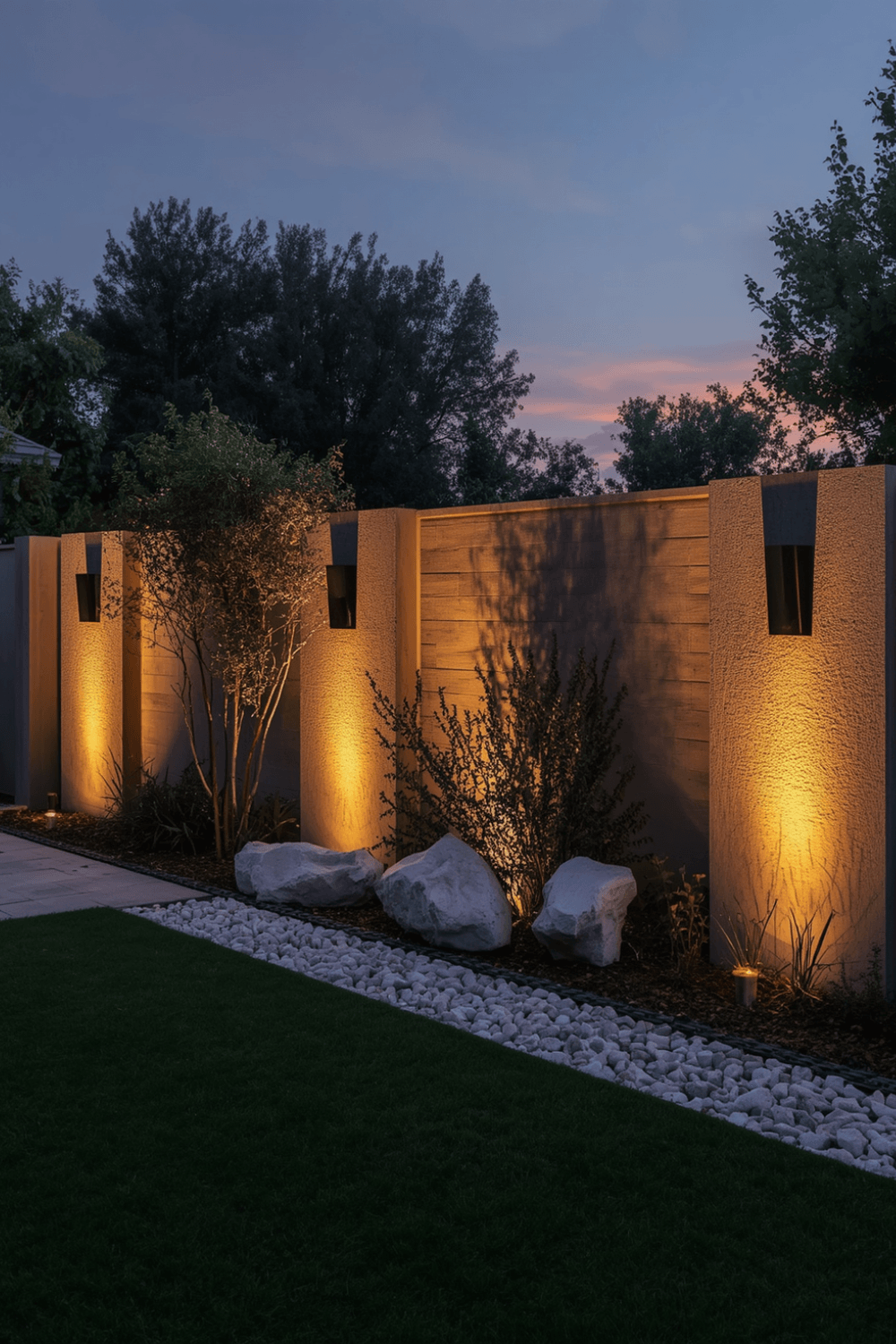
A thin LED strip along the underside of a pergola beam gives a soft overhead glow without the visual clutter of hanging fixtures everywhere.Color temperature is the other half of this. Stay warm, somewhere aroundfor almost everything. Cooler, bluer light past reads as office building or parking garage, not Mediterranean vill
Highlighting Decorative Garden Stones and Natural Elements
If your yard already has good bones, mature trees, a rock garden, a dry creek bed, feature lighting usually beats buying new hardscaping. The best fixture, in my experience, is one you never actually see, just the effect it leaves behind. Keep them low, well-shielded, and angled so the source itself stays out of normal sightlines.
Backyard Lighting Ideas for Entertaining
A resort feels luxurious partly because it’s built for people to use after dark, not just admire from a window. These backyard lighting ideas are about the spaces where you’ll actually sit.
15. String lights over a patio or dining area.
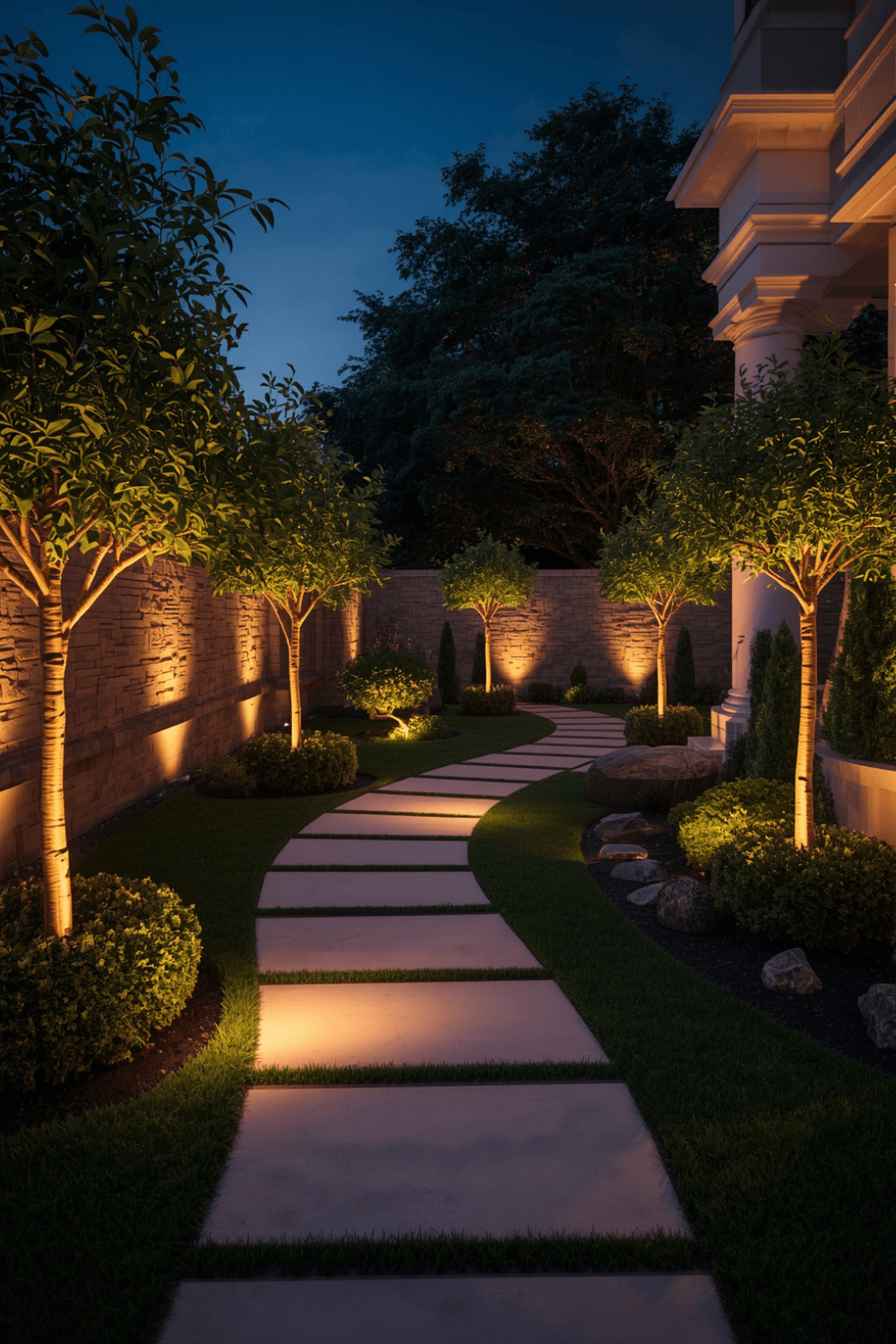
A bit of a cliché at this point, sure. But the gap between “luxury” and “backyard barbecue” comes down to tension and height. Strung tight and even, not sagging low, it reads as deliberate instead of leftover from a party three summers ago.
16. Fire bowls or linear fire features.
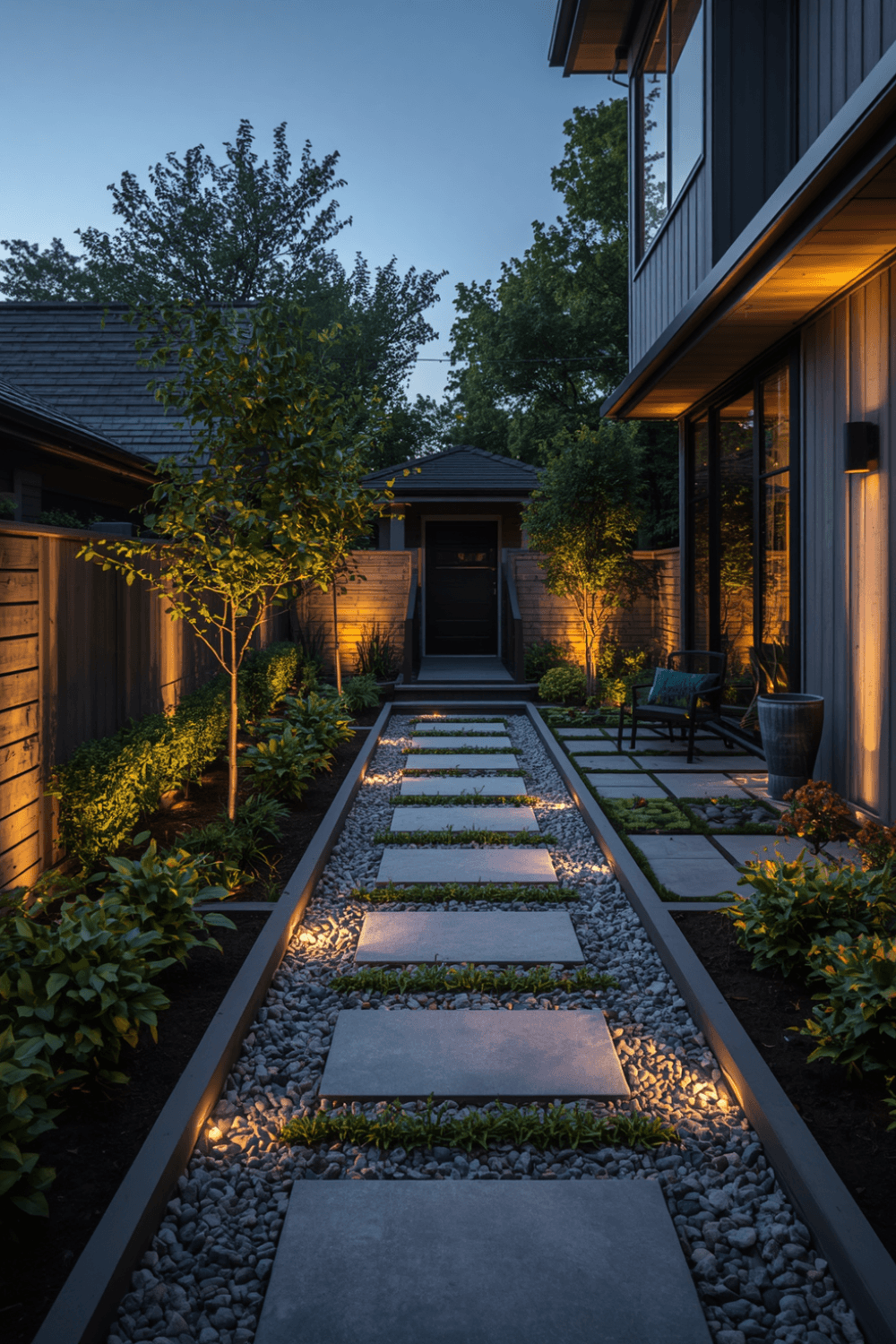
Beyond the warmth, fire gives you a flickering, organic light no LED has ever managed to fake convincingly. It’s usually the thing people gravitate toward without even deciding to.
17. Task lighting for an outdoor kitchen or bar.
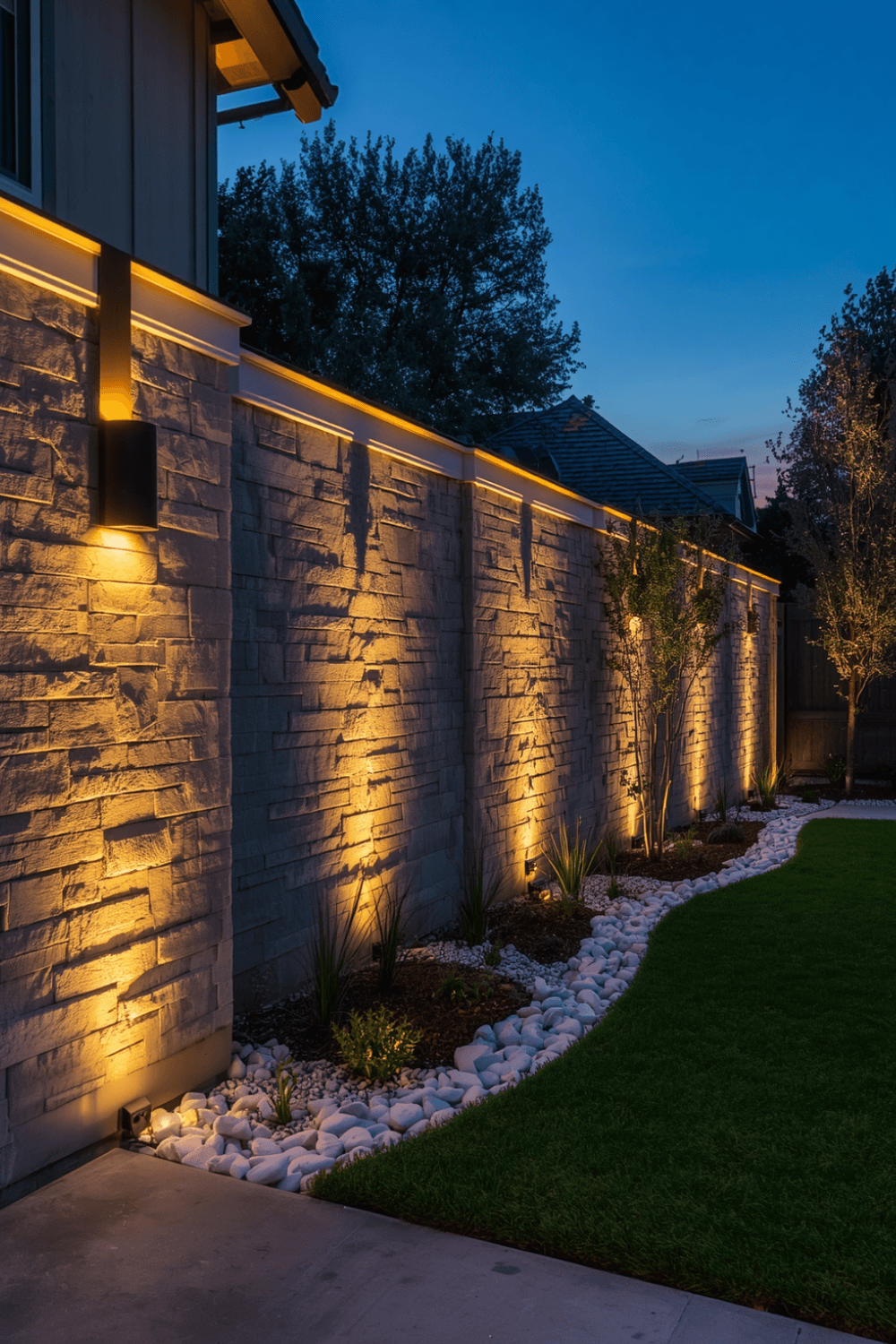
If you’ve already put money into an outdoor kitchen, under-cabinet or pendant lighting over the prep area isn’t optional. Nobody wants to chop garlic by phone flashlight.Modern systems have made all of this far easier to pull off than it used to be, both to install and to run.
18. Dimmable ambient lighting for lounge areas.
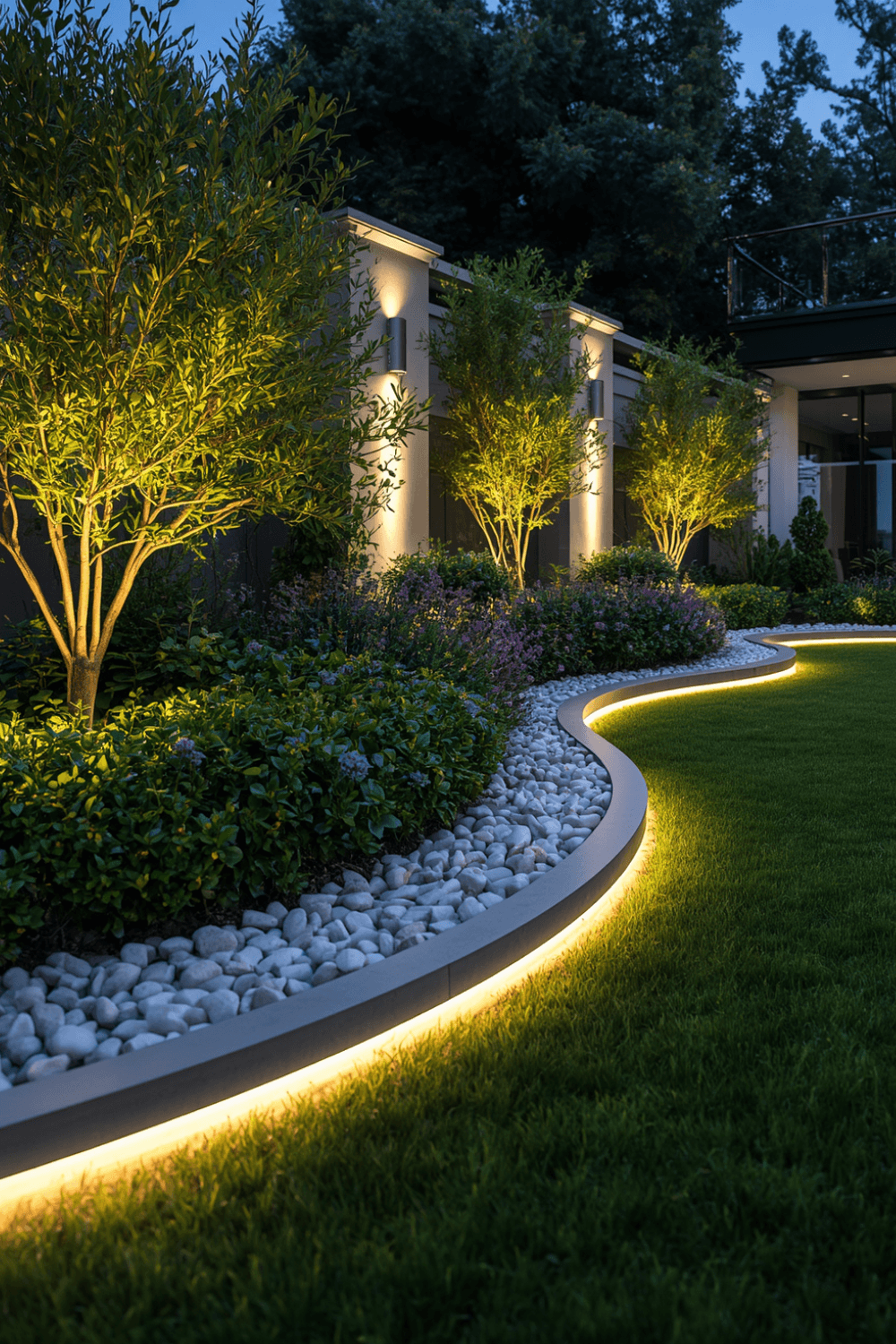
A separate dimmable circuit for seating zones lets the mood shift from bright and functional to low and easy without touching anything else in the yard. An elegant backyard design treats lighting like a set of dimmer switches for the whole evening rather than one big on/off decision. Put dining, lounge, and kitchen zones on separate switches or smart controls, and you only light what’s actually in use,
Smart, Sustainable LED Landscape Lighting Upgrades
19. App-controlled smart LED systems with saved scenes.
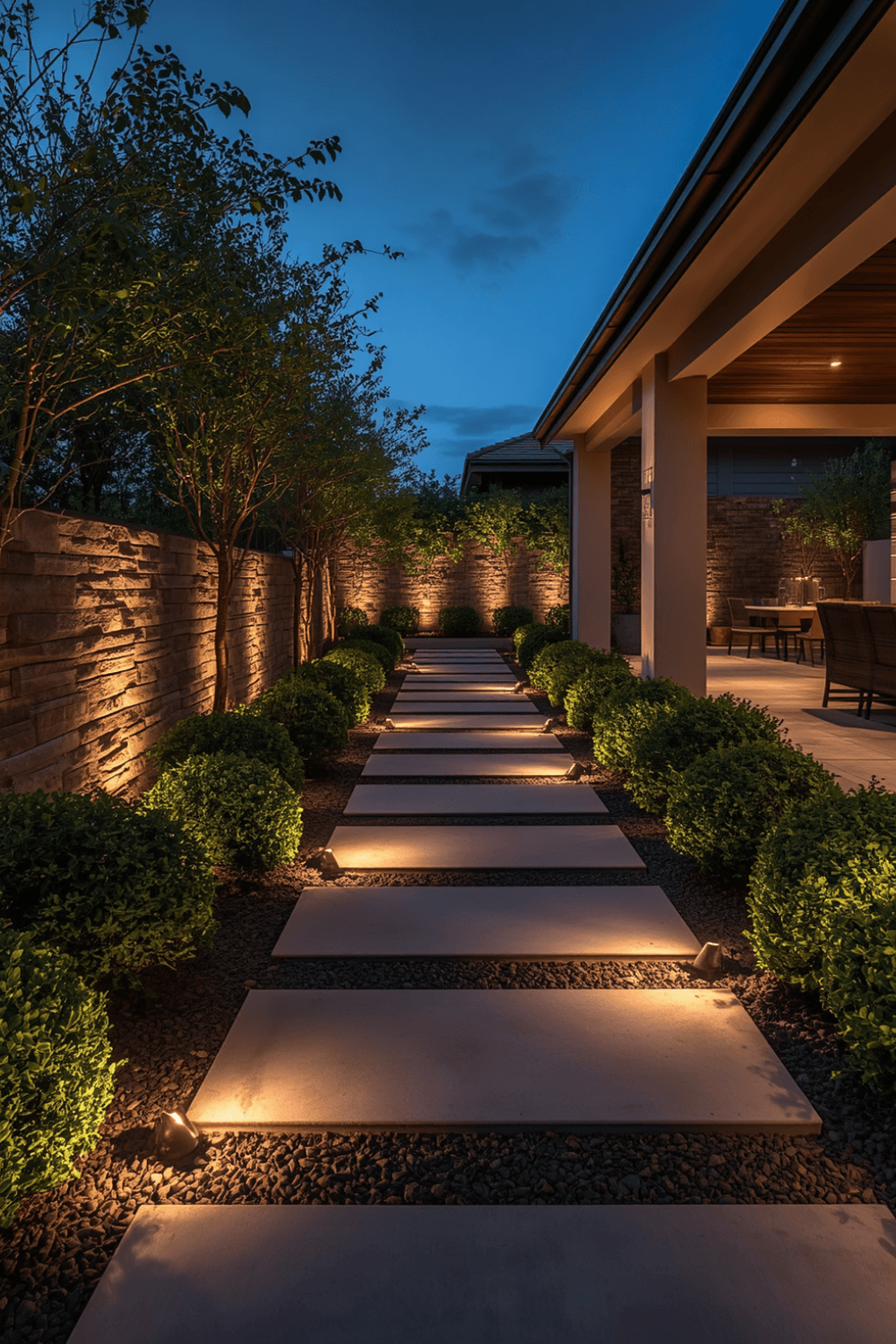
A lot of current low-voltage systems let you save lighting “scenes,” bright for guests arriving, dim for a quiet night in, all from a phone. This is one of the fastest-growing parts of LED landscape lighting, and for good reason. It puts a near-professional level of control in your hands without rewiring anything.
20. Solar-powered accent lights for low-traffic spots.
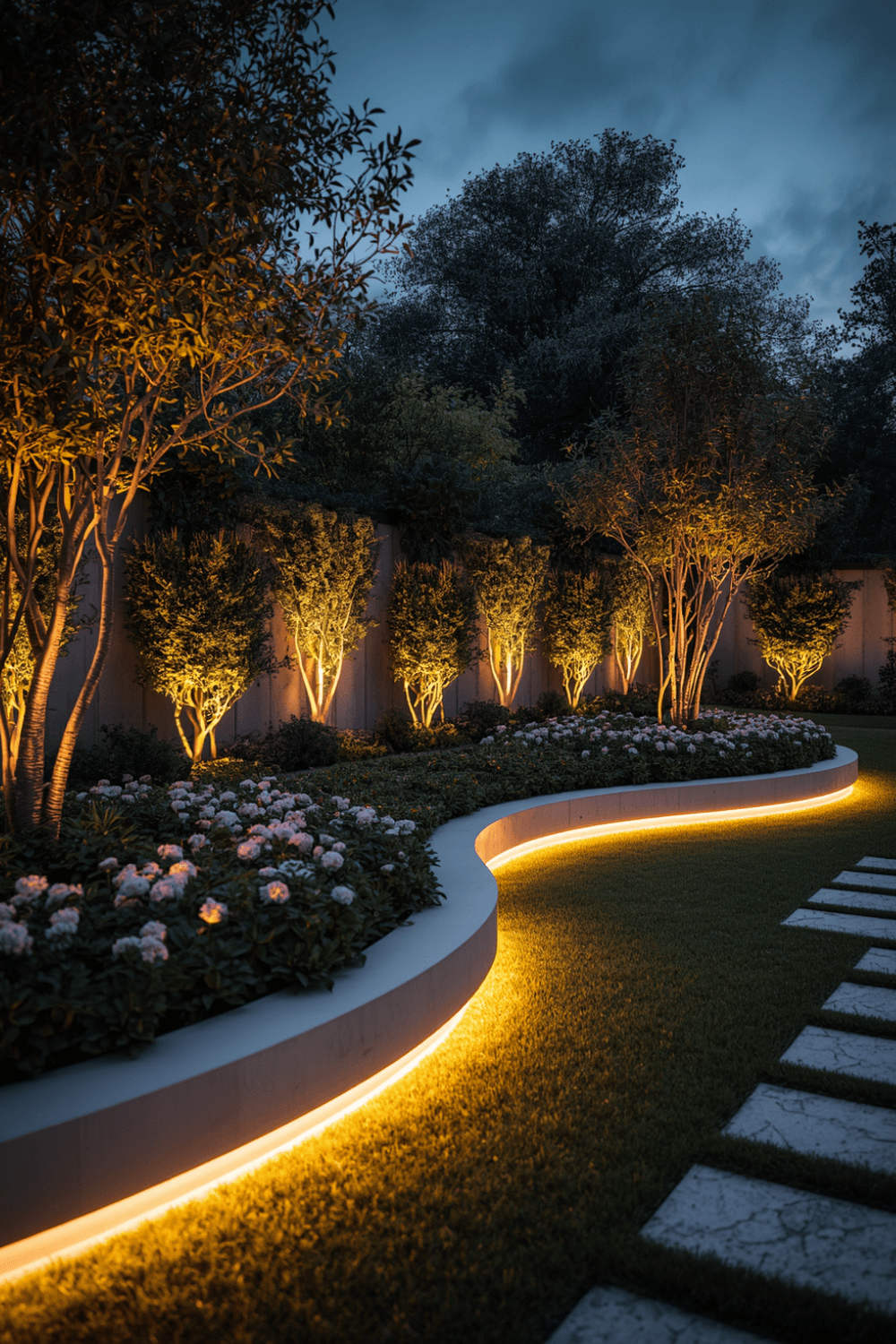
Not every fixture needs to run off the main transformer. Solar lights work well for a back corner, around a mailbox, along a far fence line, anywhere running wire just isn’t worth the hassle.Notice where shadows naturally fall, where you instinctively want more light, where existing fixtures already glare into a window.
How to Plan a Luxury Garden Lighting Design
A few things worth knowing before calling a contractor or ordering a box of fixtures:
- Walk the property at dusk first. This one step prevents most of the mistakes I see in DIY lighting plans.
- Budget for the transformer and wiring, not just the fixtures. Low-voltage systems need a transformer sized to the total wattage running off it, plus cable buried a few inches below grade. This is the part people consistently underestimate when pricing a project.
- Don’t uplight every single tree. Restraint is most of what makes a plan read as expensive. Two or three focal points beat lighting the whole yard evenly.
- Plan for maintenance, because it’s real. LEDs last a long time, often , but lenses cloud up and need cleaning, and low-voltage connections corrode after a few years in wet soil. Pick fixtures with replaceable lenses and connections you can actually reach.
- A one-time consult with a designer can save real money, even on a DIY install. Placement matters more than the fixtures themselves, and a landscape lighting design professional has usually already made the mistakes you’re about to make.
Frequently Asked Questions
How much does luxury garden lighting cost?
A professionally designed and installed low-voltage system usually for an average residential yard, depending on fixture count, wiring complexity, and extras like fire features or smart controls. DIY kits with a handful of path lights can start under though they won’t give you the same layered effect as a properly planned system.
What’s the difference between landscape lighting and regular outdoor lighting?
Regular outdoor lighting is usually a porch light or a floodlight or two, aimed at general visibility. Landscape lighting design is an actual plan, layering ambient, task, and accent light across a property to highlight specific features and set a mood, the same way an interior designer lights a room rather than just flipping on the overhead.
Can I install luxury garden lighting myself, or do I need a professional?
Plenty of low-voltage kits are genuinely DIY-friendly since they run on safe 12-volt systems. That said, a professional is worth it for larger properties, trickier transformer sizing, or anything tied into your home’s line-voltage wiring, which does require a licensed electrician in most places.
What color temperature is best for outdoor lighting?
Warm white, in the 2700K to 3000K range, is the standard for residential landscapes. It flatters skin tones, stone, and greenery in a way cooler light just doesn’t. Save bluer tones for a rare architectural accent, if you use them at all.
How many lumens do I need for garden lighting?
Depends on the job. Path lights generally land between 50 and 150 lumens, accent or tree uplights between 150 and 300, and anything washing a larger wall or facade might need 300-plus. Brightness matters less than shielding the source so you see the effect, not the bulb itself.
Bringing It All Together
A resort-style backyard isn’t one big purchase. It’s a series of smaller, well-placed decisions: warm color temperature, light in layers, a little restraint, and zones that actually match how you live in the space. Whether you start small, a few decorative garden stones lit from below, or go all in with a smart, app-controlled system across the whole property, the same principles apply at any budget.