
Elegant Closet Design: What I Learned After My Closet Looked Expensive in Pieces But Not as a Whole
I invested real money into individual elegant touches for my closet, a beautiful crystal chandelier, brass hanging rods, a plush bench, each piece genuinely gorgeous on its own. Put together in the same space, though, it looked oddly disjointed rather than cohesively elevated, like a showroom display of nice things instead of one intentional, elegant closet.
It took stepping back and rethinking how these individual pieces actually related to each other before my closet finally read as elegant as a whole, not just impressive item by item. Here’s what I learned about the real difference between expensive-looking pieces and a genuinely elegant closet.
Elegant Closet Design Is About Cohesion, Not Just Nice Individual Pieces
My original approach was picking each element based purely on whether I loved it individually, without much thought to how the finishes, tones, and styles would actually relate to each other once everything was together. That’s a pretty common mistake, buying beautiful things that don’t quite speak the same design language.
Once I started thinking about my closet as one cohesive story rather than a collection of individually elegant choices, everything I added afterward made the space feel more put-together instead of more cluttered with nice stuff.
My Mistake: Mixing Metal Finishes Without a Unifying Plan
My original closet had brass hanging rods, chrome drawer pulls, and a black metal chandelier, three completely different metal finishes with nothing tying them together. Individually elegant, sure, but together they read as unplanned rather than intentionally eclectic.
I swapped my chrome drawer pulls for brass ones to match my hanging rods, and kept the black chandelier as an intentional contrast accent rather than a third competing metal tone. That single change made the whole closet feel like it had an actual plan behind it.
Step-by-Step: Creating Genuinely Elegant Closet Design
1. Choose one primary metal finish and stick with it
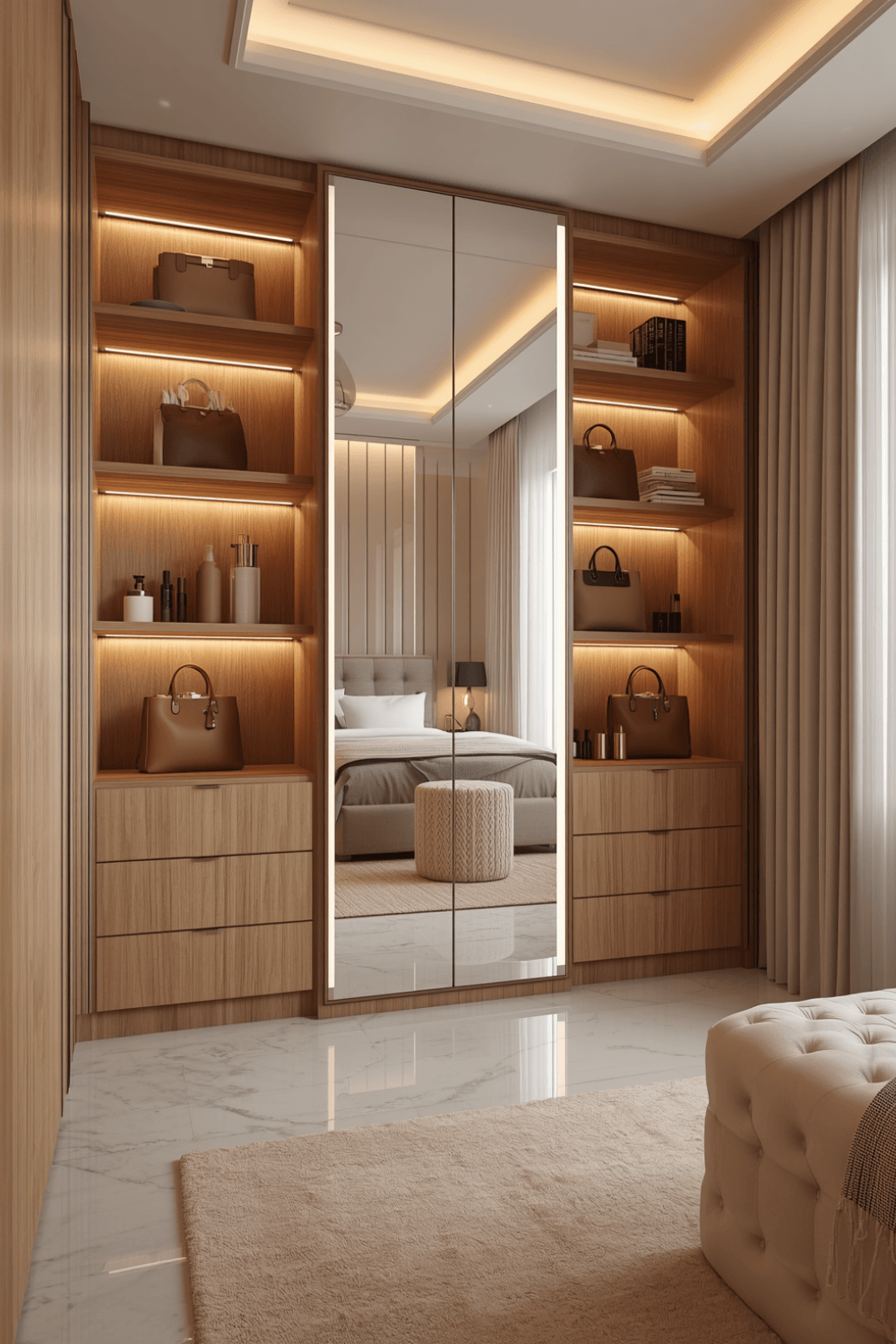 I now recommend picking a main metal tone, brass, chrome, or matte black, and using it for the majority of your hanging rods, hardware, and fixtures. A secondary accent metal can work well in small doses, but it should feel like an intentional contrast rather than a third or fourth competing tone throughout the space.
2. Select a cohesive color palette before choosing individual pieces
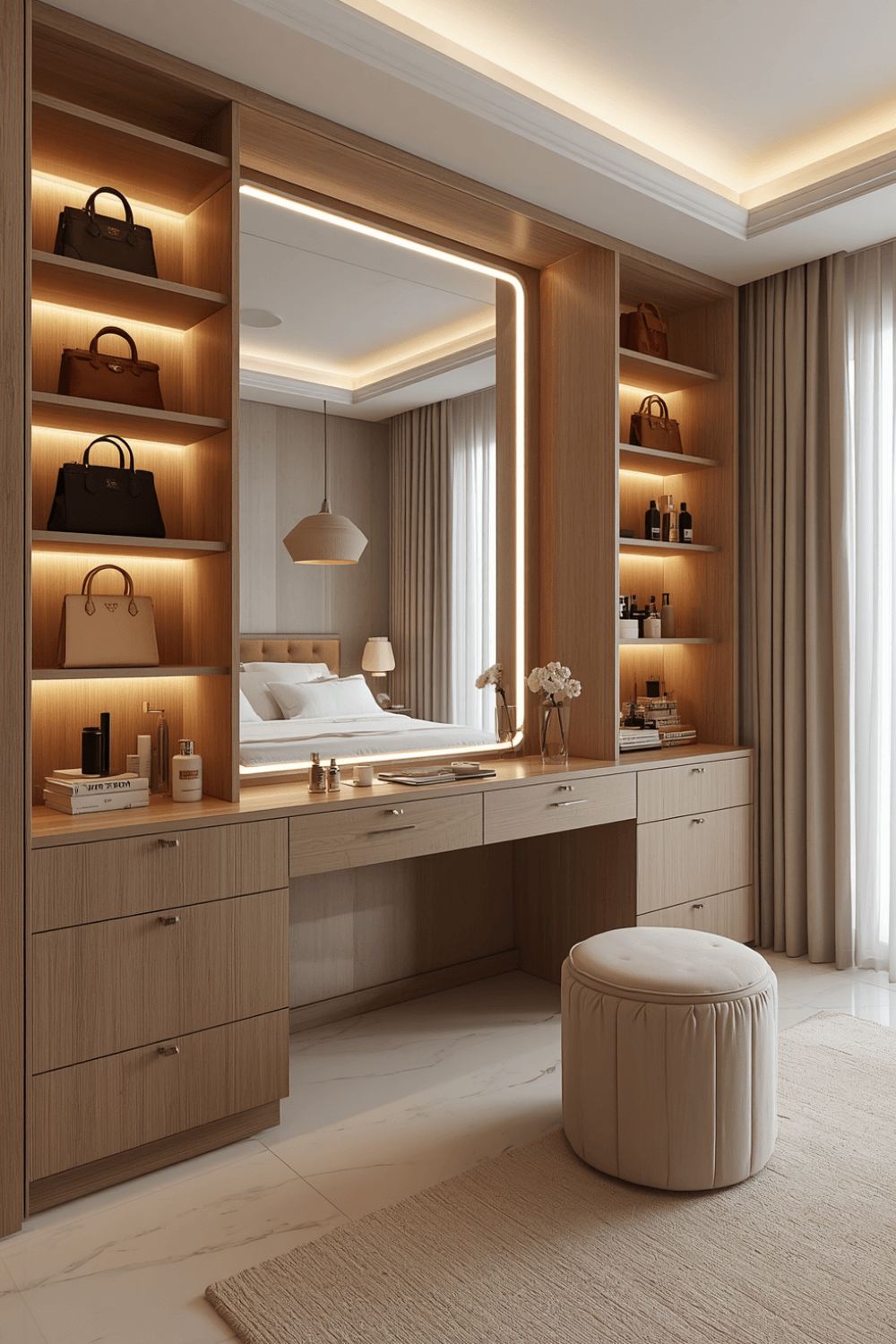 I picked a warm neutral palette, cream cabinetry, soft gray walls, and warm wood accents, and evaluated every new piece against whether it actually fit that palette before buying it. This discipline stopped me from impulse-buying beautiful items that, however elegant on their own, didn’t actually belong in my closet’s specific story.
3. Invest in one genuine statement piece
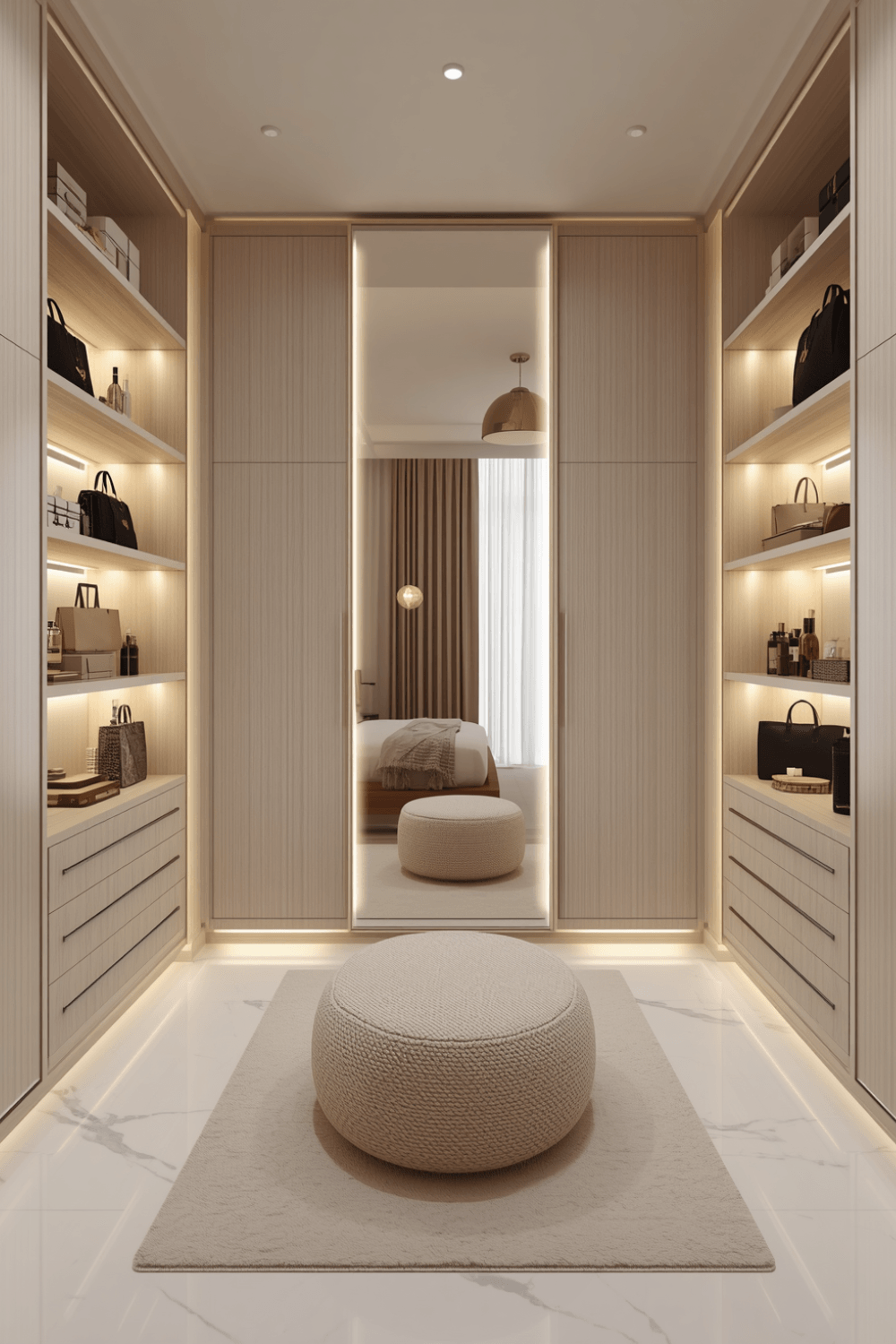 Rather than trying to make every single element a showstopper, I chose my chandelier as the one true statement piece and kept everything else more understated in support of it. Elegant design often comes from restraint around a few standout choices rather than competing statements everywhere.
4. Choose flooring and cabinetry that complement, not compete
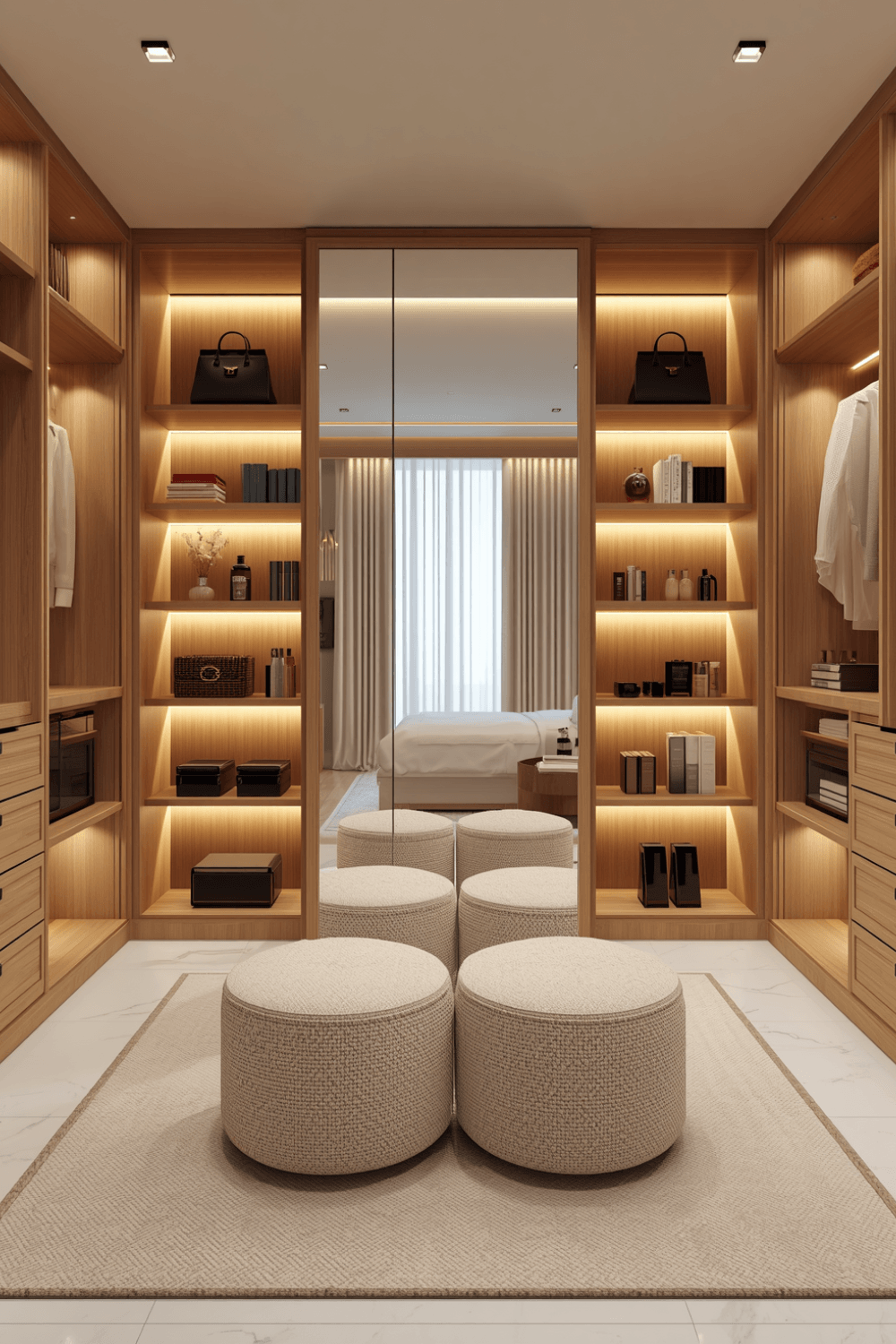 My original plan had a heavily patterned tile floor alongside equally busy cabinet fronts, which fought visually with each other. I simplified my flooring to a plainer herringbone wood pattern once I understood the cabinetry needed to carry the visual interest, not both surfaces trying to be the focal point simultaneously.
5. Add architectural details for lasting elegance
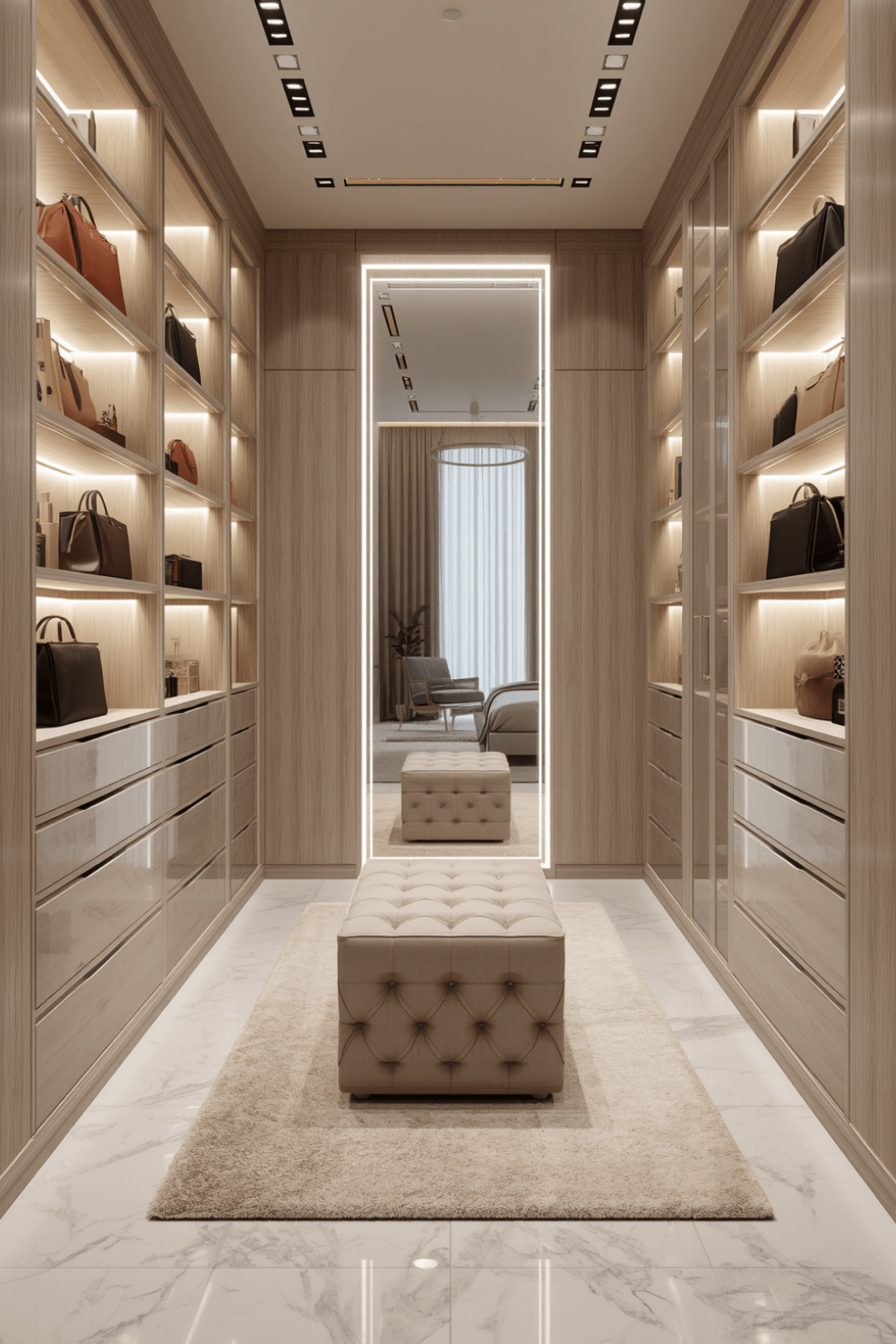 I added simple crown molding above my upper cabinets and a furniture-style leg detail on my center island, both relatively affordable additions that added a level of custom, elegant detail beyond what flat-panel cabinetry alone provides. These architectural touches tend to age better than trendier decorative elements.
6. Layer in natural materials for warmth alongside elegant finishes
I added a woven storage basket for accessories and a wood valet stand, which softened what could have otherwise felt like a slightly cold, overly polished space. Elegant doesn’t have to mean sterile, and natural texture keeps the closet feeling warm and lived-in rather than showroom-perfect.
7. Edit ruthlessly once the space feels complete
I removed several smaller decorative items I’d added along the way once I realized they were competing with my actual statement pieces rather than supporting them. A genuinely elegant closet often has less visual noise than people expect, letting the well-chosen pieces actually stand out.
Real Examples From People I Know
A friend renovating her closet committed early to an all-brass hardware and fixture plan throughout, including her rods, drawer pulls, and even her light fixtures. Because every metal element matched from the very beginning, her closet reads as intentionally elegant without needing any later corrections the way mine did.
Another friend took a more restrained materials approach, keeping her cabinetry and flooring simple and neutral, then investing her whole design budget into one dramatic chandelier and a plush upholstered bench. The simplicity everywhere else let those two pieces genuinely shine as the room’s elegant focal points.
Common Mistakes to Avoid
Mixing multiple competing metal finishes without an intentional plan. It tends to read as unplanned rather than eclectic, even when each individual piece is beautiful.
Buying elegant pieces based purely on individual appeal. Every choice should be evaluated against whether it actually fits your closet’s overall color and material story.
Trying to make every single element a showstopper. Genuine elegance often comes from restraint around a few well-chosen statement pieces, not competing focal points throughout the space.
Choosing busy flooring and cabinetry patterns simultaneously. Let one surface be the visual star while the other stays simpler in support.
Skipping the editing step once the space feels complete. Removing smaller competing items can make your actual statement pieces stand out more clearly.
Final Thoughts
My closet taught me that elegant design isn’t really about how much any single piece costs or how beautiful it looks in isolation, it’s about how intentionally everything relates to everything else in the room. The metal finish fix alone did more to make my closet feel cohesively elegant than any of my individually gorgeous pieces had managed on their own.
If you’re working on your own elegant closet design, commit to one primary metal finish, evaluate every piece against your overall palette before buying it, and don’t be afraid to edit once the space starts feeling complete. That discipline is really what separates a closet full of nice things from one that genuinely reads as elegant as a whole.