
Modern Japandi Bathroom Ideas: What I Learned Trying to Create a Calm Space That Actually Stayed Calm
I renovated my bathroom chasing that serene, minimalist Japandi look I kept seeing online, all natural wood, clean lines, and an almost meditative sense of calm.
It turns out achieving that calm Japandi aesthetic is only half the battle, the harder part is actually maintaining it once real daily life moves back in. Here’s what I learned about both designing and genuinely sustaining that look long-term.
Japandi Is About Function as Much as It’s About Looks
I initially treated Japandi purely as a visual style, natural materials, muted tones, simple lines, without thinking enough about the actual storage and organization systems needed to keep that minimal look intact daily.
Once I understood that the aesthetic depends heavily on genuinely functional storage working behind the scenes, my approach to fixing the space changed completely.
My Mistake: Beautiful Open Shelving With No Actual Storage Plan
My original design used simple open wood shelving for a clean, minimal look, but I never accounted for where daily-use items like toothpaste, razors, and skincare products would actually live.
I added a simple closed vanity drawer system for daily-use items, keeping the open shelving reserved for just a few curated, intentional objects.
Step-by-Step: Creating a Modern Japandi Bathroom That Actually Stays Calm
1. Prioritize closed storage for daily-use items
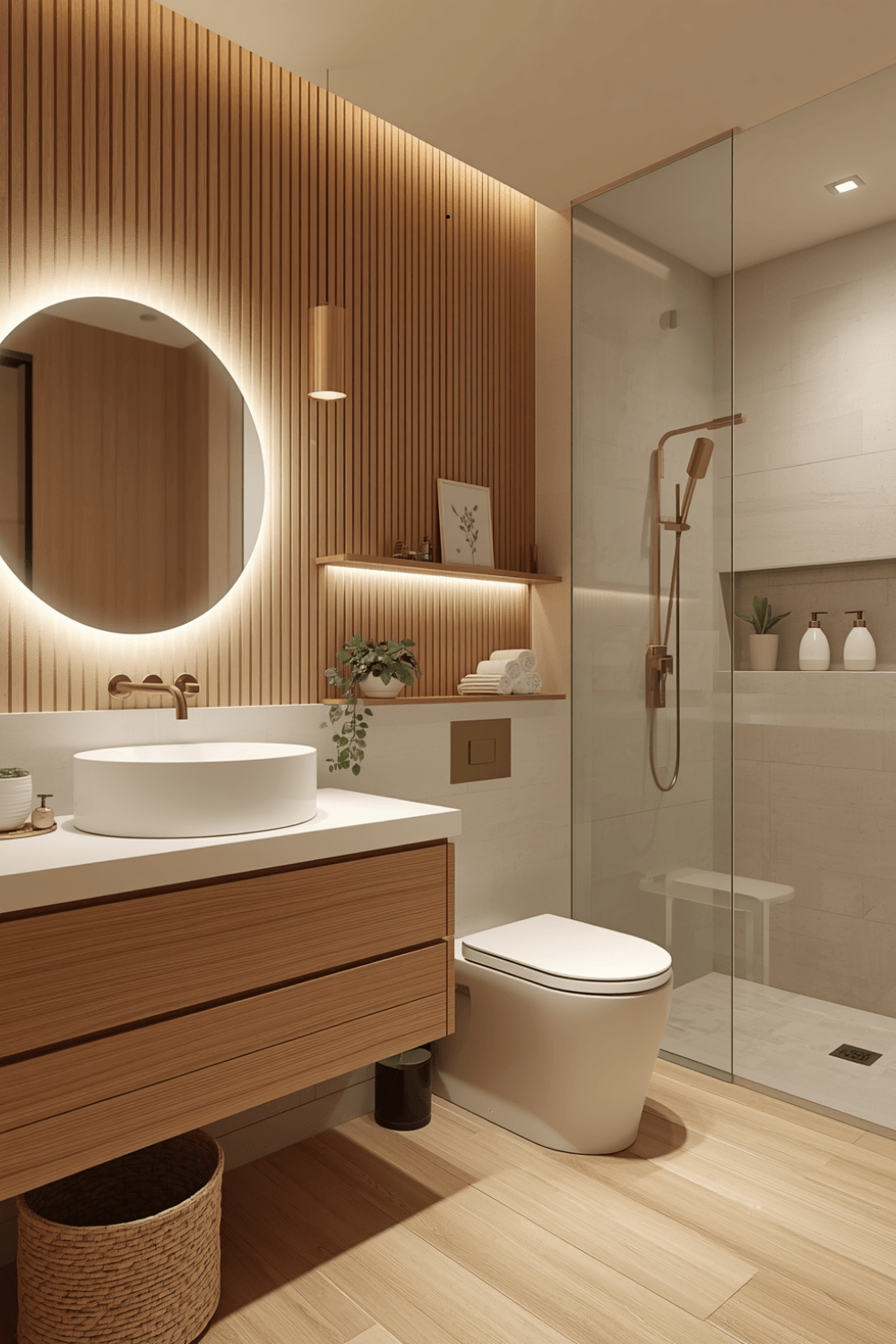 I now recommend planning closed drawers or cabinets specifically for the toiletries and products you use every day, reserving any open shelving for a smaller number of curated, intentional objects. This distinction is genuinely what determines whether open shelving stays looking minimal or slowly turns into visual clutter.
2. Choose natural wood tones with visible grain
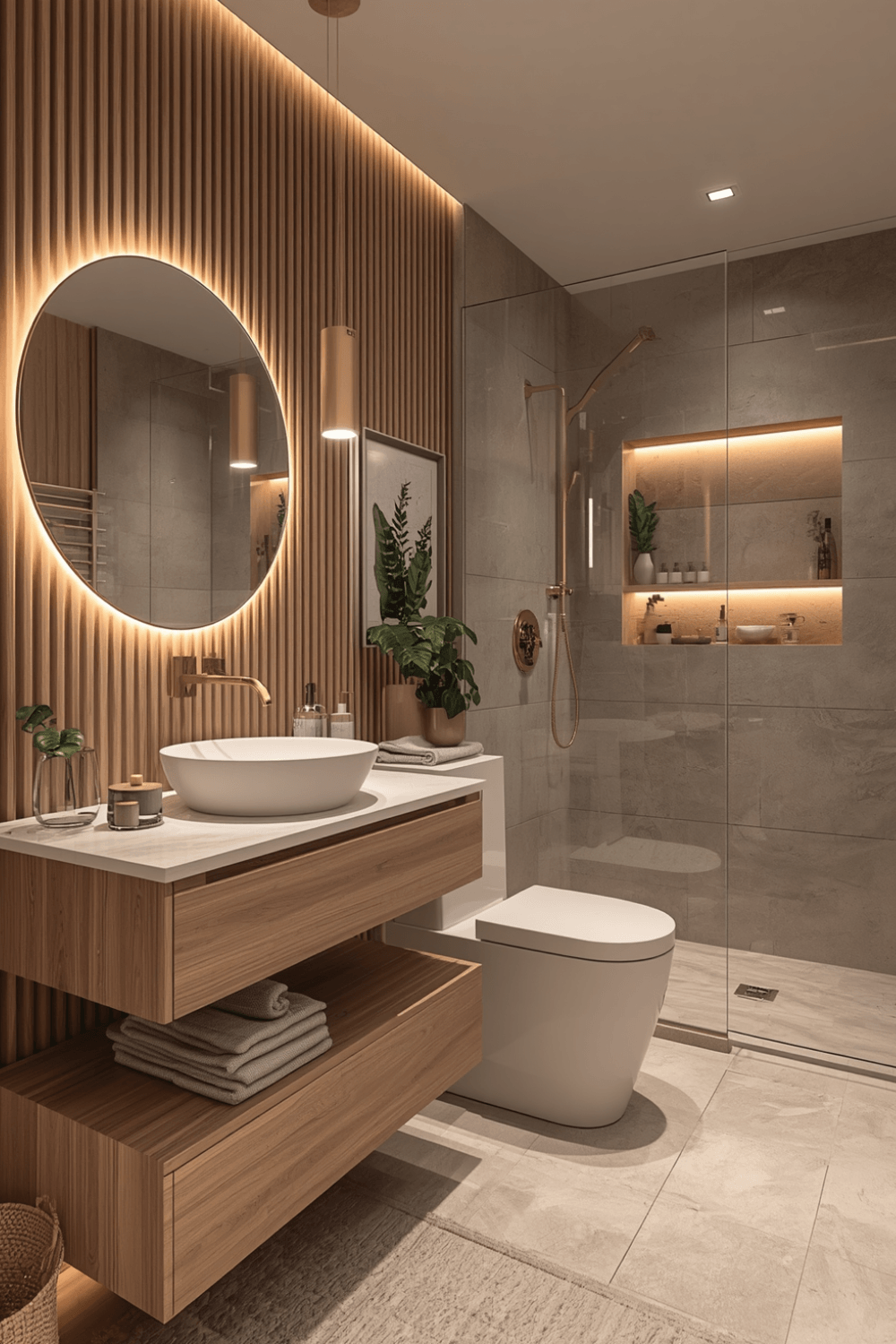 I used a light oak vanity with visible wood grain rather than a painted or heavily processed finish, which is a core element of the Japandi aesthetic. That natural texture adds warmth and organic character that a flat painted surface simply can’t replicate in the same way.
3. Stick to a muted, limited color palette
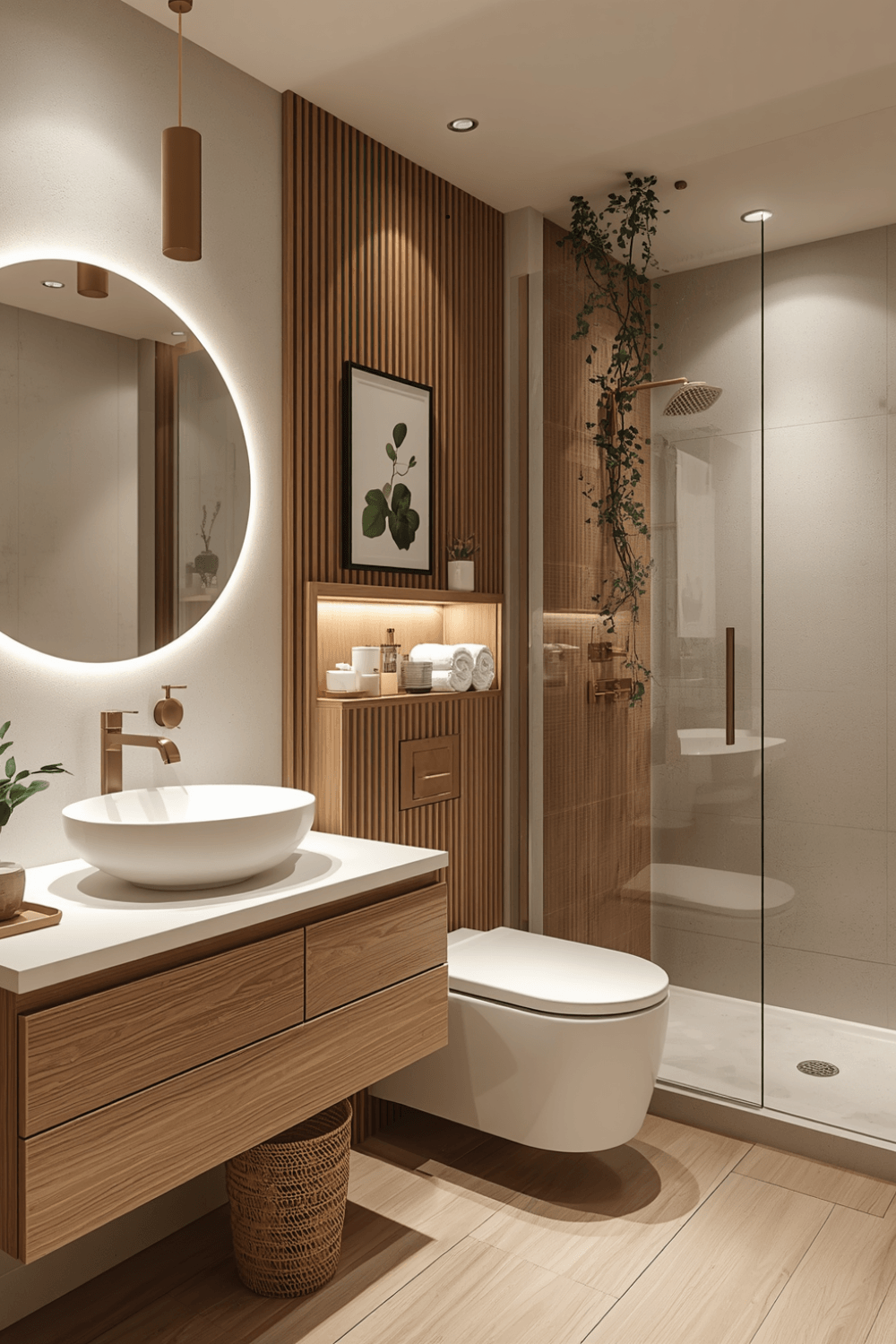 I kept my walls a warm off-white and my tile a soft, natural stone tone, resisting the urge to add additional colors or patterns into the mix. Japandi genuinely depends on restraint in the color palette, since introducing too many tones undermines the calm, cohesive feeling the whole style is built around.
4. Add one or two natural texture elements, not several competing ones
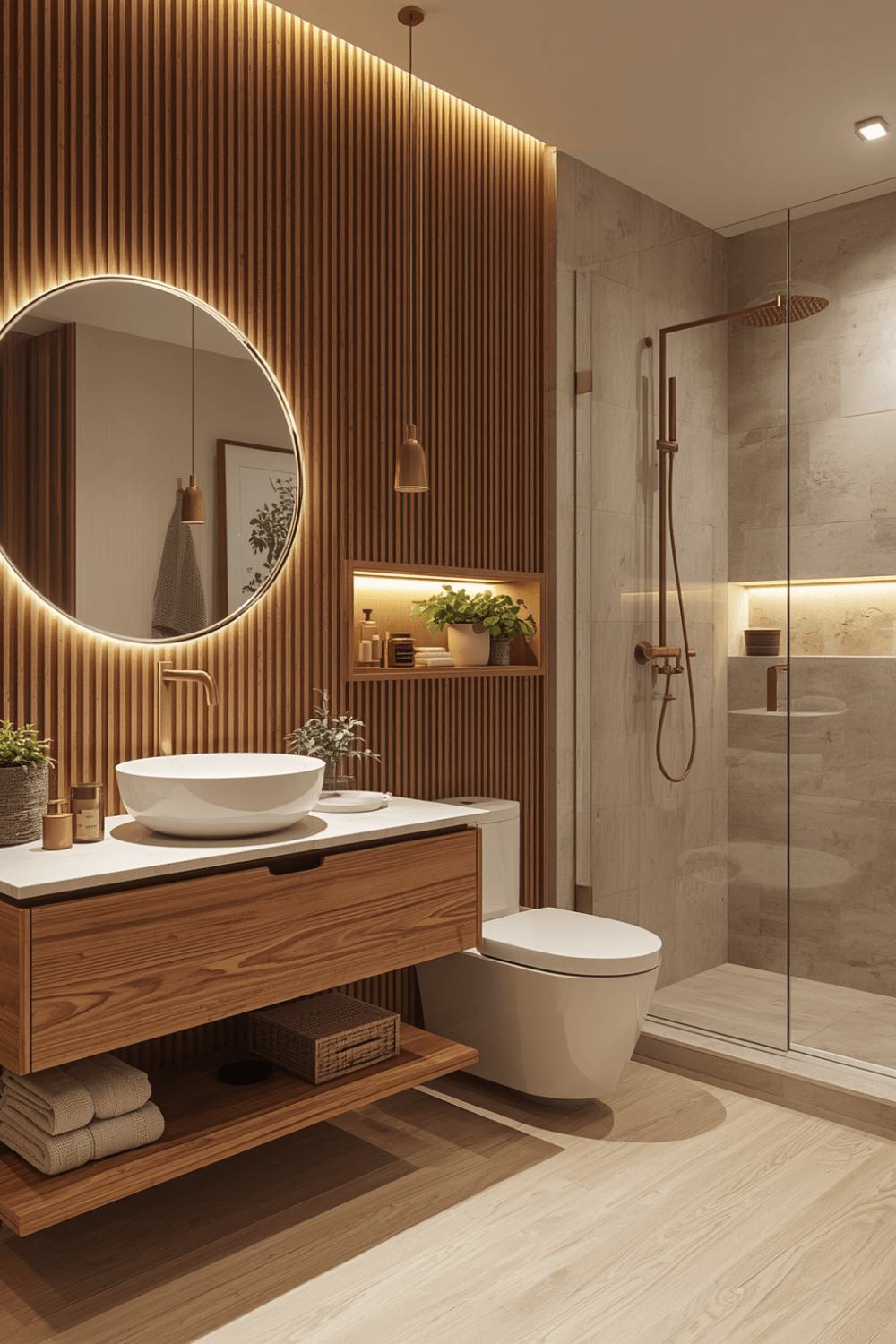 I added a woven rattan bath mat and a single ceramic soap dish with a hand-thrown, slightly imperfect quality, rather than layering in multiple different natural materials competing for attention. A couple of well-chosen textural elements read as intentional, while too many at once can start to feel busy despite each individually fitting the aesthetic.
5. Choose fixtures with simple, unobtrusive lines
I swapped an ornate faucet for a simple, matte black design with clean geometric lines, which fits the understated Japandi aesthetic far better than anything decorative or fussy. Fixture choice matters more in this style than in a lot of others, since ornamentation directly works against the calm simplicity Japandi is built around.
6. Add a single plant for organic life without overdoing it
I added one small potted plant on my vanity, specifically choosing something low-maintenance since I know myself well enough to admit multiple plants would eventually become another maintenance burden I’d neglect. One thriving plant reads as intentional, while several struggling ones undermine the calm feeling you’re going for.
7. Build in a genuine daily reset habit, not just a design plan
I spend about two minutes each evening wiping down counters and returning any stray items to their designated drawer or shelf spot. This small, consistent habit is honestly what’s kept my bathroom looking the way it was designed to, far more than any single storage solution on its own.
Real Examples From People I Know
A friend renovating a small guest bathroom leaned heavily into closed vanity storage with almost no open shelving at all, since she knew from experience that open storage tends to accumulate clutter in her household. Her bathroom maintains that calm, minimal Japandi look with almost no daily upkeep required because there’s simply nowhere for clutter to visually accumulate.
Another friend added a small woven basket specifically for corralling loose items that don’t have an obvious home, tucked into a cabinet rather than left visible. Having one designated catch-all spot, hidden from view, keeps her open surfaces genuinely clear without needing to find a perfect home for every single item.
Common Mistakes to Avoid
Relying entirely on open shelving without a closed storage plan for daily items. It tends to accumulate visual clutter fast, undermining the calm aesthetic Japandi is built around.
Introducing too many colors or patterns into the space. Japandi depends heavily on a muted, restrained palette to achieve its signature calm feeling.
Layering multiple competing natural textures at once. A couple of well-chosen textural elements read as intentional, while too many can start to feel busy.
Choosing ornate or decorative fixtures. Simple, clean lines are central to the Japandi aesthetic, and fussy details work directly against it.
Skipping a genuine daily maintenance habit. Even a well-designed space needs a small, consistent reset routine to actually stay looking the way it was originally designed.
Final Thoughts
My Japandi bathroom taught me that achieving that calm, minimalist look is really only the first half of the project, the harder and more important part is building genuine storage and habits that let it actually stay that way through real daily use. The closed storage addition alone did more to maintain the aesthetic than any of my original visual design choices.
If you’re working on your own Japandi bathroom, plan closed storage for daily-use items before finalizing any open shelving, stick to a genuinely limited color and material palette, and build in a small daily reset habit. That combination is really what separates a Japandi bathroom that looks calm on installation day from one that actually stays that way months later.